
One Refugee’s Journey Through ICE Detention
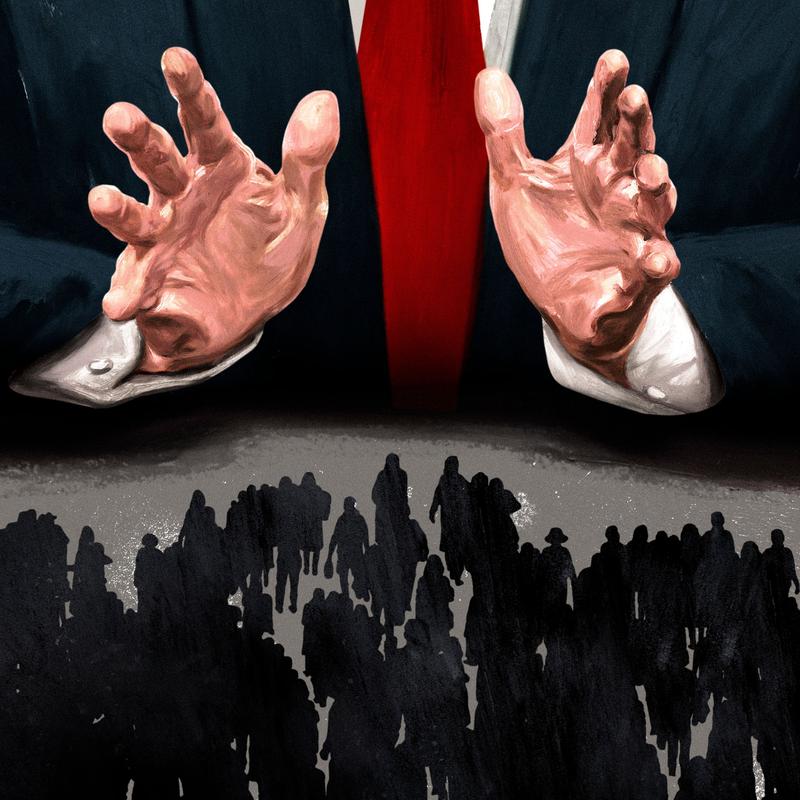
Jonathan Blitzer: Welcome to The New Yorker Radio Hour. I'm Jonathan Blitzer. I'm a staff writer at The New Yorker. This is a special episode of our program today. I've covered immigration for more than a decade, and I think it's pretty clear that immigration is the defining political issue of our time, beyond all the other disruptions of the Trump administration. When Trump launched his 2016 campaign, he blamed Mexico for sending rapists, drug dealers, and criminals across the border.
There was the Muslim ban, family separation, a whole host of radical actions, but the current term has made the first one seem almost quaint, trying to overturn birthright citizenship, racially profiling US citizens, jailing tens of thousands of immigrants in appalling conditions. Then, there's been nearly two dozen shootings by immigration agents, at least six of them fatal to date. I could go on and on.
The question of who has a right to be in the United States is absolutely central to our country right now. In the second part of this episode, I'm going to speak with a Democrat and a Republican in Congress about how voters are receiving Trump's immigration policies and how that may affect the midterms. First, I'm going to tell you a story about a guy I met here in New York, a refugee from Guinea in West Africa. His name is Alsainy.
Alsainy was early in the process of applying for asylum in the United States when he walked into 26 Federal Plaza in June 2025. It's a big federal office building in Lower Manhattan with an immigration court on the 12th floor. This is the building where you might have heard an Army veteran started a fire last week as a protest against ICE, but Alsainy was there a year ago. Alsainy is his first name. He asked me not to use his last name.
Alsainy: [Fulani language]
Alsainy [Interpreter]: Yes, at the beginning, I wasn't scared at all, because when I first went, there were a lot of people there. Everyone was busy with their own situation, so it wasn't nothing concerning to me.
Jonathan Blitzer: He was doing exactly what someone in his situation is supposed to do. He was seeking asylum from persecution back home in Guinea and had been in the US for a little over a year. He had a room in the Bronx and was learning his way around New York City. It was all new, and Alsainy didn't know what to make of some of the horror stories he was hearing about the Trump administration. Choosing to do things the right way, it gave him a sense of confidence.
Alsainy [Interpreter]: Because I had not done anything wrong. There was no reason for anything bad to happen to me.
Jonathan Blitzer: The meeting's short. The judge schedules another hearing so that Alsainy can begin gathering the evidence for his asylum application. A few minutes later, he leaves the courtroom holding a document with the date when he's supposed to return. He's standing by the elevator when six agents come up to him.
Alsainy [Interpreter]: They were not wearing proper uniforms, but they also had something written on it, ICE. They had face mask. Right after I came out, then they grabbed me.
Jonathan Blitzer: Alsainy's short and skinny, 5'5", with dark skin and short dreadlocks. He's 28 years old. In June of 2025, he spoke next to no English. In many of our meetings, an interpreter is helping us out.
Alsainy: [Fulani language]
Alsainy [Interpreter]: I told them no, I wasn't going to go with them because I had just seen the judge. One of them actually grabbed my bag and said, if I don't come with them, they will do bad thing to me.
Jonathan Blitzer: This wasn't the first time Alsainy had been accosted by government agents. He fled Guinea in 2023 after he was arrested at a political protest and beaten so badly that he suffered memory loss. In New York, when the ICE agents grabbed him, he was terrified.
Alsainy [Interpreter]: I was resisting at first, but they just pushed me inside the elevator and pinned me down and then put the handcuff on me.
Jonathan Blitzer: You might have seen videos of people being arrested just like this at 26 Federal Plaza in New York.
News Clip: This is one of the many hallways in Lower Manhattan where mass immigration agents have been apprehending people outside of their routine immigration court check-ins.
Jonathan Blitzer: This sort of footage exploded about a year ago because ICE was doing something it had never really attempted before, picking people off when they showed up to immigration court. Alsainy was a case in point. He thought he was just seeing an immigration judge, that he'd be back in the Bronx by the end of the day. What was going through your mind while you were in the elevator?
Alsainy [Interpreter]: I said to myself, "You're going to be arresting me, and you're most likely going to be sending me back to my home country." I was very concerned about that, but then I said to myself, "If that were to happen, I would rather be detained here or even killed here than be sent back to where I had come from."
Jonathan Blitzer: I cover immigration for The New Yorker. Quite frankly, I've been scrambling to document everything the current administration has done over the last 18 months. It has made radical changes to the US immigration system, upending the lives of immigrants across the country. These major policy shifts are getting overshadowed by news of immigration agents shooting and killing people in the streets of American cities.
More than anything else, what I see happening is that the President is trying to sabotage the system of legal immigration, and that is making the country a much more hostile place for immigrants. President Trump has canceled the existing legal status of hundreds of thousands of people. Our nation's promise to be a place of refuge for the persecuted is anathema to this administration. It wants to end that promise once and for all.
Arresting people in immigration court is unprecedented. Had Alsainy arrived in the US a year or two earlier, he would have left the courtroom that day and returned to the Bronx, just like he expected. Instead, he found himself handcuffed in an elevator headed to the 10th floor of 26 Federal Plaza, where ICE has a field office. Were you put in a cell? Were there other people in that cell with you?
Alsainy: [Fulani language]
Alsainy [Interpreter]: Yes, we were in the room. There were more than 60 of us in that room. I was there for two days. You couldn't lay because there was no space to lay down. For you to sleep, you will have to sit down. They will give us some water, but they will also give us some cookies. That's what we had for food.
Jonathan Blitzer: This ICE field office is not supposed to hold anyone for longer than 12 hours. Last summer, ICE was arresting so many people from the immigration court and from elsewhere around the city that the field office was jam-packed. In fact, more than 1,000 people have been held there since January 2025. Alsainy had no idea what was happening. Why was he being held? How long would it last?
Agents kept pressuring him to sign things. He's smart and canny, but he never really learned to read or write. In any case, the documents were in English. He refused to sign them. Good thing, too, because some of them, it turns out, could have got him sent back to Guinea. Alsainy didn't have a lawyer. There was no one for him to call. Could you communicate with other people who were in the room with you?
Alsainy [Interpreter]: Yes, there were many Fulani speakers, and so we would talk. Right there, I actually saw many who had signed document, saying they would rather be sent back because they didn't want to be in that situation.
Jonathan Blitzer: Two days later, after watching more people come and go, Alsainy heard his name called. He and some other men were taken out of the building. Again, someone handed him a document he couldn't read.
Alsainy [Interpreter]: We were shackled. They said we were all being taken back to our home country, but then once we came out, I was taken to a separate direction.
Jonathan Blitzer: Eight people are loaded into a van. It's nighttime. They drive for hours through the dark. In the early hours of the morning, they pull up near a jail in the middle of Pennsylvania. They're at ICE's Moshannon Valley Processing Center. Alsainy will spend the next six months at Moshannon. We're on the corner of Marcy Avenue and Hooper Street in Williamsburg outside of this beautiful old church. We go down these stairs into the basement of the church, and that's where this law clinic has its offices.
Jonathan Blitzer: Hello. Hi, Heather.
Heather Axford: Hi, how are you?
Jonathan Blitzer: Good to see you.
Heather Axford: Good to see you.
Jonathan Blitzer: Heather Axford is the director of Central American Legal Assistance, known as CALA. She radiates the kind of gentle assuredness that helps when she's dealing with skeptical judges and nervous clients.
Heather Axford: The office opened in the mid-'80s, but it's expanded through the years.
Jonathan Blitzer: We're just walking in. There's a few desks. The ceilings, I have to say, are very low.
Heather Axford: I know. I'm so sorry.
[laughter]
Heather Axford: Even more, watch out for the beams.
Jonathan Blitzer: CALA is in a warren of offices in the basement of the Transfiguration Church. It's been here since the 1980s. Desks are tucked in every corner with papers piled high. Lawyers take calls in English and Spanish. Heather has represented thousands of clients. During the first Trump administration, the advice was straightforward: "File your case and start the legal process to regularize your status."
Heather Axford: You spend, for me, almost 20 years telling asylum seekers, "Go to all your appointments. Go to court. Tell the truth. Get your proof." I took for granted that implicit in that is court will be safe, and you will be heard. Last year corrected that for me, right?
Jonathan Blitzer: What has most shocked you?
Heather Axford: I think it's how lawless it is. It's like an animus against due process, right? The law is as we declare it, right? Makes it really hard as an attorney advising people, because I can advise people as to what the law is, but that's increasingly at odds with what their experience will be.
[music]
Jonathan Blitzer: We know where this shift started. Late in May of 2025, the White House was angry that the government wasn't deporting more people faster, so top officials set a target for ICE. 3,000 arrests a day nationwide, well beyond what the agency was capable of. A week after that, ICE appears to have given agents the green light to start arresting people at immigration courts. The administration also issued a directive to immigration judges, telling them to dismiss cases on the spot without hearing evidence or putting decisions in writing. The idea was to set people up. Someone shows up for court, the judge dismisses the case straight away. ICE officers are waiting outside to detain and deport them.
Heather Axford: The first couple of days, people didn't understand what was happening. You would even have people being like, "Oh, yes, dismiss my case. Great," but then pretty quickly, people were educated. I jumped in on a case after the gentleman had been detained, and he was like, "I had my proof. I'm telling the judge, 'No, don't dismiss my case. Look, I've got this proof. I've got these things to show you,' and it doesn't matter."
Jonathan Blitzer: Alsainy is caught up in all of this. After two days in a holding cell with virtually no food, he's sent to a detention center in Pennsylvania. He's desperate to find legal help, and he comes across a list of pro bono law offices. It's alphabetical. CALA is near the top. He calls the number and, in his very limited English, says he's from Guinea. CALA mainly works with Central Americans. As he's explaining his situation, one of the staff attorneys, Andréa Nunes, hears his last name and recognizes where he's from.
Andréa Nunes: When I heard the last name, I was like, "I bet he's a Fulani guy from Guinea, and I bet he's got a killer case." [laughs]
Jonathan Blitzer: Andréa worked with Fulani people before she was at CALA. She knows about the government violence that followed a coup in Guinea in 2021.
Andréa Nunes: He sounded like he didn't have a lot of hope, and he sounded really overwhelmed.
Jonathan Blitzer: You guys have this follow-up conversation with an interpreter.
Andréa Nunes: Yes.
Jonathan Blitzer: Is that when you start to really get a fuller command of the details of his case?
Andréa Nunes: Yes.
Jonathan Blitzer: Your lawyer brain must be going now, and you must be thinking, "Wow, this guy's actually got a pretty strong asylum claim."
Andréa Nunes: Yes, such a good claim. Such a good claim.
Jonathan Blitzer: You're smiling as you say that. I see the fire in your eye.
Andréa Nunes: [laughs] Yes, 'cause you're like--
Jonathan Blitzer: Alsainy's claim is so strong because he's been subjected to violent and clear-cut political persecution. In 2023, he was at an anti-government protest when a group of state security agents arrested him. They beat him unconscious. He woke up hours later in a jail cell covered in blood. He was held for about a week. Before he could leave, the agents took his photograph and threatened him. If they saw him at another protest, they'd kill him.
Andréa Nunes: Claims that are so strong that you were tortured in state custody after you went to a political protest, a peaceful political protest, oh, my gosh. That's what people think of when they think of asylum, like people who don't know very much about it.
Jonathan Blitzer: Right, sort of textbook, yes.
Andréa Nunes: Yes, it's so simple. You know, unfortunately, that no matter how strong your claim is, if you don't have representation, it's so hard to win by yourself, especially if you're detained, because how can you call your family in Guinea to get documents if you're detained in the US?
Jonathan Blitzer: Alsainy and Andréa spend almost three months putting together the evidence for his asylum case. He shares the details of his story, and then Andréa tries to run down the evidence. That means calling Alsainy's sister and mother back in Guinea so they can work the bureaucracy there to get key documents, medical records, witness statements. All the while, Alsainy is stuck in Moshannon, where he lives in a room with men from all over the world, each of them in some kind of limbo.
Alsainy [Interpreter]: We were about 30 people in the dorm, but each person has their own bed. Then, we had about three TVs, and we could also go outside, play soccer, play basketball.
Jonathan Blitzer: Alsainy falls in with a guy from Sudan. When they can use the recreation yard, the two of them walk around talking. The other man has lived in the US for decades. They speak in English. This is how Alsainy begins to learn the language. What'd you guys talk about?
Alsainy: Talk about getting released sometimes. He was like, "We've been here a long time."
Alsainy [Interpreter]: We talk about getting released. When he got detained, he used to live in Pennsylvania. He got his wife and kids in Pennsylvania. The guy came to the States when he was a kid. All his family is here, so he doesn't even know where they're going to send him.
Jonathan Blitzer: It's easy to forget the fundamental horror of a place like the Moshannon Processing Center, which is that many of the people who are held there have not committed any crime. People lose hope. They get desperate. At least two people died in Moshannon while Alsainy was there.
Alsainy [Interpreter]: There were two that I still remember. There was one of a Chinese guy who actually hung himself. He committed suicide. There was another guy who complained he was having chest pain. They called upon the guards, but no one came. He was too late by the time he got to the hospital. There were some rough things happening in there, but you have to have courage for you to continue to survive in that situation, right? That's what I gave myself so that I can continue to fight for my case.
Jonathan Blitzer: Alsainy had been detained at Moshannon for four months when he finally had his asylum hearing on September 29th.
Alsainy [Interpreter]: The judge seemed like a nice judge, but I was concerned that I was going to lose my case.
Jonathan Blitzer: The asylum hearing was virtual. The judge was in Maryland. Alsainy was in Pennsylvania. Andréa was in New York.
Andréa Nunes: It's funny because when you go into the final hearing as the attorney, you, in your mind, have the things that you think might be the issue. I was worried about the judge being like, "He's bad at dates. I don't believe him," because that's a big thing with asylum, is credibility. Alsainy, he was severely beaten in the head, which we had documented. I was nervous that even when it's documented that they would still be like, "I think he's lying," or something like that. That wasn't the issue. The judge totally believed him. She found that he was open in his responses and candid with the court.
Jonathan Blitzer: The hearing lasted several hours. In the end, the judge was persuaded. Alsainy had been persecuted at the hands of the Guinean government. She made her decision that day, finding that he was being targeted because of his political opinion. If he were returned to Guinea, she wrote, Alsainy would likely be jailed and possibly killed by the government.
As a result, legally speaking, the US could not send him back there, and yet the judge denied Alsainy's asylum claim. The reason was technical. During the Biden administration, the government created a controversial regulation that took asylum off the table for anyone who didn't enter the country at an official port of entry. Alsainy crossed into the country from Mexico illegally in March of 2024.
He was sick at the time, likely with chikungunya, which comes with a high fever, rash, and extreme joint pain. Those, at least, were some of the symptoms Alsainy had, so Andréa makes the case that Alsainy had a medical emergency, which was grounds for an exemption from the Biden-era rule, but the judge disagrees. By this point, Alsainy's learned enough English that he can understand what the judge is saying.
Alsainy: [Fulani language]
Alsainy [Interpreter]: At one point, I heard the judge say they were not sure what I deserved to be granted my asylum. I was really getting angry and wanted to respond. Of course, they would not talk to you directly.
Andréa Nunes: I could tell that he was understanding her decision. He looked so defeated and so bummed, but then she was like, "But my alternative finding is that he is eligible for withholding of removal," relief.
Jonathan Blitzer: Instead of asylum, the judge grants Alsainy something called "withholding of removal." I'm going to parse the legalese here, because this is another major shift in how immigration law is getting reinterpreted. People who win asylum can eventually apply for permanent residency or a green card. People with withholding can't, but they also can't be deported to their home country, so this is historically counted as a win.
Alsainy [Interpreter]: My lawyer explained to me, we will then continue to work on my case. Also, this was going to allow me to come out of detention.
Andréa Nunes: I remember calling a friend who does a lot of detained representation, and he was like, "That's awesome. Withholding is really hard to win. You should definitely feel proud of yourself, but your client's not getting out."
[music]
Jonathan Blitzer: That's Andréa Nunes, an immigration lawyer in New York. Our story continues in a moment. This is The New Yorker Radio Hour. Stay with us.
[music]
Jonathan Blitzer: This is The New Yorker Radio Hour. I'm Jonathan Blitzer. I'm a staff writer at The New Yorker, and I'm sitting in today for David Remnick. On today's episode, we're taking a close look at the ways that the Trump administration has been overhauling the nation's immigration system. We'll continue with the story of a man from Guinea who was detained after an immigration hearing. That's an unprecedented step that ICE began taking in 2025. The man's name is Alsainy. We're only using his first name for his safety. At his asylum hearing, a judge denied Alsainy's asylum status, but she granted what's called "withholding of removal." That meant that Alsainy couldn't be deported back to Guinea.
Before Trump's second term, most people who had won withholding of removal would be released from government custody, but that's not what happened to Alsainy. He spent the rest of the fall in Moshannon. By December, he'd been locked up for six months, even though the government wasn't appealing the judge's ruling in his case. Meanwhile, the Trump administration was in the midst of a highly public battle about withholding of removal.
News Clip: Kilmar Ábrego Garcia.
News Clip: Kilmar Ábrego Garcia.
Jonathan Blitzer: Remember Kilmar Ábrego Garcia from El Salvador?
News Clip: That's the Maryland man who, in the beginning of the Trump administration, was picked up and deported to El Salvador, mistakenly put in a prison there, and then had to come back to the US.
News Clip: There's an ongoing fight to deport him to Liberia. Ábrego's attorneys say he should be sent to Costa Rica instead.
Jonathan Blitzer: In the first year of Trump's second term, the government deported some 15,000 people to third countries. One group wound up in South Sudan, another in Eswatini. Afghans and Iranians were sent to Panama, a Colombian woman to the Democratic Republic of the Congo. It wasn't just that these people were deported to an unfamiliar country. That country was often just a short stop on the road back to the place they'd fled.
This has now happened to two of Andréa's Guinean clients. Both had one withholding of removal in immigration court, and both were deported to Ghana. The government of Ghana doesn't care about the ruling of a US immigration judge, and so Ghana has since sent both men back to Guinea. Both of them are currently in hiding. Even with the withholding-of-removal decision in his case, Alsainy, like Ábrego Garcia, was in a new kind of jeopardy.
Alsainy [Interpreter]: If they're sending me to a third country, they're just putting me into a worse and worse situation.
Jonathan Blitzer: There was a bond hearing to determine if Alsainy could be released, now that he had won withholding of removal, but it was full of mishaps. The translator kept getting the facts wrong, garbling Alsainy's answers. Instead of a rash from his illness, the interpreter said Alsainy had pimples on his skin. Sometimes the interpreter used French words, which Alsainy couldn't understand. They lost the bond hearing. Andréa filed a motion to challenge the decision. In the meantime, though, Alsainy and Andréa knew that he could be sent out of the country at any moment. They came up with plans for what to do if that seemed to be happening.
Andréa Nunes: We would practice. I would pretend to be ICE, and he would be Alsainy. I would be like, "Oh, Alsainy, we're going to send you to Ghana," and then Alsainy would do his practice. He'd be like, "I cannot be removed to Ghana because I have an appeal pending with the BIA, and I have an automatic stay," but we would do--
Jonathan Blitzer: You had to come up with a script, essentially.
Andréa Nunes: We would practice it all the time just because-- Thankfully, again, I'm really impressed by his English. Again, it's not good enough for court, but for--
Jonathan Blitzer: Well, he essentially learned it in immigration detention.
Andréa Nunes: Yes, it's so wild, but he can advocate for himself.
Jonathan Blitzer: The new American Dream. It's such an incredible dystopian version of cultural assimilation.
Andréa Nunes: I thought to myself, "Okay, maybe if they accidentally try to send him somewhere, he can advocate for himself, and they'll understand."
Jonathan Blitzer: ICE tends to move people with little to no warning. Often, the only way that someone finds out that they are about to be moved is that their commissary account is frozen. They can't buy food or make calls. One day, late in December, Alsainy's account stops working. He tries to make a phone call, but can't. He and Andréa have a plan for this, too. They've put money on a friend's account. He calls Andréa and puts Alsainy on the line.
Andréa Nunes: "My commissary's been shut off." He was really worried. He was like, "I'm scared." Those are, I feel like, the worst words to hear from someone, especially in his situation.
Jonathan Blitzer: Within hours, Alsainy's on a bus heading who knows where.
Alsainy [Interpreter]: Once we got off the bus and then they took us into an airplane, then I said to myself, "Oh, wow, so they finally actually going to be deporting me," so I was really, really worried at that point.
Jonathan Blitzer: When the plane finally lands, the ICE agents say-
Alsainy [Interpreter]: -"Some of you are staying here, but then others are going to be continuing."
Jonathan Blitzer: They read through a list of names. A few people get off. Alsainy does not. The plane takes off again. Another landing, another list of names. Alsainy stays shackled on the plane. They land for a third time, and finally-
Alsainy [Interpreter]: -they called my name, and they pointed to a separate vehicle. They said that's where I was going to go in.
Jonathan Blitzer: A short drive later, the van pulls into a prison complex. Alsainy and the others are still in the United States. They're in Indiana at the Miami Correctional Center.
Alsainy [Interpreter]: Yes, when I first get there, one other guy was getting released. We asked him how the place look like, and he says, "The place no good."
Jonathan Blitzer: Immigration detention centers like Moshannon are not supposed to be like prisons. Most of the detainees are not criminals, but the Miami Correctional Facility is a prison. ICE rents space there. Alsainy was put in a small cell with one cellmate. He couldn't go outside for recreation.
Alsainy [Interpreter]: We'll be locked up for 20 hours a day. The only time you will come out is to either eat or go take a shower.
Jonathan Blitzer: You spent 20 hours of every day in, essentially, a cell?
Alsainy [Interpreter]: Yes, there were two of us in a cell. The bathroom was also within that cell. Everything was there.
Jonathan Blitzer: What was the food like?
Alsainy: [Fulani language]
Alsainy [Interpreter]: There was no food, really. It was only sandwich that they gave you, like peanut butter sandwich or bologna sandwich. That's what you will get.
Jonathan Blitzer: Alsainy doesn't eat pork, so he'd have to trade the bologna sandwiches for something he could eat.
Alsainy [Interpreter]: For me to get a peanut butter sandwich, I needed two bologna sandwiches to get one peanut butter sandwich.
Jonathan Blitzer: That was the rate. That was the going rate. Many of the people working in the ICE detention center were inmates from the prison, cleaning, doing other menial jobs. Alsainy said the prisoners had more opportunities to be out of their cells than the immigrants did, which reminded me of something another person being detained by ICE told me recently: "We're less than prisoners."
Andréa Nunes: Their staff, I think, was really violent. Alsainy got pepper-sprayed by staff there, at least one time.
Jonathan Blitzer: Weeks go by, Alsainy says officers would come by to ask who was willing to be deported. They would also look for people who are willing to be sent to third countries.
Alsainy [Interpreter]: ICE will come every day and tell you, "So-and-so country is willing to take you," and so you just sign and get deported to that country.
Jonathan Blitzer: Did you know anyone who got sent to a third country, to a country that wasn't their home country?
Alsainy [Interpreter]: Yes, I knew this Senegalese guy who got sent back to Ghana, but I knew a lot of people who got sent to a third country, countries that they were not from. I better be detained, then get out, and do something good for my life than being sent back and getting killed. If you're taking me home, they will kill me. If you're sending me home, I'll tell you to kill me right now.
Jonathan Blitzer: Alsainy and I talked about this a lot. He really means it when he says that he'd rather die in the US than go back to Guinea. He and Andréa are increasingly desperate to get him out of detention. She files a petition known as a writ of habeas corpus. Habeas is one of the bedrock legal rights in a democracy. You cannot be held indefinitely without any actual charges. Andréa wants a judge to evaluate whether ICE could go on holding Alsainy. At the Miami Correctional Facility, things are getting worse by the day. These are men from all over the world, locked up in abysmal conditions with no idea when they might be released.
Alsainy [Interpreter]: You have to understand the state of mind of people in that kind of situation because people are hopeless, and so they feel like they have nothing to lose. They are always frustrated, and they can take that frustration upon to you.
Jonathan Blitzer: Fights sometimes broke out. Guards reacted harshly. They pepper-sprayed men and threw them into solitary confinement, regardless of whether they were instigators or victims. One morning, Alsainy is on the breakfast line when he notices another detainee having some sort of emotional breakdown.
Alsainy [Interpreter]: He was screaming and crying and saying, if they don't take him out of there, he's going to hurt someone. The guard said, "If you want to kill yourself, kill yourself. You want to kill someone, kill someone. I don't care."
Jonathan Blitzer: Remember, Alsainy is short and thin. In moments like this, he's an easy target. Before Alsainy realizes what's even happening, the man is attacking him.
Alsainy [Interpreter]: This guy comes from behind me while we were waiting for food. He comes from behind me and ripped my dread, and then almost took out my eye.
Jonathan Blitzer: When the guards finally get the man off him, Alsainy's lost a chunk of hair. His scalp is bleeding, but worse, he's really worried about his eye. He can't open it. It's bleeding badly. When he asks for medical attention-
Alsainy [Interpreter]: -they said they don't care about it. They told me to get out of their face and leave. If I didn't leave, they were going to pepper-spray me or stuff like that.
Jonathan Blitzer: Back in the cell later in the morning, when someone comes around to count the detainees, Alsainy asks again for medical assistance. The woman doing the count says she'll ask, but she doesn't come back. A few hours later, someone else does, though, with major news, news about a legal development. A judge has finally decided on Alsainy's habeas petition. After nine months of being held in detention, the judge orders that he has to be released immediately. It's February 12th, 2026.
Alsainy [Interpreter]: I was sleeping, and then the lady came and called my name. She said, "You're going home." I said, "Going home where?" She said, "You're going back to New York. You should start packing your stuff. We can't keep you here even for 20 minutes."
Jonathan Blitzer: Andréa is overjoyed. She arranges for a volunteer to pick him up from the detention center, buy him a bus ticket. By the next day, he's back in New York. That's where he is now, kind of back where he started, learning his way around the city, looking for work, trying to make a life for himself. Alsainy isn't the kind of person to talk much about his trauma. Clearly, everything he's been through, first in Guinea, now in the US, had added a layer of difficulty and chaos to his life.
It's surely having an impact on how he thinks about his future. At the time of his release, there were nearly 70,000 people being held in immigration detention, more people than ever. That number doesn't begin to capture the millions of lives that have been turned upside down by the President's mass deportation campaign. In the meantime, the legal landscape was shifting. The administration's courthouse arrests began to face legal setbacks in court.
News Clip: A federal judge in California is banning federal officials from making arrests at immigration courts nationwide in a setback for the Trump administration's crackdown.
Jonathan Blitzer: In New York, a judge ordered the government to stop detaining people at 26 Federal Plaza, where all of this started for Alsainy.
News Clip: In the ruling, the court wrote that while "there is a strong governmental interest in enforcing immigration laws," there is also a serious interest in allowing migrants to pursue asylum claims without fear of arrest.
Jonathan Blitzer: The morning after the judge's ruling, masked ICE agents were back outside the courthouse ready to make more arrests. An activist named Peter Melck Kuttel was there at the time. He tried to show them copies of the decision. The image, it reminds me of Alsainy leaving the courthouse a year ago, holding a printout from the judge listing the date and time of his next appointment. You'd think the documentation might actually mean something. As Kuttel described it later to a local paper, he showed them the decision. The agents waved him away and said simply, "We don't care."
[music]
Jonathan Blitzer: I'm Jonathan Blitzer. Our program continues on the next episode when I'll speak with a Democrat and a Republican in Congress on the politics of immigration and how this is all playing out with voters. Thanks for listening.
[music]
Copyright © 2026 New York Public Radio. All rights reserved. Visit our website terms of use at www.wnyc.org for further information.
New York Public Radio transcripts are created on a rush deadline, often by contractors. This text may not be in its final form and may be updated or revised in the future. Accuracy and availability may vary. The authoritative record of New York Public Radio’s programming is the audio record.