The Reporter Nicholas Lemann on California’s Battle to Pass a Billionaire Tax
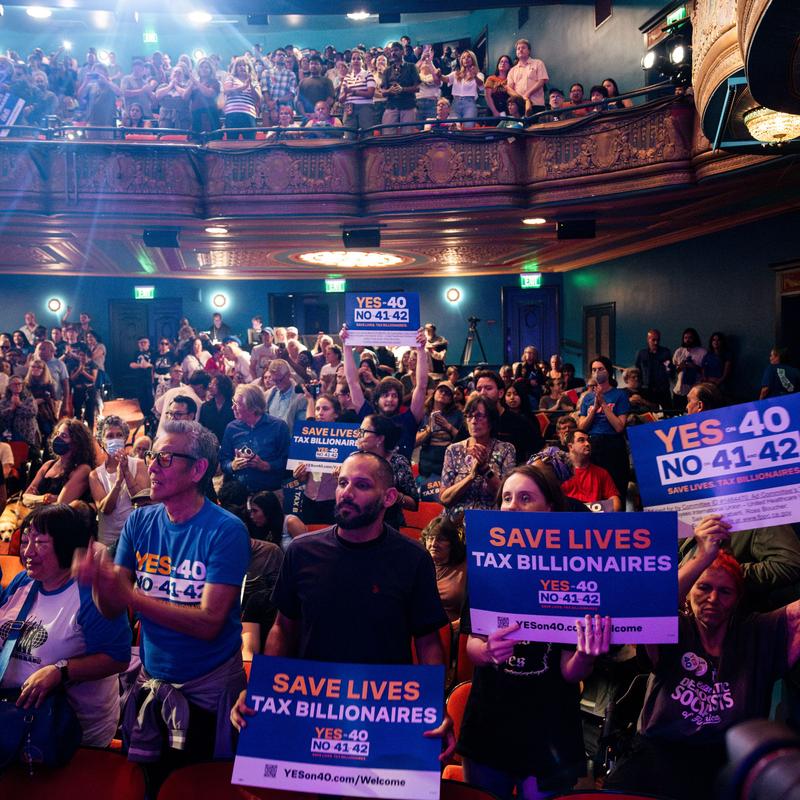
David Remnick: [00:00:00] In the midterm election next month, there's a wealth tax on the ballot in the state of California. It calls for a 5% tax on wealth above one billion dollars. It's earmarked for healthcare. Now, that's a tax only on actual billionaires, and we've heard a lot about the progressive surge in this election, so you would think that's a pretty easy win for the Democrats.
Who would not vote to tax the billionaires just a little bit more? Well, not so fast. Many prominent Democrats are not supporting the measure, and it really faces an uphill battle. The wealth tax is seen as a bellwether progressive issue, so what happens with this in the state of California could well matter to the Democratic Party nationally.
Beginning this week, we're starting a new feature at the Radio Hour, The Big Story, something drawn from reporting in the pages of The New Yorker. This [00:01:00] week, my colleague Nicholas Lemann has reported on the politics around the wealth tax in California.
Nick, the big political story obviously in the United States is the midterms- Uh-huh ... in early November And there are a lot of candidates to consider and- Mm-hmm ... potential blue wave to consider. But I think the m- most vivid political question that's being debated now that doesn't involve a candidate is the wealth tax or Proposition 40 in California.
And this is an attempt to, as it were, go after billionaires, a one-time only thing. Um, and a lot of the billionaires are asking, "Don't we pay enough taxes already?" And, "We're gonna leave if you levy this big tax." Give me the, the background of what this bill is and- Okay ... why there's such a ferocious debate about it.
Nicholas Lemann: Okay. So first of all, um, you know, I, uh, love intellectual history, and the problem of loving intellectual history is most of the [00:02:00] time people say to you, "Well, who cares what intellectuals think?" So there are very few examples we can say, "Well, here's direct impact of intellectuals on politics," but this is one such example.
So it all starts with Thomas Piketty writing that surprise bestseller on inequality.
David Remnick: The book Capital in the Twenty-First Century.
Nicholas Lemann: Yeah.
David Remnick: Mm-hmm.
Nicholas Lemann: And then he has two close associates, Gabriel Zucman and Emmanuel Saez, and they have enlisted three law professor allies, and, and this, you know, group of five really, not Piketty himself, but, but these other five
David Remnick: have been- We should point out, we should point out that Piketty is French.
Nicholas Lemann: Piketty is French. Yeah, yeah. And Zucman is French, and Saez is French. So just,
David Remnick: you know- Al- always a recipe for political success in America.
Nicholas Lemann: Yeah. Um, so, so these five guys have been going around for years talking about rising inequality, talking about [00:03:00] how wealth inequality is more severe than income inequality, and making themselves available to any politician anywhere who wants to devise wealth taxes.
David Remnick: Mm-hmm.
Nicholas Lemann: So they've been involved in a bunch of these efforts over the years, so that's one piece of the background. Their big sort of debut, I guess, in American politics was designing a wealth tax proposal for Elizabeth Warren when she ran for president in 2020. So, so that's one part of the story. They were kind of open for business to design wealth taxes for people.
And then if you remember back a year plus ago, the One Big Beautiful Bill Act that President Trump signed on July 4th, 2025, that had massive tax cuts and also to pay for part of them, but not all of them, massive spending cuts. A lot of the cuts were to Medicaid. There's one union [00:04:00] leader in California, a guy named Dave Regan, who had the idea he, his union would be devastated by these Medicaid cuts Trump signs this bill.
Dave Regan says, "Aha, I, I know what to do. We'll have an initiative to have a wealth tax to plug the hole left by Medicaid cuts." He calls Emmanuel Saez at Berkeley and says, you know, "Activate your team." And they put together, um, a proposition to tax billionaires only. This tax would fall on as few as 200 people in California, and is supposed to produce something like $100 billion in revenues, and it would go overwhelmingly to one group of hospitals where Regan's union has...
is the organizing union to prevent them from suffering from the effects of Medicaid cuts.
David Remnick: Well, it's a pretty, it's a pretty [00:05:00] stark question, and I think when people that would first hear about it, they think, "What's the problem?" I mean, income inequality has gotten worse and worse and more and more stark with time.
Nicholas Lemann: Uh-huh.
David Remnick: Um, it can't possibly be considered an unpopular idea, at least, to tax the wealthy So what's the what? What are the flaws in this bill?
Nicholas Lemann: Okay. So it, it's actually, uh, super controversial and may or may not pass. So just for starters, the billionaires d- who would be taxed don't like this. They have a lot of money.
The lead billionaire is Sergey Brin, the Google co-founder. He's put well over $100 million of his own money, which is kind of like $15 for you- Right ... into this. And so they're gonna be spending very, very heavily to defeat this measure.
David Remnick: Um- Sergey Brin, I believe, has already moved out of California, hasn't he?
Nicholas Lemann: Yeah, he's moved out, and one of the key arguments [00:06:00] is if you put this tax in, all the billionaires will simply leave, so it's not gonna actually work as a revenue producer.
David Remnick: Um, despite all this opposition and the opposition of 200 billionaires and whatever money they pour into it, uh, it's, it's interesting to me to note that a lot of labor unions in California have not come out for this.
That-
Nicholas Lemann: No, and a lot have come out against it, in fact.
David Remnick: And the Democratic Party establishment in California, even though it seems, for example, in Los Angeles, the DSA candidate is running strong against Karen Bass, the Democratic Party, mainly in the name of Gavin Newsom, the governor, is not behind this.
Nicholas Lemann: Democratic politicians are terrified of it, and, and so Newsom has kind of stuck his head out and, and, and been vocal in his opposition. And most of them- Why are
David Remnick: they, why, why terrified, Nick? Why are they so st- terrified of this bill?
Nicholas Lemann: [00:07:00] Well, depending on how cynical you wanna be about politicians, um, one theory is they genuinely have bought the argument that the billionaires will leave, and so it'll defeat its own purpose.
Another is that, uh, these billionaires who are overwhelmingly in tech, Silicon Valley, um Many of them, not all of them, have supported, uh, have supported Democratic politicians. And in a way, tech, especially in California, is the industry group that is really in the Democratic column a lot of the time.
They're-- These guys are not gonna get money from the oil industry, and it's really expensive to run campaigns. So that's another thought about it.
David Remnick: By and large, they were certainly, you know, all in for Obama. There was an affinity- Right ... for that kind of- Right ... uh, Democratic Party. Now, you have tech titans sitting behind the President of the United States, Donald Trump, at his second inauguration.
Nicholas Lemann: Right. So that's, [00:08:00] that's a hugely interesting story on its own. Trump came in and, um, essentially said... I don't think it was pure love, you know, David. I think it was, uh, as he has with many other sectors in the country, s- he said, "You don't think of me as your biggest, uh, customer or client, but I am because I've got a lot of weapons I can use against you that traditionally presidents haven't used, but I don't follow traditional norms and I'm gonna use them.
And, uh, if you don't want me to, put on a tie and suit and, and come to my inauguration." You, you know, I have to remind you, David, years ago during the romance between tech and Washington, I did a profile for The New Yorker of Reid Hoffman, one of the big Democratic donors. And first time I went there, you know, I wore a suit and tie to interview him.
And he sort of takes me aside and said, "Let me tell you something. Never come to Silicon Valley in a necktie again, [00:09:00] please, I beg you." And I didn't, but that was why it was especially striking to see all these guys in suits at the inauguration.
David Remnick: You know, for years I've been hearing rich people in New York City threaten to leave the city 'cause the taxes are too high, "I'm gonna move to Miami Beach."
Nicholas Lemann: Right.
David Remnick: Whatever. They don't do it- I know ... in any great numbers. You know, Mom Dani is l- was elected, and that was supposed to be a trip wire for this trend to happen. Okay, Sergey Brin left, fine. A couple others left.
Nicholas Lemann: It's, it's hard to know because, I mean, part, part of it is you're only talking about two hundred people.
And part of it is that these guys already have, you know, multiple homes, so where they, quote unquote, "live" is a little bit of a-
David Remnick: Right ...
Nicholas Lemann: mystery.
David Remnick: Here's an interesting figure in all of this, and this is such an excellent piece. Congressman Ro Khanna, whose district is in the heart of Silicon Valley, supports the tax.
Nicholas Lemann: Right.
David Remnick: And he's the representative for a, a lot of [00:10:00] these billionaires because of where his district is. And he, by the way, is a wealthy guy himself. What does he see that his fellow Democratic lawmakers do not?
Nicholas Lemann: I think first of all, he sees that there's a big cultural gap between the Silicon Valley worker bees and the Silicon Valley, you know, founder owner types.
There's a big, big gap, and there's a lot of resentment and a feeling of, you know, I'm living on a hamster wheel and I'm, you know, very high cost of living, very high pressure. All I do is work. And the level of sort of satisfaction with life is not that high. Um, and, and that creates a political gap between the people who vote in elections and the people who own the companies.
And I think the other thing is he sees an opportunity to occupy the left flank of next [00:11:00] round's Democratic presidential field with... 'cause Bernie's now 85, and Ro Khanna has, has really allied himself or positioned himself as the Bernie heir. They've co-sponsored a national wealth tax. Bernie, unlike Elizabeth Warren, has publicly endorsed Proposition 40.
David Remnick: If, if I can interrupt, why would Elizabeth Warren not endorse it?
Nicholas Lemann: Well, I don't know, uh, partly because I called her office repeatedly and they would not answer that question, but this is something a lot of the kinda left establishment of the Democratic Party is very uncomfortable with. And it's partly because Dave Regan, the father of Prop 40, is not a real popular guy even in the labor movement.
David Remnick: This is the SEIU labor-
Nicholas Lemann: Yeah ... labor. SEIU, AUHW is- Right ... is the name of his union, and he's seen as a sort of maverick union leader who doesn't play well with the movement and, [00:12:00] um, is, is kind of too aggressive and looks out for his own union- Oh ... not the whole movement. So that's one thing. And then, you know, there's a lot of sorta liberal tax lawyers who are telling politicians this is...
it's a good cause, but this isn't the right, you know, vessel for it.
David Remnick: So we had on this program not so long ago, Senator Chris Murphy from Connecticut. Mm-hmm. Pretty wealthy state. And he said to me that one reason the Democrats had become so weak is that they gave up on populist economics a long time ago because to win office, they need campaign financing from- Right.
Right ... as you mentioned before, cam- very wealthy people. Would you agree with that? And if so, how do you break out of that cycle?
Nicholas Lemann: Yeah, that's the question. And, and Khanna is quoted in the story saying essentially that, and slightly more kindly toward his colleagues. You know, in the post Citizens United era, there's two things going on.
So one is politics is [00:13:00] very, very expensive, and the Democrats need money to be competitive, and they've made themselves competitive partly as a result of making an alliance with elements of business and wealth. So that's one, and then two is the so-called Great Reversal where, you know, the Republicans, m- some of them claim to be the new working class party, and the Democrats are the sort of upper middle class professional party.
David Remnick: Right.
Nicholas Lemann: Something like 24 of the 25 richest congressional districts in America are represented by Democrats. So that's another part of the story. It's not so clear which is the party of the rich and which isn't the party of the rich.
David Remnick: Now, polls are not to be believed, but if we can cheat on that principle a little bit-
Nicholas Lemann: Mm-hmm
David Remnick: what they don't seem to envision is Proposition 40 in California winning. The polls have that possibility. It seems like the support for that is, is well under 50% at
Nicholas Lemann: this point. [00:14:00] Yeah, so, so here's the kinda weird thing on this. If you ask Democratic voters, "Do you believe in a heavy wealth tax on billionaires?"
You get, like, three-quarters yes. If you ask, "Are you for Proposition 40?" It's, like, 45% or something like that yes and 42% no. Um, if you go on the pr- you know, online prediction markets, it's down to below a third-
David Remnick: Yeah,
Nicholas Lemann: it's 30% ...
David Remnick: of
Nicholas Lemann: prediction. Yeah. Yeah. Um, so, so that's something to unpack, right? Um-
David Remnick: And you know what political professionals look at?
They look at Polymarket all the time.
Nicholas Lemann: Yeah, yeah, exactly.
David Remnick: I'm still a little unclear, Nick, why there's still such a huge gap between people supporting a wealth tax in principle versus supporting Prop 40.
Nicholas Lemann: I think one reason is Prop 40 has a big, big opposition. I cannot tell you how much anti-Prop 40 [00:15:00] content just flows into my inbox every day just 'cause I'm on all the mailing lists.
David Remnick: Yeah.
Nicholas Lemann: And it's all over the airwaves in California. Many prominent politicians from the governor on down are vocal opponents of it. Very few politicians are vocal proponents of it. The labor movement is split. The National Democratic Party isn't really backing it. It has broad notional support as an idea among Democrats, but it doesn't have broad organized political support.
So that's, that's one thing. It may be that people admire tech titans and don't want them to leave California, and that they're buying that argument.
David Remnick: Hmm. I think you're telling me, Nick, that while there's good ideological reason for this, it sounds to me like the billionaires are gonna walk away with it.
Nicholas Lemann: Well, if I were betting, I don't know if I would go against Polymarket. Um, [00:16:00] but I, I, I would say this: in the early 20th century, somewhat on purpose, somewhat by accident, the country decided we're gonna tax nationally through income tax and, and not wealth tax for the most part. But today, uh, number one, wealth inequality is just extreme, and it's pulled away from income inequality.
The top 0.0, you know, 0.1%, the top tenth of a percent, just that group has 15% of the total wealth in America. Hmm. The bottom half has about, um, 2%. So just the numbers are very striking, and the, the populist mood is very striking. So, you know, it could be that Am- A-America, you know, in the late 19th century thought of itself as an agricultural small government country, and then it changed in 20 years.
So we could be seeing some seismic [00:17:00] shift like that now.
David Remnick: Nicholas Lemann, thanks so much.
Nicholas Lemann: Thank you.
David Remnick: You can read Nicholas Lemann's article, The Battle to Pass a Billionaire Tax, and many years of Nick's reporting on American politics at newyorker.com. You can also subscribe to the magazine there as well, newyorker.com.