Richard Brody Presents the 2026 Brody Awards
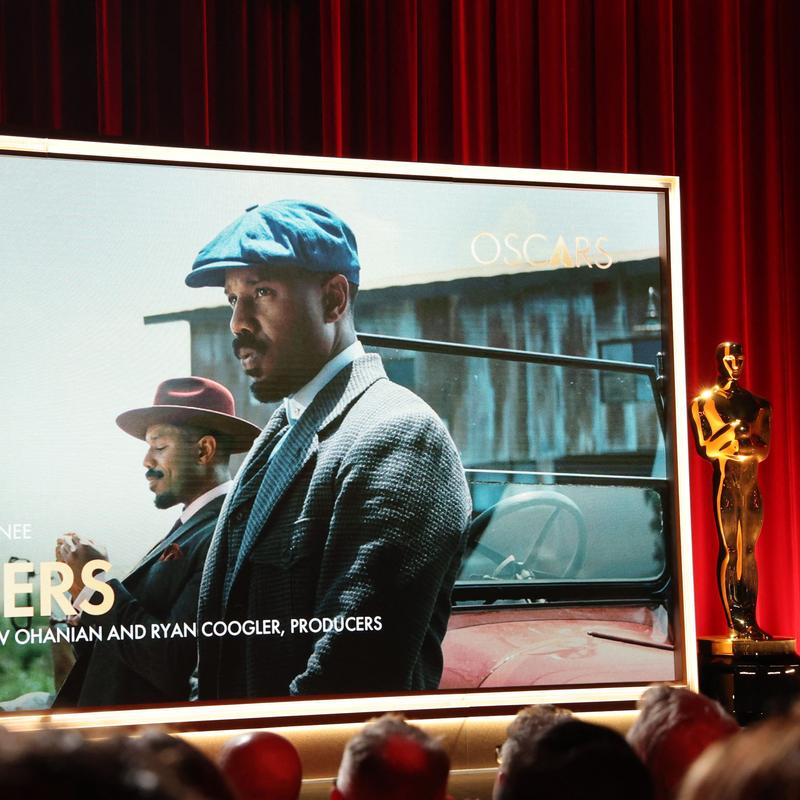
David Remnick: I'm David Remnick, and you're listening to The New Yorker Radio Hour. Now, this program doesn't have many rituals, but here's one that we observe every year, the Brody Awards. When Oscar night is around the corner, I sit down with two of our illustrious critics to discuss the year in movies; The ones that didn't get enough credit, according to them, or maybe the ones that got a little too much, and maybe not to mention the films that you should see and you might have missed so far. I'm joined by New Yorker staff writer and co-host of our podcast, Critics at Large, Alexandra Schwartz. Alex, how are you?
Alexandra Schwartz: Hello.
David Remnick: One of The New Yorker's film critics, Richard Brody.
Richard Brody: Hello, David. Hello, Alex.
David Remnick: When we've done this in the past, Richard, your picks for the year's best movies, usually, let's just say they're wildly different [chuckles] from what we usually see from the Academy. This year, I don't know what's happening. Either you've gotten more conservative, or somehow the Academy has finally caught up to you. What's going on here?
Richard Brody: Yes, I think that the Academy has gotten better and the movies have gotten better. On the one hand, ever since the OscarsSoWhite campaign that was launched in, I think 2015, by April Reign, the Academy has responded by greatly increasing its membership, diversifying its membership, internationalizing its membership, and the result is by and large, better nominations.
David Remnick: Also, the Academy told everybody that they've got to actually watch the movies. They have to watch all five films in each category.
Richard Brody: No student does all the homework. That means that they have to press play and watch to the end. They can eat their dinner while they're-- Unless their eyeballs are being monitored, there's no way--
David Remnick: Why would they do that?
Richard Brody: To be able to vote on the film.
Alexandra Schwartz: The joy of participation.
David Remnick: Yes, that's it. It's like soccer.
Alexandra Schwartz: Well, or probably more to the point, this is why things like Oscar campaigns actually have traction. If you need a shortcut, or if people pressure works on you, then okay, you know who you're going to vote for. You may not have to see everything in contention, I would imagine.
David Remnick: I'm crushed.
Alexandra Schwartz: I, of course, am not a member.
David Remnick: I'm crushed to hear this. [chuckles] Richard, there's a new category this year, casting.
Richard Brody: A very good category, athough I think it's a slight misnomer. I think that actually what it really means is best ensemble cast. On the other hand, I'm very happy that casting directors are in fact being named and honored. By and large, this is something that's been missing for many years.
David Remnick: Why was it missing? Why did somebody suddenly have this revelation to do it?
Richard Brody: Well, I think that first of all, there are many movies which are dominated not by one or two main roles, but by an ensemble. Those ensembles are put together by a very skilled person. There are many people whose work goes into making films who deserve to be acknowledged.
David Remnick: Now, according to a new deal with YouTube, in a few years, the Oscars are going to be streamed online by YouTube and not by ABC. Is that going to affect things at all, you think, Alex?
Alexandra Schwartz: It's probably for the best. This just reflects the reality of how most people consume television or big programming. I'm a cord cutter. I cut my cord so long ago, I don't even remember what it was. I think they're meeting the people where they are.
Richard Brody: Yes, exactly. Especially younger people where they are, and people around where they are. The Oscars are an international event, but American broadcast television is not.
David Remnick: Now, let's get to our awards. Now, the hell with the Academy. Let's get to the Brodies. These are the awards we've all been waiting for. Alex Schwartz is here with the official Brody envelopes. Let me see those envelopes. Alexandra Schwartz: Russell, Russell, Russell.
David Remnick: I believe you. Now, to be clear, these nominations and awards aren't chosen by any August voting body. It's just all one person, Richard Brody. We're going to start, Alex, with best actor. Who was nominated?
Alexandra Schwartz: The nominees for the Brody Award for Best Actor are: Timothée Chalamet for Marty Supreme, Michael B. Jordan for Sinners, Wagner Moura for The Secret Agent, Josh O'Connor for The Mastermind, and Denzel Washington for Highest to Lowest. Richard, the winner is?
Richard Brody: The winner is Michael B. Jordan and Michael B. Jordan in the dual role of Smoke and Stack in Sinners. This was a very hard choice because I find really hard. I find all five actors brilliant in different ways. One of the things that really struck me about Jordan's performance in Sinners is that although he's playing two vibrant roles in a- or it's really an action film, there's an extraordinary intimacy to his performance. It's almost as if he seems to be whispering his role throughout, that he's instead of pushing outward, he's drawing viewers in.
Michael B. Jordan: Look at that sky. That's a mighty fine day to be free ain't it? Our own juke joint for us and by us just like we always wanted.
Michael B. Jordan: Only chance we got if we split up. Well, who gonna watch the truck when I'm in there talking to the Chows?
Michael B. Jordan: [bleep] let them see it's you.
Michael B. Jordan: We've been gone a long time, Stack. Seven years ain't long enough to forget about us.
David Remnick: Who is your close second?
Richard Brody: Wagner Moura. Wagner Moura of The Secret Agent.
David Remnick: I agree. I love that movie.
Richard Brody: Yes, it's a great movie. It's a very elusive role because he's actually playing a multiple role too. He's playing a character who's in hiding.
David Remnick: Alex, did you have a winner?
Alexandra Schwartz: I like the Timothy of Marty Supreme. I actually think he's going to take the Oscar. Certainly, the momentum is with him.
David Remnick: Is it?
Alexandra Schwartz: I think it is after the Golden Globes. What do you think, Richard?
Richard Brody: Yes, I think the same thing.
Alexandra Schwartz: Yes. We may be surprised, but I'm happy for the Brodies' win because Michael B. Jordan gives a fantastic dual performance with very subtle distinctions between these two twin brothers.
David Remnick: Okay, let's move to the next category.
Alexandra Schwartz: All right. The Brody nominees for Best Actress are Rose Byrne for If I Had Legs I'd Kick You, Susan Chardy for On Becoming a Guinea Fowl, Callie Hernandez for Invention, Dakota Johnson for Materialists. We're going to come back to that.
David Remnick: Wow.
Alexandra Schwartz: Tessa Thompson for Hedda. The Brody goes to?
Richard Brody: It goes to Tessa Thompson for Hedda.
Alexandra Schwartz: Aha.
Tessa Thompson: You can write your books with them and teach with them at the university, and you might even be able to get jobs alongside them. They'll never really respect you if they think you can't do it like the boys.
Speaker 2: Hedda, please.
Tessa Thompson: You saw Greenwood's face earlier when you asked for a soft drink like a soft woman. What did you see?
Tessa Thompson: Condemned.
Richard Brody: People didn't see Hedda, unfortunately. It was released by Amazon. It spent very little time in theaters. I think that that counts seriously against it in the Academy.
David Remnick: Who's probably going to get it? Rose Byrne.
Richard Brody: Yes, Rose Byrne, probably. It's a very good performance.
Alexandra Schwartz: Richard. Dakota Johnson has not been universally adored for her performance in Materialists.
Richard Brody: [laughs]
Alexandra Schwartz: I'm putting this case lightly.
Richard Brody: The movie.
Alexandra Schwartz: What made her a standout performer for you? I'm very surprised to see her on this list.
Richard Brody: Oh, I like Dakota Johnson as a performer in general. She is a dialectical actress. She has an exquisite way with dialogue, and that Materialists gives her a great deal of dialogue of a very practical nature to spin on the end of her finger like a basketball.
David Remnick: Oh, my God.
Alexandra Schwartz: Wow.
David Remnick: She's going to treasure that.
Alexandra Schwartz: Now, for our third category, here are the nominees for the Best Director Brody. Wes Anderson for The Phoenician Scheme, Ryan Coogler for Sinners, Kleber Mendonça Filho for The Secret Agent, Kelly Reichardt for The Mastermind, and Josh Safdie for Marty Supreme. Richard the Brody goes too.
Richard Brody: It goes to Kelly Reichardt for tThe Mastermind.
Alexandra Schwartz: I love this movie, too.
Richard Brody: It's an odd thing to say because by definition, the best movie of the year is directed by the best director, Ryan Coogler, for Sinners. I wanted to divide things up a little bit here because I wanted to look at direction in a classical, artisanal way. The Mastermind is a really dramatic movie, but it's small scale. It has very long takes with very careful physicality. It's a heist movie set in 1970, starring Josh O'Connor as an unemployed cabinet maker who decides to break with his bourgeois life and become an art thief.
Josh O'Connor: The paint has come off the wall, going into the cases, down to the waiting car.
Alexandra Schwartz: It will be interesting to me if Ryan Coogler wins, in part because he insisted and got total creative control on Sinners. He really pushed the studios in a direction that we all know they are not comfortable being pushed, where he got final cut, and he got to retain ownership over Sinners. That would be an interesting win.
David Remnick: I should say Jelani Cobb had a terrific interview with Coogler on this program when that film came out.
Richard Brody: This is actually one of the reasons why Hollywood films are so good right now. One of the positive effects of Barbenheimer is that studios have come to realize that one way of actually doing well, both with money and with awards, is to give good directors a great deal of freedom.
David Remnick: I'll make no secret. I love the Secret Agent. I thought that was the best movie I saw this year. I know you guys both liked it as well. Does the director of a foreign film, or does a foreign film ever take the big awards?
Richard Brody: Parasite.
Alexandra Schwartz: Parasite.
David Remnick: That was a complete outlier, right?
Alexandra Schwartz: Remember Life Is Beautiful from the '90s. There was the whole Roberto Benigni jumping on chairs moment.
David Remnick: That was a mistake.
Alexandra Schwartz: Well, it was the '90s. A lot then was a mistake.
David Remnick: [laughs] All right, let's move on to the big, big award, the Best Picture. Alex, who are the Brody nominees for Best Picture?
Alexandra Schwartz: The Brody nominees are Afternoons of Solitude, Hedda, Highest to Lowest, Marty Supreme, The Mastermind, Misericordia, One Battle After Another, and Sinners. The Brody goes to.
Richard Brody: It goes to Sinners, one of the most comprehensively imaginative films that I've seen in a long time. Thrilling. Visually, emotionally, historically exciting. It starts out like a historical drama with a great deal of detail, including practical material detail about life under Jim Crow in Mississippi in 1932. It veers into becoming a vampire film. As a vampire film, it isn't just a vampire film. It's vampires as metaphor. The metaphor is a brilliant metaphor for cultural appropriation for the way that White artists will go down south, both literally and metaphorically, take over the blues, and turn them into something of their own, along with whatever devastating effect that may have on the artists themselves.
Alexandra Schwartz: Richard, One Battle After Another, did that film not do it for you? I read your review. I think you liked it. You didn't think it rose to the level?
Richard Brody: It's in my top 10. It's a very good movie. Its tone is all over the place. For instance, I happen to love Leonardo DiCaprio as an actor, but I think that his performance is completely out of tune, just discordant with the movie, that it's a comic performance, just like Sean Penn's. He's a brilliant actor, but I think that he's completely misdirected. One of the--
David Remnick: It's the ensemble cast that's so good, actually.
Richard Brody: Benicio del Toro, especially. Benicio Del Toro gives that movie its moral and tonal essence. One of the things about talking about acting is that I actually think it's very much talking about because the actors don't simply present themselves as they see fit. I don't think Leonardo DiCaprio had necessarily the idea to perform like that. This was the tone that Paul Thomas Anderson brought to the film, and I think it was a mistake.
David Remnick: Is there a Schwartz this year, Alex?
Alexandra Schwartz: Ooh, a Schwartz, how exciting. After a dozen years, I've been elevated.
Richard Brody: Yes.
Alexandra Schwartz: Ooh, what would I do? I have said, I guess I have to stand by it, I also love Sinners, and I very much enjoyed Marty Supreme. The Mastermind might have been my favorite movie last year. You know what I loved? It really surprised me. You think it's going to be a very small-bore movie. It takes place in a small Massachusetts town. The theft itself is small. It's from a small local art gallery.
Then what Kelly Reichardt does is very subtly bring in the bigger world of politics and tensions that were going on in mid-'70s. Rather than make a huge PT Anderson thing of it, she lets them leak in around the background so you can see what the solipsistic lead is missing. Everything about it was dark, beautiful, and multi-layered. Mainly, I'm not even saying it needs an award, but I hope more people see it because it's really worthwhile.
David Remnick: Alex Schwartz, Richard Brody, as always, it's a great pleasure. You can find Richard Brody's column on film at The Front Row, and Alex's writing at newyorker.com, and you can hear her co-hosting The New Yorker podcast, Critics at Large. Thanks so much, guys.
Alexandra Schwartz: Thank you, Alex.
Richard Brody: David, thanks very much.
David Remnick: Along with all the cultural uplift that you can find at newyorker.com, you can subscribe to everything at The New Yorker at newyorker.com.
Copyright © 2026 New York Public Radio. All rights reserved. Visit our website terms of use at www.wnyc.org for further information.
New York Public Radio transcripts are created on a rush deadline, often by contractors. This text may not be in its final form and may be updated or revised in the future. Accuracy and availability may vary. The authoritative record of New York Public Radio’s programming is the audio record.