
Molly Fischer on Waymo, the Driverless Taxi Coming to a City Near You
David Remnick: [00:00:00] Hailing a taxi, getting into a car with a total stranger, trusting that he or she is going to get you where you're going, well, that's a quintessential big city experience. Used to be pretty rare outside of big cities, but rideshares like Uber have made it familiar around the country. What about getting into a cab with nobody in it?
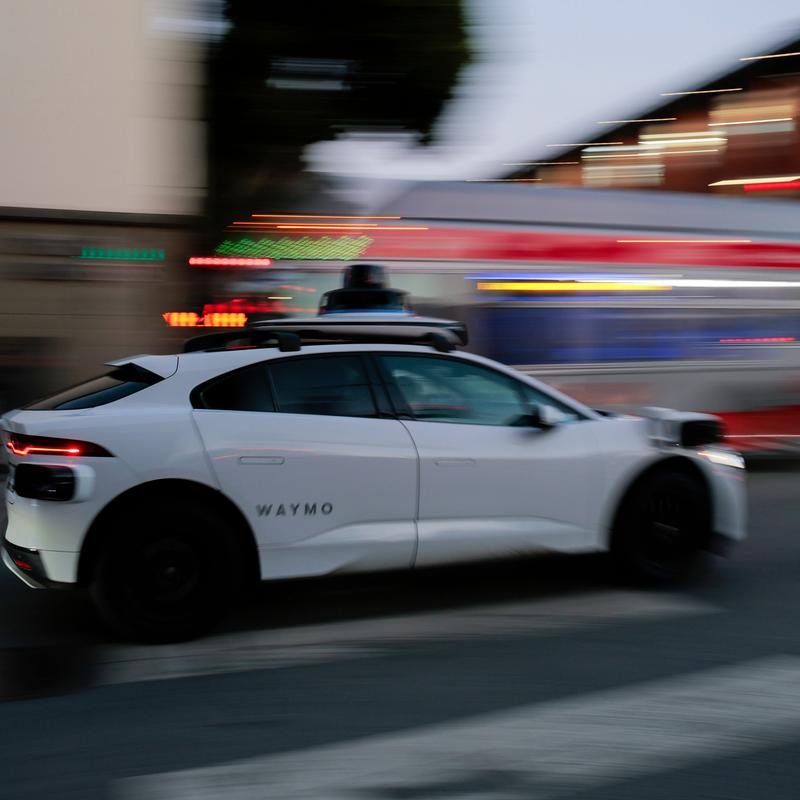
The driver's seat is empty, the steering wheel is turning as though there was a ghost. I can't think of a more uncanny experience, and I haven't been in one yet, and I'm not sure I intend to. The company that's putting these driverless cabs on the road is called Waymo, and as of now, there are about four thousand nationwide.
Staff writer Molly Fisher has been reporting on Waymo, and she lived to tell the tale Molly, you have a big piece out this week in The New Yorker on Waymo and the phenomenon that's sweeping the country, I s- I assume starting in the West Coast. What made you wanna write [00:01:00] about this?
Molly Fischer: Well, I, I initially came to it through some writing I was doing about Zohran Mamdani and his time as the new mayor of New York City, and there was a lot of suspense around the question of what Zohran would do about the cabbies because he's, you know, had this long-standing alliance with New York City's cab drivers.
And the fact that Waymo was looking to come into New York City seemed to present a real conundrum for him because, you know, it's this technology that's really exciting to a lot of people. It has a lot of promise in terms of improving road safety, but it also is something that, in a very visible, concrete way, is in a position to replace people's jobs.
And so that was sort of my, my entry point, but it ended up becoming a much smaller piece than I anticipated of the article as a whole, in part because, you know, the question of when and how Waymo might actually arrive in New York is sort of been tabled for the moment, but also because I just became fascinated with all of the human weirdness around these cars.
David Remnick: When was the first time you ever [00:02:00] stepped into a Waymo?
Molly Fischer: I stepped into a Waymo in San Francisco in June of this year while reporting this story. I took Caltrain, the commuter rail that runs up the San Francisco Peninsula from my mother's home in San Jose- Right ... to San Francisco. I opened the Waymo app that I had just downloaded, and lo, a car arrived, and I climbed in.
It was kind of shocking, actually, to realize how in stride I took this experience, you know? It, it- God ... made me appreciate my own kind of passivity when it comes to climbing into cars.
David Remnick: The editors at The New Yorker must be horrible bastards to make you get in a, get in a car with no driver.
Molly Fischer: Well, well, well, no, but here's the thing.
You know, you say that, and yet no driver is exactly what customers want. I mean, I, I'm not speaking so much for myself here necessarily, but one of the things that really struck me was just that Waymo is very keen to talk about the power, um, you know, understandably, the sophistication of its automated driving [00:03:00] system.
Right. You know, it's able to do this incredibly complex task with an impressive degree of reliability and with what they tout as pretty impressive safety statistics. But what customers overwhelmingly told me they liked about this technology was the fact that there was not going to be someone else in the car, you know?
David Remnick: They don't
Molly Fischer: want the chatting? The driver was... They don't want the chatting. They don't want to smell someone else's food. They want to control the music and the temperature without having to talk to someone else. You know, it's very much, uh, of a piece with the kind of Silicon Valley mindset of enabling people to order food without calling another person on the phone, enabling people to watch a movie without going to a theater.
You know, it's all about this kind of isolated bowling for alone self-sufficiency that you can kind of cast as a broader trend in American life.
David Remnick: What about the weirdness factor? You get in-
Molly Fischer: Let's not cut the weirdness short.
David Remnick: Yeah, you get in, you get in a car and there's no one behind the wheel
Molly Fischer: But the wheel is turning.
The wheel is there, and it's turning, which kind [00:04:00] of adds to
David Remnick: the uncanniness. Okay, that adds to the weirdness factor. Yeah. You write in your piece, "Human drivers make human mistakes. Robot drivers make robot ones." What are the robot mistakes that you learned about while reporting this piece?
Molly Fischer: Well, one robot mistake that's proved really vexing for Waymo is, uh, trying to understand and correctly respond to the stop signs on school buses.
You know, when a, a school bus has stopped- For sure ... and it's, uh, you know, letting kids on or off, a stop sign will pop out on the side. And, you know, drivers in both directions are supposed to stop and wait for that to be done so that kids stay totally safe, and you know, no one's driving... There's no traffic going by as kids are disembarking.
Um, and Waymos have had a lot of trouble with that one. Yeah. And they've put out various fixes for this, and it, you know, has not seemed to, to take. But the, the hypothesis I heard was that, you know, there are a lot of kinds of stop signs out there. Like, there are stop signs that, you know, maybe a construction worker is holding at a construction site, or there's a stop sign that's in [00:05:00] the hand of a crossing guard and is kind of, you know, held loosely at their side while they're waiting by the side of the street corner.
There are stop signs, of course, that are your classic normal stop signs planted by the road. And for the Waymo to get enough training data, basically, on the school bus stop signs, they'd have to pass a lot of school bus stop signs to know that they are responding correctly to that very particular instance as opposed to-
David Remnick: I
Molly Fischer: see
a stop sign by the side of the street.
David Remnick: In the end, what we wanna know that's so basic, is a Waymo safer? Getting in a Waymo taxi, for example, is that safer than getting in a regular old taxi?
Molly Fischer: Well, uh, what I have to say I, I worry will sound like I'm dodging the question, but the reality is that the, the answer to that question is really complicated because there are a lot of different ways you can define safety.
And there are also, even when you try to reduce it to something as seemingly straightforward as crash statistics, there are a lot of ways to define those numbers and set up your statistics to, to kind of, uh, compensate for different things in different [00:06:00] ways. 'Cause you're trying to arrive at a comparison between human drivers on the road and the Waymo driver, and that involves making a lot of choices because, you know, for example, we know that cars that are old are less safe than cars that are very new.
Mm-hmm. Mm-hmm. And there are a lot of old cars on the street. So, you know, if Waymos are all pretty new, to make a really parallel comparison, you'd wanna just be comparing the new Waymos to other new cars. But of course, that's not the reality on the street, so that skews things a little bit. There are a lot of minute choices go...
that go into making the sausage of these statistics, and it's hard to arrive at something that everyone can agree is accurate. That said, Waymo does seem to have very promising figures for how they compare to a typical human driver when it comes to injury-causing crashes. They, they like to say that they are 10 times safer than a human driver.
And while for a host of reasons it's hard to, um, definitively prove or disprove that, it does seem to be a figure that's been received with, you [00:07:00] know, some degree of, of approval and, and m- m- people find it promising at core experts in the field.
David Remnick: What's the geography of Waymos? Where am I gonna find them most around the country and around the world?
Molly Fischer: You'd certainly find the most in the Sun Belt, which shouldn't be surprising just because these are places where there's not a lot of scary weather to contend with. Right. You know, the Waymos are not, at this point, I, I think, understood to be equipped to deal with serious snow or, you know, even in some cases rain has been, has been tricky historically.
David Remnick: Much less, much less black ice. Yeah.
Molly Fischer: Oh, yeah. I would, I would be concerned. Um- Uh-huh ... no, so th- they've been by far the most prevalent in places like Austin, Texas, in the Bay Area, of course, in Los Angeles, in, you know, now parts of Florida, and, uh, Georgia, and Southern California, and, um, you're seeing them in, in that swath of the country.
But now there's certainly interest in testing vehicles and trying to expand to places like New York [00:08:00] or Boston or Washington, DC or London or Tokyo, and, and those cities that I mentioned, um, have not, have not gone into effect yet, you know? You can't yet download the app and hop in a Waymo in New York or Boston or DC.
But that certainly is, is what the company would like to do and where they'd like to be.
David Remnick: But if I'm in less populated areas of the States, if I'm in Central Colorado or Nebraska, I'm not gonna see any Waymos around. Nobody's interested? No, you're
Molly Fischer: not.
David Remnick: It's just- You're not ... it can't, it can't, can't work, or people aren't interested?
Molly Fischer: Well, it's, it's kind of an interesting irony because I think, um, you know, I've, I've, I've heard people who are, are, you know, sometimes Waymo critics or Waymo skeptics to some degree observe that there could be real value in an autonomous vehicle in, say, you know, a, a rural area of a state where there's not transportation infrastructure, where maybe you have, like, old people who have to travel a long distance to get to their doctor's appointments.
Sure. If you could dispatch a robot car to ferry them around, that could be great.
David Remnick: Yeah.
Molly Fischer: But in a place like Midtown Manhattan, where there are [00:09:00] already a lot of transit options, you know, it, it's less clear that Waymo is filling an obvious need. But of course, you know, Midtown Manhattan is the place where you go to make money and where you go to kind of be something that has, has the image that they wanna have and is serving the c- clientele that they wanna serve.
David Remnick: What about around the world? Am I gonna see a lot of this in tech-forward cities like Seoul or Tokyo?
Molly Fischer: I think that seems like it's certainly where the company would like to be. I mean, they, they right now are testing in Tokyo, and, and I, last time I looked at the Waymo jobs page, hiring a number of roles in Tokyo, so, uh, something to look out for, for sure.
David Remnick: Is the world that's envisioned here A world without drivers at all from coast to coast? Or is it just for the purposes of supplementing public transportation in urban areas?
Molly Fischer: It's a good question. I mean, you know, I think that that's, um... I think it would take long enough to dissuade all people from driving ever that no one is imagining that's something that's on the immediate horizon.
But [00:10:00] the, one of the two co-CEOs of Waymo has talked about, you know, envisioning driving as something that you do when you want to do it in a future where these cars are more prevalent. You know, something that you could do in the way that perhaps someone today rides horses as a hobby. You could be someone who drives as a hobby, but, you know, that's, that's probably a long way off.
David Remnick: Do truck drivers have reason to fear for their jobs?
Molly Fischer: Waymo specifically is not a threat to truck drivers, but there are other companies out there and, and there have been other startups that are focused more on autonomous trucking. And certainly the Teamsters have been one of the big anti, anti-Waymo, anti-autonomous vehicle voices- Mm-hmm
as different local governments have tackled the question of whether to permit these cars in their, in their cities, in their states. Um, the unions that represent drivers of trucks and also drivers of, of taxis and, and rideshare vehicles, um, have been really, really concerned about what this might portend for their workforce.
David Remnick: Who [00:11:00] owns Waymo, and is it a competitive business?
Molly Fischer: Google owns Waymo for the most part. They, they started Waymo. Waymo was originally the Google self-driving car project. Mm-hmm. Um, it was a, a team of Google engineers kind of noodling around with Priuses that you could buy at a, a dealership and that they had then outfitted with all kinds of crazy sensors.
But now it is, it is a, a separate thing. It has its own, its own shingle out on, uh, in Mountain View. And, um, it is and is not a competitive business in the sense that there are a number of other companies that are interested in doing this. Uh, Zoox is the, the Amazon self-driving car operation. Tesla, of course, is trying to do its own robotaxis and Cybercabs.
Um, there are, there are a number of people who are interested in this, but it's also true that Waymo is out pretty far ahead of- Mm-hmm ... all these other competitors. They have, um, just a, a vastly larger fleet in vastly more places than anyone else, to the point that, you know, I, I'd heard some people in my [00:12:00] conversations with, um, sort of New York transit expert people, um, talk about anxieties that, you know, if you were to, to regulate and permit Waymo in the state at this point, it would, it would practically...
It would, in effect, be granting them a monopoly just because they are the only people that would be able to- Right ... fulfill the kinds of requirements you might place on a company to demonstrate that it had done X number of miles, had proved itself on X number of metrics. You know, they, they kind of are, are definitely leading the pack at this juncture.
David Remnick: Now, it... for a while there, Elon Musk seemed to be the only person really talking about self-driving cars.
Molly Fischer: Mm. Mm-hmm.
David Remnick: Um, but I think what you're telling me is Tesla has somehow fallen behind Waymo, which is mainly a Google-owned situation. How did it fall behind?
Molly Fischer: Well, I mean, they're pursuing a different business model.
Their focus is, you know, notwithstanding, um, some robotaxi service, cyber cab service in places like Austin, primarily they are concentrating on, um, privately owned vehicles. So, you know, you can go out and buy a Tesla in a way that you [00:13:00] cannot go out and buy a Waymo. Right. So that is kind of a different proposition and means that, you know, you're, you're approaching your clientele and your growth in a different way.
Um, I think it's also true that w- Tesla has run into some trouble with the way that it markets and describes its technology. Tesla describes what it offers as, as a self-driving vehicle, when in fact it's, you know, something that does still require that a, a person be sitting in the front seat and ready to take over if something goes awry.
David Remnick: Right.
Molly Fischer: And so that's, you know, significantly different than what a provider like Waymo is offering, where they are comfortable sending these cars out fully without someone behind the wheel.
David Remnick: Well, l- let's think of it in terms of jobs as we, as we're thinking about AI in general too. In the Let's say that Waymo really spreads across the country- Mm-hmm
and becomes at least ubiquitous in cities. I'm sure it's impossible to come up with exact numbers, but how many drivers do you think will be put out of work by Waymo?
Molly Fischer: It's [00:14:00] not something, and the ke- company is very keen to point this out, you know, it's not something that represents, you know, a switch being flipped, and then immediately all the drivers are out of work.
Um, I think clearly there will still be, you know, no matter what, no matter how good this technology gets and how successfully it's marketed, cases where people do want and need another person in the car. For example, you know, people who need help getting in or out of a car. Right. People who perhaps use a wheelchair or for another reason, you know, want to have a driver there to assist them.
David Remnick: But that becomes a much smaller business then.
Molly Fischer: Potentially. Potentially. Yeah, sure. Um, I mean, I think that, you know, on one hand, there's the practical, concrete question of how many jobs could become obsolete if this technology becomes truly entrenched. But then beyond that, there's also this sort of, uh, more vibes-based perhaps, uh, thing that's going on, where even people who are not necessarily granularly concerned about the labor questions around Waymo are still sort of balking sometimes at the, I guess, [00:15:00] optics you could say, or a- against the idea of a company coming in and putting humans out of work or doing things that, you know, were once done by humans.
Um, and I think that that's something that even for people who wouldn't necessarily talk about their concerns in terms of, of labor questions, you know, you start to see in places where Waymos are prevalent, where people do feel like it's a certain kind of statement to, like, a- arrive at a bar in a Waymo as opposed to an Uber.
You're kind of putting yourself out there as someone who is pro-technology, pro- Huh ... uh, Silicon Valley, pro kind of, you know, this kind of automation in a way that, um, feels like it's a little bit of a cultural signal at this point and in this moment.
David Remnick: I'm speaking with staff writer Molly Fisher. More in a moment.
What's the most frightening story you heard about Waymos?
Molly Fischer: Oh, [00:16:00] gosh. Well, you know, I think the most frightening stories that I heard had to do with the very quality that attracts people to Waymo in the first place, which is, as I mentioned, you know, the idea that you are in a driverless vehicle. You're in a car where there's not necessarily going to be another person in there in the front seat.
Um, not necessarily going to be someone else who is kind of a An outside authority or supervisor or someone who's able to, to take control and help you navigate a difficult situation. And so some of the incidents that I heard about and that I, I talked to the people who had experienced them about, um, had to do with, you know, in one case, a man who was riding in a Waymo late at night in San Francisco, and, um, two men approached the car and began using what he remembers as, as something like a pipe, you know, something big and hard and heavy to hit the windshield- Mm
and hit the windows, and they started climbing on top of the car, and he was terrified. He was alone in this car. It [00:17:00] was... You know, the glass was starting to crack on the windshield. And when he called Waymo support, they basically said that they, they couldn't move the car because it was obstructed. You know, there were people on it, so, like, the Waymo is, is programmed to not drive through people.
So-
David Remnick: What, what was happening? Was it a robbery or it was like a
Molly Fischer: Waymo jack? No. Well, it seemed to be an attack on the Waymo. What he remembers is seeing them, like, climb on top of the car as if they were- Jeez ... trying to attack the lidar. And you know, the lidar is used to help the Waymo see its environment.
It has a number of different kinds of sensors, you know. The most distinctive part of the appearance for sure is, is the lidar that spins on top in a, in a dome on the car. And the police eventually came. He was sitting there for about a half hour, but he realized that, you know, if he had been in this car with a driver, the driver would've gotten him out of there
You know, if you have a, a human driver, they will figure out a way to, you know, uh, manage a totally freaky, unexpected circumstance like that, you know? So I think the [00:18:00] idea that isolation is something we want, and isolation is also something that scares us when we- Yeah ... realize we're alone in our circumstances is, uh, one that I really took to heart because it does feel like, you know...
I mean, when you think about also the people who put their kids in Waymos, which is something that is technically not allowed in San Francisco but also pretty widespread.
David Remnick: Right.
Molly Fischer: The idea, you know, as a parent of putting my kid in a car where there was no one else in the car and just knowing that, you know, not through any fault of the car or through any, you know, misdeed or, or problem necessarily, they could get stuck somewhere.
Something could, you know, something could go wrong unexpectedly, and the idea of a child or someone else who, you know, is, is limited in their ability to navigate that being alone is pretty scary to me.
David Remnick: Well, in Austin, there was a mass shooting in Austin, Texas. Yeah. And weirdly, a number of Waymos blocked the emergency vehicles from getting To the site of the disaster.
What [00:19:00] did Waymo learn from this? Why did it happen in the first place?
Molly Fischer: Yeah. Well, this is a real, um... This is a real problem that Waymo has to contend with right now, and I know that in San Francisco, for example, the mayor has been pretty, pretty pro-Waymo for a long time, and had been someone who was a, a proponent of this technology and of supporting tech in the city, and has recently called for more regulation, in part because of incidents where Waymos were interacting poorly with emergency vehicles, were limiting first responders' ability to do their jobs.
So, like, the company certainly knows that this is something that it, it needs to work on, that... and that people are seeing it fall short. But I think this is, again, coming back to the, the fact that, um, you know, when you don't have a human being who's able to make judgments in the moment behind the wheel, you run into what is called, uh, an edge case, which is to say something that is kind of on the edge of, of Waymo's ability to, you know, navigate its typical circumstances.
And so an emergency vehicle is not something you're going to have to contend with. A, a mass shooting is [00:20:00] not something you're going to have to contend with almost ever when you're on the road. But, you know, if, if, if you are a human, you're going to be able to make choices that accommodate that circumstance in an appropriate way, and the Waymo Driver is not necessarily capable of doing that reliably- Right
quite yet.
David Remnick: Well, it- in some circumstances, it's assuring to have a human being, even though you don't know who the hell the human being is sitting behind the wheel.
Molly Fischer: Indeed.
David Remnick: But in some cases, um, I think people would prefer not to have it, and notoriously, Uber has had some very negative headlines about drivers, about the rate of sexual- Absolutely
misconduct and assault. Um- And here you have no driver at all. Is Waymo assertively going after Uber and Lyft and the other ride shares with human drivers?
Molly Fischer: Yeah, I mean, I think certainly, um, certainly they recognize that women and, and other people as well having- Mm-hmm ... difficult [00:21:00] experiences with rideshare drivers is a real problem in an area where they have a real advantage to offer.
I mean, I, I spoke to many women and, you know, have read accounts from many other women who have, have described this as being a real part of what appeals to them about, uh, about a, something like a Waymo, is that- Right ... they don't wanna have to deal with, with harassment or with, uh, innuendos or just, you know, with the fact of- Sure
of giving a, a man who they don't know their home address, say. Like, I think that that is understandably something that, uh, is disconcerting to people. Um, you know, at, at the same time, I did speak to a woman who, you know, described herself as being really, really cautious about that stuff to me, you know, who said that-
David Remnick: Hmm
Molly Fischer: when she gets in an Uber, she, like, gives them a pickup address down the block from her house because she doesn't want to, you know, give out her home address. Right. She's someone who, like, thinks really carefully about, about safety and is really cautious, and had a really terrifying experience of, uh, sexual assault with a man she got into the Waymo with, who had called the Waymo, which was something that was only possible [00:22:00] because there was not a driver there, and she thinks that, you know, he chose a driverless car because he was looking for an opportunity to assault her.
David Remnick: Jesus.
Molly Fischer: Yeah. Wow.
David Remnick: Finally, I wanna know this. When I see a movie like The Taking of Pelham 1 2 3, both the early version and the later version, one of the cool things about it is that a subway rider somehow realizes that somewhere elsewhere in the city, there's a kind of skunkworks. There's a central command.
Yeah. You- they know where all the subways are and where they're going and how fast, and Denzel Washington and/or Wa- Walter Matthau- ... is trying to deal with all this. And is it r- By the way, great movie, both versions. I get into a Waymo. Okay, I know what's not there. There's no driver, but who knows where the hell I am, and is there a kind of command center for Waymo that n- you know, is following me and making sure I don't, you know, end up in a disaster?
Molly Fischer: Not in the same centralized way you're picturing for the New York City subway, for example. Waymo [00:23:00] does have people, through subcontractors, who are located remotely and, you know, do jobs that include responding to customer inquiries or problems on the road. So, you know, if, um, if your Waymo is stuck, if you are having trouble getting the doors to open, there's a, a customer service agent basically who you can call and who will help you with that.
There are also people who are able to respond to inquiries from the driving system itself. So if the driving system finds itself in a situation that it doesn't know quite how to navigate, you know, for example, a traffic light is out, and it's trying to figure out how and when to proceed, it can... You know, what the company calls this is, like, something like Phone a Friend.
It can phone a friend who's located perhaps in the US, perhaps in the Philippines. You know, there are a number of call centers and, and organizations for people who are handling this. And, um, from there, you know, the, the human can sort of provide some direction. The company has been pretty cagey about this in terms of what they're willing to reveal to the public, I mean, because, you know, u- people are understandably [00:24:00] uncomfortable with the idea- Yeah
of someone being able to watch them while they're on the road. This all seems pretty disconcerting to a lot of people, so I think they, um, they are pretty tight-lipped about what that actually looks like. Um, in response to a Senate inquiry earlier this year, they did say that they have about 70 of these people on duty at any given time and that they are located in, in several locations in the US as well as in the Philippines.
Um, and that's... There's not a lot beyond that that has been publicly established about, about what the company does in terms of remote operations.
David Remnick: All right, Molly, here, here's the moment of truth. Next time you're in San Francisco, and you're not on assignment, are you getting in a Waymo, or are you getting in a cab, or are you getting around some other way?
Molly Fischer: I'm probably getting in an Uber, for better or worse. You know, I don't feel great about that, but I, I think that, um-
David Remnick: You're not sold yet?
Molly Fischer: Well, hmm. Oh, who knows? I might do it. I might do it if I had my son with me. He's intrigued by the robot cars. He's heard me [00:25:00] talk a lot about robot cars. And so I think the novelty for, you know, a three-and-a-half-year-old would probably be strong.
I feel comfortable with that.
David Remnick: The things we do for our children. Molly Fischer, thanks so much.
Molly Fischer: Thank you.
David Remnick: The title of Molly Fischer's piece is We're Learning to Live With Waymos. It's Going Weird. You can find it at newyorker.com and you can subscribe to The New Yorker there as well, newyorker.com.