
Jeremy Strong on Playing Mark Zuckerberg and Other Unpopular Characters
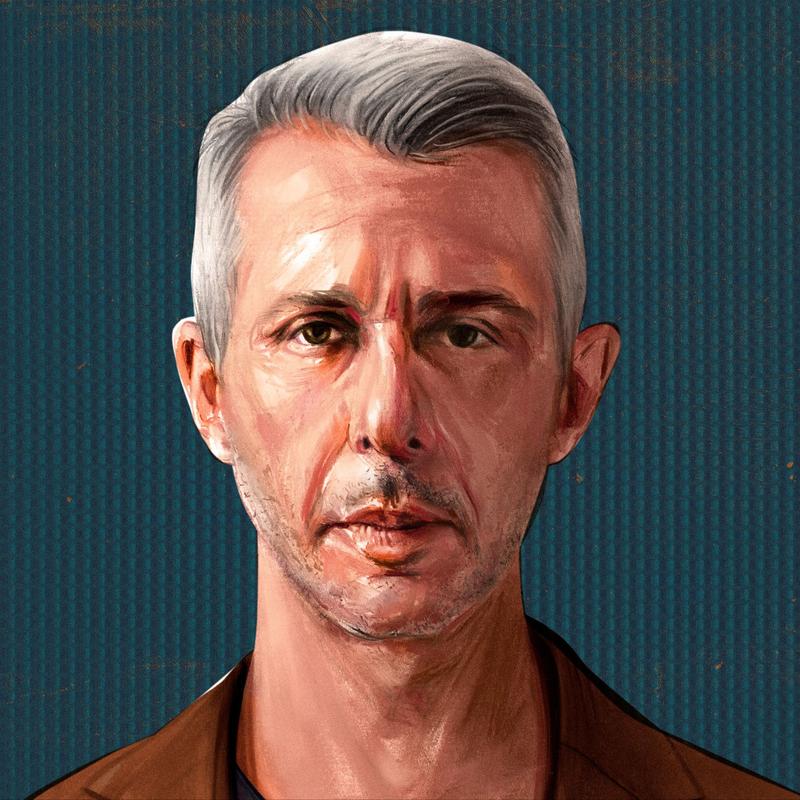
David Remnick: [00:00:00] In 2010, when the film The Social Network came out, Facebook itself was only six years old. YouTube and Twitter, they were even younger. Social media was remaking the internet as we knew it, and the whiz kid, Mark Zuckerberg, who famously dropped out of Harvard to launch Facebook to the world when he was barely old enough to drink, he was hailed as a genius.
16 years later, the world looks very different because of social media, and the pushback against Facebook, Instagram, and other platforms is obviously enormous. Mark Zuckerberg, in some quarters, looks like public enemy number one. The 2010 film was written by Aaron Sorkin, and Sorkin brings us back to Zuckerberg's story now in a sequel, The Social Reckoning.
Clip: I am here to help Facebook, not hurt it, okay? You sent me a message. What would you like to talk about?
David Remnick: That film is set around 2021, as Facebook was dealing with leaks from a whistleblower about the [00:01:00] harm it was causing. Public perception was beginning to turn severely for the worse.
Clip: People around here understand that when I say no, that's the end of the debate.
I'm not two years out of a dorm room anymore, Charlie. Look around.
David Remnick: And playing Mark Zuckerberg is one of the best actors working today, somebody who thinks very, very hard, very seriously, about how to inhabit a complicated character, Jeremy Strong.
I go to a screening of this new movie, and you haven't even opened your mouth where I was thrown back in my chair, just the physicality of you, your posture, your physical bearing, and then of course, it's interacting with my memory of him testifying in Congress and all this kind of thing. It... There's a certain kind of magic that's already happened without you opening your mouth yet, and I want to know what goes [00:02:00] into that.
Jeremy Strong: Well, first of all, that means the absolute world to me, coming from you. Thank you. Um, my task Is to kind of surround the subject as, as completely as possible. Um, leave no stone unturned in, in a kind of investigative mission to learn everything about them, both intellectually and viscerally. And the visceral part is more important because it's ultimately a non-intellectual process, unconscious process.
I'm not thinking about- Mm-hmm ... my posture, how I hold my mouth or jawline. I'm not thinking about the voice. All of that, by the time you walk onto a set, and if it hasn't, you're in trouble, has to have become second skin.
David Remnick: There's another aspect here, is that you've got another [00:03:00] performance of Mark Zuckerberg as a younger man by Jesse Eisenberg in an earlier film written by your director, Aaron Sorkin.
Jeremy Strong: Yeah.
David Remnick: I, I'd love to know h- what role that plays and what role Aaron Sorkin, your director, plays, or does he leave creating the character entirely to you?
Jeremy Strong: I love the first movie, and I think Jesse's a great actor. I didn't really think about what he did in that film. Mm-hmm. That wasn't really something I ever thought about.
I thought only about Mark Zuckerberg. In, in the same way that when I played Roy Cohn, I didn't go back and look at James Woods. I didn't go back- Mm-hmm ... and look at Pacino. Um, if anything, because the anxiety of influence might, uh, you know, that might have an effect. And I think the goal is to own it and to find your version and to connect to your own inchoate instincts and let your intuition guide you.
David Remnick: [00:04:00] Is this a harder thing to do when you're playing somebody who's, quote-unquote, "real," as opposed to somebody who's made up by a screenwriter?
Jeremy Strong: Yeah, it's... I think it's a different set of challenges. And in this case, I mean, I have to attempt to create a character or embody a character with such belief and conviction that you might accept it, and you might suspend your disbelief.
You might forget about Jesse. Mm-hmm. You might even forget about what Mark looked like in- Right ... twenty nineteen in front of Congress. And so that's my only goal.
David Remnick: I think by now, a lot of people are, to put it mildly, fed up with Mark Zuckerberg- Yeah ... in a way they nes- weren't necessarily when they went to see-
Jeremy Strong: The first movie
David Remnick: the first movie. Sure. And by now, he's a, at a different level of wealth and power and influence that was unimaginable even to him. [00:05:00] And you reach out to him. You write him a letter, is that right? I
Jeremy Strong: wr- I wrote him an email.
David Remnick: And what did it say, and what were you looking for?
Jeremy Strong: I essentially said, "You've probably heard that I'm going to be portraying you in this film or a character based on you, and I just want you to know that I take this very seriously, that I'm trying to learn everything, and that I'm going to approach it with respect and veracity as much as possible."
David Remnick: Yeah. And what do you hear from him?
Jeremy Strong: Well, the response, I don't feel, uh, that I can speak to that because it was private, and I don't wanna violate that, but-
David Remnick: What was the spirit of the response?
Jeremy Strong: I think the spirit of the response, uh, was, um, hedged but responsive. Uh, uh, and, and I wouldn't say that he was grateful.
I [00:06:00] think if I were Mark, I would be rightly cautious and wary- Mm-hmm ... of another film being made, given that there's a lot about the first film that is fictional. This is Aaron Sorkin's version of-
David Remnick: For sure, and you can hear it in the speech rhythms- Yeah ... and the, and the way the... it's very Sork- Sorkinian.
Jeremy Strong: Yes.
David Remnick: Um, e- So I'm
Jeremy Strong: playing-
David Remnick: Even to the point where he parodies himself a couple of times and, you know, you know, "Can we have the room?" I think somebody says at some point- Right ... in a kind of West Wingy-
Jeremy Strong: Right ...
David Remnick: uh, way of self-awareness.
Jeremy Strong: You know, I think one of the things that I'm, I, I was trying to understand was this transition into a wartime CEO, essentially, somebody who's besieged and embattled and yet determined, someone who it is my belief is idealistic and, and principled, if wrong.
At the time the movie starts, you know, we've had 2016 election interference by state [00:07:00] actors. We've had the Macedonian trolls misinformation campaign. We've had Rohingya violence against the Rohingyas, Muslims in Myanmar in 2014. You know, all of these things create this intensification of pressure on this person, this crucible of pressure Contending with content moderation of hate speech, terrorist content, harmful content, child exploitation, election misinformation, all of these things.
Under investigation by the FBI, the DOJ, the SEC, the FTC by 2019, and also by 2019, 100 billion pieces of information flowing across their platforms every day. So part of my job in understanding him and sort of fighting his fight is, and this is gonna be an unpopular [00:08:00] thing to say in this climate- Mm-hmm
is, is, uh, trying to have a kind of empathy, uh, an empathetic understanding of this person's struggle.
David Remnick: But, but the empathy is not a political empathy. It's an empathy of trying to imagine yourself as that person- Yes ... seeing the world as he
Jeremy Strong: might. Yes. It's, it's, it's, it's a... I would say the, the empathy is a necessary and perhaps the vital component of this art form, which is to be, in a sense, impartial.
Uh, I, I am representing him. You know, Aaron said that when he writes a character, it's as if that character is arguing to God why he should be admitted to heaven. And I think, uh, I would recuse myself from playing the role if I was going to inject my own subjective judgment or condemnation of a character.
David Remnick: Did you change your view of Mark Zuckerberg when you started out as just a citizen who, [00:09:00] like anybody, was reading about him, was watching him? Did the process of going so deep on him as a character and then playing him change your view of the human?
Jeremy Strong: Sure.
David Remnick: Yeah. How so?
Jeremy Strong: I mean, when I try to put myself in these shoes and feel the weight of these incredibly complex frontline decisions that have no precedent in the history of humankind, weighing on the one hand free speech and on the other hand safety, 'cause ultimately every content moderation decision is about those things- Right
voice versus harm. On the margins, those issues are incredibly complex. So that gave me a different kind of empathy, uh, for the [00:10:00] person and people having to make those decisions and, and failing to make them perfectly. Now, I should say I'm not ambivalent about, you know, how bad short-term dopamine-driven feedback loops are on our, on the mental health of our young people.
I'm not ambivalent to those things. I'm not ambivalent to the heinous fallacies of Alex Jones or to Holocaust denialism being on some of those platforms. Just to be really clear about that, I, I think those things are unequivocally
David Remnick: wrong. Well, you played Roy, Roy Cohn, and I, I wonder when the person, when it's so hard to find the good in them, like Roy Cohn, maybe I'm getting, maybe I'm getting it wrong.
That seems like a really hard task for an actor.
Jeremy Strong: Well, you know, Roy Cohn was called by [00:11:00] someone the polestar of human evil, and Ken Auletta told me he was the most monstrous person he'd ever encountered. So, so yes, it, it, that is hard, and I'm not sure looking for the good is the right way to frame it.
David Remnick: But you're, what you're saying is not looking for the good, but looking for how that person sees himself and the world is the important thing.
Jeremy Strong: Yeah, I mean, I think you're trying to see through their eyes, and you're trying to understand their struggle.
David Remnick: Mm-hmm. Who's the model for you? Uh- Who's the, who's the actor that exemplifies both in process and result what you'd like to be? You had a Daniel Day-Lewis-
Jeremy Strong: Yeah,
David Remnick: I- ... figure in your past in that way.
Jeremy Strong: Sure. Yeah, I mean, Daniel, you know, I, I, I worked for Daniel as his assistant. You were his assistant, yeah. Which was a profound and revelatory experience for me. And of course, he's someone that so many of us have been so [00:12:00] inspired by. His commitment, his resolve, his willingness to, you know, in his words, make a fool of himself.
Mm-hmm. You know, to go out on a limb. But this, you know, Meryl is certainly somebody that we all feel that way about- Meryl Streep ... as well, Meryl Streep. Dustin Hoffman, you know, who recently said to me, "I don't know how I did it," and you feel like you'll never be able to do it again each time.
David Remnick: I'm speaking with the actor Jeremy Strong.
He stars in The Social Reckoning, a new film about Mark Zuckerberg and Facebook. We'll continue in just a moment. This is The New Yorker Radio Hour.[00:13:00]
This is The New Yorker Radio Hour. I'm David Remnick, and I've been speaking today with Jeremy Strong. Strong stars as Mark Zuckerberg in The Social Reckoning, Aaron Sorkin's latest film. Many critics consider Jeremy Strong the Dustin Hoffman or Al Pacino of today. He's played Kendall Roy on Succession, along with Roy Cohn in The Apprentice, and recently Bruce Springsteen's manager, Jon Landau.
He's well known in Hollywood for an immensely intense level of preparation for his roles. For example, he might stay in character for long stretches of time during filming or speak only in the accent of his character even while off the set. We'll continue our conversation now.
How much is your approach, um, helpful to a director and your fellow castmates? How much does it throw them off? You, you're, you're, you're super involved in these things. When you did your own research on Roy Cohn for [00:14:00] The Apprentice, for example, you ended up, you yourself, adding a scene to the movie that wasn't in the script that had to do with diamond cufflinks, if I remember.
Jeremy Strong: Oh, yeah. Yeah, yeah.
David Remnick: Um, is that something- Yeah ... that's appreciated by the people around you, or how does this work?
Jeremy Strong: I mean...
David Remnick: You're laughing.
Jeremy Strong: No, I, I, I mean, I think, um, I can't really speak to that. Of course, some people seem to have been, uh... It is never my intention to interfere with anyone else's experience or anyone else's way of working.
First do no harm, right?
David Remnick: Right.
Jeremy Strong: But commit to your fucking, to what you're doing, and utterly.
David Remnick: Meaning you get frustrated sometimes with other people who are or are not?
Jeremy Strong: No, just meaning that I'm just there to commit utterly to serving the material. Right. And so if [00:15:00] some people, uh, feel, um, that I'm taking it too seriously- Yeah
or it changes the molecules in the room in a way that makes something uncomfortable, I guess that's something that I don't feel that I need to apologize for because I believe, and I think the directors that I work with all believe, that it's in service of the- Mm-hmm ... material. And I personally think that a lot of the reactions to it are, um, have a personal-
David Remnick: Right
Jeremy Strong: nature.
David Remnick: That hurt
Jeremy Strong: Uh, what do you mean?
David Remnick: Well, let's talk about what we're talking about in this sense. So we met last year at the Telluride Film Festival. Yeah. I saw you, and I really admire you. And I'd seen you in any number of, of films, and I thought I should walk in the other [00:16:00] direction because we had published a profile you-- of you by Michael Schulman in 2021 that I read as something that was about a serious artist being not self-serious in the der-derisive sense, but serious.
And yeah, there were people in it that, you know, poked fun at your method and because they did it a different way, and I read it an entirely different way. I did not read this as a profile that was making fun of somebody above all or anything of the like. But I know that you were hurt by it, at least in the, in the immediate aftermath of it, that you didn't like it and saw it as a betrayal of trust, I think is the phrase you used.
And these moments of what you-- which I, I admired your honesty in that piece and openness. That's what was rare about it and startling. But you didn't feel that way, certainly not in the [00:17:00] immediate aftermath.
Jeremy Strong: Um I would only say that what I shared, what I talked about is a betrayal of trust. Mm-hmm. I feel like, you know, it could have been met with...
'Cause I've had other different experiences with different journalists. Right. It perhaps could have been met with more compassion. Mm-hmm. Uh, a- and, and that's what I would have wished for. But listen, you know, all's fair in love and war. So I think the thing about this film, this work, the work that I care most about, Roy Cohn, you know, these are right on the fault line of, of everything that's going on in our world right now.
And so if I take my job seriously, it is commensurate with the kind of subjects that I feel that I'm working on.
David Remnick: You went on this... Uh, did a Super Bowl commercial to make fun of your own seriousness in the wake- Yeah ... of that [00:18:00] profile. Uh, a, a Dunkin' Donuts- Yeah ... uh, commercial, which was pretty hilarious.
Why'd you do that? Did you feel you had to take the air out of that imagery of s- self-seriousness?
Jeremy Strong: No. You know, to, to be honest- Or just have
David Remnick: fun ...
Jeremy Strong: it, it was really that I was asked to do it. Ben Affleck asked me to do it and, and the, the, the pitch of what it was was not something that excited me and then-
David Remnick: So you rewrote it
Jeremy Strong: and then I rewrote it and just, you know, had an image of, I think it's Marty Sheen in Apocalypse Now coming out of that sludge. That's right. And I sort of had, like, a middle of the night image of somebody coming out of coffee beans. So it just evolved from there. There's nothing, you know... It wasn't a... But Enemy of the...
The Ibsen play was a response to that profile for me because Ibsen had written Ghosts, which he felt like- Mm-hmm ... was a deeply personal expression that was met with ridicule and scorn by people who he thought would meet it with, uh, understanding and approbation. And, and Enemy of the People, [00:19:00] uh, which is, you know, a, a, a, about someone attempting to tell the truth to a community who sees himself as a servant of the people but is called instead an enemy of the people.
Clip: Right.
Jeremy Strong: You know, this ongoing question about, like, how do other act... How does it make other actors feel? It feels along those lines of trying to make me into an enemy of the people when I strongly see my job as a servant of... Not that you... That's what you're trying to, to do. Um- No,
David Remnick: I... In a million years, I wouldn't have read it like that.
Jeremy Strong: But-
David Remnick: But I'm not you ...
Jeremy Strong: but, um, but you know- I think that what Aaron is doing, The Social Reckoning is about this. The big question of this movie, and I think a question that hangs over, you know, like the sword of Damocles over some of these CEOs, is the question that was asked to Benjamin Franklin in 1787 outside the [00:20:00] Constitutional Convention.
You know, what, what have you given us? A republic if you can keep it. Mm-hmm. And I think that, you know, those are-- That's what's at stake in this movie as Aaron sees it. Um, these issues of truth decay, of the denial of truth, you know, these things are so potent, and they're so important that to me it warrants just being c- completely all in to show up and give these things everything I can possibly give them.
So, so yeah, I... You know, if I have a Polish voice for those seven months, um-
David Remnick: Which is for another film. Yeah.
Jeremy Strong: Which is for this Peter Morgan- Yeah ... film, The Boys from Brazil. Uh, uh, that's just, uh, you know, that- that's much ado about nothing.
David Remnick: So meaning it's in service to something.
Jeremy Strong: Yeah. Yeah.
David Remnick: You were in a film about The Chicago Seven.
Jeremy Strong: Yeah.
David Remnick: You played Jerry Rubin, who was the great [00:21:00] comedian radical of that group.
Jeremy Strong: Yeah.
David Remnick: I remember as a kid reading his classic book, Do It.
Jeremy Strong: Yeah, great book.
David Remnick: And at one point, you wanted Aaron Sorkin to spray you with tear gas, you know, for the verisimilitude of what was happening at this demonstration. And Aaron Sorkin took your suggestion in his telling, but he decided that it might hurt a lot of people and...
But it was, it, it was an example of your You know, some would call it craziness and others would call it devotion to the, to the craft or n- the need for some sense of, um, realism.
Jeremy Strong: Sure. Well, I just, you know- What, what
David Remnick: kind, what is that all
Jeremy Strong: about that- I wanna, I wanna kind of demythologize that a little bit because-
David Remnick: Go ahead.
Go ahead ...
Jeremy Strong: you know, first of all, you're, what you're alluding to is what happened in Grant Park, uh, between the Chicago Police and the- The- ... and the Yippies and everyone, you know- The Democratic
David Remnick: Convention of '68.
Jeremy Strong: Yeah. Mm-hmm. Ev- everyone who was protesting the war in Vietnam and the [00:22:00] Democratic Convention.
And, you know, if you watch Haskell Wexler's incredible documentary- Mm-hmm ... Medium Cool, you're, you're right in there and you feel this sort of authoritarian police state and the incredible, uh, violence that was happening. So I think what I want to do is capture, uh, what was at stake- Mm-hmm ... and what was happening and what those people were putting themselves through, what they were putting on the line.
Now, what I wanted to do, I should, I wanna be very clear, involved no one else and would have involved no one else. Fair enough. It was f- you know, for the purpose of a close-up and to have the physiological effects of what that would
David Remnick: be. Of, of your eyes burning
Jeremy Strong: and yeah. So that I, you know, I don't really...
You know, the goal in a sense, you know, Brando put himself in a bathtub of ice once to, to get a certain effect of numbness. So you, you, you don't wanna act is the point. You don't ever wanna act.
David Remnick: You, I, I had seen you, as we all had, in s- smaller roles, but then [00:23:00] Succession came along And you play this incredibly complex, sad, damaged, intelligent, unaware, aware-- uh, it, just an incredibly complicated character.
But this one is neither entirely made up nor based in a very clear way on a character like Mark Zuckerberg. When you're looking at it through the lens of the Murdochs, which is the most obvious model, is it there for you just to ch- pick and choose from characteristics? How did you create the character of Kendall Roy in concert with your colleagues?
Jeremy Strong: Yeah, you're, you-- I think you're like a detective and you're just looking for clues, so you read everything. Each time it's different. You really kind of start from nothing every time. Uh- But,
David Remnick: but this time around, you don't contact James Murdoch or anything.
Jeremy Strong: No, because also I don't think it was [00:24:00] certainly that family along with-
David Remnick: Others
Jeremy Strong: a lot of other families are in the genome of what Jesse wrote, but it's not a one-to-one. Uh, it's, it's not, I would say, about them.
David Remnick: Have you ever indulged in therapy? And if so, is it helpful in this, um-
Jeremy Strong: Uh ...
David Remnick: work?
Jeremy Strong: I mean, sure. I've, I've, I've, I've had therapy. I've read a lot about psychology. I'm married to a psychiatrist.
Um, is it helpful in this work? Not really because, I mean, uh, in, insofar as it gives you a deeper understanding of human psychology, sure.
David Remnick: But an understanding of yourself and-
Jeremy Strong: I'm not sure- ... and
David Remnick: your resources ...
Jeremy Strong: I'm not sure yourself You know, w-what I'm trying to do is disappear into a role. That's what my heroes [00:25:00] did.
That's what... When you see Ben Kingsley play Simon Wiesenthal in The Murderer is Among Us, and then you see him play Adolf Eichmann, you know, a few years ago, like, I don't see the guy anymore. I just see those characters. So that, that for me has always been the Holy Grail.
David Remnick: Do you care how he will react to this film, how Mark Zuckerberg will encounter this film?
Jeremy Strong: Uh, y- y- I do, yeah. I
David Remnick: do. You do.
Jeremy Strong: Yeah.
David Remnick: What reaction would disappoint you or upset you?
Jeremy Strong: I mean, I think my hope is that the film is a dialectic rather than a polemic, rather than... There's a kind of trend generally of, like, it's all Facebook's fault, like all of it, everything.
David Remnick: Mm-hmm.
Jeremy Strong: Now-
David Remnick: Including the weather.
Jeremy Strong: Yeah, just- Yeah ... it's all their, it's all their fault, and I don't think that that is a... You know, when [00:26:00] we talk about truth decay and the deterioration of civil discourse, our storytelling plays a really important role in that. So I personally, and it's why I reached out to Mark, and my feelings as we were doing it, 'cause I was defending him a lot when we were making the film, to my director.
David Remnick: What were you defending to Aaron Sorkin specifically?
Jeremy Strong: Just arguing for Mark's point of view, arguing for-
David Remnick: Because you thought he was right, or you thought that's how he would see the world?
Jeremy Strong: That's how he would see the world. It's
David Remnick: a big difference.
Jeremy Strong: Yeah. I mean, I sent Aaron emails as Mark sometimes at night.
I
David Remnick: see.
Jeremy Strong: But I'm not... I've taken Jeremy out of this at, at- Right ... at that point, which I know sounds crazy, but it's really not. It's about sort of negative space. You wanna create room to enter into this other person's experience.
David Remnick: Is there an afterlife to it? You finish a role, it's wrapped, it's ready to air.
Does it still live inside you, or is it gone? [00:27:00]
Jeremy Strong: I think I'm changed by some of these things. You know, they take you places experientially. I always answer with other people's words because they're better than mine. So I'll say there's a poem that I really love by Stanley Kunitz that you might know called The Layers.
And he writes, "I have walked through many lives, some of them my own, and I am not who I was, though some principle of being abides from which I struggle not to stray."
David Remnick: Jeremy Strong, thank you.
Jeremy Strong: Thanks, David.
David Remnick: Jeremy Strong. He plays Mark Zuckerberg in The Social Reckoning, which opens next week. And you can read our profile of Jeremy Strong by Michael Schulman at newyorker.com. And you can subscribe to the magazine there as well, [00:28:00] newyorker.com.