“Fat Swim” and Literature’s Fatphobia Problem
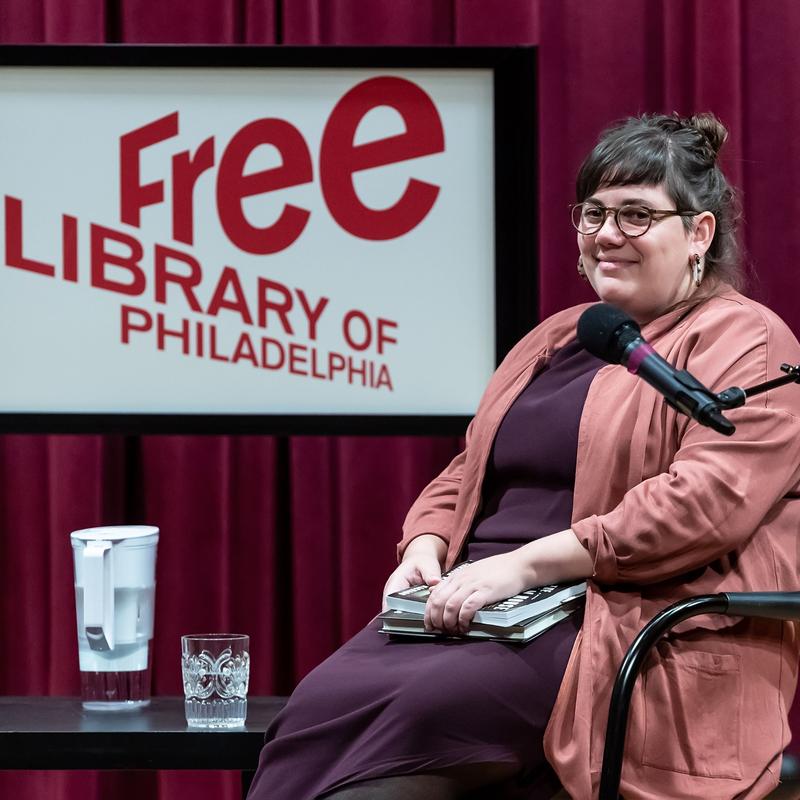
David Remnick: Jennifer Wilson writes about culture for The New Yorker, culture in many forms, everything from the latest in literary fiction to the boom in prenup agreements. Jen sat down the other day for a conversation with the author of a new book called Fat Swim.
Jennifer Wilson: I first met Emma Copley Eisenberg around seven years ago in Philadelphia, where we both lived at the time. She had created a literary organization called Blue Stoop to help connect the city's community of writers. Now she's out with Fat Swim, a short story collection set in Philadelphia. The characters are vibrant, and many identify as fat and are resentful that they live in a world that wants to limit their cravings for food, for one another, and for life. Emma is one of the foremost thinkers about fatphobia in literature, but also in American culture more broadly. It was one of the reasons why I was just very excited to have the opportunity to talk to her.
David Remnick: Here's Jennifer Wilson talking with Emma Copley Eisenberg.
Jennifer Wilson: The book is called Fat Swim. It's a collection of short stories. The first story is also called "Fat Swim," and it begins with an eight-year-old girl named Alice looking out her window.
Emma Copley Eisenberg: Yes. That story was the first time I was like, "Okay, I think I'm writing a collection of stories that has a real coherent, I would call it, a plot throughline through the stories. She sees this group of fat women who live in her neighborhood, she lives in West Philly, and has some complicated feelings where she's identifying with them and aroused by them and wants to be a part of their group, but also feels foreign because she's a kid and they're adults.
There's this moment, I think, where Alice sees, just some long leg hair on one of the women at the pool, and the wind is blowing it. They see her looking, and they're like, "Do you want to touch it?" and she's like, "Yes." I think it's an interesting moment because leg hair, it's not forbidden, it's not like one is like, "I cannot have long leg hair." It's certainly part of feminist reclamation movements of, "I can have whatever body hair I want," et cetera, but it is still this very intimate thing where we don't usually touch each other's leg hair, I guess, or body hair at all.
I thought, "There's something interesting to me about what," it just happened as I was writing the story because I was just like, "Alice wants to be close to them. She wants to be close to their bodies." I think also we underestimate how much kids are always looking at the bodies of adults, being like, "Am I like that, or am I different from that?" I think the whole story is, in many ways, Alice asking, "Who am I? What does my body mean? Do I get to say what it means, or are other people going to tell me?" That she's looking at these adult women who are like her but also really far away.
Jennifer Wilson: Then you have another story called "Beauty," which to me is about the real material economic consequences of fatphobia. Can you set up that story for our listeners?
Emma Copley Eisenberg: Yes. Essentially, it's a story about a woman who works at a beauty startup with these friends and then is essentially cast out.
Jennifer Wilson: It's a beauty brand for athletes.
Emma Copley Eisenberg: Yes, athletics.
Jennifer Wilson: It's called Lavender. Once the company starts to get some interest from investors, they start to have opinions about what these three women look like.
Emma Copley Eisenberg: Exactly. It's the people that are associated with a beauty brand become not just spokespeople but physical manifestations of what the brand means, and this character does not fit what they want the brand to mean as her body changes. I think there's a lot in here, too, of people's bodies change over their lifetime. I feel like that's something that I've thought a lot about. I keep hearing about this book and readers reacting to it of people are like, "We think there's this category called fat people, and then there's other categories called thin people." There's all these ways that people are like, "Oh, you're a former fat person," or something, but it's also you don't know what your body will become in 10 years or 20 years.
The way of talking about people's bodies may become surprisingly relevant to you, reader, who is not yet ready for that. This person's body changes a lot. She's living in this really isolated part of Pennsylvania that barely has internet access. I think the story for me is also a lot about the internet, and a lot about what it feels like to try to drop out of the internet and how impossible that is, and the ways that being perceived and being reflected back on the internet can become this place where, without that, we hardly know ourselves anymore.
Jennifer Wilson: I wanted to ask you about Ozempic because related to this story, Beauty, there's been some reporting on people who take Ozempic and other brands of GLPs because they say that they feel like they need to to get ahead at work.
Emma Copley Eisenberg: Yes. I saw that article. I know.
Jennifer Wilson: A lot of people are saying that they're using Ozempic and other GLPs not because they necessarily have a problem with the way that they look but because they feel the outside world does. There was an article in The Cut about ordinary people, real estate agents saying they felt that they needed to lose weight to keep their job. That our images are everywhere now, and we were supposed to all be brands. I just was wondering, what has Ozempic meant for the fat liberation movement?
Emma Copley Eisenberg: I feel like it would be impossible to summarize all of the discourse around that because it's so variant and multi-layered, but I think there are a few different views on that. One is, indeed, that taking Ozempic or any other GLP-1 and becoming smaller to conform to a societal norm is counter to the fat liberation movement. I think there's certainly people who believe that. I think there's also a lot of folks who want to acknowledge medically, there's many reasons why people take GLP-1s that are productive and important. Actually, GLP-1s have been around since 2006 or so and been prescribed relatively safely.
I think it has certainly challenged the fat liberation movement to clarify like is the fat liberation movement fundamentally fat-positive, or is it more about body autonomy, which, again, is self-determination? I think there has not been a real answer to that. I don't know that we'll see one for quite some time, but it's prompted that conversation.
Jennifer Wilson: It's incredible because the CDC, I think, most recently reported that around 75% of Americans are "overweight," and we can talk a bit about that term. It's just unbelievable because when you look at popular culture, I don't know if there have been studies, but I'm just going to spitball here, I think it's less than 75% of characters in movies and TV shows are fat or overweight, as the government says.
Emma Copley Eisenberg: Totally. It's so interesting to me that so "overweight" and also "obese," those are words that, yes, they come from the medical community like you're saying. I think for me, they're such bummer words because, one, it implies there is a correct weight or correct size to be, which has been debunked so many times by scientists and medical folk. Also, I think even taking the health issue out of it, I don't want to be described in a medical context when I'm writing art or when I'm reading art. It's very strange.
I think also, for me, it's just really lazy craft. On a craft level, I see so much use of those words in contemporary fiction, literary fiction, and I'm like, "That doesn't tell me anything." To say the character is overweight, I have no further visual information. I have no further insight into their presence or the way they would be in a room, which is what I care about as a reader, I'm like, "I want to know how they are in the scene and what's happening, and how to visualize them."
Jennifer Wilson: You're also a literary critic.
Emma Copley Eisenberg: Occasionally, like in Moonlight.
Jennifer Wilson: Occasionally. In Moonlight. You have a newsletter called Frump Feelings. You wrote this entry that was titled "Fatphobia is the Literary World's Final Frontier." In that post, you talked about fatphobia in contemporary fiction and the work of writers like Zadie Smith, Gillian Flynn.
Emma Copley Eisenberg: Lauren Groff. Jonathan Franzen.
Jennifer Wilson: Yes. When you write about "Gone Girl," you talk in particular about a scene where Amy is telling the reader that she's gained weight and that she wants the public to remember her as pale, thin Amy. You point out that moment as an example of fatphobia in the text. I'm wondering, how do you decide when a text is fatphobic versus representing fatphobia, including a character's internalized fatphobia?
Emma Copley Eisenberg: For sure. I think how I personally think of it is, is the body's changes, the body's desires, the body's size, all these things, are those elements crucial to the text, crucial to the plot, or not? I think in the case of "Gone Girl," they're not. There's nothing in that book that really explores Amy's experience of or ambivalence about being embodied, except for perhaps her ambivalence about having a child that is explored a bit.
If the book had really delved into the experience of Amy trying to maintain this small body, and we learned about her food intake, or we learned about the way that she moves through the world, if we saw her obsessing over that, or going to the gym, or having friends, for which that was really an important element of her story, I would be like, "That comment makes complete sense." It just was completely ancillary to the plot, which, again, by plot, I mean the main thread or the logic of the book. I also look at point of view a lot, so, for example, in Crossroads, a Jonathan Franzen novel.
Jennifer Wilson: I should say you dedicate one of your stories, Beauty, to Jonathan Franzen.
Emma Copley Eisenberg: I did. It's like the youth are dedicate parentheses pejorative or dedicate parentheses complimentary, and this is definitely dedicate parentheses pejorative. Yes.
Jennifer Wilson: Why?
Emma Copley Eisenberg: In Crossroads, which is a multi-POV novel, and the introduction of one of the main characters is the overweight person who was Marion, and then a few sentences on, I'm paraphrasing, but it's like, "There was no relief from her body, and there was no angle that you could see her on the street that would make you want to see more of her." I felt sort of slapped, I think, when I read that sentence in the book because to me, it was so dehumanizing.
That idea that Marion is disgusting, and also pathetic, and also aesthetically intolerable is present in many POVs throughout the novel. I think it's a POV thing to me as well. Or in the case of Ottessa Moshfegh, over a body of work, you can see the same themes emerging, which critic Andrea Long Chu wrote about at length. I think about it over the course of a book in many different characters' points of view, or over a body of work, but it's impossible to know for sure.
The thing is all of us have internalized fat. We live in America. Every single one of us, me, all the people I know have internalized this idea that to be fat is to be disgusting, is to be less human, and so it's impossible to not have that. I am not really interested in, and I don't do this in Fat Swim, like I don't create a world that's a utopia, where these sites of oppression, not just fatphobia but also racism, also prejudice against folks with disabilities, that all exists in the book because it exists in the world. I feel like my main promise to the reader as a fiction writer is to represent the world as it is, which includes all of those things.
The story of Beauty includes a lot of what we might call internalized fatphobia, even though it's dedicated to Jonathan Franzen. Because I was like, "I want to write a Marion," so the main character of Beauty is named Marion, "I want to write a Marion who the reader is begging to see from every angle, who has a self-possessed sexuality that is really unapologetic and also quite strange." In that way, I'm very grateful because writing out of spite can be extremely motivating as well.
Jennifer Wilson: All of these stories are either set in Philadelphia or what I think of as the Philadelphia diaspora, which includes the Jersey Shore, the Poconos.
Emma Copley Eisenberg: New York City.
Jennifer Wilson: New York City. What does it mean to you to be a Philadelphia writer?
Emma Copley Eisenberg: I think I did not set out to write another Philly book.
Jennifer Wilson: Your last book was a novel, Housemates, which was set in a communal living situation in West Philly.
Emma Copley Eisenberg: Yes. I was like, "I've written my Philly group house novel." I think Philly just has its hooks in me, and I can't seem to get away, which I think is an experience for a lot of people, for one. I think I've always been really excited and nerding out about books that have a geographical center and the characters orbit about that geography. Bryan Washington's Lot, I love what he does with Houston and the way all the characters orbit around these different neighborhoods of Houston, and connect, and date each other, and hurt each other, and go back into their apartments, which are in different parts of town.
Even though I wasn't conscious, I think I have always had a soft spot for those kinds of books. I've been there 15 years now, and Philly is an extremely-- I think we're an extremely sensory city, like everyone's always yelling at each other, people are sitting outside in the stoop talking constantly, throwing stuff, chatting, sweating, cursing, whatever.
Jennifer Wilson: It's glorious.
Emma Copley Eisenberg: Glorious. I know. They grease the poles so that people won't climb them. I think there's a real sense of the public street as a place where stuff happens, I think, in Philly, which I'm really interested in. I think there's an interconnectedness that you've probably experienced being a native Philadelphian where it's anywhere you go, you're like, "Oh, that person knows my cousin, who knows my friend." It's just you always find someone you know. I think that sense of being linked is very in the book, too. To me, I think that--
Jennifer Wilson: It helps create a short story collection where there's interconnectedness.
Emma Copley Eisenberg: Exactly. Philly is really interconnected, whether you want it to be or not.
Jennifer Wilson: Emma, you have a book coming out, but you also have a billboard. Can you tell us a little bit about the billboard that you took out to not just to promote your book but to convey a plethora of messages? It's someone in a pool.
Emma Copley Eisenberg: The figure on the billboard is subtle, if you will.
Jennifer Wilson: Yes. I didn't notice that there was a person there at first.
Emma Copley Eisenberg: Exactly.
Jennifer Wilson: Underwater.
Emma Copley Eisenberg: Under pool water.
Jennifer Wilson: Under pool water.
Emma Copley Eisenberg: Yes. It's blue, has the pool water effect, and then layered underneath the pool water effect is a voluptuous naked figure with a very delicious bottom, and some fat folds, and a stomach that protrudes over the thighs. The words are, "Your gut is a terrible thing to lose," and obviously, "Ha, ha, play on. The mind is a terrible thing to waste." Also, with all these messages, everyone's like, "The body keeps the score, and the body knows things that the mind doesn't." I'm like, "Hmm," but like, "Who am I? Am I my body, or am I my mind, or am I both?" No one really has the answer to that.
I wanted to think about this idea of the gut. Everyone's always like, "Trust your gut. That's where the wisdom is supposed to live, and that's where your most selfiness is supposed to live," but at the same time, "Our gut is disgusting and something to be lost and made smaller." I'm like, "That is a strange contradiction." I hoped that by having that message up there with this sensual, subtle fat flesh, that it would be a way for people to just start to ask that question of, "What's in the gut? Is it disgusting and morally bankrupt, or is it all-knowing and the root of all the meanness? If it's both, what does it mean that everyone's trying to lose theirs?"
Jennifer Wilson: Thank you so much for being here, Emma.
Emma Copley Eisenberg: It was such a delight.
[music]
David Remnick: Emma Copley Eisenberg's new book is called Fat Swim. She spoke with Jennifer Wilson. You can find Jen's writing, including recent pieces on Elle Fanning and a memoir by Arsenio Hall, at newyorker.com. You can subscribe to The New Yorker there as well, newyorker.com.
[music]
Copyright © 2026 New York Public Radio. All rights reserved. Visit our website terms of use at www.wnyc.org for further information.
New York Public Radio transcripts are created on a rush deadline, often by contractors. This text may not be in its final form and may be updated or revised in the future. Accuracy and availability may vary. The authoritative record of New York Public Radio’s programming is the audio record.