Andrew Ross Sorkin on What 1929 Teaches Us About 2025
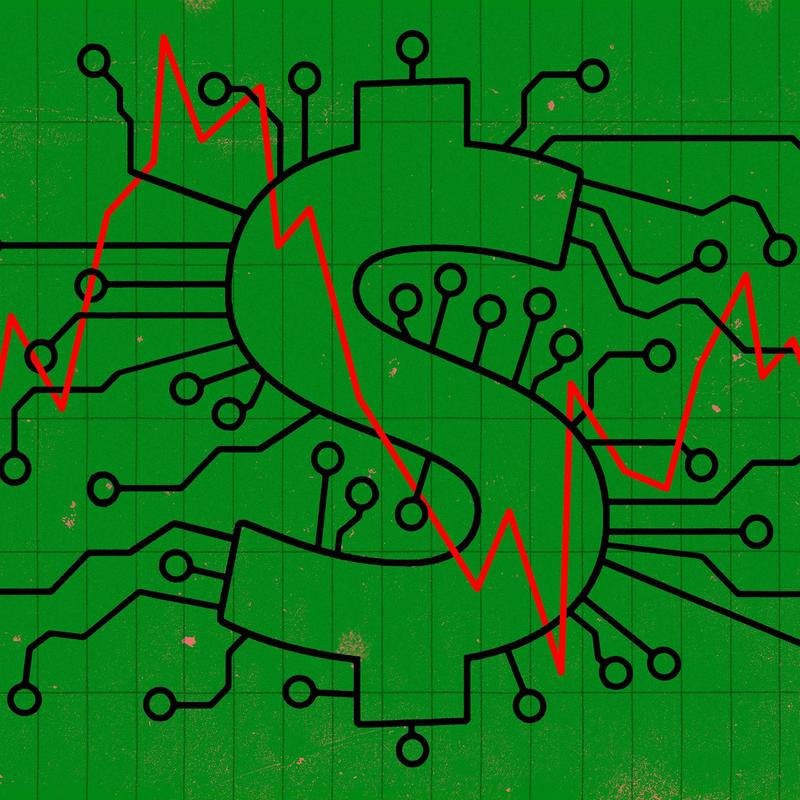
David Remnick: I'm hearing the same murmurings about the economy that you are. Catchphrases like, "Correction, bubble, crash, buy gold, reduce your exposure," or more bluntly, "Cash out. Since the beginning of the year, when Donald Trump began his tariff rollout, the markets, even at record heights, have been in turmoil. If Trump had gone through with all his most unpredictable and punitive tariffs, we might have faced real disaster, a major recession, but he didn't. Not quite. The market stabilized over the year. In fact, they've been surging lately. That has some people worried about a threat that could be bigger still. They worry that the economy and its expansion is so dependent on the realm of artificial intelligence, with all its fantastical prospects and unknowns, that we might be in trouble and very soon. Just the other day, Sam Altman seemed to suggest that companies like OpenAI might need a government bailout, and that caused a furor. Altman quickly walked that statement back.
Sam Altman: At some level, when something gets sufficiently huge, whether or not they are on paper, the federal government is the insurer of last resort, as we've seen in various financial crises and insurance companies screwing things up. I guess given the magnitude of what I expect AI economic impact to look like, I do think the government ends up as the insurer of last resort.
David Remnick: I'm no expert on what's happening here, but Andrew Ross Sorkin certainly is. If you follow finance, you know Sorkin is the co-anchor of Squawk Box on CNBC. He also founded the New York Times business site DealBook. Ross Sorkin's last book was Too Big to Fail, an account of the 2008 financial crash. He's followed it with a deeply researched and terrifically readable book about the biggest crash of all time. It's called 1929.
[music]
Andrew, just after Donald Trump's tariff policy went into effect, he privately admitted that his economic plan could bring about a recession, privately. What he really wanted to do was avoid a depression. Talk about how the Great Depression not only defined the '30s, but shaped American politics for generations, even today.
Andrew Ross Sorkin: Look, we had a crash in 1929 that was ultimately the first domino, if you will, in a series of horrible policy choices that led to 25% unemployment in 1932, 9,000 banks going out of business by 1933, but really a shift in terms of how people even thought about investing. Some investors were generationally scarred, never even touched the stock market ever again.
By the way, the 1920s is really what changed the way we live now, what we're living through today, which oftentimes feels like a bubble, and this euphoric moment is so similar to the '20s because we had automobiles, we had telecommunications, we had radio. People thought RCA was the Nvidia of its time.
David Remnick: Are we sleepwalking into disaster? I read this extraordinary narrative of yours about the Depression and all these well meaning, intelligent status giants, wealthy people who had actual millions of dollars, millions.
Andrew Ross Sorkin: There were some with billions.
David Remnick: Yes. They all thought they were doing the right thing or that they could shove the disaster down the road. Then, as Hemingway tells us, little by little, then all at once, the disaster comes, on my birthday, I should say October 29th.
Andrew Ross Sorkin: I think we are invariably headed towards some correction, if not worse. If you look at where our economy is today, given all the spending that's going on in artificial intelligence, somewhat indiscriminately, I would add, at valuations that are shocking, the rubber will meet the road at some point.
David Remnick: Because it always or because?
Andrew Ross Sorkin: Now, uniquely it's going to hit the road, because it always does, but it always does when you have a confluence of things happening at the same time, you have this remarkable euphoria around a technology that's going to change the world, and invariably it likely will.
David Remnick: AI.
Andrew Ross Sorkin: AI. The economics of that technology changing the world may not all happen at one time, and so you have a remarkable period of spending, but not necessarily the revenue and profits on the other end to make it all work. Then, more importantly, you have a remarkable amount of leverage in the system, every financial crisis. If I learned anything from covering 1929, covering 2008, it is leverage, it is people borrowing to make all of this happen. Right now we are beginning to see a remarkable period of borrowing to make the economics of AI work.
David Remnick: Map out the specifics and the scale of what's been going on. Why is the stock market over 45,000? What's the scale of the leveraging that's going on? Why are we in such peril? Who's doing the borrowing?
Andrew Ross Sorkin: Some of the big tech companies, whether it's Google, or Meta or Amazon, they're all investing right now in Nvidia chips and other data centers. They have real cash and they're making real money. By the way, they're now spending virtually, in some cases, in Meta's case, almost all the money that they're bringing in on these data centers.
Increasingly, what's happening is there's a whole subset of companies that are emerging around this. Real estate companies, energy companies, by the way, energy to power these data centers is huge. How are they doing that? Taking out extraordinary loans to build out the energy requirements to make all of this happen? A lot of where the leverage lies is in all of the real estate companies, construction companies, energy companies that are building the future, if you will.
The question is, the people who are supposed to be paying for it may not be able to. OpenAI just made $100 billion commitment to Nvidia. It doesn't have $100 billion to commit. What's happened here? Nvidia said, "We'll finance you." Effectively, Nvidia is giving OpenAI the money that OpenAI is going to give back to Nvidia.
David Remnick: Are you suggesting that's a scam, or are you suggesting that the timing of the way leverage works and being paid back is such that it causes these disruptions, depressions possibly, or corrections, more optimistically?
Andrew Ross Sorkin: If you get to a terrible moment, it's the leverage which sucks the confidence out of the system, because it's not just that there's a correction in the system, meaning it's not just that some of these stocks fall by 20% or 30%. It's that if you're leveraged, you owe three and four times that.
David Remnick: And you can't come back.
Andrew Ross Sorkin: You can't come back.
David Remnick: Is that where we are?
Andrew Ross Sorkin: I think that's where we are probably right now. The question that I have in my mind is I'm not sure we fully know where all the leverage is today.
David Remnick: I don't know what that means.
Andrew Ross Sorkin: Historically, companies and even individuals took loans largely from banks. They disclosed what those loans looked like, the Federal Reserve knew what those loans looked like. Today, most loans are not coming from the banks anymore. They're coming from what's called the shadow banking system. They're coming from what's called private credit funds.
David Remnick: Explain both of those things.
Andrew Ross Sorkin: Historically, you go to the bank, we give them our cash, and then they would take that cash and they would loan it out to a company that wants to go buy Nvidia chips. In the private credit business, let's say David Remnick decides he's starting a private credit fund, you're going to go around to some pension funds and say, "Give me a $1 billion for the next 10 years. You give me the billion dollars for 10 years, I'll give you back your $1 billion plus, plus."
Arguably, you would then take that $1 billion and then loan it out to somebody and they would go buy the chips. There's no disclosure around it. We don't know about these funds. We don't know what's in them. We don't know how they're being valued or carried at any given moment. The truth is that this private credit universe is connected back to the banks because so many of the banks help lever them up. If people can't pay their loan back, you could have a real credit crunch.
David Remnick: I would bet some huge proportion of the people listening to this or out in the world think, "All I know is I've got a 401(k) and the market's at 45,000 or whatever it is, which is great. It keeps going up and up and up, so no worries. Along comes Andrew Ross Sorkin telling me, you better worry, but I don't know how to wrap my head around it."
Andrew Ross Sorkin: Here's the problem, and I try to wrap my head around this. If you look over the past 100 years, the truth is that it has been much more profitable to be a professional optimist than a professional skeptic.
David Remnick: We're in it for the long run.
Andrew Ross Sorkin: Look, Charles Merrill, who founded Merrill Lynch back in 1928, told people to get out of the market. Now, you might think that was a brilliant thought, except for the fact that from the beginning of 1928 to September of 1929, the stock market went up 90%. It's not just knowing that there's going to be a correction of some sort or a crash, it's getting the timing right and knowing when to get on, off and on the train again.
David Remnick: Your story about the Great Depression centers on a single bank merger that went wrong, and that really helped to fuel the crash. Right now we're talking about Nvidia all the time. How much of our economic fate is in the hands of the narrative of Nvidia's destiny?
Andrew Ross Sorkin: Oh, I think hugely so. Jason Furman, who's an economist at Harvard, said if you were to eliminate all of the spending on data centers, effectively all the money that's going to Nvidia, if you will, the United States would have a growth rate of about 0.1%. Call it flat. That's just a demonstration of how much our future to some degree is dependent on it, and also how much perhaps this AI bubble or growth rate is masking or papering over some of the other problems in our economy.
There's an argument to be made that AI is going to be here, just like radio was in the late '20s. By the way, here we are on the equivalent of radio right now. You look at similarly the internet, late '90s. It wasn't that when the dot com bubble burst, it wasn't that the Internet was broken, it was just that the economics got out of whack and now we have a robust world that's based largely on the internet. I imagine something similar is going to happen in the world of AI.
David Remnick: Are you bullish on AI? Some people say that, McKinsey, for example. McKinsey said nearly 80% of companies found it had no significant impact on their bottom line.
Andrew Ross Sorkin: I think currently in this moment, it hasn't had the transformative effect that people are talking about. Do I think over time it will? Yes, I do.
David Remnick: I'm gleaning this conclusion from what we're talking about so far. A, we're in a bubble, but nevertheless you should stay in the market, and B, you're heavily invested in AI because you think that's going to turn out just fine.
Andrew Ross Sorkin: First of all, I'm not invested in any of these things because the truth is, as a journalist who works at the New York Times and CNBC, I am not allowed to buy individual stocks.
David Remnick: You stay in a fund or something.
Andrew Ross Sorkin: All I own is mutual funds and the like, just to be 100% clear, because I want to be an independent actor. I think that everybody needs to think through when and if you need cash, and if you need cash and you think in the next couple years you're going to need cash, you'd like to think that you have some access to that. I don't like to give financial advice, but that's the truth. If you have 30 years from now and you don't need the money, I like to believe that 30 years will be better 30 years from now than today. By the way, if I didn't think that it wouldn't be fun to be alive.
David Remnick: No, it wouldn't. When you look at the situation that you lay out in terms of debt, in terms of AI, in terms of financial policy, we haven't even gotten to tariffs yet, how big is the bubble? How ready is it to burst and how would that look?
Andrew Ross Sorkin: The question in my mind is this could continue on for many, many years before it bursts. It doesn't have to burst tomorrow. In fact, I would argue that it's likely that there's going to be a whole number of iterations of continued growth for some period of time. Right now, these big, large language model companies are investing almost religiously at this point.
If you really ask them to pencil out the math, most of them truly can't do it or are using very aggressive projections and effectively say, "Look, it's a trade off. One alternative is that we don't invest enough and we don't want to be behind, and the other is maybe we'll invest too much, but some prefer to think that that's the better path."
David Remnick: What troubles you the most?
Andrew Ross Sorkin: We're trying to prop up industries and parts of our economy through tariffs that economically naturally shouldn't be propped up. However, there's some real questions about what you would do otherwise. If we didn't have tariffs on cars, for example, in America, we probably wouldn't have a car industry right now.
David Remnick: That the Chinese car industry is so superior.
Andrew Ross Sorkin: BYD cars, which are EVs, electric vehicles in China are the gold standard. They are better than our cars, they are cheaper than our cars. I think if most Americans had an opportunity to sit in the back of one of those cars, they would say-
David Remnick: As you have-
Andrew Ross Sorkin: -"What is going on here?" People including, by the way, Elon Musk, who makes Teslas, would tell you that those are remarkable cars. He's made the argument that without tariffs we would have a real problem. You may say we want to have an automobile industry, but we've decided there's certain industries we want to support and other industries that we don't.
There's a real question mark, just long term, about what we're doing. We're also obviously moving to a services economy. By the way, the more this goes back to AI, the greater we have a services economy and the greater you think that that can potentially be under threat from AI. What do we have?
[music]
David Remnick: I'm speaking with financial journalist Andrew Ross Sorkin of CNBC and the New York Times. We'll continue in just a moment. This is the New Yorker Radio Hour.
[music]
This is the New Yorker Radio Hour. I'm David Remnick. I've been speaking today with Andrew Ross Sorkin, one of the leading observers of finance in our time. Sorkin has been covering business for more than 30 years, since before he'd even graduated from college. He's gained the clout to call out corporate practices that he thinks are harmful to the economy. For example, what were called inversion mergers.
After he did so, the federal government took action to make them more difficult. Sorkin has spent his life covering the economy in the here and in the now. His new book is about the 1929 Wall Street Crash that led to the Great Depression. Yet, some of the parallels to our own time are unmistakable.
Sometimes I watch you on television, read you in the New York Times, and I try to imagine the sheer number of financial and business elites that stream in front of you on a given day and in a given year. You know everybody, you go to Davos, these people are, over time, comfortable with you. I want to get a sense of what they are talking about, not on the record, when they think about Donald Trump's tariff policy. Now, obviously not everybody thinks the same thing.
Andrew Ross Sorkin: Maybe the Overton window is shifting. I think in general, they started by saying this was a terrible, terrible idea. I know people who are, who talk privately about shipping certain products from the United States out of the United States to other places and back into the United States. People are moving stuff around for reasons that make no sense except that you can lower your tariff fee by doing crazy things.
David Remnick: How did the Overton window shift?
Andrew Ross Sorkin: There's a sense, irrespective of what you think the Supreme Court is going to do, that tariffs are now here to stay, that the world is moving in this direction of breaking globalization, and that if the rest of the world is splintering, and by the way, we may be leading some of that splintering, that the next decade or two decades likely mean the tariffs are going to be here. I think some of them are starting to accept that as a fate.
Then, and this maybe goes to the Overton window portion of it, they start to get supportive of it, or at least as they're trying to get their head around it, they're trying to rationalize why this could somehow be a good thing, they start to say to themselves, "Maybe we're actually going to create our own automobile industry and that will create resilience, and maybe we're going to create a better pharmaceutical industry." I'm not arguing these are the right paths. I'm just suggesting that I think some of these people who historically were against these things seem to almost be softening over time a little bit around them.
David Remnick: I think it's inarguable that one of the reasons that Donald Trump, ironically maybe, came to office is that he sensed radical income inequality, and he had a vocabulary to play on it. No matter what you think of the sincerity of it, he knew how to speak to it better than the Democrats, who had their own billionaire donors, by the way. Is that cracking up, that sense among working people, as evidenced by the election the other day, that maybe that support, that faith in Donald Trump to help working people is fading.
Andrew Ross Sorkin: Look, I think some of the polls would suggest that there's real anxiety about what's happening in the economy. I think a lot of parts of the economy that the president, during his campaign said that he was going to fix has gone unfixed. The question is where are we going to be in the midterms and where we'll be in 2028?
I don't necessarily look at what took place on Election Day, and say to myself that this was all a repudiation of Trumpism, because I think you look at some of those states and-
David Remnick: It's limited evidence.
Andrew Ross Sorkin: -it's limited evidence at this point. It's not clear to me that the vote for Mamdani, for example, was a repudiation of Trump as opposed to if you had voted for Cuomo.
David Remnick: You see some of the wealthiest people in America troop through your television studio. You report on them. Do they care much about radical income inequality, which is just hugely different than even the period that you were writing about in the 1920s and '30s.
Andrew Ross Sorkin: Do they care about it? That's a great question. I think that they tell themselves that they care about it. I don't know ultimately how thoughtful they are being about how to end inequality. I think that they believe that Capitalism with a capital C is the answer.
David Remnick: Wasn't capitalism and big capitalists a little different? Not to be naive about this, but I read your book, and nobody rented out the city of Venice for their wedding. The conspicuous consumption was infinitely more modest, no matter how outlandish, the Great Gatsby existed in reality, for certain, but this business of the skybox view of life, it was not nearly what it is today. Doesn't anybody in that class have any sense that this could come to a terrible end one way or another?
Andrew Ross Sorkin: I think they think about it and then try not to think about it. I'm being as straight with you as I possibly can--
David Remnick: Because the sweet meats are too delicious.
Andrew Ross Sorkin: Because they ultimately believe that ending inequality is potentially an end to their affluence. For all the talk about increasing the size of the pie, I think they also recognize that there might only be one size of the pie and who's taking which piece is the question.
David Remnick: They don't sense the resentment, much less hatred.
Andrew Ross Sorkin: Oh, I think that they clearly get the resentment and the hatred. By the way, most of these people feel very alone in that way.
David Remnick: I see you wiping a tear away from the corner of your eyes.
Andrew Ross Sorkin: No, I'm not. I'm just suggesting that I think when you think about these people at the very top, I actually think they're very cognizant of the resentment, but I don't think--
David Remnick: We had the president of the United States just had a Great Gatsby at night. It's almost like rubbing it in the face of the people that he at least pretends to be the champion of. This seems to be a lack of self knowledge all around.
Andrew Ross Sorkin: Certain people have taken a position that they just don't care.
David Remnick: Is there any relationship in your mind after doing this book and working on it so hard and for so long, is there any relationship between a Herbert Hoover figure and anyone now, whether it's Donald Trump or what have you?
Andrew Ross Sorkin: Look, Herbert Hoover, oddly, there were Trumpisms about them. Herbert Hoover implemented tariffs in 1930, Smoot Hawley tariffs. Why did he do that? He did that because in 1928 when he was running for president, he was desperate to get farmers to vote for him. It's actually very similar to what Trump was doing.
David Remnick: One of your banker characters refers to it as asinine.
Andrew Ross Sorkin: As asinine. They thought it was a terrible idea. Here he was in '28 trying to get the farmers to vote for him, and he says, "I'm going to put tariffs in place." We get to 1930, and he thinks, "I need to make good on the pledge." One of the things that I'm fascinated by is the transition of power between Hoover and Roosevelt. Hoover, desperately, after he lost the election, wanted to rescue the banks. He wanted to bail out the banks.
He was secretly actually trying to talk to Roosevelt to get him to help him do this before he became the president. Of course, Roosevelt wanted to have nothing to do with him because he wanted to start with a clean slate and didn't want to be connected to these things. I think about that a lot, because if you go back and think about the crisis in 2008, there was the transition from Bush to Obama, and it was critical. It was actually super important that they were talking to each other and frankly trying to help each other. I continue to wonder, in this polarized world that we live in today-
David Remnick: Oh, that's possible.
Andrew Ross Sorkin: -if in fact we ever get to a crisis and we are in a transition, is it going to look like 2008 Obama and Bush, or is it going to look like Biden and Trump?
David Remnick: Who are the responsible people in charge in Washington today, in the administration? Who do you have faith in, if any?
Andrew Ross Sorkin: I like to believe that Scott Bessent is one of the adults in the room. The president's maybe worst impulses seem to be improved when Scott Bessent gets in the room. Interestingly, I've been surprised that actually, if there's any governor over this president thus far, it seems that it may very well be the markets.
You if you think about it, after the tariffs were first announced back in April, it was the bond market that really went wild and forced his hand, and he really did sort of downshift. Similarly, even just a couple of weeks ago, he had announced these 100% tariffs on China. The equity market went crazy and he downshifted again. Are there any guardrails? It very well could be that the market is his guardrail.
David Remnick: One of my colleagues, John Cassidy, recently published a book about a history of the critics of capitalism from Adam Smith, in fact, who in some ways was a critic of capitalism as well as a creator of it, all the way to the present day. If you look at polls of young people, you see that the word capitalism loses out to the word socialism. What does that mean?
Andrew Ross Sorkin: I think what it means is that people don't think that they can get ahead right now. Mamdani, I think, has done a great job of describing it as an affordability crisis, but I think it's so much more. I think it's about what the American dream even is and whether you think you can do better than your parents did.
David Remnick: Or even the same.
Andrew Ross Sorkin: Or even the same. I think prior to the 1920s, the American dream really was this sort of Horatio Alger story, this rags to riches opportunity. In the 1920s, they thought the only way in was this lottery ticket. The truth is, most people who buy a lottery ticket lose. That was the truth in the twenties of the stock market.
I think right now, if you go on your iPhone and you go onto TikTok or Instagram, what's being sold on the scroll of the American dream, whatever that is, is very much this lottery ticket, get rich quick fantasy. It is not this idea that if you do all the right things, if you go to school and you work hard-
David Remnick: You got a split level
Andrew Ross Sorkin: -it's going to work out. It's not clear to me that breaking up the big tech companies necessarily or taxing the wealthy per se--
David Remnick: Not even a little bit. We're changing the tax code.
Andrew Ross Sorkin: I desperately think that there's things that are terribly mistaken about the tax code before you even have to think about a wealth tax. I think there are so much low hanging fruit in the system that frankly would probably raise even more money than a wealth tax. The estate tax has to be fixed. The idea that people can transfer extraordinary amounts of money to their heirs right now-
David Remnick: Dodging all types of tax.
Andrew Ross Sorkin: -and dodging all sorts of taxation, capital gains taxes, we have a lower capital gains tax ostensibly to incentivize investment, but the wealthiest people in the world are still going to invest if there is a higher tax on their capital gains, because where else are they going to put their money? Some of the things going on in real estate.
The reason why the real estate industry, which Trump has lived in for as long as he has, it's extraordinary. Some of the ways you're able to dodge taxes in that space by effectively depreciating assets at a time when the value of those assets continue to go up. I would even think about a tax on philanthropy. I know people think that this is completely wild and crazy, but most people who are giving their money to philanthropy today that are wealthy get a huge break.
It means that all of us are subsidizing their philanthropy, their particularized philanthropy. Warren Buffett has made 100 plus billion dollars. All of that money will never get touched or taxed in any way because he is moving it into charity. He's taking those shares, he's never selling them.
David Remnick: He determines its fate.
Andrew Ross Sorkin: He determines its fate. I would think it would not be completely crazy to say, "You know what, every year, if you want to give away $5 million of shares without any taxes, short," but after that, you have to sell the shares, the government gets to collect the tax, and you can then take that money if you'd like and donate it to a charity. Now, by the way, the nonprofit world thinks what I'm saying is horrible.
David Remnick: Presidents of libraries and symphony halls and [crosstalk]
Andrew Ross Sorkin: Hospitals and all sorts of things that are well meaning, I don't want to take away from it, but the truth is there's a lot of money that effectively, because of all of these maneuvers, goes untouched.
David Remnick: Finally, Andrew, some people sell out of the market when it gets volatile, no matter what people are telling them to do. I've heard of hedge fund managers investing in gold. You've done extensive research into what people did before and during the stock market crash of 1929. I know you'll be a little oopsy about answering such a question, but what's the Andrew Ross Sorkin investment strategy right now? What does your investment portfolio look like these days? Or did you stay for journalistic reasons?
Andrew Ross Sorkin: Agnostic. For journalistic reasons, I try to be agnostic myself, but if you're my parents who are retired, they're in the late 70s, early 80s, I wouldn't want them to be fully invested in this moment.
David Remnick: You want them to have enough cash.
Andrew Ross Sorkin: I want them to have 10 or 20% of their of whatever they have in something that's "liquid" so that if something bad happens in the stock market--
David Remnick: Is that because of now or because of always because of their age?
Andrew Ross Sorkin: Probably a combination of both. I think in this particular moment, I think it's probably a little bit more acute given how out of balance it does seem the stock market is historically.
David Remnick: If you're in your 40s or 50S?
Andrew Ross Sorkin: If you're in your 40s or 50s and you don't think you're going to need the money, if you really don't think you're going to need the money. By the way, I'm in my late 40s, I have kids, I have responsibilities and things. I think you could probably let it ride a little bit longer. Again, I'm pretty cautious. I like to have a little bit under the mattress. Having said that, as I've said I'm a journalist, I'm a professional skeptic. It has paid a lot more to be a professional optimist, and that is the hardest part about this.
David Remnick: Andrew Ross Sorkin, thank you.
Andrew Ross Sorkin: Thank you.
[music]
David Remnick: Andrew Ross Sorkin is the founder of DealBook, the New York Times business site, and he's on CNBC's Squawk Box. Sorkin's new book is called 1929: The Inside Story of the Greatest Crash in Wall Street History. For more on the economy, you can read the Financial Page, our weekly column by John Cassidy at newyorker.com. Of course, you can subscribe to the New Yorker there as well, newyorker.com.
[music]
[END OF AUDIO]
Copyright © 2025 New York Public Radio. All rights reserved. Visit our website terms of use at www.wnyc.org for further information.
New York Public Radio transcripts are created on a rush deadline, often by contractors. This text may not be in its final form and may be updated or revised in the future. Accuracy and availability may vary. The authoritative record of New York Public Radio’s programming is the audio record.