Despite Reports, Reading Is Alive and Well
David Remnick: [00:00:00] For decades, there's always been a crisis of reading. Most recently this summer, an article came out in The Atlantic called The End of Reading Is Here, and it put forward some decidedly depressing statistics. If you're someone who cares about reading, much less books, seeing a crowd of people swiping videos on their phones, well, it's true, it can feel like the end of civilization as we know it.
And yet it turns out that the picture is much more complicated, and it may not be doom at all. This week, one of the big stories in The New Yorker is by staff writer Nathan Heller, and he tackles the state of reading in a very realistic and clear-eyed way. Books he discovered are, in fact, much healthier than you might have thought.
So I asked Nathan Heller, what's the fuss all about? Nathan, let's talk first about the notion that reading is dying or reading is [00:01:00] dead. Where does that come from? Why has it taken hold?
Nathan Heller: Well, it's a very old idea. It's been around almost, um, as long as reading has, um, it turns out. I, I was initially interested in it because it's an idea that one hears a lot about.
Um, it seems as if every few years there's a kind of a renewed interest in the question, a renewed, um, a panic.
David Remnick: Well, let's talk about the panic first and then the countervailing- Mm-hmm ... statistics and realities as you put them out. I think, you know, there have been any number of sources or places where you see this, as you're calling it, a panic plays out.
There's a piece in The Atlantic, it was a cover story not, not so long ago, that was filled with that, that idea, that notion that reading was on the decline. And if you... And anecdotally, you know, maybe it's me getting older and, you know, you talk to your friends who might be teachers or college professors who are parents and bemoaning, uh, [00:02:00] how infrequently they see younger people reading, or that you can't assign long books anymore in a college course, or kids these days are staring at their iPhones all the time.
There seems to be a lot of that, and there's no question that you also heard that to some degree 20 years ago. But people who've been teaching for a long time think it's true this time.
Nathan Heller: Yeah. You, you heard it 20 years ago, and you heard it even, um, I mean, um, about 100 years ago. Um, Walter Benjamin, um- Sure, go,
David Remnick: go invoke
Nathan Heller: Walter Benjamin.
In 1928, yeah. He declared that the end of, of reading and, and books was incipient. Um, and, and meanwhile, um, a l- lot of books have been published in the years ever since, and a number of them are pretty good, um, and, and have actually moved the craft along. So it's a concern which, which has been there a long while.
You hear it in particular, um, in the academic context, um, [00:03:00] from professors who, who, who, who say they have had to curtail, um, what, what they assign because their students are having trouble with those sort of triple-decker Victorian novels in a way that they weren't, um, 20 years ago. Um, I think that's quite real.
I did a piece a few years ago about the struggles of the humanities, um, within, um, higher education, and that, um, is a real phenomenon. In that case, um, all of the numbers were quite clear, and it sort of came out whichever way you shook them.
David Remnick: Right.
Nathan Heller: What my reporting in, uh, in that piece ended up, um, indicating was that it, it was less, I mean, a case of, of the students and, um, and more, um, a case of what the [00:04:00] universities on the institutional level were valuing there.
There was perhaps a little, um, less of an emphasis and less of a value structure at this particular moment behind what would traditionally be called a liberal arts education, of which the humanities has always been a big piece. So that I think is part of what is going on in the universities. It's not going on at all, um, in the bookstores.
Um, I, in the course of reporting this piece, I talked with a lot of- booksellers at a lot of bookstores, um, in a lot of cities, and what they all said universally was that they see young people coming in even, e- even more, um, than they've ever been, and they're reading. What was surprising to me, and indeed surprising to a lot of the [00:05:00] booksellers, was that, um, they're reading and, and they're buying, um, a lot of the classics.
David Remnick: What are the statistics or facts that you would say fly in the face of arguments like the one you saw in The Atlantic, and many other places too? I don't wanna pick on any one article.
Nathan Heller: Yeah, there have been a lot of alarmist, uh, headlines over the course of the year. Um, many of them rely on a pretty narrow range of data.
The Atlantic, in its, uh, in its article, it pointed to data from the National, uh, Educational Association, which indicated that fewer than half of all adults claim to have, um, read a book of any kind in twenty-twenty two. I looked at that survey, and one of the interesting, um, features of it, which the NEA itself, um, noted, um, was that if, if you factor in, um, [00:06:00] audiobooks and the listening of audiobooks, the numbers come out basically flat.
In other words, it isn't actually that people are encountering fewer books, um, it's that they seem to be taking them in a little more via, um, audio. If you look at the data Broadly, um, and as a whole, the trend is exactly in the opposite, uh, direction. Um, there has been, over the course of the decade, a twenty-five percent increase in the number of print books sold, and the number of independent bookstores, um, is wildly increasing.
It's increased seventy percent over the course of the past five years alone. In other words, um, it isn't only that people are reading more, it's that they're going to bookstores a lot more. [00:07:00] It turns out that the numbers overall are pretty good. You know, according to Pew, which is in the business of, uh, of, of, of measuring these things, thirty-eight percent, which is m- well more than a third of all American adults, um, had read between one and five, uh, books over the course of the year.
When you think, um, of the scale of the country, that's actually a very huge number, um, who are doing a good amount of reading.
David Remnick: Nathan, you attribute the shift among young people in part to BookTok. What, for the uninitiated, what exactly is BookTok?
Nathan Heller: BookTok, um, is a, is an ecosystem on social media in which people, and usually, uh, younger people, I mean, essentially summarize and review and recommend, um, what they're reading.
And it has, it, it has [00:08:00] developed, um, a really enormous audience over the past few years. The k- the, um, pandemic was, was, was, was a sort of a signal moment. Um-
David Remnick: So the pandemic was good for reading.
Nathan Heller: It was great for reading- Let's not do it again- ...
David Remnick: in all kinds of ways ... but I'm glad it was good
Nathan Heller: for reading. That, that was one of the few upsides, yeah, of the pandemic.
David Remnick: You interviewed several BookTok influencers for the piece, including Eden Yonas, um, who's a leading BookToker.
Nathan Heller: Yes, indeed.
David Remnick: All right, let's listen to her.
Clip: One of the parts of the, the now that's interesting to me is I think that people are Really fatigued with their screens. Yeah. And I think that, um, uh, you know, the book social media landscape has really flourished, like, in tandem with that because people want to have a space where they [00:09:00] can...
You know, they wanna have a space where they can communicate with people about something that they enjoy, but that isn't reliant on being on their devices, right? Mm-hmm. Mm-hmm. So, um, there are so many other... There's so many good things about social media. Um, obviously I love social media. I spend a lot of my time on social media, but I think that the book space in particular has been a, a unique environment to be in recently because I just see so many people being like, "Not only what books should I read, but how do I step away from my phone long enough to gain the attention span to, to read consistently?"
Mm-hmm.
David Remnick: Mm-hmm.
Clip: Um, and I think all of that kind of came together in this perfect storm where now people are just ravenous for, for content that isn't on their laptop or their phone.
David Remnick: Here, here's what I'd say about that, Nathan. I dearly hope she's right.
Nathan Heller: We all do, David. I think-
David Remnick: But is she?
Nathan Heller: Uh, [00:10:00] within, you know, w- um, how, how much of, of the population are, are you talking about is the question.
Right. Kind of the largest of the BookTokers have, um, each followings, um, of, of a few million, uh, people,
David Remnick: which is the- And th- and naturally that is least gonna lead somebody to read those books. At
Nathan Heller: le- at le- Not all of them, but- Not but a great n- n- number.
David Remnick: What she's telling us is people not only wanna break away from their screens, but they also wanna break away from the algorithmic rhythm of life.
Nathan Heller: Exactly that.
David Remnick: So it's, it's, it's helping you shut this off. BookTok is i- ironically a social media means to help you move away from social media.
Nathan Heller: Well, that's what they say, yeah. Um, and, and indeed i- if, if you walk into a bookstore, one, one of the kind of the miracles of, of being in there is that nobody can tell you, um, where, where to go and wh- and what to take off the shelf.
Yeah. And you, you're kind of... You're able to do it [00:11:00] of your own, of your, of, of your own volition. And for a lot of, um, of younger people who have grown up in an environment in which everything, um, I mean, I mean, has been, has, has been algorithmically fed to them, um- It seems as, as if this, um, it, it feels as, as if it's a liberation.
Uh, th- the idea that you can actually, uh, th- that, that you can discover things on your own and, and, and, and you can endorse them, and you can, uh, pass them around.
David Remnick: I think it's fair to say that this piece that you've done, it came from a conversation about whether it's really true, as so many people are saying, that reading is declining or reading is dead, and then the piece expanded into a profile embedded within it, or one thing is embedded within the other, so that it's also a profile of a man named James Daunt.[00:12:00]
Who is that?
Nathan Heller: James Daunt, um, is one of our leading booksellers. Um, he began when he was 26 with what was then a s- a small shop, um, in London, and over the years it became tremendously popular. They opened a few more branches, and then after more than 20 years there, he became the CEO of Waterstones, which is this enormous book-selling chain in the UK.
Um, it's, it's the biggest, but they were essentially crashing into bankruptcy. Um, so he, he was installed. Um, he turned it around in the course of a few years by a number of, of metrics of s- of success. When he went in, it, it was having a loss of tens of millions of pounds, and he turned it around [00:13:00] into a profit by the middle to the end of the decade.
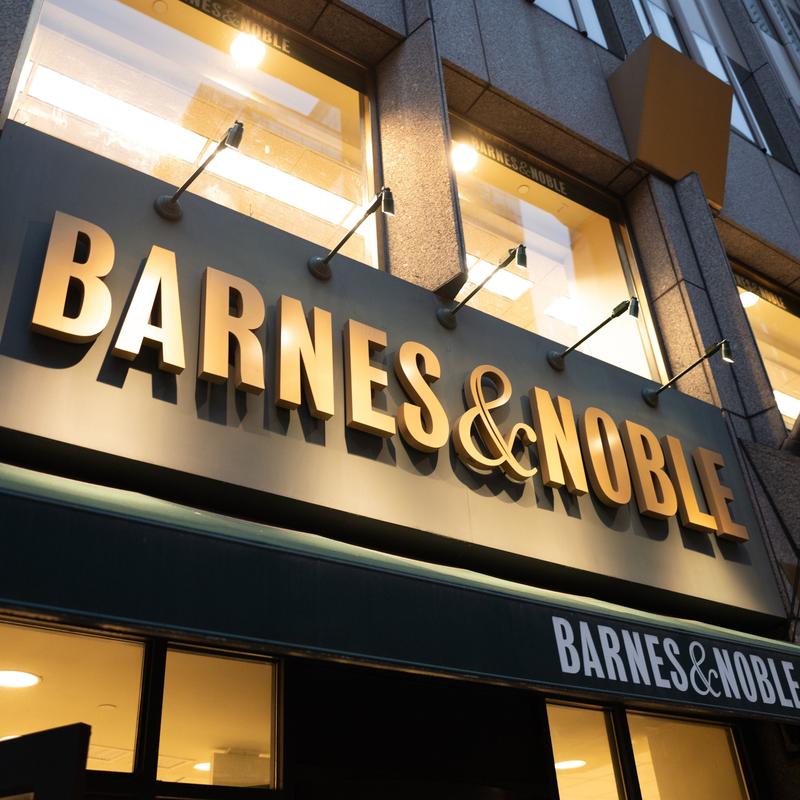
And then he, in 2019, he was made, um, in addition to Waterstones, uh, the CEO of Barnes & Noble, which, um, as we all know, is, um, is at this point, it's the largest book-selling chain in the US. It was also on the verge, on the verge of going under, as many of its earlier peers, Borders and the rest of it, had. And he turned Barnes & Noble around on the same model that he had Waterstones, and the results have been quite surprising.
Part of what was interesting about Daunt, um, as, as a, as a subject, was that he was really working on premises about, um, business which were completely different, um, from the ones that have been [00:14:00] predominant in the US over the past, uh, 20 years, which is really the Amazon, uh, model. One, one of the attributes of, of Daunt, um, is that he's very, very attentive to all of the details of the way that a bookstore looks, and as a result of, of that, he has been able to, it seems, bring a larger audience back into the bookstore.
What Daunt has, has, has shown in Barnes & Noble is a really surprising thing, which is that if you make a good retail space, um, people will come, and, and they do in fact, um, want- To be there, um, in person. And they do wanna buy their books right off the shelf and, and the table.
David Remnick: I remember when Barnes & Noble was the bad guy.
You know, we'd go to the movies, and we'd see a Meg Ryan in a movie, and she owned a little shop, and it was gonna be eaten up by Tom Hanks and [00:15:00] this kind of Barnes & Noble down the street. Now that so many of those bookstores have disappeared from our life, thank God there are still many indep- independent bookstores, uh, around the country, but fewer than there were, Barnes & Noble is now kind of the salvation, um, in some ways, and James Daunt has revolutionized the way Barnes & Nobles operates.
Nathan Heller: Exactly that. It's become, it's become, um, a kind of a massive, um, underdog, essentially- ... in this new world that we live in, where- Yay,
David Remnick: Tom Hanks. ...
Nathan Heller: 20, 20, 20 years ago, um, kind of the line w- was, was that bookstores were on their way out- Completely ... because everything was gonna be digital- And Amazon ... and nobody...
And Amazon. Right. Everybody's gonna order. Ev- everybody's gonna read everything on the Kindle. Um, what has been interesting is that 20 years after that, um, people are g- are going into bookstores, and, and they're going into bookstores, um, in growing [00:16:00] numbers. And the pandemic, um, was surprisingly enough for a brick-and-mortar retailer, it was a real turnaround moment for Barnes & Noble under Daunt.
Um, it, it had at that point, uh, the company that had eight years of negative revenue slopes, which in 2021 turned around and, and went positive. A very surprising thing. Over the course of last year, Barnes & Noble, um, it was able to open 60 new stores across the country. They've seen a kind of a resurgence, um, of, of their customer, of, of their customer base.
And Barnes & Noble is, is at this moment, um, it, it's a private company, so it should be noted that our visibility into it as a whole is, is limited. But on the basis of the data, um, I was able to get, it seems as if it's at this point a stable and a growing company, which, um, [00:17:00] is, is a thing that would've been almost, um, un- unfathomable a decade ago.
David Remnick: You, you quizzed James Daunt of Barnes & Noble on this very question that we started out talking about, this kind of doom-mongering about reading. Let's listen to him.
Cip: My parents bought a television very reluctantly, and I remember we'd asked like 1,000 times, and eventually, you know, we got this TV.
Nathan Heller: Yeah.
Cip: And then my parents, they went, "Now, you know, it's the end of the world. You're never gonna read again, and you are just destined for a life of ignorance and stupidity."
Nathan Heller: Right, right, right.
David Remnick: It was like half an
Cip: hour a day.
Nathan Heller: Right.
Cip: And then my dad liked watching the sports, so- Mm-hmm ... you know, he was happy and, like, it's ridiculous.
And at the same time, these bestsellers and just the sheer volume of books, have, have you, have you seen what Sarah J. Maas' books...
Nathan Heller: Mm-hmm.
Clip: They're thick. These kids are reading like, whoosh. And, and they go through, of course [00:18:00] they read crap from time to time. Mm-hmm. And of course they... But we just went through a whole phase where classics were back in fashion.
Mm-hmm. I mean, kids were reading Middlemarch, and do you know how long Middlemarch is?
Nathan Heller: Right, right.
David Remnick: Okay, I wanna take issue with James Daunt on one thing The general public and most of us do not watch television a half an hour a day.
Nathan Heller: Yeah.
David Remnick: I, I think it's true. One watches television a million hours a day- Right, right, right
or somewhere in between is the truth. Um, is it possible that James Daunt, and even you, Nathan Heller, are putting a slightly rosy cast on this vexed question?
Nathan Heller: People have, have always watched a lot on their screens, at least over the past- Mm-hmm ... half a century. Um, but people have also read. Yeah. Um, and there has been a very dynamic book-selling, um, market- Mm
um, o- over those years. There's also been a [00:19:00] lot of really, really interesting, very good books have been written in those years, um, ev- even with the TV. I've heard
David Remnick: this.
Nathan Heller: And, uh-
David Remnick: And luckily, thanks to AI, none of us are gonna have to work more than a day or two a week, and we'll have plenty of time to do both.
Nathan Heller: Well, that'll be the day. Yeah.
David Remnick: Nathan Heller,
Nathan Heller: thanks so much. Thank you, David. A pleasure.
David Remnick: You can find Nathan Heller's excellent essay, The New Age of Reading, at newyorker.com, and you can subscribe to The New Yorker there as well, newyorker.com.