
Demi Moore Talks with Jia Tolentino
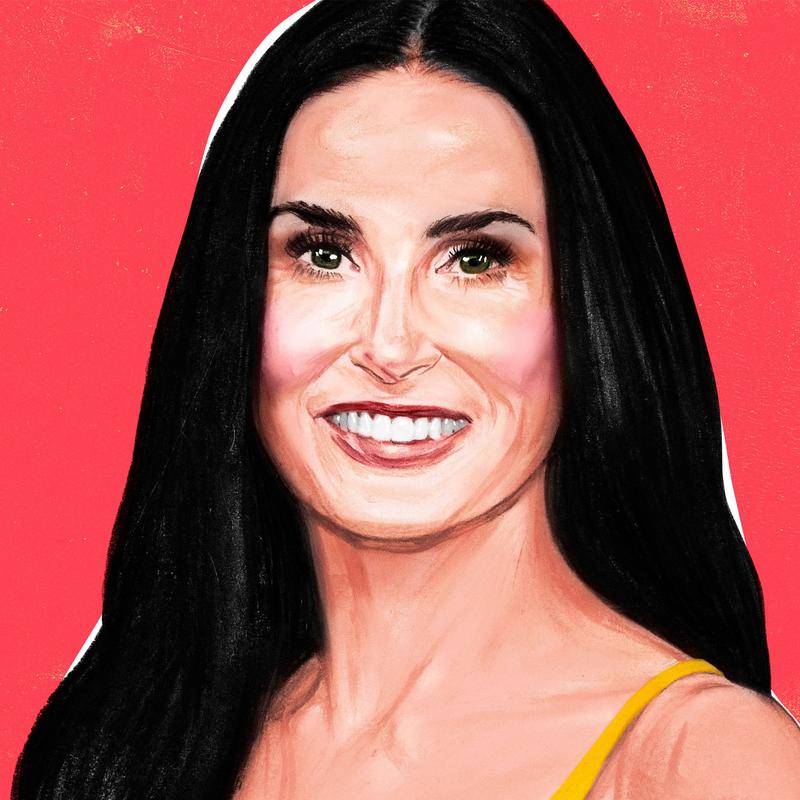
David Remnick: Demi Moore was one of the biggest stars of the '80s and '90s, and for a time, she was the highest-paid actress in Hollywood. Since she reemerged as a lead in the 2024 film The Substance, Demi Moore has been very busy. She's got a major role in the new season of Taylor Sheridan's "Landman," and she stars in two widely anticipated films that are coming out this year.
First, there's a science-fiction film directed by Boots Riley, and then there's "Strange Arrivals," where she plays a role alongside Colman Domingo, and it's about a couple who claimed to have been abducted by aliens. Sounds pretty good. Demi Moore's memoir "Inside Out" came out a few years ago, and this fall at The New Yorker Festival, she sat down and talked with staff writer Jia Tolentino.
[applause]
Jia Tolentino: You had quite young parents. You moved around a ton. You were required to grow up very quickly. You write in the memoir that all the adapting that you had to do as you moved from place to place was part of perhaps early training to become an actor. Can you just talk about that?
Demi Moore: Yes. I was in roughly never less than two schools a year. We were always moving, and I became quite excellent at loading a U-Haul, but one of the things, when you don't know any different, is that there's two aspects to that. Yes, I became very adaptable to being in a new environment, new schools, new friends. On the plus side, I also learned kind of the positive side of not clinging to attachment.
The downside of that is that it made it harder to know how to really nurture friendships, but that ability to be adaptable lent itself very much to what the nature of being an actor is, because that is entirely what we're asked and required to do, not just in our roles but with each project. It's kind of like mini-marriages, mini-families that you're stepping into, and each is slightly different, and you have to find a way of holding on to your own center as you are in entirely new settings, environments, and with different people.
Jia Tolentino: Did you feel when you were little that you-- Did you have a sense of what that center was, or did it take longer to realize that you had to hold on to--?
Demi Moore: I think the thing is, when you're always trying to just-- Like I became very quick at assessing, like what the situation is, who's who, who's popular, who's not, and the effort became how to fit in, but in doing so, sometimes I didn't always have a sense of myself at all. I think that that's something that evolved much more as I matured, and in truth, as I made a clearer decision about what path I wanted to take-- By the way, that was still at only 15 years old, but no, I think I actually didn't know, like, "Well, what do I like? What do I like?" Because I was so always working towards just fitting in and belonging.
Jia Tolentino: Right. You started acting as a teenager, and you were, as they say, you were booked and busy. Also, you were quite young when you had children too. You were kind of in the thick of it in terms of your career. I don't think that any one of us watching A Few Good Men could really have had any idea that you began rehearsing for that movie mere weeks after having your second child. Right?
Demi Moore: Yes, she was a month old when we started rehearsing, and all I could think about is that I was going to be in a military uniform.
Jia Tolentino: Well, you write-- you auditioned, or you started--, you were in talks [crosstalk], quite pregnant, right?
Demi Moore: Oh, I had to audition. When I auditioned for A Few Good Men, I was almost eight months pregnant, which was quite awkward reading those lines with Tom Cruise with this gigantic belly. I think Tom was quite embarrassed. I actually felt okay about it. I was moving around all right, but I could tell he felt that it was a bit awkward.
Jia Tolentino: Well, it's kind of amazing, like you really-- you pushed yourself to--, like there was an unbelievable amount of discipline in play, an unbelievable amount of just will and effort. There was another part of the memoir you were writing about when you were filming Indecent Proposal, shooting days were 4:00 AM to 4:00 PM, so you'd get up at 1:30 AM, start training by 2:00, do a full-day shoot. You'd get off, your kids would still be up.
Demi Moore: Yes.
Jia Tolentino: Hang out with them. I was wondering, what does that time period feel like to you now?
Demi Moore: At that moment, none of my peers were having children. I think that there was still a bit of a feeling that you had to choose. You had to choose a career or being a mother. It's one of many things for me that I just felt like that didn't make sense, and so I challenged that to say, "Why not? Why can't you have both?" But with that, I think came a lot of pressure I put on myself to, in a sense, prove that it was possible, and it was a lot. I look back at that time now, and I go, "What the fuck was I thinking, and what was I even trying to prove?" But it wasn't as supported as it is today, to be breastfeeding and then blocking and rehearsing a scene.
Jia Tolentino: Well, I was wondering, let's just go to the first clip from the movie that you were getting up at 1:30 to train for from Indecent Proposal.
Demi Moore: Okay.
[clip begins]
Diana Murphy (Demi Moore): You want me to lie. You want me to say he's awful, so you know what? I'm going to tell you he's awful, and you won't believe me. How can I win?
David Murphy (Woody Harrelson): Just tell me the truth, D.
Diana Murphy (Demi Moore): It was sex, David. Just sex. Not love. Just sex.
David Murphy (Woody Harrelson): And was it good sex?
Diana Murphy (Demi Moore): Don't do this, David.
David Murphy (Woody Harrelson): Can you just tell me that, D? Was it good? What are you hesitating for? Just tell me. Was it good? Was it good? Was it good?
Diana Murphy (Demi Moore): Yes.
[clip ends]
[applause]
Jia Tolentino: Watching you watch it, the lines are still in your head.
Demi Moore: I haven't seen it in such a long time.
Jia Tolentino: But they were coming. Your mouth was making the--
Demi Moore: [laughs]
Jia Tolentino: I mean, it's lodged, right? Is it like that for a lot of stuff or just these really pivotal scenes in your movies?
Demi Moore: I don't know. Literally, I don't know, I think I was maybe wondering what was going to be coming out of my mouth, but it's-- Sometimes what's nice at this point in my life is that I actually have the ability to look back and have more appreciation versus--
Jia Tolentino: Yes, [unintelligible 00:07:01].
[laughter]
Demi Moore: I was like, "Yes, that was pretty damn good." Versus remembering being in it, how critical I was, how much I just dissected and tore apart all that wasn't versus today, where I can really appreciate all that is. It's really nice, and I appreciate being able to see that. I love Woody so much.
Jia Tolentino: He's so [crosstalk].
Demi Moore: Although doing it, I have to say-- I met Woody because he was good friends with Bruce, and so doing the scenes with him, which obviously we have quite a few love scenes, was literally like having to do it with my brother,-
[laughter]
Demi Moore: -which was a little bit awkward.
Jia Tolentino: Well, I wonder if you can talk about filming it. This scene is probably the most vulnerable moment for Diana, your character, in the whole movie, despite the fact that Indecent Proposal is engineered around what's ostensibly this other moment of vulnerability, this, if you haven't seen it, the billionaire played by Robert Redford offers her a million dollars for a single night. We don't see that moment very wisely. It's cut out. Tell us about filming that scene and [unintelligible 00:08:13] that.
Demi Moore: The one particular with Redford?
Jia Tolentino: No, sorry, the--
Demi Moore: Oh, this one.
Jia Tolentino: Yes.
Demi Moore: I think this was such an interesting film in terms of the provocative nature, the deep question that it was bringing forward, which is, "Is there a price for everything? Does everyone have a price?" Also, what we will do to survive. In this case, it's the pain of making a choice and having to live with the consequences is what that scene is really all about, and the unforeseen consequences of doing something that's for the higher good and not really knowing the depth of loss that could be at stake.
Jia Tolentino: Yes, but what's also-- It is a profoundly provocative movie, especially-- I went back and reread all the coverage, but there was something about it that was, just like you were saying, so much has changed in terms of what women who are in the middle of their careers and having young children, what they can demand and expect and sort of-- It's quite different watching, like all the reviews are like, "[gasps], this scandalous, this unspeakable--"
David and Diana, they talk about what happened in Vegas, like it's this mortal sin, right? This sin that they committed together, but that also, within the sexual morality of the time, kind of has to sit upon your character, like it's a thing they did together, but somehow she--
Demi Moore: Is shamed for it.
Jia Tolentino: Yes. I'm also like-- I mean, if you built a contemporary movie around this choice, it is my sense that many more people, men and women, offered a million dollars to spend a night with Robert Redford, which would be like, you know.
Demi Moore: "Okay, I'm in."
[laughter]
Jia Tolentino: Does it feel less-- Like it carries the provocation that it really did at the time, but is it funny to think about it now--
Demi Moore: "To think about it that way?" It is interesting, but I think at the core, at the core of our humanness, like while there are aspects of that, what's at question, may have changed in terms of our morality. I think in terms of the core of our humanness, the idea that you break a certain bond of being chosen, which is what's really occurring, is that we have two people who've chosen each other, and by breaking that bond, by her going outside for them, it's like a glass breaking that can never quite be put back together. I don't know if that's any different today than it was then.
Jia Tolentino: Right. Totally. Do you have a favorite character?
Demi Moore: That I've played?
Jia Tolentino: Yes.
Demi Moore: I have a partial attachment to G.I. Jane-
[cheering]
Demi Moore: -because there was something in that, for me, that really addressed so many bigger questions at play in women's roles, and particularly just this idea of, "If there is someone who is skilled and has the desire, why wouldn't we want them in that? Why is gender even a question?" Just on a personal level, it was really transformative for me.
Jia Tolentino: I'm interested in these commonalities. I've had such a fun time rewatching my way through your filmography. You are always playing tough, incredibly capable women who are in the middle of some battle between the complex reality that this woman lives in and the larger world's idea of how she should be. It's maybe not every single role, but it's G.I. Jane, The Substance, and the battles often center on the body. Right?
Demi Moore: Yes.
Jia Tolentino: Like high stakes have been placed on your characters' bodies in many of your movies, whether it's the financial salvation of the household, like in Indecent Proposal or Striptease, or the entry of women into combat, or in The Substance. Decades of box office, millions of dollars have been riding on Elisabeth Sparkle, and yes, Disclosure, like there are many movies of yours that engage these ideas. I was wondering if you ever remember a moment of seeing these commonalities and trying to-- Like at what point did you realize that you were playing these characters that were--?
Demi Moore: I think so often-- Well, one, I really feel like roles choose you as much as you choose them, and I do think you're 100% right, that there is a thread that goes through, even if it's an unconscious one. I think mine tend to also challenge the status quo. There is a certain physicality, and I think that a lot of that was in an effort also for me to overcome some of my own issues around my body and my own discomfort in my own body, with particularly the ones that were so physical, like G.I. Jane, where I really knew that my body was a real pivotal part of the character. It pushed me to have to, in a sense, face myself and face that discomfort.
Jia Tolentino: You wrote in the memoir that this was the film that you were most proud of because it was the hardest for you to make in every way, emotionally, physically, mentally. I wonder if you can tell us about just playing this character, the training. I think you did it all. You outlasted Sam Rockwell [laughs],-
Demi Moore: Yes.
Jia Tolentino: -who dropped out because of the water shoots or whatever. You wrote that they called you Jordan, your character's name, the whole time, and by the end, they were yelling at the guys, "Are you going to let yourself get beaten by some mother of three?"
Demi Moore: Yes. When I went down to do the training before we started filming, it was literally me and 40 guys. They made it so that I really had to feel--
Jia Tolentino: Just like in the movie.
Demi Moore: I had to feel physically, emotionally, mentally what the experience would be that you go through, through the BUD/S training. I mean, even down to being freezing in the water and saying, "Oh my God, I have to pee," and somebody saying, "Well, let it go, and I hope it comes downstream." I'm like, "Wow, I am really in it. I am in in this."
Jia Tolentino: When rewatching the movie, I was struck by this other confrontation between you and Viggo Mortensen's character, this moment where he is haranguing Jordan in the shower.
[clip begins]
Master Chief John Urgayle (Viggo Mortensen): The Israelis tried it, women in combat. Seems men couldn't get used to the sight of women blown open. They'd linger over the wounded females, often trying to save those who obviously couldn't be saved, often to the detriment of the mission.
Lt. Jordan O'Neil (Demi Moore): You were given the Navy Cross right? May I ask what you got it for?
Master Chief John Urgayle (Viggo Mortensen): Since it bears on this conversation, I got it for pulling a 240-pound man out of a burning tank.
Lt. Jordan O'Neil (Demi Moore): So when a man tries to rescue another man, he's a hero, but when he tries to rescue a woman, he's just gone soft?
Master Chief John Urgayle (Viggo Mortensen): Could you have pulled that man clear? Lieutenant, you couldn't even haul your own body weight out of the water today.
Lt. Jordan O'Neil (Demi Moore): Permission to get dressed, Master Chief?
[clip ends]
Jia Tolentino: It's an interesting decision that I love so much. Looking back, like she's nude, she's in the shower. It's this intimate and charged moment. The two of you are obviously incredibly hot, but the movie, it's not played like that. It's brusque, it's short. There's no charged--, like there was--
Demi Moore: Not sexual. It's not--
Jia Tolentino: It's brusque, it's quick. I was thinking about that and how for even a movie of that time, that's unusual. That's an unusual decision to not have there be kind of a moment.
I was thinking about another bit of your memoir when you were writing about A Few Good Men, you wrote, "What I admired most about A Few Good Men was the originality Aaron Sorkin and Rob Reiner showed by not having my character and Tom's get involved in anything romantic, or even unprofessional. There was an expectation at that time on the part of studios and audience that if an attractive woman showed up on film, it was only a matter of time before you saw her in bed with the leading man, or at least half naked. Sorkin said he wrote to an exec who had been lobbying hard for a sex scene."
He said, "I'll never forget what the executive wrote back, which was, "Well, if Tom and Demi aren't going to sleep together, then why is Demi a woman?"
Demi Moore: In that time, to be fair, like that, it was really a big part of the dynamic that was at play, and so I really-- I always really appreciated that they took a stand for the integrity of the material because it wouldn't have ever been right, and it didn't need it.
Jia Tolentino: Yes.
Demi Moore: It didn't need it.
Jia Tolentino: There's something different about The Substance, in that your characters have tended to be fearless, more or less. I mean, they have their vulnerabilities, but they go through life, like they do what needs to be done. Like they are just doing, they are unbelievably competent. They don't have a breakdown in the front they put on to the world, basically. Your performances are all fearless, but this film struck me as a little different because Elisabeth is actually wracked with fear, and she shows it.
You said, accepting your Golden Globe, that a producer told you 30 years ago that you were a popcorn actress, meaning, as you said, that I could make very successful films and make a lot of money, but I wasn't going to be recognized. You said, "There came a moment where I thought that was it. Maybe I was complete and I had done what I was supposed to do."
The Substance, people reacted in a way that repudiated all of that so forcefully. Like people were responding to your acting, your craft. Not your presence, not your star power, but really the particularity and the nuance of what you were doing. I wondered if that changed the way that you-- Like what does that do to your own process now, like if it changed the way either you look for and consider new roles, or if it made you think differently about the work that you had done in past decades?
Demi Moore: In my own growth, what I've learned is how we relate to the issue is the issue, how I related to myself for a very long time was only that of what I wasn't, everything that I hadn't done what I--, and I really didn't have a sense of my own value or appreciation. If there's probably any thread of everything I've done, it's probably in finding that sense of value that I didn't get in the foundation of when I grew up, that-- I don't know. How do I-- Your question is, let me go back, is do I see myself differently now?
Jia Tolentino: Has it changed the way you go after new roles now?
Demi Moore: No, it's still the same. For me, it's really looking to do stuff that's still-- really pushes the envelope, that pushes me to places, "I need to do something enough that I'm willing to fail." I think my only other thing I was going to share is that I realized today that there was a point in my early career where I had nothing to lose because I didn't have anything. Then I had a little bit of success where you then start to get afraid of losing that success. Sometimes that fear of losing creates a contraction, and then you fear taking a risk, and so what I've always tried to do is keep pushing myself beyond that limit.
[applause]
[music]
David Remnick: Demi Moore spoke at The New Yorker Festival with Jia Tolentino, and she's starring in the new season of Taylor Sheridan's "Landman." You can read Jia Tolentino at newyorker.com, including her terrific profile of Jennifer Lawrence, which came out recently. You can also subscribe to The New Yorker there as well, newyorker.com.
[music]
Copyright © 2026 New York Public Radio. All rights reserved. Visit our website terms of use at www.wnyc.org for further information.
New York Public Radio transcripts are created on a rush deadline, often by contractors. This text may not be in its final form and may be updated or revised in the future. Accuracy and availability may vary. The authoritative record of New York Public Radio’s programming is the audio record.