Chloé Zhao on “Hamnet,” Her Film About William Shakespeare’s Grief
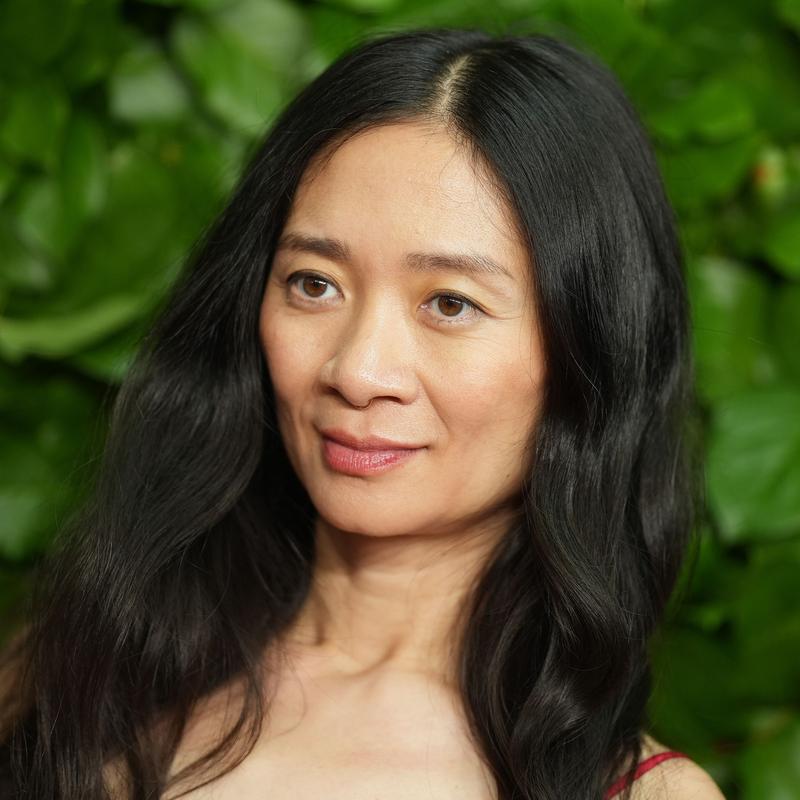
David Remnick: Chloé Zhao was only the second woman to win the Oscar for Best Director, and that was for her film Nomadland, which starred Frances McDormand as an itinerant worker. Chloé Zhao is 43, and she's had a varied career, ranging from low-budget contemporary Westerns to making a Marvel film called Eternals, which is a supernatural epic with a colossal budget. Now Zhao has taken another distinct turn to Hamnet, a story about the creative life and the family life of William Shakespeare, based on a novel by Maggie
O’Farrell’. Zhao's film is about Shakespeare as a young man grieving the loss of his only son.
It stars Paul Mescal and Jessie Buckley. Chloé Zhao spoke with our staff writer, Michael Schulman, who covers film and entertainment for The New Yorker.
Michael Schulman: How did this book and how did this project make its way to you?
Chloé Zhao: I was driving through New Mexico to Telluride Film Festival, and then that's when Amblin called me and told me about this project.
Michael Schulman: Amblin meaning?
Chloé Zhao: Amblin Spielberg's Production Company.
Michael Schulman: Spielberg's Production Company.
Chloé Zhao: They said it over the phone, the reception, [chuckles] "If you haven't been to the Four Corners, not great." I was in and out, and they're saying it's about Shakespeare's wife and the death of their son. I just thought there's so many things in that sentence that I have no personal connection to, so I said no. Then a few hours later, I met Paul Mescal for the first time. I didn't know who he was because I had not seen normal people. His career has changed a lot in a short amount of time.
Michael Schulman: Yes.
Chloé Zhao: I sat next to the creek with him, and I just felt something about him. There's something about him. There's a simmering discomfort in him, like an animal. Like a Steppenwolf just want to burst out, and that's why he creates. The energy was really strong. He's talking about-- oh, I asked him, "Would you ever consider playing young Shakespeare?" He said, "Wait, are you talking about Hamnet? [chuckles] I love the book so much. You have to read the book. It's not what you think it is. Please read the book."
Michael Schulman: What about the book, when you read it, made you feel like you were the right person to do it? Were there details in the novel that really spoke to you?
Chloé Zhao: When I read the book, I thought the internal landscape was so beautifully described. That usually I have to really get to know, say, Brady from the writer. I Had to get to know him for such a long period of time. Would I understand his internal landscape so then I can externalize it on screen so the audience isn't just relying on him verbally. Maggie already done that work for all the characters. I thought that's my blueprint. Also, there's a rhythm to the way she writes, has a heartbeat to it that is very similar to mine. I found out later that her favorite filmmaker is Wong Kar-wai, which is the person whose work that made me want to make films many, many years ago. There was that similarity as well.
Michael Schulman: There's also an external landscape in the film that is so vivid. You're a filmmaker who shoots the natural world beautifully. Anyone who's seen your first three features were all or in part set in the American West and South Dakota specifically. Hamnet is set in Elizabethan England, and you shot in Wales and Herefordshire. I'm curious about what you got from that very different kind of natural landscape as you were thinking about the film.
Chloé Zhao: The natural world, the reason why it has been such a big part of every film I've done is because I can now, in my 40s, look back at my career and say the reason why that is is because I have always had a deep fear of death. I think that drives my creativity. When you're afraid to die, you are actually not able to live fully. I know that deep inside. At night, when the light goes off, phone shuts off, I'm lying there, I know I'm not living my life fully, and it's because I'm so terrified. I don't feel safe in this world.
Also, my instinctual human self knows that when you go into nature, if you have a relationship with nature, then you develop a very embodied spirituality that is not relied on anyone else telling you. It's an embodied safety that you feel within oneness, and that you can only find in nature when you become one with your surroundings. All of our great prophets goes into nature to come back with the message for a reason. I just knew that's part of working on my own shit [chuckles] to get myself into nature. The second part, to answer that question, is that in my 30s, I was much more like a pioneer, like going west, like finding treasures.
I wanted to go as wide as possible, chasing horizon after horizon so I can come back with treasures. The camera is insatiable. It wants to capture everything, and I want to move. I'm always on the move. Then in my 40s, after midlife crisis, I realized that I can't keep running from myself. In the forest, it's the opposite of the plains. The forest is deeply feminine, and it makes you stay still. When you stay still, you have nowhere to go but into the underworld and into yourself, where all your shadows are. I knew in my 40s, this is the right place, right kind of nature for me to dive deep in.
When it comes to the forest in Wales, in terms of inspiration, I was-- when I first visited that forest with my cinematographer Łukasz, we wanted to go to find a language for the film, or just let the forest tell us what the film is about beyond what we read in the book. I was in Kyiv right before that, and I was with somebody who was making a documentary about a strip of forest in the front line. When I left Kyiv and went to Wales, and it was this beautiful spring forest that we were in, me and Łukasz was at. I was getting some images and footage from the front line in Ukraine, and I will see these black holes in the ground. Some of them, they're land mines holes, sometimes they're dugouts.
Then I walk around our forest, and I would see these black holes that are natural made black holes. I just such a big emotional reaction to it. I start crying. I sat next to this black void, because it's coming for all of us. Also, is in that void, the compost. New life comes in this hole here, and the one in that front line, new life will come. There's hope. In Hamnet he wrote, "All living things must die, passing through nature to eternity." To me, that eternity is love. Then my Polish, DP runs over and look at the hole and go, "I understand this. We must film this hole." Then he filmed the hole. We had Max Richter's Sleep album playing. Then he started lifting up at some point, the tripod, and then he went up to the sky.
Then we just started, went up and down, up and down. It was like, "Ah, this is what the film is about."
Michael Schulman: Right.
Chloé Zhao: We consider nature an HOD. A department head is constantly working with us.
Michael Schulman: One of your main characters is William Shakespeare.
Chloé Zhao: I know.
Michael Schulman: The William Shakespeare played beautifully by Paul Mescal. This is not the witty hyperverbal Shakespeare of Shakespeare Love. He's actually a man of pretty few words. He's brooding, he's frustrated. As you and Maggie were writing the screenplay, how did you approach just the challenge of writing lines for William Shakespeare?
Chloé Zhao: [laughs] I think the reason why the producers and also Maggie chose me is because I don't feel that way about William Shakespeare. I don't have the same reverence. I do have reverence intellectually, but I don't have the burden on my shoulders as many people in the West do. Maybe the same as I am with cowboys or westerns. I watched only two and a half Westerns when I met the writer. I watched more afterwards because I fell in love with it and it's the same. I'm probably going to be doing more Shakespeare-related things after this.
I didn't come feeling that he's any different than a man who fell in love with a woman and couldn't quite express his feelings. I never-- the pressure is on the actors. It's on Paul, [chuckles] who does have a lot of reverence in the sense that not only will we put him through not only playing William Shakespeare, but also telling the story of Orpheus and Eurydice as William Shakespeare. To answer your question, he's very different than in the book. Actually, Maggie reminded me a couple of weeks ago when she was here, she's like, "Do you remember that--" You see in the book, he's quite talkative, he's expressive an actor.
I guess that was me. I guess I made a decision to change his character because I find a lot of male artists get into expressing themselves in their arts because they never felt safe to express their emotions in real life, in our society.
Anne Hathaway: What are you looking at?
William Shakespeare: You.
Anne Hathaway: Why? I thought you were a man of words, master tutor.
Chloé Zhao: As a little boy, they're told to toughen up or there's no space for your emotions because mom is crying, my sister is crying. I was raised by a man like that. I've loved and be loved by a man like that my whole life. It just became natural for me. Paul, as well, was part of that decision as well, watching him. There's him in this character as well. I can only work that way because, moment by moment, I need to feel love towards this character and I need to feel like I understand him, and there's a part of me that is like him. I feel safe in my fantasy world on set. Then I can deal with emotional situations in life.
Paul was under a lot of pressure because we don't talk about who this character is. We start shooting and find him. That's day three when we did the Orpheus scene where he goes, "I don't. Talking to people is difficult for me." Then she said, "Tell me a story." We did that whole scene on day three and many, many takes. Usually I don't do that many takes, just for him to find who is William Shakespeare speaking one of the greatest myths to a woman he fall in love with. That's very loaded.
Michael Schulman: Yes. Then at one point he actually bursts forth with the to be or not to be speech.
Chloé Zhao: That's also pressure on Paul. Yes. [laughs]
Michael Schulman: I know you went to school in England as a teenager. Were you taught Shakespeare there? Was that your first encounter with his actual text?
Chloé Zhao: Well, I didn't speak English. When you don't speak English and you have Romeo and Juliet in front of you in the equivalence of a ninth grade-- [chuckles] Still, when I was on set of Hamnet, when Paul was delivering his speech, I only understand a third of it technically because I just don't understand what those words mean. At the beginning, Paul has said to me-- Look, I can study it and translate every word and understand what it all means.
Paul said to me, "Listen, if Shakespeare is performed right, you don't have to understand what they're saying. You feel it in the body. The language is written like that." In a way, me and Lukasz, who also doesn't speak much English, we sat there and we watched Paul's performance. In a way, we embody Agnes, who doesn't quite understand everything, but we feel it. In those days in the globe, I'm judging by me and Lukasz's physical reaction, we start crying or we go, "Oh," like our throat is tight, our stomach turns, then we know it's the right take. We didn't even have to understand every word, which is really magical. It's making me think about Shakespeare completely different.
Michael Schulman: I think that's true for anyone watching Shakespeare. I believe you just wrapped directing the pilot of the Buffy the Vampire Slayer revival. You're back working on a franchise with a very intense fandom.
Chloé Zhao: Which I'm also one of them.
[laughter]
Michael Schulman: I'm sure that helps. I'm curious, as you move forward in your career, how do you see your relationship with the franchise-driven part of Hollywood? I think, from what I can tell, it's only getting harder and harder to make a movie that isn't based on something connected to some form of IP. Yet you've done both. You're continuing to do both. You could call Hamnet and-
Chloé Zhao: Hamnet is an IP.
Michael Schulman: -William Shakespeare IP in some way.
Chloé Zhao: I thought about his sellability when I signed up both Maggie's book and him. It's pretty strong IP we're dealing with here.
Michael Schulman: Right. How do you see yourself fitting into the industry that is now so IP-driven.
Chloé Zhao: Why do you think that is?
Michael Schulman: Because people want safe bets. It's hard to make money on a film.
Chloé Zhao: Yes. I just launched-- I just made announcement, me and my producing partner, Nic Gonda, we teamed up with Kodansha, which is the oldest and one of the largest manga publishing house in Japan. They have everything from Akira to Ghost in the Shell to Attack on Titan the Sailor Moon. We just teamed up with them to launch Kodansha Studios, which means that we will be developing live-action adaptations of their IP in house before it goes to the studios.
Michael Schulman: Tell me more about manga.
Chloé Zhao: Manga is quite different than Western comics, particularly American comics. Manga is heavily influenced by Japanese Shintoism. If you don't know what that is, it's believing that every object has a spirit. Like this glass has a spirit within itself. There has been quite complicated relationship between studios licensing Japanese IP, and it's particularly manga IP.
The adaptation process has been quite complicated for years and years and years now. I've always dreamt to be a bridge between the East and the West, and to be able to create a safe and nurturing garden in a way for international filmmakers, writer, directors and Japanese senseis, manga artists, authors, to come together and to, at early stage, allow the artists to really see each other like, "Why did this artist create this story in Japan? What is really the core of it, spiritually, emotionally?" Then to find the right filmmaker and then can allow them to work together to develop the screenplay, until the shoots of the plants are strong enough, and then we go to our studio partners.
I think that's, I guess, one of my place in the IP world. I think adapting from IP is beautiful. I started my writing career as a fan fiction writer-
Michael Schulman: Oh really?
Chloé Zhao: -in China. A pretty well-known one, too. You never know because I will never share with you my pen name. I don't mind. I think the word "original" is misunderstood in modern world because origle means the source. It means old, the beginning. Original actually means going back to the source. Our modern culture is so obsessed with new things, must have new things. It's a very masculine-dominated way of looking at the world. Must have new things all the time. Nature, everything goes back to the source. I don't mind working with IP. It's just how we do it I think could be healthier, more wholesome.
Michael Schulman: The last thing I want to ask you about is you've described yourself as deeply neurodivergent, and you've talked about how you become overstimulated and kind of shut down. A director on a set has to deal with so much, so many people, departments, questions, images. How does that challenge you on a movie set, and how does it help you on a movie set?
Chloé Zhao: Good question. See, I didn't have my official diagnosis until this year. In the past, I always wondered, maybe I'm just built wrong. Something is off with me. Going to premieres or press days promoting the film is even harder because the amount of exposure going to an award show or things like that. [chuckles] I feel a lot of shame around "Why can't I enjoy it like the people around me could be?" Then, once I have some language around it, it's very empowering. I go, "Okay." The fact that I'm good at some things is my sensitivity, my intuition, my ability to process information, my pattern recognizing skills.
I can watch people and find patterns, and I can pretty much predict what they're going to do in a scene. All those things I understand is because my brain takes in so much more information than the person next to me, so I need time to process that information. If I don't process it and more coming in, then I could shut down and implode, or just have massive meltdowns. [chuckles] Since then, and also a really strong perfume can give me a shutdown.
Michael Schulman: Really?
Chloé Zhao: Yes. If someone's wearing-- if going through the airport, that's tough.
Michael Schulman: You won't be working in Smell-O-Vision?
Chloé Zhao: [chuckles] No, but I love anything that's natural from the natural world is fine. It's the chemical in the perfume that is overwhelming. Like cleaning products, air fresheners, things like that.
Michael Schulman: Well, you are very likely headed on the road to the Academy Awards again. I hope that no one is wearing very strong perfume at them.
Chloé Zhao: That's lost cause. It's okay.
[laughter]
Michael Schulman: Congratulations on Hamnet.
Chloé Zhao: Thank you.
Michael Schulman: It's a really beautiful movie.
Chloé Zhao: Thank you.
[music]
David Remnick: The New Yorker's Michael Schulman speaking with Director Chloé Zhao. You can find Justin Chang's review of Hamnet @newyorker.com and of course, you can subscribe to The New Yorker there as well, newyorker.com. I'm David Remnick, and that's our show for this week. Thanks for joining us. See you next time.
Speaker 4: The New Yorker Radio Hour is a co-production of WNYC Studios and The New Yorker. Our theme music was composed and performed by Merrill Garbus of Tune-Yards, with additional music by Jared Paul. This episode was produced by Max Balton, Adam Howard, David Krasnow, Jeffrey Masters, Louis Mitchell, Jared Paul, and Ursula Sommer, with guidance from Emily Botein and assistance from Michael May, David Gable, Alex Barish, Victor Guan, and Alejandra Decket.
Copyright © 2025 New York Public Radio. All rights reserved. Visit our website terms of use at www.wnyc.org for further information.
New York Public Radio transcripts are created on a rush deadline, often by contractors. This text may not be in its final form and may be updated or revised in the future. Accuracy and availability may vary. The authoritative record of New York Public Radio’s programming is the audio record.