Ada Ferrer on America’s Imperial Adventures in Cuba
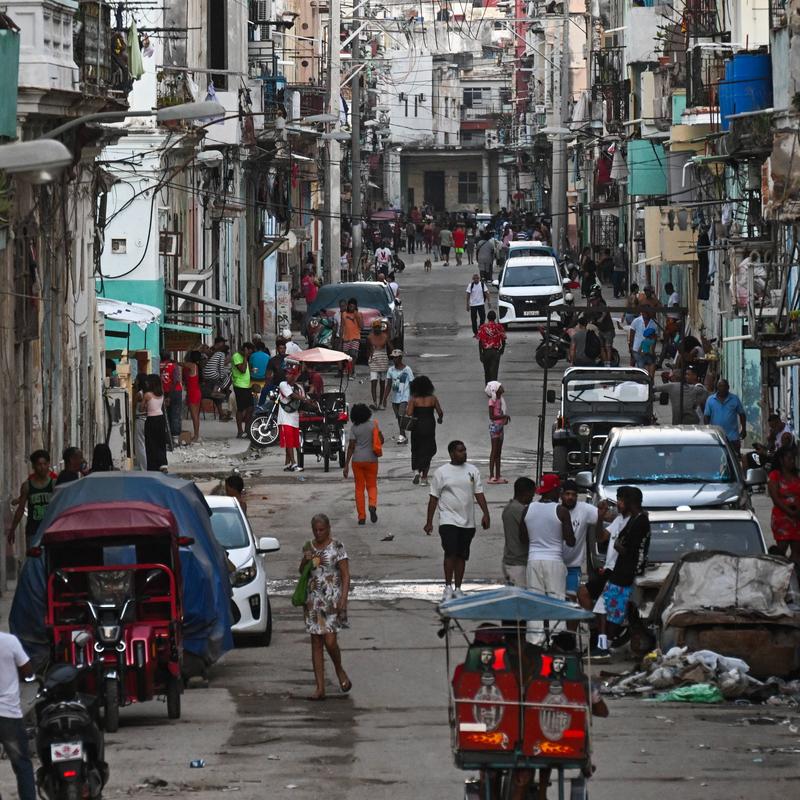
David Remnick: We're talking today about the United States and Cuba and the Trump administration's threats lately of a takeover there. Trump would certainly not be the first president to intervene in Cuba. America's troubled relationship with the island goes back centuries. To get a clearer view of the relationship, I spoke with the historian, Ada Ferrer, who won the Pulitzer Prize for her 2022 book, Cuba: An American History.
Ferrer herself left Cuba as a small child, coming to the United States with her mother back in 1963, when Castro's regime was arguably at its peak. I spoke with Ada Ferrer this week about what a military campaign would mean to Cubans and to the large Cuban-American population in Florida and beyond.
Ada, Donald Trump said this about his intentions toward Cuba. It may be a friendly takeover. It may not be a friendly takeover. It wouldn't matter because they're down to, as they say, fumes. That's what President Trump has said. How do you react to a statement like that?
Ada Ferrer: Well, they are down to fumes. He's assuming there's a difference between a friendly takeover and an unfriendly takeover. In my opinion, there's no such thing as a friendly takeover of Cuba. If you know any Cuban history and any history of the relationship between the two countries, you can't listen to those words and not cringe.
David Remnick: Jon Lee Anderson was just there for us and is about to publish a piece about what he saw and what he heard. It's pretty desperate. My guess is that you speak to people there as best you can, but tell me what it's like.
Ada Ferrer: Well, it feels total. There's a sense of hopelessness. There's a complete lack of confidence that the current government in Cuba can find a solution to anything. It's affecting every realm of daily life. It's gotten worse since Trump has cut off the shipments of oil to Cuba. It's gotten a lot worse over the last three months, but it was already devastating. You already had hospitals, parts of which were crumbling, literally.
I know someone in Cuba, this was in December of 24, who needed hip surgery because she fell and broke her hip. The family had to provide the prostheses. They had to buy it on the underground market themselves because the hospital couldn't provide it. They had to provide medicine. They had to bring sheets. They had to bring food. The other thing they had to provide was blood because the hospital could not keep stores of blood.
David Remnick: Wow.
Ada Ferrer: The government can't even pick up garbage. That was true even before, right? There's a sense in which there's a lot of basic services that they can't provide.
David Remnick: The responsibility for that failure is at the feet of the Cuban government, at the feet of the United States. Where do you place it?
Ada Ferrer: Both. The Cuban people are so desperate right now that they are much less interested in the question of who's to blame. In some ways, they don't quite care who's to blame. They just want something to change. I think that's the mood right now. In terms of what I think, the US embargo is a policy that has harmed the Cuban economy. There's no question about that. Right from the very beginning, it denied Cuba access to its major and natural market 90 miles away. Cuba turned to the Soviet Union and found salvation there, right?
In some sense, it never became an economically independent nation. It relied on the Soviet Union for decades. The Soviet Union collapsed. It sent the Cuban economy into a tailspin, and then Venezuela stepped in with oil, but there's no saviors anymore. If you look at what the Cuban government has been investing in over the last years, there's tremendous investment in the tourist industry, but remarkably, surprisingly little in things like agriculture or infrastructure or even education, health, and so on. They've made decisions that have contributed to the current crisis.
David Remnick: The state of Florida and its politics has been, for years, influenced by Cuban Americans.
Ada Ferrer: Right.
David Remnick: The usual stereotype of that is that they're quite conservative, especially on this issue. Are they still?
Ada Ferrer: Absolutely. I think a majority of Cuban Americans would welcome some kind of action by Trump and Rubio to force a change in Cuba. I think what many people don't think about when they think about Cuban Americans is how diverse the community is, not politically necessarily, but in terms of when they arrive. Most Cuban Americans, most Cuban-born people in Miami arrived in the very recent past. That means that they grew up in a communist society. They went to schools. They recited poems about Che Guevara, or their parents did.
They came out of that system and this ongoing developing crisis, in some ways, over 30 years, but very, very in an accelerated manner over the last five or six years. What that means is that many of the people who are eager for that kind of action from Trump and Rubio aren't these old Cuban Americans who lost property 60 years ago. It's people who never had much property to be taken. That also means that that distinction that's traditionally drawn between Cubans on the island and Cubans here is not quite as meaningful as it was decades ago.
David Remnick: Now, Cubans fleeing the Communist Party had enjoyed protected status immigrating to the US. Now, we're deporting record numbers of Cuban people, with some of those Cold War protections revoked. What do Cuban Trump supporters think about that?
Ada Ferrer: You're right. The Cuban Adjustment Act, which had afforded Cubans advantages that nobody else had, it's still the law technically, but it almost doesn't matter because Trump is doing things that he's acting as if the law didn't exist. There are Cubans languishing in places like Alligator Alcatraz, including a cousin of mine. There are people who came in under Biden's humanitarian parole program. Those people all received self-deportation letters.
I know, actually, that what was happening before the invasion in Venezuela was that Trump was losing support over that. You got a sense from talking to people in Miami, political leaders, activists. I heard it, that he was going too far, that they thought he didn't mean them, that he thought he was going to go after criminals, but he was just going after people who were working, and so on, and so forth. I haven't heard that so much since the attack on Venezuela.
David Remnick: About a decade ago, Barack Obama, as president, visited Havana. He removed Cuba from the list of state sponsors of terrorism. That's a decision that Donald Trump eventually reversed. That was a moment of real optimism, both in Cuba and in the United States, about Cuban-American relations. How were those moves received at the time, and how are they remembered among Cubans today, that moment a decade ago?
Ada Ferrer: I was there when Obama visited. In all my visits there, I have never seen the sense of excitement and hope that I saw when Obama was there. People were on the street. People were eager to see him, eager to watch everything he said on television. I ran into people who said things to me. I remember talking to this older woman who said she watched his speech on television. She referred to him as "my president." The relationship between the two countries has been so hostile for 67 years that that moment just seemed like the possibility of something new and something different.
David Remnick: Now, seems the polar opposite. I have to think if you're sitting in Havana today or anywhere in Cuba, and you watch what happened in Venezuela, and you listen to Marco Rubio and others talk about the imminence or almost inevitability of American action in Cuba, the sense of anxiety has to be really horrible.
Ada Ferrer: The anxiety isn't just about Trump, and it isn't just about Marco Rubio. The anxiety is about the fact that they haven't had electricity maybe in 36 hours. Whatever little food they had is gone. Hospitals are sending people home because they can't do surgeries, right? In some sense, the sense of hopelessness about that, about the current situation means that more people are willing to take a change, no matter where it comes from.
I think that is new. If you think about the Cuban population now, and maybe I forget the numbers, maybe a third are born after the fall of the Soviet Union, they've never known a Cuba in which you could achieve well-being. Not luxury, but well-being without access to hard currency, without access to remittances from abroad, without some kind of reliance on an underground market and shady deals, right? The crisis now is happening after 30 years.
David Remnick: I want to be clear about what you're saying. You're saying people would welcome a change. They're desperate for a change.
Ada Ferrer: Yes.
David Remnick: At the same time, you're not saying they're eager for American intervention in the way that Marco Rubio hints at it.
Ada Ferrer: I don't know that a majority is eager for Marco Rubio to invade. I can't say that. I think more people than ever are willing to countenance that as a possibility and even as a short-term solution.
David Remnick: You seem worried that that's going to be taken advantage of.
Ada Ferrer: Yes, I do worry about that because I don't think a solution will ever be US intervention. I don't think that. I don't believe that because I'm someone who has studied US-Cuban relations forever. I know what US invasion and US intervention and US meddling-- I know that history. One of the words or one of the phrases that keeps getting used is something about the liberation of Cuba, a free Cuba. Historically, the US has not acted in the interest of a free Cuba.
From the 19th century, it tried to impede Cuban independence at every turn. In the 1820s, when Latin America became independent, it specifically wanted to avoid that for Cuba. Then in the mid-19th century, in the 1850s, they supported the government. Independent Americans supported invasions of Cuba to liberate it from Spain and then attach it to the US as slave states. This is when slavery still existed. In 1898, you get the Spanish-American War in which the US intervenes in Cuba.
Most Americans may not realize that what preceded that was 30 years of struggle for Cuban independence. The US went in, but then it staged a military occupation for almost four years and left only when Cuba was willing to accept something called the Platt Amendment, which gave the US the right of intervention. The revolution happened in 1959. The US tried to intervene again at multiple points. You had the Bay of Pigs, April 1961, a CIA-sponsored invasion of Cuba, which was manned by Cuban exiles.
Before it happened, I thought of this when Trump was suggesting that Marco Rubio might be the next president of Cuba. At the time, people in Washington, in the White House, were slapping themselves on the back, saying Bobby Kennedy was going to be the next mayor of Havana, right? These kinds of predictions are not unprecedented. In some sense, that's part of the background. That's why any historical knowledge makes you skeptical of a statement like Trump's.
David Remnick: You have family still in Cuba?
Ada Ferrer: I have, yes. I have family still in Cuba.
David Remnick: How do you talk to them? How is it possible to speak to them? Can you have phone conversations, or is it by WhatsApp? How does it work?
Ada Ferrer: WhatsApp. It's all WhatsApp.
David Remnick: What are the conversations like?
Ada Ferrer: Well, some of the conversations are about health. I have a cousin right now in the hospital. Sometimes they need medicine, and I have to figure out ways to get them medicine. A lot of it is things like that, dealing with-
David Remnick: Day-to-day practicalities.
Ada Ferrer: -day-to-day emergencies, yes. I actually have family that left Cuba, and they moved to Spain. So many people are going to Spain. There are these private bus companies. Well, I don't know what they're doing now with no gas, but they were doing this before January. These private bus companies that just go from one town to another, picking people up and just taking them to the Spanish consulate and the Spanish embassy.
There are so many people doing it that it's become a business. Last time I was there, which was two years ago, I said a little over two years ago, I spent a lot of time with someone who is a poet, who was driving a car to make extra money. One of the things we talked about, and I've noticed this over 30-some years of traveling to Cuba, is that you get tired of watching people leave.
You're happy for them, but you get tired of saying goodbye. I've noticed it myself that many of the people who I was friends with in the beginning are no longer there because they left. You make new friends, then they leave. I reached out to him, can't remember when, late last year. He always told me he would never leave, and he's now in Spain. He's living in Madrid. Something he said would never happen.
David Remnick: Ada Ferrer, thank you so much.
Ada Ferrer: Thank you.
[music]
David Remnick: Ada Ferrer is a professor of history at Princeton University, and her book, Cuba: An American History, won the Pulitzer Prize.
[music]
Copyright © 2026 New York Public Radio. All rights reserved. Visit our website terms of use at www.wnyc.org for further information.
New York Public Radio transcripts are created on a rush deadline, often by contractors. This text may not be in its final form and may be updated or revised in the future. Accuracy and availability may vary. The authoritative record of New York Public Radio’s programming is the audio record.