With the Podcast “I’ve Had It,” Jennifer Welch Goes “Dark Woke” on Politics
David Remnick: One of the big changes in our politics, and I don't think we've really gotten our heads around it yet, is the change in how and where people get their information. You know the top line here, very real declines in people watching the nightly news and reading the newspapers, and in their places come a much more scattered, much more siloed universe of social media feeds, TikTok explainers, podcasts, newsletters, and all the rest.
Now, I don't think it's unfair to say that most of these outlets, not all, but most, whatever their virtues, are not exactly obsessed with fairness and accuracy in the way that the best traditional journalism outlets are or damn well should be, and yet there's no denying the power, even the relatability, of many podcasts, whether it's Ben Shapiro on the Right, Joe Rogan, wherever he might be on a given day, or on the Left, someone like our guest today, Jennifer Welch.
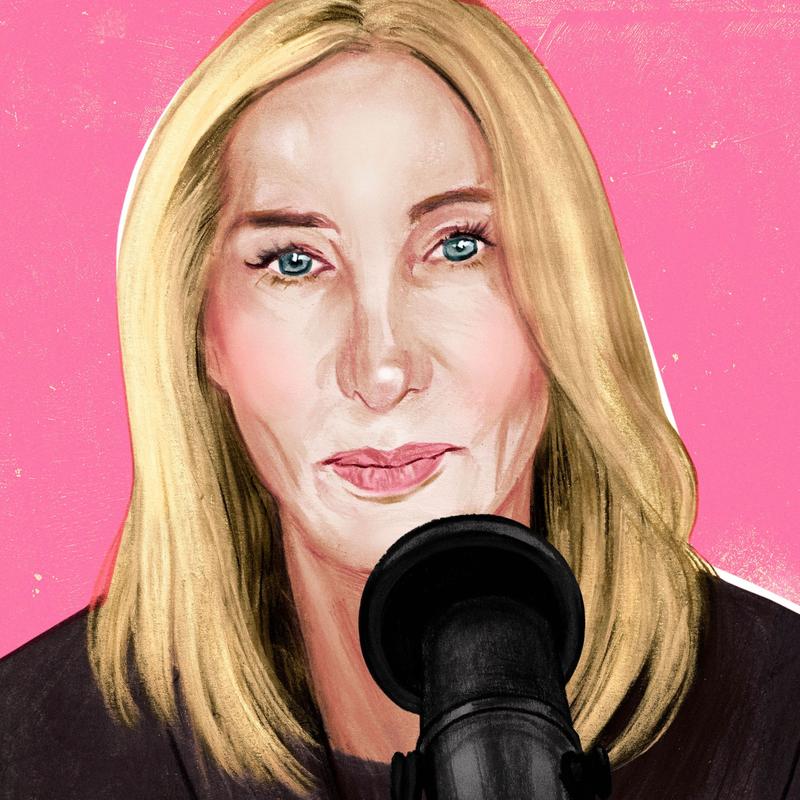
Welch came to political podcasts in a kind of roundabout way. She had a successful career as an interior designer, and she co-starred in a reality show on Bravo. Since 2022, she and her co-host Angie Sullivan have been pushing political buttons and getting millions of fans on the podcast called I've Had It. That's Jennifer Welch's daily state of mind, furious.
Jennifer Welch: I've had it with white people that triple-Trumped, that have the nerve and the audacity to walk into a Mexican restaurant, a Chinese restaurant, an Indian restaurant, go to perhaps their gay hairdresser. I don't think you should be able to enjoy anything but Cracker Barrel.
David Remnick: Her frustration is not only with MAGA. Welch has gotten particularly contentious in interviews with establishment Democrats like Cory Booker and Rahm Emanuel. She takes real advantage of a certain surprise factor, that a white woman in her 50s from Oklahoma has emerged as one of the most provocative voices on the Left today. I spoke last week with Jennifer Welch, co-host of the podcast I've Had It.
You have one of the biggest podcasts out there. As you know, there are hundreds of thousands of podcasts. Everybody and their uncle apparently has a podcast at this point. How did you conceive of this show? Where does it fit in? What is it?
Jennifer Welch: My friend Angie and I were on a reality television show in 2016 to around 2019. Our politics seeps through a little bit, particularly mine does in the show, because that's what was the hook for the Bravo executives. They're liberals in Oklahoma.
David Remnick: Right, where you're from.
Jennifer Welch: Right. I'm from Oklahoma City. The show gets canceled, and I go back to being an interior designer. Then I'm doing national projects. That was great fun, and I'm just booming. Then there was the post-COVID boom, where everybody comes out of quarantine wanting to redecorate everything. My kids were like, "You still have a lot of people that follow you that are interested in the show. You should do a podcast." I tell Angie this and we decide to do it.
The premise was during the Biden administration, which was, "I've had it. I've had it with gender reveal parties, I've had it with over-celebrating children. Why are we going to kindergarten graduations? Why?"
David Remnick: [laughs]
Jennifer Welch: There were these relatable grievances. Everybody likes to trash-talk. My co-host and I look somewhat MAGA-coded.
David Remnick: You're MAGA-coded because of where you're from?
Jennifer Welch: The blonde hair, some Botox from time to time, and the southern accent. It's kind of Fox-coded, I would say. I've always been a die-hard political junkie. I was raised in the Bible Belt by two progressive atheists, which is a very, very strange upbringing.
David Remnick: Was political discussion a big part of your upbringing in Oklahoma?
Jennifer Welch: Yes, with my mother.
David Remnick: Who was pretty Left, right?
Jennifer Welch: Very Left. My mother is a voracious reader. She was a closet atheist for many years, because if you came out of the closet as an atheist in a place like Oklahoma, it's about as bottom of the barrel.
David Remnick: It's social death for you.
Jennifer Welch: Total social death. I remember the first time I ever asked my mother, "What is gay? Why would somebody be gay?" I'm six years old. My mother would say, "Well, darling, all you need to know is nobody in their right damn mind would ever choose to be gay in the middle of the Bible Belt. That would be insane. It is not a choice." This type of critical thinking, juxtaposed with the rigid evangelicals that I went to school with that were constantly trying to recruit me, was a really interesting upbringing.
David Remnick: You've got this podcast now with the background that you've got. What do you see as its distinguishing feature? What's it about?
Jennifer Welch: We moved on from the petty grievances, and we have an additional podcast now called IHIP News, which is short for I've Had It Podcast News. We have so many people in the middle of America, blue dots if you will, that have a different worldview about American politics than, no offense, you coastal elites do, or people inside the Beltway do. There is a part of Beltway politics that is too civilized, that doesn't understand the grit and the fangs that will draw people in the middle of the country into the fight.
David Remnick: You're trying to, as least as I listen to it, give voice to that sense of frustration. Some of your recent episodes on your podcast have these names, and not all of them will be able to make it on conventional radio. No Country for MAGA Men, New Year, Same Assholes, Wring out the Bullshit, Mary Grift-mas, Fascism, But Stupid, and finally, All the President's Morons. I think that's a different mood, say, than Pod Save America.
Jennifer Welch: Yes, this is the era of FU politics and dark woke.
David Remnick: What is dark woke?
Jennifer Welch: Dark woke is a reaction to you have the purest woke people who are policing what everybody says, up in everybody's business, which is similar a bit to conservatives being up in everybody's business. Dark woke, for me, is we are fighting for good, for equality, and for social justice for everybody, but we don't mind saying eff you, you have to know what you're up against, and you have to be ruthless.
David Remnick: Give me some examples and tell me who your allies are in that.
Jennifer Welch: Well, some examples would be we have to go after these MAGA men. One example would be Jesse Watters. This man talks incessantly about masculinity. Joe Biden is not masculine because he sucks on soup. What kind of man sucks on a straw? He goes on and on and on so much about the idealized man. That's a part of fascism. Propelling this form of toxic masculinity. Why are you so obsessed with men, Jesse Watters? What's all that about? Why are you so obsessed with trans people? Why are you thinking about genitals all the time? Kind of flipped the script.
David Remnick: When you look at the guys on, and it's almost all guys, on Pod Save America, do you look at them as very 2016, very 2008, very Obama, and you've left that behind?
Jennifer Welch: I see the situation as being so dire right now that I don't see any of these people as competitors. I see the whole group as people building a media ecosystem that is pro democracy. If people that are still stuck in the Obama era need to go listen to Pod Save, I know that they are pro democracy and antifascist.
David Remnick: You think it's a form of self-soothing, almost?
Jennifer Welch: Yes.
David Remnick: And delusional?
Jennifer Welch: Yes.
David Remnick: Explain that to me, because I would bet if we're being honest with each other, that on public radio, there's a lot of that, too.
Jennifer Welch: There are some commonalities between the center left and the far right that can no longer be ignored. You can look at the electorate, and you can say, "You're being lied to. These people are lying to you." The center-left movement, the Hillary Clintons, certain people in that media echo chamber, are still lying to you because they prioritize corporate interests over the interests of the people. That is what has left the vacuum for well-meaning people to just vote against the status quo.
This has been an evolution for me because I was a very good MSNBC liberal. That's where I got my marching orders. That's where I felt like I was intellectual, I lived out, and I was the most liberal woman in Oklahoma City. I see the error of my thinking and not thinking even outside of that box.
David Remnick: Be specific. What were the errors? You're obviously very, very tough on the likes of Hakeem Jeffries, Chuck Schumer. Give me a sense of what you think their sins are and what distinguishes your politics from, say, the more supportive voices that you do hear on Pod Save America or the like.
Jennifer Welch: The error of my way was probably voting for Hillary Clinton over Bernie Sanders. There's a condescension to corporate Democratic politics with the very long answers. You probably saw where I asked Cory Booker, "Do you think Benjamin Netanyahu, who is a war criminal--" It was a yes or no question. It was a very long answer.
David Remnick: Here's where I would get into a conversation with you. Some things are a yes or no answer, some things aren't, and some things actually are complicated.
Jennifer Welch: Agree.
David Remnick: Some things do have a complicated history that's not necessarily both-siderism or all the other derisive terms for it. Is that just weakness in your eyes or what?
Jennifer Welch: I do think that some answers are more complex, but when you have somebody like Cory Booker, who has presented himself to all of us as standing for the marginalized, standing for humanity, standing for civil rights, and you ask him a question about Benjamin Netanyahu, who has a warrant out for his arrest for being a war criminal, and you see that answer being duplicitous, this is very damaging to the Democratic Party.
[music]
David Remnick: Jennifer Welch is co-host of the podcast I've Had It. We'll continue in a moment.
[music]
David Remnick: This is The New Yorker Radio Hour. I'm David Remnick. I've been speaking today with the co-host of the popular political podcast I've Had It. Her name is Jennifer Welch. Even if you aren't a regular listener, Welch very well may have popped up on your social media feeds with stinging rebukes of politicians on both sides. Her progressive politics are not unique, but her style and her sense of how to connect with listeners is pretty unapologetic, pretty in your face, and very profane.
Where Michelle Obama famously said, "When they go low, we go high," Welch says, "You want to go low, we're going to go lower." I'll continue my conversation with Jennifer Welch.
[music]
David Remnick: Joe Rogan is the leading podcaster, not only in this country, but in the world, and by a lot.
Jennifer Welch: Yes.
David Remnick: This is a guy who started out not with politics in mind, but rather with UFOs in mind and UFC fighting, and suddenly politics, and big thinkers, and dark web people, and, and, and started coming to his show, and it became even more important, even more influential. One of the biggest lingering questions about Kamala Harris wasn't about this policy question or that; it was about why the hell she didn't manage to go on Joe Rogan. Now, I know you don't listen incessantly, but I wonder how you think about him, and what influence it might or might not have on what you do.
Jennifer Welch: These voices are out there, everywhere, and on the Right, they have a massive, massive media ecosystem. The Democrats are too structured. They need to go on all of these podcasts. Kamala should have gone on Joe Rogan and allowed herself to not be so disciplined. The reason that Joe Rogan, in a much smaller podcast, I've Had It are taking off so much is because this is the way people speak. The news where you're just being reported to, it's kind of aged. It feels somewhat antiquated. We've become more informal in the way that we live.
To combine this with my former profession, I still do it, interior design, think about back in the '50s, the kitchen, your guests never saw it. It was a very formal way of life. Now the kitchen is the nucleus of the house, and everybody hangs out at the island. As a culture, we've become less and less formal. You see that in architecture, and you see that in the way we consume news. There's this idea that when you're listening to a podcast or two people having a conversation, that you know them and they're right in your ear, and it feels intimate versus the presentation of corporate news. What I grew up, and I still like it, and I still watch it.
David Remnick: Do you?
Jennifer Welch: Yes, I do.
David Remnick: Do you think The New York Times is a reliable purveyor of news? Because it's certainly the dominant newspaper and probably news gathering organization in this country.
Jennifer Welch: I do think they do really good work. There has been some sanewashing headlines pertaining to covering what is actually happening right now, that I think is not just a New York Times problem, but a media problem in general. I saw online, imagine if we covered what was happening in the United States right now, the way we cover what happens in dictatorships in Africa or the Middle East.
David Remnick: More outraged, in a sense.
Jennifer Welch: Right, and it would be more realistic as to what's happened. I think the media has been very complicit because of the corporate ownership of it. It's been the soft sell of this fascism just normalized it.
David Remnick: I'm not sure I agree, if you don't mind my saying so. I get that critique, and I hear it all the time. I'm in corporate media. This week's cover of The New Yorker is Donald Trump amidst lots of explosions, obviously Venezuela, drinking from a gigantic barrel of oil, and the oil is coming all over him. A more straight-up the wazoo political cartoon you can imagine by Barry Blitt, and there it is. Yet I go to one panel discussion after another and get yelled at by one comedian podcast, usually comedian podcasters, about the corporate media. They're the truth teller. I don't know if it's as simple as all that.
Jennifer Welch: I think you're correct that there are outliers, but it seems like, since Fox News, there has been a trickle-down effect of a weakening of journalistic integrity across the board.
David Remnick: You had Rahm Emanuel on.
Jennifer Welch: Oh, Yes.
David Remnick: Rahm Emanuel is pretty clearly either thinking about or already running for president. You just let him have it. Let's listen for a second.
[clip from podcast]
Rahm Emanuel: We were really South on kitchen table issues. We weren't really good about the family room issues.
Jennifer Welch: I disagree with you. I disagree with you 100 million percent.
Rahm Emanuel: The only room we do really well was the bathroom, and that's the smallest room in the house.
Jennifer Welch: That is such bullshit. That is total bullshit. That is buying into the right-wing media narrative. I'm so sick of Democrats like you selling out and saying this. You know who talks about trans people more than anybody? MAGA. Kamala Harris talked about homeownership. She talked about kitchen table issues. Trump's over there, droning on about Hannibal Lecter. Are you kidding me?
David Remnick: You put it right between his eyes. Why?
Jennifer Welch: When I heard him buy into the narrative that the right wing defines the left wing by. By being trans obsessed or bathroom-obsessed when they, the right wing, are the people who ran on this for him to placate to that narrative. When he said it—I didn't know he was going to say it—I felt the adrenaline come up in me. I have friends in Oklahoma who have trans children. To go back to what my mother said, "Nobody in their right mind chooses to wake up and thinks, you know what?
Today, I'm going to eff with the conservatives, I'm going to switch genders, and I'm going to go try to be a D1 tennis player." That's not what this journey is. For the Democrats, we have to be the party of equality. Even if these MAGA people don't understand what transgenderism is, that's okay, you don't have to understand it, but we're not going to bully them. We're not going to pick them up and throw them under the bus. The rights that are available for me need to be readily available for those people.
David Remnick: Clearly.
Jennifer Welch: I would even go a step further. Maybe they need a little bit more love and a little bit less throwing under the bus. When I hear Democrats do this, it really pisses me off. That's why the Democrats lose, because average voters sniff that duplicity out.
David Remnick: Do you accept the argument—I hate the word, but I'll use it anyway—that wokeness got to a point where it did hurt the Democrats on a whole other range of issues and their efforts to get elected.
Jennifer Welch: I accept that what we're going through right now is a backlash from a lot of that. I remember on my Instagram feed, after Kamala lost, somebody wrote, "I hate being white." Hust very histrionic about the whole thing. I thought, "Oh, for God's sake, this is ridiculous. You still don't even get the point." On the far left, it can go too far, too woke. Which is why I think we have to go dark woke. Don't get mired down. They call me a wine mom all the time.
David Remnick: Yes, what is that? And why aren't you more pissed about it?
Jennifer Welch: I was interviewed by the aforementioned New York Times, and they referred to me as the wine mom. I definitely was at one point. I remember my kids were really little. I was like, "God, I can't go through another day sober. I need to have a few glasses of wine."
David Remnick: [laughs]
Jennifer Welch: These kids are a lot, right? Between you and me and your listener. I do think it's reductive to refer to me as a wine mom. I do think you would never refer to Joe Rogan as a wine dad or a whiskey dad. I do think women oftentimes get defined in a parental role where men never do. Here's the difference between being woke and dark woke. Where this comes from is all the people that are pro-democracy. I'm not going to pitch a fit and say, "Quit calling me a wine mom." That's sexist.
David Remnick: You think that would alienate a potential listener?
Jennifer Welch: I don't care about alienating listeners as much as I do, "Is this helpful?"
David Remnick: I think part of your show is almost cathartic.
Jennifer Welch: That's exactly right.
David Remnick: "I'm going to get this off my chest," and "I tune in so I hear you doing it with me, so I feel less lonely."
Jennifer Welch: That's exactly right. I also think when you are falling prey to abuse and what this government is doing to us right now is abusing us, we are seeing it every day with ICE raids, with just Stephen Miller in a news clip as abusive as all get out. We need a sense of community. My husband is in recovery from opioid addiction. That was an incredibly painful, isolating, horrible thing that I went through. I found myself at an Al-Anon meeting. I found myself with this group of people who were experiencing the same type of gaslighting and abuse that one suffers from loving an addict. It depersonalized it for me. It made me realize, "Oh, what I'm perceiving as I'm not lovable, or if I just did this or if I just did that, then maybe he might be sober," that there is an actual playbook that a lot of addicts do because it's addiction. Similarly, when you get to IHIP News, we're all experiencing this trauma, and we're being gaslit, and we're being propagandized, and you feel like you're going crazy.
David Remnick: You're comparing your show to an Al-Anon meeting, in a sense?
Jennifer Welch: Kind of, but in the sense of community that you realize you can go there and go, "Oh, God, I'm not crazy." I think a lot of people don't realize how isolated Americans in the middle of the country are.
David Remnick: What I worry about is the other thing, is exposing people and myself to contrary opinion. Not the same opinion. Am I wrong, too? Sometimes I'll be at a gathering or whatever it might be, and everybody's saying the same damn thing. That concerns me, too.
Jennifer Welch: I see your point. I think that I approach the podcast—and I mention this a lot—with my experience in Oklahoma, which has a Republican super majority. The last time we had a Democratic governor, we were ranked 17th in the country in education. Since we've had a Republican super majority in the state, the governor, the state house, the state senate, and the state supreme court, we have fallen from 17th in education to the 50th in education.
David Remnick: No, it's grim. It's grim. Are you getting listened to, though, in Oklahoma?
Jennifer Welch: Yes, when I go home and I go to Oklahoma City Thunder games, you wouldn't believe the number of people in Oklahoma City.
David Remnick: It's an awfully good team.
Jennifer Welch: God, they're so good.
David Remnick: They're even better than the Knicks.
Jennifer Welch: Oh, yes, the Knicks fans are so salty.
David Remnick: Were you too mean to Erika Kirk, and was your timing lousy?
Jennifer Welch: No.
David Remnick: Does it help your cause to call her, particularly in that moment of aftermath, a grifter and a person who weaponizes her gender to demean women?
Jennifer Welch: Yes, because that's what she did. If people are out trying to fundraise off of his death and the message that she's sending to women to marry younger breed immediately, it is a very dangerous message, so I double down on that. I think her message makes women less safe.
David Remnick: We've got an election coming up in a year. Who do you like and who do you not like for 2028? How's Gavin Newsom looking to you?
Jennifer Welch: Okay, your female listeners will appreciate this, and this is what we get to talk on podcast, but not corporate news. He's very easy on the eyeballs, which is a nice component.
David Remnick: He looks like a dastardly senator in a movie, doesn't he?
Jennifer Welch: He does.
David Remnick: The haircut, the whole thing.
Jennifer Welch: Out of central casting. Yes. I like his fight. I like how he relentlessly trolls Trump. I think with the base, he's going to have the same problems that Clinton and Kamala did. Granted, he is a white male, and historically, they seem to do better in the electorate than women.
David Remnick: [chuckles] They do, they really--[laughter] That seems to be the history of the presidency in this American history.
Jennifer Welch: Right, much to my chagrin. He has time to clean all of this up. He recently said he opposed a billionaire tax. I think he's going to have a very hard time if he doesn't really get in the trenches with where the base has moved. I think that's going to be what's most shocking for the Democratic establishment candidates, is how much the base has moved away from corporate Dems.
David Remnick: Who does that leave you with?
Jennifer Welch: I'll tell you, I love Ro Khanna. I don't think he's going to run for office. Somebody who I think can be interesting is JB Pritzker. He's a billionaire.
David Remnick: And a real one.
Jennifer Welch: A real billionaire. He is Jewish. He has an opportunity to speak to what a lot of people in the Democratic base have issues with, with Palestine. If he can call what is happening a genocide, if he can call Benjamin Netanyahu a war criminal, he would be a credible messenger.
David Remnick: Those are litmus tests for you.
Jennifer Welch: I hate the word litmus test, but I'm realistic in the sense that I believe that we have to call what we're seeing realistically. You cannot gaslight people about it.
David Remnick: Would you have called LBJ or Richard Nixon war criminals?
Jennifer Welch: Probably. I think that American foreign policy has been problematic for a long time, and I've had a great awakening about this. As I see what happened with Venezuela, when I saw that they were killing fishermen, I had to be really objective and honest. We didn't really do anything about what George W. Bush did in Abu Ghraib or the CIA black sites, Obama's drone program, remember? I love Obama. I'm super nostalgic about him, but if we are really to be honest about American foreign policy, these provocations that Trump just did, they're not new.
David Remnick: It seems to me that the people that you're looking at are Ro Khanna, AOC, the new mayor of New York. Is that the kind of area you're talking about? Economic populism from a Democratic view.
Jennifer Welch: Yes. The last gubernatorial race that we had, we had our governor who was running for a second term, Kevin Stitt, MAGA, right-wing Christian nationalist, says, "I dedicate every square inch of the state to my Lord and personal savior, Jesus Christ." Then you had Joy Hofmeister, who ran against him. She was a former Republican, switched to Democrat and she ran as Republican light, and Kevin Stitt kicked her ass. I'm curious, when you get these Democrats that can run in red areas the way Andy Beshear did, and you get them to run on a populist message, they use faith to say your faith may tell you to bully those kids, but in Andy Beshear's case, he said, "I will not bully these trans kids."
David Remnick: Like Talarico and Texas.
Jennifer Welch: Exactly. Can we get people in the Democratic Party that speak more to more Americans? I think an economic populist message is something that you could see triple-Trumpers cross over as we did in the New York City mayoral race, you have 1 in 10 Trumpers voted for Zohran. That's pretty significant.
David Remnick: What I'm asking you, can Oklahoma ever become purple or blue?
Jennifer Welch: Maybe I'm an optimist. I do think if somebody ran in Oklahoma and went to rural Oklahoma and said, "You have been lied to. Look at what the Republican supermajority got you. Look at what the Republican supermajority got Harold Hamm. Harold Hamm is one of the richest Oklahomans, big billionaire oil guy." I think if they really spoke to people and said we see you--
David Remnick: Forgive me, your language on your show, does that invite or alienate people who are, as it were, red?
Jennifer Welch: If I'm honest, it probably alienates them, but I'm not a politician. I'm not trying to get more--
David Remnick: You're not, by the way? You're not running for anything?
Jennifer Welch: No. Oh God, no. No.
David Remnick: You told Kara Swisher you'd rather make your living on your back than as a politician.
Jennifer Welch: I would.
David Remnick: That's a pretty good Sherman statement.
[laughter]
Jennifer Welch: They need a populist truth teller to go into these places because here's the problem where the Democrats have messed up. They withdrew from a 50-state strategy, so what you have is an electorate that gets more and more radicalized, versus having robust campaigns. Can the Democrats win immediately? No. Look at the seeds that Bernie Sanders planted. I believe during the primary of 2016, Bernie won Oklahoma against Hillary. I know these people, and they're earnest and well-meaning. They need an off-ramp to get off of this Republican Party bullshit lie of trickle-down economics, of scapegoating marginalized people, of this massive wealth gap that we have.
If you take somebody who says I'm going to fight for you, I believe—that might not happen the first election—but if there if there was footing in the state of people running based on facts and for Oklahomans over the course of a couple of election cycles, I think you could see change.
[music]
David Remnick: Jennifer Welch, thank you so much.
Jennifer Welch: Thank you.
David Remnick: Jennifer Welch is host of the podcast I've Had It, along with Angie Sullivan.
[music]
Copyright © 2026 New York Public Radio. All rights reserved. Visit our website terms of use at www.wnyc.org for further information.
New York Public Radio transcripts are created on a rush deadline, often by contractors. This text may not be in its final form and may be updated or revised in the future. Accuracy and availability may vary. The authoritative record of New York Public Radio’s programming is the audio record.