
Trump's War On the Fed [EXTENDED VERSION]
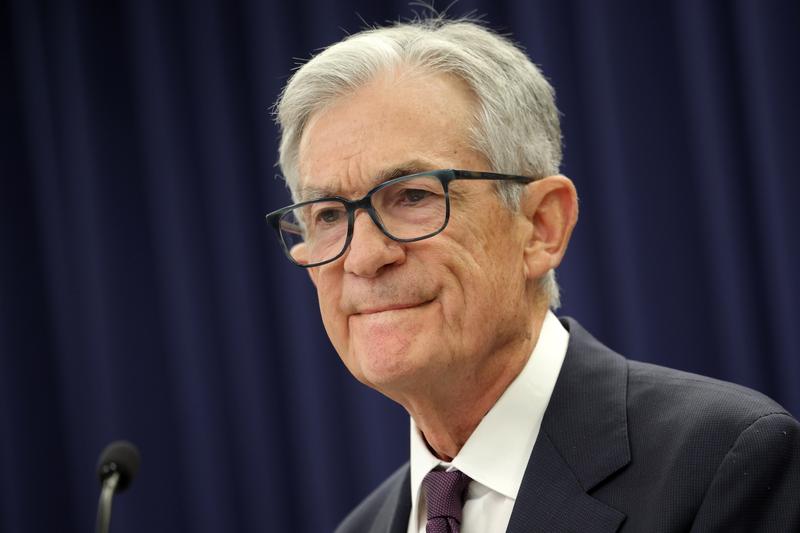
( Kevin Dietsch / Getty Images )
Brooke Gladstone: From WNYC in New York, this is On The Media's midweek podcast. I'm Brooke Gladstone. We led last week's show with an interview I did with Mark Blyth, the Professor of International Economics and Public Affairs at Brown University. What you're about to hear is a much extended version, because we really got into it. We were discussing the potential impact of the President's attacks on the chairman of the Fed. Actually kind of fun.
News clip: This morning, federal prosecutors have launched a criminal investigation into Federal Reserve Chairman Jerome Powell related to his testimony before a Senate committee about the multi-billion-dollar renovation of two Federal Reserve buildings.
Brooke Gladstone: Powell, not famously a hothead, fired back at the administration in a two-minute long video message.
Jerome Powell: The threat of criminal charges is a consequence of the Federal Reserve setting interest rates based on our best assessment of what will serve the public, rather than following the preferences of the President.
Brooke Gladstone: There's been a lot of hand-wringing about the independence of the Fed, an institution which has traditionally been outside of the political fray.
News clip: If for political reasons, they lower interest rates to appease the President, there's going to be no end to that. Future Democrats could do the same thing. That's bad.
Mark Blyth: As Mervyn King, who used to be the head of the bank of England puts it, you don't want an inflation nutter in charge of the government.
Brooke Gladstone: Mark Blythe is a professor of international economics and public affairs at Brown University.
Mark Blyth: Someone who will drop rates that will make credit really cheap. Everyone will go have a party. There isn't enough stuff. The price of stuff will go up. You'll get inflation. Right? That's what they're worried about, okay?
Brooke Gladstone: It's what everyone is talking about and warning about, but steady on.
Mark Blyth: Now, for that to happen, the Fed would have to have real control over the whole curve, and they don't.
Brooke Gladstone: A quick Econ 101 refresher. Historically, the power of central banks stems from their ability to steady economic water by setting interest rates, acting as reserves for commercial banks, and buying and selling things like bonds, essentially IOUs, where in return for lending the government your money, you get it back later with interest. The curve is how much it costs to borrow money over time.
The Fed has plenty of short term control over that cost, but long term, if whoever is buying the bonds, everyone from pension funds to individuals, if they lose faith in what the government is doing, they can say, "We won't take on the government's debt, unless we get a higher interest rate." A key example of this ebb and flow happened this week.
Mark Blyth: Look at what happened with the credit card stuff. Trump comes out and says, "10%. That's it."
Brooke Gladstone: That's a 10% cap on credit card interest. A policy championed by both parties.
Mark Blyth: Their premise is, "Hey, if we are asked to lend money, which is extend credit to someone who is a low earner or has a shaky credit score, we need to get compensated for that risk." The banks go, well, there'll just be less credit.
Brooke Gladstone: That said, Blythe argues that central banks are, in fact, far less responsible for the supply of money in the economy as a whole than we may believe.
Mark Blyth: We deregulated banks in the 1980s, and what that means is the vast majority of cash, the bank of England in 2014 estimated that for the UK, 96% of all cash is not anything that comes from the central bank. It's actually just commercial bank loans.
Brooke Gladstone: As this story unfolds, he says there are a few ways to understand the DOJ's investigation into the Fed chair. Yes, it could be an authoritarian power play or a Trumpian distraction, but he favors another reason that this is a story about a trend, the slow decline of the power and independence of central banks, and everywhere.
Mark Blyth: Hey there. It's good to see you again. [chuckles]
Brooke Gladstone: Let's start with why we even have a central bank.
Mark Blyth: Money is private. Basically, for years, for centuries, for millennia, people have been offering different tokens to each other as money, and the problem with this is, it tends to be unregulated. Nobody knows how much is in circulation. People lose faith in it. You get panics, you get crashes, and ultimately, the authorities don't like this, because if you're the state, and you want to do things like tax a regular basis, or raise money to go off and have a war with the Dutch or something, it's a bit of a pain if your financial markets keep collapsing.
Brooke Gladstone: [laughs]
Mark Blyth: You invent this thing, and you basically provide two things, emergency liquidity to the market. When everybody else is selling, you're buying, trying to stop everyone withdrawing their cash all at once, right? The other thing that you do is you basically set the price of money, what we call the interest rate, how much that costs to borrow, which gives them an enormous amount of power and leverage.
Brooke Gladstone: These institutions, as you said, functioned as the government's banks, and they served commercial banks. They weren't setting policy, but where do federal banks get their money?
Mark Blyth: This is where it gets really interesting. If you pick up any economics textbook, what it will tell you is, this is how we make money. Basically, there's the treasury, and the treasury, and then there's the central bank, and the central bank sends out a certain amount of money to these big banks, preferential customers, and they then lend that onto smaller banks, and then they do this thing called fractional reserve banking, whereby, they have like, let's say, $6 out in lending for every $1 they've got on reserves, so that if anyone comes in and says, "I'm feeling a bit nervous, can I have my money back?" They've still got enough of a capital cushion.
That's not true anymore, because we deregulated banks in the 1980s, and what that means is, the vast majority of cash, the bank of England in 2014 estimated that, for the UK, 96% of all cash is not anything that comes from the central bank. It's actually just commercial bank loans, so I'm going to make an assumption, Brooke. I'm going to make an assumption that you like high powered motorcycles.
Brooke Gladstone: Oh, yes.
Mark Blyth: Every weekend, up and down Long island.
Brooke Gladstone: Cylinders out the wazoo. [chuckles]
Mark Blyth: You got it, right? These things cost a few quid, so basically you go to the bank and say, "I'd like to buy a Ducati 750," and they go, "Of course," and they hand you the money. When they do that, they create money. That's the money that's created, and when you pay back the loan, you're destroying money, so the vast majority of money in the world is not central bank money, it's commercial bank credit.
Brooke Gladstone: You're creating money by putting it out into the world, and you're destroying it by putting it back in the bank.
Mark Blyth: In the bank. You got it. Exactly, so where does the central bank fit into this? The central bank basically produces reserves on demand for these banks, just in case they've lent out a little bit too much, and they get a bit nervous about people coming in, and asking for the money back.
Brooke Gladstone: Okay, but the central bank money, as a general rule, isn't being just printed in the garage. It comes from doing things with the commercial banks, like buying government securities and selling government securities.
Mark Blyth: Yes, absolutely. All right, so why do you have a bond market? You have a bond market, because at the end of the day, governments don't actually fund everything through taxes. What they'll do is, they'll say to the public, "Look, Brooke, rather than buying that motorbike, why don't you just give me money for 10 years, and I'll guarantee you, the 10,000 you would have spent in the motorbike will give you the whole thing back, and I'll give you an interest payment on top of that. It's the safest investment you can make."
What governments provide through the bond market is not just a source of government financing, it's safe assets for the financial sector, and those safe assets, basically, underlie all of the credit transactions that we've got in the economy, whether it's credit cards, whether it's your pensions. One of the things I like to point out to people is, if you half the national debt, you'd cause a financial crisis, because half of the safe assets in the world would disappear, and the cost of credit would go through the roof.
Brooke Gladstone: Also, you can use securities to essentially expand, or shrink the money supply. What you call creating or destroying money.
Mark Blyth: Yes, but again, actually, the money supply really isn't controlled directly by the central bank, because it's commercial banks. I mean, think about it this way, as bitcoin money, we could have a whole debate about this. The fact is you can spend it. Stablecoins, we're about to do a big thing on stablecoins. That is money that's created by the private sector. It's got nothing to do with the central bank. Again, the way that we think about this is almost like 19th century, but what's actually happening in credit markets is really quite different.
Brooke Gladstone: I just want to comprehend this big argument that says, if the central bank falls to the whims of a single person with an extremely short term objective, which is winning the midterms in the current case, it could destabilize the world. Could it?
Mark Blyth: I'm not quite sure that it's really that important. Now, if the argument is, as Mervyn King, who used to be the head of the bank of England puts it, "You don't want an inflation nutter in charge of the government," someone who will drop rates, that will make credit really cheap. Everyone will go have a party. There isn't enough stuff, the price of stuff will go up, you'll get inflation. That's what they're worried about.
Okay. Now, for that to happen, the Fed would have to have real control over the whole curve. What's the curve? What you pay in interest. The further out you go in duration and time, so like a one-year bond, a three-year bond, a 10-year bond, and they don't, because there's this big thing we talked about called the bond market.
Brooke Gladstone: Who's in charge of the bond market?
Mark Blyth: The bond market, and the bond market is everyone from pension funds, and other institutional investors. The hedge--[crosstalk]
Brooke Gladstone: They're not the ones who create the bonds?
Mark Blyth: No, they're not, but they're the ones that buy and sell them, and that's what determines the price, which is known as the interest rate on the bond. At the end of the day, the government increasingly funds itself through short term debt, basically, buying and selling treasuries at the front end of the curve, the short end of the curve. The long end of the curve is set by global and local investors.
If they lose faith in what the government's doing, they will demand more interest to hold that debt, so you might cut it on the front end, but it goes up on the back end, and it's not clear that even if you cut it on the front end, this stuff goes through. Look at what happened with the credit card stuff. Trump comes out and says, "10%, that's it," and the banks go, "Well, there'll just be less credit."
Brooke Gladstone: The world currency is currently the US Dollar. You just said that, if the international markets lose faith, that'll be a problem, and won't they, if the Federal Reserve of the United States no longer looks independent, or is in the thrall of an inflation nutter?
Mark Blyth: All of that is true, but you need to put this in a historical perspective a little bit. There's a feeling amongst Americans who think about this stuff that Moses found the tablets, he handed them to George Washington, and the 11th Commandment is, "Thou shalt have an independent central bank," and this has been true for 4,000 years. That's not what happened.
The United states only got us Fed in 1913. That Fed was actually quite supportive of government actions, all the way through the New Deal. It's only in 1951 that it carved out its independence. There's a bit of a spat between the Fed and the treasury, and Harry Truman. The bank says, "Our job is actually just making sure that the currency is stable, and inflation doesn't get out of control," so they had what were called the Fed-Treasury Accords, where they basically divided up the territory, and this is where we get the distinction between fiscal policy, what the government does, taxes and spending, and monetary policy, what the central bank does.
Now, this is complicated by the fact that the Fed has a dual mandate that also comes out of World War II, which says that you'll also maximize employment. Now, if you think about this for a minute, if you have a standing charge from the legislature, you only exist because of Congress. You have to report to Congress, and one of the things you have to do is to make sure that there isn't mass unemployment.
They've already told you what to do. The notion that you're completely independent, has always been a bit of a myth, so what are you independent on? So-called operational control of interest rates. This is where the 1970s comes into it. That's when we start to worry about inflation, and the lesson that we took from that was Paul Volcker, who was in charge at that time, banks interest rates up to nearly 20%, causes a massive recession. Inflation falls from 16%, all the way down, basically, over the next several years, but the economy loses inflation, and by 1984, Ronald Reagan saying, "It's morning in America," and the economy takes off on a tear.
This is the beginning of the rationale for having big, powerful independent central banks that don't let the government spend too much money. Then, when the financial crisis hit in 2008, we turned to the central banks, because they were the ones in charge and said, "Right, lads, you need to fix this terrible mess."
Brooke Gladstone: It was the commercial banks that caused it.
Mark Blyth: Yes, I know, but basically it's the same as 1913. The banks got themselves into trouble, and you want the central bank to fix it.
Brooke Gladstone: When you say the independence of the Federal Reserve is a dying trend, what do you mean that makes circumstances so different that we still don't need to buck the inflation nutters lowering interest rates, the politicians who just want to get reelected, even if the long term implications might be devastating?
Mark Blyth: Central bank independence reaches its zenith, basically, just before the global financial crisis, and then they're discredited, because they were the people that said, "We've got this," and there was a huge crisis that engulfed the whole world. Ultimately, these are creatures of a particular time, as they used to put it, the great moderation, very low volatility, everything's calm, interest rates are low, growth is nice, everything's ticking along. We don't live in that world anymore.
We live in a world in which we're-- Literally, the United States is saying, "We don't really care about democracy anymore, we're just going to occupy countries, and take their oil." That happened so quickly.
Brooke Gladstone: Are you saying it's just less important?
Mark Blyth: At the end of the day, if the problem is geopolitical competition between the United States and China, the United States deciding that it's going to just control a hemisphere by hook, or by crook, it's going to invade Greenland. You're focusing on short term interest rates, and central bank independence. It's like the whole house is burning down, and you're worrying about your favorite rug.
Brooke Gladstone: We should not worry about Trump using--
Mark Blyth: Brooke, it's not should. None of this is my opinion about what ought to be. What I'm trying to get away from, there's a way in which people talk about this stuff in the United States, where it's like people who watch The West Wing, and wish they lived in that world.
Brooke Gladstone: [laughs]
Mark Blyth: That world does not exist.
Brooke Gladstone: It's a moderating enterprise for an immoderate time.
Mark Blyth: Yes, exactly. It's a set of institutions that don't respond well to randomness and volatility, put it that way, and that's the world that we're in. Again, I'm not endorsing this. I like the '90s, but we don't live in that world anymore.
Brooke Gladstone: All around the world, leaders have decided that they don't want their central banks independent anymore, as the far populist right rises everywhere, but the example of where this idea was carried out is Turkey, and that was a disaster.
Mark Blyth: It was indeed. That's the cautionary tale that people like to point to. The guy who runs it, Erdogan, basically has this idea, which is intuitive, but from the point of view of anybody who does this stuff wrong. Here's the intuitive idea, when you push up interest rates, things get more expensive, so why do you increase interest rates if you want to make things less expensive?
Brooke Gladstone: Right.
Mark Blyth: Intuitive. Right? Okay, but the thing is, by making credit more expensive, the economy slows down, and that shifts people's expectations of prices, and that helps to lower inflation. That's the standard model. He was like, "No, we're basically going to have lower interest rates to combat inflation." Of course, that didn't work. They ended up with very high inflation that crashed their currency, and then their exports got a lot cheaper.
Now, is the United States, Turkey? No, it's not. The United States prints the thing that everybody else needs to earn, in order to import food. If the United States cut interest rates to 1%, would it produce a Turkey-like reaction? Well, here's what happened. The President of the United States said, "We're going to basically not just reduce central bank independence, we're going to arrest the chairman." The markets went, "Meh". Because either they know it's bullshit and it's just disruption, or alternatively, they see the world in such a way, they're like, "All right, so he cuts it to 1%. Might get a little pickup in inflation in the United States, if it feeds through. Meh."
Brooke Gladstone: Let's move on to the second narrative that you might use to explain this, or that you might apply to this situation, that it's simply a power play. It sure sounds like it.
Donald Trump: We have a bad Fed chairman. He's bad in a lot of different ways, but he's bad because his interest rates were too high. He's got some real mental problems. I'll be honest, I'd love to fire his ass. He's renovating a small building. It's the most expensive construction job in history, and it's only a renovation. He's billions of dollars over budget, so he either is incompetent, or he's crooked.
Brooke Gladstone: Under our 47th president, why should the Fed be any different from any other institution intended to safeguard the nation's stability? I mean, the fact that it is stable, that it uses actual data, would inevitably make it a target. This administration hates at expertise, so why power play here, at least any different from anywhere else?
Mark Blyth: Well, what exactly was the expertise that saw the 2008 crisis coming? What was the expertise that saw the inflation coming? What was the expertise that basically has presided over very low growth rates across the developed world since 2008? Stagnant, real wages, shocking levels of inequality, and we just absorb all that, and think everything's great.
Brooke Gladstone: Didn't our central bank help us out of the pandemic decline faster than Europe?
Mark Blyth: Well, yes, but it also did things like basically guarantee the price of ETFs offered to asset managers. What it does every time is, it makes sure that people who have real cash and real assets make no losses, and the cost of doing that has to be paid by other parts of society. You're telling the story of, "We are the way, the truth and the light, and we have data," and the administration, and lots of other people in other countries, simply don't believe it.
Now, the contradictions in this coming from this administration are absolutely massive, because, of course, they do billionaire tax cuts. They basically get their rents from Silicon Valley, so the notion that these guys are in any way genuine economic populace is, at best, questionable, but nonetheless, the strategy is clear. It's not that we hate expertise. We simply don't believe that these independent agencies will do what we tell them.
Brooke Gladstone: What does that mean for our economy if it's left to the manipulations of presidents who want to stay in power, no matter how much people suffer in the long term, or are you saying that the Fed just isn't that powerful?
Mark Blyth: Is it important to have a central bank that basically does bank regulation well, and make sure that the credit system doesn't blow up? Hell, yes. Absolutely. What we've done is this weird thing, where we've made the head of the Fed the most important economic person on the planet, and whatever they do is the most important thing, and that is simply not the case.
Brooke Gladstone: This is a power play because Trump believes in the Fed's power?
Mark Blyth: Because the Fed is the titular, observable, obvious institution in which to say, if you push this over and put your yes man in charge, you're signaling to every other independent agency in the government, "You will now do what I say."
Brooke Gladstone: It's like going into the prison and beating up the big guy.
Mark Blyth: Exactly.
Brooke Gladstone: [laughs]
Mark Blyth: That's it. Yes. Take the baloney sandwich, slam it on the floor, head butt him, and walk out. That's pretty much it.
Brooke Gladstone: [laughs] Trump may not get his way. Multiple Republicans have gone on record saying that the Fed's independence is important. North Carolina's Thom Tillis on the Senate Banking Committee is an important guy. He said he's ready to hold up all Fed appointments until this thing with Powell is, "Resolved", which I think means Trump has to back off. Maybe it's not a well thought out power grab.
Mark Blyth: Here's the last possibility as to what this is. You fell for it again, Brooke.
Brooke Gladstone: The distraction.
Mark Blyth: It's just-- It's flood the zone.
Brooke Gladstone: Look, we've done nothing but talk about these distractions, how this administration has flooded the zone in the first 12 months, and the last time around. It's an absolutely real and relevant tactic, but Americans do consistently vote with their wallets. Americans increasingly disbelieve that Trump can handle the economy.
Mark Blyth: What exactly is Powell being arrested, or whatever got to do with any of that?
Brooke Gladstone: Powell and the central bank, all of that is conflated with the whole notion of affordability, and controlling prices and so forth. You think that's not how the public perceives it?
Mark Blyth: Half the public couldn't tell you what the central bank is if their life dependent on it.
Brooke Gladstone: Well, that's true, but they've seen the headline, bad for the economy.
Mark Blyth: Okay, so they believe all headlines then. In which case, they should just believe Trump, right? Venezuela may be a distraction option, because you don't get to run a country by kidnapping a guy and his wife and saying, "We now run things." You actually need to go run things. Basically saying, "We're going to arrest the Fed chair," when you know that you're not going to arrest the Fed chair, it strikes me as just another distraction. This entire thing could literally just be, "What do I do this week to stay in the headlines?"
Brooke Gladstone: Let's consider that all three of your stories about what's going on now are correct, that removing Powell or trying to, or simply discrediting the independence of a central bank is a global trend. Also, it's a power grab, and serves as a temporary distraction from less flattering news.
Mark Blyth: Yes, the all of the above answer. I fully sign up to the all of the above answer.
Brooke Gladstone: [chuckles] How should people watch this story, if not for the politics, then for their pocketbooks?
Mark Blyth: My recommendation is don't watch it at all. I hate to say that, particularly to a media show, but basically it's toxic. There's lots of things to be worried about that will definitely impact your pocketbook. Let's go back to groceries. Groceries are up 20% from where they started at the beginning of the pandemic, and they're not coming down.
Brooke Gladstone: There's nothing that the central bank can do about that?
Mark Blyth: It's not a central bank problem. Like, cut interest rates to 0.5%. It's not going to make the price of carrots any different. I know we're looking for reasons, we're looking for solutions in this incredibly volatile and complex moment, and it doesn't help that we have an administration whose policy seems to be, "Is that a fire? I've got a bucket of gasoline."
Brooke Gladstone: [laughs]
Mark Blyth: Try and just focus on the things that actually are real, rather than the things that are just either wacko theories, possibilities, or just distractions. I know it's hard to filter out. Your job in the media is to basically go after every story, and every story could be real.
Brooke Gladstone: Not our job. This is the second week that we've worked on just trying to figure out what the hell is going on here.
Mark Blyth: Exactly. There are a few branches of the media that try to do this, but the day-to-day job is, basically, what's going to be the headline tomorrow, and these guys supply the headlines. You should be skeptical of that.
Brooke Gladstone: With regard to the central bank, sum it up in a couple of sentences. Your general disdain for the over coverage.
Mark Blyth: Yes, it's not even disdain. I mean, great respect for central banks and central bankers. Many of my friends are central bankers. I'm going to put it this way. Independent central banks, you can't live with them, you can't live without them.
Brooke Gladstone: [laughs]
Mark Blyth: They're really important institutions. There's a reason that almost every country has one. If you have money in banking and credit, chances are, you'll have a central bank to keep them in line, and make sure it doesn't blow up. The mistake that we made, if we made a mistake, was to basically treat these guys as the masters of the universe, and they're not. They're just people that can push around the price of money.
When things are really stable, and things are going well, that's cool. That's great. Because it means, no, you don't have to do much, and they can look after it, and everybody makes money. It's all fine. Then, when it's no longer like that. Remember, we did that episode called the Sigh? Do you remember the Sigh?
Brooke Gladstone: Yes, I do.
Mark Blyth: Exactly. When you get to the time when people stop getting together, and laughing and joking and drinking, and get together and go, "Ugh", that's the world we're in now, and that's when basically shoving around the short end of the curve, and mucking around with interest rates. Again, it's about worrying about that rug that's on fire when the rest of the house is burning down.
Brooke Gladstone: We will never rid ourselves of Masters of the Universe, and wouldn't it be better if we have to put our faith into, even if it's mythic, this master that we at least believe that people who aren't running for the next election, are better positioned to control certain aspects, because someone's going to control it, and do you want it to be a political leader who relies on the momentary whims of himself, or his public?
Mark Blyth: How about we stop thinking about Marvel movies as a guide to how we should govern ourselves, and we actually remember that we're democracies? Democracies are lotteries. They're not guarantees.
Brooke Gladstone: Even the founding fathers believed that we shouldn't have a public referendum on everything every five minutes, because it is difficult for any human being to think in long terms.
Mark Blyth: I agree, but if your solution to that is what we've been doing, which is the following. You elect someone for four years, and then they say, "Trust me, I'm an expert. We've got this." It turns out that their knowledge is fragile. They don't really know what's coming around the corner, because nobody does. They're as fallible as everybody else. Then, that claim to expertise, technocracy, becomes delegitimated, and that's the world that we're in.
When Michael Gove, the Conservative minister, said, "The British people have had enough of experts," everyone got outraged. If your experts aren't actually experts, and they're just marginally better at guessing the future than everybody else, then it's not really the thing you want to hang your hat on.
Brooke Gladstone: Doesn't Trump throw this whole calculation up in the air?
Mark Blyth: Of course, he does, but like the rest, the whole world isn't governed yet. Isn't governed by Trump, and there are many other ways to use a great British expression, "To skin the cat." You don't have to have it. It's not, basically, we either have a technocracy, or we have Donald Trump. There's a few things in between that we could possibly try.
We used to have a much more robust democracies, whereby, there was proper parliamentary government and oversight. I mean, think about Congress. Congress is a joke. It doesn't legislate. It sits around. It tweets. "I'm outraged." "What are you outraged about?" "I'm outraged about the outrage." "Well, that's very good. We'll put that on Twitter." They don't do anything. The number of bills that are actually passed is just, like, declining faster than my height due to aging. I mean, they're a joke. Right? That should be the focus. We should be reinvesting in, basically, from the ground up, a proper democracy. If we just have one, where basically we've decided there's technocrats and the deplorables, that is truly a bad way to run a place.
Brooke Gladstone: All right, Mark, thank you so much.
Mark Blyth: Always a pleasure.
Brooke Gladstone: Mark--
Mark Blyth: That's great. We went everywhere with that. That was fabulous.
Brooke Gladstone: No, I really appreciate it. Well, I find that one of my strengths is not trying to ever cover up my ignorance. I just don't think it serves the listener, so that's part of my job.
Mark Blyth: This plays to my strength, because my strength one thing is, I've only got one superpower. My superpower is simplification. You ask that question, I'll simplify it, and then we're good, and we could just go everywhere.
Brooke Gladstone: [chuckles] Mark Blythe is a Professor of International Economics and Public Affairs at Brown University. Follow us on TikTok or Instagram, where we'll be posting some show videos we made from the interview, and tune into the big show, which posts, as always, on Friday.
[music]
Copyright © 2026 New York Public Radio. All rights reserved. Visit our website terms of use at www.wnyc.org for further information.
New York Public Radio transcripts are created on a rush deadline, often by contractors. This text may not be in its final form and may be updated or revised in the future. Accuracy and availability may vary. The authoritative record of New York Public Radio’s programming is the audio record.