
Trump v. BBC
[music]
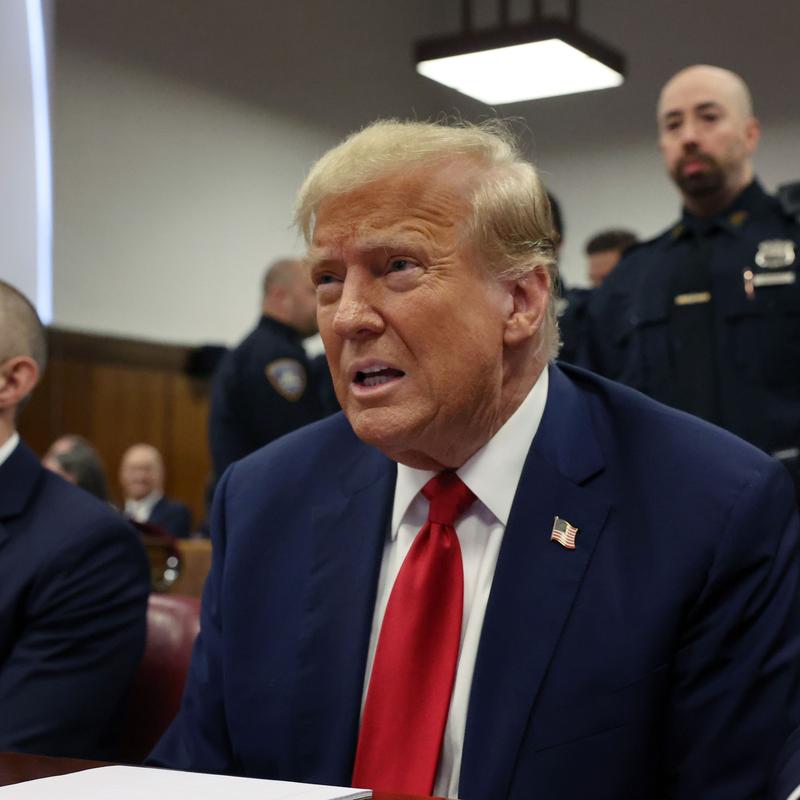
Brooke Gladstone: This is On the Media’s midweek podcast. I’m Brooke Gladstone. Late last year, President Donald Trump sued the BBC for $10 billion, alleging that the program Panorama edited a segment to defame him. So far, Trump has faced some major roadblocks in extracting that sum or anything near it from the British broadcaster. For one thing, the BBC has little to gain from appeasing the American president. They’re not subject to US regulatory powers, but the money isn’t always the point.
Liz Dye: Donald Trump loves to sue media outlets. He’s been doing it for a very long time.
Brooke Gladstone: Liz Dye is a legal journalist and the host of the Law and Chaos Podcast. Although it has some unusual features, and we’ll get to them shortly, Dye sees the BBC suit as part of Trump’s established record of troll suits.
Liz Dye: One of the most notable early Trump media lawsuits was against a reporter named Tim O'Brien, who wrote a book in 2005 called TrumpNation. At the time, Trump was claiming to be a billionaire, but O'Brien said his net worth was actually $250 million at most. In 2006, Trump sued O'Brien for libel in New Jersey, demanding $5 billion. That’s the MO right there. The case was tossed, and it was tossed on appeal as well, but to Trump, that was still a win. He has two quotes that really summarize his position. In one, he said, "Ultimately, I had great success doing what I wanted to do, costing this third-rate reporter a lot of legal fees."
He told The Washington Post, "I spent a couple of bucks on legal fees, and they spent a whole lot more. I did it to make his life miserable, which I’m happy about." That is Trump’s philosophy. He uses litigation against media outlets as a weapon, and he makes them pay. He doesn’t make them pay because he wins these lawsuits. In fact, he almost never does, but litigation is cripplingly expensive, and in this country, in almost every instance, you pay your own legal fees win or lose.
Brooke Gladstone: There are several suits pending at the moment. Trump is suing The Wall Street Journal for describing the drawing he made for Epstein’s birthday. He drew boobs. [laughs]
Liz Dye: He did draw boobs, yes, and we’ve all seen the picture.
Brooke Gladstone: He’s sued CNN. You want to go through some of these?
Liz Dye: Sure. He sued CNN in between his two presidencies. He said that using the word "big lie" was defamatory.
Brooke Gladstone: "The big lie" in reference to his claim about a stolen election.
Liz Dye: Right, because he says it has Nazi associations. He’s currently suing The Des Moines Register over a whiffed poll of Iowa in 2024. He’s using Iowa’s Consumer Fraud Statute in that lawsuit. He likes to do that. He used the same consumer fraud theory to sue CBS for tortiously editing 60 Minutes in an interview with Kamala Harris.
Brooke Gladstone: A lot of these networks have settled for huge payouts to his ballroom or his presidential library.
Liz Dye: Right, but they never settled with him before he came back to office, right? They don’t settle with him unless he’s got his hands on the levers of power, and we saw that also with the social media lawsuits after the January 6th insurrection. When he was thrown off of the social media platforms, he sued Meta and Google and X, claiming that they had tortiously deplatformed him.
He had a very strange theory of the case there, that the social media platforms became agents of the government and violated his First Amendment rights. The tech platforms had already won at the trial court. The case was on appeal when he came back to the White House. Those three platforms decided to lose and pay him off instead, in the same way that CBS did, because they had regulatory issues in front of the administration.
If you know that this government can bring a massive antitrust lawsuit against you or an FCC enforcement action, you have many reasons to pay up, and that is indeed what they did.
Brooke Gladstone: These, what you call Trump’s "troll suits," pretty much never lead to victory in court.
Liz Dye: Yes. I like to call these "lawsuit-shaped objects." They are not traditional complaints. They often don’t state a cause of action. In fact, he recently filed one against The New York Times that was so offensively defective that the judge threw it out on his own, without being asked by The New York Times three days later. He’s now refiled it. This is a lawsuit about reporting on his tax returns.
Brooke Gladstone: Tell me about Trump’s lawyers. Who does he use to bring these cases? Are there any consequences?
Liz Dye: There have been. In between, when he was president the first time, and he was president the second time, he hired a lawyer named Alina Habba. She filed this infamous civil RICO suit against Hillary Clinton and her supposed best friend James Comey, and the DNC, and the law firm Perkins Coie, and the lawyer Mark Elias, basically all of the Democrats in Washington, DC, alleging that they had this massive conspiracy to get Trump.
This case was so totally defective that it wound up getting Alina Habba and Donald Trump sanctioned to the tune of $1 million because they had wasted so many lawyers' time and dragged them, in fact, down to the Southern District of Florida, which is where Donald Trump likes to file his lawsuits. Right now, his main defamation lawyer is an attorney named Alejandro Brito, who has a boutique firm in Coral Gables. Mostly what Brito does is file these kinds of garbage lawsuits on Trump’s behalf, and Brito has been paid handsomely for it.
In at least one of these settlements, Trump made a provision that the lawyer would get paid $1 million, so if he only hits on 1 out of 10, he’s still doing pretty good.
Brooke Gladstone: [laughs] I think we’ve laid the groundwork here to talk about Trump’s case against the BBC. He’s suing them because of a segment in which they cut 2 parts of a speech he gave together to imply that he’d exhorted his supporters to violently attack the Capitol on January 6th. The BBC conceded that they made a mistake, and they retracted the segment, but that didn’t satisfy Trump.
Liz Dye: Right. No one is defending the way that this segment on a documentary show called Panorama was edited, but it was 12 seconds, which aired only in the UK, and look, it was 2024. By then, everybody already had an opinion about January 6th, so I don’t think it changed anything, and of course, Trump won the election, but we are not the only ones on this side of the pond who are trapped in an endless culture war, and the BBC, which is funded by a mandatory assessment on all households, is a perennial political football in Britain.
In 2025, a Conservative paper published this internal memo criticizing the BBC for having a left-wing bias with respect to immigrants and trans rights and a whole bunch of other hot-button issues, and it mentioned this inappropriately edited, 12-second clip from the Panorama documentary. Then Trump, from across the Atlantic, says, "Cool, let me get some of the spoils from someone else’s culture war." He decides he’s going to sue the BBC, but he cannot file in the UK because there’s a one-year statute of limitations on libel suits.
Instead, he files a $10 billion defamation suit in the Southern District of Florida, which is a little bit awkward since this documentary never aired in Florida or anywhere in the United States. It was not licensed for distribution in North America, and the BBC app actually blocked it in America. Trump’s lawyers have an answer for that, though. They say, "What if someone in Florida was using a VPN to pretend to be in England and managed to watch it?" Then they point out that VPN usage went up in Florida in 2025 right after the documentary came out, which, maybe, those things are related, but I would point out that that is exactly when Florida’s age verification law came into effect. People had to show their ID and prove their age to watch online pornography.
Brooke Gladstone: Ah. Let’s see, two possible theories: This documentary spiked an actionable number of people to get VPN so they could see it, or the other option is teenagers wanting to watch porn got VPNs?
Liz Dye: Right, or anybody who didn’t want to show their ID.
Brooke Gladstone: Yes, so I don’t know. You’re right, it’s a total toss-up.
[laughter]
Liz Dye: Right.
Brooke Gladstone: The BBC apologized. They didn’t write a check, but they did respond by hiring Charles Tobin, who you call one of the best media lawyers in America.
Liz Dye: He is indeed, and he is with the firm Ballard Spahr, which is a very big law firm. It’s a white-shoe law firm, and they’re for serious, right? They’re not Alina Habba.
Brooke Gladstone: What’s happened?
Liz Dye: Trump files a lawsuit in the Southern District of Florida against the BBC. That’s where he likes to sue because a lot of his appointees are on that court, including Judge Roy Altman, and that is where the case lands. The BBC immediately moves to dismiss for lack of jurisdiction because if nobody in Florida watched this documentary, there’s nothing for a Florida court to do. They ask to hold off on discovery until after the judge decides if he’s going to hear the case at all because discovery is incredibly expensive and it’s unpleasant, particularly in a $10 billion case.
There will be dozens, if not hundreds, of depositions, millions of pages of documents, thousands of billable hours for lawyers, and if the judge is just going to dismiss the case anyway for lack of jurisdiction, there’s no point in bothering. It’s a huge waste of time and money. Judge Altman does what initially looks like a favor for Donald Trump. He says, "Go ahead and take discovery while I think about this motion to dismiss."
Now Trump is delighted because he can do what he loves to do, which is bleed the media outlet by forcing them to pay their lawyers and go through all of this expensive discovery, but that turns out to be a monkey’s paw because it does not seem to have occurred to Trump or his lawyer Alejandro Brito that both sides will get to take discovery. The BBC’s lawyers immediately do what any competent practitioner would have anticipated; they drop subpoenas on everyone inside and outside the government who was anywhere near Trump on January 6th. Roger Stone, Steve Bannon, Ivanka, and Jared, Rudy Giuliani, Sidney Powell. The gang’s all here.
Brooke Gladstone: Not to mention Don Jr.
Liz Dye: Not to mention Don Jr. Who could forget that guy? Because if the question is, "Was it defamatory to imply that Trump told his followers to riot at the Capitol?" Then the issue of whether he intended them to riot at the Capitol is totally relevant. The BBC also subpoenas 12 different federal agencies for information about January 6th, and on top of that, they want all of Trump’s financial documents, because if you ask for $10 billion in damages, you've got to show your work. You have to say, "This is how this broadcast financially harmed me."
Brooke Gladstone: Talk about the impasse.
Liz Dye: Right. Trump doesn’t want to produce this stuff. Remember, he spent years fighting the January 6th Committee to not have to divulge what he has now put in question and turned into evidence in this case. Even if Trump really did want to cooperate with discovery in this case, his lawyer, Alejandro Brito, is not set up for this anyway. He runs an eight-lawyer shop in Coral Gables, right? He is set up great to send a mean letter to a media outlet demanding billions of dollars. He is not set up to run a billion-dollar lawsuit.
You need a whole fleet of associates. You need massively expensive document management software, and of course, you wouldn’t have that if you were a small-time guy. That’s not a dig on small-time lawyers; that’s just the reality of time management, and so Brito is flailing around. He missed some deadlines, the documents he turned over were insufficient, they contained boilerplate non-responses, and he really starts to blow this home-court advantage with Judge Altman.
He actually sealed that when he tried to get the magistrate judge, who is an assistant judge, dismissed. He claimed that she was biased, and judges are quite protective of the magistrates. He really has managed to make Judge Altman pretty pissed off. At this point, someone inside the Trump Administration comes up with a plan, and the plan involves getting the government inside this case. The hook that they come up with rides on these subpoenas that the BBC has served on the 12 government agencies.
The Justice Department files what is captioned a "Notice of Interest." They say, "We’re an interested party because you subpoenaed the FBI and the National Park Service and the NSA," which sounds logical, except that there’s already a legal mechanism in place to deal with subpoenas on government agencies, so-called "third-party subpoenas," right? When the agency is not the target of a lawsuit, it’s like a witness. The agencies have their own internal rules on how to respond to subpoenas; those rules are called "Touhy regulations."
The BBC’s lawyers did exactly what the law envisions; they served the subpoenas on the federal agencies, and then they began the dialogue with the agencies' lawyers as an accommodation process, and there’s no role for the DOJ in this process.
Brooke Gladstone: Right, there’s also no role for the DOJ in objecting to subpoenas sent to private parties like Sidney Powell, Roger Stone, Donald Trump Jr., the Republican National Committee, and all these other places. Why are they objecting to subpoenas that have nothing to do with the government?
Liz Dye: At this stage, they’re only mumbling about it because they don’t want to say the reason, and the reason is that they’re going to assert executive privilege. This is a redux of a fight that took place in the first Trump Administration--
Brooke Gladstone: That anything that Trump says can’t be used-
Liz Dye: Exactly.
Brooke Gladstone: -and anything he said to anybody else, because it would impair his ability to govern? This whole January 6th thing, was that part of his official duties?
Liz Dye: That is a question, right? Steve Bannon claimed executive privilege for his conversations with Donald Trump, and of course, Steve Bannon was not in office. I think he was a part of the first Trump Administration until about 2017; I think he lasted like three months or something. What the government is trying to maneuver itself in position to do is make really expansive executive privilege claims. The way that they’re doing that is to ride in on these subpoenas of the federal agencies, to try and use them as a Trojan horse to bring their hundreds of lawyers inside this BBC civil case, and that would be mighty convenient for Trump and Brito, because at this point, Brito’s sucking wind.
Brooke Gladstone: You say all of this has more than a whiff of déjà vu? You’re reminded how in 2020, then-Attorney General Bill Barr swooped in to substitute the government as a defendant in E. Jean Carroll’s original defamation suit against Trump. That was when Trump was calling her a liar all over the place when she accused him of sexual abuse, but it doesn’t make any sense because that was certainly Trump acting in a private and not in a presidential capacity.
Liz Dye: That is indeed what every court to consider the matter has said. What happened in 2020 is that Bill Barr attempted to substitute the United States government as the defendant in the Carroll v. Trump case on the theory that Trump was, as you said, doing official president stuff when he said Carroll was too unattractive to sexually assault, which sounds crazy, but Bill Barr was relying on a real law. The Westfall Act really does allow the government to stand in the shoes of a civil servant who gets sued for conduct that he did in the course of his official duties, that was part of his official duties.
Brooke Gladstone: This wasn’t part of his official duties.
Liz Dye: No, of course not. The argument that they made at the time was that Trump had a duty to comment on news of the day, and E. Jean Carroll’s accusations were indeed newsworthy. No, but if this Westfall certification had worked, it would have ended Carroll’s lawsuit, because you cannot sue the government for defamation, but the Justice Department is still, to this day, fighting at the Supreme Court on Trump’s behalf to reverse that and allow it to substitute itself and end this case, which would have the effect of blowing up the $83-million verdict rendered by the jury in the second case.
There's no Westfall Act if you're the plaintiff doing the suing, right? The Westfall Act is if the government employee is the defendant. Here, Trump is suing the BBC, and so the Justice Department has gotten creative and tried to wiggle its way in here by saying it's defending against these subpoenas so that it will allow the government to stand next to Trump and do the grunt work in this offensive litigation on the taxpayer's dime.
Brooke Gladstone: If Trump has bitten off more than he can chew with the BBC, why hasn't he just dropped the case?
Liz Dye: He has no incentive to drop the case. It's like he said in the beginning with Tim O'Brien, "It costs me a few pennies, and it makes them really unhappy." At this point, it is certainly costing the BBC more to pay Ballard Spahr than it is for Trump to pay Brito, and that's not his MO. Mostly, the super PACs that are associated with him pay his legal fees. In the two and a half years before he became Attorney General, the Save America PAC paid Todd Blanche $10 million, or paid it to his firm, to defend Trump in the criminal actions in New York, DC, and Florida, so it's no skin off Trump's nose.
It will be uncomfortable for him if he actually has to sit for depositions, but I do not think that this case will get that far. I think that Judge Altman will put it out of its misery within the next few months because, as we said, the documentary never aired in Florida. There is no injury. If it comes down to the wire, he'll walk away. That's what we saw him do in a lawsuit he filed against Michael Cohen, his--
Brooke Gladstone: His erstwhile bestie. Yes.
Liz Dye: Right, that on the eve of him having to sit for a deposition in that case, he dropped it, but I don't think it's going to come to that. I think that the court will just dismiss it.
Brooke Gladstone: What's going on in the BBC's mind here? Obviously, they don't have any regulatory issues before the government, and they don't have to worry about that, but they are spending a lot of money. You suggest that it's partly because settling would mean using public money to write a check to mollify Donald Trump.
Liz Dye: Right. I don't think that I'm talking out of school to say that Donald Trump is as popular as drug-resistant syphilis in the UK, so I think it would be politically disadvantageous for them to settle. Why should they settle? There's no case here. Donald Trump has no claim and his demand for $10 billion is ridiculous. It would be so politically costly for the BBC to pay out such an enormous figure, or indeed even a small figure, to the President of the United States that they can't do it because the BBC's management could not possibly settle this and then argue that they had been good guardians of the public fisc.
Brooke Gladstone: Right. Is this just another Keystone Cops legal drama? Is there a bigger moral to this story, or are we just watching to see how far he can go and how much he can get away with?
Liz Dye: "Yes, and--" My day job has been to read Trump's garbage defamation lawsuits. It is my actual job to read these.
Brooke Gladstone: I'm sorry.
[laughter]
Liz Dye: No, and I love my job. God knows it's permanent employment, and so it is very funny to watch them flail around in this way, but it's also not funny, right? We exist in this contracting media environment, and part of the reason it's contracting is that our political figures find it expedient to destroy trust in legitimate sources of information. Trump has actually revived slurs like "Lügenpresse," which was a term the Nazis used to denigrate the media, and Trump files these harassing lawsuits that cost millions of dollars to defend, even when the media outlets eventually win.
That's millions of dollars that don't go to support journalism, and it puts these outlets in a terrible, impossible, existential choice, right? How much risk are they willing to take to report stories that are going to make powerful people mad? There has to be more than The New York Times and The Washington Post being willing to report these stories because they are big enough to absorb the litigation risk. It's even worse when the Justice Department, which is, after all, funded by you and me and every other American taxpayer, gets co-opted to support this billionaire president's effort to harass media outlets, suppress speech, and penalize journalists for reporting on him in ways he doesn't like.
Brooke Gladstone: What do you plan to do after Trump finishes his second term?
Liz Dye: Depending on the results of the election, I think that there will be plenty for me to do to watch us try and rebuild our legal system. I hope that more states will pass anti-SLAPP legislation to shift the fees, to make it more expensive for billionaires to file these harassing lawsuits against journalists, and I hope that my new job would be documenting the revival of the rule of law in this country.
Brooke Gladstone: Liz, thank you so much.
Liz Dye: Thank you.
[music]
Brooke Gladstone: Liz Dye is the host of the Law and Chaos Podcast.
After we recorded this conversation with Liz, a magistrate court in Miami ruled that the president must turn over financial information since his suit rests on claims of money damage. This opens the door for the BBC to examine the books for up to 400 of Trump's businesses. This is unlikely to be the final word, however, since both sides are entitled to seek review of the magistrate's ruling from Judge Altman.
Thanks for listening to the On the Media midweek podcast. Be sure to tune in to the big show on Friday for a look at how a reporter is now tracking ICE deportation flights. I’m Brooke Gladstone.
Copyright © 2026 New York Public Radio. All rights reserved. Visit our website terms of use at www.wnyc.org for further information.
New York Public Radio transcripts are created on a rush deadline, often by contractors. This text may not be in its final form and may be updated or revised in the future. Accuracy and availability may vary. The authoritative record of New York Public Radio’s programming is the audio record.