
The Forgotten History of the First Sitcom
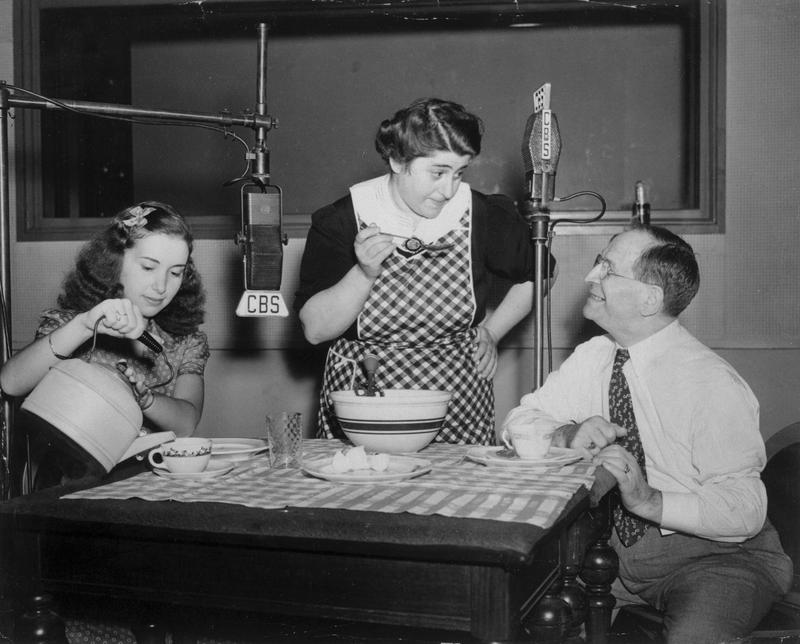
( Getty Images / Getty Images )
Micah Loewinger: Hey, you're listening to the On the Media midweek podcast. I'm Micah Loewinger. In the ongoing battle over the future of Warner Brothers, its two would-be buyers, Netflix and Paramount, continue to vie for the company. Netflix just wants control of the studio side, whereas Paramount wants the whole lot, including CNN, a deal which President Trump says he's watching closely and will insert himself into if necessary. Just a quick reminder, Paramount is owned by David Ellison, who last year installed Bari Weiss as head of CBS News. Just before the holidays, we learned that Weiss pulled a 60 Minutes piece investigating allegations of abuse at the Salvadoran detention center where the Trump administration sent hundreds of Venezuelans earlier in the year.
Weiss said she pulled the piece because it wasn't ready to air, but the producers and reporters disagree, saying that the piece had been through all the usual fact checks and legal reviews. Last summer, amid other stories of possible media capitulation, New Yorker staff writer Emily Nussbaum was digging into a story about a monumental figure in the early development of TV, the inventor of the daily sitcom. That twisty tale occurred in a time of similar precarity for our media, mid-20th-century America. Brooke's conversation with Emily aired last August.
Brooke Gladstone: You opened the article by taking us to May 9th, 1954, on the set of the CBS game show What's My Line?
John Daly (archival): Time now for everybody's favorite guessing game, What's My Line? Brought to you by New Stopette, America's leading spray deodorant. Now with [crosstalk]--
Brooke Gladstone: Where judges are supposed to guess the identity of guests. The well-known ones are often mystery guests where the judges are blindfolded.
John Daly (archival): Are they all in place? Panel?
Panelist (archival): Yes, sir.
John Daly (archival): Good. Will you come in, mystery Challenger, and sign in, please?
[applause]
Emily Nussbaum: She wrote her name as Gertrude Berg, but underneath it, it said Molly Goldberg, which is the name that she was known by.
Brooke Gladstone: She used a funny voice.
Emily Nussbaum: Yes, because she's in disguise. She spoke in this kind of high-flown, fancy-pants accent.
Brooke Gladstone: It was kind of like the Queen.
Emily Nussbaum: Yes, exactly. [laughs]
Molly Goldberg (archival): Are you someone very much in the public eye? Rahther.
[laughter]
Brooke Gladstone: What's My Line? ran from 1950 to 1967, and among its guests were virtually all the leading lights of the mid-century, Elizabeth Taylor, Lucille Ball, Bette Davis, Lena Horne, Walt Disney, Jackie Robinson, Alfred Hitchcock, Salvador Dali, Yves Saint Laurent, Wilt Chamberlain, Judy Garland, Edward R. Murrow, Eleanor Roosevelt. Every field, everywhere. Depending on how old you are, you're likely to know at least some, if not all, of those names. It's even likelier that you wouldn't recall the name of Gertrude Berg.
Emily Nussbaum: Gertrude Berg was, for one thing, pretty much the first showrunner in the modern sense. She created a radio show called The Rise of the Goldbergs that ran for decades. Then she created the very first sitcom and very first family sitcom on television, starting in 1949, also called The Goldbergs. She created the show, she wrote the show, she directed a lot of the episodes, and she starred in the show as this character, Molly Goldberg, who was hugely beloved. This larger-than-life Jewish mother on a show that was about a working-class immigrant family living in the Bronx.
Brooke Gladstone: Did she have a working-class background?
Emily Nussbaum: Her family was from an economically complex background. Her father owned a rundown hotel in the Catskills. Actually, her whole career began at the hotel because she would come out there as a teenager, and she was running the theater program during the summer. She was pretty different than the character she played, Molly Goldberg. The thing they had in common was that they were both forces of nature who were at the center of the story.
Brooke Gladstone: You wrote from the start, the character of Molly Goldberg made some listeners nervous. Was the portrayal a form of minstrelsy, like the crude blackface dialect humor of Amos 'n' Andy, the only radio show that had higher ratings? If she was a trope, she was also a corrective to an earlier stereotype, that of the mournful, self-abnegating Yiddishe mama, or the saintly shtetl survivor in the 1927 talkie The Jazz Singer.
Emily Nussbaum: The stereotype of the mother before Molly Goldberg was the idea of the traumatized, humble, self-sacrificing mother.
Brooke Gladstone: Sitting in the rain is nice.
Emily Nussbaum: Exactly. Molly Goldberg was nothing like that. She was from the same background, and she cooks, and she cleans, and all of this kind of stuff, but the show is about her. She is the source of the humor. It's a dialect humor where she gets English wrong. Despite the fact that she doesn't seem sophisticated, she's actually incredibly canny and clever. She's a trickster. She's always setting people up in romances. She's solving problems.
Brooke Gladstone: Interestingly, she was implicitly political.
Emily Nussbaum: She became more political as time went on. The show ran from 1929, pretty quickly became a hit and got a big sponsor all the way through 1945 during the Depression. A lot of it was simply the portrayal of unemployed and poor people within this immigrant community in New York struggling to make a living. People found that moving and poignant. The portrait of the plight of renters, the idea of unions. Certainly, New Deal stuff was in it. She talked about civil rights. She broke the color line in a way that other shows didn't. It wasn't didactic or explicit, it was woven into the fabric of the show.
She also did really bold gestures, specifically about the Jewishness part. She had a Seder episode. She had a Yom Kippur episode. That was in 1933. In 1939, they had an episode explicitly about Kristallnacht. In that episode, while they're doing the Seder, a thug throws a rock through the window. Molly delivers a speech to her family about the power of ideas and how they can blast through fascism. It's really stirring, honestly, just having actual rabbi and cantor performing a Seder during that period, and on the show, the characters talking about cousins of theirs in Europe trying to get out during the rise of Hitler.
Brooke Gladstone: Her sponsor, Pepsodent, agreed to air that particular show without ads. One telegram she got read, "Just as Pepsodent acts as a disinfectant, so does your broadcasting to dispel hatred and bring humanity closer together."
Emily Nussbaum: I do think that people understood that this was a bold thing to do on radio. You have to understand during that period, radio was the mass medium. Everybody listened. This show, because it was so highly rated and so accessible, was an incredible platform.
Brooke Gladstone: Even though Hitler's war hadn't yet begun in Europe, there was a war at home. This was also a time when, on the all-important radio, you had the demagogue antisemite Father Coughlin, the so-called radio priest, flooding the airwaves with hate speech.
Father Charles Coughlin (archival): We are Christian insofar as we believe in Christ's principle of love your neighbor as yourself. With that principle, I challenge every Jew in this nation to tell me that he does not believe in it.
Emily Nussbaum: This show, because of a positive, layered, humane portrait of a Jewish working-class New York family, was, by nature, counter-programming. People's attachment to these characters, to Molly, to Molly's husband Jake, and to their two teenage children who grew up on the show, made Jews feel like full Americans, which wasn't necessarily the way that people were thinking of them.
Brooke Gladstone: The radio show was canceled in 1945. CBS's public reason was low ratings, but you say Berg's family thought politics were at play. That sounds a little familiar.
Emily Nussbaum: The show had been on for several decades. It was still a successful show. Whether it was because they did not love that Gertrude Berg was a prominent New Dealer, or whether it was because she was getting older, the show was getting older, it's complicated.
Brooke Gladstone: Then after four years in the wilderness, she got a TV show.
Emily Nussbaum: It's interesting because when television first started, it was done live. It was in New York. It was a new medium, exciting, and had potential, but it was also really chaotic and experimental. It had a kind of "anything goes" feeling. The show, as soon as it went on TV in 1949, was a tremendous hit. That first year, it got very high ratings. In the first Emmys, she was the first winner of the Best Actress award. From being a melodrama, she turned it into more of a sitcom, which would become the bedrock of television. She single-handedly created many of the central things about what a sitcom is.
Brooke Gladstone: She opened each episode by leaning out the window, looking at us, and delivering a message about Sanka.
Molly Goldberg (archival): One, two, three. With a little boiling water, you have a delicious cup of Sanka. If a neighbor should happen to fall in without any extra trouble, you have two cups of instant Sanka. Oh, yes, and I want to tell you that if you're a person who shouldn't drink coffee with caffeine in it, you can still drink as much instant as you like and sleep. That was the important job.
Emily Nussbaum: When you watched it on TV, you were one of her neighbors. She was looking right out the window at you, welcoming you, being funny. Then, when the ad ended, you would sort of come into her living room. This intimate thing, where you're suddenly in somebody's family living room that everybody knows from having watched any sitcom, came really from The Goldbergs.
Brooke Gladstone: You were startled when you watched because The Goldbergs, though a foundational show in its day, stood apart from what we now think of as quintessential '50s TV.
Emily Nussbaum: The model of the '50s sitcom that it really differed from were things like Ozzie and Harriet, Leave It to Beaver, the growing move toward-
Brooke Gladstone: Waspiness? [chuckles]
Emily Nussbaum: -a super white suburban family with a father wearing a suit, reading his newspaper, commuting to work. This particular image of a mother as thin, wearing pearls and a shirtwaist, a loving, bland mom who vacuums the carpet wearing heels, and all of that kind of thing. The episode that I talk about in this essay--
Brooke Gladstone: From September '49, you mean? The one about the neglectful landlord?
Emily Nussbaum: Yes, I knew that she'd put political stuff on her show woven in, but I was really startled by the episode because they get a new landlord, and he hasn't been fixing up the apartment building. The whole family falls into a debate: "What is the technique that the renter should use to fight this neglectful landlord?" The entire episode plays out as a political debate about radicalism versus moderates. I'm not saying every episode was like this, but that was definitely the vibe of the show. It very much came from the community in New York that show was part of, which was socialist, left-wing, union, pro-civil rights.
Brooke Gladstone: Jewish.
Emily Nussbaum: Importantly, Jewish creatives. That lasted for a year. [laughs] The show lasted for longer than that. For a year, she had free rein where the show was the huge hit and was able to express all of these new ideas and create the ideas of the sitcom.
Brooke Gladstone: You point out that Philip Loeb, who played Berg's husband on the TV show, their on-screen marriage was beloved by viewers. He was even voted best television father by the Boy Scouts. He also was critically the engine for the show's activism off camera. He was a central organizer involved in creating SAG-AFTRA, but because of that, he was an easy target for Joe McCarthy, who used the Red Scare to ride to power.
Emily Nussbaum: There were many people in their circle who had strong left-wing politics, but he had devoted his life to better conditions for working stage actors, including getting paid for rehearsal time, reasonable hours. He was also, I have to say, a tremendous performer. He was a really sexy, charismatic guy. He and Gertrude Berg on that show had wonderful chemistry. There are many things that are tragic about what ended up happening. One of them is the loss of this very powerful dynamic between them as a Jewish married couple on television. Something that didn't appear for many, many, many years after that. Yes, the Red Scare. There are many different stages of the Red Scare.
In 1947, there had been the part that a lot of people know about, having to do with the movies and the Hollywood Ten and the protests, where people refused to name names in front of Congress, but because television was a little bit more off the radar, it hadn't really been attacked. Even though the show went on the air in 1949, they hadn't gotten a lot of pushback to Philip Loeb's politics until the summer of 1950. This document came out, a book called Red Channels. It was this amateurish, hand-done thing that didn't come from the government. It was a group of ex-FBI agents and a bunch of passionate, demented anti-communists. It was just a list of everybody in radio and TV that they were accusing of being a subversive, not just communists.
It was anybody involved with union organizing who'd supported civil rights. I compare it in the piece to Libs of TikTok, and I actually think that's true. It was all dependent upon gossip and rumor. The minute it came out, everything changed in television. This is the part that's very unfortunate about my piece is I'd been working on it for a while. By the time I wrote it, it seemed unusually timely, because this is really a piece about the fact that when politics changes, and people are accused of being dangerous subversives, institutions fold. That's what happened when Red Channels came out. Her previously amenable sponsor, General Foods, and CBS went to Gertrude Berg, and they said, "You have to fire him, and if you don't, the show will go off the air."
Brooke Gladstone: She fought back. She even threatened to lobby her fans to boycott General Foods, and it worked for a while.
Emily Nussbaum: Loeb did not want to be paid off. He wanted to fight back on principle. She did back him up. She basically said to CBS and General Foods, "I will tell everybody to boycott your product if you do not let me keep Loeb and keep The Goldbergs going." Ultimately, they dropped The Goldbergs.
Brooke Gladstone: Replaced with I Love Lucy.
Emily Nussbaum: Originally, it was going to be the first powerhouse block: The Goldbergs and I Love Lucy. I Love Lucy came out, and obviously became a spectacular hit. When you look at the history of television, most people remember that as the beginning of the family sitcom and Lucille Ball as the first lady of television.
Brooke Gladstone: At that point, the show moved to NBC, but no sponsor would sign up with Loeb in the cast. In '52, she gave Loeb a deal, 90% of his salary for the run of the show, but what happened to him?
Emily Nussbaum: It was a tragedy. It was a very hard period. This isn't only about Loeb. I became, while I was researching this, just really fascinated by the TV blacklist and the victimization of so many brave, talented people. He was one of them. It basically became impossible to get a job. He really, really needed the money because he was the single father of a son who was very ill, mentally disabled, or possibly had schizophrenia and was institutionalized. He needed to pay for his son's care. In the aftermath, he who had for years been part of that great artistic world downtown, this incredibly sparky, argumentative, funny, social guy became bleakly depressed.
A few years later, in 1955, he checked into a hotel, took an overdose of pills, and he committed suicide. This is a terrible tragedy of the blacklist. Also for obvious reasons, it cast an enormous shadow over the show that he had been part of.
Brooke Gladstone: Over Berg. To survive, she, in the end, shifted. The show stayed on the air until 1956, but it became watered down. She did an interview that year in Commentary, saying, "You see, darling, I don't bring up anything that will bother people. That's very important. Unions, politics, fundraising, Zionism, socialism, intergroup relations. I don't stress them. After all, aren't all such things secondary to daily family living?"
Emily Nussbaum: In the wake of all the damage done by the Red Scare, yes, the way she talks is pretty striking. Clearly, the show was political. There's something very sad about that quote. On the other hand, I understand where it was coming from. Anybody who spoke out was in danger. She ended up dying 10 years later, and she did some cool stuff in the interim. She actually ended up winning a Tony on Broadway, but The Goldbergs was her life's work. The fact that it was slotted out of history is a sad thing. I also think it's understandable.
When people think about the blacklist and when they think about early television, they want to remember that as a period of cozy innocence, sweet experimentation, lovely little sitcoms, or they want to think about people as heroes: Murrow fighting against McCarthy, people refusing to name names. The truth is, when you look at that period, you see entire institutions dropping to their knees, flipping and firing people because of the slightest hint of rumor.
Brooke Gladstone: When you started working on this piece months ago, did you find your approach changing as the news changed?
Emily Nussbaum: Honestly, when I started it-- I'm generally interested in the history of television and feminist TV creators, Jewish art, and sitcoms. I was interested in the whole debate about representation, about like, "Should Jews play Jews?" There was a whole conversation going on about that. By the time I actually started writing, I wasn't interested in that at all. I was interested much more in the politics of it, and right now, how prescient her story is, how meaningful it is, what a warning it is. I have to say now, in the aftermath of the piece coming out, CBS's recent levels of cowardice. I was working on this piece when the head of 60 Minutes quit because they weren't able to do any more investigations of Trump.
That was so alarming. Then obviously Colbert's show was just canceled. They cut this deal with Trump, and it's such a cliché to say this obey-in-advance thing, but this is terrifying stuff happening. It doesn't fix the problem to learn from history, but it is a meaningful thing.
Brooke Gladstone: Emily, thank you so much.
Emily Nussbaum: Thank you so much for having me.
Brooke Gladstone: Emily Nussbaum is staff writer at The New Yorker and author of the recent piece, "The Forgotten Inventor of the Sitcom."
[MUSIC - My Yiddishe Momme: Sophie Tucker]
Micah Loewinger: This interview first aired last summer. Thanks for listening to the Midweek podcast. If you'd like to see some behind-the-scenes content, maybe some insights from Brooke and I that we can't fit in the show, please give us a follow on Instagram and TikTok. We're making lots more videos these days, and of course, don't forget to listen to the big show on Friday. I'm Micah Loewinger.
[MUSIC - My Yiddishe Momme: Sophie Tucker]
Copyright © 2026 New York Public Radio. All rights reserved. Visit our website terms of use at www.wnyc.org for further information.
New York Public Radio transcripts are created on a rush deadline, often by contractors. This text may not be in its final form and may be updated or revised in the future. Accuracy and availability may vary. The authoritative record of New York Public Radio’s programming is the audio record.