
Tell Your Uncle He's Fighting Twitter Bots in Bangladesh
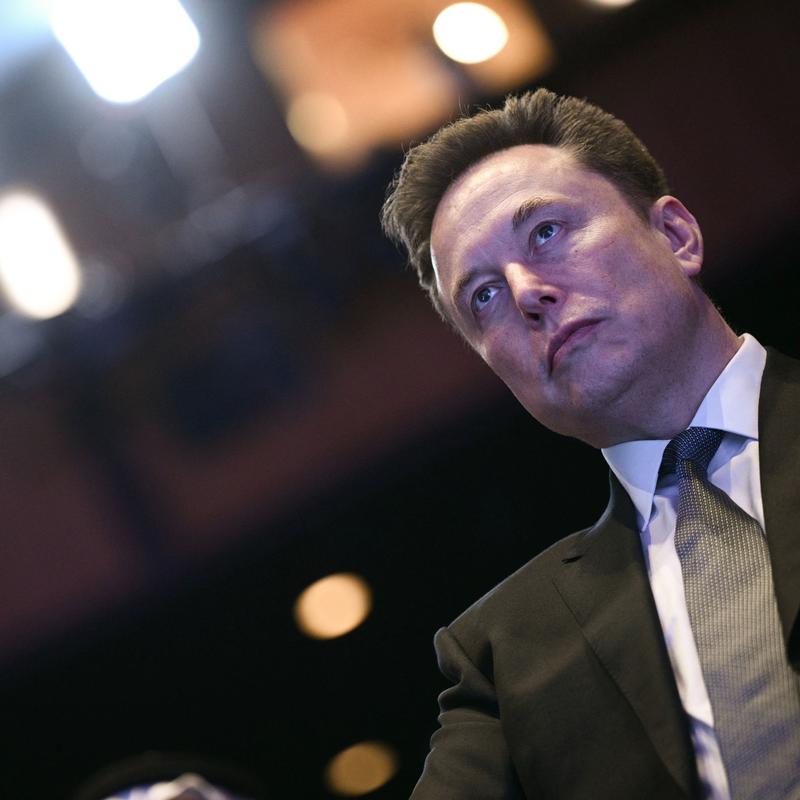
Charlie Warzel: Musk essentially just pulled the curtain down on everyone at once. He unleashed a global witch hunt.
Brooke Gladstone: A new location feature on X is raising questions about prominent MAGA accounts.
Charlie Warzel: @MAGANationX is based in Eastern Europe, and the handle @American is based in Pakistan.
Brooke Gladstone: From WNYC in New York, this is On the Media. I'm Brooke Gladstone.
Micah Loewinger: I'm Micah Loewinger. Also, on this week's show, how a school librarian in Louisiana became the target of book-banning activists.
Amanda Jones: I'm scared they're going to follow me home. I'm going to be on this stretch of road where no one's around, and so, yes, I carry a weapon.
Brooke Gladstone: Plus, the untold history of how scholars helped win World War II.
Elyse Graham: The library is full of stories about spies, but none of those stories are about spies in the library.
Micah Loewinger: It's all coming up after this.
[music]
Brooke Gladstone: From WNYC in New York, this is On the Media. I'm Brooke Gladstone.
Micah Loewinger: I'm Micah Loewinger. The MAGA media has been particularly strange lately. Equal parts confusing and confused.
David Asman: Just one word, wow. "Commie Mamdani," as the president has referring to his guest in the Oval Office there for the past several months, looked like best friends with President Trump now.
Harry Sisson: Laura Loomer, who's one of Donald Trump's biggest supporters, said after the meeting that Democrats will have a landslide in the midterms because of the meeting. She was just raging.
Micah Loewinger: On the very same day as the Trump-Mamdani rapprochement, the president's former ride or die announced she'll be leaving Congress early next year.
News clip: Marjorie Taylor Greene's resignation announcement late last night sending shockwaves across the Republican base.
News clip: The president is again calling his former ally a traitor.
Micah Loewinger: According to one Fox News host, their breakup was over "affordability," but we all know that the real reason was Greene's decision to push for the release of more Epstein files.
Marjorie Taylor Greene: Watching this actually turn into a fight has ripped MAGA apart.
Micah Loewinger: Six months ago, the Epstein files were a common crusade for right-wing influencers. Now, not so much.
Alex Jones: They're going to release all this stuff the next week or so, and it's going to be a whole bunch of recycled bullcrap.
Micah Loewinger: Alex Jones of Infowars.
Alex Jones: Absolute nothing burger.
Megyn Kelly: As for Epstein, I do know somebody very, very close to this case who is in a position to know virtually everything.
Micah Loewinger: Here's Megyn Kelly, who deserves a gold medal for these mental gymnastics.
Megyn Kelly: This person has told me that Jeffrey Epstein, in this person's view, was not a pedophile. He liked 15-year-old girls.
Micah Loewinger: Suffice to say, there's a lot of cognitive dissonance coursing through the MAGA internet right now, and the work of telling right-wing audiences what they want to hear has grown more and more difficult. Last weekend, we learned that a lot of people doing that work on Elon Musk's X are not who they appear to be. Big accounts, crypto boosters, Trump family fan pages, right-wing news aggregators with hundreds of thousands of followers. Many of them, it turns out, are likely click farms based in Eastern Europe, Southeast Asia, and Northern Africa.
Charlie Warzel: X rolled out this new feature called "About This Account." It allows people to click on the profile of a user and see information like what country the account was created in, where the user is currently based, and how many times the username has been changed.
Micah Loewinger: Charlie Warzel is a staff writer at The Atlantic. He's been tracking the anger and confusion among X users as they've learned about the lie at the heart of the platform.
Charlie Warzel: People started clicking around and singling out hyperpartisan accounts, either from the far right or the far left, or accounts coming from conflict zones. They started noticing that not everyone was, according to this feature, who they said they were.
Micah Loewinger: Can you give some examples?
Charlie Warzel: Yes. There was an account called @MAGANationX, which had roughly 400,000 followers when I looked it up. Its bio says it is a "Patriot Voice for We The People." According to the feature that is based in Eastern Europe, there is an "America First" account with 67,000 followers based in Bangladesh. My favorite, it's very poetic, is that the X handle for @American is, according to the feature, based in Pakistan.
Micah Loewinger: As somebody who's been covering the kind of weird political internet for a long time, was this surprising?
Charlie Warzel: It's not surprising at all if you've been reading the research in the way that I and plenty of my other colleagues who cover social media have. What is genuinely surprising, I think, is the scale, and also just the nature of it all happening at once, right? These foreign influence operations have been uncovered forever. On the internet, they've really been a subject of media scrutiny since my old colleague Craig Silverman at BuzzFeed unveiled this network of Macedonian teens right before the 2016 election that was creating all these hyperpartisan Facebook pages and websites.
Micah Loewinger: That was the era when we called this stuff fake news. I guess it was more about fake news websites. Now, this is more about just people pretending to be people they're not online.
Charlie Warzel: That's right. I think that Musk essentially just pulled the curtain down on everyone at once. People on the left who are running around saying, "We knew all these MAGA accounts were bogus," right? The billionaire hedge fund manager, Bill Ackman, is looking at accounts that have been quoted by mainstream news organizations and saying, "Aha, see, we knew the news was fake."
Micah Loewinger: Do we have a sense of which end of the political spectrum is faring worse?
Charlie Warzel: As a journalist, I want to be very clear that it's tough to get a picture of the scope of this because it's very difficult to just be independently researching this at Twitter scale. From what I can see, I do think this is disproportionately harmful to the right wing because Twitter has become such a political weapon for the far right. Musk, as recently as last week, he was apologizing because there was left-wing political influencer stuff that was showing up in people's feeds and saying, "That's a mistake."
It's very clear he's tried to tilt the algorithms toward one set. I think just for that reason alone, there is this notion, as these accounts are being uncovered, that the MAGA movement has really dined out on the fact that there is an incredible online grassroots effort here, right? This is the voice of the people, so to speak. I think seeing that on X hurts them a little more than it hurts the left. A lot of which have moved away from Twitter as a primary place.
Micah Loewinger: There is something I think ironic and funny about a social media site that seems to promote very xenophobic personalities and content, revealing itself to be exploited by non-Americans. Tell me about how these revelations are being metabolized.
Charlie Warzel: There is an account that I don't really feel like I need to name that it was relatively popular. It was verified. It was very pro-Israel, very Islamophobic. Recently, it had been posting a lot calling for Zohran Mamdani's deportation, right? It turns out that account, according to the tool, has changed its username 15 times, and it is based in South Asia.
I'm going to X, and I'm trying to verify this, and I'm looking at it. I notice that this account is going to other accounts and accusing them of being fake, calling these accounts "Pakistani garbage." What you have is this thing that just really feels like it exemplifies what X is now, which is this Russian nesting doll of bullshit, right? Fake people yelling at fake people for being fake. It is this nothing-is-true-and-everything-is-possible moment.
Micah Loewinger: It's sad to think that people on the other side of the world are willing to larp as white supremacists and American Christian nationalists to make a buck, but how profitable is this really? Are people getting rich off of these like--
Charlie Warzel: I think it's really hard to tell what people are making. Most cases in these types of programs, it is pennies on the dollar versus what the actual platforms make. In October of 2024, X made a change to this program where the payouts weren't based off of advertising. It was based off of engagement, how many people were liking, retweeting, and especially commenting, right?
I saw one figure, again, very anecdotal, that if you get around 1,300 or so replies to a tweet that you can probably make a couple of thousand bucks off of that. This idea, back in October of 2024, was roundly criticized by people. This is the classic Silicon Valley sin, which is creating the conditions where people are optimizing for engagement. Of course, there is nothing more engaging than outrage.
Micah Loewinger: One thing I don't understand is why would Elon Musk approve this feature, this product?
Charlie Warzel: I honestly can't tell you what he might have been thinking here. When Elon Musk bought X back in late 2022, he was obsessed with bots, right? He was obsessed with spam. He said that the platform was absolutely clogged with it, that people were being impersonated rampantly. I often disagree with Elon Musk's decisions as the owner of X. I think this is a smart one, right?
Micah Loewinger: Yes.
Charlie Warzel: I am for transparency on these platforms. Very classically, this was rolled out in X fashion, which is with a lot of grand pronouncement, and then in a way in which there were all these bugs, right? The biggest problem with the rollout is the fact that there were a whole bunch of false positives or mislabeled accounts. Hank Green, the popular YouTuber, it says his account is based in Japan. When I asked him about that on Sunday, he said he'd never been to Japan. When you have these people who actually genuinely have been mislabeled, it does cast doubt on the entire product and makes for even more mayhem.
Micah Loewinger: Okay, so let's just stipulate that an uncomfortably large portion of traffic on X is driven either by bots and/or these engagement slop farm accounts that claim to be one thing and are really another, but X is not the most popular social media site in America. It's the eighth behind YouTube, Facebook, Instagram, TikTok, WhatsApp, Reddit, and Snapchat. Sure, X is chaotic, less trustworthy than ever. How big of a deal is that?
Charlie Warzel: A lot of the media elite and the political elite hang out on X. It's a place where, by virtue of habit or because they still feel like they get something out of it, it's where this discussion happens, right? The vice president of the United States is posting constantly on X.
Micah Loewinger: He's addicted to the site.
Charlie Warzel: He's addicted to the website. Donald Trump used to be addicted to the website. He now has his own, but I've reported a lot in the last year that the Trump administration uses the main governmental accounts basically to troll their ideological opponents inside the country. They post memes. They make news. I think more than just that, all these political influencers, media personalities, and politicians also take these posts from supposed ordinary accounts, right? They hold them up as these examples of ideological dysfunction, corruption, depravity, right? These posts from average people are used as fodder in the culture war.
Micah Loewinger: Can you give an example of that?
Charlie Warzel: If you remember, Cracker Barrel changed its logo this summer.
Micah Loewinger: How could I forget? That was one of the biggest news stories of my lifetime.
Charlie Warzel: I'm speaking to another terminally online person here. For those of you who aren't addicted to the internet, when Cracker Barrel changed their logo, there was this huge supposed outcry from the far right that this is an example of DEI politics taking over.
Micah Loewinger: They took the silhouette of the old man out of the logo, and they replaced it with some kind of sanitized, millennial, friendly, modern Cracker Barrel logo.
Charlie Warzel: Right. Again, independent of whether or not you think that that was a good idea, the narrative around this was that the people on the left were basically trying to sterilize the heritage of this institution and what it represented of rural life. Cracker Barrel, a couple of months ago, hired an outside consulting firm, research firm, to try to dredge up just like how much of this was real or fake, this outrage online. According to a Wall Street Journal report from October, between 32% and 37% of the posts that were outraged about this from either side of the political spectrum were supposedly fake accounts. This is a very standard way to create culture war.
Micah Loewinger: Assuming that Silicon Valley is not going to have some collective come-to-Jesus moment where all of these trends are just reversed, what can the users, the customers, the living data mine vessels--
Charlie Warzel: The product. [laughs]
Micah Loewinger: Yes, the product. What can we do to help ourselves survive this techno-hellscape?
Charlie Warzel: If there is a thing that makes me feel a little bit optimistic, I think it is the idea that these platforms, because of the decisions of their founders, are becoming genuine failed states. The dream of these platforms or the thing that felt great back when they were all first announced and we all got on there, the excitement part of that, it's so far gone that what makes me feel optimistic is that maybe people are going to vote with their time and their eyeballs and their attention and their accounts and log off. I've been fascinated by this company, and I can't remember the name, that makes these pouches that you put your phones in, right?
It was originally so that stand-up comedians didn't have to worry about people filming their sets or whatever. Those bags are being used in schools now. There are phone-free bars and concerts, and people are having this great time. One reaction to that is, "Oh, man, that's just so sad, a really pathetic indictment of our culture." The other is like, "Are these the tiny ways, these tiny, little fractures that all come together to cause whatever it is to break a little bit?" I really feel like if there is a way to be optimistic about this, it's that people aren't stupid. After a while, they're going to realize the temperature of the water they're swimming in and be like, "I got to get out of the pool."
Micah Loewinger: Oh, I really hope you're right, Charlie. Thanks so much.
Charlie Warzel: Thanks for having me.
Micah Loewinger: Charlie Warzel is a staff writer at The Atlantic and host of the podcast Galaxy Brain.
Brooke Gladstone: Coming up, what to do when people who think you're corrupting their kids come after you, locked and loaded.
Micah Loewinger: This is On the Media.
[music]
Micah Loewinger: This is On the Media. I'm Micah Loewinger.
Brooke Gladstone: I'm Brooke Gladstone. The once-flourishing book-banning movement actually took a hit nationwide in local school board races earlier this month.
Kyle Clark: School board candidates backed by teachers' unions swept races across Colorado last night.
News clip: In Pennsylvania, Democrats flipped at least two dozen school board seats. In Ohio, they won 18 of 22 races. In Minnesota, 94% of candidates backed by the National Education Association won.
News clip: In Akron, two Moms for Liberty-aligned incumbents were ousted.
News clip: For the first time in recent years, Cy-Fair ISD will not have a supermajority conservative board of trustees after this week's election.
Brooke Gladstone: Those wins provide a sliver of hope for librarians across the country who've been targeted and harassed by activist groups like Moms for Liberty, who seek to remove long lists of books from library shelves. A documentary released this year, The Librarians, follows some of those librarians' tribulations from Florida-
Julie Miller: We got the list of these books are to be removed immediately. I wrote an email back and just asked, "Could you please provide us with the reason why each of these books is being removed?" I was removed from my library for asking questions.
Brooke Gladstone: -to Texas-
Granbury administrator: We were going to pull books off the shelves. It's the transgender, LGBTQ, and the sexuality in books.
Brooke Gladstone: -to New Jersey-
Martha Hickson: I see the kid emerge from the stacks holding Lawn Boy by Jonathan Evison. 24 hours later, that student's mother was standing in front of the Board of Education and calling me a pornographer, pedophile, and groomer of children.
Brooke Gladstone: -and Louisiana.
Amanda Jones: In our parish, we have the highest concentration of KKK, Aryan Nation, those type of groups.
Brooke Gladstone: In September, we spoke to school librarian Amanda Jones from Livingston Parish, Louisiana. In 2021, she was awarded one of her profession's highest honors, School Librarian of the Year. In 2022, she found herself in the crosshairs of culture war after she spoke up at her public library board meeting.
Amanda Jones: I talked about how libraries already have policies and procedures that, if anyone doesn't like a book in a library, whether it's school or public, there are processes in place.
Brooke Gladstone: After the meeting, two men she didn't know created memes about her that circulated all over the internet, including by family and friends.
Amanda Jones: One meme said that I advocate the teaching of anal sex to 11-year-olds. The other meme was a picture of me that had a circle that looked like a target around my face. That post identified me as a school librarian and where I worked, and insisted that I give pornography and erotica to six-year-olds. They circulated all over the state that weekend. Then by the next week, it was all over the country.
Brooke Gladstone: It was excruciating.
Amanda Jones: I eventually had to take a leave of absence from work for debilitating panic attacks that I had never had before. I was losing chunks of hair. I lost 50 pounds over the next few months from the stress of it all. I had a little pity party for a few days, but then I woke up that third or fourth day with just a burning rage at these men and what they were doing and saying about me, and a burning rage at people that I had stood up for that were saying these awful things about me. I decided to stick up for myself and fight back.
Brooke Gladstone: How did you do that?
Amanda Jones: I filed a defamation lawsuit against these two men. It is still ongoing today. It's been three years. Then they turned around and said I was filing the lawsuit to keep sexually explicit books in the children's section of the library, which is not what the lawsuit is about. Just lies.
Brooke Gladstone: What's at stake here?
Amanda Jones: Lives are at stake. Children's lives. People tell me I'm exaggerating. It's hyperbolic. It's not. I've taught for 25 years. I've taught thousands of students, and I have had many, many students who have grown up and taken their own lives. Over two dozen. I stopped counting at around 20 because it was too heartbreaking. They generally fall into two categories. They're either veterans that served our country and weren't given resources when they returned, or they're members of the LGBTQ community.
Almost every single former student that I know of that has taken their own life fall into one of those two categories. To me, both of those reasons are preventable. I do raise money every year for disabled American veterans, but I thought that what I could do for maybe mitigating some of this in our community would be to make sure that kids are represented in the books in our public library and our school library, and make sure they can see themselves and feel seen and heard and represented.
Brooke Gladstone: Students have spoken to you about what certain books have meant to them over the years.
Amanda Jones: Oh, yes. I teach middle school, so they're not the most talkative, forthcoming bunch, but a lot of former students, yes, in their 20s and 30s. One student, right after this happened, wrote me and said, "I was thinking of taking my life, and you gave me a book that made me feel like there was other people like me, and I decided to live for one more day." That's powerful.
One of my former students was substituting at our school. She stopped by the library to come and talk to me. She hadn't been in our school library in 10 years. She walked around. Within minutes, she said, "Ms. Jones, this library has changed so much. I see books with people that look like me. I see brown characters on the covers of these books. I never saw that when I went to the school." I want to preface. I was not the librarian at that time.
[laughter]
Amanda Jones: It made me tear up.
Brooke Gladstone: There's a study by the Human Rights Coalition that found that amid all of the fears of being unsafe at school that 9 out of 10 kids feel safest in the school library?
Amanda Jones: They do. I want 10 out of 10 kids at my school to feel safe and loved and seen, and that they can come to the library without judgment and just relax and be who they are. That's very important. It's a huge responsibility, and I don't want to let these kids down.
Brooke Gladstone: You've mentioned their safety several times during this conversation. How about yours?
Amanda Jones: Well, I generally feel unsafe most of the time. [chuckles]
Brooke Gladstone: Tell me why. Describe what you've encountered.
Amanda Jones: Getting a death threat, saying that they know where you live and work, will change you forever. It was the work part that got me. My fear is that someone will come after me and that, in the process, children will be harmed. I don't think I could ever live with myself if that happened, and I know it wouldn't be my fault, but I think about that almost daily.
Brooke Gladstone: Tell me about guns.
Amanda Jones: When I go to library board meetings, I have to travel through very rural areas, wooded areas, and I'm by myself a lot of these times. I'm scared they're going to follow me home. I'm going to be on this stretch of road where no one's around. Yes, I carry a weapon, and I do sleep with a shotgun under my bed because I have a teenager that I want to protect if someone breaks into my home.
Brooke Gladstone: The documentary shows the connection between all of these movements to ban books or censor them or move them across the country. From where you live in Louisiana to Texas to Florida, even New Jersey, we learn that some of the people behind these campaigns have connections to the Christian nationalist movement. Among them, Dan and Farris Wilks, billionaire oil tycoons who've donated lots of money to politicians and conservative media outlets. Here's a clip of Farris from the documentary.
Farris Wilks: A male-on-male or female-on-female is against nature. This lifestyle is a predatorial lifestyle in that they need your children and straight people having kids to fulfill their sexual habits. They want your children. The cornerstones of our government are crumbling and starting to come apart, and it's because of the lack of morality, the lack of belief in our heavenly Father.
Brooke Gladstone: There's also a company, Patriot Mobile, that's been financing these book-censoring groups. Here's a clip from one of their meetings.
Patriot Mobile Member: God takes what the devil meant to harm us and he turns it into good. He blesses us with it. Every time we're attacked at Patriot Mobile, our sales just go through the roof. We increase our sales. What does increasing our sales mean? It means we can give more money back to organizations like Moms for Liberty.
[applause]
Brooke Gladstone: How have you seen that play out in your town, in your state?
Amanda Jones: They're apparently not worshiping the same God I am. [laughs] That's not Christianity, so I created an organization called Livingston Parish Library Alliance. We've been tracking campaign donations. We have noticed that when politicians specifically speak out about the library and insist there's sexually explicit materials or whatever, we've noticed an uptick in donations. They play on people's fears that there's these evildoers coming after your children.
Brooke Gladstone: Where are those donations coming from?
Amanda Jones: It's a dark money, nonprofit, extremist group. They don't live or work in my community that have entered my community working with local politicians to create this fear so these politicians can get votes, power, and money. The lady that originally on our library board started all of this nonsense, who is now on our parish governing because we're parishes and not counties in Louisiana. It catapulted her into a higher elected position. Her husband formed a PAC, and the Koch brothers have donated over $60,000 to their PAC. It's all money and power.
Brooke Gladstone: In the first public meeting where you spoke out, there were out-of-town activists trying to get books moved in your community. How big a role generally do out-of-town activists play?
Amanda Jones: The American Library Association, they put out a State of the Libraries report every year. Last year, they reported that I think it was 72% of book challenges and all of these things that are happening are from political focus groups. There's a pastor from Texas that travels all over the country to talk about the porn in the libraries where he doesn't live.
There's a man that's filed thousands of challenges in Florida schools. He doesn't have a child in those schools. That's not an organic concern. I don't fault a parent for filing a legitimate challenge against a book. These people, they're not reading these books. They're finding lists online, and they're just filling out these challenges. They're just trying to cause chaos, and so distrust in our library systems.
Brooke Gladstone: There was some reporting a couple of years back that Moms for Liberty's influence was waning. They'd run a number of candidates for school boards who lost. Do you see this movement dying down at all?
Amanda Jones: It depends on where you're at in the country because these are such local fights. In areas like Texas and Florida, where it started, it's been going on a lot longer. We're starting to see the pendulum switch back to normalcy. There's also been lawsuits won in those states.
Brooke Gladstone: Lawsuits against?
Amanda Jones: School systems that are banning books. There's been some pretty large lawsuits in Florida. Penguin Random House has been fighting the fight. Several authors, Peter Parnell, Justin Richardson, George M. Johnson, have been fighting back against book bans and winning in court. That's helping states like Florida. Then you've got states like Arkansas that were a little slower to start the book-banning movement. They're just getting into the heat of it right now. You've got states like Missouri that was a little behind Texas and Florida. Some states are swinging back, and some are just getting started.
Brooke Gladstone: You've also said that the problem starts at the top, that it's dependent on who's president.
Amanda Jones: When Donald Trump was inaugurated in January, he almost immediately had the US Department of Education post that they were ending the Biden book ban hoax. Everyone's like, "See, it is a hoax. That's not happening." People in my community believe everything he says. I wrote an article for Time last year that said the presidency was going to determine the fate of libraries. I was right, because the minute he got into office, he fired the librarian of Congress and almost completely gutted the Institute of Museum and Library Services, the national organization that helps all of the libraries in the United States.
I know Louisiana, just the libraries alone get 2.7 million to help run our state library. Our state library helps all of the rural parishes in Louisiana that can't afford some of the things like we're talking Wi-Fi in areas that don't have internet service access. We're talking helping people print. We're talking ESL classes and career advice and law help, and all of these resources that people sometimes realize that libraries do.
Brooke Gladstone: Amanda, I want you to sit back here for a second and see if you can remember the moment when you decided you wanted to be a librarian.
Amanda Jones: Oh, I remember it exactly. I don't like to give her credit for it, but when I was in college, I had lost that love of reading. I watched The Rosie O'Donnell Show while I was waiting for class one day. She had on this up-and-coming author, J.K. Rowling. Rosie O' Donnell just kept talking on and on about these Harry Potter books. I went and checked out the first three, read them in their entirety twice that week. That day that I finished reading the whole series for the second time, I went and got special permission as an undergrad to start taking library science classes as an undergrad.
Brooke Gladstone: [chuckles] Why? You could have just become a reader again.
Amanda Jones: I just love reading so much, and I realize that not every kid does. Not every kid is going to be a reader, but I can try to show them the right book. Because once they become readers, it opens them up to a whole new world, especially in areas like mine where people don't have a lot of money. They're not going to be able to travel the world, but they can adventure through books. They can learn, and they can grow. Books do save lives. Books do make us more empathetic, kind human beings. We could use a lot more of that in this world.
Brooke Gladstone: You're going on tour, and you said you're still scared. That hasn't gone away.
Amanda Jones: No, it hasn't. I often request security at events, but I'm starting to feel like maybe it doesn't matter how much security you have. If someone wants to come after you, they're going to come after you. That's very scary.
Brooke Gladstone: Amanda, thank you very much.
Amanda Jones: Thank you for having me.
Brooke Gladstone: Amanda Jones is a school librarian and author of the book That Librarian: The Fight Against Book Banning in America. Earlier this month, she settled her defamation case with one of her accusers for a dollar and a public apology.
Ryan Thames: I said that she advocates for giving age-inappropriate materials to children. I said that she advocated for the teaching of anal sex to 11-year-olds. Those statements were not true.
Brooke Gladstone: The Librarians documentary is currently playing in theaters across the country.
Micah Loewinger: Coming up, the daring do of librarians in wartime.
Brooke Gladstone: This is On the Media.
[music]
Micah Loewinger: This is On the Media. I'm Micah Loewinger.
Brooke Gladstone: I'm Brooke Gladstone. We're living in history all the time. Nevertheless, sometimes seem more historic than usual. Our freedom of expression and even the facts of our own history have come under siege, along with our archives, museums, universities, and libraries, but history could tell us if we chose to listen that, at times, the very future of the world has depended on these very institutions.
Case in point, historian Elyse Graham, professor at Stony Brook University, delved into the moment when the US government, staring into the maelstrom of the Second World War, was in desperate pursuit of historians, librarians, artists, and academics. A pursuit led by what was then called the Office of Strategic Services, and later the CIA. Graham describes in her gripping history Book and Dagger, how scholars became unlikely spies during World War II. She argues that without this unheralded core of peculiar recruits, that war might very well have been lost. I spoke to Graham earlier this year.
Elyse Graham: The library is full of stories about spies, but none of those stories are about spies in the library.
Brooke Gladstone: [chuckles] You say that the war was won on the front lines, but it was won with books?
Elyse Graham: We often think of World War II as the "physicists' war." It was finally won by a bunch of physicists in New Mexico who dropped an atomic bomb. That itself was a successful misinformation campaign.
Brooke Gladstone: How so?
Elyse Graham: In early 1945, a fellow named Henry DeWolf Smyth was called into an office in Washington and asked if he would write this book that was about a new kind of weapon that the US was developing. It was published by Princeton University Press about a week after the bomb was dropped. It explained how the US made the bomb. It told the Oppenheimer story that you see it in the movies, where a group of shaggy-haired physicists figured out how to split the atom and all of this stuff.
The thing is, the physics of building an atomic bomb is, in some respects, the least important part. More important, if you actually want to make the thing explode, is the chemistry, the metallurgy, the engineering that were left out of the story. The book was published the way it was so that it would satisfy people's curiosity, but not give other countries the information that you actually need to build a bomb.
It was a misinformation campaign, the very last one of the war, and the most successful because it still utterly dominates the way that we think about how the war was won. This wasn't just the physicists' war. It was also the historians' war, the book collectors' war, the artists' war, the professors' war. The war was fought on battlefields, but it was won in libraries.
Brooke Gladstone: We think of James Bond, we think of Jason Bourne, suave or brutal, but you show that the OSS's Research and Analysis branch were recruiting people who were very different.
Elyse Graham: These spies, these librarians and professors during World War II, they were chosen precisely because they would be overlooked. A lot of them went undercover, and nobody suspected them of being spies. Rumor has it that to this day, the CIA does recruiting at the annual American Library Association conference.
Brooke Gladstone: [laughs] Now, you touch on so many characters in your enthralling narrative, but there are three you return to again and again. Joseph Curtiss, Sherman Kent, and Adele Kibre. Your book starts very cinematically with the recruitment of the very unlikely Curtiss.
Elyse Graham: People who were in charge of recruiting spies into the OSS at the beginning of the war drew on spy stories to tell them what to do. Someone came up to Curtiss and said, "Listen, you need to go to the Yale Club in New York City tomorrow. Wear a purple tie. You're going to see a man who's smoking a cigarette. When he sees you, he'll put it out. He has an important message for you," and that's how he got recruited.
Brooke Gladstone: Why Curtiss in particular?
Elyse Graham: Curtiss was a professor of early modern literature. Curtiss was the sort of guy who wouldn't be able to get the attention of a waiter. Students didn't remember him later on. If you're going to send someone behind enemy lines as a spy, it is useful that this is someone who nobody would look at twice. Not the kind of guy who's wearing a tuxedo and everybody knows takes his martini shaken, not stirred.
Brooke Gladstone: Why was he assessed as having the right stuff?
Elyse Graham: When you go undercover, it's important that you be as competent in your cover as you are in the spycraft. Joseph Curtiss's cover was he was going to Istanbul in order to collect books for the Yale Library, which meant he had to be competent in collecting books. Of course, in the meanwhile, he was tracking down German spies and turning them into double agents, but that's definitely not the kind of thing you would expect someone like Joseph Curtiss to be doing.
Brooke Gladstone: He was sent to supposedly neutral Istanbul just as whatever spying that was going on there by the Allies was falling apart.
Elyse Graham: The OSS branch in Istanbul was falling apart because the guy in charge of it thought that he was in a James Bond story. He was sleeping with his sources, and his sources turned out to be enemy agents. His cover was blown so thoroughly that every time he walked into one of the city's nightclubs, the band would start playing a song called Boo Boo, Baby, I'm a Spy.
Brooke Gladstone: [laughs]
[MUSIC - Wartime Istanbul: Boo Boo, Baby, I'm a Spy]
I'm so cocky I could swagger,
The things I know would make you stagger,
I'm ten percent cloak and ninety percent dagger,
Boo, boo, baby, I'm a spy!
Elyse Graham: That was Lanning Macfarland. Curtiss actually tracked him down. He got tired of not being contacted. Maybe Macfarland was hanging on to his own jobs by his fingernails. People were getting fired from the Istanbul outpost left and right. Whatever the case, Curtiss was given a surprising new job, which was to build a counter-intelligence operation that would find enemy agents, turn them into double agents, and would also spread propaganda, rumors, misinformation. He turned out to be surprisingly good at it. I know that there's a lot of lying and backstabbing in academia, but this is something else altogether.
Brooke Gladstone: [laughs] Tell me how these unlikely agents were trained.
Elyse Graham: The Americans had these camps with tents in national parks, where they would learn how to do quick draws like cowboys. You'd be standing in a muddy field, and there would be a fighting instructor teaching you how to use ordinary objects as weapons. You'd learn how to use somebody's trousers to restrain him, or how to fold a newspaper in such a way that it turns into a deadly weapon. You would learn, if you were a woman, how to use a makeup compact as a knuckle duster. The assumption was that you'd be out in the field with only your wits to protect you.
Brooke Gladstone: I was really struck by the meticulous creation of persuasive pocket litter.
Elyse Graham: As a general rule, you can have either a weapon or a cover, but not both. Because if the Gestapo catch you with a gun or a knife, you're not going to be able to persuade them that you're an ordinary civilian. Everything on your person, including the stuff in your pockets, should agree with your cover. Your breath should smell like the toothpaste in the area that you're supposed to be from. If there are grains of tobacco in your pockets, they need to be tobacco that is sold in the place where you're from. It was really, really specific.
Brooke Gladstone: Let's move on to another notable character you return to again and again. Sherman Kent. Less Caspar Milquetoast and more Humphrey Bogart, maybe.
Elyse Graham: He was a tweed-wearing history professor at Yale. He was brilliant, but he was always looking for a fight. When he was teaching, he would throw chalk past the heads of his students, which they don't let us do anymore. When he gets recruited, he goes to a spy training camp. He learned how to throw daggers, and he became so good at it. For the rest of his career, he was famous for being able to throw a dagger better than a Sicilian. That was the phrase that was said about him.
He didn't end up going into the field. He wound up going to Washington, where he worked in intelligence analysis, also known as the Chairborne Division. This is professors of literature and history and economics who are pulling out of novels and newspapers, strategic intelligence that can be used to fight the war. All the work of those professors and librarians would have been nothing if Sherman Kent hadn't been their spokesman. What he was trying to persuade the military of was that most of what an intelligence agency needs to know can come from public sources.
Paper can be more effective than bombs. It could tell the right reader what factory should be bombed to stop the production of ball bearings. It's more useful to stop the production of ball bearings than to stop the production of fighter planes because ball bearings are used to create fighter planes. How do you know what factory? By comparing minute fluctuations in railroad rates, and then you find its address by looking at a street directory. It was really adventurous and imaginative reading in the New York Public Library and the Library of Congress that allowed the Allies to come to these insights.
Brooke Gladstone: Now, talk about Adele Kibre.
Elyse Graham: Kibre had, without knowing it, been trading all of her life to be a spy. She had a PhD in classics from the University of Chicago. Because women couldn't really go into the professoriate in these years, she became a professional archive hunter, hopping from archive to archive across Europe, earning money by taking photographs of rare texts for scholars back home in the States.
Kibre became the most productive document acquisitions agent working for the Allies. She was working undercover in supposedly neutral Sweden. Sweden could continue to be neutral as long as no spies operated in Sweden. Kibre had to work completely undercover. The Swedish police had trained with the Gestapo. This was actually still a very dangerous place to be a spy. She acquired and sent home on microfilm a massive number of documents that went all over the world on behalf of the Allies, including into the library at a little place in New Mexico called Los Alamos.
Brooke Gladstone: In Adele, you actually have a kind of movie spy. She used charm. She used guile. She also used the technique you describe of saying something wrong in order to be mansplained. The secret reality.
Elyse Graham: Kibre was aware that she was the sort of woman who appealed to men who think two things at the same time. One, that they're attracted to smart women, and two, that they're smarter than the women they're attracted to, which is a very dangerous combination. Kibre changed her persona to suit the people that she was talking to. When she was trying to get documents from professors, "Oh, I myself got a PhD at the University of Chicago," when she talked to people who were sympathetic with the Germans, she seems to have represented herself as being sympathetic with the Germans. She reflected what they wanted.
Brooke Gladstone: You also found that a lot of other women who worked for the OSS were left out of these histories, and that was about 35% of the OSS. A lot of the work that these spies did revolved around changing the narrative. One very effective tactic involved "whispering."
Elyse Graham: Whispering was a subspecialty of propaganda. Now, you might think that spreading rumors means talking as loudly and widely as possible, but that's not true. The coordination of loose lips had to be as tight as the coordination of Special Forces. I'll tell you how it worked. The Allies put together rumors at something called the rumor factory. The head of this section had the enviable title "master whisperer." The whispers would go out through strategic networks.
In a given region, a chief whisperer would organize the whispers, give them to agents. They would give them to sub-agents. Mostly, sub-agents were ordinary civilians. You could be a reliable sub-agent in a propaganda network and not even know it. The rumor factory classified whispers in two categories. One, smokescreen rumors that were designed to deceive the enemy about the Allied war position or the Allies' intentions. Two, rumors that were designed to attack the morale of the enemy.
There's one that goes, this is 1941 in Germany, "A woman in black committed suicide with a revolver on the steps of the Reich Chancellery," which is Hitler's headquarters in Berlin. "She held in her hand a newspaper announcing the death of her husband and son." This is to make people think about the despair of the German people.
Brooke Gladstone: Of course, one of the most famous coups pulled off by this corps of irregulars was Operation Mincemeat. British Intelligence dressed up a corpse as a Royal Marine to deceive the Germans about an upcoming invasion.
Elyse Graham: Operation Mincemeat convinced the Germans to believe in a coincidence that was, on its face, ridiculous simply because it was a compelling story that this British Marine fell in the ocean carrying a suitcase of plans that showed the Allies planned to invade Greece instead of Sicily. The British worked up a whole background for this guy. He had pocket litter. He had a photograph of his fiancée, Pam, an overdraft slip from the bank showing he had spent too much on the engagement ring for Pam.
Brooke Gladstone: They dropped the corpse so that it would wash up in Spain.
Elyse Graham: Whom the Germans trusted. They successfully laundered the operation into a trustworthy source, which was also done with whispers. If you could get a whisper printed in a small newspaper, then a big respectable newspaper would print that the small newspaper was saying it. Then, suddenly, it was respectable. This is something that tells us about how important it is to teach people how stories work.
Brooke Gladstone: Do we have that kind of literacy about stories today? You say stories won the war, but the humanities now are under attack.
Elyse Graham: Before the war, US libraries were underfunded. They had very thin collections compared to what was available in Europe. After the war, both university libraries and public libraries were invested in heavily by the US government, which was determined to never be caught so badly lacking again. The US had learned the value of libraries, not just as centers of community and education, but as something that's integral to national security. These are some of the lessons that the US self-consciously brought away from the war. Of course, 80 years have passed since then, and we've largely forgotten that lesson.
Brooke Gladstone: In your book, you highlight the world-changing contributions of the people that Hitler despised, the members of the French resistance that destroyed critical railways that helped turn the war, and all the people that he rejected, who wound up being responsible for turning the tide of a war.
Elyse Graham: Yes, Hitler, he had an authoritarian regime. The thing about authoritarians is they have an incredibly limited outlook, an incredible need to conform, a conviction that anybody who's competent must share their exact way of thinking, which is a huge weakness. I wrote a piece for The Globe and Mail a while ago, saying authoritarianism is a catastrophic military disadvantage. The US military and others have conducted tons of studies showing, for instance, that diversity is a big military advantage.
It improves things ranging from resilience to unit cohesion and, more broadly, agile military thinking because they value outside perspectives. During World War II, Hitler and his cronies were constantly hobbled by the fact that they excluded violently so many people who wound up contributing marvelously to the Allied side of the fight. Anyway, I write this piece, and then a very belligerent guy writes to me and says, "What about the Spartans?" I guarantee that everything he thinks he knows about the Spartans, he got from the movie 300.
Brooke Gladstone: [chuckles]
Elyse Graham: The stories we tell matter. A ton of guys watched that movie. It came away from it thinking, "Well, the best fighters are a small group of guys who have 12 packs and don't wear shirts, but in a totally straight way, and fight against these dark-skinned Persians using the power of their own conformity." The stories we tell matter. Of course, the 300 guys should make their movie, but it's useful to have historians out there, too, talking about how it really worked. All of these things are, in the end, stories. It's important to have a plurality of stories out there so that we can arrive at a better and more useful truth, including about what happened during World War II and how we won it.
[music]
Brooke Gladstone: Elyse Graham is a historian and professor at Stony Brook University and the author of Book and Dagger. Thanks so much for being here.
Elyse Graham: Thanks for having me.
[music]
Micah Loewinger: That's it for this week's show. On the Media is produced by Molly Rosen, Rebecca Clark-Callender, and Candice Wang. Travis Mannon is our video producer.
Brooke Gladstone: Our technical director is Jennifer Munson, with engineering from Jared Paul. Eloise Blondiau is our senior producer, and our executive producer is Katya Rogers. On the Media is produced by WNYC. I'm Brooke Gladstone.
Micah Loewinger: I'm Micah Loewinger.
[music]
Copyright © 2025 New York Public Radio. All rights reserved. Visit our website terms of use at www.wnyc.org for further information.
New York Public Radio transcripts are created on a rush deadline, often by contractors. This text may not be in its final form and may be updated or revised in the future. Accuracy and availability may vary. The authoritative record of New York Public Radio’s programming is the audio record.