
Planet Money Wrote a Book And Then Dissected The Business of Publishing!
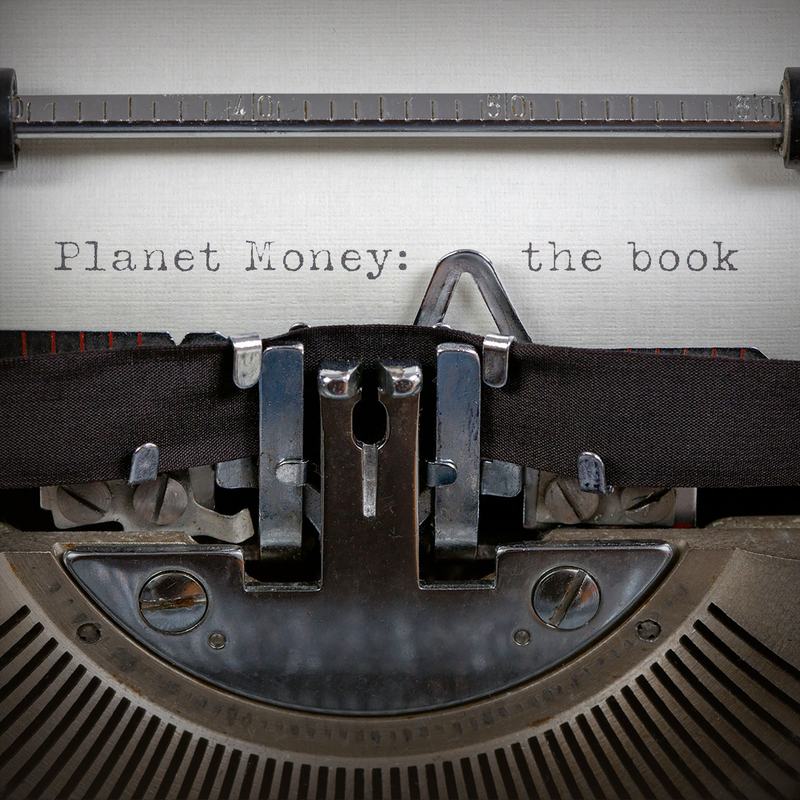
Micah Loewinger: Hey, you're listening to the On the Media Midweek podcast. I'm Micah Loewinger. Every now and then in this time slot, we bring you something that was made by another audio team. This week, we're presenting you with an episode of the NPR show Planet Money. They're three episodes into a five-episode series all about the book industry. It's very media, and we think you're going to love it. To explain the premise, here's the host of the series, Alexi Horowitz-Ghazi.
Alexi Horowitz-Ghazi: For a long time, whenever I entered the cozy refuge of an independent bookstore, I couldn't help but suspect that there was this whole hidden world, this whole economy lurking behind the bookshelves. I know in the era of TikTok and polymarket and video podcasting, it can be easy to overlook the humble book, but it is undeniable. Books are one of the most influential technologies ever. From the wealth of nations and Das Kapital to the Art of the Deal or Dreams for my Father, books can make us all lean in one day or suddenly everyone you know is finding life-changing magic and tidying up.
Even if you haven't picked up a book in years, the forces that shape the marketplace for books have the power to shape everything else in your life. They shape the ideas that make it to the masses. Last year, when my boss informed the team in an editorial meeting that the Planet Money book, which had been in the works for a while, was now hurtling toward publication, I found myself leaning in. The question on my boss's mind was this. Would anyone on the team like to report out how the book got made, to see what it might tell us about the business of books? Would anyone raise their hand? When I heard the call to tell the tale of the Planet Money book, what do you think I did, Reader? I raised it.
[music]
Hello and welcome to Planet Money. I'm Alexi Horowitz-Ghazi. We live in a world built on by books, and yet the economic machine that produces them is shrouded in mystery. The ways in which the invisible hand determines what books actually get made. Today on the show, the first episode in our series, Planet Money sets out to land a book deal and gets to go backstage to see everything that happens behind the shadowy curtain of the publishing industry. We see what happens when lofty artistic ideals meet the cold logic of the market. There will be whale fights, corporate speed dating, and a literary shotgun wedding.
[music]
I'd accepted the mission to tell the tale of the Planet Money book. In order to figure out where it came from, I started with the man who keeps the Planet Money solar system spinning every week.
Alex Goldmark: I am Alex Goldmark. I am the executive producer of Planet Money. In that role, it is my job to decide on the structure of the big projects we do, the business side of Planet Money.
Alexi Horowitz-Ghazi: I guess for disclosure's sake, we should also say, you are my boss.
Alex Goldmark: That is true.
Alexi Horowitz-Ghazi: Or actually, you're my boss's boss. You're kind of my grand boss.
Alex Goldmark: Oh, ouch, but okay, yes, sure.
Alexi Horowitz-Ghazi: I think it's cool. [laughter] Longtime listeners may recall Planet Money's habit for participatory projects. We made a T-shirt and followed all the underlying economic threads around the globe. We bought a barrel of oil to follow it from the ground all the way to the pump. We resurrected a superhero to make a comic book. We'd released a record. We just designed a board game. As to why our latest project is a book, Alex says you can thank the free market for that. When did the first twinkle of a Planet Money book enter your eye?
Alex Goldmark: I think, in all honesty, the first way it got on my radar was when these two literary agents said, "Hey, we've been retained by NPR to see if there are any NPR properties that would make for good books, and we think Planet Money could be one."
Alexi Horowitz-Ghazi: Alex was, let's say, lukewarm at first because this was the opposite of how Planet Money projects have usually gotten started. Typically, we pick some part of the economy we want to understand better and then dive in to figure out the industry. In practice, we've often failed to turn a profit, but that's okay, because making money was not the point. Here with the Planet Money book, and NPR seemed to smell an opportunity.
Alex Goldmark: I think at the time, one of my bosses said, "Hey, will you talk to these people?"
Alexi Horowitz-Ghazi: My great, great, grand boss?
Alex Goldmark: Yes. I was like, "Okay, that sounds potentially fun."
Alexi Horowitz-Ghazi: That is how Alex first met a pair of seasoned literary agents named Laura Nolan and Jane von Mehren. When you were first starting this, were you aware that historically Planet Money projects have notoriously lost money?
Jane von Mehren: No.
Laura Nolan: Alex made a point of not telling us that.
[laughter
Alexi Horowitz-Ghazi: Laura and Jane are a tight knit duo. Their minds are melded so closely, it can be hard to tell where one of Jane's sentences begins and Laura's ends. As literary agents, Jane and Laura do not work directly for a publisher. They help authors sell their book ideas to the publishers. When Jane and Laura make a sale, they make a commission, usually around 15%. They see themselves as like the spotters within the publishing industry peering into the vast swirl of infinite would-be books and scooping up the ideas they think they might be able to sell.
Laura Nolan: We are always thinking, "Is this idea a book? Is this article a book? Is this conversation I'm having with this random cousin of my husband a book?" Everything is processed through this lens of, is this a book or not?
Alexi Horowitz-Ghazi: In the case of Planet Money, Laura and Jane had been wondering whether this podcast might be a book for a while. They'd previously helped NPR make a book about women in music and a Wait, Wait... Don't Tell Me! Crossword book. They saw potential in Planet Money, in part because the show had recently sold out a live musical based on our superhero series. That made them even more intrigued by the idea of getting Planet Money between the hardcovers.
Laura Nolan: Here's an engaged audience of people who will go to a theater because of a character that was created by Planet Money that is actually in a comic book. Was it Jane von Mehren: Microface.
Laura Nolan: Microface, thank you. We're like, "Wow, if people are going to pay money to and go to the show, this really bodes well for a book."
Alexi Horowitz-Ghazi: Jane and Laura set up a meeting with Alex at the South Street Seaport in Lower Manhattan. What was the point of that first meeting?
Jane von Mehren: We knew we wanted Planet Money to do a book. It was not clear that Planet Money was ready to do a book. I think the point of the first meeting was to try and persuade Alex that now is the time.
Laura Nolan: Seal the deal, as we say.
[laughter]
Alexi Horowitz-Ghazi: The agents make their case to Alex. They explain that making a book would allow Planet Money to spread the show's signature brand of irreverent economic infotainment. It might even invite new listeners to the podcast by getting into untapped markets,
Jane von Mehren: Being in airport bookstores, being in libraries, being in schools. There were ways in which a book could do that in a way that a podcast can't.
Alexi Horowitz-Ghazi: Talking with Laura and Jane, Alex starts to see how a Planet Money book might be a good way to advance the mission of the show. There was still the question of, what kind of book the show would actually want to make, and what would find traction in the crowded marketplace for books? The three of them start brainstorming possible approaches, and at first, Alex is throwing out all sorts of concepts.
Alex Goldmark: I think I was like, "I want pamphlets, and we'll do the first one, and then we'll add to it. Over time, we'll have like 10 different pamphlets, and each one explain an industry or something and then shoot." They were just like, "No. You got to stop, Alex."
Alexi Horowitz-Ghazi: We love the energy.
Alex Goldmark: I think they were like, "This is good. You're very generative. Let's keep going. Anything else?"
Alexi Horowitz-Ghazi: The agents told Alex his ideas were a little bit too narrow. The key to selling a big book these days, they say, is figuring out a broad frame that would appeal to as many people as possible. How wide was the spectrum of possible Planet Money books we could have gone down? Is it like if we're trying to move copies like, Romantasy's super hot right now. Maybe we do a 50 shades of green.
Laura Nolan: 50 shades of green. Love that.
Jane von Mehren: That is hilarious.
Alexi Horowitz-Ghazi: We'll save that one for later.
Laura Nolan: I think that's going to be book 2.
Alexi Horowitz-Ghazi: For book 1, however, the broad idea that Alex and the agents finally land on is a field guide to the global economy. Just like the show, this book could use a series of vividly reported stories to bring our daily lives into economic focus. From how we all work to how we date and pick our mates to how we invest and save for retirement. This, they explain, is the kind of book that might have a mass market appeal.
Alex and the agents had a book idea. The next thing they needed was a book proposal. The proposal gives a sense of what it'll actually be like to read a prospective book. It lays out the structure of the various chapters, and it makes a business case for why this book and this author would be a good bet for a publisher. A book is not just some collection of interesting stories. A book is a product. Book proposals are both the vehicle by which nonfiction books are bought and sold, and they offer publishers a glimpse of how they might sell the book to readers. To get the ball rolling, Alex needed someone to actually help write the proposal. If everything went well, that person could write the actual book.
Alex Goldmark: Around the same time, by total coincidence, a guy named Alex Mayyasi reached out and he said, "Hey, have you ever thought of doing a Planet Money book? I would love to write one." It was fortuitous.
Alexi Horowitz-Ghazi: Fortuitous because Alex Mayyasi had reported a few Planet Money episodes over the years. He understood the voice and style of the show, and he'd also worked on a book for Atlas Obscura about food, so he knew the book writing process. After talking to some other candidates, my grand boss Alex, finally popped the question. Other Alex, he said, "Do you want to be our writer?" Other Alex said, "I do."
Alex Goldmark: Then we had to write the proposal.
Alexi Horowitz-Ghazi: Over the next year or so, Alex and Alex and Jane and Laura pass this epic Google Doc back and forth over and over. They come up with some sample writing, draft an outline for the whole book, and they lay out a business case for why readers would be clamoring for just this book at just this moment. At the end of the process, you have--
Laura Nolan: The proposal.
Laura Nolan: Oh, there you go.
Alexi Horowitz-Ghazi: The very proposal. Old radio tricks. Once Jane and Laura and the Alexes had that proposal, it was time to court some publishers. For months, Jane and Laura had been seeding the marketplace by dropping Whispers of a Planet Money book at every power lunch and cocktail hour they could. You see, the publishing industry is so small and connected, they explain. It's a bit like a high school with its own set of unwritten rules and etiquette. Like a high school, a lot of the most important trade information travels from literary agents to book editors and back through word of mouth.
Laura Nolan: We will have lunches or breakfasts or drinks. They generally reach out or you reach out to them. "I haven't seen you. We should get together. What are you buying lately? What are you interested in?"
Alexi Horowitz-Ghazi: That is essential information, because each of these editors is a potential buyer representing the publishing house behind them, the Penguin's Random House and Simon's & Schuster of the world. The first thing to understand about this market is that over the past half century or so, it's become more and more concentrated in the hands of a few companies.
Laura Nolan: Once upon a time, these were all independent publishers. Over the many years, they all got swallowed by other publishers and swallowed again, and those people got swallowed, et cetera. That's why we are down to what they call the Big five, which are major conglomerates that contain inside many, many publishers.
Alexi Horowitz-Ghazi: The many, many subsidiary publishers inside a big one are actually known as imprints. When you look around the bookstore at all the tiny little symbols at the base of a book's spine, a penguin or a campfire or a random little house, those brand markers or colophons, they are signs of all the hundreds of formerly independent publishers that have been gobbled up over the decades. If the publishing world is an aquatic ecosystem, there once were thousands of little fish that have been swallowed successively by larger and larger fish. Until now there are five gargantuan publishing houses.
Jane von Mehren: Correct.
Alexi Horowitz-Ghazi: A few others who have managed to grow outside of this conglomeration process.
Laura Nolan: Yes.
Jane von Mehren: Yes.
Alexi Horowitz-Ghazi: The consolidation of the publishing industry has made the bottom line more important than ever. It's changed the kind of books that actually make it to the printing press. There's increasing pressure for publishers to boost their profits by betting on books that aren't as risky. Just like how Hollywood has turned more and more to mining familiar IP and cranking out sequels, publishing has leaned more and more on putting their money behind authors with platforms and built in audiences.
There are, of course, still more than 100 small independent presses and academic presses. Jane and Laura think the Planet Money book could go big. As they pointed out in the proposal, the show had already sold nearly 17,000 comic books and over 20,000 T-shirts. In this era, when publishers are betting on whether a would-be author's audience might actually buy their book, Jane and Laura were hoping they could lure in one of the biggest fish in the sea of publishers. We want a whale, ideally.
Jane von Mehren: Yes.
Laura Nolan: We do.
Jane von Mehren: Exactly.
Laura Nolan: We want a big whale that will know how to sell books to every single possible person and get books into every single bookstore.
Alexi Horowitz-Ghazi: A lot of the editors Jane and Laura are casually courting represent a whale in this world. One of the people they make sure to tell about the Planet Money book is someone named Tom Mayer.
Tom Mayer: I was at my desk and I got a call from Laura Nolan and Jane Van Mehren and they said, "We've got something really exciting."
Alexi Horowitz-Ghazi: Tom is an executive editor at W.W. Norton. Now, Norton is not a whale. They're not one of the big five, but they are a major publisher that has managed to stay independent, like a literary dolphin. The house has published fictional sensations like Fight Club and A Clockwork Orange and all sorts of heavy hitting nonfiction like, like Michael Lewis's Moneyball or The Big Short. We should say Norton, Penguin, HarperCollins and several other publishers are financial supporters of NPR.
Tom says the basic business model in publishing, whether you're a whale, a dolphin, or a guppy, is generally the same. Publishers are trying to buy the rights to books based on what they like and what they think will be profitable. Tom is trying to acquire and edit great works of art, but the publisher needs to keep in mind the commerce of it all. Because for the publisher, every book is also a financial risk. They have to treat each new prospective book like a new prospective investment and check how it would fit into their overall portfolio.
Tom Mayer: A publisher is like a basket of stocks. We publish 150 books in a year. Some of them are going to do really well. Some of them are going to do okay, some of them are not going to do well. What you hope to do is generally keep the whole portfolio moving upwards. It is a balance and you have to have diversity. You want to have some mysteries and you want to have some nonfiction, and you want to have academic works of sociology, and you want to have cookbooks. Having a diverse and interesting list of books means that there will be successes even as there are failures. Publishing is a power law business. 20% of the books make 80% of the money. Many, many books don't sell.
Alexi Horowitz-Ghazi: Are you thinking about risk mitigation in your own annual list of books that you're acquiring? Sort of thing of like, "Okay, well, these ones seem like they might not sell that much. I should probably try to get some that are more sure fire in some way."
Tom Mayer: Alexi, Every time I try to think like a businessman, I fail. If I think too hard about, "I've signed up four music books this year. I can't do another one." Then I'll miss the next great music book. If I think I've signed up a bunch of debut novels that might or might not work, I'd better sign up some branded podcast book. [laughter] Then I will will make a mistake. If I think too strategically or too programmatically about my investment choices, I will not make good art.
Alexi Horowitz-Ghazi: Now, book editors, Tom explains, wear a few different hats. They are, of course, in the writing trenches with their authors, helping to shape the structure and style of a manuscript. That is the art side. On the business side, and even more importantly for our story, they are also in charge of acquiring new titles for their houses. These are the buyers that agents like Jane and Laura need to sell on something like a Planet Money book. Getting Tom's attention on any given book proposal can be difficult.
Tom Mayer: I did the math a couple years ago and I discovered that I receive 500, roughly, proposals from book agents every year.
Alexi Horowitz-Ghazi: Wow.
Tom Mayer: That's reputable book agents who have gone through this process of vetting authors and making book proposals. Out of those 500, I'm excited about 30 or 40, and I end up buying 10 or 12 a year. Out of what I'm getting submitted from the entire world that has already been culled, I end up signing up 2% of the things that are sent to me.
Alexi Horowitz-Ghazi: Keep in mind, these days, editors like Tom generally do not read unsolicited proposals or manuscripts that don't come to them through vetted agents. Publishing is, in some ways, an industry built on gatekeeping, and agents are just the first of many. The way Tom is thinking about it, every time he opens his inbox and gets a proposal from a trusted source, the thing he's hoping for is the tingly feeling of reading something undeniably great.
Tom Mayer: I literally don't know what's going to come in my inbox today. It could be the next Nobel prize winning novel. It could be garbage. I don't know. That feeling of, what might it be? Is this going to be the one that gives me that feeling, that sparkle, that sense that this is the best thing I've ever read? It might be today. I might go back to my desk and find an agent has emailed me something incredible. That is a feeling I love, and it's part of what I love about my job. When agents call and they say, "I've got something I'm excited about." I say, "Great. I know you, agent. I can't wait to see what it is."
Alexi Horowitz-Ghazi: You know I'm chasing that literary high.
[laughter]
Tom Mayer: I need my next fix. Give me that good. I want that uncut nonfiction.
Alexi Horowitz-Ghazi: When the Planet Money book proposal hit Tom's inbox, he did not read it right away. It took a few days and a polite reminder from Jane and Laura telling him that other publishers were getting excited before he finally took a look. When he did, he says he did notice that telltale tingle.
Tom Mayer: I immediately said, "This is a book for Norton." We've published lots of books that explain business and finance and economics to everyday readers. It's a category of books we know really well and we're good at it.
Alexi Horowitz-Ghazi: Tom knew and liked Planet Money. He knew the show had a big following, and he knew that NPR listeners generally buy books.
Tom Mayer: I said, "This book is going to be big. I hope, I expect, I think, and I want to share it with my colleagues right away." It was a perfect storm, another famous Norton book. It was a perfect storm of feeling about why I wanted to proceed.
Alexi Horowitz-Ghazi: Now, the decision to pursue a book for acquisition isn't solely up to individual editors like Tom. He has to make the case to all of Norton's other editors and department heads at a big editorial meeting about why this is a Norton book and why it's a good bet. Tom says most of his colleagues were generally on board, but--
Tom Mayer: Honestly, the biggest challenge is what is the valuation? Planet Money is a household name. They've got lots of followers. This book will sell more than zero copies, which is the potential fate of many books. Zero copies sold happens.
Alexi Horowitz-Ghazi: In reality, Tom says, even a total flop will sell at least a few copies. Tom's colleagues at Norton wondered, how many copies would the Planet Money book actually sell? Tom told them about Planet Money selling T-shirts and comic books and vinyl records. The proposal was claiming that Planet Money would promote the book in all sorts of ways. They'd talk about it on NPR, put endless promos in the feed, maybe even produce a meta-reported series about the making of the book.
Tom's colleagues pushed back. Would Planet Money actually do any of that? If they did, would any of it translate to more book sales? Tom did not know the answer to those questions, but he still got the green light to push the process forward, to set up a meeting with the agents, Jane and Laura, and both of the Alexes. Remember, Tom is not the only editor who Jane and Laura have been courting for this book. A key part of a literary agent's job is to try to give as many editors as possible a sense of FOMO over the book proposal. Of course, that doesn't always work.
Laura Nolan: It wasn't clear when we sent it out how many people were going to respond. If we had one publisher only and everybody else didn't like but one publisher loved it, that's all you need is one. In this case, we were getting absolutely just inundated with requests. Jane and I were then faced with 23 publishers who wanted meetings, which was probably the largest number I have ever had in my career.
Alexi Horowitz-Ghazi: Jane and Laura explained to my grand boss, Alex, that before the pandemic, when a book proposal was hot, the book's author and agents might take a fancy black car all over town to meet all the prospective publishers.
Alex Goldmark: We get to do it all on zoom now.
Alexi Horowitz-Ghazi: Hooray.
Alex Goldmark: I think it was like 17 meetings, or maybe it was 27 meetings. I remember there being a seven in there.
Alexi Horowitz-Ghazi: It was actually 23 meetings, but you get the point. Jane and Laura set up a sort of speed dating Zoom gauntlet. 23 half-hour meetings spread out over four days, where Alex and company meet their prospective publishers one by one to pitch each other on why they might be the best fit. One publisher pitches a glossy graphics, heavy coffee table version of the book.
Tom and his team at Norton pitched the idea of making college courseware based on the book to get it into classrooms and onto economic syllabi. Alex says the whole thing was a blur. For Jane and Laura, all this interest means one thing. They've got enough potential buyers to hold an auction. If they play their cards right, they should be able to turn this hot hand into cold, hard cash.
Jane von Mehren: Laura and I were behind the scenes talking and strategizing about, "How are we going to structure this auction?" We had created a lot of excitement by having so many meetings, but we wanted to continue that excitement and incentivize publishers to jump high.
Alexi Horowitz-Ghazi: After the break, Jane and Laura come up with an auction plan, and this little Planet Money book goes to market. Nearly a year-and-a-half after book agents Jane and Laura reached out to Planet Money's executive producer Alex about making a book, it was finally time for all of this careful planning and gamesmanship to come to a head. It was time to take the proposal to auction. Jane and Laura say, you got to remember this is a gentle, bookish crowd. If you're picturing a dramatic Sotheby's style paddle party or a rowdy cattle action--
Jane von Mehren: It's not like the the auctioneer who's like, "Give me your bid, give me your bid." This is all done by email.
Alexi Horowitz-Ghazi: Oh, man.
[laughter]
Laura Nolan: I know. There's-- I know. Yeah.
Alexi Horowitz-Ghazi: I want that fast talking, gavel touting flavor.
Jane von Mehren: Unfortunately, there's not that.
Laura Nolan: Maybe we'll move in that direction. That can make it a lot more entertaining.
Jane von Mehren: Yes, exactly. What we did do was we tried to create a structure and rules that would give us some advantages, to make it a little bit more like that gavel toting situation.
Alexi Horowitz-Ghazi: The main thing they're trying to do is to make potential bidders feel motivated by the level of competition without scaring them away. A lot of this comes down to a kind of information management. For example, normally Jane and Laura would keep something like the number of publishers they'd met with a secret. If there are only a couple of bidders, they don't want to tip their hand. In the case of the Planet Money book, there were 23 potential bidders, so Laura and Jane strategically let that number slip, which for Tom Mayer, the book editor who's always chasing the literary dragon, it seems to have had its intended effect.
Tom Mayer: Oh, my God. Everybody in town is bidding. All the publishers want this book. What are we going to do next?
Alexi Horowitz-Ghazi: The key information Tom needed to come up with a plan for bidding was to know what type of auction format Jane and Laura were going to use to sell the Planet Money book. Tom says there are a few classic auction formats you generally see in the world of book publishing. The first is what's known as a round robin auction.
Tom Mayer: It's a classic poker game style of bidding in which each person can top the prior bid in turn. One publisher bids $10,000. The next person says $15,000, the person after that says 20, and you just go around until the bidding stops. This produces the most rational price, but it can take a really long time and people's attention can wane.
Alexi Horowitz-Ghazi: Agents might prefer this format to push editors to try to one up each other. If the agents want to capitalize on people's limited attention, Tom says there's one particularly intense auction format known as the one best bid.
Tom Mayer: One shot. You put your best foot forward, your best offer, and you just hope you win. Bidders, they have almost no information. You don't know what the baseline price is. You don't know what anyone else is thinking. You know nothing. This leads to really unpredictable results. It's risky for everyone, it's risky for the authors, it's risky for agents, it's risky for publishers because prices are less rational in that one round low information bidding environment.
Alexi Horowitz-Ghazi: Agents might choose this format if they want to keep the auction quick and efficient. The one round best bid auction forces potential publishers to set aside all the flattery and small talk and actually put their money where their mouths are. Luckily for Tom and also maybe everyone else, Laura and Jane decide, because there's so much competitive interest for the Planet Money book, the kind of auction they will run is something called the two round best bid. Though there's sometimes a third round. Tom likes to call this one the wedding cake auction because there are tiers of bidding and the pool of bidders gets smaller each round, like the layers of a cake.
Tom Mayer: In the wedding cake auction, the top four bidders advance to the second round. Often there will be a third round where the top two bidders advance and they're sitting on top of the wedding cake like little cake toppers.
Alexi Horowitz-Ghazi: Cute, but very adversarial.
Tom Mayer: Yes, a little bit.
Alexi Horowitz-Ghazi: Not unlike marriage.
[laughter]
Tom Mayer: It's a complicated relationship, Alexi.
Alexi Horowitz-Ghazi: The wedding cake auction also requires a complicated bidding strategy. Now that Tom's gotten word about what kind of auction he's entering, it's time to do some planning.
Tom Mayer: Now I'm thinking, "We got to come up with a strategy to get into that second round." That's the most important thing.
Alexi Horowitz-Ghazi: How does he make sure he's able to bid enough to make it to the second stage of the auction without accidentally driving the price to irrational heights. He's got a confab with the sales team, the marketing folks, and come up with a model to justify a range of possible bids. The way they do this is to make sales projections. One of the big tools there is called a comp or comparable title. Basically, they come up with a selection of similar books stuffed by the same author on the same subject, and they use that to estimate the potential demand. Tom thinks of comps as a necessary evil.
Tom Mayer: I can't tell you how many books I've been pitched that are like, just as Michael Lewis did in Liar's Poker, I will do for the whatever industry. It's just like, "No, it's not going to happen like that." Michael does his own thing and his book appeared at a particular moment in history and became a phenomenon for its own unique set of reasons. All the institutions involved do need some metrics to think about stuff. Even though individual comp is anecdotal, you can paint a picture of how big a potential market might be when you look at 10 similar books in a similar category.
Alexi Horowitz-Ghazi: Tom wouldn't say which exact books he used as comps to come up with Norton's bid, but he did say he looked into books put out by other prominent podcasts. Scanning Google, that includes things like The 99% invisible book which became a New York Times bestseller. So that is how they come up with revenue, the money they estimate might come in. Next, they got to think about the cost of publishing the book. There are of course, the costs of manufacturing and marketing. The lion of the bid will be the advance against royalties. Generally in the publishing world, the advance helps an author cover their costs while writing the book.
If the book sells enough copies to pay back that advance, then they can start to accrue royalties on every additional copy sold. So the bigger the advance, the more copies the publisher needs to sell in order to get back into the black. And if the book doesn't end up selling well, the author keeps the advance, and the publisher has to eat that loss. So for the first round of bidding for the Planet Money book, Tom and his team are trying to figure out how big of an advance they should offer. And in addition to their own calculations, they have to think strategically, because they know they're competing against as many as 22 other editors who are doing the same math. Some of them are surely from the big five. That is daunting because the big five publishers have much deeper pockets than Norton. There's HarperCollins, owned by News Corp of Rupert Murdoch firm. There's Penguin Random House and Macmillan, which are each owned by huge German conglomerates. Unlike those companies, Norton is employee owned.
Tom Mayer: We have to be more thoughtful about when we make a bet on a book because we're not playing with a conglomerate's money or private equity money, anything like that. We're not playing with house money. When we are bidding on a book, we're bidding with literally our own money.
Alexi Horowitz-Ghazi: Tom and his team consider all these things. The expected sales, the possible advances, what the competition might be up to. And they finally come up with a number. On Tuesday, March 28, 2023, the bidding window set by Jane and Laura finally opens. Publishers will have until 11:00 AM the next day to submit their bids by email. The next morning, at an office building near the Flatiron in New York, Laura and Jane are nervously waiting for the offers to start rolling in. The first one hits their inbox around 9:45 AM.
Laura Nolan: And then they just started to trickle in, boom, boom, boom, boom.
Alexi Horowitz-Ghazi: Over the next hour or so, the bids keep coming. But Jane and Laura do receive word that one publisher has decided to exit the race. They also hear from a few editors that they won't be submitting a bid, because fellow imprints within the same corporate conglomerate had trumped their own offers. And as all of this information is trickling in, Jane and Laura are pacing back and forth between their two glass offices in plain sight of all their colleagues.
Jane von Mehren: And it was exciting for everybody, yes, because our colleagues knew that we were having this auction, and they could see us. So they could see it and be like, OK, what happened?
Alexi Horowitz-Ghazi: They were rooting for their favorite horses in the race.
Laura Nolan: They're shocked. I can't believe they bid. I can't believe they dropped out. They had a lot of feelings too. It was pretty dramatic.
Alexi Horowitz-Ghazi: When the bidding window closes at 11:00 AM, Jane and Laura have received 16 bids on the book book, which is pretty high for a book auction. Now they have to tally up the numbers and figure out which bidders would advance to the next round. They're obviously looking at the top line number, the advance, but each bid is not just the advance. Each bid is a specifically tailored potential contract that also includes a mix of things like the rights to translate the book or to sell it into different international markets. Those are based on each publisher's actual strategy for selling the book. All of which means Jane and Laura have to do some math comparing these different packages. When they finish, they find there are roughly enough ties for 10 editors to make it to the next round.
Jane von Mehren: So we went back to those 10 people and said, good news, you've made it to the second round. And so by 3:00 PM, we would like your next bid. We told them what our top bid was at that point, so they knew where we were. And that is all we said.
Laura Nolan: We didn't say, nine other people have made this bid too.
Alexi Horowitz-Ghazi: Oh, so they didn't know how many people had advanced.
Laura Nolan: No.
Jane von Mehren: No.
Laura Nolan: They want to know.
Jane von Mehren: They want to know.
Alexi Horowitz-Ghazi: Jane and Laura then turn to letting everybody else know that they've fallen out of the race. They have to do this delicately because Jane and Laura are in this high school dance for the long haul. They need to maintain their reputation so they can pitch the same editors a different book next week. They reached out to the editors no longer in the running
Jane von Mehren: And said, "We're really sorry, we're so grateful for your interest and support, blah, blah, blah, but you did not make the the second round."
Alexi Horowitz-Ghazi: What were their responses?
Jane von Mehren: There were a couple people who were literally shocked.
Laura Nolan: The were shocked.
Jane von Mehren: Shocked that they had not made the second round.
Laura Nolan: Because they had offered what they thought was a very big amount.
Jane von Mehren: Yes, exactly.
Alexi Horowitz-Ghazi: As for Tom Mayer over at Norton,
Tom Mayer: At the end of the first round, Jane and Laura called me and they said, "You made the second round." I said, "Yes."
Alexi Horowitz-Ghazi: Wow.
Tom Mayer: All right. Oh my God, now what?
Alexi Horowitz-Ghazi: Especially because not only had Norton advanced, Tom learned the amount of money he'd offered in the first round was actually the highest bid, setting the new floor for the next round of the auction.
Tom Mayer: Which is both a cool feeling and a scary feeling. We're like, "Yes, we're winning," but also like, "Oh my God, did I bid too much?"
Alexi Horowitz-Ghazi: The fear that Tom is describing here has a name in economics. It's called the winner's "winner's curse.” The idea is that the winner of an auction will often overpay for something, especially if there's a lot of competition and the object in question is difficult to put a value on. With the specter of the winner's curse on their minds, Tom and his competing editors all have to come up with their bid for a second round of the auction.
Norton's bid from the first round had set the new minimum bid that all the publishers now had to beat. So all 10 competing editors are now going back and double-checking models to figure out exactly how many more clams they're willing to shell out. For all involved, including Jane and Laura and the Alexes, the stakes are high. For the editors like Tom, who are putting so much on the line, this moment is especially emotionally fraught.
Tom Mayer: You're thinking about what's going to happen? If I win, I'm going to be doing this project for three years. I'm really emotionally attached to it. If I lose, goodbye. I never see them again. You have this very heightened sense of emotions around the moment.
Alexi Horowitz-Ghazi: It does feel a little bit like getting in a bidding war over a house, and you have to somehow figure out how to make emotional peace with either outcome.
Tom Mayer: Yes. If you win, you win. "Oh, my God." The bottom falls out of your stomach. "What have I done? What have I bought? I've just spent all this money on this thing," or, "Nope, somebody else bought it. Actually, no, you don't live here."
Alexi Horowitz-Ghazi: Devastating.
Tom Mayer: It can be really devastating. Every editor has memories of books that they've lost, and there are books that you lose that fail miserably, and you think, whew, dodged a bullet. Then there are books that you lose that go on to sell really well, and you're kicking yourself for the rest of your life.
Alexi Horowitz-Ghazi: With all that emotional and financial baggage in tow, that same day, Tom and the other editors in the auction put the rest of their chips on the table, hoping their pile would be just tall enough to beat out their competing editors, their comp editors, if you will.
Tom Mayer: As it turned out, things were then very close again at the end of the next round, because everyone had improved their bid by roughly the same amount. That's when the beauty contest began.
Alexi Horowitz-Ghazi: The beauty contest.
Tom Mayer: The beauty contest is what happens at the very end. It's the end game of a book auction where the numbers are basically the same and you go back to that value in the chemistry. Did the author like you? Is your plan better than somebody else? Is your vision and strategy more compelling to them than not?
Alexi Horowitz-Ghazi: In the case of the Planet Money book, the last round of the auction, the beauty contest, came down to two final contestants, Tom's team at Norton, the dolphin, and one of the big five publishers a whale. The Big Five publisher only offered to print a two-color version of the book, but they also offered more actual money up front. A full-court publicity press, and a tried and true way of getting the book into airport and indie bookstores around the country. This was the closest thing to a sure bet you can ask for, the opportunity to ride a whale, potentially all the way to the top of the bestseller list.
Norton, on the other hand, was offering slightly less money, but they did offer full color. The thing that was really different about their pitch was this gambit. In addition to their normal retail book business, Norton is also a big player in the world of textbooks. They were offering to get the Planet Money book, a retail book, into educational courseware and textbooks. This could potentially mean more sales in the long run, but it wasn't something Norton had really tried before, so there were a lot of unknowns. At the end of the day, it was up to Planet Money's executive producer Alex to make the decision. Jane and Laura explained the last offers and their competing visions for the Planet Money book, and Alex says he was racked with indecision. Norton's educational pitch was compelling.
Alex Goldmark: We really liked that because, like, we have an educational mission, right? We want, like, as many people as possible to understand the economy. And so doing it directly like that was really appealing. But there was no apples to apples to make. It was like, I don't know what that's worth. How much is that equal to in advance?
Alexi Horowitz-Ghazi: Basically, Alex's decision was between going with Norton and gambling on selling textbooks to the students of tomorrow, or taking more money upfront and going with the whale. When was the moment that you knew the auction was over?
Jane von Mehren: When Alex Goldmark told us. [laughs]
Laura Nolan: Yeah, when Alex Goldmark said, I want to do this. I want to go--
Jane von Mehren: Right.
Laura Nolan: --I want to marry this publisher.
Jane von Mehren: Right.
Alexi Horowitz-Ghazi: After several days of going back and forth, Alex finally made the call.
Alex Goldmark: I remember going, "Okay, we're going with Norton." It felt like this huge thing that I didn't know if it was going to be good or not. I didn't know if it was right or not. It felt right, but it felt great to just have made that decision.
Alexi Horowitz-Ghazi: Laura and Jane called Tom to deliver the news.
Tom Mayer: I said, "Heck yes, let's--" I was so excited. We wanted to publish this book. We put so much work into bidding on it and getting excited and making our offers. The auction had been tense. We celebrated. Everybody got together. We were like, "Yes, we did it, we won. It's great."
Alexi Horowitz-Ghazi: You'd made it through the gauntlet of the wedding cake, and Planet Money said, I do.
Tom Mayer: Yes, they said, I do. We popped the champagne.
Alexi Horowitz-Ghazi: What was the bid?
Tom Mayer: I'm not going to talk about numbers.
Alexi Horowitz-Ghazi: It's like a corporate secret.
Tom Mayer: Yes. There are ways in book publishing that people signal how much they paid for things. Like, there's-- Publishers Marketplace is a clearinghouse of deals where you can post a deal, and, you know, you can say it was a big deal, a major deal, a-- you know, there's various adjectives that, like, indicate the levels of advance. As a policy, we don't talk about how much we've paid.
Alexi Horowitz-Ghazi: In this publishing house, we believe every deal is a major deal.
Tom Mayer: [laughs] Yes, sir.
Alexi Horowitz-Ghazi: Publishers are generally not in the habit of disclosing how much they've paid for their books, which makes it difficult to know exactly what an average advance might be for a major book deal. There are self-reported surveys of authors on the internet that estimate the average advance for a major deal may be somewhere around $60,000. Still, I wanted to know what the Planet Money book had sold for, so I put the question to the agent, Laura and Jane. So what was the winning bid?
Jane von Mehren: We cannot tell.
Laura Nolan: We can't talk about money.
Jane von Mehren: No.
Laura Nolan: No, let your imagination. Agents don't really kiss and tell when it comes to how they do these things. That's right.
Jane von Mehren: It's my client's information if--
Alexi Horowitz-Ghazi: I'll run it by my grand boss.
Laura Nolan: You do, you're free to ask whomever you want. We can't say.
Jane von Mehren: Right, sorry.
Alexi Horowitz-Ghazi: Finally, I did put the question to my grand boss, who was only slightly less evasive.
Alex Goldmark: We got a lot of money, Alexi. It was seven figures, as Norton put in a press release around the time of buying the book. More than a million dollars.
Alexi Horowitz-Ghazi: But less than two?
Alex Goldmark: I think we can say less than two, yes. Maybe book 2, maybe it'll do so well. We'll get that for book 2.
Alexi Horowitz-Ghazi: Once we shop and auction off 50 Shades of Green, we're going to be rolling in the dough. Once Alex signed on the dotted line, Planet Money's agents, Jane and Laura got the first installment of their commission. It was time for them to hand off the batton to pass the Planet Money book on to the next stage.
Laura Nolan: It's like you give the bride or the groom.
Jane von Mehren: Up until we sell the book, it's we've kind of been driving the process. Then afterwards, it is the editor who becomes the leader.
Alexi Horowitz-Ghazi: With that Planet Money's agents had successfully walked my grand boss, Alex down the aisle to put a contractual ring on the finger of Tom Mayer of house WW Norton, a merging of two humble dynasties. How similar or dissimilar was it to the feeling of proposing or getting proposed to for marriage?
Alex Goldmark: [laughs] Way faster and more like a shotgun wedding kind of situation, right? Because I'd only met these people like a week earlier.
Alexi Horowitz-Ghazi: Nevertheless, Planet Money had sealed the coveted book deal, but now for the hard part.
Alex Goldmark: That's just it. Guess what? Then the next day, you pick up the phone and you say, "Hey, let's have a meeting to talk about how we're going to write this book." Suddenly, you have to do the whole thing. And so then it was like a kickoff meeting where it's like, you know, the first day, you sort of enter your new home after your wedding. And everybody else is gone, and you just have, like, confetti on the floor and a mess. And you're like, what do we do now? Like, how do you actually make a book?
Alexi Horowitz-Ghazi:Yeah, how do you actually make a book? That's next week on Planet Money.
[music]
Micah Loewinger: The Planet Money team wants you to know that the book is in stores now and they're on tour. Go to their website for more details. Thanks for listening to this week's midweek podcast. Coming up on the show this week, I sat down with a legend in the business, Democracy Now's Amy Goodman. You're not going to want to miss it. While I have you, if you want more OTM in your life, follow us on Instagram and Tiktok. Go check out our subreddit R/onthemedia.
[music]
Copyright © 2026 New York Public Radio. All rights reserved. Visit our website terms of use at www.wnyc.org for further information.
New York Public Radio transcripts are created on a rush deadline, often by contractors. This text may not be in its final form and may be updated or revised in the future. Accuracy and availability may vary. The authoritative record of New York Public Radio’s programming is the audio record.