Michael Loewinger: Hey, you're listening to the on the Media midweek podcast. I'm Michael Loewinger.
Orson Welles: Hello. This is Orson Welles. I've come to visit with you for a few minutes, and with your permission, every week at this time, we'll have a little conversation about people and the things they're doing all over the world.
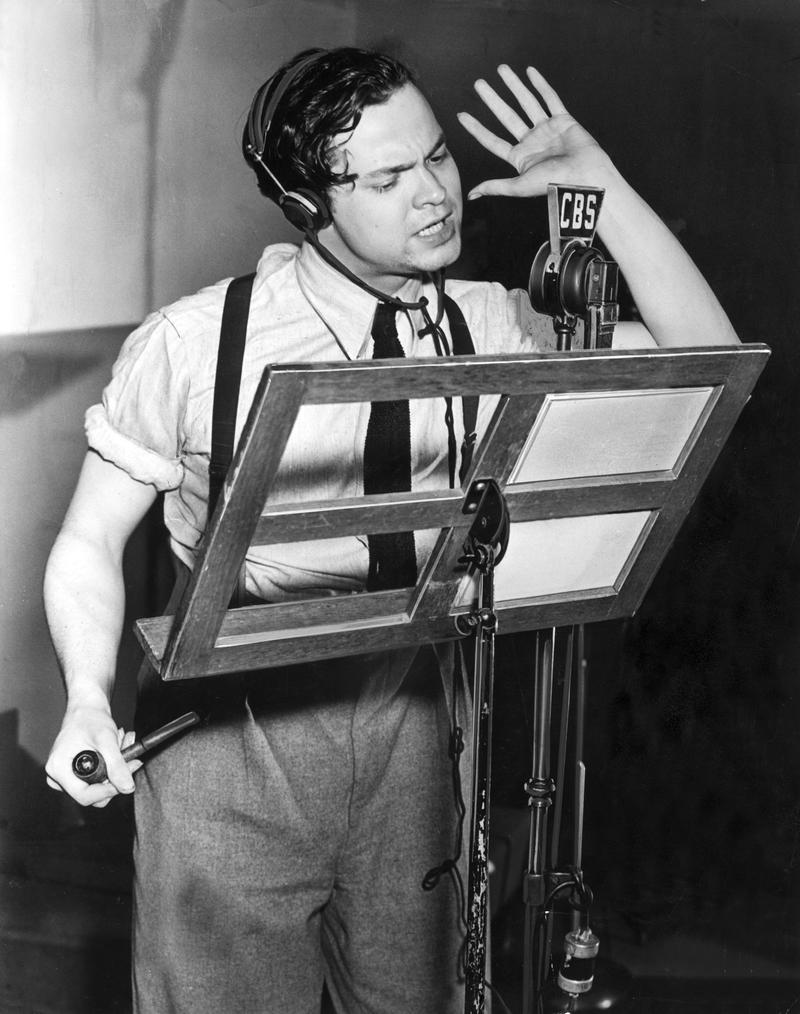
Michael Loewinger: In 1946, Orson Welles, the actor and director behind Citizen Kane, was at the pinnacle of his career. At the time, he had a national radio show called Orson Welles Commentaries on ABC.
Orson Welles: I'll try to have a story for each time, and I'm going to speak my mind about the news. You know, we don't have to agree on everything to be friends.
Michael Loewinger: After a year on the radio discussing politics and Hollywood, Welles heard of a shocking crime. It was the end of World War II. A Black soldier heading home was brutally beaten by a white police officer in South Carolina. No one knew the identity of the officer. No one even knew the town where it happened. Welles pledged to solve the mystery on the air.
Today on the midweek podcast, we're bringing you episode one of a new series from our friends at Radio Diaries called Orson Welles and the Blind Soldier. It's the story of a crime in a small Southern town that became a spark for the budding civil rights movement. We begin at the scene of the crime.
Corine Johnson: I'm right here at the spot where the theater was, right across the street here, but all these trees weren't there then. My name is Corine Johnson. I'm 98 years old. When I was 18 years old, I had just got out of high school. I was working at the theater. One of the fellows that worked at the theater came over, and he said, "Corine, some police over there beating up a man." I left the ticket box. I said, "What? I want to see." You see that space right over there? That's when it happened. I stood on the railroad track, and I saw a man by the drugstore. He was down on the street there being beat up by the police. I didn't know who it was. That's what I saw. I'm the only witness living in Kentucky, and I ain't never forgot it.
James L. Felder Sr: On February 12th of 1946, an African American soldier in uniform on the day he is discharged is brutally beaten in South Carolina.
Female 1: This horrific event happened to this young soldier, but we didn't know how, and we didn't know who was responsible.
James L. Felder Sr: This story could have easily have been just a footnote if you did not have Orson Welles lifting it up to public attention.
Male 1: Orson Welles immediately recognized that this was a story. It was a great whodunit.
Presenter: This is ABC, the American Broadcasting Company.
Orson Welles: Good morning. This is Orson Welles speaking. I'd like to read to you an affidavit. "I, Isaac Woodward, Jr., being duly sworn to depose and state as follows that I am 27 years old and a veteran of the United States Army, having served for 15 months in the South Pacific and earned one battle star. While I was in uniform--"
Richard Gergel: I'm Richard Gergel. I'm the author of Unexampled Courage, about the blinding of Isaac Woodard. Here is the story. Isaac Woodard and a group of soldiers, Black and white, who had been that day discharged from Fort Gordon, were heading home. On a bus, they were sharing a bottle and talking and laughing. I'm sure they were a bit loud and a little rambunctious, and some of the white folks on the bus didn't like it. The bus driver didn't like it.
Orson Welles: About one hour out of Atlanta, the bus driver stopped at a small drugstore. As he stopped, I asked him if he had time to wait for me until I had a chance to go to the restroom. He cursed and said no.
Richard Gergel: The bus driver cursed him.
Orson Welles: When he cursed me--
Richard Gergel: And Isaac Woodard--
Orson Welles: I cursed him back.
Richard Gergel: Cursed him back. He is in the first hours of his return to America. This is a man with battlefield medals on his chest, sergeant stripes on his shoulders, and he is treated like he's nothing. He spoke up. The bus driver was now seething with the impudence of this Black man, and he left his bus in search of a police officer. Woodard tried to explain that all I was trying to do was go to the bathroom, and the response to that was to be hit over the head with a Blackjack.
Orson Welles: They didn't give me a chance to explain. The policeman struck me with a billy across my head and told me to shut up. After that, the policeman grabbed me by my left arm and twisted it behind my back.
Richard Gergel: A moment later, he was being led away, and the bus left without him. On the way to the town jail where he was being arrested, he was beaten repeatedly by a police officer, eventually driving the end of the baton into both of Woodard's eyes.
Orson Welles: He started punching me in my eyes with the end of the billy. He pushed me inside the jailhouse and locked me up. I woke up next morning and could not see. I was blind.
Laura Williams: Sergeant Woodard survived, but he was blinded permanently. My name is Laura Williams, and Isaac Woodard was my uncle. Immediately after the attack, there was so much confusion because my family didn't know where he was. Isaac didn't even know where he was.
Richard Gergel: A reporter, a guy by the name of John McCrae, who was also very active in the NAACP, heard the story that there was a Black man at the VA South Carolina hospital who had been beaten by a white police officer and was now blind.
James L. Felder Sr: The brutality of beating a veteran like that, still in uniform, coming home from fighting a war, that was enough to really galvanize the support of the NAACP. My name is James L. Felder Sr. I was executive director of the NAACP from South Carolina.
Richard Gergel: The NAACP is looking for a way to reach a larger audience, and they knew that Orson Welles was a friend of the civil rights movement. They believed it would capture his imagination, and they were right. He heard about it, I think, on a weekday, and that Sunday he was on the national radio.
Orson Welles: There's a price for everything. There's nothing that does not have its cost. What does it cost to be a Negro in South Carolina? It costs a man his eyes.
Beatrice Welles: My name is Beatrice Welles, and I'm Orson Welles daughter. Nobody talked about this kind of stuff in 1946 on the radio about a Black man being beat by a white man.
Orson Welles: The blind soldier fought for me in this war. The least I can do now is fight for him. I have eyes, he hasn't. I have a voice on the radio, he hasn't.
Beatrice Welles: He wanted America to know who the culprit was.
Richard Gergel: Nobody knew who had beaten Isaac Woodard at the time, and no one knew what town it had actually happened in.
Orson Welles: Now it seems the officer of the law who blinded the young Negro boy of the affidavit has not been named. Till we know more about him, for just now, we'll call the policeman Officer X. He might be listening to this. I hope so. Officer X, I'm talking to you. Wash your hands, Officer X. Wash them well. Scrub and scour. You won't blot out the blood of a blinded war veteran.
James L. Felder Sr: Even his tone caught your attention.
Orson Welles: Wash a lifetime, you'll never wash away that leprous lack of pigment, the guilty pallor of the white man.
James L. Felder Sr: It's not something that just hits you and bounce off; it just kind of sears itself into your brain.
Richard Gergel: He was demanding accountability for white people for inflicting violence against Black people.
James L. Felder Sr: He was right on the case. That was the beginning. That was the beginning.
Orson Welles: You're going to be uncovered. We will blast out your name. I will find means to remove from you all refuge, Officer X. You can't get rid of me.
Michael Loewinger: That was episode one of Orson Welles and the Blind Soldier. You can find the rest of the series on the Radio Diaries podcast or at radiodiaries.org. Thanks for listening to the midweek podcast. Don't forget to follow us on Instagram, Bluesky, and TikTok. The big show drops on Friday. See you then. I'm Michael Loewinger.
Copyright © 2026 New York Public Radio. All rights reserved. Visit our website terms of use at www.wnyc.org for further information.
New York Public Radio transcripts are created on a rush deadline, often by contractors. This text may not be in its final form and may be updated or revised in the future. Accuracy and availability may vary. The authoritative record of New York Public Radio’s programming is the audio record.