
"Making China Great Again" One Web-Novel At A Time
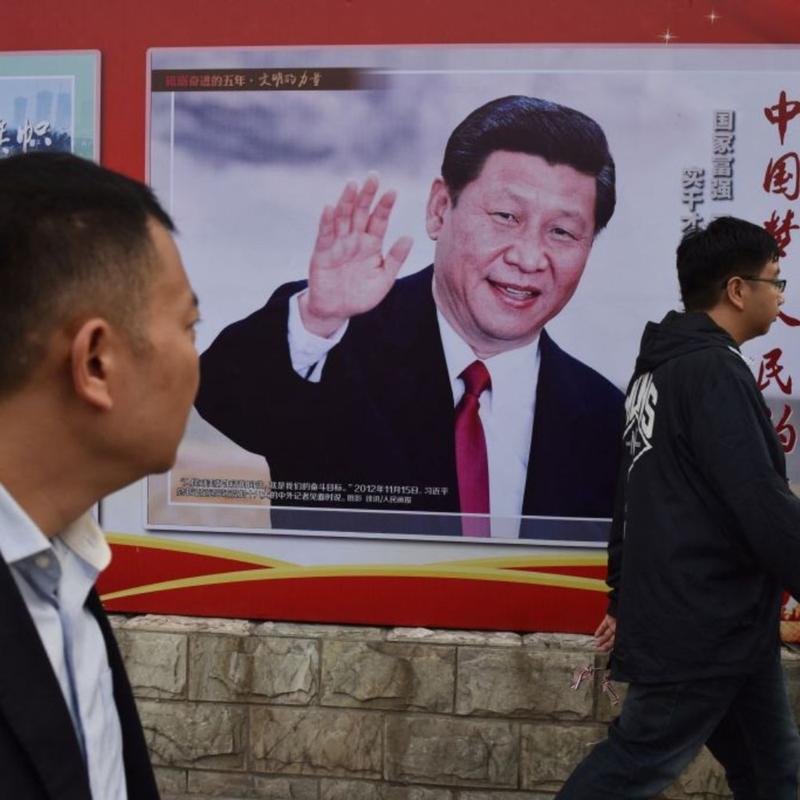
Micah Loewinger: Hey, you're listening to the On The Media Midweek podcast. I'm Micah Loewinger. Last month, President Trump and President Xi Jinping met in Beijing amid growing tensions around both Taiwan and the war in Iran. During Xi's opening remarks, however, he brought up a third, much older war.
Brooke Gladstone: Chinese President Xi Jinping reached deep into history to frame the future of US-China ties as he met his US Counterpart, Donald Trump, yesterday.
Micah Loewinger: President Xi warned against what's known as the Thucydides Trap, the idea that conflict can erupt when a rising power challenges an established one.
President Xi Jinping: The name refers to the ancient Greek historian Thucydides, who suggested that war between Athens and Sparta was inevitable because a rising Athens seriously threatened to displace the ruling power of Sparta.
Micah Loewinger: In this case, Athens is China and Sparta is the United States. The term Thucydides Trap was coined in 2012 by Harvard professor Graham Allison, who looked at 16 similar rivalries in history and found that 12 ended in conflict. Xi's tone that day seemed to be one of both warning and conciliation. At a state banquet that evening, he said, "Achieving the great rejuvenation of the Chinese nation and making America great again can totally go hand in hand and advance the well-being of the whole world."
The key idea that Xi kept repeating was this inevitable rejuvenation of China. To better understand how not just Xi, but the Chinese people are understanding and imagining the rise of China on a very global stage, one researcher turned to a very specific yet booming corner of the Internet.
Rongbin Han: Today, China's Internet has over 1 billion users, and about half of them are Internet literature readers.
Micah Loewinger: Rongbin Han is a professor of international affairs at the University of Georgia and an expert in Chinese cyber politics. Brooke spoke to Rongbin about his new book titled Make China Great Again Online Alt-History Fiction and Popular Authoritarianism.
Rongbin Han: Internet Literature in China. Originally, it was a hobby. Now, many of those web novels have been adapted to TV dramas, movies, games, comics. It involves millions of dollars every year. 2019, around that time, there was a report out of the top 100 most popular TV dramas, 42 of them were adapted from a web novel.
Brooke Gladstone: What first got you into Chinese web novels?
Rongbin Han: I was reading a lot, and I noticed some of those fiction titles, what I call Make China Great Again fiction. They typically involve time traveling back into history and try to save China from various crises or glorify ancient China in one way or the other.
Brooke Gladstone: Tell me a little bit about your research. You said you've read 70 of these novels, almost always involving a Man traveling back in time to save China from various crises, and that these books are very long.
Rongbin Han: The average length of those 200 books is 2.88 million characters. It's close to the Harry Potter series translated into Chinese. The whole series, about 3 million characters.
Brooke Gladstone: Wow. You've noted that dominant theme of making China great again. It looks to fixing the past. What is the impulse to fix the past?
Rongbin Han: A bigger context of that is China rise.
Brooke Gladstone: The rise of China in the world.
Rongbin Han: Yes. The primary purpose of this research is I truly want to understand what are Chinese people thinking. The collective national revival drive people to look into the past and try to make up historical sorrows. Right now is good. Future is bright, and the only dark side is in the history. Let's go back and remedy that. That's my understanding of why there's not one title, not two titles. There are thousands of such titles.
Brooke Gladstone: I'm still not clear what people get out of fixing the past, especially if the country they're living in is on the way up.
Rongbin Han: It's precisely because the country is on the way up. That's why it's connected to mega in a way. In the past few decades, we experienced globalization, and Chinese people generally see globalization as helping China rise. A lot of people in the West argue that we lose from globalization. Jobs move to China, industries move to China. In China, it's like, "Hey, we benefited from this process, and future is great for us. Now we are becoming a power again. Let's go back and fix history." That's the only part that doesn't look good.
Brooke Gladstone: Were there particular periods that people went back in time to, most often?
Rongbin Han: About 52 out of the 200 titles focus on Ming dynasty.
Brooke Gladstone: This was about a 300-year period between the middle of the 1300s and the middle of the 1600s.
Rongbin Han: That's right. That's because Ming dynasty is the last Han Chinese dynasty. Before that, it was the Mongol Yuan dynasty. After that, it was the Manchu Qing dynasty. Another crucial aspect was because Ming dynasty, according to the Chinese popular perception, is a critical historical juncture when China started lagging behind, the Western powers started exploring the world, and then later industrialization. A lot of people believe that the Ming Dynasty had the capacity. If you have a nudge in history, it will change the course of China's development completely.
Brooke Gladstone: No more humiliation.
Rongbin Han: Exactly.
Brooke Gladstone: There's a particular work called The Morning Star of Lingao. It was written collectively by hundreds of writers.
Rongbin Han: That fiction was a collective brainchild of a now-expired forum. One day, somebody posted a thread saying, "What if actually we can time-travel back to Ming dynasty and do something? What are we going to do?" Then there are a lot of people responding to that thread, and then they started to develop this into a fiction. That has become the foundation of this, what I call collective mode of production. The fiction is published on one of the most popular literature portals, so somebody has to take charge. A lot of other people are participating in the process, contributing to stories.
Brooke Gladstone: That's a new phenomenon. Group writing of these novels.
Rongbin Han: Yes, it's still being updated now.
Brooke Gladstone: The novel itself.
Rongbin Han: Yes, it is over 9 million characters now. I've read up to 8 million characters. I haven't read the latest developments. A Morning Star of Lingao involved a collect of time travel, 500 people bringing a ship of equipment, books.
Weapons through a wormhole to the late Ming dynasty.
Rongbin Han: Exactly.
Brooke Gladstone: You noted that it took 2,600 installments just to occupy the one particular part of the region. What does this book represent?
Rongbin Han: There are different schools of thoughts on Chinese Internet. A lot of people believe that industrialization is the only way to save China. Why? It takes a shipload of equipment, machines and guns and books, and everything, and 500 people, and takes such a long time for them only to occupy a small part of China. Because they go into details about how their arrival would transform the society, how gradually industrialization may take place, how political organization and everything would gradually evolve. People see that as a representative work of industrial party.
Brooke Gladstone: For broadcast, I'll say there's another novel called four letter word that begins with F Qing, which is much more aggressive in tone.
Rongbin Han: It's about time traveling to early Qing time period. They try to overthrow the Qing dynasty and then fast forward modernizing China. The early Qing period typically is considered as a good time because there wasn't really any major external or internal crisis to China. A lot of those writers and readers are pretty nationalistic, and they don't like the Qing dynasty. That's why so many of them actually would flood to Ming dynasty, especially late Ming dynasty, preventing Qing from takeover.
Brooke Gladstone: This author goes back to the early Qing to expel the barbarians, revive China, to resurrect the nation like the Han and the Tang dynasties, to surpass all European and Asian nations. The interesting part to me is you've noted that the author builds an ideological construct close to capitalism to replace Confucianism.
Rongbin Han: A common feature of many of those titles. The majority of them are going to establish if not capitalist, it's going to be a commercial economy.
Brooke Gladstone: The current leadership of China has nothing against this. You wrote in your book that at the core of the genre is the nationalist quest for a Chinese revival, a theme that directly interacts with a state notion of the Chinese Dream, which is President Xi's official slogan.
Rongbin Han: President Xi Jinping coined the term Chinese Dream almost as soon as he came into power. That was 2013. Now, one thing I think worth highlighting is that the Make China Great Again fiction titles, they emerged long before President Xi Jinping came into power. It's not something new. Chinese Dream is not something that the Party or President Xi invents and then try to impose on Chinese people. Rather, I think it's the Chinese parties and also President Xi Jinping. They're smart enough to really ride with this trend.
Brooke Gladstone: You suggest that they're co-opting this trend. This is what you've called a negotiation, a kind of dance between the public and the government to imagine the future of China through these web novels.
Rongbin Han: There are so many different ways they are trying to reform China. Sometimes contradictory, sometimes actually they echo the Chinese national dream, the official ideology.
Brooke Gladstone: They're not generally punished for contradicting it?
Rongbin Han: That's why I call it a negotiation. The Party doesn't have the capacity to effectively control everything. It's not even in their best interest to do so. By allowing people to participate in the process of negotiating what Chinese Dream is, even though at times would be contesting the official ideology, it would benefit the regime in different ways. Because the Party can never produce so many different stories of Chinese Dream that are actually read by millions of readers.
Brooke Gladstone: You've observed also that the Party was never good at producing propaganda. It tended to be of low quality, and people didn't really like it.
Rongbin Han: State propaganda is not that effective. People, honestly speaking, are very aware of state propaganda. Research suggests that when people discern there is a connect to the government, they instantly start questioning and don't trust that source. Chinese Dream is about national revival. That's dry. There's nothing interesting in that. Honestly speaking, as an average citizen, why should I learn about it? Each of those Make China Great Again titles is about how to revive China. For the Party to actually recruit people, they have to allow some diversity of ideas.
Brooke Gladstone: You've been highlighting the active role of regular citizens in shaping this vision of an ideal. In this case, by reading and writing these novels. You also observe, and this is crucial, how the ruling class can rule without coercion, allowing the ruled to gradually adopt the norms and values of the ruling class willingly.
Rongbin Han: I borrowed that idea from Gramsci.
Brooke Gladstone: Antonio Gramsci.
Rongbin Han: The very idea of cultural hegemony. The idea of hegemony is that you can rule without coercion. If people buy your ideas and willingly following your ideals. Typically, when we look at a communist system, we envision an imposing state trying to indoctrinate people, change people's mind. We see that doesn't work very well, especially in the long run, because people aware that somebody is trying to impose something on them and they're going to try to fight.
If you allow people to actually help construct the ruling ideology and they automatically buy into this ideology in the process, you will be meeting with much less resistance because you helped produce everything. You're part of this now, of course, from the party's perspective, you have to keep the bottom line.
Brooke Gladstone: Yes, you don't want it to spiral out of control, but you can allow diversity to a degree within. I just wonder what, if anything, do these stories tell us? What do they reveal about the hopes and dreams of the Chinese people for their country? What do these stories reveal about what the government wants? Is there space between them?
Rongbin Han: Really a fantastic question. Honestly speaking, I personally read like 70 plus titles from cover to cover. Maybe cover to cover isn't the proper way to describe it since it's online, but anyways, each of them is different. One of the things worth highlighting is that overwhelmingly majority of those titles would topple economic reforms. They would introduce commercial economy and ultimately most of them capitalism, echoing China's economic reform in one way or the other. They would actually talk about intellectual property rights, banking, trade, and all sorts of things like that.
Some of those fiction titles talk about some democracy. One fiction talk about introducing parliamentary politics to the Song dynasty, which is fascinating. Of course, it was confined, not really popular election, but it's parliament. Another title actually tried popular election. That story is interesting because the main character time-traveled twice. He was official of the Song Dynasty. Somehow, he got knocked out in a battle and then traveled to modern time, joined the Communist Party in fighting the Japanese invasion, and then he traveled back and carried with him the knowledge he learned in the process.
He conducted land reform, but he also conducted popular election because interesting enough, the Communist Party did that before taking over the entire China. It's overall pretty limited.
Brooke Gladstone: Why should we all the way over here care about these Chinese alt history web novels?
Rongbin Han: I think it is important to the western audience because we're living in an age of China rise, where China's heading is going to have impact on not just Chinese, but global audience. I'm trying to understand what Chinese people are thinking. I think it's related to whether the Chinese political system will be stable in the long run. If my findings are correct, I would bet so all those will bear implications for people on the West.
Brooke Gladstone: Finally, one point you've made is that China seems to be intentionally expanding its soft power. You note that recent surveys suggest that China is viewed more favorably compared to the US, but research also suggests that Chinese ideologies are not appealing. You say that the importance of this work, these novels, is to help China figure out what its model is before trying to export it.
Rongbin Han: Yes. The Chinese party state has to come to terms with its people first before it can ever actually project itself as a global power. You have to convince your domestic citizens that you are a legitimate power before you can actually convince the international audience. To a certain extent, I think there is something that's working, and there's something not working. Something that's working is that China has actually convinced its domestic audience that the party can deliver economic growth and improved governance. Now, a lot of people are questioning it because of slowdown of economy and everything.
Overall, in the reform era, the Chinese party state has been doing a relatively good job there. Infrastructure, clean streets, efficiency. That's what the Chinese state has been delivering to its own citizens. The Chinese citizens were first convinced. Now, the international audience. Now the bad part, ideology. Communist ideology is not appealing to international audience. This is the first step towards the Chinese state and Chinese citizens come to terms and understand what an ideal China looks like. From there, they might be able to convince international audience.
Brooke Gladstone: Thank you very much.
Rongbin Han: Thank you.
Brooke Gladstone: Rongbin Han is a professor of international affairs at the University of Georgia, where he specializes in Chinese cyber politics.
Micah Loewinger: Thanks for listening to the Midweek podcast. Don't forget to listen to the big show on Friday, but in the meantime, follow us on Instagram and TikTok and check out our social media subreddit r/onthemedia. We'd love to see you there. I'm Micah Loewinger.
[music]
Copyright © 2026 New York Public Radio. All rights reserved. Visit our website terms of use at www.wnyc.org for further information.
New York Public Radio transcripts are created on a rush deadline, often by contractors. This text may not be in its final form and may be updated or revised in the future. Accuracy and availability may vary. The authoritative record of New York Public Radio’s programming is the audio record.