
Long Live the Art of Shoe-Leather Reporting!
Brooke Gladstone: Remember when the Justice Department mistakenly published personal details and unredacted photos of dozens of survivors of Jeffrey Epstein's sexual abuse?
Annie Farmer: I found my own date of birth, my own phone number.
Brooke Gladstone: From WNYC in New York, this is On the Media. I'm Brooke Gladstone. For a reporter who's been on Epstein's trail for years, her beat is an ongoing quest for accountability.
Julie K Brown: There are huge pages of redactions that involve descriptions of activity by other possible co-conspirators.
Brooke Gladstone: Also this week, a former member of Trump's administration has a mysterious relationship with a guru-like figure.
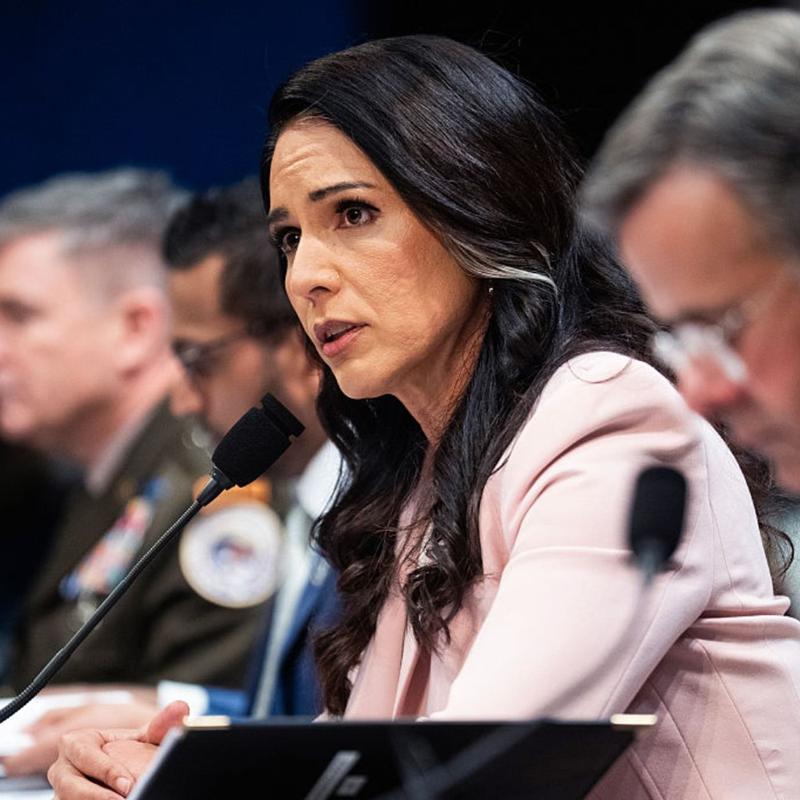
Jon Swaine: The eccentric politics, the shifting positions, the unusual stances that this advice contained does match Tulsi Gabbard's own shape-shifting in many ways.
Brooke Gladstone: It's all coming up after this.
Micah Loewinger: From WNYC in New York, this is On the Media. I'm Micah Loewinger.
Brooke Gladstone: I'm Brooke Gladstone. This August week, we're reaching into the archives to highlight the work of a couple of past masters of the deep dive. The kind of journalist who spends months, sometimes years, chipping away at sources and leads to finally emerge into the light with a story that blows your socks off. We'll start with Julie K Brown, an investigative journalist at the Miami Herald and author of the Substack, The Epstein Files by Julie K Brown, where she is continually covering the Epstein story.
It was her series of articles in 2018 that revived Epstein's cold case and led to his arrest. When I spoke to her back in February of this year, it was just as the Justice Department had released a batch of documents related to Epstein's criminal case.
Reporter: Many of Epstein's survivors have been publicly pushing for years to have these documents come out. It took a law passed with near-unanimous support in Congress to finally bring these documents to light.
Todd Blanche: Today we are producing more than 3 million pages, including more than 2,000 videos and 180,000 images.
Brooke Gladstone: Whereupon then Deputy Attorney General Todd Blanche announced the release of the documents in compliance with the Epstein Files Transparency Act.
Todd Blanche: A rigorous process was undertaken to protect victims against any clearly unwarranted invasion of their personal privacy.
Brooke Gladstone: Clearly not rigorous enough.
Annie Farmer: I found my own date of birth, my own phone number.
Brooke Gladstone: Epstein survivor Annie Farmer speaking on NBC.
Annie Farmer: Was also just really disturbed to see evidence of names of people that I knew did not want to be public.
Brooke Gladstone: There are also pictures.
Reporter: Former Prince Andrew seen in these photos kneeling over an unidentified woman.
Brooke Gladstone: The Justice Department says it's been working to take down the files with personal details about Epstein's survivors. Meanwhile, the list of powerful men implicated in Epstein's files continues to grow.
Reporter: Like Elon Musk, who seemingly planned visits to Epstein's island, and Trump's Commerce Secretary, Howard Lutnick.
Speaker F: Another very prominent person caught up in all this is Bill Gates.
Reporter: The DOJ also posted, then temporarily removed without explanation, a spreadsheet of complaints made to the FBI, including unverified allegations about both President Trump and former President Bill Clinton.
Brooke Gladstone: About the February release, Julie K Brown wrote that the FBI appears to have done a spectacular job of redacting whole pages of information, hiding the names of powerful men that Epstein associated with, while exposing the names of Epstein's survivors.
Julie K Brown: That is really not what was supposed to happen. The Epstein Files Transparency Act was passed with the purpose of the public being able to see how Epstein got away with these crimes for so many years. A big piece of that is the interactions between the prosecutors back in 2007 and Epstein and his lawyers and the trajectory of how did they come up with this lenient plea deal. We can't see because the names of all the prosecutors, it's almost all of them, redacted. They basically let him off the hook in Florida.
Brooke Gladstone: Basically off the hook, but he was charged with something, right?
Julie K Brown: Yes, he was charged with solicitation of a minor for prostitution, and he did serve a year in the county jail, but he wasn't in the county jail because he got work release and he spent all day in his office. Later we found out that he was even having young women come into his office so that he could have sex. It wasn't much of a sentence. To be honest with you, the charges that he would have faced would have put him in prison for life. When we say he got off, he got off, considering that at the time, they knew that he had raped about 40 girls.
Brooke Gladstone: There were grand jury transcripts, hundreds of pages of testimony that Miami US attorney Alex Acosta provided in 2019 to DOJ investigators. It was Acosta who helped create that really lenient deal. What else did you learn about Acosta?
Julie K Brown: Well, we know that Acosta was then appointed as Labor Secretary under Donald Trump. There is quite a bit of documents in here about an investigation by the Justice Department. Acosta was questioned by these DOJ investigators in 2020. His answers to the questions are remarkable. This is probably the defining case of his career. Yet he doesn't remember this, doesn't remember that.
It's unfathomable that he said that he didn't know that there were so many victims. I mean, how could he have not known that at one point he is calling the victims women? The investigator from the Justice Department had to take him to task and say, "Wait a minute, he keeps saying women. These were 13 and 14-year-olds. Right?" There were so many nuances to the questioning and how he answered them that I think that that almost in itself tells a story.
Brooke Gladstone: There were some missing binders of evidence. An 11-month gap in Acosta's incoming emails that coincided with the timeframe that Epstein's deal was being negotiated. He blames that on a technical glitch.
Julie K Brown: Well, there were a lot of technical glitches, it seems, during this case. These are the reasons why a lot of people are suspicious and skeptical of the way this case was handled back then. Because now we're finding out that there were glitches, that there were constant reminders that Epstein had his finger on these prosecutors. He tried to get dirt on all of them. He investigated the police chief. He hired private investigators to follow the victims.
Brooke Gladstone: This is known.
Julie K Brown: This is all known. It was all part of my original series in the Miami Herald in 2018. Epstein had a playbook to basically try to corrupt everybody that he came in contact with in order to get away with his crimes.
Brooke Gladstone: Trump, we know he and Epstein were friends. There has been lots of speculation about whether the files would contain evidence of Trump's involvement in, or at least knowledge of, Epstein's crimes. Buried in the middle of this latest batch was a summary of one tip phoned into the FBI up about Trump's involvement with Epstein's activities.
Unverified, but horrifying. After this tip sheet was released, it mysteriously disappeared. After multiple outlets like Meidas Touch and Bellingcat, which copied it, shared the tip sheet, it suddenly reappeared in the documents. The DOJ calls the accusations sensationalist and untrue. Sensationalist, yes, but how would they know that it was untrue? It doesn't seem like the FBI ever followed up.
Julie K Brown: Look, anybody that is in law enforcement does investigations knows that you get crazy tips. That doesn't mean you ignore them. If I ignored every crazy tip that I got as a journalist, I wouldn't be sitting where I am right now. Then I'm not saying this tip involving Trump is true. That's not what I'm saying at all. I'm saying it was up to the FBI and the Justice Department to nevertheless investigate them, no matter how strange they sounded. I'll tell you why. I've interviewed a lot of these victims. They have been traumatized, unbelievably, and some of their memories are twisted. This is why these cases are very hard to successfully prosecute, quite frankly.
Especially if they were very young when they were sexually abused, their stories change. They remember things later that they didn't remember back then. They're traumatized. I have found that while parts of some of these women's stories didn't add up, the key parts of the story added up. This is common. I've talked to FBI experts who interview children that have been abused, and they say this is very, very common, that children misremember things. They say this happened here and it didn't happen there, it happened somewhere else. Things like that.
Brooke Gladstone: You say that there were, what, 302 victim interviews? In the papers, there are no FBI notes, there are no transcripts of interviews. You can't see any evidence that they were addressed in any way?
Julie K Brown: No, I haven't found them yet. Remember, there are 3 million documents here. Sometimes I feel like we find things just by accident, but my guess is no; I just don't think they did. I never thought the authorities took this. With a couple of exceptions, the Palm Beach Police Department did their job, but the state attorney and the Justice Department completely failed these victims. As a result of their real incompetence, hundreds of other young women, and possibly even girls, were subjected to sexual assault and rape.
Brooke Gladstone: Now, with regard to this tip sheet, you noted several similarities within these unverified accounts.
Julie K Brown: Well, one of the patterns that we're seeing is that at the time that Donald Trump and Jeffrey Epstein were chummy and doing a lot of partying together, there were these model parties. They were at Epstein's mansion in New York, and they were also at Mar-a-Lago. We're learning every day new information about these parties, that Epstein is sending women to these model parties. Because remember, Epstein's way of entrapping these girls and young women, at least in the early '90s, was to say, "I'm going to make you famous. I know people in the modeling industry. You should go to this party at Mar-a-Lago."
Some of these tips are from women that say, "I went to a model party either at Jeffrey Epstein's mansion or at Mar-a-Lago, and I was raped." My experience is most of these women who have had this horrible thing happen to them, they don't really want to come out about it because it subjects them to all kinds of ridicule. My experience is they're not making this stuff up. Now, are there people out there that are disturbed, that are doing that? Probably, but that's my point. You still have to investigate.
Brooke Gladstone: What about Katie Johnson? That's a pseudonym.
Julie K Brown: Well, she had filed a lawsuit against Epstein and Trump in 2016, quite detailed. It included affidavits for two other people that supported her story. Those two people went by pseudonyms as well. She was about to go public. She did do some media interviews. Very few. Then there was a press conference called days before the 2016 election.
She says that she had received threats and she just backed out. We have never really heard another thing about her since. It's hard to know. There's some evidence that her story was possibly manipulated by political operatives who were anti-Trump in the run-up to the 2016 election. That, of course, hurt her credibility. It's really important to know that just because some political operatives took advantage of her doesn't mean that her entire story was false.
Brooke Gladstone: She never said that she lied.
Julie K Brown: No.
Brooke Gladstone: As you say, that's why we have the FBI.
Julie K Brown: That's right. I don't see any evidence, by the way, that the FBI ever spoke to her.
Brooke Gladstone: Do you expect anything Trump-related will emerge from a million of these documents once you go through them?
Julie K Brown: I just don't think we're going to find out anything about him because I think that they were scrubbed, and I'm not saying he's guilty of anything. These files were probably scrubbed. I don't think we're gonna find out unless there was a mistake made. It was clear that, that [unintelligible 00:13:31] was a mistake, that they let that out because they grabbed it back right away.
Brooke Gladstone: It was too late.
Julie K Brown: That should be telling right there, that they must have missed it.
Brooke Gladstone: In this recent release of papers, which I know you've been going through page by page, is there anything that you would direct listeners to that might affect what they think about this case or why they should think about it at all?
Julie K Brown: There is evidence of corruption on the part of public officials or former public officials. Maybe there are people that don't understand the case as well as I do. I know all these people. Epstein kind of emailed in a code sometimes, but I could figure out what he's saying. He had some of these people probably on his payroll in one way or another. I'm seeing lots of evidence of that.
Brooke Gladstone: Some high-profile people lost their jobs. Maxwell is serving a 20-year prison sentence. In terms of accountability, to me, this seems like pretty weak tea with so many participants, so many dubious investigations. What about we as a public, how should we feel?
Julie K Brown: Right now, I think that everyone in the public should be writing every single one of their elected officials and demanding that this case not go away, that they stop politicizing it. This is a crime against children. Every single person in this country should be demanding that they start treating this case the way they should have in the beginning. Anybody who was involved or who helped Epstein by cutting him a deal needs to be looked at. All their bank accounts should be looked at. The only way that that's going to happen is if the public demands it.
Brooke Gladstone: For many of our listeners, the worst facts of this story, the serial sexual assault, rape, sex trafficking of girls and young women, it's been known for a while. For listeners who have tuned this story out over the years, maybe because it's too awful, maybe because it involves such a vast group of powerful people, it almost feels like a conspiracy theory. What would you say is the importance in tuning back in?
Julie K Brown: Well, that's a very good question, because everybody, including myself, we're very exhausted from all the bad news that's happening right now in our country and in our world. Even myself, I sometimes have to just put the covers over my head because it's too much. It's too loud, too disturbing. I always get out of bed, and I keep going, because if we let this case slide and all the people that helped him get away with this slide, it means we don't care about the most vulnerable people in our society. That, to me, goes against everything our country has stood for.
Brooke Gladstone: You say that you've been flooded with tips during the latest round of coverage. These are victims.
Julie K Brown: Some. They're mostly people. It's kind of cool in a way. There are all these, I don't know what you call them, citizen journalists or something. A lot of them are lawyers that are fascinated by this story, and they're all digging into the files because they're online. One of the biggest tips I just got, somebody found an email. I'm not going to tell you what it is, because I'm working on this story. They sent it to me, and I'm like, "Oh my God." I'm getting a lot of people simply just sending me things that they see in the files. I welcome that because you never know. I might not have seen it. Everybody keep digging. Send me stuff.
Brooke Gladstone: What does it feel like to be focused on this story for so long? Does it drag you down?
Julie K Brown: It does at times, but then I'm really excited today because I just discovered a bunch of stuff and I'm like, "Yes, yes, I thought that this person was doing something wrong."
Brooke Gladstone: What happens then? Earlier in this story, Epstein weaseled out of charges. Now you have a Justice Department that is highly unlikely to bring any charges unless they're Democrats. Do you see accountability around the corner?
Julie K Brown: I don't know, to be honest with you. Everybody says the lists and all these wealthy men that were involved; to me, I think the Justice Department should look at all these prosecutors back in Florida. Think about it. If they had put him in prison back then, we wouldn't be sitting here right now.
Brooke Gladstone: Right.
Julie K Brown: I think that's what's lost here. Going after the men. Yes, we should do that too, but we shouldn't lose sight of the fact that we were failed by our criminal justice system years ago.
Brooke Gladstone: Julie, thank you very much.
Julie K Brown: Sure.
Brooke Gladstone: Julie K Brown is an investigative journalist and writes the Substack, The Epstein Files by Julie K Brown. This conversation first aired in February.
Micah Loewinger: Coming up, when rumors were circulating about a guru-like figure who was influencing the former Director of National Intelligence, one reporter dug in.
Brooke Gladstone: This is On the Media. [music] This is On the Media. I'm Brooke Gladstone.
Micah Loewinger: I'm Micah Loewinger. For some journalists like Julie K Brown, reporting out a single story for years and years becomes their life work, and they can accumulate deep sourcing on their chosen beat. For others, they'll drop into a story and get to work building their knowledge of a subject. Like The Washington Post's Jon Swaine did for his piece digging into the long-circulated rumors about Tulsi Gabbard and her relationship with a guru-like figure.
The story came out in June, and it's a masterclass in careful reporting. As director of National Intelligence, Gabbard presided over the nation's top intelligence agencies, including the CIA, the NSA, and the intelligence branch of the FBI. Her tenure was brief but embattled. During her time in office, Gabbard fired two career officers who found that Venezuela was not directing the criminal gang, Tren de Aragua.
She also revoked the security clearances of dozens of national security officers, some of whom had worked on the investigation of Russian interference in the 2016 election. Then at the end of June, Tulsi Gabbard resigned. In addition to advising the president on things like Iran's nuclear capabilities, Gabbard regularly released tranches of declassified documents in reports with headlines like "New Evidence Uncovers Obama-Directed Creation of False Intelligence Report Used to Launch Years-long Coup to Undermine President Trump and the American People." Also, this.
Tulsi Gabbard: On my final day as Director of National Intelligence, I'm releasing never-before-seen communications and documents that expose exactly how Fauci worked with politicized career leadership in the intelligence community to suppress the truth about his actions, the virus's lab leak origins, and his role in directing US Funding for this dangerous research that caused immeasurable harm and countless lost lives.
Micah Loewinger: The journalist, Denby Fawcett, who has covered Tulsi Gabbard's political career for over 20 years, wrote in 2019 that quote, "For as long as I have known Tulsi Gabbard, I now understand I have never known her and probably never will. So much of what she does seems to make sense only to her." Jon Swaine's carefully reported story in The Washington Post, released in June, brought us one step closer to understanding the enigma that is Tulsi Gabbard.
His investigation helps explain why, for instance, Gabbard has shapeshifted over the years from liberal Democrat to Bernie Sanders ally to Trump insider, why she's flip-flopped on same sex marriage and war with Iran. As Swaine uncovered, Gabbard's public Persona may have been shaped and reshaped in part by a mysterious guru and his followers. Jon, welcome to the show.
Jon Swaine: Thanks for having me.
Micah Loewinger: Tell us about how you got interested in this wild story.
Jon Swaine: I'd always been interested in Tulsi Gabbard because she has been such an unusual political figure. She's gone from being a socially conservative Democrat to a liberal Democrat and a Bernie Sanders ally to eventually being a MAGA Republican and Donald Trump appointee. I'd been interested in some stories over the years in magazines like The New Yorker and New York Magazine and in some Hawaii publications about this faith group that she grew up in, the Science of Identity Foundation.
None of them had really gotten to the bottom of whether it mattered and whether Chris Butler, the founder, had any influence on her politics. She had always said he was her spiritual teacher, her guru, but there just seemed to be this lingering question of what exactly was their relationship. When she was nominated by Trump to be Director of National Intelligence, I thought I'd give it a go.
Micah Loewinger: To be clear, Tulsi Gabbard has definitively rejected any claims that Chris Butler has had any influence on her politics. She had this exchange with one of your Washington Post colleagues back in 2019.
Interviewer: For clarity purposes, Chris Butler. How would you describe--
Tulsi Gabbard: He's one of my spiritual teachers.
Interviewer: What does that mean?
Tulsi Gabbard: One who provides spiritual guidance.
Interviewer: Has he been a mentor politically, or is it just spiritually?
Tulsi Gabbard: No, no, not at all.
Micah Loewinger: Talk about the Science of Identity Foundation and Chris Butler. What are their beliefs?
Jon Swaine: Chris Butler in the late '60s dropped out of the University of Hawaii and fell in with the Hare Krishna movement, which was just then beginning. He quickly accumulated a group of followers, devotees. He was charismatic and good-looking and a good speaker. That grew into this organization that he called the Science of Identity Foundation. Spiritually, it is a sort of offshoot of the Hare Krishna movement, and it's interested in chanting and yoga and diet and morals.
Chris Butler: What is your essence? You are the life force, the spirit soul, only temporarily in the body, using the body. Aham Brahmasmi, I am Brahman, I am spirit. I am not matter.
Jon Swaine: Chris Butler himself has a really unusual politics. It doesn't really fit on the left-right spectrum. He's very much into environmentalism and anti-capitalism, but he's against abortion and against same sex marriage and homosexuality. Lectures that Chris Butler gave to his followers in the '80s and '90s, that I saw, were very anti-gay people, very anti-Muslims.
Former members I actually spoke with recalled that when they went to schools associated with the Science of Identity Foundation, they would be expected to listen to recordings of Chris Butler's lectures. Several of them actually noted their surprise, as they sort of thought back, about how explicit and kind of disgusted Chris Butler's lectures were when talking about gay people.
Chris Butler: Because they have no logic in their explanations that it's somehow normal or that it's clean or that it's not sinful, that a man is having sex with a man, or a woman with a woman, they must convert us by force.
Jon Swaine: He also has, from reading his lectures, quite wild conspiratorial views on other things, including sometimes the intelligence services and intelligence agencies. That was the kind of environment and the kind of teachings that were going on in this group when Tulsi Gabbard's parents became members in the early '80s.
Micah Loewinger: Okay, so he has these sort of idiosyncratic beliefs. Why then do some former members say that he is a cult leader?
Jon Swaine: Former members say that actually behind the scenes there's a more troubling side to the organization. That is that Chris Butler demands complete obedience from his devotees. He demands complete secrecy. They have to serve him and work for free in his kitchens and provide him with all sorts of things, and that he controls major life decisions, that he tells people who they should marry and when and things like that. This is very much not what's publicly stated by the organization. They definitely dispute characterizations of a cult.
Micah Loewinger: Some former members reportedly had said that they would die for him.
Jon Swaine: Right back at the start of his sort of guruship, there were reports in the Hawaii press about that kind of thing. Yes, indeed, a couple of devotees said they would do anything for him. A reporter said, "Even kill yourselves?" They said, "Yes."
Micah Loewinger: The main source in your piece is a woman named Rebecca Salzberg. You first spoke to her back in 2024. She was a member of the Science of Identity Foundation and worked on several of Tulsi Gabbard's congressional campaigns. When you first spoke to her, Salzburg told you that Gabbard's ideas and political path were 100% her own and that they were not shaped at all by her guru, Chris Butler. Then, nine months later, Salzburg got back in touch with you, and her story had changed. What did she say?
Jon Swaine: She said that she hadn't really told me the full story last time and that things were more complicated, that she had fallen out badly with Science of Identity Foundation over quite separate issues of the way they handled allegations of abuse within the organization. I think that and her disenchantment with Tulsi Gabbard moving far to the right politically had led her to come forward and correct the record, to correct what she'd told me before, and that was that Chris Butler was involved, according to Rebecca.
We talked, we messaged for a couple of weeks, and something that I asked her prompted her to check an old email account. In that email account, she found dozens of documents containing guidance for Tulsi Gabbard when she was in Congress. According to Rebecca, these documented the guidance and the directives that Chris Butler gave Gabbard.
Micah Loewinger: Yes. The question you asked her was, "Do you know what Nine Isles is?" What is Nine Isles? What did this lead unlock for you?
Jon Swaine: That's right. About nine months earlier, deep within a company document that was related to someone I thought was in the Science of Identity Foundation and connected to Gabbard, was an email address, and it was @nineisles.com. When I asked Rebecca, she said, "Well, yes, that's the email domain used by Chris Butler's office to send out these political memos." She said, "In fact, I got lots of emails from Nine Isles addresses when I was working for Tulsi Gabbard and when I was working on projects for Chris Butler."
Micah Loewinger: You gain access to this massive trove of emails. What did you find exactly?
Jon Swaine: These documents were quite strange. They were, first of all encrypted, so they had to be decrypted, and Rebecca gave me the key that was needed to do that. They were emailed from this anonymous address with pretty much no comment attached to them, and they were unattributed in the document themselves. There was no title saying who was talking. They were essentially transcripts, it seemed, of someone talking, sometimes talking to Tulsi Gabbard, sometimes saying things that Tulsi Gabbard should do.
It was clear that it was Tulsi Gabbard who was on the receiving end, because often there would be references to TG and to things that made it clear that it was her: speeches she was planning to give or committees she was on. The speaker giving those directives and sometimes giving very harsh criticism was unnamed. When I asked Rebecca, "Who is the speaker?" she was kind of amused that I would even ask and said, "Well, it's Chris Butler, obviously. He is the only one who could have talked to Tulsi Gabbard that way." He's the only one who tells any of them what to do.
Micah Loewinger: If it was, in fact, Chris Butler, and you make a pretty compelling case in the piece that it was him, why wouldn't he use his name? It's his organization. He's calling the shots. Why the internal anonymity?
Jon Swaine: The answer to that question kind of appears in the documents themselves. Sometimes it comes across very clearly that he and Tulsi Gabbard are aware of how it might look if she was known to be the disciple of this eccentric guru that, as he put it in one document, "Everything I've taught, all my lectures, everything will be put on you." According to Rebecca, that's one of the reasons why he wanted complete secrecy around this, why there was no attribution in case these documents ever did become public, so that they could basically be deniable.
Micah Loewinger: These documents, they span the years of 2011 to 2018, during which Tulsi served her first two terms in Congress. After getting this trove of documents, you began the arduous process of trying to figure out how the advice Tulsi Gabbard was receiving from this advisor may have affected her behavior while she was in office. Can you give some examples of moments when you found Gabbard appearing to do exactly what she had been told to do?
Jon Swaine: I found a memo from 2014 in which this speaker was telling her that the US needed to essentially punish countries whose citizens had been going out to the Middle East and fighting for Islamic State. Your listeners will probably remember that was an issue at the time. The speaker thought that countries such as that should lose their benefits that the State Department gives them in terms of visitors to the US not needing visas.
He said that Tulsi Gabbard should propose this. The speaker says, "Get it started in the morning. You need to be the leader in this regard. Don't dick around." What I found when I compared the date of that to what Tulsi Gabbard was doing around that time was that she indeed released a statement the following day calling for this policy. A week after that, she introduced a bill in the House of Representatives to do it.
Micah Loewinger: You have also written about Gabbard's proposal to improve medical care for veterans, which appeared to align with another directive that she got from this anonymous advisor.
Jon Swaine: That's right. Also in 2014, there was a crisis in veterans' health care. There were backlogs, and veterans were not getting care as quickly as they should have been. This unnamed speaker, this advisor to Tulsi Gabbard, was saying that she needed to propose a new policy that meant veterans could get care anywhere and be reimbursed by the government, and they shouldn't have to get approval first. They could just go in, get treated, and get reimbursed.
The speaker tells Tulsi, "Actually put forward legislation, get it done." In the following weeks, Tulsi Gabbard wrote an op ed in the Honolulu Star-Advertiser calling for this policy, but she actually omitted this detail that preapproval shouldn't be necessary. I got hold of an email in which Chris Butler's top aide said, "He was pissed she didn't say that they should get private care without preapproval." Then a month later, Tulsi Gabbard introduces a bill in the House that does include that detail.
Micah Loewinger: That's yet more evidence that the unnamed person in the transcript was likely Chris Butler. In a memo from October 2015 labeled CNN Wolf Blitzer talking Points Final, she received advice on how to respond to the fact that she had been asked by Democratic leadership not to attend a presidential debate. The advisor in that transcript said, "It's not a boohoo. I don't get to go to the party situation, Wolf." That's the line being delivered to her. Here's what Tulsi said during the interview she ended up having with Wolf Blitzer.
Tulsi Gabbard: Really, Wolf, that's really the issue here. The issue here is not about me saying boohoo, I'm gonna miss the party.
Jon Swaine: My colleague Aaron Schaffer and I kind of painstakingly went through 32 of these documents that were specifically marked as talking points for interviews that Tulsi Gabbard was due to give. We went through the videos and the transcripts and found that 24 times she used phrases from these documents almost verbatim, and the other eight times she used ideas from them, if not the actual phrases themselves.
Throughout this trove of documents, there's a real concern and preoccupation with how she appears on TV, whether she's sort of smiling, whether she's doing a strange sort of tick with her eyes that the advisor gets angry about. All of that really seems to be part of a plan to raise her national profile and have her run for president one day.
Micah Loewinger: You note in the piece that the advisor describes her as chicken [beep sound] or mealy-mouthed. What was going through your mind as you're seeing this behind-the-scenes shaping of a public official?
Jon Swaine: I think what struck me was that this seemed to be a very unusual advisor-politician relationship. Politicians obviously have advisors. They have informal people that they trust to give them tips and talking points. I had never known of a public official like a member of Congress being dressed down in this way and insulted and spoken to quite demeaningly, like someone was basically in charge of them.
As you said, she's insulted for things she's said in statements, for appearances she's made on TV. It's suggested to her that she apologized to cable news anchors for having been bad on their shows and even sometimes for allowing criticism from commenters to stay unanswered on her Facebook page. She's yelled at, if you like, by this advisor.
Micah Loewinger: Coming up, the second half of my conversation with Jon Swaine in which we get into the mechanics of long-form reporting.
Brooke Gladstone: This is On the Media. [music] This is On the Media. I'm Brooke Gladstone.
Micah Loewinger: I'm Micah Loewinger. We're listening to my conversation with Washington Post reporter Jon Swaine about his in-depth exploration of Tulsi Gabbard's relationship with a mysterious guru. I asked Swaine to lay out the painstaking process he went through to investigate the claim that the unnamed advisor was, in fact, Chris Butler.
Jon Swaine: From the start, I noticed that in some of these documents, occasionally, even though they were unattributed, occasionally, the speaker would give a little clue as to who they were saying. For example, "I'm your guru, and you're my disciple." Tulsi Gabbard was on record saying Chris Butler was her guru, her spiritual guru. The 19 documents in all, out of hundreds, where the Micah Loewingerid self-identify, it always seemed to point to Chris Butler. The group itself, in their comment to us, claimed that it was other people, that it was Tulsi Gabbard's father, in some cases, that it was a man named Sunil Khamenei, and others.
He's been known as Butler's right-hand man and was known to have advised Tulsi Gabbard, so his involvement would have been less controversial. Every time I found a clue or a self-identification, it pointed to Butler and not to those two men. I tried other things as well. I used artificial intelligence at one point to just analyze these documents just to see what it could find, using statistical models to analyze the words that were used.
The verdict really was that this was probably only one speaker, not several, and that it was much more likely to be Chris Butler than those other two men. I had a 7,000-page archive of Chris Butler's known statements and public lectures to compare with these comments and found several similarities. There was a non-word, a sort of misused word, duplistic instead of duplicitous, that appeared both in one of the memos to Tulsi Gabbard and in nine of Chris Butler's own lectures.
Micah Loewinger: As you say, there were other circumstantial clues like policy advice where the speaker starts reminiscing about their experience of being a teenager working in Hawaii, which also points to Chris Butler.
Jon Swaine: That's right. Chris Butler was raised in Hawaii and has spoken of his youth in Hawaii and the two other men that the group pointed to. Mike Gabbard, Tulsi's father, he's actually Samoan, and Sunil Khamenei was raised in Hong Kong for the most part. These things and other circumstantial clues just reinforced Rebecca's claim that it was Butler and not anyone else.
Micah Loewinger: Syria was another subject that came up in many of the memos that you got ahold of. This was during the Syrian civil war when the Bashar al-Assad regime tried to brutally crush a popular uprising, leading to a 14-year conflict. The person behind those memos said, "The CIA is the one that started this thing." You found it striking that such deep suspicion of US intelligence appeared to have been fed to someone who would later coordinate the nation's top intelligence agencies, including the CIA. Tell me about Chris Butler's stance on Syria and Assad and how that may have influenced Gabbard's positions.
Jon Swaine: Chris Butler, throughout his lectures, is unmistakably anti-US intervention overseas. He was the son of a radical left-wing physician who, when he was a child, his father was a prominent anti-Vietnam War activist and was known for his politics. Butler suspected that his home, when he was growing up, was bugged. He said that the CIA and other agencies were trying to control people with mind control and that they were also trying to infiltrate the Hare Krishna movement.
Chris Butler thought that the agitation for a war with Iran was wrong and that US intervention in Syria during that civil war was wrong as well. We see in these memos a steady stream of advice, often very forceful, to Tulsi Gabbard to oppose US intervention overseas. Tulsi Gabbard is known for having carved out that policy position herself when she was in Congress. It was one of her biggest, you might say, signature stances that the US intervention in Syria was wrong and that the US should stop interfering overseas.
Micah Loewinger: In the memos, the advisor is saying things like, "The CIA is the one that started this war in Syria," which is a more extreme position and theory than what we see from Tulsi Gabbard.
Jon Swaine: It's interesting. This is an example of where, for several years, Tulsi Gabbard seems to be a bit more restrained than the advice that she was receiving. She, at that time, and in the following months and years, would say that the CIA had been wrong to arm Syrian rebels and to interfere and to get involved and to make this situation worse. I found that actually toward the end of her time in Congress, in 2019, when she was running for president, she did go just about as far as that slightly wild claim from the advisor. She was on Stephen Colbert's show in 2019 and basically said that yes, back in 2011, the CIA had begun this, what she called regime change war.
Tulsi Gabbard: There are two things we need to address in Syria. One is a regime change war that was first launched by the United States in 2011, covertly led by the CIA.
Jon Swaine: That's a pretty left-field statement, given that it was a civil war, that everyone knows the US did then intervene to prop up some people in it. To claim that the CIA actually started it is something else.
Micah Loewinger: You also found in that trove of documents a literal directive to tweet from Gabbard's account about the plight of Kurdish fighters in Kobane. Shortly after Gabbard appears to receive this directive, she posts that tweet verbatim.
Jon Swaine: That's right. This was actually an unusual example in that it was sent directly and unencrypted to Tulsi Gabbard's personal email account. She gets an email from a woman that we understand to have been Chris Butler's top aide, subject in caps, "IMPORTANT TO DO," and then, "Must tweet around 9:00 AM." It had language that the aide said was approved.
Tulsi Gabbard's account posts it verbatim. Another email says that she should send follow-up tweets that tag senior administration officials because, "He'd like them to see the video," and he is not mentioned as usual. Sure enough, Tulsi Gabbard did go ahead and send follow-up tweets tagging senior people in the administration with this video of victims in Syria.
Micah Loewinger: I understand that Tulsi Gabbard has denied that Chris Butler played this advisor role in her life. He's done the same. Did you uncover any clues as to why Tulsi Gabbard would want to go along with this kind of behavior? Aren't politicians kind of egotistical? Don't many of them have a kind of "I always know right" attitude about their behavior? Why would a public official want to be directed and pushed around like this?
Jon Swaine: Well, I'd love to talk to Tulsi Gabbard about this question. She didn't respond to my questions, and I don't know. I don't know her mind. Rebecca and others who have experience of Chris Butler point out that when they are initiated by Butler as disciples, as his disciples, they essentially pledge allegiance to him and obedience to him and that they will follow what he says.
Again, this is something that the Science of Identity Foundation disputes. They say that's not how the guru relationship actually works, and people are free to make their own minds up. That's certainly the explanation I get from Rebecca and former members that, in all aspects of, they ultimately had to answer to Chris Butler and do what he said. Tulsi Gabbard, in her job, it just happened to be that she was a politician and she knew to do what he told her to do.
Micah Loewinger: You note that in the memos that you received, the unnamed speaker was very interested in Donald Trump's candidacy in 2016.
Jon Swaine: He, in memos even before Donald Trump was running for president, said that the government needed to think, "America first," which we all know now is something that Donald Trump has pushed very hard on. In another memo about the crime problem in some inner cities, this advisor called for occupying them with a National Guard, which Donald Trump obviously did more recently.
This advisor, I should say, one thing that comes through in the memos is they're a keen viewer of Fox News. We know that is also true of Donald Trump. There's definitely overlap in the politics of this advisor, who may be Chris Butler and Trump. It does help make sense, I think, of why Tulsi Gabbard made this shift from Democrat to MAGA Republican.
Micah Loewinger: There are two questions that you ask yourself in this piece. Had a reclusive guru been secretly trying to steer Tulsi Gabbard's actions as a public official? Could that shed light on the improbable arc traced by one of the most unconventional, enigmatic shape-shifters in modern American politics? What answers did you come to by the end of your reporting?
Jon Swaine: I think on the first, we present a large amount of evidence pointing to Chris Butler being the unnamed advisor. We can't say decisively because the group denies it and the memos are unattributed. On the second, I am more confident in being able to say that I think whoever this person was, advising, whether it was Chris Butler or his right-hand man, the eccentric politics, the shifting positions, the unusual stances on various different things that this advice contained, does match Tulsi Gabbard's own shape-shifting in many ways. I think it does help us understand why she was such an unusual member of Congress and DNI and might continue to be if she returns to politics after this.
Micah Loewinger: A lot of politicians have been accused of having someone behind the scenes influence them, like spouses or senior advisors or religious leaders. I'm thinking of the role that Nancy Reagan was said to have played during Reagan's presidency or Vice President Dick Cheney during George W Bush's presidency, or concerns that John F Kennedy would listen to the Pope over the American people because he was Catholic. This fear or suspicion that someone unelected is pulling the strings is not in and of itself new or unique to Tulsi Gabbard. Why is this story in your mind different? Why did you feel it was so important to spend years working on it?
Jon Swaine: I think those examples you give, they all had factors that make them different from this story. Dick Cheney was the duly elected vice president of the country. I think everyone expects presidential spouses to be giving the president's private counsel at times. The difference here is that Tulsi Gabbard explicitly denied that this person was influencing her politics because there was concern. If he is or if he was, that contradicts what she said publicly.
I think the fact that these allegations by former members of his group have been made about how he treats people, how he expects people to give him complete obedience and secrecy and to protect the fact of his influence from public view, that made me determined to find whether he really was influencing her and whether this was a secret that she was keeping from people. Her elevation to director of National Intelligence overseeing some of the most powerful agencies in the government, I think, made that question even more important.
Micah Loewinger: Obviously, there's a lot we don't know about Gabbard's relationship with Chris Butler, especially during her time as Director of National Intelligence. Are there any other big questions you'd still like answered?
Jon Swaine: I think the big question I would like answered by Tulsi Gabbard and by Chris Butler's group, the Science of Identity Foundation, is having now read our piece, presumably, and having now seen the weight of evidence that we present. Is it still their position that Chris Butler didn't advise Tulsi Gabbard on politics and, in fact, that these memos were from other people, or do they want to correct anything that they said to us?
Micah Loewinger: Well, I really hope you one day score an interview with him or get closer to answering that question. Cause this was just such tremendous and enthralling reporting. Jon, thanks so much for coming on the show.
Jon Swaine: Thanks for having me.
Micah Loewinger: Jon Swaine is an investigative reporter at The Washington Post. The story we were discussing is titled Tulsi Gabbard, Her Guru and the Mysterious Messages that Helped Shape Her Political Career. That's it for this week's show. On the Media is produced by Molly Rosen, Rebecca Clark-Callender and Candice Wong, with help from Ella Walsh. Travis Mannon is our video producer.
Brooke Gladstone: Our technical director is Jennifer Munson with engineering from Jared Paul. Eloise Blondiau is our senior producer. Our executive producer is Katya Rogers. On the Media is produced by WNYC. I'm Brooke Gladstone.
Micah Loewinger: I'm Micah Loewinger.
Copyright © 2026 New York Public Radio. All rights reserved. Visit our website terms of use at www.wnyc.org for further information.
New York Public Radio transcripts are created on a rush deadline, often by contractors. This text may not be in its final form and may be updated or revised in the future. Accuracy and availability may vary. The authoritative record of New York Public Radio’s programming is the audio record.