
How the Justice Department Failed Epstein’s Victims
News clip: Former Prince Andrew, seen in these photos kneeling over an unidentified woman.
Brooke Gladstone: The Justice Department mistakenly published personal details and unredacted photos of dozens of survivors of Jeffrey Epstein's sexual abuse.
Annie Farmer: I found my own date of birth, my own phone number.
Brooke Gladstone: From WNYC in New York, this is On the Media. I'm Brooke Gladstone. For a reporter who's been on Epstein's trail for years, the quest for accountability goes on.
Julie K. Brown: There are huge pages of redactions, but there is evidence of corruption.
Brooke Gladstone: Also this week, the battle over an old statue of a conquistador in San Juan raises questions about who should represent Puerto Rico.
Alana Casanova-Burgess: There was an empty pedestal just sitting there and a pantheon of heroes to fill it, and yet the government insisted it should be Ponce de León up there.
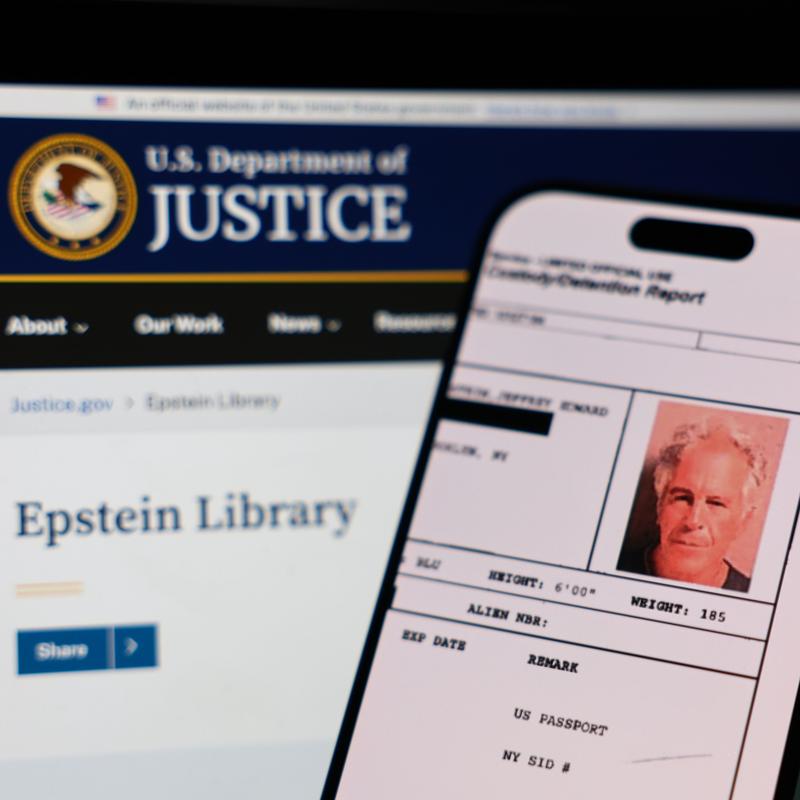
Brooke Gladstone: It's all coming up after this. From WNYC in New York, this is On the Media. Micah Loewinger's out this week on a reporting trip. I'm Brooke Gladstone. Last week, the Justice Department released the latest batch of documents related to Jeffrey Epstein's criminal case.
News clip: It took a law, passed with near-unanimous support in Congress, to finally bring these documents to light.
Todd Blanche: Today, we are producing more than 3 million pages, including more than 2,000 videos and 180,000 images.
Brooke Gladstone: Deputy Attorney General Todd Blanche, formerly President Trump's personal attorney, announcing the release of the documents in compliance with the Epstein Files Transparency Act.
Todd Blanche: A rigorous process was undertaken to protect victims against any clearly unwarranted invasion of their personal privacy.
Brooke Gladstone: Clearly not rigorous enough.
Annie Farmer: I found my own date of birth, my own phone number.
Brooke Gladstone: Epstein survivor Annie Farmer speaking on NBC.
Annie Farmer: It was also just really disturbed to see evidence of names of people that I knew did not want to be public.
Brooke Gladstone: There are also pictures.
News clip: Former Prince Andrew, seen in these photos, kneeling over an unidentified woman.
Brooke Gladstone: The Justice Department says it's been working to take down the files with personal details about Epstein's survivors. Just a reminder, after serially trafficking and abusing girls and young women over the course of at least two decades, the DOJ says he harmed over 1,000 victims. Jeffrey Epstein was arrested in 2019. He died in prison shortly thereafter. The feds ruled it a suicide. Ghislaine Maxwell, his girlfriend and accomplice, remains in prison serving a 20-year sentence. Meanwhile, the list of powerful men implicated in Epstein's files continues to grow.
News clip: Like Elon Musk, who seemingly planned visits to Epstein's island, and Trump's Commerce Secretary, Howard Lutnick.
News clip: Another very prominent person caught up in all this is Bill Gates.
News clip: The DOJ also posted, then temporarily removed without explanation, a spreadsheet of complaints made to the FBI, including unverified allegations about both President Trump and former President Bill Clinton.
Brooke Gladstone: This week, we learned that Bill and Hillary Clinton will provide testimony in front of the House Oversight Committee. It's all part of a broader push to learn, nearly seven years after Epstein's arrest and death, what was never learned at the time, who were his co-conspirators and how he was allowed to get away with such widespread abuse for so long.
Julie K. Brown: We're learning new things every day.
Brooke Gladstone: Julie K. Brown is an investigative journalist at the Miami Herald and author of the Substack The Epstein Files by Julie K. Brown, where she is continually covering the story. Her series of articles in 2018 revived Epstein's cold case and led to his arrest. She's thrilled the papers have been released, not so delighted with the pattern of redactions. The wrong people are being exposed, and the wrong people are being protected.
Julie K. Brown: That is really not what was supposed to happen. The Epstein Files Transparency Act was passed with the purpose of the public being able to see how Epstein got away with these crimes for so many years. A big piece of that is the interactions between the prosecutors back in 2007 and Epstein and his lawyers, and the trajectory of how did they come up with this lenient plea deal. We can't see because the names of all the prosecutors, it's almost all of them, redacted. They basically let him off the hook in Florida.
Brooke Gladstone: Basically off the hook, but he was charged with something, right?
Julie K. Brown: Yes, he was charged with solicitation of a minor for prostitution. He did serve a year in the county jail, but he wasn't in the county jail because he got work release and he spent all day in his office. Later, we found out that he was even having young women come into his office so that he could have sex. So it wasn't much of a sentence. To be honest with you, the charges that he would have faced would have put him in prison for life. So when we say he got off, he got off, considering that at the time, they knew that he had raped about 40 girls.
Brooke Gladstone: There were grand jury transcripts, hundreds of pages of testimony that Miami US Attorney Alex Acosta provided in 2019 to DOJ investigators, and it was Acosta who helped create that really lenient deal. What else did you learn about Acosta?
Julie K. Brown: We know that Acosta was then appointed as Labor Secretary under Donald Trump. There's quite a bit of documents in here about an investigation by the Justice Department. Acosta was questioned by these DOJ investigators in 2020. His answers to the questions are remarkable. This is probably the defining case of his career, yet he doesn't remember this, doesn't remember that. It's unfathomable that he said that he didn't know that there were so many victims. How could he have not known that?
At one point, he is calling the victims women, and the investigator from the Justice Department had to take him to task and say, "Wait a minute, you keep saying women. These were 13 and 14-year-olds." There were so many nuances to the questioning and how he answered them that I think that that almost in itself, tells a story.
Brooke Gladstone: There were some missing binders of evidence, an 11-month gap in Acosta's incoming emails that coincided with the timeframe that Epstein's deal was being negotiated. He blames that on a technical glitch.
Julie K. Brown: There were a lot of technical glitches, it seems, during this case. These are the reasons why a lot of people are suspicious and skeptical of the way this case was handled back then, because now we're finding out that there were glitches, that there were constant reminders that Epstein had his finger on these prosecutors. He tried to get dirt on all of them. He investigated the police chief, he hired private investigators to follow the victims.
Brooke Gladstone: This is known.
Julie K. Brown: This is all known. It was all part of my original series in the Miami Herald in 2018. Epstein had a playbook to basically try to corrupt everybody that he came in contact with in order to get away with his crimes.
Brooke Gladstone: So Trump. We know he and Epstein were friends. There's been lots of speculation about whether the files would contain evidence of Trump's involvement in, or at least knowledge of, Epstein's crimes. Buried in the middle of this latest batch was a summary of one tip phoned into the FBI about Trump's involvement with Epstein's activities. Unverified, but horrifying. After this tip sheet was released, it mysteriously disappeared. After multiple outlets like MidasTouch and Bellingcat, which copied it, shared the tip sheet, it suddenly reappeared in the documents.
The DOJ calls the accusations sensationalist and untrue. Sensationalist, yeah, but how would they know that it was untrue? It doesn't seem like the FBI ever followed up.
Julie K. Brown: Look, anybody that is in law enforcement, and does investigations knows that you get crazy tips. That doesn't mean you ignore them. If I ignored every crazy tip that I got as a journalist, I wouldn't be sitting where I am right now. Then I'm not saying this tip involving Trump is true. That's not what I'm saying at all, but I'm saying it was up to the FBI and the Justice Department to nevertheless investigate them, no matter how strange they sounded. I'll tell you why. I've interviewed a lot of these victims. They have been traumatized unbelievably, and some of their memories are twisted.
This is why these cases are very hard to successfully prosecute, quite frankly. Especially if they were very young when they were sexually abused, their stories change. They remember things later that they didn't remember back then. They're traumatized. I have found that while parts of some of these women's stories didn't add up, the key parts of the story added up, and this is common. I've talked to FBI experts who interview children that have been abused, and they say this is very, very common, that children misremember things. They say this happened here, and it didn't happen there. It happened somewhere else. Things like that.
Brooke Gladstone: You say that there were what, 302 victim interviews? In the papers, there are no FBI notes, there are no transcripts of interviews. You can't see any evidence that they were addressed in any way?
Julie K. Brown: No, I haven't found them yet, but remember, there are 3 million documents here. Sometimes I feel like we find things just by accident, but my guess is no, I just don't think they did. I never thought that authorities took this-- With a couple of exceptions. The Palm Beach Police Department did their job, but the State Attorney and the Justice Department completely failed these victims. As a result of their real incompetence, hundreds of other young women and possibly even girls were subjected to sexual assault and rape.
Brooke Gladstone: Now, with regard to this tip sheet, you noted several similarities within these unverified accounts.
Julie K. Brown: One of the patterns that we're seeing is that at the time that Donald Trump and Jeffrey Epstein were chummy and doing a lot of partying together, there were these model parties. They were at Epstein's mansion in New York, and they were also at Mar-a-Lago. We're learning every day new information about these parties, that Epstein is sending women to these model parties, because remember, Epstein's way of entrapping these girls and young women, at least in the early '90s, was to say, "I'm going to make you famous. I know people in the modeling industry. You should go to this party at Mar-a-Lago."
Some of these tips are from women that say, "I went to a model party either at Jeffrey Epstein's mansion or at Mar-a-Lago, and I was raped." My experience is most of these women who have had this horrible thing happen to them, they don't really want to come out about it because it subjects them to all kinds of ridicule. My experience is they're not making this stuff up. Now, are there people out there that are disturbed that are doing that? Probably, but that's my point. You still have to investigate.
Brooke Gladstone: What about Katie Johnson? That's a pseudonym.
Julie K. Brown: She had filed a lawsuit against Epstein and Trump in 2016, quite detailed. It included affidavits for two other people that supported her story, although those two people went by pseudonyms as well. She was about to go public. She did do some media interviews. Very few. Then there was a press conference called days before the 2016 election. She says that she had received threats, and she just backed out. We have never really heard another thing about her since. It's hard to know.
There's some evidence that her story was possibly manipulated by political operatives who were anti-Trump in the run-up to the 2016 election. That, of course, hurt her credibility, but it's really important to know that just because some political operatives took advantage of her doesn't mean that her entire story was false.
Brooke Gladstone: She never said that she lied.
Julie K. Brown: No.
Brooke Gladstone: As you say, that's why we have the FBI.
Julie K. Brown: That's right. I don't see any evidence, by the way, that the FBI ever spoke to her.
Brooke Gladstone: Do you expect anything Trump-related will emerge from a million of these documents once you go through them?
Julie K. Brown: I just don't think we're going to find out anything about him, because I think that they were scrubbed, and I'm not saying he's guilty of anything. These files were probably scrubbed, so I don't think we're going to find out unless there was a mistake made. It was clear that that tips document, it was a mistake that they let that out because they grabbed it back right away.
Brooke Gladstone: It was too late.
Julie K. Brown: That should be telling right there, that they must have missed it.
Brooke Gladstone: In this recent release of papers, which I know you've been going through page by page, is there anything that you would direct listeners to that might affect what they think about this case or why they should think about it at all?
Julie K. Brown: There is evidence of corruption on the part of public officials or former public officials. Maybe there are people that don't understand the case as well as I do. I know all these people. Epstein emailed in a code sometimes, but I could figure out what he's saying, and he had some of these people probably on his payroll in one way or another. I'm seeing lots of evidence of that.
Brooke Gladstone: Some high-profile people lost their jobs. Maxwell is serving a 20-year prison sentence. In terms of accountability, to me, this seems like pretty weak tea, with so many participants, so many dubious investigations. What about we, as a public? How should we feel?
Julie K. Brown: Right now, I think that everyone in the public should be writing every single one of their elected officials and demanding that this case not go away, that they stop politicizing it. This is a crime against children. Every single person in this country should be demanding that they start treating this case the way they should have in the beginning. Anybody who was involved or who helped Epstein by cutting him a deal needs to be looked at. All their bank accounts should be looked at. The only way that that's going to happen is if the public demands it.
Brooke Gladstone: For many of our listeners, the worst facts of this story, the serial sexual assault, rape, sex trafficking of girls and young women. It's been known for a while. For listeners who have tuned this story out over the years, maybe because it's too awful, maybe because it involves such a vast group of powerful people, it almost feels like a conspiracy theory. What would you say is the importance in tuning back in?
Julie K. Brown: That's a very good question, because everybody, including myself, we're very exhausted from all the bad news that's happening right now in our country and in our world. Even myself, I sometimes have to just put the covers over my head because it's too much, it's too loud, it's too disturbing, but I always get out of bed and I keep going, because if we let this case slide and all the people that helped him get away with this slide, it means we don't care about the most vulnerable people in our society. That, to me, goes against everything our country has stood for.
Brooke Gladstone: You say that you've been flooded with tips during the latest round of coverage. These are victims?
Julie K. Brown: Some. They're mostly people. It's cool in a way. There are all these, I don't know what you call them, citizen journalists or something. A lot of them are lawyers that are fascinated by this story, and they're all digging into the files because they're online. One of the biggest tips I just got, somebody found an email. I'm not going to tell you what it is because I'm working on this story. They sent it to me, and I'm like, "Oh, my God." I'm getting a lot of people simply just sending me things that they see in the files. I welcome that because you never know, I might not have seen it. Everybody keep digging, send me stuff.
Brooke Gladstone: What does it feel like to be focused on this story for so long? Does it drag you down?
Julie K. Brown: It does at times, but then I'm really excited today because I just discovered a bunch of stuff, and I'm like, "Yes, yes, I thought that this person was doing something wrong."
Brooke Gladstone: What happens then? Earlier in this story, Epstein weaseled out of charges. Now you have a Justice Department that is highly unlikely to bring any charges unless they're Democrats. Do you see accountability around the corner?
Julie K. Brown: I don't know, to be honest with you. Everybody says the lists and all these wealthy men that were involved. To me, I think the Justice Department should look at all these prosecutors back in Florida. Think about it. If they had put him in prison back then, we wouldn't be sitting here right now. I think that's what's lost here. Going after the men. Yes, we should do that, too, but we shouldn't lose sight of the fact that we were failed by our criminal justice system years ago.
Brooke Gladstone: Julie, thank you very much.
Julie K. Brown: Sure.
Brooke Gladstone: Julie K. Brown is an investigative journalist, and she's been reporting on the Epstein files since 2017. She has a Substack newsletter, The Epstein Files by Julie K. Brown. This is On the Media.
[music]
Brooke Gladstone: This is On the Media. I'm Brooke Gladstone. Is this Bad Bunny week or what? Last Sunday, the Puerto Rican reggaeton singer won the Grammy for Album of the Year, the first for an all-Spanish release. This Sunday, he's headlining the Super Bowl. It's a perfect week for the launch of Season 3 of a podcast that On the Media had a hand in creating, La Brega, a show produced by Futuro Media about Puerto Rican history and life in the US Colony.
Every episode is produced in English and Spanish, and it's hosted by our former On the Media colleague, Alana Casanova-Burgess. Episode 1 tells the story of a statue of a Spanish colonizer in Old San Juan, a statue that, of course, tells one particular story about Puerto Rico's colonial past. A few years ago, activists tore that statue down, hoping to start a conversation about Puerto Rico's colonial present. That didn't go so well. Alana takes it from here.
Alana Casanova-Burgess: It wasn't just any Monday morning in Puerto Rico. It was January 24th, 2022, and there was a lot of anticipation. [news clip] For one thing, kids in Puerto Rico were going back to in-person classes, even though the pandemic was still in full swing. Some students hadn't been in a classroom for two years because of the earthquakes in the south. Also, on this Monday, the king was coming.
News clip: El Rey Felipe VI viene a la isla con motivo de la celebración de los 500 años de la ciudad capital de San Juan.
Alana Casanova-Burgess: The actual king of Spain, Felipe Juan Pablo Alfonso de Todos los Santos de Borbón y Grecia, or King Felipe VI, was coming to celebrate the 500th anniversary of the founding of San Juan. His visit had been postponed from the year before, and the press was poised to cover three carefully choreographed days of meetings. They had the official schedule, and they were ready to tell us about it.
News clip: Dónde se realizan los actos protocolares.
News clip: Los actos protocolares.
News clip: Como parte de los actos protocolares. Habrá una transmisión simultánea.
Alana Casanova-Burgess: Those actos protocolares, all of that pomp and circumstance, were in service of a bigger goal, according to TV analysts. Now, as a US colony, Puerto Rico can't go around making trade deals with other countries, but the king was coming with Spain's Minister of Commerce. Talking heads on TV, like a former governor, kept saying the visit could spell investment for Puerto Rico. You know deals, deals, deals.
Speaker 12: El mundo entero, que a través de la visita del rey, nos vea y diga, "A esa casa se puede entrar, en ese lugar podemos invertir."
Alana Casanova-Burgess: The stakes were high when we woke up that Monday morning, logged onto Twitter or Facebook or Instagram, and saw photos nobody was expecting. According to police, the statue of the Spanish conquistador Juan Ponce de León in Old San Juan had been vandalized sometime around 4:30 AM, although vandalized seemed like an understatement. In photos, we could see this green-bearded sculpture lying on the ground, face up, next to his white pedestal. He was broken in two.
Ponce's legs had come off from his body just below his medieval puffy shorts. Part of his base had come off, too, so he was surrounded by chunks of rubble. The real Ponce de León had been appointed by Spain as the first governor of Puerto Rico in 1509. His statue had been pointing south, perhaps towards the original capital city, Cáparra, with his other hand on his hip, but on the ground, it looked like the statue was holding his finger up in the air, as if he wanted to say just one more thing before everyone stopped listening. He looked small.
Rubén Sánchez: ¿Qué pasó? ¿Quién hizo esto y por qué?
Alana Casanova-Burgess: For many media commentators, like talk radio show host Rubén Sánchez on WKAQ, the big reaction was horror, shock, dismay. The statue, he told Mayor Miguel Romero, had been there since he was a little boy.
Rubén Sánchez: ...Desde que yo soy chiquito.
Alana Casanova-Burgess: That actually, it had been up in that plaza since the 1890s, right off the famous Calle San Sebastián, next to the Church of San Jose, the same church that King Felipe was scheduled to visit the very next day. The mayor had the royal plane's arrival time at his fingertips.
Rubén Sánchez: ¿Entonces, a qué hora usted espera a Felipe?
Miguel Romero: Entre 5:45 a 5:50 debería estar llegando aquí a Puerto Rico Rubén.
Alana Casanova-Burgess: Sometime between 5:45 and 5:50 that very afternoon.
Miguel Romero: A lo mejor el rey ni cuenta se da de este tipo de cosas.
Alana Casanova-Burgess: Perhaps, the mayor said, the monarch doesn't even notice these kinds of things. Maybe the protest wasn't even about the royal visit, but it absolutely was. Even before 7:00 AM, a group called the Fuerzas Libertarias de Borikén had taken responsibility for pulling the statue down. They hadn't been heard of before, and they haven't been heard of since, but the message was no kings and no gringo invaders. They were linking Ponce de León, a symbol of Spanish colonialism, to people from the United States moving to Puerto Rico for tax incentives, displacing Puerto Ricans. Whoever was behind the group, they had gotten everyone's attention.
Rafael Capó García: I immediately called a friend, and we came here, really, really early, just to see it. I needed to see this statue on the ground.
Alana Casanova-Burgess: Rafael Capó García leads Memoria (De)colonial, a group that gives counter-narrative history tours.
Rafael Capó García: It was me and probably three other people interested in what had happened. Then you had the press, you had municipal employees outraged with how you could deface this monument.
Alana Casanova-Burgess: Rafael already knew the statue really well. He used to be a high school history teacher, and he'd bring his students to Old San Juan for field trips, teaching them to question whether violent colonizers were really heroes and champions who deserved to be on a pedestal. When he saw Ponce de León lying on the ground, he felt hopeful.
Rafael Capó García: I was. I was hopeful. I was excited that we were going to finally have these conversations, much needed conversations.
Alana Casanova-Burgess: That conversation about who really represents Puerto Ricans and Puerto Ricanness, it didn't seem like there was going to be time for it to happen, because by 8:30 AM, Mayor Romero had already made a promise in interviews. He sounded confident, even breezy, standing next to the empty pedestal, speaking with a reporter from El Nuevo Día.
[News clip]
Alana Casanova-Burgess: He expected the statue to be back up that very same day.
Rafael Capó García: The municipal government had to run, had to hustle to get this statue up, because in their minds, they couldn't allow the king of Spain to visit San Juan and see this symbol of Spanish heritage on the ground.
Alana Casanova-Burgess: Did you think that they would be able to do it?
Rafael Capó García: I didn't think they would be able to do it because the statue was broken in half. Imagine, it takes them forever to fix a pothole.
Alana Casanova-Burgess: It was actually Mayor Romero who acknowledged the pothole problem that morning. The city would have to spend public funds on fixing the statue, he lamented, instead of on fixing a pothole. There are some potholes in Puerto Rico that are old enough to have birthday parties, but the city was going to go ahead and try to repair Juan Ponce de León in less than a day. It felt ridiculous. Online, people were coping with the absurdity the usual way, with memes.
Juan Pablo Díaz: I saw it at 10:00 AM, 11:00 AM, and I just started brainstorming because I--
Alana Casanova-Burgess: Juan Pablo Díaz, who goes by Juan P, is a political satirist and actor. He wanted to get something out about the statue really quickly.
Juan Pablo Díaz: I thought, "Well, I can do a parody of a song because the music is already there. I just have to change the words. He's the king of Spain. What is a good song? A good recognizable song? The statue is broke. Partío. Corazón Partío. Alejandro Sanz. let's go."
[music]
Juan Pablo Díaz: [singing].
[music]
Juan Pablo Díaz: [singing].
Alana Casanova-Burgess: [singing].
[music]
Alana Casanova-Burgess: Juan P also rigged a bitmoji to look like a green-bearded Ponce de León singing along to the song.
[music]
Juan Pablo Díaz: ¿Cómo van a recordar ahora el colonialismo?
Alana Casanova-Burgess: There's a particular line he wrote. The statue sings, "You all know that nothing will be the same without me. How will you remember colonialism?" It's a punch, because in Puerto Rico, nobody needs a statue to remember colonialism. It's not in the past. So far, around 500 years of Puerto Rico's colonial past and present were being crammed into one single day. More and more layers were revealing themselves as the hours ticked by. Potholes, earthquakes, tax incentives, the literal king of Spain.
Juan Pablo Díaz: I think Puerto Ricans laugh to get less pissed off.
Alana Casanova-Burgess: Actually, the more Juan P remembered the day with me, the more pissed off he got.
Juan Pablo Díaz:
Alana Casanova-Burgess: He remembered that the coverage was taking the vandalism of the statue so seriously, as though it was a national catastrophe.
Juan Pablo Díaz: Esa noticia se trató como si hubiese sido, olvídate, el desastre, la catástrofe nacional.
Alana Casanova-Burgess: There was a disconnect between the way the government and the press were handling the story and the anger and mockery that we were seeing online. There were Valentine's Day cards like, "You knock me over like Ponce de León," and jokes about the statue being too high to get up off the floor at a party, asking someone to get him a sandwich. People were playing with the idea of honoring other more deserving figures instead, photoshopping boricuas like Iris Chacón and Bad Bunny up on Ponce de León's old spot.
The thing is, in Puerto Rico, there's no shortage of people who deserve to be honored on a pedestal. If you ask around Old San Juan, or even in that same square Plaza San Jose, you'll hear so many better options than Juan Ponce de León.
Interview clip: Any other person, honestly. I just won't like to see him.
Alana Casanova-Burgess: Baseball players, musicians, poets.
Interview clip: Pues Roberto Clemente.
Interview clip: Julia de Burgos, tremenda poeta, escritora, un orgullo para la mujer.
Alana Casanova-Burgess: Boxers, independence activists, Ricky Martin.
Interview clip: Mariana Bracetti. And those are just the persons that pop up.
Interview clip: Yo diría que, una persona como Ricky Martin. ¿Qué mejor ejemplo para representar?
Alana Casanova-Burgess: I heard creative responses, ideas for things that aren't even human, like a tree or a goddess.
Alana Casanova-Burgess: I heard enthusiasm to the point of yelling.
Speaker 23: Una mujer. Una mujer! Por favor!
Alana Casanova-Burgess: I heard the names of tons of talented and distinguished boricuas.
Interview clip: Hay un montón.
Alana Casanova-Burgess: Icons who inspire so much devotion.
Interview clip: Pues como que, corazón, como que wow.
Alana Casanova-Burgess: Growing up, my mother would point out Puerto Ricans everywhere. She still does.
Interview clip: Hi. I just wanted to tell you that I saw the Jimmy Fallon Show and I heard the Planeros de la Cresta. Did you know they're from Ciales?
Alana Casanova-Burgess: I can't remember my English father ever leaning over to celebrate someone's Englishness, but in Puerto Rico and its diaspora, we have a thing for people representing the archipelago, competing for it or championing it in some way. What does it mean and what does it take to champion Puerto Rico as a nation, unflinchingly and with boundless pride?
Perhaps this is why the events of January 24th, 2022, felt and feel so absurd, because there was an empty pedestal just sitting there and a pantheon of heroes to fill it, and yet the government insisted it should be Ponce de León up there and that they could resurrect his statue in just a day. The hours were ticking by. Coming up after the break, remember, five hours to go until the king arrives. This is La Brega.
[music]
Brooke Gladstone: This is On the Media. I'm Brooke Gladstone. We're listening to episode 1 of the new season of La Brega about the toppling of a statue and what happened next. Here's Alana.
Alana Casanova-Burgess: By 1:00 PM, a city crew had removed the statue of Ponce de León, or the two pieces of it, from the plaza. No one knew the whereabouts of the colonizer, but with five hours left until the king's arrival, we got a glimpse. Someone, it seemed likely that it was a municipal employee, had recorded an eight-second video that I can only describe as art. The opening frame shows one of those blue quilted blankets people use to protect precious cargo. A left hand pulls the fabric back and reveals Ponce de León's face, and gives him a short, swift slap.
It's hard to keep a straight face, even just remembering the video. It has derailed our editorial meetings and makes it hard to even record these lines. The comedic timing is impeccable, but it's also deep. In life, Ponce de León was a violent conquistador. As a statue, he was glorified on an adorned pedestal, but now he was broken in two and casually slapped. That's not to say everyone agreed. It's typical when a controversial monument is vandalized for some people to see it as an affront to heritage and an effort to rewrite history.
There were people who certainly felt that way and were offended. Online, there were arguments in comment sections and on Facebook posts about what the statue really represented.
Interview clip: Es lamentable.
Alana Casanova-Burgess: The director of the Museum of San Juan was giving voice to that reaction in interviews.
Interview clip: Estamos ante un atentado contra el patrimonio artístico y cultural del pueblo de Puerto Rico, una estatua…
Alana Casanova-Burgess: That's because Juan Ponce de León isn't only a person who existed, and who enslaved and killed indigenous people and Africans. He's also a symbol of Spanish heritage and part of a conversation about what it means to be Puerto Rican and who represents our origins. The statue of him isn't just any monument. It says a lot, and I mean that literally.
Film clip: Yo Juan Ponce de León. Colonizador y primer gobernador de la isla de Puerto Rico.
Alana Casanova-Burgess: There's a short film from 1957 that was made by the Puerto Rican government and narrated by the statue. It tells the story of the Spanish conquest.
Film clip: Aquí es mi estatua en una tranquila plazoleta.
Alana Casanova-Burgess: It's a real rewriting of history, with only scant acknowledgment of any violence. The last line makes a big claim. The people of Puerto Rico are a tree, and he, Ponce de León, is the root.
Film Clip: Pueblo puertorriqueño. Árbol del cual yo, Juan Ponce de León, soy la raíz.
Alana Casanova-Burgess: If the actual statue could really talk, it would tell a much more complicated story about Puerto Rican identity. Rafael Capó has written about it extensively.
Rafael Capó García: The earliest mention that I found was in 1877. A journalist in the conservative newspaper Boletín mercantil mentioned how Puerto Rico needed to honor its conquistador. He mentioned that just like in Mexico, Hernán Cortés was the Mexican Moses who was venerated by all, Ponce de León should receive the same treatment in Puerto Rico.
Alana Casanova-Burgess: Four years later, there's another newspaper report about the statue. It has been made in New York and is arriving in San Juan. The material is notable. It's made from two bronze cannons that had been used to defend Puerto Rico from a failed invasion by the British in 1797. This is one of the defining moments in Puerto Rican history when Sir Ralph Abercromby attacked San Juan with a massive fleet and thousands of soldiers.
Rafael Capó García: The people that defend Puerto Rico are not just Spanish soldiers.
Alana Casanova-Burgess: Black Puerto Ricans, Creoles, whites, men, women, everyone came together to fight off the British. Many historians say that this is the moment that the Puerto Rican nation was created. When the statue was put up in 1882, those who had pushed for it were celebrating a connection to Spain with this other element baked in.
Rafael Capó García: For me, the statue and Hispanic heritage has always been really interesting because of how it has become not so much now, but it definitely during the 20th century, when the US was trying to Americanize Puerto Ricans, a lot of them sought refuge in Hispanicity.
Alana Casanova-Burgess: It was a way of saying, we aren't Americans.
Rafael Capó García: "We are something else," and rooting themselves in European and Hispanic Spanish heritage was a defensive mechanism.
Alana Casanova-Burgess: Being Spanish was special, different. For example, there's a debate that comes up in 1908 for the 400th anniversary of Ponce de León arriving in Puerto Rico.
Rafael Capó García: The official historian of Puerto Rico, Cayetano Coll y Toste, is adamant that Juan Ponce de León has his own national holiday, he's a hero in Puerto Rico, and he specifically mentions, and I love this quote, he says, "Hopefully all conquistadors of the Indies would have been as benevolent as Juan Ponce de León was with the indigenous peoples of Puerto Rico."
Alana Casanova-Burgess: This is simply not true.
Rafael Capó García: Because it's always that Puerto Rico is an exception. That we are somehow devoid of racism, because in our historical origins, thanks to Spanish civilization, we were conceived through mixture and tolerance from the beginning. This narrative is always constructed by positing that there is an other that is racist and refuses to mix. Those are the British, and that is the United States.
Alana Casanova-Burgess: At some point, though, you get up on the pedestal.
Rafael Capó García: Getting up on the pedestal was not the plan.
Alana Casanova-Burgess: It was around 2:00 PM, a little less than four hours before the King of Spain was slated to arrive in Puerto Rico on this fateful day. Municipal workers had been readying the base to receive the repaired statue. One of them had left a ladder.
Rafael Capó García: He put a ladder there, and he left. I looked at my friend, and I was like, well, fuck it.
Alana Casanova-Burgess: When Rafael got up there, he did the Ponce de León pose. A finger in the air and a hand on the hip.
Rafael Capó García: Tan pronto me paré arriba.
Alana Casanova-Burgess: Were you trolling them a little bit?
Rafael Capó García: I was definitely trolling. I had no intention of staying the entire day. I stayed there maybe for an hour.
Alana Casanova-Burgess: It was long enough to make some news that a protester had delayed the installation of the statue. They took it very seriously.
Clip: Hubo una manifestación que impidió cuando un hombre…
Alana Casanova-Burgess: After Rafael's pose, some other protesters started arriving. It was getting close to the deadline.
Laura Pérez: I didn't know how it was going to end.
Alana Casanova-Burgess: Laura Pérez is a journalist based in San Juan and an editor for La Brega. She had been reporting for a wire service that day and had been in the plaza for nearly five hours.
Laura Pérez: At some point, I realized that there were policemen walking into the plaza. They were wearing riot gear, and they were intimidating.
Alana Casanova-Burgess: It was 4:45, an hour to go.
Laura Pérez: People actually started screaming at them, and what they were saying is something I've heard before in these kind of circumstances. "How come you don't answer the call when my safety is at risk? How come is it that you're here now when I'm protesting?"
Alana Casanova-Burgess: The riot police marched forward, forcing people out of their way and forming a line around the pedestal, creating space for the municipal workers who had just arrived with the repaired statue.
Laura Pérez: When they started trying to get Juan Ponce León out of the pickup, that's when I realized, "Oh, this is heavy, and this is not an easy task."
Alana Casanova-Burgess: Municipal workers brought a couple of cherry pickers with them. They're like a small crane with a basket on the end. They had wrapped yellow straps around the now intact statue, so it looked like Ponce was wearing a zip-lining harness. He was hanging from a crane while workers in the baskets and on the ground tried to position him on the pedestal. There was a live stream so we could all watch through splayed fingers.
Laura Pérez: All of a sudden, the statue is flying in the middle of the square. He's just flying, but he's crooked. Not like a superhero that knows how to fly.
Alana Casanova-Burgess: He was at an angle as though he was really zip lining, and they couldn't quite place him as he swung around.
Laura Pérez: I'm not sure that they know what they're doing.
Alana Casanova-Burgess: An hour went by.
Laura Pérez: It seemed that they were just improvising. They were just trying to make it work with whatever materials and tools they have for whatever it is that they do for a living, which is not putting statues back up on a pedestal. I'm sure about that.
Alana Casanova-Burgess: Because the top part of the pedestal had also crashed down that morning, the base was now shorter, and there didn't seem to be an easy way to install the statue.
Laura Pérez: They had to put it back down, and then Ponce León was again lying on the floor of the square where the day started.
Alana Casanova-Burgess: Meanwhile, in the live feed from the airport-
Clip: Ya está bajando el Rey Felipe XI. Está por bajar.
Alana Casanova-Burgess: -the king's plane had landed a few minutes early at 5:35.
Speaker 31: Ahí lo vemos, acompañado del gobernador de Puerto Rico.
[music]
Alana Casanova-Burgess: It was an unforgettable spectacle. A split screen with the king on one side getting a red carpet welcome and the conquistador statue on the other swinging from yellow nylon straps. The audience was Puerto Rico, even though it seemed like the show had been put on for someone else.
Laura Pérez: We're always thinking about what others think of us, but not what we think of ourselves. That's Puerto Rico.
Alana Casanova-Burgess: It was just before 7:00 PM when the bronze statue of Juan Ponce de León was finally reinstalled, with his legs attached to his body and his finger pointing to the south. The king had yet to drive past the site, but something was wrong. The statue leaned to the left a lot.
Adrian Florido: You couldn't in good faith stand back and look up at that pedestal and say, "Juan Ponce de León is standing tall and proud and straight."
Alana Casanova-Burgess: Adrian Florido is a reporter at NPR who covers race and identity in the US. When I told him I was starting this season with this story, he remembered a recording he had made for his side project, documenting Puerto Rico in sound.
Adrian Florido: A lot of times when you're recording and documenting, you don't know what it means yet. I think that's true of what happened with the Ponce de León statue.
Alana Casanova-Burgess: Adrian had followed the movement to remove statues of Confederate generals and other figures, and this moment of reflection that a lot of communities around the world had had about their monuments.
Adrian Florido: "Who are our heroes? Who are we honoring? Let's put the statue in a warehouse for a while until we decide what to do with it." A lot of places said, "No, we're not putting that back up. It doesn't represent our values anymore." Other places have left the pedestals just blank and empty, which forces a conversation about what used to be there and what isn't there now, and maybe what should be there. Maybe there aren't answers to that question necessarily, but it forces people, at the very least, to reflect on it.
Alana Casanova-Burgess: That clearly wasn't happening here. There just wasn't going to be time to discuss what this particular statue says about Puerto Ricanness or Puerto Rico. Adrian got there just after it had been reinstalled, and there were protesters heckling and pointing out that, yes, the statue was most definitely crooked. He spoke with the director of public works for San Juan, Raúl García.
Raúl García: Raúl García. Director de operaciones y jornadas del municipio de San Juan.
Adrian Florido: I asked, "Did you put it up the way it was before? People are saying it looks a little crooked."
Raúl García: Está en el lugar exacto, en la posición exacta, porque a muchos de los que estaban protestando ahora mismo les parece que como que quedó un poco chueco, pirado.
Adrian Florido: Pirado is the word that Puerto Ricans use. Chueco is the word that we Mexicans use.
Adrian Florido: He said, "We put it back up exactly the way that it should be."
Raúl García: Te falta un poco el pedestal…
Alana Casanova-Burgess: He says the pedestal is missing, but that they'd be fixing it soon.
Adrian Florido: I was curious to know whether he'd had the conversation with anybody about whether that was the right decision to make, given what was happening in other places where these sorts of statues had been toppled.
Raúl García: Aquí hay una estatua...
Adrian Florido: This is a statue that has been here since the 19th century. Of course, we were going to put it back up.
Alana Casanova-Burgess: It's not a political situation. It's just simply that the administration decided to put it back up.
Adrian Florido: Did you talk about this?
Raúl García:
Adrian Florido: He said no without hesitation? Like, "Of course not."
Alana Casanova-Burgess: We asked the municipal government for an interview and for comment, and they did not respond. The king did make a visit to the church next to the statue during his visit, but he didn't walk past it. It seems unlikely that he saw it at all, given how far away his driver parked. We'll never know if the king of Spain noticed the tiny, crooked colonizer, but frankly, I don't think most people care if he saw it or not. Four years later, Ponce de León is still slanted. The city never did fix the pedestal, so the effect is that the statue is leaning to the left and is also lower to the ground, knocked down a peg, literally.
It's telling a different story than it used to. I've heard a lot of fantasies about what could happen next. What if Ponce de León keeps leaning and just crashes to the ground again? Then what? If the bronze from the cannons that the statue is made out of is so important to a story about Puerto Rican identity, what if it were melted down and forged into a new monument? Who would we replace him with? What story would that tell, or what if the pedestal were left empty to invite us to reflect on who actually represents us? What would we learn about Puerto Ricanness if we really had that conversation about who has championed Puerto Rico and who our heroes are? We're going to do just that.
Brooke Gladstone: Season 3 of La Brega is all about Puerto Rican champions. New episodes will be released every Tuesday, wherever you get your podcasts. That's the show. On the Media is produced by Molly Rosen, Rebecca Clark-Callender, and Candice Wang. Travis Mannon is our video producer. Our technical director is Jennifer Munson, with engineering from Jared Paul. Eloise Blondiau is our senior producer, and our executive producer is Katya Rogers. On the Media is produced by WNYC. Micah Loewinger will be back next week. I'm Brooke Gladstone.
Copyright © 2026 New York Public Radio. All rights reserved. Visit our website terms of use at www.wnyc.org for further information.
New York Public Radio transcripts are created on a rush deadline, often by contractors. This text may not be in its final form and may be updated or revised in the future. Accuracy and availability may vary. The authoritative record of New York Public Radio’s programming