
Far Right Stars Are Bemoaning the Chaos They Created
[music]
Micah Loewinger: Hey, you're listening to the On the Media Midweek Podcast. I'm Micah Loewinger. In advance of the midterms this fall, the man who once spoke nightly to the MAGA establishment on the movement's favorite TV channel says he's done with the GOP.
Tucker Carlson: I would not support the Republican Party. There's no chance I would support the Republican Party. I'm not going to support the Democratic Party. I don't know what I'm going to do.
Micah Loewinger: This is Tucker Carlson speaking on a right-wing podcast last week, citing frustrations over Donald Trump's handling of the economy, his war in Iran, and support of Israel.
Tucker Carlson: How could I or any American voter support a political party that's not loyal to the United States, that puts the interests of a foreign country above those of its own citizens?
Micah Loewinger: Carlson's apparent pivot echoes the move by white supremacist podcaster Nick Fuentes, who has also disavowed the administration for similar reasons. Their turn away from the president and the party is just one form of growing discontent in the right-wing podcast circuit. In a recent piece titled The MAGA Stars Freaked Out by Their Own Movement, Vox senior correspondent Zack Beauchamp described a crop of conservative personalities who now fear that their base has grown too bigoted and too conspiratorial. According to Beauchamp, their disgust with MAGA's transgressions is ironic because they helped create the party as it is today. Zack, welcome back to OTM.
Zack Beauchamp: Hey, I'm always happy to be back.
Micah Loewinger: You have a thesis about the current state of the Republican Party. You say that MAGA's pursuit of transgression has begun to spin out of control, even among some of the people who thought they were steering the ship. You say, "It's a real-life version of the famous sketch on Tim Robinson's Netflix show, I Think You Should Leave." Can you describe that sketch for listeners who maybe haven't seen it?
Zack Beauchamp: Sure. I'm so glad we're opening with this. There's a store. There's a car crash at the store, and the car that crashes into this clothing store is shaped like a hot dog.
Customer: Driver's gone.
Store Employee: Somebody call the cops. We need to find that driver.
Tim Robinson: You know what's driving me nuts? It could literally be any one of us. Ooh.
Store Employee: No, it couldn't. You're dressed like a hot dog.
Zack Beauchamp: My basic take here is this is really what's going on in the Republican Party right now. You have people who have been very clearly responsible for the party's push further and further to the right and towards a conspiratorial extremist state of mind now getting really upset that people are acting like a conspiratorial extremist party.
Micah Loewinger: You write about a handful of people who you cheekily refer to as hot dog men, who are prominent right-wing commentators, activists, personalities who had their own personal red lines here or there crossed by the MAGA movement and are squirming as they see their audiences embrace things that they don't like. You point to Ben Shapiro. He's the conservative far-right content creator who's kind of started to fall out of favor recently. His audience has dropped off, and his media company, Daily Wire, has had to lay off a bunch of people. Why is he a hot dog man?
Zack Beauchamp: When I was thinking of examples for this piece, I wanted to be pretty strict about who qualified. I wanted it to be somebody, not just who was on the right and generally upset about the state of the right, but whose actions and past statements had, in very specific and concrete ways, contributed to the problems that they're now bemoaning. You can draw a straight line between this person's past behavior and what's going on right now.
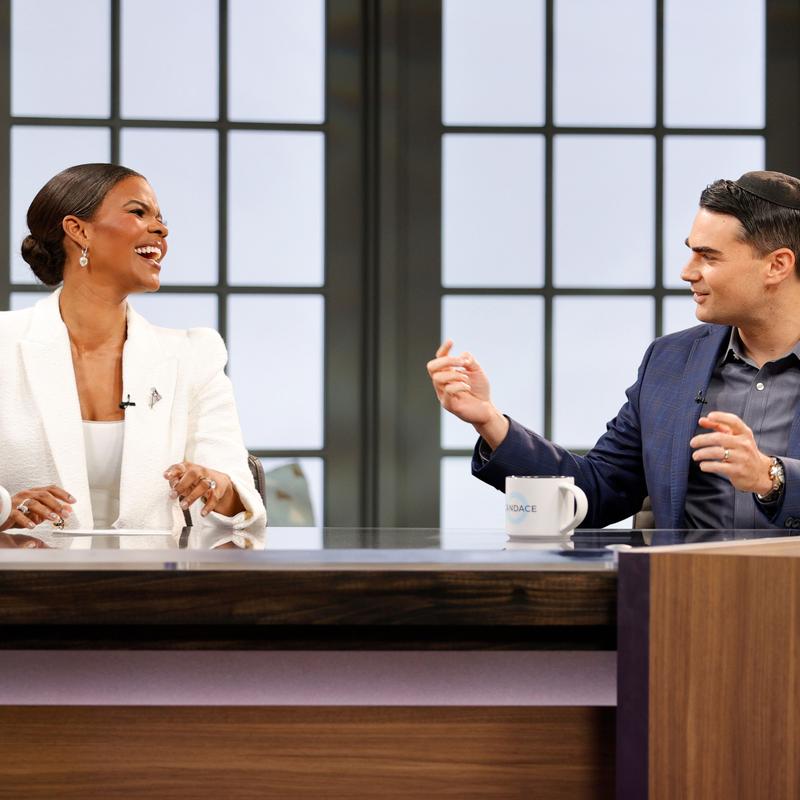
I thought Ben was a really good example because he's been on this tear recently. One of them, I think, is actually really righteous in a lot of ways about the rise of a kind of influencer class that takes a conspiracist, antisemitic view of the entire world. He focuses on Tucker Carlson, on Nick Fuentes, and on Candace Owens, who are three of the right's biggest personalities in podcast world, and I think his critiques of all of them are right.
The problem is that Ben actually created some of this, and very specifically, he hired Candace Owens. In the late 2010s, Candace Owens was making a name for herself as a right-wing provocateur. She'd already said a bunch of pretty extreme things. In 2020, for instance, she claimed that Bill Gates was doing secret experiments on people in Africa, and then said at one point that the problem with Hitler was basically that he tried to do stuff outside of his borders, which is ignoring the whole killing German Jews en masse. In a New Yorker interview recently, he says that he actually liked most of the inflammatory stuff that she said back then.
Ben Shapiro: In 2021, what we saw was a fairly, I would say, mainstream conservative who said inflammatory things, obviously, and who had been telling us that she [crosstalk].
David Remnick: Inflammatory things that you liked?
Ben Shapiro: I would say most of them that I liked, some of them not as much.
Zack Beauchamp: That seems to be part of why he hired her. She got attention through saying inflammatory stuff.
Micah Loewinger: You're saying that Shapiro can't feign ignorance about Candace Owens's past flirtations with antisemitism and claim, oh, this is a new thing, because she has been saying antisemitic stuff all along.
Zack Beauchamp: Antisemitic, not quite. She's pushed in that direction, but not quite, but conspiracism, which is much of his current critique of her. He's really upset with Candace Owens, for example, for her dark insinuations that Erika Kirk was behind her husband's assassination, in league with Israel somehow.
Ben Shapiro: Candace Owens, as you may have heard me refer at the top of the show, is an evil, twisted human being. Now, the reason I say that today is because Candace has spent the last several months attacking the widow of Charlie Kirk, Erika Kirk.
Zack Beauchamp: Owens has always been a conspiracist. She's always been someone who pushes the boundaries in an extreme direction. Yet it's the insistent lack of self-reflection, of acting like they're all trying to find the guy who did this when he's wearing a hot dog suit, that really is at the core of this phenomenon.
Micah Loewinger: Let's talk about another hot dog man, Christopher Rufo.
Zack Beauchamp: Yes, another good example. Chris Rufo, if you're not familiar with him, is probably the leading right-wing activist on cultural issues. He's behind a lot of the push against DEI and against critical race theory, if you can remember that panic from a few years ago. He's very effective at pushing discourse to the right, and often plays very fast and loose with the facts in doing so.
For instance, he attempted to validate the lies about Haitians eating cats and dogs in 2024 during the campaign and wrote some long investigations claiming to find evidence of it that did really nothing of the kind. Rufo recently has been, like Shapiro, very upset about the rise of this sort of antisemitic conspiracist influencer class. I want to be clear, I think it's right for both of them to be upset about this. My concern is not with the substance of what they're saying, but the deeper logic that underpins it.
Earlier this year, when Joe Kent, who was a high-level counterterrorism official in the Trump administration, resigned, Rufo wrote a piece critiquing Kent's resignation letter, which was pretty out there. For instance, Kent describes the recent US counter-ISIS campaign as somehow being a war for Israel, which makes no sense whatsoever and very much smacks of antisemitic conspiracy theorizing, and Rufo was right to seize on that as a problem. Except in that very same piece where Rufo is bemoaning Kent's state of mind, he notes that he campaigned for Joe Kent when he ran for Congress.
Kent ran for Congress twice in 2022 and 2024 in Washington State, but Joe Kent was always this guy. Back then, he called Nick Fuentes for social media advice during his campaign. He hired a Proud Boy as a campaign consultant. He did an interview with a neo-Nazi podcaster. That's where he comes from. It's what his base was, and it's part of why he lost both of those elections to Congress in a conservative Washington district.
Micah Loewinger: It was beyond the pale even then.
Zack Beauchamp: Yes, yes, it's just too crazy. Yet it wasn't for Rufo.
Micah Loewinger: How much is this new tone from Christopher Rufo and Ben Shapiro a reaction to a genuine ratcheting up of bigotry and conspiracism, versus how much of it is just this sort of anxiety about the vibes in the MAGA movement right now, where it feels like it's not as fun as it was maybe during the campaign?
Zack Beauchamp: I think there's two interrelated strands here. One is a sense of failure, as you suggest. The Trump administration's not going well. At this point, that should be obvious to basically everybody. Trump's approval rating, I saw a poll where he was at 30% recently, which is astonishingly low, though that's not an average. Just one poll, but his numbers are really quite bad.
There's not any real policy accomplishments that you can point to and be like, "Look at this really impressive thing that they've done," and they're staring down the barrel of a really, really bad midterm. People are already starting to say that X other faction is responsible, because no one can say Trump is at fault for this. There's a certain level of infighting between people blaming each other for what is ultimately the result of the big guys' decisions.
The second part of it, I think, is a sense of a loss of control and an uncertain future. I do believe that both Ben and Chris are genuinely upset, but it's not just that it bothers them on a moral level. It's that the success of people like Carlson and Owens and Fuentes, and their ability to win an audience and get some supporters in the congressional GOP delegation, or at least people who are aligned with them broadly, is indicative of an inability of people like Rufo and Shapiro to be the gatekeepers in the conservative movement, to say, "Okay, we've come here, we've gotten to this point with Trump, but we're not going to go any further than that." That loss of power says something very troubling about the post-Trump future.
Micah Loewinger: I want to talk more about what this tells us about the GOP in 2028, but let's talk about another example, Joe Rogan. In your piece, you write about a recent episode of his podcast where he starts fretting over conspiracy theories about the Trump assassination attempt in Butler, Pennsylvania, during the 2024 campaign.
Zack Beauchamp: It's funny when you listen to this episode, Rogan gets very upset about the idea that anyone could believe that there was some kind of conspiracy involved in the Butler shooting. It's not clear exactly what about it that makes him upset about it. He seems to say it's dumb. Like, how could anyone who understands guns believe anything like this?
Joe Rogan: Then there's a photo of a bullet whizzing by his face. Anybody that thinks that that's staged is out of their fucking mind.
Zack Beauchamp: I'll grant him that. The problem is, within roughly a minute in the audio, he goes on to talk about how maybe the guy who tried to shoot Trump had been programmed by MKUltra, mind-controlled by the government?
Joe Rogan: Tim Burchett, who I had on the podcast, the congressman, he thinks that guy was some sort of an MKUltra-type deal. He says he thinks they still do that. He thinks someone's still doing that?
Podcaster: I've always thought that. I'm not trying to steal--
Zack Beauchamp: MKUltra was an old defunct program the government tried out during the Cold War to try to manipulate people's mental state.
Micah Loewinger: This is the famous LSD mind control operation.
Zack Beauchamp: Yes. Rogan is saying that maybe the remnants of this program programmed someone to try to want to shoot Trump. That is way dumber than thinking that the Butler assassination was staged. It's way crazier. Yet he seems to think there's some kind of smell test that this conspiracy theory passed that the Butler was staged by Trump 1 doesn't. I think what he's upset about, in this case, I'm reading between the lines here, is that people are starting to believe a conspiracy theory that is not Joe Rogan-approved, that does not fit with whatever his idiosyncratic view of the world is about what does and doesn't make sense on a gut level. As a result, he gets real mad.
Again, this goes back to the lack of control. It's that people are having unauthorized thoughts, which is funny because it's like how these people described their approach to the world. It's like, "Oh, the mainstream media won't let you think the kind of things that we are saying. We're telling you the truths that the man has hidden." Then all of a sudden, when there are "truths" that are being aired on social media or alternative platforms that they don't like, they get very upset about this.
Micah Loewinger: There's this kind of trope now of referring to Joe Rogan as speaking out against the Trump administration, as breaking with the Trump administration when it becomes too extreme. Last month, he said he didn't like the idea of the White House hosting an outside UFC event, and then he appeared on camera as an analyst at the event, so I guess he changed his mind.
Zack Beauchamp: [laughs]
Micah Loewinger: Many in the press like to use him to prove a point about how MAGA is contradictory, how Trump is failing at his agenda.
Zack Beauchamp: It just doesn't seem like he has any appetite for courting a sustained break with the White House. That would be difficult for him. I'm going to be a little mean here, but I think it's sort of warranted. Unless and until it becomes good business for Joe Rogan to break with Donald Trump, he's not going to do it.
Micah Loewinger: What about Mark Levin? You say he's a hot dog man. Who is he, and what has been his red line?
Zack Beauchamp: Mark Levin is an old-school talk radio host on the right who has a very long history of saying extremely provocative stuff and has been a hardline MAGA guy, really, really on board with what the Trump administration has said. If you listen to Mark Levin shows, it's just the most vitriolic, angry, over-the-top, mean, biting commentary on anyone who disagrees with him.
Micah Loewinger: He's got a Rush Limbaugh vibe to him.
Zack Beauchamp: Yes. When I first heard him, I thought he was Temu Rush Limbaugh, basically. Actually, when I first heard him, Temu didn't exist at that point. This is a long time ago, but now that's the language I would use today. You've got this sort of imitator. Then recently, he's on this radio show, and he's talking about how there's this new breed of Republican or conservative-aligned podcasters and influencers who make their money by just being crazier than anyone else. They do it for the financial incentives, and it's just like, "Have you listened to your own show?"
Mark Levin: I could kick Tucker Carlson's ass. He's not that smart.
Zack Beauchamp: Do you listen to yourself talk?
Mark Levin: I'm going to get into the gutter with these guys because that's where they are. I can't debate them. I'm not interested in debating them. I'm interested in exposing them. I said, and I'll see you all--
Zack Beauchamp: His show is not about trying to educate anybody. It's about trying to be an ideological extremist who castigates his opponents in the most aggressive possible terms. That's not trying to educate people. That's political infotainment. That's your whole thing. Now that somebody has figured out a direction to take it in that you don't like, that you don't approve of, you're very upset. It truly beggars belief that he could say this with a straight face.
Micah Loewinger: You start your piece with this quote from Representative Thomas Massie in 2017, who, describing Trump's rise, said that his supporters weren't voting for libertarian ideas. They were voting for the craziest son of a bitch in the race.
Zack Beauchamp: Yes, he was right. He knows it better than anybody at this point because he just lost his reelection bid to a Trump-backed candidate. This happened despite the fact that Massie had gone out there all the time, saying he voted with Trump 91% of the time. He didn't oppose Trump or really try to get in his way. He just bucked him on a few issues, like the Iran War and the Epstein stuff. He was really out front talking about Jeffrey Epstein and the files. Yet, he still lost because voters couldn't tolerate that kind of breaking with the president's agenda and anything that smacked of cooperation with the Democrats.
It seems like that's the logic on which the conservative political sphere operates. The base who determine primary outcomes are really interested in someone going further and further in a sort of anti-liberal, anti-norms direction. It's just not obvious where this process stops, and I don't think that media voices have the level of authority necessary to prevent or change the basic orientation of so many of these voters.
Micah Loewinger: When you're looking at 2028 and this scramble to succeed Trump and take the reins of MAGA or what's left of it, how does this thirst for transgression inform your understanding of the current players?
Zack Beauchamp: I think it means that the field is completely open. The truth is that Trump is this almost unique disciplining force on the conservative movement. Nobody has his charismatic authority with MAGA voters. That's what is holding this fractious group of people, many of whom really hate each other or have very, very different views of the world, together.
What happens afterwards, to me, is honestly a complete mystery. If the pattern holds that we've been seeing and that we've been talking about so far, the most logical next step would be ideological radicalization, would be the right going in an even more openly conspiratorial and bigoted direction, maybe nominating someone like Tucker Carlson for president, and that's possible.
Micah Loewinger: There have been rumors that he's positioning himself, but do you really think that he's going to make a bid, or is that just a media gossip narrative?
Zack Beauchamp: It's hard to say. He recently said that he's not a Republican anymore, that he can't vote for the Republican Party, which certainly seems like a dumb thing to say if you want to run for the Republican nomination.
Micah Loewinger: Or if you want to appeal to some kind of growing, disaffected, non-party-aligned voter base.
Zack Beauchamp: You got it. That's the other possibility, is this is actually just setting oneself up for being able to say in 2028, "I told you this was going to be a disaster. I was right. I can swoop in and come back and save the party." That's certainly something that he could do. I can't dismiss that out of hand, but it's not just him. It could be somebody like him who fits that general profile. That's one thing. That's one possibility.
Another is that basically MAGA infighting opens up the door to a return of the Republican establishment. This is like the reverse scenario of what happened in 2016 when there were 12 establishment-friendly candidates and Donald Trump, roughly. Trump won, in part, because the establishment guys all thought Trump was going to lose, and so spent a bunch of time fighting each other and no one person getting out of the race rather than competing against Trump.
You can imagine a version of that, in reverse, happening, that there are so many different MAGA voices claiming to be the true spokespeople for the movement that they end up getting in each other's way. There's somebody who's wearing a populist skin suit, but nonetheless really reflects pre-2016 Republican Party sensibilities. There are quite a number of those people in hiding in the GOP right now.
Micah Loewinger: Marco Rubio?
Zack Beauchamp: Marco Rubio would be a great candidate for this kind of thing. That depends on how much Rubio has authentically converted to MAGA. It's tough to say. Again, I don't have good enough sourcing in Rubio world to be able to say one way or another on that front, and there are arguments I could make both ways. He certainly would be a good candidate.
Then there's a third possibility, which I think is actually quite similar to what's going on in the Democratic Party right now, which is like a low-boil internal conflict forever. In the Democratic Party today, since Hillary Clinton's defeat, there's been no unifying narrative or story that has explained what the party stood for other than being against Trump. That's been enough to win one presidential election and be a very effective force in midterm elections, but it's not enough to establish a new identity for the party or an ideological narrative it wants to cohere around.
You've got a bunch of different factions. You've got moderates, you have people more focused on social issues and identity politics, you have the Bernie-type socialists, all sorts of different wings that you can talk about, and no one of them has been able to consolidate control or authority. I think that could happen in the Republican Party. You get a lot of different groups and different subgroups with different interests, and they fight each other in perpetuity over control and over individual elections, but no one contest is decisive, and so you have a GOP that's ideologically adrift for quite some time in the absence of Trump. I think that's a possibility too.
There may be something else, honestly, that I can't foresee. The situation is just so chaotic, and it's so clear that the people who want to control it don't have the power or authority to do so, and that Trump is the only one who does. Eventually, he has limits. He has to die at one point. He can't last forever, so we don't know. We just don't know. That's the ultimate lesson of all of this. The future of the Republican Party, which is one of the two most important actors in determining the future of the United States as a whole, is unclear. Our country's future is unclear.
[music]
Micah Loewinger: Zack, thank you very much.
Zack Beauchamp: Thank you.
Micah Loewinger: Zack Beauchamp is a senior correspondent at Vox covering the crisis of global democracy. Thanks for listening to the On the Media Midweek Podcast. If you want to hear more from us, just search On the Media on Instagram and TikTok, where Brooke and I are now posting videos which give you a sort of behind the scenes of the show. You can see clips from some of our interviews and hear us reflect on things that we're following in the news. Don't forget to tune into the big show on Friday. I'm Micah Loewinger.
Copyright © 2026 New York Public Radio. All rights reserved. Visit our website terms of use at www.wnyc.org for further information.
New York Public Radio transcripts are created on a rush deadline, often by contractors. This text may not be in its final form and may be updated or revised in the future. Accuracy and availability may vary. The authoritative record of New York Public Radio’s programming is the audio record.