
A Deadly ICE Shooting in Minnesota. Plus, Trump Plays King in Venezuela.
Brooke Gladstone: Minnesota had already made headlines after a MAGA YouTuber claimed widespread fraud in Somali run daycare centers.
Nick Shirley: This one's also generated nearly $3 million in the past three years. Let's see if there's any children.
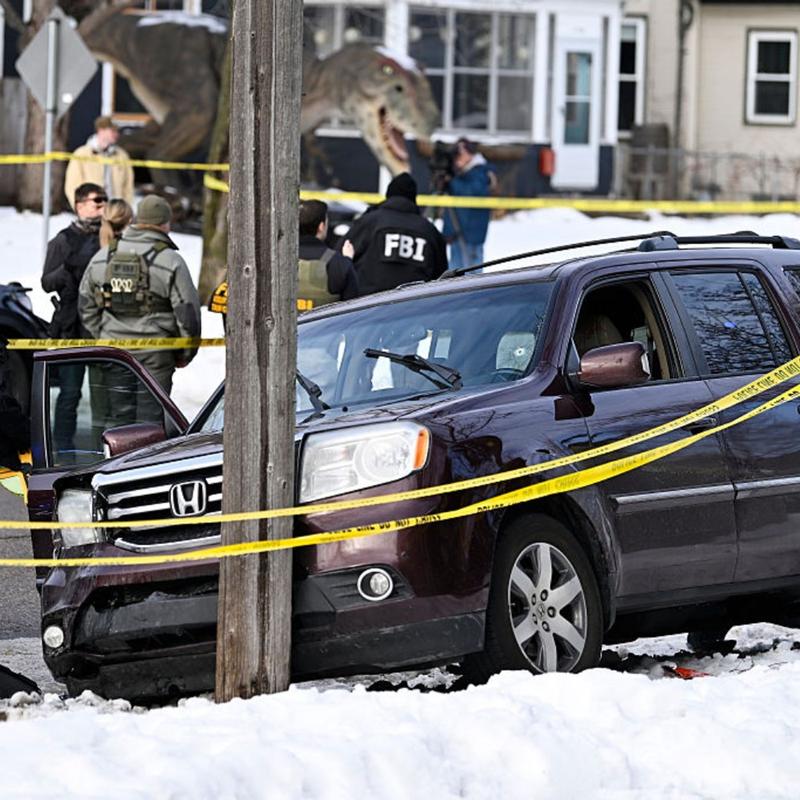
Micah Loewinger: Then Wednesday, an ICE agent shot an American citizen.
News clip: You shot her.
Brooke Gladstone: From WNYC in New York, this is On the Media. I'm Brooke Gladstone.
Micah Loewinger: I'm Micah Loewinger. Also on this week's show, the perils of reporting on the ground in Venezuela.
Rafael Osio CabricesYou can go to prison for a joke, for a tweet, for anything.
Brooke Gladstone: Plus, on foreign policy, Trump seems to be rolling back the clock.
Abe Newman: This is a story of kings, Louis XIV, "I am the state." It's not just corruption. This is a system where resources are being channeled into this insider elite group.
Micah Loewinger: It's all coming up after this.
Brooke Gladstone: From WNYC in New York, this is On the Media. I'm Brooke Gladstone.
Micah Loewinger: I'm Micah Loewinger.
News clip: Say her name.
News clip: The Minneapolis police chief says a woman was killed after being shot in the head by an ICE agent.
News clip: We have to give you a warning here. The video you're about to see is graphic. You'll see an ICE agent stopping a red SUV. One tries to open the car door. The driver reverses, and then pulls away.
News clip: There was an agent directly in front of her. From the video, it looks like at least two shots were fired by that agent. The woman's vehicle then crashes and she was pronounced dead at the hospital.
News clip: The victim has been identified as a 37-year-old. Her name is Renee Good. She was a US Citizen. City leaders say that she was a legal observer monitoring federal activity at the time. She was not the target of any ICE arrest.
News clip: She was on her way home after dropping off her six-year-old child Wednesday morning when this all happened.
Jacob Frey: They are already trying to spin this as an action of self-defense.
Micah Loewinger: Minneapolis Mayor Jacob Frey.
Jacob Frey: Having seen the video myself, I want to tell everybody directly, that is bull-- [beeps]. This was an agent recklessly using power that resulted in somebody dying.
Micah Loewinger: Early reports from Fox News, Minnesota Public Radio, NBC and ABC relied on a tired trope calling the killing a "ICE-involved shooting." Within a day, 404 Media, the BBC, New York Times, Bellingcat and Washington Post used verified cell phone footage, some from multiple angles, to conclude that the tires on the victim's car were clearly moving away from the officer when he began shooting her three times. Nevertheless--
News clip: The president is saying the woman driving the car was very disorderly, obstructing and resisting, who then violently willfully and viciously ran over the ICE officer.
News clip: People in position of power have already passed judgment.
Micah Loewinger: Minnesota Governor Tim Walz speaking in a press conference on Thursday.
Tim Walz: From the President to the Vice President to Kristi Noem have stood and told you things that are verifiably false. They have determined the character of a 37-year-old mom that they didn't even know.
Micah Loewinger: That's precisely what we heard from the MAGA media this week.
News clip: The woman who lost her life was a self-proclaimed poet from Colorado with pronouns in her bio. She was a disruptor, though she considered herself a legal observer. There's no evidence she had a law degree.
News clip: I'm tired of hearing, "This is tragic," that somebody lost their life. If the choice is between that lady and an ICE officer that wants to go home to their family just because they're doing their jobs, I want that officer to come out on the right side of this all day long.
News clip: I'm totally with you. I don't lose any sleep for this woman because she seemed crazy.
Micah Loewinger: Let's talk about how we got here. A day before the shooting, the White House announced an aggressive new push in Minneapolis St. Paul.
News clip: Long guns, armored trucks and the head of Homeland Security. 2,000 federal agents are flooding the Twin Cities in a serious show of force. The head of ICE calls it their largest immigration operation ever.
Micah Loewinger: Part of their justification.
Kristi Noem: This state has faced unprecedented immigration fraud.
Micah Loewinger: DHS Secretary Kristi Noem.
Kristi Noem: It's seen unprecedented benefit fraud. Individuals were allowed to come into this country and set up fake companies and fake nonprofits and divert billions of dollars away from American citizens and those vulnerable citizens who truly needed the services from those programs.
Micah Loewinger: She's referring to a video from 23-year-old MAGA content creator Nick Shirley, who went viral just after Christmas for claiming to uncover evidence of widespread fraud at Somali-run daycare centers in Minnesota.
Nick Shirley: In this video, we will down all of the fraud from start to finish from going to the fraudulent businesses and confronting the people who are making millions of dollars from the government.
David Hoch: What was this money spent on? … 1.26 million. What was that money spent?
News clip: There aren't any kids.
Nick Shirley: Answer the question, are there children? There's no children inside this building.
Micah Loewinger: Despite its dubious claims, or maybe because of them, the video has received some 139 million views on X thanks to big boosts from Elon Musk and Vice President JD Vance who wrote, "This dude has done far more useful journalism than any of the winners of the 2024 Pulitzer Prizes. Journalism? No. Useful. Very." Here's Vance in an Interview with Fox's Jesse Watters this week.
JD Vance: The Democrats have a little bit of a Somali problem. They've let it go.
Jesse Watters: America has a bit of a Somali problem.
JD Vance: Especially the Democrats in Minnesota.
Micah Loewinger: Simply put, the rabid national focus on this local story can be explained by racism and xenophobia. Like so many sticky narratives, a bit of truth can open the door for wild exaggeration and scapegoating. Fraud has been a perennial storyline for Minnesota leaders, investigators, and newsrooms for many years. It's also true that some Somali Americans have been implicated before, most famously in the prosecution of Feeding Our Families, a Minnesota nonprofit that fraudulently received over $240 million during Governor Tim Walz' tenure. This week, he decided to throw in the towel.
News clip: He is not going to run for reelection. This comes as pressure has been growing around this widening welfare fraud scandal. Now, Walz has not been accused of any wrongdoing, but it has been a growing political headache.
Micah Loewinger: To dig into the veracity of the claims that helped set this week's news in motion, I spoke to Jeffrey Meitrodt, a senior investigative reporter for The Minnesota Star Tribune. I began by asking him about Nick Shirley's main source, an activist named David Hoch, who takes Shirley to a series of daycare centers while making hyperbolic claims like this.
David Hoch: My opinion is that this is the worst fraud in human history. What is occurring in Minnesota and more specifically in the Twin Cities right now.
Jeffrey Meitrodt: He's something of a political gadfly. He described himself originally as a Republican, but then he seemed to lose faith in that party, created his own party, ran for governor, ran for attorney general, got very few votes, and he considers himself an independent whistleblower. He has now been fed a lot of information by Republican legislators here who have been looking at this as a significant campaign issue.
Micah Loewinger: The Intercept reported that Hoch posted on Instagram last year, "Every Somali in Minnesota is engaged in fraud. All of them." He also reportedly posted in November, "Even the Blacks have had enough of the demon Muslims." There's a healthy dollop of racism in this video.
Jeffrey Meitrodt: I think that's clear. Minnesota is the home to the largest Somali population in America. There's over 100,000 Somalis here. They're state legislators, they are policemen, they are teachers. To say that the vast majority or even all of them are criminals, it's just absurd.
Micah Loewinger: At one point, Nick Shirley says, "We're going to go confront these people. We're going to go to these daycare centers. We're going to see what's actually happening." Hoch says, "Okay, so we have to be careful because these people are very violent. They're exceptionally violent."
Jeffrey Meitrodt: Yes. It's like the notion is that there's Somali gangs roaming the streets of Minnesota just indiscriminately attacking people left and right and that the majority of the crime here, which is utter nonsense. Nothing of the sort is happening. This is like a fantasy world of white nationalism. It's just nuts.
Micah Loewinger: Give us some of the more local context. At one point in the video, we hear something to the effect of, "It's not racist or Islamophobic to investigate fraud. If white people were doing it, too, we would be focused on that as well." Why do you think they're focused on Somali businesses here?
Jeffrey Meitrodt: Fraud here has been a story for 10 years. The first charges involving Somali daycare operators were filed back in 2014. There were about 10 cases filed between 2014 and 2017. Then the Feeding Our Future case came along with the meals program. Again, that was mostly Somali-owned businesses that were involved in this. Now, we have programs that are helping both people with autism and homeless people who need housing stabilization services. Again, Somali business have been implicated in these cases. That sets the table for you to demonize the entire community.
Micah Loewinger: Let's just dig into some of the specific accusations in the video. Shirley and Hoch visited 10 different daycare centers, knocking on doors and trying to speak with anyone near the entrance. In some cases, when they visited a center, no one would respond or open the door. In others, there's awkward conversations sometimes with a language barrier where Shirley and Hoch keep asking, "Where are the kids? Where are the kids?" We never see any, although one center is credited with allowing them in. You co-reported a story with your colleague Deena Winter, who went to those same centers, and you collaborated on an article about her visits. Can you tell me about what you two found?
Jeffrey Meitrodt: Sure. Obviously we wanted to fact check this video. Deena, my colleague on the story, she went and she visited all 10 of the daycares. Half of them were either shut down or wouldn't let her in, and the other half did. When she went in the daycares that were open at that moment or at least welcoming visitors from the media, she saw what looked like very legitimate operations. These were not suburban looking daycares by any stretch of the imagination, but they were very functional. They had cribs, they had beautiful painted Disney characters on the walls. This wasn't something that somebody whipped together in 10 minutes to fake a state inspector or a newspaper reporter. They were filled with toys and filled with sleeping children.
Micah Loewinger: Yes. I want to play you some tape from two of the centers that both Nick Shirley and your colleague Deena Winter went to. First we have the Minnesota Childcare Center.
David Hoch: We're just wondering where the children are.
News clip: Where the children are?
David Hoch: Yes. Where are the children? It says you have 102 children here, and you got $2.66 million this year in funding and $2.5 million last year. We're just wondering where the kids are.
News clip: Can I ask who are you?
Nick Shirley: My name is Nick Shirley.
News clip: Nick Shirley.
News clip: Which department [unintelligible 00:12:05]
News clip: That is harassment.
Nick Shirley: We are from ourselves. Hello. We'd like to ask where the money's going. Look at that. Shut us down.
Micah Loewinger: Tell me about the Minnesota Childcare Center. What did you see there?
Jeffrey Meitrodt: We saw dozens of children. There were three rooms full of school-aged children sitting there coloring, reading books and doing everything you normally expect in a daycare operation. The idea that there were no kids here is just crazy. This specific daycare, it's been licensed since 2015. It has 62 violations. It's been routinely inspected every six months by the state.
Micah Loewinger: 62 violations? For what?
Jeffrey Meitrodt: Paperwork violations, not doing background checks on employees that were required. Nothing about fraud. They have had some problems. A lot of these centers have had violations as well as most other daycare operations in the state of Minnesota. A lot of these operations owned by Somali business people have struggled in some cases to understand the regulatory culture here and what they're supposed to do to satisfy all these various state regulations. Minnesota, often described as a nanny state, really, in a sense, makes it tough for daycare operators because they got to follow all kinds of regulations to document everything that they're doing, how they're doing it. That's a high bar for folks that struggle with English, maybe new to this country, have set up these daycares to help other Somali families actually show up for work and gain employment. They rack up violations. Actually, that doesn't make them criminals.
Micah Loewinger: You said earlier that some of these places don't look like suburban daycares. In other words, in the video, they look like these are very urban buildings. They may not look to viewers like the daycares they're used to seeing where they live.
Jeffrey Meitrodt: People could be predisposed to believe these allegations because they look at that and they're thinking, "Gee, that doesn't look like the daycare center I dropped my kids off to," where they've got a gymnasium outside and a white picket fence, and there's kids all over the place. It's the middle of winter, so you're not going to see any kids outside playing. If they were, they're probably in the park. That's about a block and a half down the road, which again, is not going to show up in your video. A lot of these folks that own these centers, they're getting space where they can afford it.
Micah Loewinger: Let's talk about another daycare center that Deena visited. ABC Learning Center. Here's what Shirley had to say when he visited.
Nick Shirley: All the windows are blacked out.
David Hoch: This facility is licensed for 40 children. I've come by this place a hundred times. I've never seen a child here ever.
Nick Shirley: I knocked on the door, and to my surprise, somebody actually answered the door. Hello, can we speak? I would like to check a child in the daycare. Can I speak to a manager? Where can I get paperwork to file for my son? I wanted to put my son Joey in daycare. After a few questions, the lady went silent. Looks like little Joey Shirley ain't going to daycare.
Jeffrey Meitrodt: There were 30 kids there on the inside, and not perhaps on the outside, but on the inside, it looked like a very nice, well-maintained daycare center where they're licensed for 40 kids. There were 30 there. They're not at capacity, but that's a pretty good group of kids. We even talked to some of the neighbors who said, "We've been seeing kids come in here for years." The idea that it's a fraudulent operation actually made them mad.
Micah Loewinger: Minnesota's CBS local affiliate was given access to evidence that purportedly proves that kids were in fact inside the daycare center the day Shirley came snooping around.
News clip: Hassan showed us security footage from the same day Shirley was here. According to the timestamps in the videos, this woman takes a young child into the center at around 9:00 AM that day, about three hours before Shirley arrives at the door closer to the street. Within the hour after Shirley leaves, a woman arrives at the other door with a stroller. A larger family heads inside.
Micah Loewinger: We see this kind of ticker just going up after every daycare center of fraud. By the end, it's over $110 million in funding. It appears to be just the amount of federal funds that goes to each of the daycare centers they visited over a multi-year period. Help break down those numbers and how they might stack up against what we actually know about fraud?
Jeffrey Meitrodt: The 10 daycares that were the subject of this "documentary," they received a total of $17 million in the most recent fiscal year. The idea of getting to $100 million or so over a five-year period, the math makes sense. What you're claiming then is that every single dollar paid to these daycare centers is fraud. My guess is that at the end of the day, if the Feds do actually investigate, they could discover that there was some over-billing, that maybe they claimed the children received services on days that they didn't show up. However, that's a big if, we don't even know that the Feds are investigating these specific daycares at this point.
Micah Loewinger: Though they've claimed investigations will follow because of the video.
Jeffrey Meitrodt: Right. Again, the Feds are generally pretty limited on what they can say about targets of an ongoing investigation. Joe Thompson, the assistant US attorney here who has talked about this $9 billion number, he has not come out and accused any other specific operations of any of these social service programs of fraud or suspected fraud. He's merely talked about the whole landscape and what those fraud amounts could be. He and his colleagues have not come on and said, "We do agree that these 10 daycares look suspicious, and we're investigating them." They have not gone that far.
The state has, however, said that four of them are now under investigation. They're not telling us what they're under investigation for, but they could make a criminal referral. They could end up just simply documenting more violations, or they could discover overbilling. We really don't know where that's going to go.
Micah Loewinger: The Minnesota Department of Children, Youth and Families did compliance checks on all of the childcare centers in the video and found they were, "operating as expected," yet local outlets have reported that some Somali childcare providers have received harassing phone calls and at least in one case have been vandalized and broken into and had records stolen. What have you seen?
Jeffrey Meitrodt: I'm telling you, there's a lot of fear out there right now. This video has resulted in a lot of hate being directed at Somali daycare operators. Even the ones that aren't in this video have been getting death threats. They feel like they're targets. I talked to one attorney who represents several Somali daycares. He said there have been hundreds of death threats leveled at his clients, and they're terrified.
Micah Loewinger: News of Renee Goode's killing broke after we spoke with Jeffrey Meitrodt early Wednesday. On Friday, I called him back up. What have your last 48 hours been like?
Jeffrey Meitrodt: We feel like our city's been turned upside down. There are ICE agents everywhere, and people are afraid. The events are being canceled. Schools has been canceled. We just feel like we're a city under siege.
Micah Loewinger: What connection, if any, do you see between Nick Shirley's video and the events that have since transpired?
Jeffrey Meitrodt: I see this as almost an outgrowth of the tension that has been growing between the state and federal authorities. We have been under attack now for weeks by the President [unintelligible 00:19:51]. There has been a slow ramping up of ICE activity over this period, clashes with protesters. A lot of people felt like an incident like this was inevitable because it's like you're poking the bear. Sooner or later, something bad's going to happen when federal authorities are, in a sense, over-muscling local authorities, shoving their way into places, taking actions without any real reason. It's not like the city was having some kind of crisis that we needed help with the federal authorities. They're creating the crisis.
Micah Loewinger: Why do you think they sent ICE there?
Jeffrey Meitrodt: To punish Minnesota. We've had a governor who ran against the president. A lot of bad blood between them. It's hard not to look at this as some kind of retribution example setting like, "This is what happens to states that don't toe the line."
Micah Loewinger: What would you like listeners to keep in mind as they're following coverage of the fallout from the shooting, coverage of the protests and so on?
Jeffrey Meitrodt: This is not only in Minnesota situation. ICE is going to be expanding its presence around the country. People should be looking at Minnesota and not thinking of this as something that's happening in isolation. They should be thinking about, "Gee, I wonder who's next, and could it be us?"
Micah Loewinger: Jeffrey, thanks for doing this work.
Jeffrey Meitrodt: Thank you.
Micah Loewinger: Jeffrey Meitrodt is a senior investigative reporter for The Minnesota Star Tribune.
Brooke Gladstone: Coming up, wake up, babe. A new foreign misadventure just dropped.
Micah Loewinger: This is On the Media.
Brooke Gladstone: This is On the Media. I'm Brooke Gladstone.
Micah Loewinger: I'm Micah Loewinger. It's been about a week since President Donald Trump directed a violent raid on Caracas, bombing several military sites and capturing Venezuelan President Nicolas Maduro and his wife, Cilia Flores. When it comes to at least one of the motivations behind the raid, Trump can be counted on to say the quiet part out loud.
Jon Stewart: On what moral foundation will this conflict be framed?
Micah Loewinger: Jon Stewart on The Daily Show this week.
Jon Stewart: We're going to have presence in Venezuela as it pertains to oil, but.
President Donald Trump: We're going to get the oil flowing the way it should be.
Jon Stewart: Seems a little on the nose.
[laughter]
Jon Stewart: Oil, precious commodity, certainly, but not the reason a country formed 250 years ago on the ideas of liberty and self-determination would go into a country and snatch a man at night. There must be a slightly more noble pretense.
President Donald Trump: We're going to be taking out a tremendous amount of wealth out of the ground.
Micah Loewinger: Reuters this week reported that 100 people died during the raid, according to Venezuela's Interior Minister. Meanwhile, The New York Times observed that "Day-to-day life for many Venezuelans has worsened." To get a sense of the media environment there, I called up Rafael Osio Cabrices, the editor in chief of Caracas Chronicles, an independent media outlet covering Venezuela. After many years of working as a journalist in Venezuela, he now lives in Montreal, Canada. Rafael, welcome to the show.
Rafael Osio Cabrices: Thank you very much, Micah.
Micah Loewinger: You started your career in Caracas in 1994. Can you describe what it was like in the years before Hugo Chavez rose to power in 1999?
Rafael Osio Cabrices: Lots of radio stations, four big newspapers, four big TV stations, cable news. The governments, at the time, had tense relationships with media. They will pressure media, for instance, by reducing access to cheap dollars to import paper for newspapers or by sending tax inspectors to a TV station. That's it. Chavez, since his first electoral campaign, started to say media were lying.
Micah Loewinger: We're quite familiar with that in the United States these days as well.
Rafael Osio Cabrices: Yes, it's exactly the same as Trump. We started to experience that in. 1998.
Micah Loewinger: In 2002, the tension between the Chavez regime and the media reached a fever pitch.
Rafael Osio Cabrices: In April 2002, there was a protest wave that ended up with a coup against Chavez. He lost power for about 48 hours, and when he recovered power and was reinstalled by the military, everything changed. We, the journalists, lost access to official sources from that moment on, and we were told that our hands were soaked in blood, and we are CIA agents and fascists and terrorists.
Micah Loewinger: You were working as a journalist and editor in Caracas until 2014, when you and your family fled to Miami and then Montreal. I actually read a piece that you wrote in The Washington Post about your decision to leave. Describe what led you to finally decide to leave.
Rafael Osio Cabrices: Yes, it was a very specific event. Chavez got away with getting the Constitution reformed in order to be elected term after term for life. When that happened, I told my wife, "I don't want to live in a dictatorship. You don't want either, so we have to leave." What we did not expect was that economic collapse that wiped out the society and produced that mass migration. That was a surprise for me.
Micah Loewinger: In that piece for The Washington Post about your experience leaving Venezuela and watching what happened to it from afar. You wrote you felt like Princess Leia watching her home planet, Alderaan, explode from a window of the Death Star.
Rafael Osio Cabrices: Imagine that almost all your friends or your family and places and institutions that gave shape to your life suddenly have to leave or cease to exist. To this point, almost all my family left Venezuela, almost all my friends and many, many things that I took for granted during my whole life disappeared. The sensation in that year of 2014 was that we were living in Alderaan and our planet exploded, and we were now trying to survive, each one of us a fragment of our world, floating in space.
Micah Loewinger: Tell me about the media ecosystem in Venezuela now. Where are Venezuelans getting their information, particularly about the aftermath of the US attack on Caracas and the capture of Maduro?
Rafael Osio Cabrices: Mostly WhatsApp and social media, because independent digital media who can tell the truth is blocked in Venezuela. With legacy media wiped out or reduced to a tiny expression with no resources, it's an environment which is perfect to use misinformation as a weapon to sabotage any attempt of society to organize itself and to fight for democracy.
Micah Loewinger: The government has issued a new decree earlier this week, effectively criminalizing any sort of celebration or support of the attack from the US. Tell me a little bit about what that looks like.
Rafael Osio Cabrices: If you have in your cell phone a meme of Maduro in shackles in the New York jail and some police officer or colectivo, which is paramilitary, stop you in the street and see that picture in your phone or a message or a conversation with a journalist, you can be thrown to jail and sentenced the same day to 20 years of prison. You can go to prison for a joke, for a tweet, for anything. People have no rights.
Micah Loewinger: How is state media covering or explaining the US attack? What are the majority of Venezuelans seeing when they scroll on their phones or turn on the TV?
Rafael Osio Cabrices: Micah, that's a tricky question because things are changing and the state media is sending contradictory signals because the power landscape is changing. We can see that the patriotic rhetoric against US is the same. Delcy Rodríguez, the interim president, is talking about following the example of liberator Simon Bolivar and defend the fatherland, et cetera. At the same time, public oil company PDVSA is announcing that they are doing business with the US in the terms that Donald Trump has dictated.
Micah Loewinger: It's my understanding that one of the common narratives is that, "Look, this is exactly what Chavez warned us about. It's the imperialist Americans invading Venezuela to take our oil." They're saying that, and then at the same time, the state oil company is capitulating and agreeing to do business with American companies.
Rafael Osio Cabrices: Yes, but that depends where are you watching? If you are an old Chavista supporter, 75 years old, in the countryside, watching the Venezolana de Televisión, which is the public TV station, you are watching endless footage of Chavez and Maduro and propaganda, propaganda, propaganda, propaganda. If that same person doesn't look the PDVSA's Instagram account today, that person won't find that statement by PDVSA saying, "We are doing business with the US, and we are selling our oil to the US."
Micah Loewinger: I see.
Rafael Osio Cabrices: The state terror apparatus is very, very efficient with social media, and they design and implement campaigns to induce terror in the population, as they did just after stealing the election in 2024 and using things like Chucky from the horror movies.
Micah Loewinger: The killer doll?
Rafael Osio Cabrices: Yes, the killer doll. To say, "Don't make ideas because the big brother of the Bolivarian Revolution is watching you all the time."
Micah Loewinger: What kind of impact do you think these state-sanctioned media narratives are having on the general public sentiments towards the United States?
Rafael Osio Cabrices: No effect.
Micah Loewinger: You don't think the propaganda is working right now, is that what you're saying?
Rafael Osio Cabrices: No, the propaganda ceased to work years ago. Except for that 15%, 20% of the population who is Chavista right now. The rest of the population does not believe a word that the government will say. Those years of real hegemony of the Chavista thought and propaganda ended years ago with Hugo Chavez.
Micah Loewinger: In Caracas Chronicles, you've written about what you say is misleading language that some international press have been spreading in their attempts to debunk Trump's rhetoric. One line that we hear from international media is that what Trump is after is Venezuela's natural resources. You say that's true, kind of not.
Rafael Osio Cabrices: I can dispute that fact that Trump want our oil because he is the first one to admit it.
Micah Loewinger: He's being as clear as he can be.
Rafael Osio Cabrices: Yes. There's a lot of technical details. We have another piece on that on Caracas Chronicles with an oil expert, which is Francisco Monaldi, professor in Rice University in Texas, who says that it's disputable to what point the US needs Venezuelan oil, because the Venezuelan oil is extra heavy and it's difficult to extract and to use in the modern oil mills. The oil industry is in a very dismal state in Venezuela and a very huge lot of money is needed to bring that industry back.
Micah Loewinger: Another narrative that you take issue with is that, "Venezuela is irrelevant in drug trafficking."
Rafael Osio Cabrices: Venezuela is not irrelevant in cocaine traffic, but most cocaine coming out from Venezuela, which is mostly produced in Colombia and goes through Venezuela, goes to Africa and Europe and the Caribbean, not the US. Venezuela does not produce or export fentanyl. Fentanyl comes into the US From Mexico.
Micah Loewinger: You're saying that sometimes, in an effort to debunk Trump, some of his critics will go so far as to deny-
Rafael Osio Cabrices: Everything.
Micah Loewinger: -of drug trafficking in Venezuela, which, as you say, is clearly supported by the Maduro regime.
Rafael Osio Cabrices: Yes. For the Venezuelan point of view, we saw as our country was kidnapped by drug traffickers. Drugs are everywhere, and the entire state is corrupted by the drug business.
Micah Loewinger: You're skeptical of the fentanyl narrative. You're skeptical of the oil narrative. Why then do you think Donald Trump is now so fixated on Venezuela?
Rafael Osio Cabrices: It's not because he wants our democracy back. It's not because he wants Maria Corina Machado and Edmundo Gonzalez take the helm of our government.
Micah Loewinger: The opposition party which has expressed fealty to him.
Rafael Osio Cabrices: Exactly. It seems to be because their golf pals convince him of doing business in Venezuela and at the same time expel Russia, China, and Iran off the American hemisphere and to resuscitate the Monroe Doctrine from the past because America must be great again. It's a combination of all that.
Micah Loewinger: As listeners are encountering news and analysis and narratives about Venezuela and the experience of the people there and the unfolding political situation, what do you want them to keep in mind? You said that sometimes it feels like people talk about Venezuela like it's part of some kind of board game.
Rafael Osio Cabrices: Exactly. Like Stratego or Risk or Dungeons & Dragons. No, Venezuela is not part of a board game. It's a country with 28 million people living under a horrendous dictatorship. Today, there are many people organizing protests against the US Attack on Venezuela. Those people did not organize protests when Maduro stole the election. Why? It's very, very cool talking about imperialism and a new world order, et cetera, and talking about Venezuela as if you are playing a board game and not talking about the suffering of a nation who was unraveled by violence, poverty, and mass migration.
Micah Loewinger: Rafael Osio Cabrices is the editor in chief of Caracas Chronicles, an independent media outlet in Venezuela. He's currently based in Montreal. Rafael, this has been great. Thank you so much for your time and sharing your perspective.
Rafael Osio Cabrices: Thank you so much. Micah, thank you for your interest and for taking the time to talk with a Venezuelan about this.
Brooke Gladstone: Coming up, we need a new word to describe the Trump era foreign policy, and we found one.
Micah Loewinger: This is On the Media. This is On the Media. I'm Micah Loewinger.
Brooke Gladstone: I'm Brooke Gladstone. Following the capture of Venezuelan President Maduro, Katie Miller, wife of Trump adviser Stephen Miller, posted an ominous image of Greenland wrapped in a US flag to X. The caption, soon. Trump later said that, "The US does need Greenland." The Prime Minister of Denmark responded, "It makes absolutely no sense." US senators also scrambled to understand what really prompted the Trump administration to do what it did in Venezuela.
News clip: This is an insane plan. They are talking about stealing the Venezuelan oil at gunpoint for a period of time undefined as leverage to micromanage the country.
News clip: The military action against Venezuela is illegal, is harmful to US interests in the region, and is profoundly disrespectful to US troops.
News clip: People are just saying, "What the hell is going on? We need answers."
Abe Newman: It's really about a small group of elites using intervention to put themselves at the center of power to show other countries that they have to bend the knee.
Brooke Gladstone: That's political scientist and Georgetown professor Abe Newman, who with his co-author Stacey Goddard, coined a new term to clarify how Trump is reshaping international relations, neo-royalism.
Brooke Gladstone: Neo-royalism is when international affairs is driven not by national interests, but by a small group of elites. This is a story of kings, of Louis XIV, "I am the state." Historically, states did this all the time. You have what people might call gunboat diplomacy. The idea that you could just go and demand things. We really ended that after World War II. The rules-based order was premised on the idea that we should talk, not shoot. That's where Trump is really drawing a line and saying, "No, I'm not committed to these rules based systems."
He just withdrew from a whole host of new international organizations. Then people are grasping, "What's going to come next if it's not the rules based order? How's global politics going to work?"
Brooke Gladstone: Maybe this is paradoxically America First, but you call that a red herring, too.
Abe Newman: The closest thing the Trump administration gets to a security issue is something about drugs. There, again, Trump just pardoned the former president of Honduras, who literally had a quote, "My goal is to put drugs up the Gringos noses." It's not a coherent policy. I mean, it's hard to think about what is the nation going to get out of this or get out of acquiring Greenland. It would estrange us from one of our closest allies in NATO. That would not help us against China. It's not going to Help your average consumer. Similarly with the Venezuela case, there's a real concern that there'll be instability in Venezuela, which would result in more migration. I don't see any clear America First objective.
Brooke Gladstone: What about the oil?
Abe Newman: All the reporting says the major oil companies, they were not driving this intervention. In fact, they were surprised when it happened.
Brooke Gladstone: They weren't thrilled. They haven't committed to do anything yet.
Abe Newman: No, the oil companies are quite cautious. These are long-term investments that would be quite expensive. What's really crazy is the United States produces way more oil than Venezuela does. It's not addressing some immediate concern economically for an America First consumer perspective.
Brooke Gladstone: Who's the elite who wins if it isn't the oil companies?
Abe Newman: This is about court politics.
Ed Markey: Paul Singer-
Brooke Gladstone: This is Senator Ed Markey speaking.
Ed Markey: -one of the biggest contributors to Donald Trump and to Marco Rubio purchased Citgo, the American subsidiary of the Venezuelan state-owned oil company, just two months ago for $6 billion, which now looks like a Filene's Basement bargain.
Abe Newman: It's fortuitous timing for him because Citgo, they're one of the few people that can process this oil that comes out of Venezuela that is less easy to refine. The thing that's very interesting is the amount of money that would come out of this in the short term in barrels of oil sold. It's not going to be a remarkable amount for the US consumer, but it is going to flow into the hands of the Trump administration and particularly Donald Trump. At least his truths that he's been putting out say he will control something like 50 million barrels of oil that the government will immediately give him.
At market price, it's over $2 billion. This oil is not as good as US oil, so maybe it's half that. It's still about what a presidential campaign would cost. What our argument is is that. Everybody says, "This doesn't make any sense because of the oil." It doesn't make sense from a national interest stance. It definitely makes sense from the elite stance that Trump gets maybe a slush fund that he can use as patronage to enrich his selected inner circle.
Brooke Gladstone: This brings us to your term neo-royalism, which you say recalls pre-16th century dynastic systems which weren't based on any international law, but on a nation's relationship to a monarch and his clique.
Abe Newman: That's right. You see that most clearly, I think, in the example of conflicts with India. There's this remarkable fallout that happens in the fall between Trump and Modi. At least the New York Times reporting it's about the Nobel Peace Prize. Trump wants Modi to recognize him as solving the conflict with Pakistan. Modi, he's also a personalist ruler. He can't go home and say, "Oh, we have peace with Pakistan, and Trump solved it." It would be the end of his career. Modi resists, and in response, Trump then slaps really unprecedented tariffs on India.
It's another example of this creating status dominance in the international system, even when it can hurt economic relations, even when it hurts individuals. It's not about the citizens involved. It's about creating this kind of status differential and saying, "If you won't recognize me, then you're going to be punished."
Brooke Gladstone: That's another head-scratcher. Why is Trump so head up about the Nobel Peace Prize?
Abe Newman: The system can't be legitimated through rules. This is a system based on exceptionalism. The Nobel Peace Prize is a way for Trump to say, "Everybody recognizes me as this exceptional ruler." Trump goes to Korea, and what does Korea give him as a symbol of friendship? They give him a crown. We should never underestimate the power of symbols and practices and norms to shape what we're doing. I think that's what Trump is doing is he's changing what the practice of global politics is to shift us from this kind of rules-based order to one that's neo-royalism.
Brooke Gladstone: Where do the tariffs fit in?
Abe Newman: Basically, as a tithing mechanism, It's a way for Trump and the US Government to put demands on other countries and companies that they then have to figure out how to get out from under. How do they do that? They make concessions. They make either investment funds that get pledged to the US Government or companies that do something to get exemptions. We don't know what Apple did to get its exemption from the semiconductor tariffs, but we do know that they're contributing to the Trump ballroom. The logic, it's not, "Let's create a new equilibrium for trade." The squeeze is the point.
Brooke Gladstone: Trump and his ilk seem to embrace a certain gangster style. The FCC chief saying, "We can do this the easy way or the hard way." Practically anything Pete Hegseth says swaggeringly about the use of power because America has it and might makes right. The gangster metaphor also extends to policy. It's all about, "Hey, nice little country you got here, be a shame if anything happened to it."
Abe Newman: Trump is very selective in his coercion. He's not very selective in his threats. There are a lot of threats. What he really wants is for actors to bend the knee. If you think about the tariff negotiations, countries are throwing investment deals at him, companies. Apple is putting a gold iPhone on his desk. The Swiss bring gold bars. He just has to use a little bit of coercion to get quite a lot of return. The problem is most other actors, they're so used to living in this rules-based international order, they don't know what to do. What I'm worried about is that people will get normalized, that they'll start to just routinize how this kind of politics is going to work.
You had the Indonesian president, it was at a Gaza peace negotiation, caught on hot mic saying to Trump, "Oh, I'd like a meeting with Eric," Eric Trump. That is very concerning to me, this kind of complying before there's even a request.
Brooke Gladstone: We should state that this kind of self-dealing is against the law. It's just no one is doing anything about it.
Abe Newman: I think one of the things that's difficult is there is the immunity decision for the President himself. It's very unclear when it's about the President. You also have a complicit Congress. One of the proposals floated recently is that the oil money from Venezuela would go into private bank accounts. It's just mind-boggling to me, the idea that the treasury would not be holding that money. Who are these banks? Which banks will benefit from being the salespeople of Venezuelan oil? Then Trump has said that he personally would control those pots of money.
Brooke Gladstone: That's very kingly.
Abe Newman: It is. It's like, "Hear, hear. You feel the treasure trove." Then it will be dispersed.
Brooke Gladstone: As I see fit. It's nice to just have a phrase that we can use because we've all seen the self-dealing. As an arm of foreign policy, I don't think that people have put it together quite so pithily before now.
Abe Newman: I also do want to stress for the listeners that it's not just corruption or crony capitalism, this is a different system where resources are being channeled into this insider elite group. Nobody would say, "Oh, Catherine the Great was corrupt," it was just a different set of principles that system worked on. When Qatar offered to give him a plane, Trump said, "If somebody offered you a plane, wouldn't you take it?"
Brooke Gladstone: This isn't about oil, this isn't about spheres of influence, this isn't about drugs in this case. None of it is really about anything except enabling Trump to amass enough resources that he can reward his friends and punish his enemies.
Abe Newman: It's about power. You have to be able to name it, and then you have to mount an alternative. That is both domestically. You had Chuck Schumer saying in response to the oil comments, "Republicans should vote against this." No, there needs to be a different vision. What is the vision for the US and the world that people can get behind? Then at the same time, globally, other actors have to stop debasing themselves to this logic. Whether that's the Swiss gold bars or the Korean crown, they need to offer an alternative as well.
Europe, for example, for so long has just stood in the shadows of the United States. It's deferred, but it needs to put something on offer and say, "We believe in this. The US can join us in openness, trade, equal rights amongst states, or if it wants to go its own way, we'll wait until it's ready to play." This idea that it needs to waffle and just minimize its losses, that leads everybody else in the world just fending for themselves.
Brooke Gladstone: With a flick of his pen, Trump can tariff them into an unstable situation at home. Can Europe afford not to waffle?
Abe Newman: Whether it's Europe or countries like China, they both have a lot to lose from this world. A difference between the two cases is China has basically said, "Look, we're not going to accept open bullying without saying there's going to be a cost involved." Europe has basically resisted that. The result, unfortunately, Europe could then end up as a vassal, that they just take everything that Trump asks for, whether that's tariffs or Greenland.
Brooke Gladstone: Abe, thank you very much.
Abe Newman: Thanks, Brooke. This was such a great conversation.
Brooke Gladstone: Abe Newman is a political scientist and professor at Georgetown University and author of the book Underground Empire: How America Weaponized the World Economy.
Micah Loewinger: That's it for this week's show. On the Media is produced by Molly Rosen, Rebecca Clark-Callender, and Candice Wang. Travis Mannon is our video producer.
Brooke Gladstone: Our technical director is Jennifer Munson, with engineering from Jared Paul. Eloise Blondiau is our senior producer, and our executive producer is Katya Rogers. On the Media is a production of WNYC. I'm Brooke Gladstone.
Micah Loewinger: I'm Micah Loewinger.
[00:50:28] [END OF AUDIO]
Copyright © 2026 New York Public Radio. All rights reserved. Visit our website terms of use at www.wnyc.org for further information.
New York Public Radio transcripts are created on a rush deadline, often by contractors. This text may not be in its final form and may be updated or revised in the future. Accuracy and availability may vary. The authoritative record of New York Public Radio’s programming is the audio record.