
#5036, Phasing
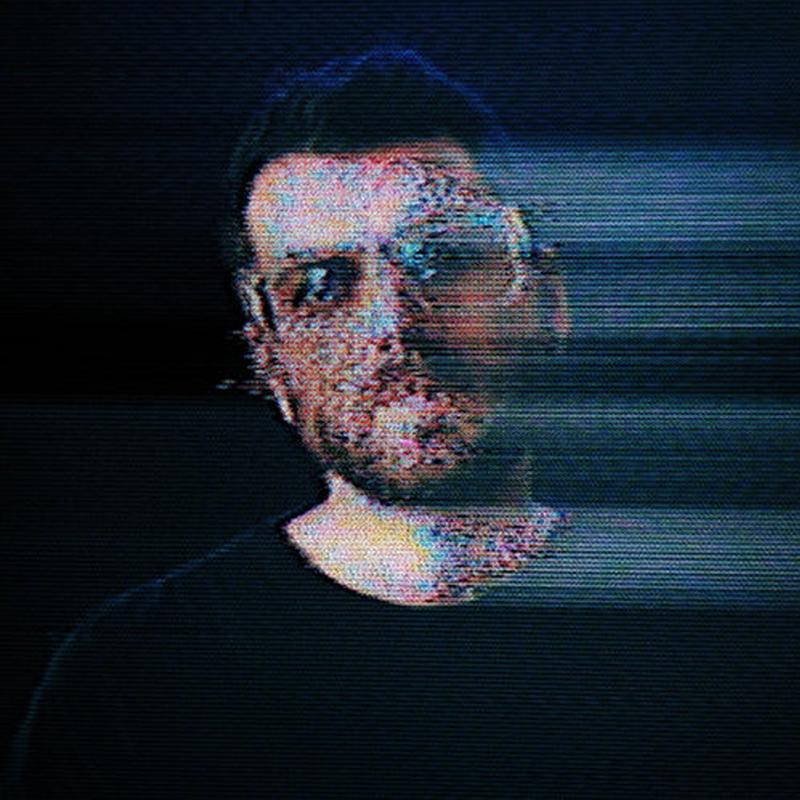
( courtesy of the artist / Bandcamp )
John Schaefer: You're listening to New Sounds, on-demand streaming audio, available when you want via newsounds.org. We're also on every day at 9 AM and 6 PM on the 24.7 New Sounds stream, available via the WQXR app. [pause 00:00:17]
[music]
John Schaefer: This may sound like some avant-garde form of techno music, but it's not. Composer Joshua Fried describes this piece, Phse 4, as music once removed. Basically, what he does is he creates little loops of sound and lets them run under a device known as an audio gate. Actually, several of these audio gates. Now, they've been around for a while. Steve Reich used a gate in some of his early works in the '70s. Basically, it's a device where you flip a switch, and the gate opens, and you hear what's happening behind it. When the gate closes again, you don't hear that sound anymore.
Joshua Fried here, and his piece Phse 4 uses these audio gates to create a pulse. Then the loops behind them start to drift, and things begin to go in and out of phase with each other. You get these really unusual rhythm patterns that you'd probably never be able to come up with otherwise. The pulse, the groove, is still there because the gates are still opening and closing in their regular pulsing patterns. I'm John Schaefer, and on this edition of New Sounds, we will hear a series of works built around this idea of phasing. We'll hear music from the artists known as Blanck Mass, Evan Chapman, the pianist Kelly Moran and her piece called Butterfly Phase, Dan Deacon's Horn Phase, and a lot more.
Before we get to all of that phasing, let's talk a little bit about those audio gates, because it just sounds very mechanistic. You flip a switch, the gate opens, you hear what's happening behind it. Before we got into this phase music, Joshua Fried came up with a really inventive way to use audio gates. He called them musical shoes. They were exactly what you're thinking. Men's shoes turned upside down and mounted on music stands so that you would hit the soles of the shoes with drumsticks. Built into the soles was the trigger for the audio gates.
Whatever was happening behind the gate would be heard whenever he struck one of the shoes with his drumsticks. In May of 1990, Joshua Fried brought his musical shoes into our studio along with the veteran synthesizer player and composer Linda Fisher, who was one of the founding members of the groundbreaking Mother Mallard band in the 1970s live electronic ensemble. The two of them did a live performance right here in our studio of a piece called Big Mouth, which featured lots of loops taken from old cartoons. As Joshua would drum on his musical shoes, he would trigger those sounds or allow you to hear those sounds in this very rhythmic way.
It is a really fun piece, and if you listen closely, you will hear the striking of the drumsticks on the soles of the shoes. You'll also be hearing all these little clips that get triggered when that happens. Linda Fisher is the composer of the piece called Big Mouth, for reasons that will become obvious. Joshua Fried plays his musical shoes live in our studio back in May of 1990.
[music]
John Schaefer: Linda Fisher and Joshua Fried playing the musical shoes live in our studio on an edition of New Sounds that we broadcast back in May of 1990. Big Mouth is the name of the piece written by Linda Fisher, but written for the musical shoes that Joshua Fried had invented. Again, these are regular men's shoes, pretty big ones, like size 12 or something, because mounted in the soles are the triggers for these noise gates, these audio gates. You hit the sole of a shoe with a drumstick and the gate opens, and you hear what's happening behind it.
What's happening behind all of those gates are these excerpts from old cartoons. There's a little bit of live keyboard playing by Linda Fisher as well, but mostly you're hearing the shoes. You're hearing the audio gates opening to reveal the silliness that ultimately ends up being not so silly after all. A piece that makes a subtle statement about mental health and how we view people who have mental health issues. Big Mouth, the name of that work from Linda Fisher and Joshua Fried. Now, as I say, that was 1990. The technology of these audio gates has progressed since then.
Joshua Fried's recent piece called Phse 4 takes a whole bunch of loops of sounds that he has made himself and puts them underneath a battery of these audio gates, the current version of them. In the piece called Phse 4, those loops underneath the gates begin to drift as the piece goes along. It's a 20-minute-long piece, but Joshua has kindly done a 7- minute edit of Phse 4, which is what we're going to hear. You'll start off by hearing some very rhythmic groove-based music. The groove will stay, but the rhythms will become fractured as the loops go in and out of phase with each other. Hence the title Phse 4. Skipping ahead many years from that earlier performance that we just heard, here is Joshua Fried with his Phse 4 edit.
[music]
John Schaefer: That is music by Joshua Fried. His piece called Phse 4. Phase, spelled without an A, so P-H-S-E 4. That is the edited version, the 7-minute version of the 20-minute original that Joshua has done, in which a series of noise gates open and close in a steady rhythmic groove, while the sounds underneath those gates that you get to hear, when those gates are open, begin to go in and out of phase with each other. It's a really fascinating exercise in warping rhythm and perhaps our sense of time. There are these odd artifacts, almost like melodies, that pop up from the interaction of these different loops as they go in and out of phase with each other.
The idea of phasing lies at the heart of all of the music that we'll be hearing for the rest of this edition of New Sounds. In Kelly Moran's hands, the phasing has a fragile beauty to it. In the hands of Evan Chapman, it becomes the sound of things falling apart. Stay with us for both of those and much more. I'm John Schaefer, and you're listening to New Sounds.
[pause 00:23:21]
[music]
John Schaefer: All of these New Sounds programs are available for on-demand listening at newsounds.org. We give every program a handy program number to make it easy to find. This is New Sounds number 5036. If you're elsewhere on the web and want to hear the show, just type into your browser New Sounds 5036, and you will get this program of music that goes in and out of phase. The simplest demonstration I can think of for this is Steve Reich's piece Clapping Music, which consists of two people clapping the same pattern at the same time.
Then, when it comes around again, one of the clappers moves one beat away from the other. Each time that happens, the music, which is otherwise very simple, totally changes.
Here's a recording of Clapping Music by the French pianist Pierre-Laurent Aimard, doing both parts from his album African Rhythms, which also features music of the Aka pygmies of Central Africa. Here is just some of his performance of Clapping Music, just so you can see what happens when very simple rhythmic patterns move in and out of phase with each other.
[music]
John Schaefer: All right, that's a bit of Clapping Music by Steve Reich, played by the pianist Pierre-Laurent Aimard. No piano there, just two layers of him doing this very simple rhythmic pattern. There's almost nothing to the piece. It's one repeating pattern going in and out of phase with itself, and that produces this ever shifting web of rhythms that you hear. Now, if you can get that kind of complexity from something so simple, imagine what you can do if, say, you have a whole arsenal of electronic keyboards at your disposal, as the artist known as Blanck Mass does.
Blanck, spelled B-L-A-N-C-K. This is the work of the British musician Benjamin John Power, and he has connections to the rock world. There's a sort of industrial post-rock sound to some of his music. In 2021, he put out this piece called Phase I. The piece Phase I, it's one big long piece, but it seems to divide itself neatly into sections. We'll hear the opening section of Phase I by Blanck. Then we'll hear the American musician Evan Chapman and his piece called Windows. In a nod to Steve Reich, Chapman, who is a percussionist, plays two different drum kits during the course of this piece, which otherwise is built around electronics and drones.
The drum kits go in and out of phase with each other, leading to a thunderous, dramatic, and possibly ominous-sounding end. That piece Windows by Evan Chapman follows this piece, the opening excerpt of Phase I by the British artist known as Blanck Mass.
[music]
John Schaefer: Percussionist and composer Evan Chapman from, I believe, Philadelphia, and a piece called Windows, which features all kinds of droning and electronic sounds. The second half of the piece, the thundering noise of two drum sets going in and out of phase with each other. Prior to that, we heard the British artist who records as Blanck Mass, Benjamin John Power is his name. As Blanck Mass, he put out an album in 2021 called In Ferneaux, and that piece is on it called Phase I. We heard the opening section of that work. Again, on this edition of New Sounds, all of the music is revolving around this idea of phasing, so similar or identical lines of sound moving in and out of phase with each other.
Now, those two pieces, Blanck Mass and Evan Chapman, have a dramatic, dark quality to them at times. Let's change things up a bit with this next work by Kelly Moran. It's called Butterfly Phase, and it has a very delicate sound. It's basically a duet between Kelly Moran, the pianist, and her piano, which is a Yamaha Disklavier. A modern computerized version or digital version of the old player piano. This gives Kelly the opportunity to play a melody that's long and sinuous. Feed it into the Disklavier, and it will then play it back for her while she plays her own part that can go in and out of phase with it. Here is Kelly Moran and her piece called Butterfly Phase.
[music]
John Schaefer: That is Kelly Moran and her Yamaha Disklavier, a digital player piano. Two lines of music coming out of one instrument. Kelly Moran, playing her Butterfly Phase from an album called Moves in the Field. Still to come, we have some phase-based pieces from electronic artist Dan Deacon and the French-born, American-based bass player and composer Florent Ghys. Stay with us for that as we continue with New Sounds.
[pause 00:46:55]
[music]
John Schaefer: Check us out online at newsounds.org. In addition to the programs themselves, there are the accompanying playlists, which obviously will give you titles, spellings of the various names, et cetera, and our soundcheck archives, our twice weekly podcast of live performances and interviews here in the studio. Also, our 24/7 New Sounds radio stream, and there's a place to sign up for our free weekly newsletter that will keep you up to date on what we're doing. That's at newsounds.org. Let's listen to two more phase-based pieces.
Horn Phase is a work by Dan Deacon, who is not a horn player.
He's an electronic composer and musician. In the past, we've heard works of his that pay pretty obvious tribute to people like Terry Riley and Steve Reich. Horn Phase uses some of that Steve Reich-style phasing technique, and so does the piece by Florent Ghys called Phase Parisienne. Ghys, spelled G-H-Y-S, is a bass player and composer but often includes lots of other sounds, including found sounds and field recordings in his music. In this piece called Phase Parisiennene, you hear the organic acoustic sound of the double bass in a piece that clearly owes a debt to some of the phase works of Steve Reich. First, here's Dan Deacon using his electronic keyboards to recreate a horn-like sound in his piece called Horn Phase.
[music]
John Schaefer: That is Florent Ghys, the French-born, American-based composer and double bass player, very cleverly incorporating a nod to Steve Reich's Clapping Music, which we heard earlier, into his piece called Phase Parisienne. Prior to that, Horn Phase by Dan Deacon, the Baltimore-based electronic musician and composer. We have been listening to music that features this phenomenon of sounds going in and out of phase with themselves in the past hour. I'm John Schaefer. Thanks for being with us for New Sounds.
[music]
Copyright © 2026 New York Public Radio. All rights reserved. Visit our website terms of use at www.wnyc.org for further information.
New York Public Radio transcripts are created on a rush deadline, often by contractors. This text may not be in its final form and may be updated or revised in the future. Accuracy and availability may vary. The authoritative record of New York Public Radio’s programming is the audio record.