
Rep. Espaillat on the Trump Indictments, 2024, and More
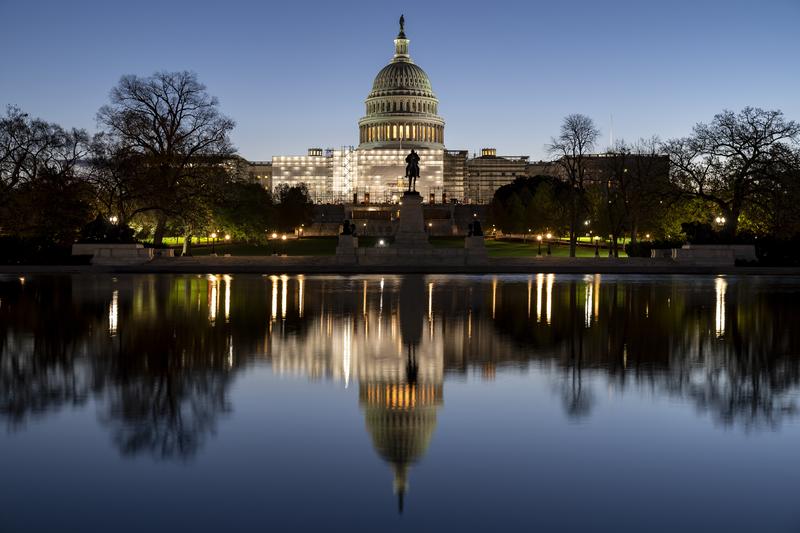
( J. Scott Applewhite / AP Photo )
[MUSIC]
Brian Lehrer: It's The Brian Lehrer Show on WNYC. Good morning, everyone. Here we are, again, just like yesterday, with lots of news to talk about, but also awaiting one of several big Supreme Court decisions that could come down any minute. They added today as a decision day, usually, it's just Thursdays, because the end of the term is approaching and some very consequential rulings have yet to be announced, including on affirmative action and college admissions, President Biden's student loan forgiveness program, whether state legislatures can gerrymander district lines and never be appealed on those in state court, and whether an artist who has a website design business, but objects to gay marriage can refuse to make wedding websites for gay couples who want to hire him. The Supreme Court releases decisions at ten o'clock on its decision days, so we're watching their feed, and we'll tell you what we know as soon as we know it.
Once again, today, we have Elie Mystal, justice correspondent for The Nation magazine waiting in the wings. He'll be on later if anything comes down. Right now we have Congressman Adriano Espaillat from Manhattan and the Bronx. We have other news to talk about, but if any news, any major Supreme Court decisions come in the next few minutes, we will get some first reactions from him.
Oh, okay. Well, we're getting some bad news here, which is not about a Supreme Court decision. Don't worry, it's not that bad. It's that Congressman Espaillat's office just let us know that he's going to be 10 minutes late. You know what that gives us an opportunity to do, folks, as I'm just learning this right now on the fly? We're going to have pure open phones. Screeners, be ready.
Here we are, on a Friday in June, awaiting what the Supreme Court does, but you can call us and raise any issue that you've been following, 212-433-WNYC. Opinions welcome here, your analysis welcome here, put something on the radar from your neighborhood or from another country that people may not be following, and we get to start that way for, I guess, about 10 minutes, 212-433-WNYC. We call it live radio, folks. Anything can happen, and you have to be ready and pivot. 212-433-WNYC. Be a columnist of the air. We'll give you one minute on any opinion, on anything.
Are you following the Trump indictment and want to talk about that? Are you following the asylum seekers in New York and want to talk about that? Are you following the air quality index, which you never followed before, but now you look at it every day just like you look at the temperature to see if you should go outside or wear a mask? 212-433-WNYC, 212-433-9692.
Let's see. We already are told that we have the first opinion from the Supreme Court. I'm reading from SCOTUS blog here, which is a news website that covers the Supreme Court. It is Lora, L-O-R-A, versus the United States. It is an opinion written by Justice Jackson, and it is unanimous. We will wait to see what Lora versus United States is and what decision they have made. When we have Congressman Espaillat besides whatever the Supreme Court does, we're going to talk about the Trump investigation and indictment. We're going to talk about investigating the investigators and the sort of tit-for-tat investigations that are going on right now.
Did you see, folks, that the very right-wing Congresswoman Lauren Boebert of Colorado has now introduced articles of impeachment against President Biden for what she calls his unconstitutional dereliction of duty at the southern border? Most of you in this listening area may think, "That's ridiculous. Joe Biden has not done anything impeachable," but I'm going to ask Congressman Espaillat once he gets here, does he think, given the Kevin McCarthy House Republican majority, and what they've shown themselves willing to do, are we about to see the spectacle of impeachment hearings, at very least, against President Biden?
Can they actually get all the Republicans, it's very close split, remember, in the House, so they would basically need all the Republicans to vote for impeaching Joe Biden, and actually send him to trial in the Senate like President Trump was twice? That's how intense, and I know to most of you groundless, this investigating, let's say trading investigations, dueling investigations has gotten. 212-433-WNYC. Let's see what issues you're gonna raise here in these few minutes.
Of course, as soon as I start taking phone calls, the Congressman's going to show up, but we're going to make him wait for a couple of minutes to give you a chance, a few of you since you've gone this far. Our lines are full. Thank you, listeners. You always show up. Elie in Brooklyn, you're on WNYC. Hi, Elie.
Elie: Hi. Good morning, Brian. Longtime listener, second-time caller. Yes, I'd like to discuss the Airbnb suit against the city. I find that the city has made a blanket decision to make it difficult for homeowners to use their homes as a means to generate income to support their families, as well as support mortgages and things of that nature, and done this in the means that target large industries that are running Airbnb hotels, but the little guys are adversely affected by this.
Yet, as someone who would like to host actual tenants, they have done nothing to address the issues with squatters or tenants that do not pay their rents on time. Yes, I think I just want to flag that as an issue that smaller homeowners, who have at least two to three family homes, do need a mechanism to support themselves.
Brian Lehrer: Yes, this is an issue, I would say, that has been on my radar, and it's on my list to do a segment on at some point. I'm glad you jumped my gun on that, and brought it up for our listeners. I think you framed it accurately in terms of the balance of interests that the city is trying to deal with here. Yes, they don't, in theory, want to deny someone like you the ability to make a little extra money, so you can pay your mortgage or whatever, but there's a housing shortage in the city. They don't want bigger landlords to use their buildings as in effect hotels, increasing the shortage of permanent housing in New York City just because some landlords might find it more profitable to turn their apartments into Airbnbs. Do you see a way that the law could walk that line, and help somebody like you without adding to the housing shortage, and therefore the unaffordability of housing in the city?
Elie: Yes. I see it as a means of, one, making it, I guess, more assessable in terms of not only providing an avenue for smaller homeowners to be able to support themselves, but also, I think my major fears, as many of my neighbors have discussed about their issues with having full-time tenants, is the fact that the city has done nothing to address tenants who do not pay their rent on time, and they basically let these people stay. Don't get me wrong [crosstalk]--
Brian Lehrer: With the eviction moratorium having expired after the pandemic emergency, you have the right. Even under the proposed Good Cause Eviction law, which failed in Albany, but even if it passed, it would still be considered a good cause for a landlord if a tenant isn't paying rent. How is it, in your experience, that they get to stay?
Elie: Well, honestly, I just bought my house last year. My family have homes close to me in the area. When my brother bought his home two years ago, there was a tenant living there for about a year that did not pay rent. The city makes it so much more accessible for those people to go through the process, and extends it for a considerable amount of time while you're still having to pay the mortgage. There's no safeguard for homeowners to be able to support themselves while going through this process.
One of the things that Airbnb does allow is that it's a short-term situation, it does not provide any tenancy for anyone under 30 days, and it allows an opportunity for a homeowner to support themselves while having the safety of knowing that the person staying there is not going to be there forever and cannot say I'm a tenant now.
Brian Lehrer: Right. Elie, thank you. Thank you very much. Good luck to you and we appreciate your call. I see the congressman is ready, but because so many of you called in and stepped right up, and so many of you have so much to say, we'll have to do a pure open phone segment in the future just to do one. We're going to take one more just to respect that so many of you showed up. Alex in Montclair, you're on WNYC. Hi, Alex.
Alex: Hey, Brian, how are you?
Brian Lehrer: Good. Are you on a speakerphone? Can you get on a handset there?
Alex: Yes, no problem. I'm in the car.
Brian Lehrer: That's what you're calling about, I see.
Alex: Yes.
Brian Lehrer: I think it's a little better. Yes, that's better.
Alex: My 16-year-old daughter is driving me around on a learner's permit.
Brian Lehrer: Wow. You're confident enough to call the radio show while that's happening.
Alex: [laughs] We feel strongly enough about this issue to make a point about it.
Brian Lehrer: Go ahead.
Alex: You've had a lot of politicians on, the governors and such talking about how climate change is so integral to all the issues that we're facing now. We think it's really important that these guys put their money where their mouths are and put high-speed chargers and all the rest stops on the New York Thruway, New Jersey Turnpike. Right now, there's very often just a Tesla or a low-speed charger, but it's something they could do yesterday and they haven't done it yet.
Brian Lehrer: What do you think it would take?
Alex: A little bit of money and initiative. There's a lot of government money out there right now to get this thing done, but every charger or every rest stop, they're just redoing the stations on the New York Thruway, but they're not putting in high-speed chargers fast enough. As you know, on your show, everybody's talked about how having those networks in place is critical to getting massive electric vehicles.
This is a way that politicians could very directly impact that sort of thing. They could have their departments get on that right away and it should have been done [inaudible 00:12:09] in Jersey, that should be on every rest stop in New Jersey and they should have 20 or 30 of them available for people. It's a no-brainer.
Brian Lehrer: To Alex's child at the wheel, keep your eyes on the road and do everything your father tells you. Alex, thank you for calling in. Certainly, that is one of the big challenges facing our country right now, one of the big jobs. You're right, Biden, and governors, and others talk about it, and that is building out the electric vehicle infrastructure including chargers as convenient- it doesn't mean they have to be in the same places but as convenient as gas stations are to access right now.
Thank you, callers. We will do more open phones. Obviously, we can take your phone calls for Congressman Espaillat too. I see one of you is calling for the congressman. It looks like Shelvin in East Harlem, so we will get to you with Congressman Espaillat in a minute. I will pass along this first Supreme Court decision that's come down, again, reading from the news organization, SCOTUSblog, which covers the Supreme Court, the decision in the case of Lora versus the United States written by Judge Jackson.
It was unanimous, so it's not a divisive issue, but it's actually one that I've heard could have implications for some of these Donald Trump trials. The question before the court, as SCOTUSblog describes it, is whether a bar on concurrent sentences extends to a sentence imposed under a different subsection. The court holds that it does not, and if that sounds like legalese, it does have implications for whether sentences need to be served consecutively or whether criminal sentences can be served at the same time.
With all these Trump trials piling up, that is one of the things that could come into play. I've heard this case, at least, related in theory to what could happen with Donald Trump. We're going to take a break, then Congressman Espaillat, stay with us.
[MUSIC - Marden Hill: Hijack]
Brian Lehrer: Brian Lehrer on WNYC, an now, Congressman Adriano Espaillat who represents Harlem and Points North in Manhattan plus the Northwest Bronx. Among other things, he's the first Dominican American elected to Congress and the first formerly undocumented immigrant. He was elected in 2016 at the same time as Donald Trump. Congressman, always good to have you. Welcome back to WNYC.
Congressman Adriano Espaillat: Thank you, Brian. Thank you for having me. Thank you so much.
Brian Lehrer: Let me also pass along to the listeners because I told them we were waiting for the Supreme Court cases that were coming down today, their second and final decision for today. This, I will tell you, folks, is not any of the big four that I mentioned at the top of the show, but they have ruled on a case called Polansky versus Executive Health Resources. This one also is not divisive. It's an eight-to-one decision with only Justice Thomas dissenting.
The question in this case, as SCOTUSblog reports it, is whether and when the government has the power to dismiss a whistleblower lawsuit filed under the False Claims Act when it initially declined to take over the case. Congressman, I'm guessing this is not a case that's been on your radar. Just in case, is there anything you want to say about that ruling?
Congressman Adriano Espaillat: It's not in our radar, but of course, the calendar in the Supreme Court, it's a busy one. Often, those cases that are not in the radar could have a broad impact, a broad impact on our community. I am concerned about everything that's being taken up and now I'm on my [inaudible 00:16:27].
Brian Lehrer: What's that?
Congressman Adriano Espaillat: I'm concerned about everything including the rights of a whistleblower to come before the Supreme Court and whether the Supreme Court will impact--
Brian Lehrer: Congressman, I have to jump in and ask you to work on your connection there. Maybe you have two people on the line at the same time that's causing some feedback and causing your voice to sound a little bit distant. It didn't sound like that when you first started.
Congressman Adriano Espaillat: How is that now?
Brian Lehrer: I think that's a little bit better, yes. To give the listeners a little more context here, the court held in this case that the government can seek dismissal of a case even if the whistleblower objects as long as the government intervened sometime in the litigation. Go ahead and finish your thought on that.
Congressman Adriano Espaillat: The bottom line is that this very conservative Supreme Court will be able to shape our lives in the future in many ways. Of course, they had a decision recently regarding redistricting that proved to be favorable to communities of color where they found that a district, a historical district with a significant number of African Americans was gerrymandered to dilute the power of one person, one vote, and that was a favorable decision.
As in this whistleblower case, there will be a significant number of other cases that maybe are not as high profile that will impact our daily lives. We ought to be watchful of everything that comes up on the docket including, of course, this whistleblower case. I am not familiar with the details of it, per se, but everything is important when you have to do [unintelligible 00:18:34].
Brian Lehrer: Their next decision day, they just announced is next Thursday, so we put everything on hold. Elie Mystal, justice Correspondent for The Nation, who's been good enough to be on call for us on these decision days. I think Elie, if you're listening, you get the next six days off, and we'll do it again next Thursday unless you want to talk about the whistleblower case or the one on concurrent sentences in which case we'll talk to you later, Elie.
Congressman Adriano Espaillat is with us right now. Congressman, the big national politics news this week is, of course, the classified documents and obstruction of justice charges against Donald Trump and his aid, Walt Nauta. Congress was already very polarized. Now, we have everyone's reaction to this and the Republican House investigating the investigators and investigating President Biden in a tit-for-tat for the impeachments of Trump.
How much is the house leadership's reaction getting in the way of other business in your opinion?
Congressman Adriano Espaillat: Oh, they continue to use this as a talking point to derail substantive debates on issues of importance, for example, the debt ceiling issue. I voted against that deal because I felt that as an appropriator, a member of the appropriations committee, the constitution grants the legislative branch and appropriators, in particular, the power of the purse. Having the White House and McCarthy cut a deal and cap spending, I think, deteriorates our constitutional duties as appropriators.
On top of that, Brian, the Republicans, and we're in the middle of a debate, chose to even cut further underneath the caps that were established on that deal. In that debate, they still inject a woman's right to choose. They still inject the issue of Trump. They still inject there a host of other issues that have nothing to do with the deal, but they try to dilute the debate or weaponize the debate to then gain some leverage on that. I voted against the deal with the miss.
For example yesterday, we had a debate on agriculture and they went at food stamps and WIC. A mom that's looking to buy baby formula is going to see dramatic cuts underneath the cap. In some cases, as low as 30% lower than the cap that were established on the deal that the president did with McCarthy. This is oblivious that they have usurped our constitutional duties as appropriators, and then they claim that the caps were just the ceiling, and they could even cut way under that for things that they [crosstalk]--
Brian Lehrer: Let me get a caller on for you, Congressman, because Shelvin in East Harlem is calling about your vote on the debt ceiling bill. Just for a little bit of context, listeners, the Democrats, and a lot of more mainline Republicans were trying to get this debt ceiling done, but some of the more progressive Democrats did vote no as well as some of the more right-wing Republicans. Included in those no votes were most, almost all in fact, of the New York City congressional delegation, including Congressman Espaillat. Shelvin in East Harlem has a question about that. Shelvin, you're on WNYC. Hi.
Shelvin: All right. Thanks for taking my call, Brian, and I appreciate your taking the time, congressman. You are my congressperson and I want to first commend you on the moral position you seem to take when it comes to your no vote on the debt ceiling. I have a couple of questions about that vote relative to the larger democratic caucus in congress.
First is an inside baseball question. I don't know how straight an answer I can get, but I feel compelled to ask it anyway. How much discussion was there inside the meetings of the caucus in advance of the vote that there was a pass to some of the more progressive wing to vote no given that there were going to be so many so-called mainline Republicans voting yes and maybe you had cut me, not you specifically, but maybe there was cover?
My second question is isn't it possible for the more progressive wing of the Democratic caucus to take a moral stance on let's just say the budget at large? The reason we have this debt ceiling issue is because we can't pass a budget. It's always a continuing resolution. On the left, can't our representatives hold Congress accountable for their failure in establishing a budget?
Let's get some military spending cuts. Let's get fossil fuel subsidies off the table so that we can continue to fund as you were saying, congressperson, a single mother trying to buy formula for their baby. Why can't we make those moral arguments on the floor of Congress in order to get true budgets passed because they are moral documents and the moral case needs to be made. The right wing's making the moral case and their case is cut the poor off, cut the needy off, cut the vulnerable off in favor of military spending, in favor of fossil fuel subsidies.
Brian Lehrer: Shelvin, let me jump in here. Thank you, Shelvin. Congressman, you heard the question.
Congressman Adriano Espaillat: Thank you. That's a so like, very broad question but Brian, let me just try to capitalize. This is difficult when the debt ceiling issue was a difficult issue to communicate to the American people. The way I put it is, if you have a mortgage and you don't like your interest rates or you don't like the conditions of your mortgage, you don't tell your credit cards, I'm not paying my credit card bills until I renegotiate this mortgage. If you don't pay your credit card bills, you're going to get penalized and your credit rating is going to be impacted. Those are two separate issues. The mortgage is not connected to your credit card bills.
That's what happened with the debt ceiling. It's been done 79 to 78 times in the past, 49 times of the Republican administrations. It is a normal transaction. You had that, you had expenses and you paid out. You took money, you used your credit cards. Now you got to pay up and you got to do it on time. To hold up government and to say you got to do cuts because we have a deficit, and because of the deficit, we also have inflation, is disingenuine.
We have inflation because for decades upon decades, we have given the very rich extensive tax cuts and our revenue has diminished tremendously. That has contributed to the deficit and as such, it also contributes to inflation.
In fact, the last inflation numbers seem to be going in the right direction to the degree that the fed's saying that they're not going to increase the interest rate. Our job growth has been consistently good although they claim that having a very low unemployment rate feeds inflation. This is a complicated discussion and they try to use that to cut spending but they went after the moms. The agricultural bill, they went after the moms. They complained about China [crosstalk]--
Brian Lehrer: That's where food stamps comes from, is the agricultural bill. Let me jump in, Congressman, did you say in your earlier answer that there was something in the debt ceiling compromise that affects abortion rights?
Congressman Adriano Espaillat: They used the abortion issue in the debate to make the cuts to leverage the messaging that they want. They use this cultural war in the very intricate debate about the debt ceiling which again, there was a deal. Biden capped the deal. It says you cannot spend more than this, but now they come back and they say, no, that was just the ceiling. We couldn't even go much under that, in fact, 30% lower for food stamps. In commerce, we complained about the Chinese outflanking us, so they cut commerce. Down the line education cut further beyond the cap. This is egregious. I'm voting, we are fighting that every day as we go silo by silo on this.
By the way, we were not whipped to vote for it or against it. Traditionally, I voted against the military budget always, voted against the military budget, military spending, but we were not whipped. What they are protecting in this debate is military spending, homeland securities, and things of that nature. That's what the Republicans are [crosstalk]--
Brian Lehrer: You were not whipped, which is a parliamentary term, meaning I guess that the color is right because there were enough votes to get the compromise passed, you had leeway to vote no voting your conscience, so you could make that statement to the American people and in your district. That's a fair way to put it, right?
Congressman Adriano Espaillat: I was going to vote no matter what, but we were not whipped either way. No.
Brian Lehrer: I have one other abortion rights question from something that's in the news this week. The latest entry into the Republican presidential race is, as you may know, the mayor of Miami, Francis Suarez. He's proposing, from what I read, a 15-week abortion limit. Do you think there's any grounds for compromise? His might be that no state could have any more than a 15-week allowable abortion rights period. It only restricts, it doesn't enable. Is there a basis for compromise if he were to propose, hey, 15 weeks, you have abortion rights, after that, no?
Congressman Adriano Espaillat: I don't see a compromise. I think a woman's right to choose is a constitutional matter. I think that to compromise it at a negotiating table is to undermine women and their rights, and for men to continue to try to, bunch of middle-aged dudes In black robes trying to tell a woman what to do with her uterus. I think it's outrageous that we're succumbing to that and that we're not fighting harder to make sure that that's upheld, their ability to decide what to do with their own bodies of health nationally. I wouldn't compromise it at any level at any place.
Brian Lehrer: Here's a caller in your district. Tiffany in Washington Heights, you're on WNYC. Hi, Tiffany.
Tiffany: Hello, Brian. A long-time listener. Hello, Congressman. This is actually a city question I'm hoping you can address because I know you are pro-funding for the homelessness issue in New York City. I have personal experience. I'm questioning the move now or the intent by Mayor Adams to veto the bill that City Council just passed enabling lessening the 90-day rule to achieve a voucher.
I just got out of the most violent shelter in New York City in the Bronx, and I successfully navigated the voucher process. I was never aware of the 90-day rule until I was deeply into it. I've been in and out of shelters for a year and a half. Not only the 90-day rule, but actually the process in which the staff at the shelter is supposed to assist you in getting out once you have the voucher to get an apartment. There was no staff available in my case whatsoever. Just the lack of staff and it's a MICA shelter, so mentally ill chemically addicted, very, very tumultuous, very violent.
The funding just does not seem to be available to help these people once they get the voucher to get out of the system.
Brian Lehrer: Tiffany, I'm going to get a response for you from the Congressman. Congressman, I think you're on generally on her side on issues like that, but I know you're also a big supporter of Eric Adams. Where do you come down on the issues she's raising?
Congressman Adriano Espaillat: Well, first the homeless issue, it's a national issue. It's not just a New York City issue. The homeless crisis is affecting-- Last time I went down to Los Angeles, it was for the summit of the Americans, and I was just taken aback by the number of homeless people in Los Angeles. It was just incredible to the degree that it may be as high as 40% of all the homeless people in the country.
When you get out LA, the airport, you see the camps. It's just incredible what's happening in terms of what our nation has become in terms of the ability that people have a roof over their head. We got to make it easier for people to transition. That means allocating funding but also making sure that public policy that governs this is easier, is not complicated. To that degree, I am for making it more flexible in terms of these 90-day rules and for the administration, the local administration, to make it easier for people to transition.
Now, you got to invest in that. At the center of that, I believe, is the ability also for the state to provide funding for housing. We all know that this session, the state legislature did not reach an agreement on a housing proposal. I'm hoping that they go back and they address this and they put the dollars in to be able to build additional shelter affordable housing, supported houses.
Brian Lehrer: Here's the issue she raised. Here's the issue she raised. Headline on Gothamist from two days ago, "Mayor Adams is considering vetoing new housing assistance bill setting up political showdown." It says he's considering--
Congressman Adriano Espaillat: I'm against that. I'm against that.
Brian Lehrer: One more call before we--
Congressman Adriano Espaillat: I am a supporter of the mayor but [inaudible 00:34:13] 100% of things [unintelligible 00:34:16] he made.
Brian Lehrer: He's weighing a decision to kill a package of four bills approved by the council that would expand access to city FAPs as they're called, housing vouchers for more-
Congressman Adriano Espaillat: Right, voucher [crosstalk].
Brian Lehrer: -low-income New Yorkers, and eliminate a 90-day waiting period that shelter residents must complete before they gain access to rental subsidies.
Congressman Adriano Espaillat: Correct.
Brian Lehrer: Courtney in the Bronx, you're on WNYC with Congressman Espaillat. Hi.
Courtney: Hello, and longtime listener. Appreciate it taking my call. My question is, with the constant flow of immigrants coming into the US in such a porous border and the constant flow coming into New York, what is the long-term solution? It just doesn't seem feasible that this can go on, that we keep looking for housing, and then for people who need housing, you just mentioned killing the housing bill, I mean, the housing assistance. How is that fair and what is the long-term solution?
Brian Lehrer: Congressman?
Congressman Adriano Espaillat: That's a very good question. First and foremost, after Title 42 disappeared, many expected a huge crisis at the border, but that has not materialized. In fact, the numbers have gone dramatically down. The reason why that is occurring is because, for example, the parole program that was initiated in January for Haiti, Cuba, Nicaragua, and Venezuela was continued. In addition, a new family reunification for Guatemala, Honduras, Columbia, and El Salvador was implemented.
Avenues for lawful entry have been expanded, and as a result, people now are utilizing these avenues to apply, and you've seen a dramatic decrease at the border of people trying to get in. The folks that are coming in, a good number of them, are from Venezuela. Let me just tell you, many of them are college grads and I may add of the 70,000 plus that have come into New York City now, one incident, ugly incident of violence involving the police, and stuff like that.
What they want is a work permit, which means that if they work, they're no longer dependent on government. They'll be able to pay a rent, they'll be able to put food on their table, they'll be able to then to continue to access the American dream.
Brian Lehrer: You are saying again in a different position than Mayor Adams, that the number of asylum seekers who've come in the last year, 70,000 and we've been getting still a couple of thousand a week in some recent weeks, is sustainable?
Congressman Adriano Espaillat: No, I'm saying that those that are coming into New York City are already in the United States, and for whatever reason, they're finding their way into New York City. By the way, not all of them stay in New York City. I think New York City may have like 42,000 of them. Some of them go to other states where they have relatives, friends, et cetera. What I'm saying is we should provide them work permits so they can work for themselves and no longer become dependent on government.
Brian Lehrer: Certainly you and the mayor agree on that. I know you got to go in a minute. Let me ask you one other thing that flows out of this. I said before you came on that I was going to ask about this. I see the very right-wing Congresswoman Lauren Boebert of Colorado has now introduced articles of impeachment against President Biden for what she calls his unconstitutional dereliction of duty at the southern border. She says, "Joe Biden unconstitutionally violated his duty under Article II of the Constitution to take care that the laws be faithfully executed. By intentionally disregarding our immigration laws."
I'm sure that you completely disagree with her on the substance as you've been just laying out. I'm curious if you think given these partisan times in the House and the Kevin McCarthy Republican Majority and the things that they've been willing to do on other matters, do you expect to see them hold impeachment hearings like there were for Donald Trump when he was president?
Congressman Adriano Espaillat: I don't believe that they will. I think that holding impeachment hearings on a border matter is a long stretch of what's allowable within that process. I think it will be ridiculous, and the American people will laugh at it. The border is very complicated. It's a crisis of democracy in the Western hemisphere, and it's no longer an ideological one, like people coming from left-leaning countries. Is people coming from right-leaning countries? Yes, and left-leaning countries too.
Our lack of leadership in the hemisphere is zero crisis, whether there are gangs or political violence or natural disaster where a mom has to pick up her 13-year-old kids and her two older kids because he's being recruited by a gang and walked thousands of miles, Brian, right through the Panamanian jungle. I tried to get to [unintelligible 00:40:00] via helicopter and we couldn't get in because there was bad weather.
Now, imagine a mom walking 2,000 miles with a 13-year-old boy and two other little kids through that treacherous terrain just to get to the border. The reason why she's doing that is because her life is in danger. There is a crisis of democracies in the Western hemisphere. We as the leaders of the Western hemisphere have abdicated our leadership for far too long and now this shows up in our doorstep.
Brian Lehrer: Congressman Adriano Espaillat, Democrat from Upper Manhattan and the Northwest Bronx, thanks for joining us. We always appreciate when you come on.
Congressman Adriano Espaillat: Thank you, Brian.
Brian Lehrer: Listeners, we promise you better sound quality on all our subsequent guests for the rest of the show. They are going to be on better lines. We promise. Brian Lehrer on WNYC. More to come.
Copyright © 2023 New York Public Radio. All rights reserved. Visit our website terms of use at www.wnyc.org for further information.
New York Public Radio transcripts are created on a rush deadline, often by contractors. This text may not be in its final form and may be updated or revised in the future. Accuracy and availability may vary. The authoritative record of New York Public Radio’s programming is the audio record.
