
Your Thoughts on Self Check-Out
[music]
Brian Lehrer: Brian Lehrer on WNYC. Recently, I was at a CVS, and I was checking out, and I saw, "Oh, there's nobody in line for the regular cashier." There's only a line at self-checkout. I thought, "Oh, I'm going to go to the regular cashier." Then I realized there was no regular cashier. There was only one employee, and that person was helping the people at self-checkout when they needed help. Now we're going to end today's show with your calls on a strange phenomenon related to that that you may have witnessed at your own local store or even be a part of.
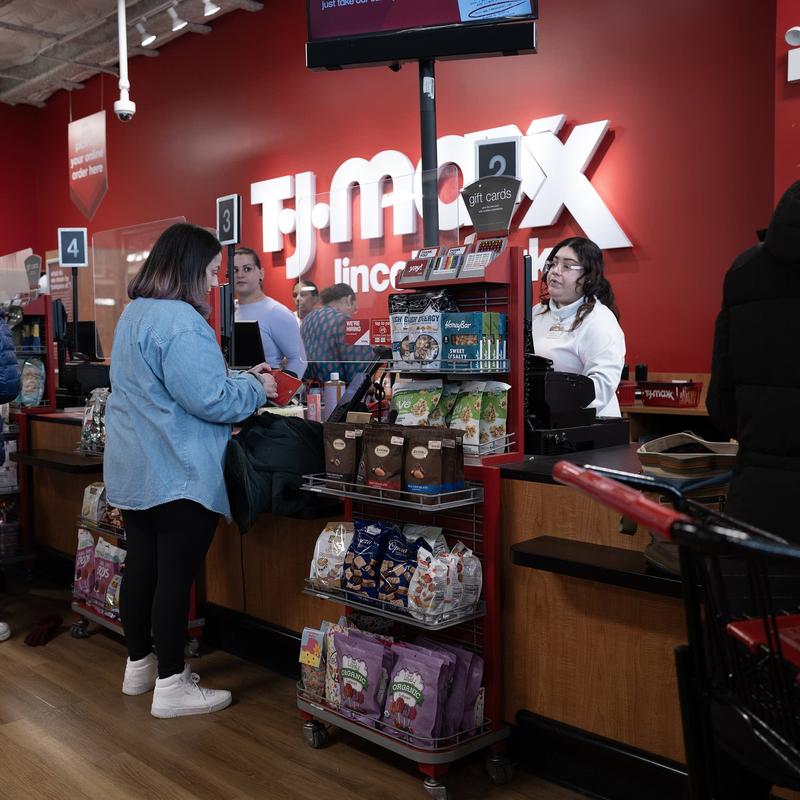
It's safe to say that most of us hate waiting in lines, unless we're waiting for something really great, concert tickets, maybe. It's natural that we would avoid a long snaking line where there's a shorter one available. Recently, people have been defying this little slice of human nature. Many people are reportedly, anyway, choosing to brave a longer self-checkout line at the store if it means avoiding the short human interaction we would have with the cashier. At least that's according to Valerie Trapp from The Atlantic. She says, "This willingness to wait longer for self-checkout hints at how people make plenty of imperfect decisions every day. It could also point to a change in the way that Americans interact with one another." "Many of us," she writes, "would rather not interact at all."
Listeners, does this sound like you? Do you choose self-checkout even if it means a longer wait time in a line? Is this a conscious choice or something you find yourself doing on autopilot by now? Call and tell us your stories, true confessions, or however you want to frame it. 212-433-WNYC, 212-433-9692. You can call or text as we welcome Valerie Trapp, assistant editor at The Atlantic. Her piece on this is titled One Line Americans Weirdly Choose to Wait In. Valerie, hi, welcome to WNYC.
Valerie Trapp: Hi, thanks so much for having me.
Brian Lehrer: How did you first notice this shift in our behavior?
Valerie Trapp: Yes. I was at my local grocery store in Brooklyn, and I had a similar experience where I showed up to check out, and I saw two options in front of me, the self-checkout line and a regular checkout line. The self-checkout line was super long. At the same time, the regular checkout line had absolutely no one in it. My instinct was to go right towards the one without a line in it. I breezed through and was soon out the door of the grocery store, and was just left with this feeling of confusion of why people would be choosing to maybe wait a little extra time for self-checkout.
That's what sparked this curiosity because it did challenge my assumption of this idea that people usually prefer not to have to wait in line. Yes, through my reporting, I found that this is something that's not just happening at this one grocery store, but seems to be a broader trend.
Brian Lehrer: Could it be, before we get to this interaction aversion, which is, I think, the premise here that's really interesting. Could it be that people, and I know I do this, look at the long self-checkout line and the shorter cashier line, but they know the self-checkout line actually goes really faster, because there are six or seven or eight of those little stations. The person at the supermarket checkout in front of you might have 45 items.
Valerie Trapp: Totally. I think that can definitely be the case sometimes. I've noticed that a little bit as well as I've observed and gone back to the grocery store and seen at different times. It does seem that at least in some cases, there really is a longer line and sometimes no one, and you could go right through the regular checkout line. It definitely seems that both options are possible, but sometimes it really is just longer.
Brian Lehrer: The reluctance to engage with other people. Talk about this psychology.
Valerie Trapp: Yes, so this is something that I found really compelling in talking to people outside the grocery store, as well as understanding the online discourse around it. I think a lot of people described a preference to not have to make small talk with a cashier, as well as a reluctance to have to really engage with some of the frictions of human interaction. For example, a cashier might not bag your groceries the way that you want to, or they might drop your fruit and bruise it. That aversion towards some of the things that are difficult to control about human interaction seemed to be a key reason that a lot of people were less inclined to go through regular checkout.
Brian Lehrer: I think Carrie in Greenwich Village has a story about this. Carrie, you're on WNYC. Hello.
Carrie: Thank you. I was at Whole Foods a few months ago, and there was a huge queue for self-checkout and virtually no one to go to a cashier. I said to the cashier, "Why is there such a difference between these lines?" She said, "Because they're all stealing." I guess that's the word at Whole Foods. That was the only thing that made sense to me about it, I must say.
Brian Lehrer: Thank you, Carrie. This is in your article, isn't it? That some people, or maybe I read it somewhere else in prepping for this, that there's a percentage of people in some survey that says, yes, they use self-checkout, and they use it to sneak some stuff without scanning it.
Valerie Trapp: Yes, I did include this in my article as well. I think the survey said it's about 15% of people surveyed who went through self-checkout said that they had done so to steal or downmark an item, which I thought was quite a large percentage as well.
Brian Lehrer: Back to the larger psychological or social psychological thing. You connect this particular change in human behavior, avoiding the cashier interaction, to your colleague Derek Thompson's writing on what he calls the antisocial century, in which people regularly carve out private experiences in public. You want to go into that larger theory?
Valerie Trapp: Yes, I'd love to. Yes, I do think definitely this preference for self-checkout speaks to that preference for these solo siloed experiences, even when we're out and about living our lives. Even in the example of the self-checkout line, I could see so many people, for example, with headphones on, going about their experience in something that we see outside of the grocery store, but on the subway or in buses. People who are cocooned in their own experience, even while out in public. I do think that speaks to a much broader trend about how a lot of people are choosing to live out their day-to-day lives.
Brian Lehrer: Is this social anxiety en masse anxiety as opposed to just being antisocial and not liking to have to deal with other humans because they're not you?
Valerie Trapp: I think that could definitely be a component of it. I, for example, in the article, I also talk about how online a lot of the people who expressed a preference for self-checkout, they talked about introversion or social anxiety as reasons that they prefer to just be able to go through self-checkout. I definitely think that's a component.
Brian Lehrer: It's interesting, and it's a small sample and thoroughly unscientific, but most of our callers are calling to say, "No, I'm the opposite of this. I always try to use the human cashier." We're going to let Chris in Jersey City represent that group. Chris, you're on WNYC. Hi.
Chris: Yes, hey, good morning. I think I'm bucking the trend, and I guess the study found because, unless the line is really short for self-checkout, I will definitely go for the human aspect. There's nothing better than just BSing with people throughout the day, whether it be in 10-second increments. That's probably the highlight of living. Also, when you're in the self-checkout, I find myself fumbling around trying to find the barcode, and it just seems to be more frustrating. It takes me longer. At best, I have a plan of interaction or no interaction with the cashier. At least they do this for a living, and they can get me through quickly. I definitely will avoid it.
Brian Lehrer: All right, so you've got your efficiency reason, but also Chris the human from Jersey City, reveling in being a human and interacting with other humans. I'm going to take another one. Alexis in West Caldwell has another reason that also speaks to being a human. Alexis, you're on WNYC. Hi.
Alexis: Hello.
Brian Lehrer: Hello.
Alexis: Hi. Yes, I always choose the human line because I want to make sure that they have jobs, and if everybody uses self-checkout over and over again, they're not going to have a need for cashiers because one person can monitor eight cashiers, and I'd rather they have jobs.
Brian Lehrer: Alexis, thank you very much. This is obviously an issue, too. Did you deal with it in the article, or is there any data yet on self-checkout being used to replace cashiers and the owners of the store saving money that way?
Valerie Trapp: Yes, this is not something I touched too much on in my article, but from outside reporting that's not in the article. I did sense that that could be a reason why a lot of people, for example, or a lot of grocery stores might move towards self-checkout.
Brian Lehrer: I mentioned that experience that I had recently, where there was no line for the human cashier because there was no human cashier. There was only one person working in that job description, and there were, I don't know, four or five, six, however many it was self-checkout stations. Sometimes you need self-help at the self-checkout. Something doesn't scan right or whatever, or it thinks you're stealing something. That happens too.
The caller was talking about, and you wrote about people who steal. That happens where it thinks you're stealing something because you're just moving your bag from the other store to the other side of the scanner or something like that, and then ding, ding, ding, and a person has to come over to help you continue. It seemed like maybe we don't have to hire as many people, having this one person monitor self-checkout only.
Valerie Trapp: Totally. Yes. I think demand has also, as a result, risen from that for people also wanting just more self-checkout.
Brian Lehrer: A listener writes, "I'm disabled and use a wheelchair. The self-checkout counters are more accessible for me because they're shorter." That's interesting. Meaning shorter in height. Do you yourself favor self-checkout even if there's a longer line? Did you start digging into this because you noticed yourself doing something?
Valerie Trapp: Yes, I noticed that my approach is just whichever line is shorter. I found myself gravitating towards the shorter regular checkout line and was curious about that maybe not being so aligned with what others were doing.
Brian Lehrer: These, "I hate self-checkout and always try to go to the cashiers," calls keep coming in, so we're going to take another one. Fran in Princeton. So many from New Jersey on this, Fran. New Jersey is the "I love cashier state." It should go on the license plates. Hi, Fran, you're on WNYC.
Fran: Hi, Brian, thank you so much for taking my call. This is so exciting for me. Yes, as soon as I heard the question, I had to call. I loathe self-checkout lines. I loathe them, and my husband always goes to them. I will always go to the person no matter what, even if there's a longer line where there's a person. I remember one time I was at CVS, and the fellow said, "You can go to the self-checkout line." I said, "You know what? I'm going to stay here with you and help you keep your job because if you keep sending people over to self-checkouts, you may end up not having a job soon."
I'll say the same thing, even for libraries or going to the doctor's office, now you have to go-- They send you first to a kiosk or even in the library. You can check books out yourself. I want to go and have a conversation with the people. I think that is just so much more human, so much more civilized. I don't want to lose this last vestige we seem to have in our society-
Brian Lehrer: Of human interaction.
Fran: -of human interaction.
Brian Lehrer: Fran, thank you very much. Did you interview cashiers about their feelings about this, Valerie? Like assuming they have a job. Maybe they don't love interacting with the customers who aren't always the most friendly and respectful of people in jobs like cashier. Maybe they see them as servants too often. I don't know. Did you ask cashiers how they feel about this question of interacting as a human good?
Valerie Trapp: Yes, that's a super interesting question. I didn't get to chat too much with cashiers. I focused a little bit more on the customer experience for this one. I would love to look into that more. That's interesting.
Brian Lehrer: Darius in Manhattan, you're on WNYC. Hi, Darius.
Darius: Good morning. What I found is this is a generational issue where Gen Z doesn't feel comfortable dealing with "strangers". They will go self-checkout route. My go-to has been that if unless I have one or two items and it's really easy, I will go to do this self-checkout. I will go to the actual cashier, especially at Costco, as an example, because if the cashier makes a mistake, it's their mistake. If you make a mistake, you're criminally liable. You've stolen something.
Brian Lehrer: Darius, thank you very much. All right. For all kinds of reasons, the Brian Lehrer show listeners are the pro-cashier caucus. Valerie, do you think it's a generational thing? I mean, some people might say Gen Z is so conditioned to be interacting through their phones that they find human interaction in person, IRL, more anxiety-producing than older people.
Valerie Trapp: From the reporting I did, I got the sense that it might be something across generations. I included in the article some data from the research group NPS Prism by Bain & Company. They found that self-checkout's popularity has been gradually increasing over the past few years across age groups, and in both urban and suburban areas, interestingly enough, as well. I think it might suggest that it could be happening across different generations.
Brian Lehrer: Oh, let's see. Caller five. Okay. "Oh, love self-checkout, says Ellen in West Orange." Ellen, you got 20 seconds for it. Hi there.
Ellen: Hi. Happy to get through. Love it because when I was young and had all those fun little part-time jobs, I never worked in a food store. I think it's really fun to do it. Also, I just feel like it's more efficient.
Brian Lehrer: Thank you very much. Your call was very efficient, which it had to be because we're out of time with Valerie Trapp, assistant editor at The Atlantic. Her piece on this is titled One Line Americans Weirdly Choose to Wait In. Thank you so much for sharing it with us.
Valerie Trapp: Thank you so much.
Brian Lehrer: That's the Brian Lehrer show for today. Thanks for listening, everybody, and stay tuned for Alison.
Copyright © 2025 New York Public Radio. All rights reserved. Visit our website terms of use at www.wnyc.org for further information.
New York Public Radio transcripts are created on a rush deadline, often by contractors. This text may not be in its final form and may be updated or revised in the future. Accuracy and availability may vary. The authoritative record of New York Public Radio’s programming is the audio record.