
Your Misunderstood Places
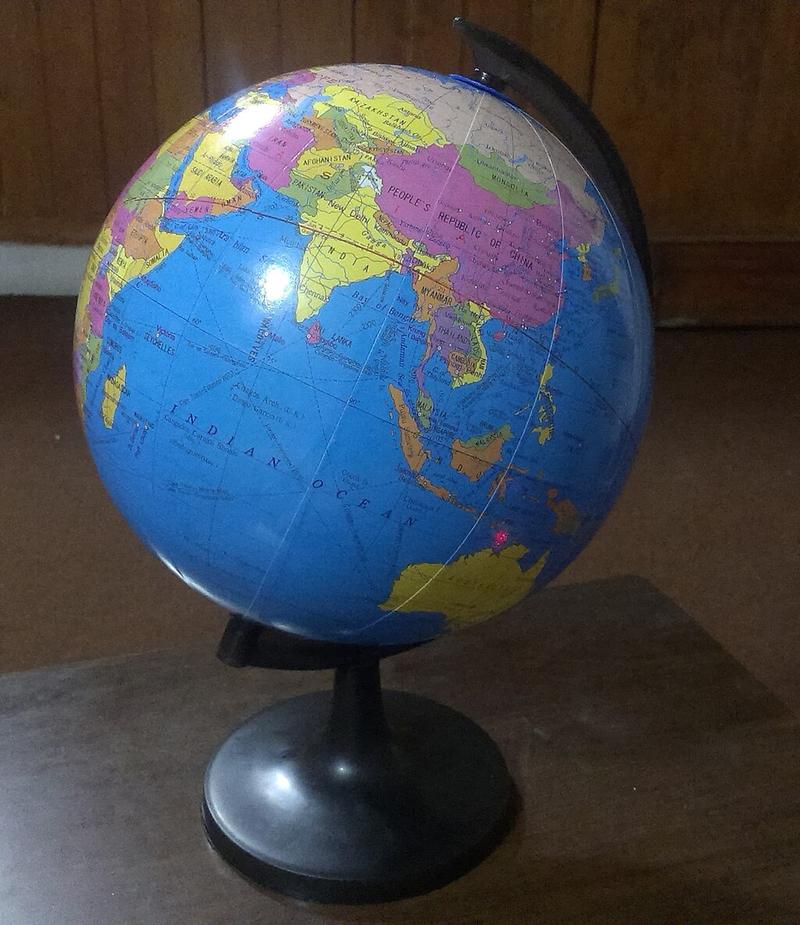
( Harshul.phadke, CC BY-SA 4.0 <https://creativecommons.org/licenses/by-sa/4.0>, via / Wikimedia Commons )
[music]
Brian Lehrer: Brian Lehrer, on WNYC. To end the show today, with Greenland, or is it Iceland, in mind, we want to invite your calls, if you come from any place that you think is largely misunderstood. Maybe we just heard a version of that, with respect to the West Park Presbyterian Church. What do people not get about wherever it is you're from? What's one thing about that place that you would like to clear up?
212-433-WNYC. 212-433-9692. What do people not get about where you are from? What's one thing about the place that you would like to clear up? This is your calls, if you come from any place that you think is largely misunderstood. 212-433-WNYC, 433-9692. This can be from the hyperlocal, which I guess we were just dwelling on, we've got two sides of how that's misunderstood, in two different shows.
It can be other hyperlocal things, like your misunderstood neighborhood or your misunderstood borough, hello, Staten island, or your local town, to a whole country, like Greenland. We're inviting your calls if you come from any place that you think is largely misunderstood. What do people not get about where you're from? What's one thing about the place that you would like to clear up? 212-433-WNYC, 433-9692.
There's a lot of talk and confusion over the status of Greenland, which is our news hook here. I wonder if any Greenlanders yourselves are listening right now, to call in. 212-433-WNYC. Despite the headlines, hardly anyone not from there understand, even who lives there, how it's governed, even its size, thanks to the typical maps that we tend to see, the Mercator maps, I think they're called, that make the polar regions look larger relative to areas farther south.
We are and will continue to talk about Greenland and the president, but right now, we want to hear from you, if you come from any place that you think is misunderstood, what do people not get about where you're from? What's one thing about the place that you would like to clear up? That can be from the South Pole to the South Bronx, anywhere in between, that can be from any of the continents that start with A, America, Africa, Asia, or even other ones that might start with E, and other continents.
If you are one of the 56 or so thousand people from Greenland, sure, we'd love to hear from you, but maybe from a different part of the world that you think is misunderstood. Maybe Somalia, very much in the news right now, and trying to be painted in certain ways, or South Africa, Venezuela, and you hear things said about your country that miss the mark, correct? Or at least complicate the narrative. Call us or text us at 212-433-WNYC, 433-9692.
Maybe you're from upstate New York somewhere, and you don't like being thought of as the boonies, somewhere in Connecticut, or the Jersey Shore, and feel like you're being stereotyped, or are you from so called flyover country? What do New York City folks not get about your hometowns? Maybe you're from Jamaica, the island, or the Queens neighborhood. What is misunderstood about where you're from?
Even the Upper East Side is not all ladies who lunch and investment bankers, and the East Village isn't all anarchists. What do you wish people understood better about where you're from? Enlighten us. Call or text us. Greenland is the news hook here, but you can call about anywhere. 212-433-WNYC, 212-433-9692. We'll take your calls right after this.
[MUSIC: Marden Hill -"Hijack"]
Brian Lehrer: Brian Lehrer, on WNYC. Now to your calls about the misunderstandings about wherever you're from. I tried to cast a large geographic net for this in the intro, and we're getting calls from Anchorage to Miami. Let's start with Lawrence in Anchorage, Alaska. Lawrence, you're on WNYC. Hi from New York.
Lawrence: Oh, good morning, Brian. I listen to you all the time up here, even though it's pretty early in the morning. I just wanted to say we don't all live in igloos here in Alaska, but also, we're a very diverse state. One thing about this Greenland thing, which is-- My partner is Alaska native. His mother was born in Wales, Alaska, which is on the very tip of the Seward Peninsula, the most western part of Alaska.
The language of the Iñupiaq people, which his mother was part of, was involved with, grew up with, that language goes all the way to Greenland. His mother could understand people in Greenland. It went all the way across the northern part of Canada into Greenland, that language base, because they migrated that far. I just thought that was very interesting and that his mother could actually understand people. He was always fascinated with Greenland, way before all of this stuff was going on in Greenland.
Brian Lehrer: How about that? Even got to bring Greenland into it. Lawrence, thank you for calling from Anchorage. Listener writes, "I'm from Belize, where more than only tourism, we have a rich social and political history. Of course tourists are welcome, but delve into our break from colonialism and our proud independence since 1973," writes that listener from Belize. Leila, in Miami, you're on WNYC. Hello, Leila.
Leila: Hi, Brian. How are you?
Brian Lehrer: I am okay, thank you. What you got?
Leila: I'm from Guatemala, originally, and I lived there until I was in my teenage years. Most of the time, the people that come from Guatemala are the poorest. They're Mayans and they're mostly very, very hardworking people. The American government couped two of our governments, because they were scared that we were going to go communist, and that's why you have these long caravans happening and coming here.
Nobody likes to leave their country, nobody likes to leave their soil, but the United States couped so many governments around the world, and when they try to come here, they act like, "Wow, they're taking over our country." You know what? You did the same thing to us and that's why we live in poverty, so I think it's karma.
Brian Lehrer: Leila, thank you very much. Here's a text from somebody from Nigeria, writes, "Nigerians are not all princes or out to scam the world. Poor governance is a factor, but neocolonialism is real persistent and not easy to overcome." Here's Ashley, in Brooklyn, originally from Utah. Right, Ashley? Hi. You're on WNYC.
Ashley: Hi, yes, that's right. I grew up in Utah, and at 19, as a non-Mormon, I couldn't wait to leave. I've spent the next 20-plus years demystifying what Mormonism is, and what Mormons are like. I think it has so much more to offer than the Mormon culture, which is definitely a big part of the state, but not everybody is a Mormon and not everybody is on MomTok. There's a bigger swath of people who are much more like New Yorkers than maybe people would believe.
Brian Lehrer: Ashley, thank you very much. Let's see, where should we go next? How about Alana, in Great Neck? You're on WNYC. Hello, Alana.
Alana: Hi, Brian. I just wanted to clear the air about Iranians, because in the media, people think that Iranians are all Mullahs and terrorists, but Iranians are kind, soft people who care about each other. Every time you talk to them, they will quote you a poem from Hafez or Saadi, or-- They love architecture and they love art. Iran is a country full of-- It's mostly Muslim, but Jews, Zoroastrians, Christians, we all live together. I'm an Iranian Jew, which is in love with Iran. I can't wait to go back. It's been 38 years.
Brian Lehrer: Alana, thank you very much. Molly, in Lake Como, New Jersey, is calling about Ohio. Hi, Molly. You're from Ohio, originally?
Molly: Yes, I am. [chuckles] What I have noticed is that a lot of the people that I know, who've lived near New York or in New York their whole life, have no idea about Ohio. They think that everybody there is unsophisticated. What I find funny is that a lot of people that I have met in the city, in wonderful cultural organizations, are from Ohio, [chuckles] just like I am.
Brian Lehrer: [chuckles] Very good, Molly. Thank you for that contribution. Listener writes, "I would like people to know that Marine Park is Brooklyn's largest city park, not Prospect Park, and it deserves more resources." Let's see, we have two in a row texts here, from people from New Mexico. One writes-- Oh, it's the same person, but they write, "I'm from New Mexico, and everyone thinks it's hot all the time, when in fact, we are in the Rocky Mountain chain. Santa Fe, the capital, is higher in elevation than Denver. We have two great ski areas in Santa Fe and Taos. People have no idea," writes that listener.
How about-- Well, while we're out west, we will go north to Janet, in Great Falls, Montana. Janet, you're on WNYC. Hi there.
Janet: Hi. Thank you, Brian. I just wanted to say a little bit about how Montana, especially, increasingly gets written off politically as a red state. Just to say, it's so complicated here, and that's relatively new. We were a "purple state" forever, with Democratic governors, Democratic congresspeople, and a mix. Just in the last five years, that has changed dramatically, so it's shocking to many of us in Montana, and it's changed so much.
In the county where I live, which was always a Democratic county, and it's not a university-- Great Falls is a working class, no university-- Within Montana, it has a reputation as being a backwater, but we were a Democratic county. Now, since COVID, and since-- Here's a huge part of what has happened to turn Montana actually very red. There have been studies now, over these last several years, showing that so many people moved in around COVID, and since.
A lot of them were Republicans trying to go to where they thought was the widest escape place they could-- conservative, because it's known as a conservative backwater, which it's not, in many, many, many ways, and I--
Brian Lehrer: [crosstalk] People are moving in. Janet, thank you very much. Let's see if we can sneak Joanna in Springfield, New Jersey, in here, who says her father was from Southern Sweden, and it's going to hook it all back to Greenland. Joanna, you got to do it in 20 seconds. That's what we got left. [unintelligible 00:13:03].
Joanna: [crosstalk] Okay, I'm going to read it. I'm going to read it. There's an explanation for all. The name Greenland is attributed to Erik the Red, a Norse explorer who sought to encourage settlement on the island during the colonization efforts, around AD 985. After being exiled from Iceland for murder, Erik sailed westward and discovered the land that is now known as Greenland.
Brian Lehrer: I'm sorry, that has to be the last word. I did hear someone say on television yesterday that Greenland is all ice and Iceland is all green, and President Trump can't tell them apart. Thanks for all your calls on your misunderstood places.
Copyright © 2026 New York Public Radio. All rights reserved. Visit our website terms of use at www.wnyc.org for further information.
New York Public Radio transcripts are created on a rush deadline, often by contractors. This text may not be in its final form and may be updated or revised in the future. Accuracy and availability may vary. The authoritative record of New York Public Radio’s programming is the audio record.