World AIDS Day and a Promising HIV Prevention Drug
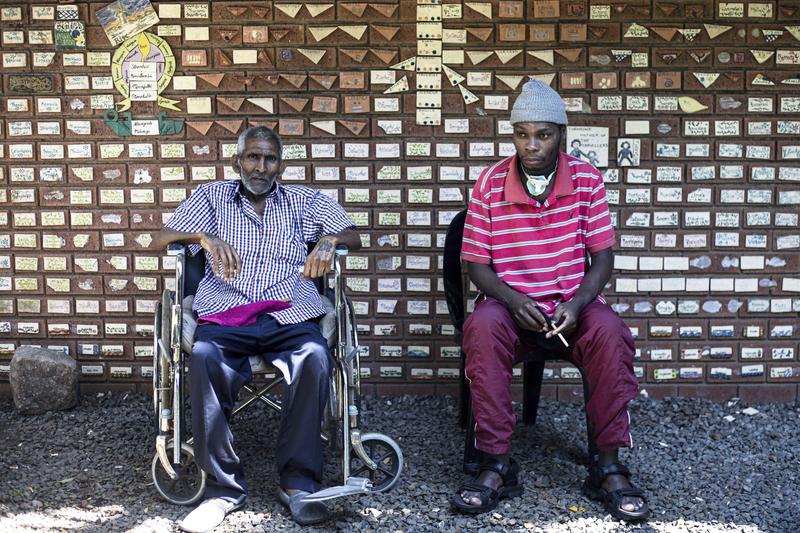
( Per-Anders Pettersson / Getty Images )
Title: World AIDS Day and a Promising HIV Prevention Drug
Brian Lehrer: It's the Brian Lehrer show on WNYC. Good morning again, everyone. So today, December 1st, is World AIDS Day. I'm going to read something from the Center's for Disease Control website about World AIDS Day now. I better read it fast before the Trump administration takes it down. I'll explain why. The CDC website says, quote, "World AIDS Day is an opportunity for every community and individual to honor the more than 32 million people who have died worldwide from AIDS related illnesses. Two World Health Organization public information officers started World AIDS Day in 1988 as an international day for global health. Since then it has been observed each year on December 1st.
World AIDS Day is a day of solidarity for people around the world who are affected by HIV, which is of course the virus that causes aids, and for voices to unite by sharing experiences, remembering those lost and standing together in the fight against HIV. So that from the CDC.gov/worldaidsday page. But like I said, you better read it quick because the New York Times reports that the State Department has instructed federal agencies and grantees to avoid any public messaging about the day, including on social media and speeches or through official communications.
Now this abrupt silence comes at a moment when the administration has frozen foreign aid and upended long standing HIV programs worldwide legal, leaving many clinics and partners unsure what support will continue. With estimated body counts being really shocking in the numbers that are coming in. It's happening, here's the other piece of news, just as a major scientific breakthrough arrives, a new HIV prevention drug called Lenacapavir, a twice a year injectable that offered near vaccine level protection in large clinical trials, including in South Africa. Yet the US plans to make the drug available in low income countries except South Africa, the country with the most people with HIV.
So today we will look at why the administration is going quiet on World AIDS Day in general, how that fits with its America first approach to global health. Also maybe to identity in this country, what Lenacapavir represents scientifically and medically and what this foreign policy around it means around the world. Joining us for this is Pratik Pawar, Future Perfect fellow at the news organization Vox. He has a recent story on Vox.com under the headline, "The US is fast-tracking this important HIV drug—for everyone except South Africa." Pratik, welcome to WNYC.
Pratik Pawar: Thank you Brian. I'm so excited to be here.
Brian Lehrer: Let's start with this World AIDS Day silencing decision. I'm thinking of the old stickers from the 1980s and buttons and everything that says silence equals death. Right. Having to do with addressing HIV and not being quiet about it. So what does it signal that for the first time since the 1980s, the US is opting out of publicly acknowledging World AIDS Day? How are advocates reading that message?
Pratik Pawar: It's an interesting time that this news is coming out. If you look at the past couple of months on how the Trump administration has been acting in terms of with science and how public health news is given out, it has been scrubbing information about Mpox, for example, or any other public health crises that sort of don't are not in line with their worldview. This is just another casualty in that line of attacks. Scrubbing information about pregnancy or supporting access to abortion. This is just one more thing on top of that. Advocates that I've been speaking to have been clear that this is going to actively harm people. People who need access to information about HIV, AIDS and how to prevent this deadly disease. I've been hearing news about this. It's quite shocking to the advocates as well.
Brian Lehrer: As the Times article points out, so far this year, the White House has issued proclamations for dozens of other observances, including to take another medical condition day, World Autism Awareness Day. So apparently there's something uniquely politically incorrect about HIV and AIDS compared to other diseases now under President Trump. I mean, it is a disease generally associated with gay men and poor people of color in this country and elsewhere. So maybe commemorating World AIDS Day is just seen as DEI, while World Autism Awareness Day and other things are not, you think?
Pratik Pawar: Yeah, I think so. HIV isn't like your cholera or your regular flu. It carries a lot of deep stigma. It's tied with sex, sexuality, and drug use, all of which is moralized in many societies and increasingly even the United States. So it is par the course of what the administration has been doing with other diseases like autism and, you know.
Brian Lehrer: Right. One other ramification of this from the Times article, World AIDS Day is when the State Department sends data to Congress from the President's Emergency Fund for AIDS Relief, known as PEPFAR, which provides money for HIV programs worldwide. It says the program's budget was sharply cut back earlier this year and the administration has reported to be planning to end it. Do you have anything on the importance of this data report? There are so many. We've talked about others on the show. Pratik, as you may know, other examples of medical and public health data that the federal government used to collect that they're just not doing anymore.
Pratik Pawar: Yes. Again, I sound like a broken record, but not collecting data and not having publicly available data available to researchers or to the general public is a huge harm in terms of our understanding of issues about, like HIV, aids, and in terms of our willingness to take action on it. If there's a vacuum in data, we don't really know how to act on or how to make corrections. So, yes, missing data isn't just about some data in the spreadsheet, but it's actually informing how we make our decisions and how we act collectively as a society towards public health crises.
Brian Lehrer: What's the latest that you have on where PEPFAR stands in terms of foreign aid? PEPFAR, again, for listeners who don't know, the U.S. program that has funded HIV treatment and prevention in dozens of countries for more than 20 years, it was started under President George W. Bush, now in limbo to some degree because of the foreign aid freeze. But we had heard foreign aid freeze at the beginning of the year, and then because of concern over HIV deaths in particular, some of that was unfrozen. Where does that stand, as far as you could tell?
Pratik Pawar: So just to put a finer point on how huge PEPFAR is, it's one of the most successful global health programs in history. It's been credited with saving over 25 million lives by essentially getting treatment and prevention to people in Africa and in Southeast Asia, to people who couldn't essentially afford the medicines. And that has essentially changed overnight since the administration came into power. Earlier this year, it froze foreign aid, it essentially gutted USAID. Now, for surprising reasons, PEPFAR is making a comeback. But it's surprising how the administration is using PEPFAR, this really successful big HIV program to roll out this new drug that we have, Lenacapavir, which is again, like a breakthrough drug, and we can talk more about that, but it's using that rollout as like a political tool to reward countries that are in line with US's vision of the world or the way it sees the world. It's using it as a diplomatic carrot and stick to punish some countries that are not in line and then reward some countries that are in line. We can talk more about how it fits into the. The America first global health strategy.
Brian Lehrer: This sounds like something we talked about earlier in the show in another segment where the Trump administration is fighting alleged drug smuggling from Venezuela, but pardoning the former president of Honduras, who is a convicted cocaine smuggler, trafficker in this country pardoning him because his politics are in line with Donald Trump's politics. So you're saying they're using a life saving medicine in that exact same way?
Pratik Pawar: Yes, more or less. I've spoken to activists on the ground in South Africa. And South Africa has become one of those testing grounds where this America first policy is sort of playing out. Two weeks ago, the Trump administration told the reporters that we're not going to give any of the doses that we have funded to South Africa, which is surprising because South Africa is a country that has the highest burden of HIV worldwide. One in five people in South Africa are living with AIDS. Epidemiologically, it's just a strange decision to me. When you try to sort of suss out why this is the case and you try to see the subtext, it's very clear that Trump has repeatedly clashed with South Africa's president. There was a terse White House meeting with the president of South Africa where President Trump essentially accused him of white genocide and some illegal land seizure. There's been a bunch of repeated attacks on South Africa politically. That sort of pushback has now blended into this geopolitical pushback from the Trump administration where they've essentially decided that we're not going to give any of our doses to South Africa.
Brian Lehrer: Listeners, if you work in public health, HIV care. Oh, I'm inviting, I know you do. We're inviting listeners. If you work in public health, HIV care, in particular global aid as it relates to public health in any way, or if HIV has touched your life, what does it mean to you that the US Is going silent on World AIDS Day per the State Department order to all government agencies that I read at the top of the segment, even as a breakthrough drug is emerging. And what questions do you have about who should get this twice a year prevention shot? First we will get into more of the details about what this drug is and why it seems to be so miraculous. 212-433-WNYC, your World AIDS Day calls at 212-433-9692, or you can text with your question or comment for our guest Pratik Pawar, Future Perfect fellow at Vox. Pratik, tell us more about Lenacapavir. Why do many experts see it as a potential game changer?
Pratik Pawar: It's basically prep as a twice a year shot. What that means is that for years HIV prevention has meant that you take a pill every single day, and that works great if you can actually stick to it, but globally, a lot of people can't because of access issues, there's stigma around getting these medicines in places like Africa, or just normal human forgetfulness. If I'm being honest, I forget to take my vitamin D supplements a couple of times a week. It's human nature to forget taking your medicines.
Lenacapavir is particularly great here because it's an injection that you take twice a year and then you forget about it. In big trials with thousands of people, it's prevented almost every single infection. We've tested this against women, against men, non-binary people, transgender people. In fact, the drug was so effective that the trials were ordered to be stopped early because it was clearly better than the pills. For all intents and purposes, if you look at the data, if you talk to any of the scientists that have worked with it, they hail this as a miracle. In a field where breakthroughs have been rare, Lenacapavir is the closest thing that we've had to a vaccine where take a shot twice a year and you essentially forget about it and you're protected from getting HIV for an entire year. That's why most scientists I talk to tell me that this is a breakthrough drug. The science on it has been solved, and now it really rests on the politics and our priorities to actually get this drug and put it to your use in a way that we can actually end the HIV crisis.
Brian Lehrer: Just to put an even finer point on how extraordinary the clinical trial results were, I see that in one trial of more than 2,000 young women in South Africa and Uganda, you note in Vox that no one who received Lenacapavir contracted HIV, zero cases among 2,000 people in the trial. That's why it was stopped, because the protection was so clear. Now, given that South Africa has the largest number of people living with HIV and hosted key parts of the trial, you've given us some of the politics about why it is not being included in the early US rollout. But let's get more specific about that. If South Africa is left out, who stands to miss access first? Which communities or groups would feel the effects most immediately?
Pratik Pawar: Not just in South Africa, but broadly around the world, you see that women and children and communities like transgender groups and gay and bisexual men are largely the groups that are affected by HIV. Cutting out access to South Africa particularly means that these groups won't have access to this cutting edge drug, this breakthrough drug that we have. Even to go a little further beyond that, even the countries that the Trump administration is giving out doses, so Eswatini and Zambia just a couple of weeks ago received the initial doses. Even in those countries, the administration is pushing those doses only through official channels. So it'll go through a hospital or through the national system.
What that means is that in Washington or in your public health clinic, it sounds great, but on the ground, because HIV is so stigmatized, you won't have-- you will have mothers come into the clinic and they might get Lenacapavir, and that's great. But the broader community that's affected by HIV, which are largely stigmatized by the national systems or the government in place, they will be cut out of getting access to, again, Lenacapavir, which is a great drug. There's this double whammy where we have this great drug, and the Trump administration is rolling out in certain countries, but even in the countries that the administration is rolling out this drug, it will really-- depending on how the rollout is being done, if it sticks to only official channels, the people who most need it won't be going to those places where they would be stigmatized, even criminalized in some cases.
Brian Lehrer: So this is another aspect of the Trump administration's culture war, if I'm understanding you correctly, because you're saying it'll be distributed through national health systems, but not through community clinics, which means, for example, people who rely on LGBTQ specific clinics, which the Trump administration wants to marginalize or delegitimize those kinds of programs that have historically reached some of the people who are most at risk, that's what's being cut out, right?
Pratik Pawar: Yes. If you look at the language that the administration sort of used against NGOs that have traditionally done this work. Jeremy Lewin, who's the State Department official who overseeing this, he's essentially called NGOs Beltway bandits. It's a loaded term. It's a misleading term. We have looked at whether NGOs have been involved in corruption, and largely there is no data suggesting that is the case. But there's this rhetoric within the administration that we don't want to work with NGOs or these other clinics. We want to work through the national system. Which sounds, again, great when you're in Washington, but it's just simply not the case when you're actually rolling out the drug in places and to people that need it most.
Brian Lehrer: Listener writes, this all seems very aligned with the religious, far right, conservative Christian objectives outlined in Project 2025. Another listener writes, another blatant example of disregard for Black and brown people. Another listener has a question, why doesn't South Africa have their own HIV prevention for its citizens? The listener writes, I'm thinking, how long will the US be a global pharmacist?
Pratik Pawar: No, I understand that pushback and South Africa should invest in its own response and it does. If you look at 2026, the coming year, Gilead, the company that makes this drug, can only make so much, right? I think their capacity is 600,000. The US is already buying half of it. There's another organization called Global Fund which is buying another half of it. So that leaves nothing for a country like South Africa, even if they have the money for it, to buy the drug, because there's just literally no supply. So when the US buys up half that early global supply of this drug and then says we'll give it away everywhere except this country with the biggest burden, that's not a neutral market outcome. South Africa is investing in its response. It's working with generic producers that are making the drugs that will come on later 2027, but in 2026, even if they have the money, they have the political will, there just aren't enough doses for a country like South Africa. That's a political choice with health consequences.
Brian Lehrer: Let's talk about the pharmaceutical side. Lenocapavir is made by Gilead, which has licensed generic production for many low income countries, but not for several upper middle income ones where infections are also rising. How does that licensing map shape who will get the drug affordably and who might be priced out where?
Pratik Pawar: Gilead has done something pretty unusual as far as pharmaceuticals, global Pharmaceuticals go. They've signed royalty free licenses with six generic manufacturers. In those licensing deals they have said for 120 low and middle income countries, these generic manufacturers can give their drugs to, whatever, $40 a year price through PEPFAR and Global Fund. And that's great. This is one of those things where a pharmaceutical company almost never gives away the drug that it has made to a generic right away. It usually sits on it for 20 years so that it can make the money back that it has spent on developing the drug. So this is great, on the one hand, that generic manufacturers can make the drugs and 120 low and middle income countries can get that drug for a very cheap price.
On the other hand, activists and people that I've spoken to have said that these licenses essentially carve or slice the world into two halves. Very poor countries that can get the generics and then there are profitable markets like Argentina or Brazil, for example, that are excluded from those licensing deals. What that means is that a country like Brazil, which has, again, a huge number of huge burden of HIV, they can't get generics from these generic manufacturers. They essentially have to negotiate a deal with Gilead. That gives Gilead the power to sell that drug, make the profit in these countries like Argentina and Brazil. They're essentially at the mercy of negotiations with Gilead. So activists that I've spoken to have said that these deals are great for countries that are in the licensing deal, but for the ones that are not, It's a bad hand that these countries get.
Brian Lehrer: On the Trump administration ordering federal agencies not to commemorate World AIDS Day today, December 1st, every year since 1988, Trump administration will no longer commemorate World AIDS Day. The New York Times headline on this the other day. Listener writes, as a member of ACT UP, I personally am currently less concerned about whether this administration says anything. Heck, I'd rather they say nothing than say something harmful.
Do you have anything on the possible effects of not the actual data production regarding HIV and AIDS that we were talking about before, obviously that would be a removal of an important public health tool, data collection, but just on sort of commemorating it? This is like when the Pentagon told all the military bases not to have observances of Black History Month or Pride Month or anything like that. This says the State Department warned employees not to use government funds for the occasion and to refrain from publicly promoting World AIDS Day through any commute communication channels. So Pratik, we just heard from that listener whose text I read that's like ah, good riddance, I'd rather them say nothing than say all the harmful things that from the listener's perspective they keep saying about so many things. Have you heard from anybody yet on the possible ramifications of if any of just not having these commemorations or these formal public recognitions?
Pratik Pawar: I think it matters that we pay attention to things that-- attention is important. I would argue that if you, if you forget about those things that still kill millions of people. Last year we had 1.3 million new infections worldwide, and sort of not letting out this information or not commemorating that, hey, here's a public health crisis that we've made huge progress against, but there's still a lot of suffering out in the world. Taking that out of public attention is, one can argue, a big disservice to the community that still continues to suffer from something like this, particularly like HIV AIDS where there's been decades of stigmatization. It took the activists raising the voice and the community to raise the voice to actually force the government to do something about it. When we don't talk about these things-- and this has happened with other, other conditions like TB, for example, largely eliminated from the US but it's a huge problem in the global south, and we've just forgotten about it. It's out of public consciousness and that makes it difficult to actually make this a priority. Not talking about HIV the same way could risks leading us down that same path where we likely forget about it and then there's no political will, there's no political public consciousness to actually act on these diseases that still affect so many people.
Brian Lehrer: A lot of outrage continuing to come in in text messages over this cutting out of South Africa from this miraculous AIDS prevention drug that's now available. Your description of which communities would be most affected. Another listener writes, so dark skinned poor people in South Africa die and Africaners take over. Do you have, I don't know if this is on your beat because it's really not this story exactly, but you know, there have been these dire estimates of how many people have already died or might die around the world because of the US withdrawal of foreign aid, even for emergency type or ongoing, let's say, food relief and medical relief. I believe there's a New New Yorker documentary about this with some numbers that are least estimates. Do you have anything on the actual life and death consequences of the way the US has withdrawn already from medical and food relief around the world?
Pratik Pawar: Yes. This is again an area of active investigation between public health. So take this information with a grain of salt because we don't have like a specific information yet, but there are credible epidemiologists who have sort of tried to understand and model how cutting of aid is going to impact. There's a researcher named Brooke Nichols at the Boston University, she's an epidemiologist and a mathematical modeler, and she's maintained a respected tracker of how these current USAID and larger foreign aid cuts, what the impact is going to be. Her tracker, as of now, I can see 600,000 people, according to her tracker, it says deaths that have been attributed to funding discontinuation by the US. She breaks it down by malaria, by pneumonia, by additional deaths related to malnutrition. Again, this number could be off by hundreds maybe.
There's another report in the Lancet that sort of tried to look at what the impact of USAID cuts will mean to global health around the world. They arrived at a number I think, was it 40 million by the end of 2030? Again, these numbers, I wouldn't focus too much on the specific numbers of it, but directionally they point in the right way in the sense that these impacts have clearly had an impact. I urge the listeners to go watch the documentary, I watched it over the weekend, by the New Yorker. it's really stunning to see how decisions that were made in Washington by Elon Musk and the administration are actively harming people. And the New Yorker documentary tries to go on the ground and tries to talk to people and see what the impact is. I don't have any specific numbers for you, but it's in the hundreds of thousands for sure.
Brian Lehrer: Pratik Pawar, Future Perfect fellow at Vox. He has a recent story on Vox.com under the headline, "The US is fast-tracking this important HIV drug—for everyone except South Africa." Pratik, thank you for talking about it with us and for your reporting.
Pratik Pawar: Thank you so much, Brian.
Copyright © 2025 New York Public Radio. All rights reserved. Visit our website terms of use at www.wnyc.org for further information.
New York Public Radio transcripts are created on a rush deadline, often by contractors. This text may not be in its final form and may be updated or revised in the future. Accuracy and availability may vary. The authoritative record of New York Public Radio’s programming is the audio record.