
Why to Read Poetry
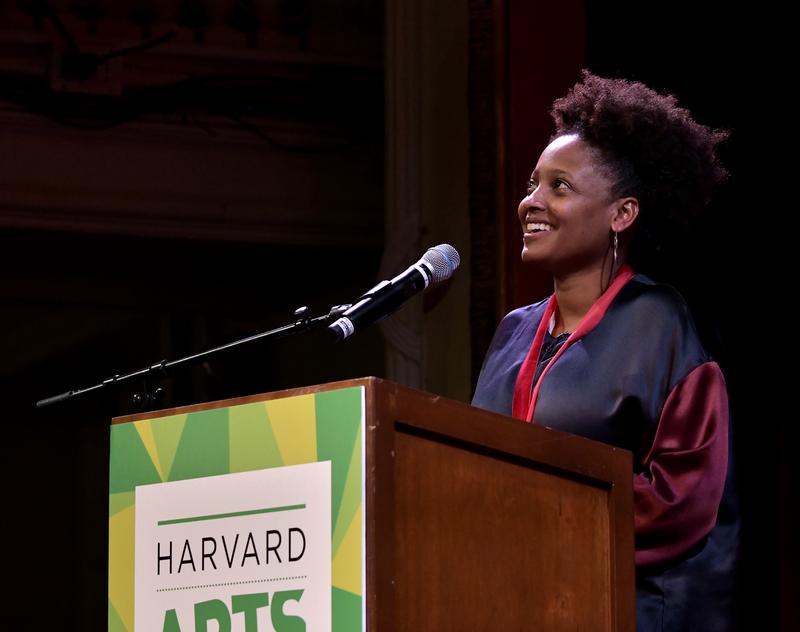
( Paul Marotta / Getty Images )
[music]
David Furst: It's The Brian Lehrer Show on WNYC. Good morning. I'm David Furst, WNYC's Weekend Edition host, filling in for Brian. Now we're going to talk about a book that invites us to see what poems can open up in our lives. Tracy K. Smith's new book, Fear Less: Poetry in Perilous Times, is a hybrid of close reading, memoir, cultural criticism, and curated anthology. Many of the chapters take a poet's work as a starting point, then open into a broader reflection that mixes personal experience with history and the civic questions that we're living with.
She writes, "There is no formula for reading and responding to poetry. How could there be when the lyric tradition exists in celebration of the individual self and its singular experience of the world?" Tracy K. Smith is a Pulitzer Prize-winning poet, US poet laureate from 2017 to 2019, and professor of English and African and American Studies at Harvard University. Her latest book is Fear Less: Poetry in Perilous Times. Tracy, welcome back to WNYC.
Tracy K. Smith: Thanks. It's great to be with you.
David Furst: Listeners, if you want to join this conversation, give us a call, 212-433-9692. Is there a poem, or perhaps just a few lines of one, that has stayed with you, helped you through a moment, or changed the way that you see something in your life? You can read us a short excerpt if you would like, or maybe there's something you've always wanted to ask a former US poet laureate. Your poetry questions are welcome for Tracy K. Smith, 212-433-9692. That's 212-433-WNYC. Can we start with some poetry?
Tracy K. Smith: Sure.
David Furst: I think you brought two poems with you. Maybe start with one of them right now, along with any background you want to give us on this poem.
Tracy K. Smith: Absolutely. Yes. I have a new book of poems that will be out in not too distant future, and I thought I'd share one that speaks to some of the questions that I have carried with me for my whole career, which are really like, how do we see one another? What do we miss in one another? What can language and a slower approach to questions that we live with help us to do in order to embrace our neighbors and the strangers among us? This is a poem that's grappling with that. It's untitled.
A stone-faced man sits in a folding chair
at the edge of his lawn. He’s facing out
toward the street, where the threat awaits.
He glares at me as if I am the threat, or
the promise of the war he will be forced
to wage. The war he has been promised
to win. He resembles the old man who sat
behind the wheel of my son’s school bus
for a time. Inscrutable what he held in mind,
in check, to himself and beneath the effort
of words. Everyone, everyone, is a slick
seed dropped in the earth and left for a season
in the dark. I want to tell him, Sleep well, brother.
Soon we will be weeds or flowers together.
David Furst: Tracy K. Smith, thank you for starting us off that way. Do you want to give any more background on that scene that you're describing?
Tracy K. Smith: Sometimes I think of poems as thought experiments. Things that allow me to go back and say, "Okay, I had a first take on an encounter or something I witnessed or something that happened to me. Can I do better? What happens if I challenge myself to be a little bit more honest with myself, more courageous, and maybe even more generous?" I see this as a poem that begins in observation of the different camps we're often placed in, or that we migrate toward, the us and the them that so many of us live with, and that I think we are in many ways trained to accept.
This is a gesture or an experiment in trying to say what is the larger we that this stranger and I actually belong to together? What would it mean to even use language to articulate that to myself?
David Furst: The first take is social media, right?
Tracy K. Smith: I think it's a lot of things, but social media has really-
David Furst: Screams "first take".
Tracy K. Smith: -drilled that into us.
David Furst: This is poetry. This is something different. Is poetry even more important in this world where we're hit with all of these first takes?
Tracy K. Smith: I think poetry is a beautiful antidote to that bad habit that we have, and it's reinforced in so many contexts. I think that in many ways it reminds us that first and foremost, we're consumers, we're customers. The ways that we rate, review, and rank services and products has become a habit that we carry into these other contexts. I think other people would describe it differently. Many metaphors are useful, but poems say to us, "Hey, listen, here is the voice of a stranger. They may be alive, they may be dead, they may be a fictional person, but they're bearing witness to some human experience. If you listen, you'll learn something about them. I have a feeling you'll learn something about yourself as well."
That's the thing that really delights me about poetry. The ways that another perspective on life, if I let it, often can nudge an awareness of questions, feelings, memories, wishes, or fears that I myself hold but haven't brought conscious awareness to or don't have words for. That feels like something that binds us together, something that says, "Oh, there's a human family we belong to, and it's large and wild and varied, but we are related to one another, and we can be helpful to one another."
David Furst: Can you tell us how you first found poetry? Is there a moment that you can talk about, or when you realized that this was an important part of you?
Tracy K. Smith: I feel like I found poetry many times, but the time that really summoned me to it as somebody who wanted to practice the art was when I was in college. I was a 19 or 20-year-old undergraduate, thousands of miles away from home in a place where everybody seemed to be so much more together and gifted and talented than I had always been told that I was. I had a lot of questions. Who was I? What was my place in that world and the world? Reading the poems of people across time taught me that if you slow down, listen more fully, and pay fuller attention, you can teach yourself things that you didn't know. That seems like a miracle that brings me back to the page again and again.
David Furst: If you want to join this discussion, you can give us a call if you'd like to read a few lines of a poem that has stayed with you. The number 212-433-9692, or if you have a question for Tracy K. Smith, 212-433-WNYC. Let's hear from Paul, calling from the Upper West Side. Do you have a poem you want to share?
Paul: Sure. It's called Dancing for the Sunsets. Can you hear me?
David Furst: Yes, absolutely.
Paul: Dancing for the Sunsets. Most people want to escape these madding crowds. I don't blame them. I will stay here and play music and recoil in silence and dream out loud. Because the neck of my guitar knows my soul completely and knows exactly who I should trust. There is no turning back now. I will remain here and wait for the onset of obsolescence. I will wait here for the onset of rust. Mr. Birthday Head wait all night for the Chelsea morning harlots to wake up late afternoon. Twirling in their head scarves, they fall in love with everything. Dance for the sunsets on Jayton Swoon.
Yes, on West 23rd street, we remember them well, oh, those magic moments when sunrise fell, they hung on our every word, and we're all hanging on by a string, but at least it's in tune. Their tales of winter are on those bookshelves in June.
David Furst: Paul, thank you for sharing. Did you write that?
Paul: Yes, I did.
David Furst: Okay, can we get a response from the former US poet laureate here?
Tracy K. Smith: Hi, Paul. Thanks for sharing that poem. It's so beautifully rousing. I love what feels like the ecstatic energy of seeing the world, seeing others, and claiming again and again a powerful place within it. I also really love-- I heard the little nod to Thomas Hardy in the beginning, like the madding crowd. A wonderful poet and fiction writer, of course. One of the gestures that really stays with me was just the neck of my guitar and the way that that figure, it's a body, it becomes embodied as this intimate, familiar. I love that it becomes a point of entry into so many other things that the poem offers.
David Furst: Thank you so much for sharing, Paul, and if you would like to share some lines of a poem that you want us to hear, maybe you wrote it. Maybe it's just a poem that stayed with you, 212-433-9692. I want to ask you about this new book that's coming out very soon.
Tracy K. Smith: It's out.
David Furst: It's out now. Fear Less, it is part anthology, part essay collection, part personal reflection. What led you to this structure?
Tracy K. Smith: I think that drawing upon knowledge, close reading, personal experience, and the things that are happening around you in the world, I think poems invite you to do that. I wanted to model that for readers, some of whom, I imagine, have a relationship with poetry that might be grounded in some or all of those capacities, and others of whom, I hope, might turn to the book because they have a lot of anxiety about poetry. They're worried that it's difficult or inaccessible.
David Furst: That I won't understand it?
Tracy K. Smith: Yes. For me, the book, each of the essays, seeks to model some of the places that poems turn us toward, some of the resources that we have, that we live with, that poems ask us to bring with us to the reading and the experience of another person's perspective.
David Furst: We're going to hear another poem in just a moment. I want you to respond very quickly to this text that we received. Someone saying the proliferation of artificial intelligence makes it more important than ever to read poetry directly to people in a room.
Tracy K. Smith: I agree with that 100%. The human voice, even the silence of human attention, what it feels like and what it sounds like when we are listening together to something, is an artifact of our human existence and the convenience, the efficiency, and the novelty of AI in the sphere of what we think of as content. I won't say literature, but content.
David Furst: Content is a word that gets used a lot, isn't it?
Tracy K. Smith: Yes, I resist that. I resist a lot of our current vocabulary. Content is one. I do not write content. I write poetry. I write literature. Another one is the noun creative. "Oh, you're a creative."
David Furst: Being creative.
Tracy K. Smith: I'm not that. I am a creator. I really want to invite artists, writers, and thinkers to claim these large nouns because what we do is irreplaceable.
David Furst: We are here with Tracy K. Smith, and again, the name of the new book is Fear Less: Poetry in Perilous Times. Let's hear from another caller. If you want to join and contribute a few lines of a poem, 212-433-9692. Susan calling from Manhattan. Welcome to The Brian Lehrer Show.
Susan: Hi, Brian.
David Furst: This is David, but I'm filling in for Brian today.
Susan: Hi, David. Oh, hi, David.
David Furst: It's great to have you with us. Is there a poem that you wanted to share?
Susan: Yes, it's a very short poem. It's from the book called Risking Everything: 110 Poems of Love and Revelation, which I gave to my husband 22 years ago. I just started reading these poems from the book while looking at a picture of him. It's called A Place to Sit by Kabir. I don't know if that's the right pronunciation, and it's translated by Robert Bly. A Place to Sit.
Don't go outside your house to see flowers.
My friend, don't bother with that excursion.
Inside your body there are flowers.
One flower has a thousand petals.
That will do for a place to sit.
Sitting there you will have a glimpse of beauty.
inside the body and out of it,
before gardens and after gardens.
That's the poem. I read a poem to Gerald almost every day because he died eight months ago. I found this book that I bought him 22 years ago, the most comforting, comforting thing that I've experienced or am experiencing. Thank you for doing a show on poetry.
David Furst: Oh, Susan, thank you. Thank you for joining us.
Tracy K. Smith: Yes, thank you for joining and sharing that poem. I'm sorry for your loss. I'm really glad to hear that poetry feels like a conduit to reconnection or sustained connection. That's one of the things that the art has meant for me in my life, as I've lost people that are beloved to me. I really love the way that that mystical imagination in the poem by Kabir reminds us of the large interior worlds that each of us possess and how going inward to those things can actually be a bridge to the farthest flung and the largest and most mysterious aspects of the world or the universe that we live in. That's something that I think is really useful even in in the context of grief, but particularly in the challenges of life that sometimes make us feel small or bereft.
David Furst: We're going to get to more poetry in just a moment. I wanted to ask you, for listeners that may not know, what does the US poet laureate actually do, and how did you choose to interpret your role during your 2017, 2019 term?
Tracy K. Smith: The job description is quite ample. You can do as much or as little as you wish to do in that role. You are asked to give a reading at the beginning of each term and a lecture at the end of each term. Because there are so many resources and such infrastructure at the Library of Congress, many poets laureates seek to do a public project. I had always been inspired by the laureates who had done so. I said, "Okay. I want to think about how poetry can become something that allows me to offer service to the nation."
David Furst: I'm David Furst, by the way, WNYC's Weekend Edition host, filling in for Brian Lehrer today. If you're just joining us, our guest is Tracy K. Smith, Pulitzer Prize-winning poet, US poet laureate from 2017 to 2019, and her new book is called Fear Less: Poetry in Perilous Times. We're also asking for your poetry. If you would like to share some lines of a poem with us, a poem that has stuck with you through the years, or means a lot to you. The number 212-433-9692. Let's hear now from Gabrielle in the Bronx. Welcome.
Gabrielle: Hi, how are you? I'm excited to be on. Ms. Smith, I'm so much looking forward to your new book coming out. I'm really excited. I can't wait till it comes out. I wrote a poem about my first daughter called Some People Call Her Moo. It was inspired by me taking the whole nine months to think of a name for her. Then, as soon as she was born, people began giving her nicknames. It's called Some people call her Moo.
Some people call her Moo. I hope she doesn't turn out to be a cow. It's no wonder she was born on a Monday. She was sweated and conceived on a Sunday. Being born without a plan, you can find yourself at a Greyhound bus station going nowhere. I wanted your name to have meaning, something that expressed your African, Jamaican, Portuguese, Chinese, white, Black, and red self. They said, don't give her a name that will spell Black. We wouldn't want her to get trapped in the night. Why every June bug, Munchie, Moochie, Gumpy, Spider, Yaps, Clowny, Shuggie, Crud, Latifah. I know, grew up in England, but you moved to the ghetto, and that was that.
Tracy K. Smith: Wow.
Gabrielle: That's it.
Tracy K. Smith: That's amazing. There's so much life and so much joy and play and challenge in that poem. One of the lines that I love is being born without-- Maybe you'll read it again after I mangle it. Being born without a plan is like-- what is it? Winding up at the Greyhound bus station without a ticket or something.
Gabrielle: Yes, I said, being born without a plan, you can find yourself at a Greyhound bus station going nowhere.
Tracy K. Smith: Yes. I love that metaphor because it's like one of the slowest moments in the poem, which is fast and full, and it becomes a little story that we can see. Some of us can even remember versions of that story that we've lived. The wish to give your child a clear, firm path and the tools to race forward upon it is so familiar. Yes. It's a great poem. Thank you so much for sharing that.
David Furst: Gabrielle, I love that you did all that work. Thinking about names, spending nine months considering, and then the nicknames, they kick in right away.
Gabrielle: Yes. Yes. It's so true. You're like, "Okay, well, I don't know what I was doing for nine months," but thanks.
David Furst: That's great. Thank you for joining us. We are going to get to another poem in just a moment if you would like to join. We've been hearing some great ones this morning on the Brian Lehrer Show. 212-433-9692. That's 212-433-WNYC. Poetry embraces ambiguity sometimes in a way that much of our public discourse does not, or sometimes the public discourse can get fairly ambiguous as well. What happens, in your view, when we allow ourselves to stay in that space, the space of poetry, in moments of disagreement or when we're trying to understand someone different from ourselves?
Tracy K. Smith: I'll take it back to that sense of the regions of what we think of as ambiguity or uncertainty or mystery within poems. I like the way John Keats gives us a beautiful term for it, negative capability, a willingness to dwell in areas where there isn't a hard, fast answer without racing toward or fabricating one. What I think happens when poems lead us to places where there are multiple possibilities or where there's a space that we're allowed to imagine and flesh out on our own, rather than being given something that's definitive or narrowing, is that we begin to do a very rapid unconscious work.
We begin to say, "I wonder what has happened to this poem speaker." In my experience, it could be something like this, or maybe the sense of grief that's being articulated or gestured toward is filled with these feelings or these events. Suddenly, the reader of the poem is doing something that, to me, feels almost like an act of collaboration. We begin to offer or ponder, or recollect experiences, evidence from life, and other things that are real for us and applicable or relevant to the poem.
I think that act allows us to be comfortable with the fact that there are often many answers to the questions that we hold. Often, answers that change or migrate in ways that are sometimes upsetting or difficult, but that we need to have an ability to follow and move toward and recognize some of the certainty that we're encouraged to race toward cuts us off from that large-scale thinking that I think is a life skill.
David Furst: My goodness. We have a lot of calls coming through right now. A lot of poetry I want to get to. I wanted to ask you also because you talked about poetry anxiety earlier. You write that there's no formula for reading a poem because the lyric tradition celebrates the individual self and its singular experience of the world. How do you help hesitant readers who maybe have this poetry anxiety trust their own instincts and responses when approaching a poem, and maybe break through some of that anxiety?
Tracy K. Smith: I think a lot of that anxiety comes from the fact that many of us grew up in classrooms where the question that was asked was, "What does this poem mean? What is the poet trying to say?" Any sense of mystery or multiplicity, or duality. A question like that makes you clench and think there's one thing that you need to spit out. People sometimes think, "Oh, a poem is a puzzle. Why doesn't it just say what the answer is instead of raising all of these things that lead me in many directions?"
When I was traveling as the laureate, going to communities where there weren't a lot of literary events or programs, and where I was meeting a lot of people who said, "I don't know about poetry. I don't know if I get it." I would say, listen, you don't need a firm grasp on literary history. You don't need a vocabulary of poetic terms and devices. All you have to do is listen to the poem, pay attention to what it causes you to notice, wonder, remember, and feel, and we can go a great and worthwhile distance simply talking about those things.
"What do you notice?" In fact, oftentimes in my classrooms, I'll tell my students, you're going to get sick of me asking you this question. I think it's one of the most productive questions we can ask of a text. "What do you notice?" Suddenly, the things that leap out at people come into language. Often, what's really exciting is when somebody says, "Maybe this might be weird, but I noticed this, or this made me think of something else that I've read or that I've experienced. Suddenly, we're talking about poems. We're talking about the conversation across texts, but we're also talking about life. I think poems are tools for bearing witness to this thing called life that is huge, unpredictable, familiar in many ways, and disconcerting or astonishing in others.
David Furst: I want to get to a couple of more phone calls here. 212-433-9692. Let's hear from Marilyn in West Orange, New Jersey. Welcome.
Marilyn: Hello. I, too, am a poet, but I want to share some quotes that drive me. One is a Mary Oliver quote, and it's not the one everyone knows. It's walk slowly and bow often.
Tracy K. Smith: I love that.
Marilyn: Yes, I just love it. I mean, it directs my life. The next is a quote from June Jordan, who's a very powerful poet. In a way, it's a totally different energy. The first function of poetry is to tell the truth, to learn how to do that, to find out what you really feel and what you really think. Poetry is a political act because it involves telling the truth.
Tracy K. Smith: I love those two quotes. I could see those two quotes as the most important things you can remind yourself every day. In a way, I feel like those are the rules. I should just give my children these-- "Bow often and tell the truth." I think they capture a lot of what I believe about poetry as well. One is that it fosters a very beautiful humility in the reader. It reminds us that there is beauty, power, relevance, magic in others and in the world around us. When we can slow down and acknowledge that the feeling of awe that it activates is something that makes us-- I don't know, for me, at least, feel willingly small in the face of the large and the miraculous.
Then that other Jordan, telling us that poems are vehicles for truth-telling, it feels so urgent because of all the ways and all the habits that we have found or made in order to avoid doing that. Poems, they bring us toward the difficult, private truths. I also really value the ways that they urge and embolden us to say there are large facts, large facets of our reality that we must name and become willing together to listen to. Yes. Thank you for bringing those voices into this conversation.
David Furst: Thank you very much, Marilyn. Let's hear now from Mary in Riverdale. Welcome to the Brian Lehrer Show. Do you have a poem you'd like to share?
Mary: Yes, I do. It's one I wrote. I just got a book out, brand new. Anyway, going back to what Tracy said about how do we see one another, this is about what paintings in a museum think of us, what we exhibit. Why do patches of paint glaze challenge us? The individuals depicted aren't alive until we gaze at them. Do they puzzle about us as much as we ponder their colors, paint, lines, meaning, sometimes even their frame? What might they reflect on as they inspect our veneer?
Would they trust our smiles or be skeptical, the way we suspect their wild. Would they try to see what's beyond our steady stare when we linger before them? Edge up close, peer at their pearly oils. In our time woven skin, they might sense a parade of disappointments or wounds from a heart broken by absence, remorse, or worse. They want us to gape until we think we sense what they will never reveal. We, too, mask secrets behind open eyes, make ourselves a work of art every day. At the end of our show, stripped of luminous sheath, we disintegrate. Artworks remain cracked or faded, magnetic eyes full of our afterglow.
David Furst: Mary, thank you so much for sharing.
Tracy K. Smith: Yes, thank you. Mary, what's the title of your book?
Mary: Dance of Atoms.
Tracy K. Smith: Oh, congratulations. I love the poem. I-
Mary: Thank you.
Tracy K. Smith: -love even that opening line. What do we exhibit? It's like a question that, for me, there's a fear that gets activated. Then I love the tenderness and the honesty with which you imagine the artwork, looking at recognizing certain things within us, even or especially those things we often seek to mask or hide. So many beautiful images in that as well. Great descriptions of facets of art and also ways of seeing. I think that's wonderful.
David Furst: Mary, and thank you, everyone, for sharing all of your poetry with us today. We have a lot of calls coming through. I wish I could get to all of them. I feel like I need to hear all of these poems to be. Tracy, can we bookend our discussion with one more poem from you?
Tracy K. Smith: Absolutely.
David Furst: Again, the new book is called Fear Less: Poetry in Perilous Times. We're speaking with Tracy K. Smith. What are you thinking about here?
Tracy K. Smith: I am really thinking about the challenges and the ruptures of this time that we live in. In many ways, every time that humans live in is characterized by challenges and ruptures. I'm also finding myself really wanting to look to the other side of this moment, whatever that might be. This is a poem that imagines that, and in many ways, it's a way of saying, "I believe we will get through this to that."
Sometimes I dream of a steep hill dotted with trees, where we, but who do I mean by we, will one day find ourselves sitting, staring out onto evidence of the end. It won't be sad. Nothing will have ended but what had already revealed itself to be insufficient. Small fires will burn mounds of ember and ash. I keep trying to touch the name of the feeling that will have settled in our bodies by then, after knowledge and regret, after hope and steadier, more certain because more honest.
More honest because we will by then have seen our biggest lies, the final and most dire shatter above us in the common sky, taking away everything with them that needed to go. I see us there on the hill. Who do I mean by us? Some combing fingers through long tufts of grass, others leaning back on our hands or hugging our own bent knees, watching in the same direction, out and down upon the passive distance. All of us, all, I guess, nothing remaining to be battled over, nothing to hide, no rewards for what we've long prized. I see us astonished, finally, and each differently, some of the forest, of us at home in the silence, others talking softly in our original voices.
David Furst: Tracy K. Smith, Pulitzer Prize-winning poet, US poet laureate from 2017 to 2019, and professor of English and African American Studies at Harvard University. I think I got your title better that time. Was that accurate?
Tracy K. Smith: Yes, thanks.
David Furst: Good. Thank you for just changing the whole pace for us here today, moving us away from first takes during this discussion about poetry.
Tracy K. Smith: Oh, thank you so much. It's been a joy to be here, and it's been a joy to hear so many poets calling in.
David Furst: Pleasure to be with you. Thank you so much. Your latest book is Fear Less: Poetry in Perilous Times. Thank you again.
Tracy K. Smith: Thanks so much.
Copyright © 2025 New York Public Radio. All rights reserved. Visit our website terms of use at www.wnyc.org for further information.
New York Public Radio transcripts are created on a rush deadline, often by contractors. This text may not be in its final form and may be updated or revised in the future. Accuracy and availability may vary. The authoritative record of New York Public Radio’s programming is the audio record.