
Why Some Immigrant New Yorkers Can't Get Commercial Driver Licenses Now
Brian Lehrer: Brian Lehrer on WNYC. What does the Trump anti immigration campaign have to do with whether your kid in New York City or elsewhere can get to school? It turns out they're related. In December, the Trump administration announced it was rolling out new commercial driver's license restrictions in response to crashes involving what Transportation Secretary Sean Duffy called "foreign drivers." Now, the federal government is threatening to withhold highway funds if states continue to issue commercial driver's licenses to noncitizen applicants. New York State, in response to that threat, is changing who can drive trucks and buses to keep the federal funds coming.
Important to say two things here. One, commercial drivers include school bus drivers, and this doesn't just apply to people here illegally. It's kicking legal immigrants out of those jobs, too. By the way, there's already a nationwide school bus driver shortage, as some of you know. The order is being challenged in court here in New York. You may have noticed that on Tuesday, during his State of the Union address, President Trump urged Congress to enact a version of this policy into law.
President Trump: Many, if not most, illegal aliens do not speak English and cannot read even the most basic road signs as to direction, speed, danger, or location. That's why tonight I'm calling on Congress to pass what we will call the Dalilah Law, barring any state from granting commercial driver's licenses to illegal aliens.
Brian Lehrer: That version would just target people here illegally. The law's namesake is Dalilah Coleman, who was five years old in June 2024 when a tractor-trailer hit her family's stopped car. The truck was operated by an illegal alien, as the president called him in the speech, who was deported back to his home country of India in September, according to Yahoo News. Joining us now with her latest reporting is Jessica Gould, education reporter for WNYC and Gothamist, as many of you know. Hey, Jess, welcome back to the show.
Jessica Gould: Thank you.
Brian Lehrer: Let me clarify first that the State of the Union, Dalilah's Law passage that we played referred to "illegal aliens" being barred from commercial driver's licenses. The policy, as it stands, is being applied to green card holders and others here legally, too, in New York. Is that correct?
Jessica Gould: Yes. I think that there are two things happening. One is this push for something called Dalilah's Law, which, as you said, would be targeting unauthorized immigrants. Then there's what's been going on for some months now, which is this pause in New York on non-domiciled commercial driver's licenses, it's a mouthful to say, for immigrants who are here legally, as you pointed out, and have work authorization. That's related to some new federal rules that are being challenged in court that would make it impossible for DACA recipients for those who have been granted asylum or TPS and have work authorization, to drive trucks and school buses, and MTA buses.
Brian Lehrer: You're our education reporter. You did this story with two of our colleagues, Karen Yi, who reports on immigration, and Steve Nessen, who reports on transportation. In your education lane on this, how many school bus drivers are licensed through this program for people here legally as immigrants with work authorization statewide, if you know?
Jessica Gould: The head of the School Bus Contractors Association for New York said that he believes about 5% of state school bus drivers are non-domicile commercial driver's license holders. The head of the city school bus department, for the Department of Education, who oversees school busing here in the city, was asked about this in a recent zoom with parent leaders about whether this has affected city school bus drivers yet, and he said this was two weeks ago, that this hadn't bubbled up to his desk yet on the city side. We are hearing about it outside of the city on the state level, and it may well start trickling into the city as well.
Brian Lehrer: I see. Even though this is playing out in courts, drivers around the state are already unable to renew their license. You spoke with Rosario Argueta, a visa holder from El Salvador who lost her job of 16 years as a school bus driver on Long Island earlier this month. What did she tell you about her experience?
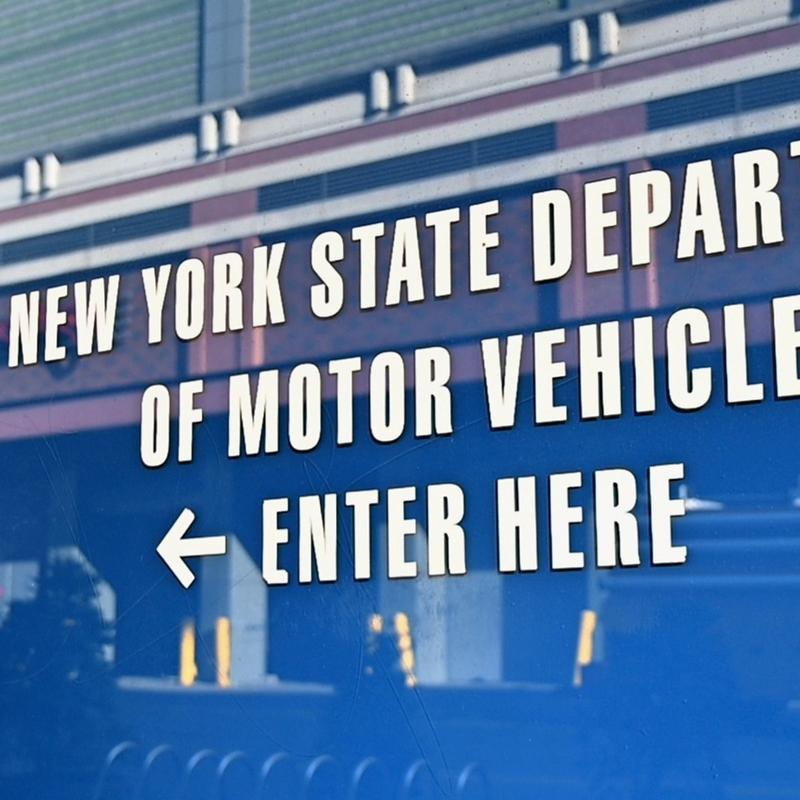
Jessica Gould: This was how we learned that this pause on non-domicile CDLs in New York was in effect, was that we started hearing about it from drivers. Rosario went to the DMV earlier this month on her birthday to renew her CDL as required, and she was told that she couldn't. She said that the DMV informed her they would not be able to renew her commercial driver's license because of these restrictions. As you pointed out, she's been driving a school bus for 16 years. Her safety record is strong. There are no problems. She was gobsmacked and also very scared about how to make ends meet.
Brian Lehrer: Why are they doing this? I don't know if this is in your lane, but the Trump people talk about, he certainly emphasized it in the State of the Union, violent criminals who are here illegally. This just seems like we want people from Central America, like that bus driver, out of the country, even if they've been here a long time and have work authorization and are law-abiding. What's going on?
Jessica Gould: I think that it is making it harder for even legal immigrants to work and be in this country. The federal government would point to a string of various crashes that have involved immigrants at the wheel. Of course, we also know that there are many, many, many crashes on our roads with lifelong American-born citizens at the wheel. Then this morning, I was hearing on our own airwaves about a crash involving somebody working for ICE.
The Trump administration says that it wants to get illegal immigrants or unauthorized immigrants off the roads. As we've talked about, this is legal immigrants are being affected. Now in New York, they threatened to withhold funding for highways. I think it was over $70 million of highway funding if the state didn't comply, citing what they said were problems in an audit of the non-domicile CDL program, that the state was granting these licenses beyond the point that the work authorization or the immigration status lasted. If you had TPS through 2026, they were granting licenses that were eight years that went beyond that. They say that's why they needed to stop what they were doing.
Brian Lehrer: Was there a shortage of school bus drivers already before this policy?
Jessica Gould: Yes. I've been reporting for some time on problems in the school bus industry in New York City. A lack of drivers is a big problem here, and we saw it actually just this week with the snows. If a driver couldn't get to work because they couldn't get out of their driveway, to get to work, then there were bus routes that just didn't run. Some of this driver shortage has to do with trends in the large vehicle driving space.
During and after COVID, as so many of us began ordering things to our homes, our groceries, getting more things from Amazon, there's been a rush from people who used to drive school buses which are, it's hard work and difficult hours to work for places like Amazon or FreshDirect or wherever for better pay or better hours, and that's left gaps in the school bus drivers' ranks. Then the ripple effects are that when a driver is sick or can't get to work, your route may be canceled, or they may have to double up, and so you can't get your kid to school till hours later.
Brian Lehrer: The only conclusion I can draw is they are so bent on getting people-- Most of the people you reported on here are from Latin America. They're so bent on getting people from Latin America out of the country that even the so-called good ones, law-abiding with work authorization, working in jobs where there's a shortage of labor, they're pushing them out with this policy. We've been focusing on school bus drivers, but I see bus drivers from the MTA are also affected. For your reporting, you spoke with a green card holder from the Dominican Republic who had been a bus driver for the MTA for nine months. Her name is Unaiko Mora, and here she is having lost her job.
Unaiko Mora: I was a good driver. I don't drink. I don't smoke. I'm behind the wheels, very conscious, very mindful. I'm respecting the traffic law. That's hard when you're trying to do the right thing, and this happens.
Brian Lehrer: I obey the traffic laws. You're trying to do the right thing, and this happens. I see you recently spoke with lawyers who told you this shouldn't have happened. What's the latest on the legal front?
Jessica Gould: In this particular case, she's a green card holder, and the lawyers I've been talking to told me that even with these changes in the regulations, she should still be able to get her driver's license. I'm going to be connecting her with one of the lawyers who reached out to me today to work with her on her case. I think that it speaks to the amount of confusion there is as these regulations are posted and then challenged in court, and then, most recently, just a couple of weeks ago, or maybe it was a week ago, revised. I think there's a lot of confusion out there.
Brian Lehrer: To be clear, this isn't a federal law or requirement, as I understand it, it's a threat to cut off federal funding for transportation to states. That means Governor Hochul acquiesced to the threat, and she's getting criticism from people for obeying voluntarily rather than trying to continue to keep these people legally employed and then fighting in court and see what happens. How does she respond to the criticism?
Jessica Gould: It's a little bit complicated because the state got a specific order from the federal government to stop issuing these licenses because of this audit that found that they were issuing them for too long or weren't backing up the issuances with enough paperwork. I think there are a lot of questions raised about how trustworthy this audit was and how thorough. They were told by the federal government specifically that they had to stop because of these problems.
The Transportation Workers Union President, John Samuelsen, was very angry and direct in his critique, saying that Kathy Hochul is sticking it to working people. The TWU says other states have been able to, with the fact that this is being challenged in court, not comply. It's definitely a difficult political issue to navigate.
Brian Lehrer: Before you go, we've talked about these commercial driver's licenses with respect to school bus drivers and MTA bus drivers. I know it's also truck drivers, which is another thing that there's a shortage of. A listener asks in a text, "What about car service and taxi drivers?" Do you know?
Jessica Gould: I don't know about that. I think there's a distinction about large vehicles in this and for commercial driver's licenses. I will admit that I have waded into the commercial driver's license world for the first time in recent weeks, and there's a lot to learn there.
Brian Lehrer: Because you're really an education reporter.
Jessica Gould: Right.
Brian Lehrer: I will say that in the various stories I've read about this, I've not seen taxi drivers and car service drivers included. It does seem to be about the large vehicle commercial driver's licenses. Jessica Gould is the education reporter for WNYC and Gothamist. Thank you so much for sharing this story with us.
Jessica Gould: Thank you.
Brian Lehrer: Brian Lehrer on WNYC. Much more to come.
Copyright © 2026 New York Public Radio. All rights reserved. Visit our website terms of use at www.wnyc.org for further information.
New York Public Radio transcripts are created on a rush deadline, often by contractors. This text may not be in its final form and may be updated or revised in the future. Accuracy and availability may vary. The authoritative record of New York Public Radio’s programming is the audio record.
