
Why RFK Jr. is Projecting a More 'Moderate' MAHA Stance
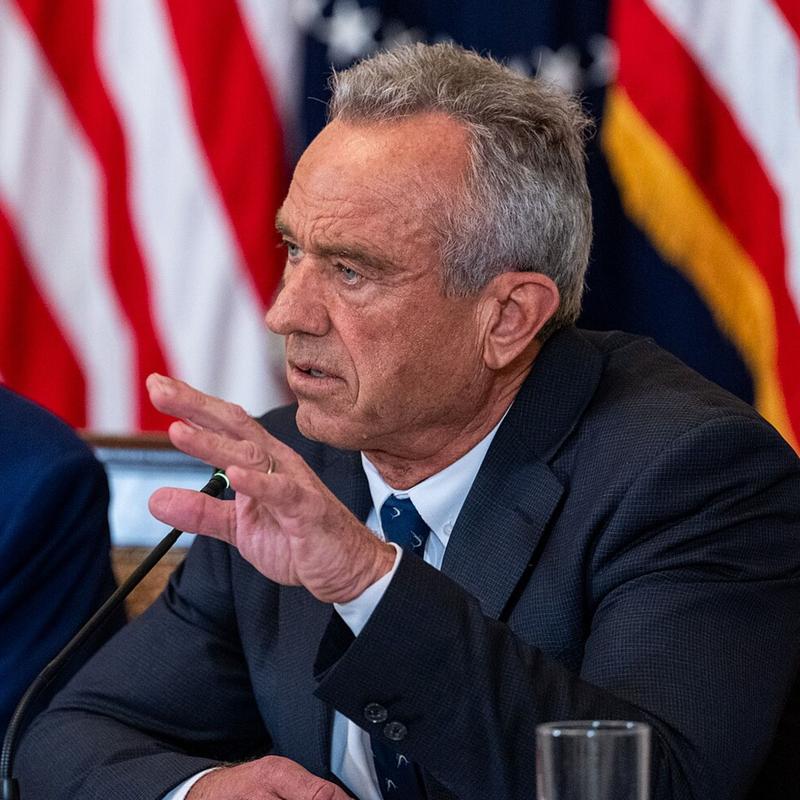
Title: Why RFK Jr. is Projecting a More 'Moderate' MAHA Stance
Brian Lehrer: Brian Lehrer on WNYC. With all the war news and other things dominating the headlines last week, and now the White House Correspondents' Association dinner shooting to boot, you may have missed that RFK Jr., the health secretary, sat for seven different congressional hearings, his first in more than half a year, and he definitely made some public health news, including definitely on vaccines. Let's catch up on some of that with some clips from the hearings and a journalist who paid close attention, a little bit of last week's old business before we get fully to this week's new business.
PBS listed four key takeaways from the hearings, including, "Kennedy deflects blame for Americans not vaccinating." "Kennedy forcefully denies there are Medicaid cuts, a claim experts call political spin," says PBS. Though another takeaway was that, "Kennedy acknowledged that some Health and Human Services cuts are painful," meaning he acknowledged cuts.
A Washington Post headline said, "RFK defends budget cuts." He also defended firing Centers for Disease Control Director, Susan Monarez, after not that long ago calling her unimpeachable. Interesting choice of words. We'll play that exchange or an exchange he had about that with Senator Elizabeth Warren. He also said that AI could someday replace the FDA, the Food and Drug Administration. Here's that clip that you probably haven't heard.
RFK Jr.: AI is going to revolutionize medicine, and it may at some point make FDA even irrelevant. It's going to give us the capacity to develop new drugs, personalized medicine for every citizen. I just was reading about a dog that had cancer. His owner used AI to develop a personalized treatment that cured the cancer. We're going to see that now in medicine, across medicine, and we're very excited about it. AI is very dangerous potentially, but also has the capacity to bring really great things to humanity, particularly in the realm of human health.
Brian Lehrer: AI might replace the human judgment of the FDA. We'll talk to Chelsea Cirruzzo in a minute, Washington correspondent for the health website STAT News. Their headlines include, "Key GOP Senators push back on Trump's plan to cut NIH, Reorganize HHS, and publicly Kennedy embraces a more moderate MAHA." The subhead on that says, "From promoting vaccines to defending glyphosfate, Kennedy has veered from MAHA messaging." Yes, that headline said, "Promoting vaccines," and sure enough, here's an exchange between Kennedy and Senator Michael Bennett, Democrat of Colorado.
Senator Michael Bennett: The measles vaccine is vital to keeping American children healthy in this country. Are you taking that position today? That has not been your position.
RFK Jr.: That's my position, we promote the measles vaccine.
Brian Lehrer: "We promote the measles vaccine." That's definitely a change from when Kennedy asked this as a serious question not that long ago.
Congresswoman Madeleine Dean: Getting the vaccine is a lot safer than getting measles?
RFK Jr.: Yes. There's no vaccine that is safe and effective.
Brian Lehrer: "There is no vaccine that is safe and effective." What happened at these seven hearings, including a week's time, sorry, seven hearings in a week's time? What might the policy or actual public health implications be of the scrutiny and his responses? Chelsea Cirruzzo is Washington correspondent for STAT News, where she primarily covers the Department of Health and Human Services, HHS, that Kennedy is secretary of. Chelsea, thanks for coming on. Welcome back to WNYC.
Chelsea Cirruzzo: Thank you so much for having me.
Brian Lehrer: Vaccines first. How much did he change his tune from the past?
Chelsea Cirruzzo: From the clips that you played, that is where at least things started with Secretary Kennedy. He, out the gate, I will say, did not address vaccines from the start. His opening statements highlighted a lot of the MAHA wins that his department has promoted, like healthy eating, the food pyramid, removing artificial dyes, but when prompted on vaccines, he did start out by saying, "Yes, we do promote the measles vaccine." He acknowledged that the measles vaccine may have saved the life of a child who did die of measles last year.
That said, he at times did shift back to his old ways of talking about vaccines. At one point during a Senate Health Committee hearing, he was dismissive of a study that said, "A decline in infant mortality followed the introduction of vaccines in the 1900s." He claims that had to do more with better hygiene and sewage. Of course, later in that hearing, Bill Cassidy, the Republican chair of the committee, did pull up the study and say that Secretary Kennedy had not interpreted it correctly. He really came out with a more moderate stance on vaccines, but when prompted, he did sound a little bit like his old self.
Brian Lehrer: I'm going to play a very, very short clip of Senator Cassidy, a physician people will remember who has been critical of Kennedy about this in the past, though he voted to confirm Kennedy, and has taken a lot of criticism himself for trusting Kennedy to do what he said in his confirmation hearing with respect to not changing vaccine policy. This is a tiny clip of Cassidy last week. Folks, listen.
Senator Cassidy: I would say effectively we're denying people vaccine.
Brian Lehrer: "Effectively we're denying people vaccines," even though Kennedy testified there that they're promoting the measles vaccine. Is that a true statement, or do you have any context for that that you can report on? Chelsea, is the United States government under Secretary Kennedy effectively denying people vaccines in ways that weren't happening before?
Chelsea Cirruzzo: They would say no, but behind the scenes, we do know that the health department under Secretary Kennedy has remade vaccine policy significantly. They have unilaterally decided to recommend fewer pediatric vaccines. They have dismissed a committee of federal vaccine advisors and then refilled it with some hand-picked folks from Secretary Kennedy himself, many of whom are vaccine skeptics, and they have voted to recommend reducing certain vaccines that are recommended to the public, including the hepatitis B birth dose.
In a way, what Senator Cassidy was talking about was when these panels, when the federal government recommends a vaccine, insurance is required to cover it. When they do not recommend a vaccine, insurance is not necessarily required to cover it, nor do federal healthcare programs like Medicaid. That said, there's additional caveat here that the decisions that HHS has made on vaccine policy, like changing the vaccine schedule, are being litigated in court. There's actually a stay on those changes that was issued by a federal judge earlier this year.
I will say that HHS asked last week that that stay be lifted while they work on an appeal, so certainly, that is still an ongoing conversation. Certainly, the changes that they made impact the ability for people to access those vaccines.
Brian Lehrer: To be clear, Senator Cassidy made that comment in September of last year that the federal government under Trump and Kennedy is effectively denying people vaccines, but played that for context. I know that still stands as his opinion today. Your article that I cited the headline on from in the intro, "From promoting vaccines to defending glyphosfate, Kennedy has veered from MAHA messaging." The glyphosfate story is very interesting and I think a lot of people have never heard of it. What is that?
Chelsea Cirruzzo: Glyphosate is a pesticide that is really loathed by a lot of the Make America Healthy Again folks. They consider it a dangerous herbicide, but recently, the White House issued an executive order to boost the production of this herbicide. That did not sit well with a lot of Make America Healthy Again folks. There's actually, I believe, a rally today pushing back on that decision, but Kennedy has defended it and so have his advisors.
Callie Means, a senior advisor, he was recently at a POLITICO event, and he said that they met for hours with critics of the herbicide and decided that to move forward. Kennedy is certainly trying to straddle a very difficult line here between the White House and his followers. He certainly can't make both happy. If the White House wants to move forward with promoting this pesticide, then that is certainly something that he would throw his support behind, but it is causing division in his movement, in this Make America Healthy Again movement that feels as though he has betrayed them.
Brian Lehrer: Listeners, any questions or comments about the seven hearings that RFK Jr. sat for in Congress last week or any of these many angles that we could be discussing based on testimony and questioning that came out of those hearings? 212-433-WNYC, call or text. 212-433-9692 with Chelsea Cirruzzo, Washington correspondent for STAT News, who primarily covers HHS.
I played that clip of Kennedy saying AI might replace the FDA. I don't want to minimize the real potential benefits of AI in medicine. We've done segments on that. I don't know if you've reported on that. You would probably characterize it as having some very good public health potential, you'll tell me, but saying AI I might replace the FDA with the human judgment, of course, that comes with that, did that alarm anyone? Did you report on that?
Chelsea Cirruzzo: I specifically did not report on it. I would definitely point you to my colleague, Lizzy Lawrence, who is just our fantastic FDA reporter, but I will say overall, we know from our conversations with folks within HHS that there are a lot of questions of AI's use in healthcare. I think we know that a lot of people feel as though AI can be helpful in streamlining decisions, making things easier, but are also adamant that a human needs to be behind many of these decisions.
When we're talking about things like drugs, medical devices, it's not something you want to take lightly. I think there's probably some trepidation about what that could potentially look like. I don't necessarily think that's something we're going to see happen in the next few years. That said, things have been moving pretty quickly with AI, more than I have anticipated, so it's certainly something to watch.
Brian Lehrer: I read that he also expressed concern about China outpacing the US on biotechnology. Did you happen to see him say anything like that?
Chelsea Cirruzzo: That is something that I have not reported on as much. It's a little outside of my beat. Again, something that we're watching, it comes back to the White House agenda of domestic production, bringing things USA made, and certainly, the White House has concerns. You see this with the most favored nation policy, which is a drug policy to reduce drug prices in the US. It's not just China, I think the White House is very concerned with the fact that in other countries they do have faster production, they do have lower prices, and they're trying to bring that to the US.
Brian Lehrer: The reason I bring it up is that yet at the same time, he defended cuts to the National Institutes of Health, the NIH, which conducts or funds a lot of medical research in this country. Here's an exchange between him and Democratic Congresswoman Madeleine Dean of Ohio.
Congresswoman Madeleine Dean: You state in your testimony that AHA, I'm not sure that acronym, but AHA will focus on high impact priority areas, including mental health. Did you recommend cutting $1.3 billion from the center for Mental Health? $1.3 billion cut in your budget?
RFK Jr.: I think that's the proposal.
Congresswoman Madeleine Dean: Okay, you're comfortable with that. Your testimony cites White House MAHA report finding a shortage of behavioral health providers. Do you agree with that finding? Did you recommend cutting $68 million from behavioral health workforce development?
RFK Jr.: I think that's a proposal.
Congresswoman Madeleine Dean: That's terrific.
Brian Lehrer: I think I slightly misstated what that exchange was about. Not NIH medical research per se, though that's being cut also, but an Office of Mental Health in particular, acknowledging there exactly at the same time that the US is concerned about other countries eating our lunch on research.
Chelsea Cirruzzo: There are two things there. Excuse me. STAT, earlier this year, we actually surveyed a thousand researchers who had been supported by NIH funding. We found that a quarter of those respondents had been forced to lay off lab members. Two out of five of planned research opportunities had been canceled, and many had seen students decide not to move forward with healthcare research. That is definitely a concern.
What you were hearing there had to do actually with a separate agency. As HHS is looking into cutting NIH again, as they proposed last year, they're also trying to create a special agency focused specifically on chronic disease. This is called the Administration for a Healthy America, AHA or A-H-A, and that is a concern for Senate appropriators who feel as though it's not necessary to achieving the goals that HHS has already set out in reducing chronic disease when we already have the NIH, we already have a agency that supports substance use disorder treatment and research, and we already have an agency that addresses community health centers.
It's a question of these shifting priorities. The HHS, the White House wants to move things around at HHS, and the Senate is not so sure that is the best use of their time and their money when we have to focus on boosting biomedical research.
Brian Lehrer: To your headline about Republican senators pushing back Republican senators. Here's Wyoming Senator, John Barrasso, who like Senator Cassidy, is also a physician.
Senator John Barrasso: I've grown deeply concerned. The public has seen measles outbreaks. Leadership in the National Institute of Health questioning the use of mRNA vaccines, the recently confirmed director of Centers for Disease Control and Prevention fired. Americans don't know who to rely on.
Brian Lehrer: What's Barroso's main issue?
Chelsea Cirruzzo: I think the main issue is that HHS is coming to Congress and saying, "Hey, we're doing all of this work to focus on the chronic disease epidemic in the US. We're really focused on addressing obesity in children, diabetes, things like that, Alzheimer's, but then when they look at the budget proposal that they present, it tries to cut those programs. The proposed budget for fiscal 2027 would cut HHS by 12%. It would also include a lot of cuts that HHS had tried to push through Congress last year, and Congress pretty much ignored and said, "We're not going to do that." That includes cutting the NIH, eliminating a health research agency and creating that AHA, like I mentioned.
Again, it seems as though the Senate is not pleased with HHS plans and they want to fund it as they have in the past. They also want HHS to spend that money. This is a big deal here because Congress will give HHS money and say, "You got to put this into this research or that research," but if HHS does not spend that money or use it as directed, Congress is going to have a problem with that.
Brian Lehrer: A couple of corrections. I think I said Madeleine Dean is from Ohio. She's from Pennsylvania. Also, that I said glyphosfate when that chemical is actually glyphosate. There's no second combination of consonants there, and that is glyphosate. We're getting some interesting content oriented comments on glyphosate. One, just to point out that that's the generic name of the chemical that's used in the weed killer, that's used in agriculture, Roundup. You familiar enough with that to confirm that?
Chelsea Cirruzzo: Yes, that is accurate.
Brian Lehrer: That's from Roundup. One listener says, "My understanding is that glyphosate, the active ingredient in Roundup, has reasonable scientific research linking it to cancers." Another one says, "An episode of Reveal," the public radio program Reveal that we aired yesterday, "was on glyphosate being used in national forests despite the health risks." There's another one that says, "Better to keep glyphosate than ban it and start with other pesticides that we don't know the effects of. Better to measure the prevalence in people's blood." How controversial is this within the public health community?
Chelsea Cirruzzo: It is pretty controversial. All of that is true. We've known for quite some time that this chemical, and I'm not even going to try to pronounce it because I also will pronounce it incorrectly, has been a concern. What folks were saying that there's pretty credible research that it is linked to cancer carcinogens, that is all accurate. Again, it was a surprise, this year to see that Bayer, which is the company that produces this, reach an agreement with the US government to continue to sell this in the US.
Again, it's something that we know can be dangerous. To the point of the person saying, It's better we know this than try something new," I can't necessarily say that's what the White House's thinking is. I don't know exactly. I think that is a point that I've heard from some people that, "We know how this works. If we control it, if we take these steps, it can be different." That doesn't always make the MAHA movement very happy, though.
Brian Lehrer: As Washington correspondent for STAT News, are you covering the Supreme Court hearing, which I think is going on right now about Roundup? I think, if they win, they would be off the hook for lots of lawsuits that say that it causes cancer and that people have been hurt by that or killed by that and sue for damages.
Chelsea Cirruzzo: Yes, I'm not covering it specifically. I think my colleagues are. I mentioned earlier that there's a rally outside the Supreme Court. There are MAHA activist members out there today to say that they don't support this chemical, that they're pretty upset. It is a vocal group that is not happy with these decisions. That is something we'll certainly be watching, and whether or not they have any impact on the White House.
One thing I will add here is these folks, these MAHA activists, especially the ones who have been critical of Kennedy in the recent weeks, they did recently meet at the White House with President Trump, with Kennedy, with other officials, including Karoline Leavitt, to talk about MAHA and their concerns. I don't necessarily know what happened inside the room, but it did seem like a positive meaning, at least from how it was portrayed. I Think that's a sign that the White House is aware of these concerns and is trying to tamp them down, is trying to reassure these groups that they have their back.
Brian Lehrer: Vivian in Washington Heights wants to bring up another controversial thing that RFK Jr. Has said. Vivian, you're on WNYC. Thank you for calling in.
Vivian: Hi. I overheard a clip where a Congressperson spoke to RFK Jr. about how he would address Black maternal fatalities during childbirth if they're not allowed to say the word Black because of DEI, and the response he gave was-- I don't even know how to put it. I don't remember exactly what he said. I just knew it was nonsensical. Then she followed-up talking about his comments to take Black children and re-home them because he feels that Black families, I suppose, are too eager to put their kids on ADHD drugs. I was just wondering if you could speak to those two points that that congressperson made and his replies to those, I don't know, accusations or whatever.
Brian Lehrer: Thank you for bringing that up. Yes, I have the quote here, if this transcript is accurate, of the 2024 podcast interview remark where as printed here, Kennedy said, "Every Black kid is now just standard put on Adderall, SSRIs, benzos, which are known to induce violence. Those kids are going to have a chance to go somewhere and get reparented to live in a community where there'll be no cell phones, no screens," from 2024. You're familiar with that one, Chelsea?
Chelsea Cirruzzo: Yes, I was actually in the room for that exchange. I believe that's Representative Terri Sewell.
Brian Lehrer: Yes, it was.
Chelsea Cirruzzo: Then I believe a few other folks brought it up as well. She was referring specifically to a 2024 interview where, yes, Kennedy did say that Black children who have been given SSRIs or certain medications for ADHD should be reparented. That is absolutely what he said. This was also a case of Kennedy also reverting back to his old ways. He said, "I didn't say that." He later apologized for the comments.
One of his first lines of defense I found in covering him is that he'll say, " I didn't say that," or, "You made that up." Sometimes it's taken out of context, but this one was certainly what he did say. I think that comes back to what other lawmakers mentioned as well, that when HHS took its position against DEI, they started going through grants and removing grants that they felt like were not aligned with HHS's priorities.
That included control, effing for certain words like women, which is something, I believe it was one of the senators. I don't want to say who it was because I think that I might be correct. Oh, I'm sorry, it was Susan Collins said that, "It's not useful to go through and just take out any grant that uses the word woman in it because then you're basically just not researching a significant portion of society." Then, of course, that includes Black children. I think exchange really came back to the priorities of HHS and how they are thinking about research.
Brian Lehrer: The sequence of responses that I have, per what you said, Kennedy did deny. He said, "I doubt that I said that," when confronted with that statement, and then said, "If I said it, I apologize, but I'd have to see the transcript." Is that consistent? I think you were just suggesting that that's consistent with his response to other things that he said maybe about vaccines or other things that sound really outrageous that he now has to deal with because he's actually a political appointee?
Chelsea Cirruzzo: Yes. Thinking back to his confirmation hearings, again, I'd have to look up exactly, but there were numerous examples of lawmakers saying, "You said this thing on vaccines or you said this thing on AIDS." A lot of outrageous and at times offensive things that he had said. Occasionally, he would say, "Yes, I did say that, but I don't believe that anymore," or he would just say, "You're making things up. I didn't say that," or, "I don't remember saying it that way." With a fact check, you can see that he did. It was a lot of things, different topics there.
Brian Lehrer: He was also questioned about firing Centers for Disease Control Director Susan Monarez. Here's an exchange with Senator Elizabeth Warren about that.
RFK Jr.: I told her that she had to resign because I asked her, are you a trustworthy person, and she said no.
Senator Elizabeth Warren: You're saying she's lying?
RFK Jr.: Yes. Every conversation I had with her, there were witnesses.
Senator Elizabeth Warren: Let me get you straight, this is the same person that less than a month earlier, you stood next to her and described her as unimpeachable.
Brian Lehrer: Now, was that from this week? That might have been from his previous round of hearings in September. What's your best take on what happened with Susan Monarez, who herself was a Trump appointee?
Chelsea Cirruzzo: Dr. Monarez was the first Senate approved CDC director. That is because of a law passed during COVID requiring that the CDC director face the Senate. She faced the Senate, she was confirmed, but within a month of her taking the job at the CDC, she was fired by Secretary Kennedy over a dispute into vaccine policy. She claims that he told her to sign off on vaccine policy, that his hand-picked panel of vaccine advisors I mentioned earlier would sign off on before she saw it and she refused. His version is that she told him that she was untrustworthy.
Now, since then, the CDC has been without a permanent leader and it has of course left a lot of the senators who would be responsible for confirming the new director very wary of who HHS might put up. The president actually nominated somebody while Secretary Kennedy was sitting in a committee hearing last week, and that's Dr. Erica Schwartz. She is a former deputy surgeon general under the first Trump administration, has many years of experience in federal government and in healthcare. I think the senators will certainly be keeping an eye on, on her longevity in the role if she is confirmed.
Brian Lehrer: Yes, this new appointee, Dr. Schwartz, or nominee, I think I've seen her described as mainstream or a public health normie, as one commentary I heard put it. Would you say?
Chelsea Cirruzzo: Yes, absolutely. Let me just back up a bit. When Dr. Monarez was outed and there was a lot of time between having a nominee, a lot of different names were being floated and some of the names we heard were definitely ones that were more vaccine skeptical or had made anti-vaccine comments in the past. That was worrying, I think, to members of the Senate who were not likely to advance a nominee like that, especially after what had happened with Dr. Monarez. Dr. Schwartz is more, I would say, of a safe choice. That's not to say she's not qualified because she certainly is, but I think she's somebody who will make the Senate happy and willing to advance her.
Brian Lehrer: Last thing, after a week of RFK Jr. hearings, there's been some political analysis, especially on him pulling back on what he used to say about vaccines, that Trump has asked him to tone it down generally because of the midterms. Is that your understanding of what's going on? I realize you're a health reporter, not a political analyst, but you got a take on that?
Chelsea Cirruzzo: Yes, I certainly have to be smart on both. Yes, that is our understanding from our reporting that the White House has asked HHS to back off of vaccines. In fact, a White House official told us a few months ago that the White House was done with the vaccine issue, that changing the childhood vaccine schedule, even though that's being litigated in court in January, was the limit of what they wanted to do on vaccines.
At this point, they just want to focus on the more politically popular issues in MAHA, like healthy eating, food dyes. Those are the sort of things that polls have found a lot of parents and voters can get behind. The vaccine stuff, more people are skeptical of it. It's a hard sell. We do know that Secretary Kennedy will be heading out on the midterms trail this summer and will be boosting his agenda. I think that what he spoke about during the Senate and House hearings that he opened up by talking about the food stuff, the drug policy and not talking about vaccines, that's a preview to what he's going to be talking about on the campaign trail and what the White House wants him to focus on. It's-- Go on.
Brian Lehrer: Where exact-- Go ahead. I'm sorry, finish your thought.
Chelsea Cirruzzo: No, and I was going to say it certainly will be easier when he's not being questioned by lawmakers to make his point
Brian Lehrer: I guess, but where exactly does the Republican Party think he's going to be a plus in midterm elections campaigning?
Chelsea Cirruzzo: Secretary Kennedy is a pretty popular cabinet member. He's got a lot of name recognition. Again, the parts of the MAHA agenda related to healthy eating, related to reducing drug prices, and also just saying that pharmaceutical companies, big companies are not really your friend. For the American citizen, it's hard to feel like you are benefiting a lot from these big companies. That speaks to a lot of people.
Kennedy has certainly got a lot of goodwill, at least in that regard. That said, the vaccine area can be a damaging part of his legacy and the way he can communicate on the midterms, which is midterms trail, which is why the White House wants him to not talk about it.
Brian Lehrer: Chelsea Cirruzzo, Washington correspondent for STAT News, thanks so much for coming on with us today.
Chelsea Cirruzzo: Thank you so much for having me.
Brian Lehrer: Brian Lehrer on WNYC, more in a minute.
Copyright © 2026 New York Public Radio. All rights reserved. Visit our website terms of use at www.wnyc.org for further information.
New York Public Radio transcripts are created on a rush deadline, often by contractors. This text may not be in its final form and may be updated or revised in the future. Accuracy and availability may vary. The authoritative record of New York Public Radio’s programming is the audio record.
