
Why Bombing 'Drug Boats' Will Do Nothing to Solve America's Fentanyl Crisis
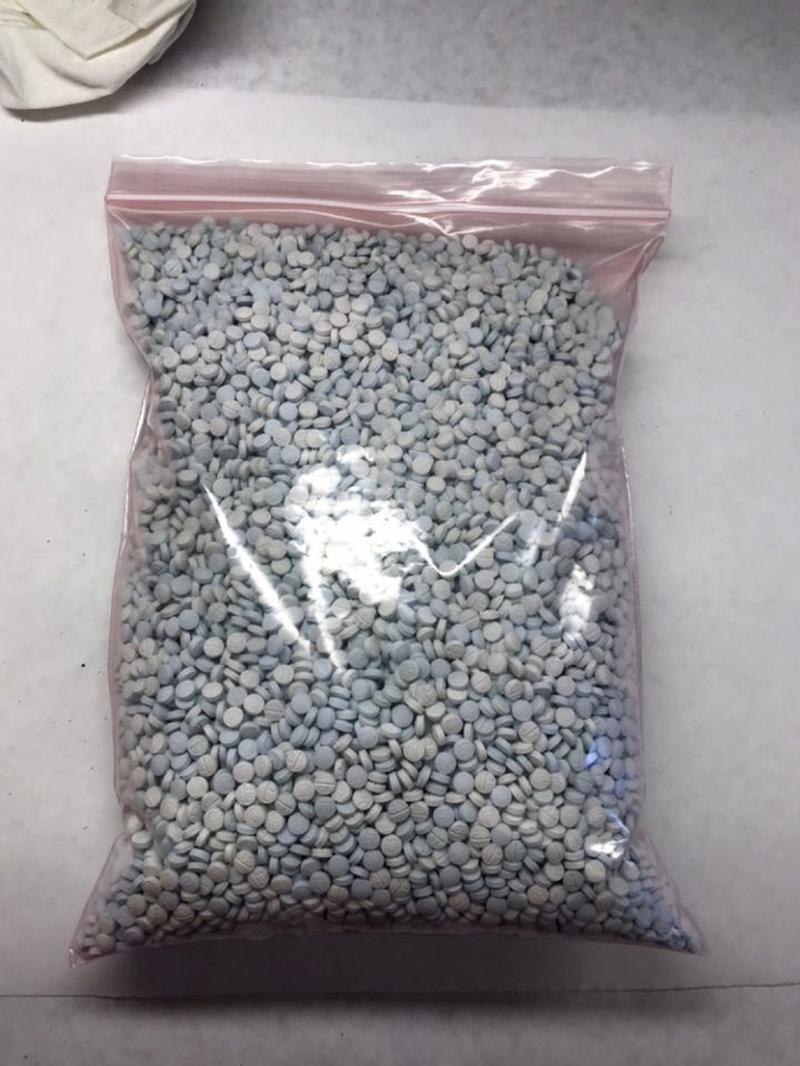
( Drug Enforcement Administration via AP )
[MUSIC]
Brian Lehrer: Brian Lehrer on WNYC. Another Health Tuesday segment. Since September, the US military has carried out 20 strikes, as you probably heard, on boats allegedly smuggling fentanyl in the Caribbean and the Eastern Pacific, killing at least 80 people. Not the fentanyl, the US military strikes. President Trump has claimed with no evidence that each destroyed boat saves the life of 25,000 Americans, presumably, by stopping the flow of fentanyl into the country.
It's the Trump administration's expedient solution to a complicated problem. America could be made "great again" if drug trafficking could only be stopped, if we could only go back to the days before the fentanyl crisis, which is real, but our next guest argues that, "There is no wholesome, traditional drug free America that we can return to." Americans have always used a lot of drugs, even in the white suburbs, and rural areas that Mr. Trump supporters call the real America." This comes from the article called I Am a Drug Historian. Trump Is Wrong About Fentanyl In Almost Every Way, so joining us now is David Herzberg, Professor of History and Director of the Drugs, Health and Society Program at the University at Buffalo. Professor Herzberg, thanks for your article. Thanks for sharing it with us. Welcome to WNYC.
David Herzberg: Thanks for having me.
Brian Lehrer: You write that the first drug crisis came in the Gilded Age of the late 19th century. Tell us that story.
David Herzberg: This is a period of time in which the American economy was undergoing industrialization, and so shifting to mass production of new high tech products that were sold far and wide, and among those new products were more powerful drugs such as morphine, which was isolated from the opium poppy, and cocaine, which was isolated from the coca plant.
The traditional market protections in America could be described as caveat emptor, or let the buyer beware, and this works in small scale markets, where you know the people selling, and you're familiar with the products, but it was kind of a disaster in the late 19th and early 20th centuries with all these new products produced by unknown concerns that might be far away.
In the headlines of that era, were all sorts of consumer tragedies such as women blinded by toxic cosmetics, or babies starved to death on swill milk, which looked like milk, but which was incredibly watery. Among those were a sharp increase in addiction to morphine, eventually, heroin and cocaine, because these products were available, and there were very few limits on how they could be sold.
The majority of addiction came from people who went to see doctors, and got prescribed these medications, because that was the largest market for them, and so it was right there in the doctor visiting classes, in other words, those people with enough money to see a doctor, they weren't particularly in cities, they were overwhelmingly white, and so that was the first drug crisis that looked similar to the initial stages of today's opioid crisis.
Brian Lehrer: Yes, pharmaceutical prescriptions, in today's case, of course, painkillers, and then people get hooked, and turn to street drugs. I mean, that's an eerie echo of what is happening today from that long ago.
David Herzberg: Yes, definitely. It really underscores the main point, which is that our drug crisis wasn't caused by foreign traffickers, so it can't be solved by declaring a war on foreign traffickers. In fact, history suggests that's likely to make things worse. We can see an example from just our most recent opioid crisis. That transition you identified from people who are using pharmaceutical opioids switching to street drug use. Why did that happen?
That happened, because, when authorities wanted to take action to do something about a growing crisis of addiction to pharmaceutical opioids, the action they took was one of these drug war type actions in which they said, "The problem is, people are abusing these drugs, and we need to stop selling drugs to people who are addicted to them." This was the line of the pharmaceutical industry. This was the line of the first round response.
Of course, people who are addicted to a drug, are very strongly motivated to keep buying it, and so when they couldn't buy, in what I call white markets, those legal pharmaceutical markets, they looked elsewhere to buy, and this created a mismatch in supply and demand in America, because illicit market opioids, what I call prohibition markets, they were 20th century old fashioned markets, they were located in major cities.
You had to go there, predominantly, to buy them, and that wasn't where these folks who had become addicted to pharmaceuticals were living. You had a lot of people who wanted to spend money on opioids, and you didn't have enough people who were trying to sell them opioids, and that's where the new suppliers stepped in. These new suppliers were-- They were modernizers.
They said, "Wait, why should we deal with farms and farmers, and goo extracted with a scalpel from a flower, when we can make a synthetic product? instead of sending it to one of these 20th century central markets where everyone has to go to, we'll bring it to where the consumers are, just like the e commerce revolution." This attempt to shut off the supply with this drug war type policy, ended up changing the market in ways that were incredibly dangerous.
For these people who had developed an addiction, they shifted from using a regulated product that was exactly what it said on the label, to using unregulated, unlabeled products that turned out to be much more potent and dangerous in the case of fentanyl, which is the synthetic product that they shifted to.
Brian Lehrer: Is this related to what you call in your piece the white market, rather than the black market, this kind of long term game of cat and mouse between drug companies, and drug regulators?
David Herzberg: Yes, so white markets, of course, are these legal pharmaceutical medical markets that sell the products that are probably in many of your listeners' medicine cabinets. There's this cat and mouse game is between authorities who want to restrain and regulate those markets in the name of public health. These are desirable products, they're good products, but they're also-- Can be really dangerous, so you want to have careful safeguards.
The companies selling them tend to believe that they are much less dangerous than authorities do, and they want to sell them much more easily, and with fewer restrictions, and so sometimes authorities get the upper hand, and these markets are reigned in really carefully, and sometimes the manufacturers get the upper hand, and they break free, and are able to sell a lot of products.
We saw that, we already talked about the late 19th century with morphine and cocaine. This happened again from about the 1950s to the 1970s with sedatives and stimulants. I'm talking about barbiturate, sleeping pills, Valium, that's an anti-anxiety drug, and amphetamine, which at the time was used for dieting, and as an antidepressant. Huge public health crisis related to too easy sale of all these drugs, because the industry had gotten one step ahead of the regulators, and were able to sell them like hotcakes. Then, when that got reigned in in the '70s, the next time that the industry won this cat and mouse game, was with the beginnings of the opioid Crisis in the 1990s.
Brian Lehrer: Listeners, I imagine some of you read this article with the very sticky title that probably made you click on it, if you were on The New York Times website. I Am a Drug Historian. Trump Is Wrong About Fentanyl In Almost Every Way. It is David Herzberg, Professor of History, and Director of the Drugs, Health and Society Program at the University at Buffalo. Who has a story, or a question or comment? 212-433-WNYC, 212-433-9692. You can call or you can text.
There is kind of a tension here, isn't there, between the desire to not over prescribe, so that you don't, whether it's barbiturates, or today's opioids, or whatever happened in the Gilded age more than 100 years ago, so that you don't over prescribe, and get people addicted in those ways, but you also don't under prescribe. I mean, we once did a segment on the show a number of years ago about concerns that patients were allowed to remain in pain too much, because doctors didn't want to prescribe potentially addictive painkillers.
David Herzberg: Yes, it's a really important point, and I'm glad you brought it up. We have a system, it's like a two stage engine, that cat and mouse game. Our system tends to overshoot the mark in both directions, so we overshoot the mark, and oversell drugs. This is, the opioid crisis was caused not by paying patients getting too many opioids, but by communities being flooded by opioids.
Three quarters of the people who developed an opioid addiction to pharmaceutical opioids, had never been prescribed an opioid themselves. It was because it was-- That a community was flooded with pills. It was just so easy for anybody to get access to them, so you have that one problem of flooding communities with a dangerous drug with insufficient warnings about the potential dangers.
Then, the other problem, when that happens, our reaction afterwards is to slam down the walls really hard. Just like what happened when I said, authorities responded to this crisis of flooding by shutting off people who were long term users of opioids, and that has had a devastating effect, and so we lurch from one extreme policy to the other, and we ignore the hard work of building a policy that delivers the drugs that people need.
Everybody agrees, these are incredibly important drugs. Fentanyl is an incredibly important drug in its proper place, and we really need to think pragmatically about how to deliver these drugs the way that we want them to be delivered, instead of either having them flooding communities, because of the profit motive, or being slammed shut in a ham-handed way, because of the political value of declaring a war against drugs.
Brian Lehrer: In the contemporary era, enter fentanyl, and you write that it came to dominate the market, because of its suitability for smuggling, not because consumers particularly wanted it. Explain.
David Herzberg: Yes, so when this generation of people who had become addicted first to pharmaceutical opioids, then they switched, and at first, they were able to buy heroin, although it required some changes in the market. As far as we're able to tell from studies at the time, when fentanyl first appeared, they actually didn't like it. It had a slightly different subjective sensation that wasn't what they were familiar with and wanted, and it's a shorter acting drug, and so you needed to use it, buy it, and use it more often, which is really inconvenient.
Of course, it's much more potent, so there's a greater degree of danger. Why did it appear if people didn't want it? This is because prohibition markets, and I use that term instead of black markets, because it makes it clear that, because this kind of policy doesn't eliminate drugs, it's really just another set of incentives in a market. Prohibition markets incentivize products that are easier to smuggle, and fentanyl, about a hundred times more powerful than other opioids that were available at the time. That meant you needed to move less of it to produce the same number of doses to sell.
In other words, it's going to be more profitable per unit of weight, and it's also going to be easier to smuggle, because it doesn't involve farmers and farms. The supply chain is much more streamlined, and because it's so small, you can evade detection. In other words, in a white market, at least in theory, there are incentives to produce and sell in a way that takes into account consumer safety.
That label, it says what it is, and it has to be accurate. Now, the person selling it, their goal is the well-being of the person who's buying it. Of course, all in theory. In a prohibition market, none of those things are there. There are no incentives for good manufacturing or, say, accurate labeling. It's just as illegal to sell high quality fentanyl that's mixed perfectly, and is accurately labeled, as it is to sell poor quality fentanyl, or even to be selling cocaine-- Claiming to be selling cocaine that is actually fentanyl. It's all illegal.
We give up on our ability to say to a producer, "If you want to enter this market and make money selling to people, you have to meet these standards, and you have to produce products that-- With consumer safety in mind." In those prohibition markets, fentanyl is a great product, but for prohibition market consumers, it's been incredibly deadly.
Brian Lehrer: As we continue with David Herzberg, Professor of History, and Director of the Drugs, Health and Society Program at the University of Buffalo, author of The New York Times essay called I Am a Drug Historian. Trump Is Wrong About Fentanyl In Almost Every Way. We're going to go to some of your calls and texts now at 212-433-WNYC, 433-9692.
Professor, here's something from a text message says, "I would honestly have no problem with the attacks on these boats, if they did in fact remove fentanyl, legal or otherwise. That said, I think it is a ruse, because his base likes fireworks. It appeals to the base." Talk about the effectiveness or your premises, not effectiveness of taking out these drug boats, even if they are carrying a lot of fentanyl.
David Herzberg: Yes, I mean, let's be clear. There's no evidence that I've seen that Venezuela supplies any fentanyl to the United States, or is a significant source of any other drug, but let's just say that they did have fentanyl in them. Here's the problem. When you cut off a supply chain, so fentanyl is now coming into the United States. If you cut off the supply chain, you still have a bunch of people who are highly committed to buying fentanyl, right?
Those people are still going to be seeking out people selling them fentanyl. This will create a moment of market disruption, where you have a mismatch between demand and supply, and that invites in new suppliers to meet that demand. Let's say, nobody does it right away. They're afraid of being blown up. The prices for fentanyl will go up, because there's high demand, and low supply.
Eventually, those prices will reach a stage, reach a height where someone is going to say, "Dang it, I'm going to give it a try. There's a lot of money to be made here." We've seen this happen again and again over the last 150 years, that when you shut down one supply chain without doing anything about the demand, new supply chains come in, and because this is an illegal supply chain, this moment of disruption invites competition. Where there are no rules, hey, competition can get quite violent.
This is just one important point, that the US has suffered a lot of death and harm due to our misguided drug policies, but countries south of our border have suffered even worse, because of the violence that gets associated with these moments of disruption. Really, you need to do something about both sides of this. It's clear that fentanyl is a bad product. The people selling fentanyl are just as responsible for that bad product, as the opioid industry was for flooding communities with opioids.
I have no desire to excuse them for selling this dangerous product, but we need to work on both sides of the equation. We need to find ways to insist that suppliers be responsible, and protect the public health, and we also need to work with our domestic population, and provide support that is needed for people with addiction to fentanyl, including access to safer opioids that can keep them from dying from this dangerous product.
Brian Lehrer: Norman Manhattan has a personal story, I think. Norm, you're on WNYC. Thank you so much for calling in.
Norman: You're welcome. Hi, Brian. Love your show. I think the professor is overlooking one drug that achieved mass popularity, and was probably the most over prescribed drug during the '70s, and that was Quaaludes, and a number of manufacturers manufactured Quaaludes.
Aurora manufactured Quaaludes. Smith, Kline and French had a variation of Quaaludes. Parke-Davis had a variation of Quaaludes until the FDA totally banned it, and took it off the market, period, exclamation point, so you have not been able to buy Quaaludes here for quite a while. My own experience is, it was the first drug that really got me in trouble.
When I could no longer get a script Quaaludes, I switched to barbiturates, which were freely available, so we're talking about the old push down, pop-up effect, and that's what still goes on. That's what still drives the drug market today. Then, barbiturates led me to Placidyls, which is still prescribed as a hypnotic, all fueled with alcohol, so I think you have to look at the overall effect.
You can ban fentanyl, and I've had surgeries that use fentanyl, and I'm very grateful that fentanyl was used, but you can ban fentanyl use, et cetera, and before you could shake a stick, something else is going to pop up for sure. I know heroin has been substituted, and I'm very happy that I've been substance free for a number of years, and I still follow the industry, and I still follow the comments, and articles, and programs like yours, Brian.
Brian Lehrer: Norm, thank you so much for telling that story, which I think Professor Herzberg completely exemplifies the arc of history that you've been describing in this segment and that you describe in your article, which is banning a particular drug, doesn't solve the problem very often, because then another drug pops up to replace it, if the demand is still there. In your experience, from your expertise as a drug in society expert and professor, what does reduce demand?
David Herzberg: Well, the Quaalude example is really interesting and instructive on that front, because, one thing I'm going to say, is that it's not clear that demand can, or even should be reduced. Using psychoactive substances is a pretty normal human behavior. The question is, under what circumstances does that normal human behavior become harmful? That's what we need to try to prevent, or to reduce.
In the case of Quaaludes, help demonstrate this, because Quaaludes is an example of, believe it or not, a success story. Because we talk about this pop-up effect. You ban one drug, and another shows up. The only reason that happens is, because we let that happen, right? That in most markets, we're pretty good at capitalism. We tailor markets to provide the products that we want.
With drugs, we don't do that, so that when we shut off OxyContin, then heroin pops up, and shut off heroin, then fentanyl pops up. This is something we can actually make deliberate choices about, and that's what happened with Quaalude. You have a whole class of drugs called sedatives that include barbiturates and benzodiazepines like Valium and Xanax and Klonopin, and they're not all-- They don't all present the same degree of risk and danger to users.
In the case of Quaalude, when they banned Quaalude for, number one, they did it slowly over time, and number two, they didn't ban all of the drugs of that class, so people who used Quaalude, could shift to a different drug which could be less dangerous. The caller switched to barbiturates. A more common one was to switch to Valium, which, of course, Valium has its dangers, and this isn't a perfect outcome, but it's a better outcome, and that's sort of what we're looking at, because we can't reprogram humans to not want to use psychoactive substances.
This seems to be part of who we are. What we can do is, introduce frictions into the marketplace that make it harder to get more dangerous substances, and can encourage people to stick with the ones that we have a lot of experience with, we know how to use safely, and so on and so forth. In that case, I think that we have a responsibility to not live in an imaginary world, where it's possible to just get people to stop wanting to use drugs.
I studied this in American history. There hasn't been a time in American history where that was true. We started with the Gilded Age. We could go back to the American Revolution. Historians in my field called the period after the Revolution, the Alcoholic Republic, because of a huge boom in drinking, so, in other words, we need to change our target from drugs to drug harm.
Brian Lehrer: One more call. Al in Summit here on WNYC. Hi, Al.
Al: Hi. Yes, my name's Al [unintelligible 00:22:59] I worked for a number of years in drug research, including working at times with the DEA. They have a very standard way of interdicting boats coming in, bringing drugs, in terms of stopping them, boarding them, searching them, arresting the people if they were smuggling drugs, and capturing the drugs, and so it was-- It's been effective.
Of course, it could use more money to do this kind of interdiction against blowing up boats, whether you don't even know if they have drugs, and you have no connection to what the supply line is, so it's completely counterproductive. It is, as people say, a kind of extrajudicial killing of people without any kind of adjudication, or evidence, and so it's more-- It must be more for show, or for other reasons than real drug interdiction.
Brian Lehrer: With your experience, Al, how would you respond to this argument that we may hear from the Trump people, which is that, the old style of interdiction, arresting people after you board the boats, if you really find drugs, obviously, didn't solve the problem from the supply side, because the fentanyl crisis has only gotten worse, and so if you blow up some boats, kill a few people, you're really going to dissuade people from taking that risk. What would you say to that?
Al: Well, you can make that argument. It's the same argument as taking children away from their parents to scare people that come to the United States. There's a moral question involved. Number one, you could be killing innocent people. Number two, it seems that the drug interdiction, in terms of the international borders, was not funded that heavily, so that's another reason why it didn't have the exact effect people wanted to--[crosstalk]
Brian Lehrer: What would happen to the people who were arrested in those interdictions? Were they jailed in the United States? Were they deported back to their countries? Do you happen to know through your experience?
Al: No, I'm not sure, but I'm sure there was a range of different kinds of responses to them.
Brian Lehrer: Al, thank you for your call. We really appreciate you sharing your experience in this area. Last question, Professor Herzberg, why not an "all of the above" strategy. If there are so many opioid deaths in this country, and so much opioid addiction that causes other kinds of suffering even for people who remain alive, why not work on the demand side, the quality of life side, reducing even for people who use drugs, the possibility of overdoses, and at the same time, work on trying to, through interdiction or whatever, reduce the supply?
David Herzberg: That sounds great to me, actually. The thing is, if we want to get practical about doing something about the supply side, that's exactly what we would need to do. We can't leave a huge vacuum of profit to be made by supplying people with-- Fentanyl is a terrible product. Our policy shifted suppliers to the point that they were supplying fentanyl instead of heroin. As weird as it may sound to say, it would be a supply side win if we shifted those markets back to heroin. It's a safer product.
Brian Lehrer: Wow.
David Herzberg: Right? This, to me, I think we do need to be really robust about dealing with supply. I just think the idea that we can eliminate the supply on its own, isn't realistic, not going to be effective, and it's going to make things worse. We need to be hard headed and practical about the supply, and use the tools we've developed all through the rest of capitalism, to get that supply to look the way that we want it to look, instead of pretending we can make it disappear.
Brian Lehrer: David Herzberg, Professor of History, and Director of the Drugs, Health and Society Program at the University at Buffalo. His New York Times piece is called I Am a Drug Historian. Trump Is Wrong About Fentanyl In Almost Every Way. Thank you for coming on with us.
David Herzberg: Thank you for having me.
Copyright © 2025 New York Public Radio. All rights reserved. Visit our website terms of use at www.wnyc.org for further information.
New York Public Radio transcripts are created on a rush deadline, often by contractors. This text may not be in its final form and may be updated or revised in the future. Accuracy and availability may vary. The authoritative record of New York Public Radio’s programming is the audio record.
