
What to Know About U.S.-Iran Negotiations
Title: What to Know About US-Iran Negotiations
[MUSIC]
Brian: It's The Brian Lehrer Show on WNYC. Good morning, everyone. We have two very interestingly placed people, I think, with us to discuss what feels like a turning point in the Iran war. Turning point because the US and Iran have both offered ceasefire plans, though they are quite the opposite of each other in important ways. Turning point because reporting indicates President Trump and Israeli Prime Minister Netanyahu may now want different things, an off-ramp in Trump's case, prolonged fighting in Netanyahu's.
Turning point because the humanitarian crisis in Lebanon is seriously deepening. Turning point because the new Supreme Leader of Iran either will or won't keep the loyalty of the Revolutionary Guard, that's who has all the guns. The regime could rise or fall on that. Turning point perhaps because the US is sending thousands more troops to the region, with this threat from White House Press Secretary Karoline Leavitt if Iran rejects the US ceasefire terms.
Karoline Leavitt: President Trump does not bluff, and he is prepared to unleash hell. Iran should not miscalculate again.
Brian: Sometimes he bluffs, but there's that, and all of that is a lot, right? Let's discuss. With us now is Kian Tajbakhsh, international relations professor at NYU, also a fellow of the Committee on Global Thought, as they call it, at Columbia University. Part of his background is that he was arrested during Iran's Green Movement protest in 2009. You may have heard his name in the news a number of years ago when he was released as part of the Iran nuclear deal under President Obama.
He is also author of the books, The Promise of the City and Creating Local Democracy in Iran: State Building and the Politics of Decentralization. Also with us, William Christou, reporter for The Guardian, based in Beirut, focusing on human rights investigations and migration issues. William and Kian, thank you both very much for coming on with us. Welcome to WNYC.
Kian: It's a delight to be on with you, Brian.
William: Thanks for having us.
Brian: William, I see you wrote up the difference between the US and Iranian ceasefire proposals for The Guardian. I'm going to get right into the weeds here. I think our listeners might appreciate that, to see if you think there may be a basis for a deal. On the Iran side, from what I've read, they want no more killing of its leaders now or in the future after the war ends, reparations for the economic damage done to Iran by the war, and recognizing Iran's sovereign right to control the Strait of Hormuz.
The Trump plan is in public, but as it's described in some news reports, he wants no more of Iran supporting proxy militias, limit its missile program, something regarding nuclear development and uranium enrichment, and free passage through the Strait of Hormuz, maybe through international control of the passage. Can you shed any more light on either plan as a way to start out?
William: Yes. I think the 15-point plan from the US, the 5-point plan from Iran, they couldn't be further away from each other. Both sides are describing each other's starting points as maximalist, unreasonable, and unacceptable. I think what's important is not so much the substance of the plans, it's the fact that the White House is looking for a way out and that intermediaries are trying to keep a diplomatic off-ramp sort of in the cards. We're increasingly seeing the White House indicating that they want an out to this war.
Iran, I think, actually might have a little bit more leverage in the situation. I think they're not trying to get another ceasefire that collapses in the next six months or a ceasefire that just sees the US and Israel prepare for another war. They want to exact the price to teach the US and Israel a lesson. I think it's good that we're seeing intermediaries floating proposals in the beginning of diplomacy that had really broken down over the last couple of weeks. The two ceasefire plans are really far away from each other, and a lot needs to be done, but the important thing is that diplomacy is finally starting up again.
Brian: Given what you just said, are any of your sources seeing these two plans as the basis for a negotiated ceasefire? Maybe Iran gives up its regional military ambitions, the proxies, the US and Israel give up their threats to kill more Iranian leaders, no regime change, and help Iran pay for damage from the war. Is anyone seeing anything like that as a path to peace?
William: I think, again, they're on very different pages right now. I think what Iran wants to see is a return to the pre-2023 Middle East, where Israel and the US are not able to bomb Iran and its regional proxies at will. Part of the thing that they're talking about now also is including, let's say, Lebanon, for example, in the ceasefire deal. What they want to see in Lebanon is not a return to the pre-war status quo but a return to the era of three years ago where Israel wasn't able to bomb at will.
I think Israel has taken a security approach in the region over the last three years, aided by the US, of mowing the grass wherever they want to, carrying out assassinations in Tehran, bombing in Syria, bombing in Lebanon. I think Iran, as part of its ceasefire deal, wants to put an end to that.
Brian: Kian, same question for you. As a scholar and an Iranian-American human rights supporter who was even arrested by the regime, can you see the incentives lining up for either side now, where the two proposals are the basis for just enough compromise to make a deal?
Kian: If you don't mind, Brian, I'd like to just step back a bit and explain to our listeners the way I see it and why I see it slightly differently from a lot of the reporting. First of all, my view is--
Brian: You know what, Kian, I have to jump in for a second because your sound isn't very good. Let's see if we can adjust that really quickly. Did you move away from your microphone from before we went on?
Kian: Yes. Is this better?
Brian: Ah, much better. Thank you for doing that.
Kian: Oh, okay. Okay, fine. Sorry about that. I wanted to just, first of all, preface my remarks by saying that my perspective is shaped by my experience as a democracy activist that lived and worked in Iran for 15, 16 years between about the years 2000 and 2016. I was working for better relations between Iran and the United States and the West, and I was supporting civil society and democracy activists in Iran as representing Western foundations, universities, and think tanks.
I was arrested in 2007 and 2009, and I was held in Evin Prison for over a year, including over eight months in solitary confinement under the IRGC. I was up close and personal with a lot of the-- When we talk about the IRGC, it's an abstract thing, but not for me. I spent many hours and months and years being interrogated in conversation. Then when I got out in 2010, I was held under house arrest for six years before I was released as part of the 2015 Iran nuclear deal. I think I'm right in saying I'm the American citizen in prison held longest by the Iranian regime inside there. Now, my perspective comes from that.
Now, the other thing I think it's important for listeners to recognize is when we talk about Iran, we should break it down into at least three groups, and I'll just say this very simply. I would say there's not just one Iran or the Iranian society. There is, and I give rough numbers, 20% of the Iranian society supports this regime. This includes, let's say, 10% of hardcore ideologues who are willing to kill and die for this regime, and then another 10% that are beneficiaries whose livelihoods depend on this regime. They're opportunists to a point, but they've also got used to the benefits of living in that regime. That's 20%.
On the other side, there's 30% of the population, like in many countries, who are apolitical. They just want to put the food on the table, they want their kids to be safe, they want to be safe, and they don't get involved in politics much. It's like people who don't vote here. Then that leaves 50% of the population that who wants to live under a different regime. I'd say a third of them maybe are willing to go out into the street and risk themselves like I did, protest, express their voice, and the others are just afraid.
When we talk about Iran, I think we have to keep in mind we're talking either about supporters of the regime or we're talking about people who want a different regime. My perspective is shaped by that 50% that does not support the regime. Now, having said that, that's how I can set up my answer to your question. These so-called proposals are so far apart--
Brian: Kian, stay close to your mic. I'm sorry, I need to remind you again. Stay close to that microphone so everybody can hear you.
Kian: Yes, I'm terribly sorry. I'm terribly sorry. These ceasefire proposals, they are not real. They're a sense of unreality. We are in this fight, and I say I have two hats, an Iranian and an American citizen. We are in this fight because the worldview, the interests, the demands of these two countries are fundamentally opposed.
Now, the way I see it is that, and I put this sharply, but I'll do it so that we can push the discussion forward. I think that from the point of view of the 50% who want a freer Iran, don't want to live under an Islamic dictatorship, the way we see it or that group sees it is that we don't think President Trump or Netanyahu has started a war with Iran. We think Trump and Netanyahu want to finish a war that Iran started 47 years ago in 1979. In 1979, the Islamic Revolution of Iran declared war on the United States, on Israel, and on Western modernity.
Why do I say that? What are the examples? They took the American Embassy hostage and killed American Marines and have been doing that for 47 years, killed over 1,000 US soldiers in Iraq. Second, they started acting on what is their eliminationist policy against Israel, which is the real genocidal project in the Middle East, that is to say, to eliminate the state of Israel with the people in it, if necessary.
Third, against Western modernity, the fatwa against Salman Rushdie was a fatwa against the most cherished ideals of liberal free societies, which is to have the freedom to think and to live and to write. They have never rescinded the fatwa against Salman Rushdie. There's a million dollars bounty, which they will give a prize. You know that two years ago, someone tried to murder Rushdie upstate, I think it was in Chautauqua, where he got a knife in the eye, and he very closely died.
We think that, from the point of view of the 50%, Iran has declared war not only on the United States, Israel, and Western modernity, but it declared war on its own people. The way I see Iran is that this regime, which is about 20% of the population, is holding 50 million people hostage. This war is something that has been 47 years in the making. The United States, in my view, and Israel have been extraordinarily patient for all these decades. They have treated Iran extremely with conciliation and with concessions throughout this whole period, and their patience has come to an end.
Why has the patience come to an end? I'll stop here, and I can explain later, but I think that the rules of the game in the Middle East changed after 2022. In two ways, I'll just flag them, and then I'll stop talking. In 2022, after October 7th, the rules of the game changed, because the costs of just dealing with Iran's nuclear file revealed itself to be far too high. The Obama administration, under the deal which I'm very grateful for, I would not be free if it wasn't for that deal, under that deal, they agreed to the Iranian demands to ignore ballistic missiles, to ignore proxies, and just focus on the nuclear deal.
Let's assume that Obama negotiated that in good faith. What was seen was that by 2022, the October 7th massacre of Israelis, the costs of doing that were too high. Iran had turned the Middle East upside down, and October 7th would never have happened without the Iranian regime's support, funding, and training. We know this. Hezbollah, Hamas, the Houthis, Shiite militias in Iraq, these are things that cause tremendous instability. The tragic war in Gaza is a response to October 7th, in my view.
The second thing, by the way, listeners should know, is that after October 7th, for the first time, the Iranian regime spoke openly of acquiring a nuclear weapon. The regime in Iran has been trying to get a nuclear weapon, despite all the people who tried to pour cold water on this idea. In fact, the deputy speaker of the Iranian parliament has just come out on a viral clip where he said, "Of course, we were building a nuclear weapon. We were lying to everyone."
The interviewer says, "Are you sure you should say this on air? Because it might affect the negotiations." He said, "No one's going to listen to me anyway." She's just come out and said, "We've always been seeking a nuclear weapon," but after October 7th, it became absolutely explicit, because the Iranian government felt they were defenseless after the June 12th war, the Israeli Twelve-Day War on Iran.
Brian: Last year.
Kian: Yes, last year. These two things changed the rules of the game in the Middle East and made conciliating the Iranian regime now intolerable for Israel and for the United States. The United States basically saw a future in which Iran and Hezbollah would have hundreds of thousands of missiles, which they would shield their covert, hidden nuclear program behind, and they would never be able to attack them. That's why it became a matter of urgency to launch this military operation, this attack or war or whatever you want to call it. The fact I see it is that this is a response to what Iran has always wanted. You should know, for the Iranian regime, this is not like a disaster. They'd be waiting and planning for this for half a century.
Brian: Let me jump in here, because I want to bring William back into it, but just to kind of land the plane here. Of course, some people will have totally different takes on the historical context, but given everything that you said, how does this end?
Kian: Are you asking me?
Brian: Yes.
Kian: At the moment, it ends by a combination of-- I don't want to fetishize diplomacy. Diplomacy and deterrence and force and international relations are just two sides of the same coin. Iran has an off-ramp. We talk about off-ramps. Everyone has an off-ramp. Iran could stop the war tonight. It could accept the conditions, the three conditions that the Trump administration put for talks in Oman, in Muscat. They're very reasonable conditions, which are supported, by the way, by 25 European and international states. Fourteen European countries in the United States have legally designated--
Brian: Why should they?
Kian: No, there's no reason they shouldn't.
Brian: Because they control the Strait of Hormuz.
Kian: It's a fight. It's a fight. There's no reason that they should do it. From their point of view, as I mentioned, from the Iranian regime's principled point of view, they believe that they are a revolutionary Islamic state, in which their goals have always been, and they are very principled about this. They believe it, they're willing to die for it, and they're willing to kill for it. They believe that the United States is an illegitimate, imperialist power that should be expelled from the Middle East, and Israel should cease to exist. Those are their maximalists. There's no reason they should give up.
Brian: It doesn't sound like you think that they're ready to make a deal. Let me go back to William Christou. Go ahead. You can give me a quick retort to that. I am interested in it.
Kian: I'm just saying that I think that the other psychology, which is important here, that I think a lot of people miss, is that we live with two different worldviews and mindsets. I'm not even necessarily saying one is right or wrong, although as someone who lives in the West and believes in our Western culture, I feel closer to the Western idea of life, liberty, and the pursuit of happiness, rather than submission, martyrdom, and imposing God's law on other people against their will. Those are the two different worldviews.
Brian: I understand. That's, again, your worldview as opposed to-
Kian: That's right.
Brian: -where the balance of power lies. Let me go back to William Christou, based in Beirut, for The Guardian. William, a lot of reporting now says Trump and Netanyahu want different things. Netanyahu wants to continue the war, to damage Hezbollah and Iran as much as possible for the kinds of security reasons that Kian was just describing, and also because it's good for Netanyahu politically and it delays even any criminal proceedings against him that are in the works, while Trump is getting hurt politically in the United States as we head toward the midterm elections and is looking for an off-ramp. How much of a split does your reporting indicate there is, and what that split might lead to?
William: I think it's a significant split, and I think for Israel, having the Trump's US as its chief patron is a blessing and a curse. The blessing is that Trump is more willing to do adventurous things like start a war with Iran that his predecessors wouldn't. The curse is that Trump's attention span is small, and his ratings are plummeting. The US appetite for the war in Iran is much, much lower than Israel's, since the beginning of the US-Israeli war with Iran.
The US's goals were pretty mixed. We had administration officials saying regime change. We had administration officials saying degrading the regime's capabilities, getting rid of the ballistic missile program, bringing them back to the negotiating table. It seemed like the US never had a very clear goal of what it wanted with this war, whereas Israel has been very clear from the beginning. They envisioned weakening the Iranian regime to the extent that a popular uprising could topple it.
I think we're seeing the US bulk at the cost of this war, literally, with the cost of the pump, where Israel and Israelis still very much want it to be fought. I don't think it's just now the US and Israel who are the stakeholders. We now have the Arab Gulf states that are pushing the US to go further. The UAE, in particular, has been incensed by the Iranian attacks on energy infrastructure, Saudi as well.
I think the Arab Gulf states, when this war first started, they were pretty pissed off because US started a war in its backyard and didn't defend them adequately. Now the way they're viewing it is that it's intolerable for them to live next to a neighbor like Iran, who could hold them hostage with a few ballistic missiles, cripple their economies, hit their hotels, hit their energy infrastructure. They now, too, along with Israel, are pushing Trump to "finish the job," but it doesn't seem like Trump wants to do that.
Brian: To that point, I want to play a clip from this morning of the United Arab Emirates Minister of State, like foreign minister, Lana Nusseibeh. She was on MS NOW and sounded to my ear, and I guess you're backing this up, like kind of a hawk who wants this to avoid a negotiated stalemate and a return to the status quo. Her words were that there needs to be a conclusive and durable outcome to the war. She explains that here in this one-minute clip.
Lana Nusseibeh: Conclusive outcome is learn the lessons that we have been learning since 2022, when the Houthis struck Abu Dhabi. They had limited capacity. We were able to intercept the drones and the missiles they sent to Abu Dhabi Airport at the time. We said very seriously at the time, Iran is a state sponsor of terrorism. These groups, Hamas, Hezbollah, groups in Iraq, the Houthis, have to be dealt with comprehensively. That didn't happen, and today the Houthis have the capability.
We're talking about the Straits of Hormuz. They have the capability now to chokepoint, the Red Sea and the Bab el-Mandeb, which they're threatening to do. Comprehensive means let's deal with the problem. You can't go back to a pre-February 28th worldview of Iran. We have learned a lot about this regime since then. It means the ballistic missiles program, it means the nuclear program, they've got enough enriched uranium today for 12 bombs, and it means dealing with their support for state proxies around the region.
Brian: Again, that was the UAE's Minister of State, Lana Nusseibeh, earlier this morning on MS NOW. William, does that reflect something? I guess your answer before the clip indicates that it does about what the Gulf Arab states as a whole want now. I guess the conflict for them would be more war to weaken Iran further after it's attacked them so much during this war, versus a quicker end to the fighting so the attacks on them stop sooner.
William: Yes. I think you've got a number of parties in this conflict that are very willing to fight down to the last American to achieve their objectives, Israel and the Gulf states. The issue is that this is what happens when you start a war with a country like Iran. It's a regional power. It lies on the other side of a Bismarckian type of alliance system throughout the Middle East. It's not just a war with Iran, but it's a war with its proxies and its alliances throughout the Middle East. As a result, we've seen reverberations in Bahrain, which has faced protests. We've seen pro-Iranian groups in Iraq start launching missiles. We now have a fight between Hezbollah and Israel happening. The entire region is aflame.
I would say I don't entirely agree that I would frame this conflict in terms of a civilizational one. I think it is very much a pragmatic one and about reshifting the balance of power in the Middle East that, since October 7th, has really pitched in favor of Israel and the US. I think we've seen various, let's say, shorter bouts of conflicts with Iran and its proxies, such as Hezbollah, since October 7th. The lesson they took away from that is that they shouldn't play by any rules of engagement.
I saw the Iranian foreign minister speak in Beirut in January, and one thing he kept talking about was Trump's doctrine of peace through strength. It became clear that this is something that the Iranians have internalized, that diplomacy is taking a backseat, and that what matters is strength, that might is right. I think what we're seeing across the region now with the sort of madman theory that Iran is employing, hitting energy infrastructure, employing Hezbollah, really just using everything in its arsenal at once and not engaging in a, let's say, a rational approach according to diplomacy is reflective of that. They are trying to show that if they are attacked that they can exact a high, high toll.
Brian: We have much more to do with our two guests, and listeners, you can get in on this too with your calls on the war. Questions, especially for our guests, who, as you've been hearing, both have either presence at the moment or roots in the region. Questions especially welcome, or comments. 212-433-WNYC, call or text 212-433-9692.
[MUSIC]
Brian Lehrer on WNYC as we continue with Kian Tajbakhsh, international relations professor at NYU, an Iranian-American who was imprisoned by the Iranian regime after being part of the Green Movement democracy protest in 2009, eventually released as part of the Iran nuclear deal under President Obama, and author of books, including Creating Local Democracy in Iran: State Building and the Politics of Decentralization, and William Christou, reporter for The Guardian, based in Beirut, focusing on human rights investigations and migration issues and also covering developments in the war.
Kian, here's a little pushback for you on your take on history from a listener who writes, "You're claiming that Iran has declared war against the US, Israel, and the West for 47 years. Why aren't you admitting the fact that the US and UK killed the Iranian democracy and declared war against Iran by moving its democratically elected prime minister, Mohammad Mosaddegh, and installing an anti-democratic autocrat like Reza Shah Pahlavi in 1953?" Which, of course, way predates the 1979 revolution where you started. What would you say to that listener?
Kian: I think that's a good question to raise. What I would respond is, first of all, a couple of things. First of all, as far as this current conflict is concerned, in other words, does that history help us understand the current conflict? I would say not really. The reason is because the Islamic government that came into power in 1979 has actually never really cared about 1953. It's not an important historical marker for them.
The prime minister who was removed in that American and British coup d'état in 1953 was a secularist, he was a Republican, and there's more nuance to say that he was a Democrat, but at any rate, he's not a democratic hero for the Islamic Republic. They don't particularly care about that. They don't see 1953 as a turning point. What they see as the turning point instead are two very historical things, and this is a bit of a longer history.
The first is the establishment of the State of Israel. There are Iranian nationalists who care about 1953, but I'm just saying for the regime in power, they've never cared about it. The establishment of the State of Israel in 1948 is the big thing that they can't swallow. The Islamists have an eliminationist/genocidal project against the State of Israel. They have funded that for 47 years, Hezbollah, Hamas, Islamic Jihad, all these organizations show that they're willing to put investment and muscle and money and time and effort, et cetera, behind that.
Brian: Although just a little pushback on that, that I'm sure a lot of people would give, is that you're framing that as just a desire born of itself to destroy Israel. Of course, the Palestinians would say the Zionist movement moved so many people into Israel over a period of decades and then demanded that democracy only be for them, not the Palestinians, and that's the war they've been fighting since 1948, not just Iran doesn't like the Jews. You know what I mean?
Kian: Yes, I do. That's obviously a very complicated issue, which I don't think we have time for. I'd be happy to do it at another time. The fact remains that whether you like a country or not, whether recognizing a country that was brought into being by international law, actually, probably one of the only times in human history in which the majority vote in the United Nations General Assembly was the basis of the founding of the Israeli state.
Once that happens, the question is whether other countries will recognize that country and then try to work other problems, or whether they refuse to recognize that country, which is essentially an act of war. In other words, if you refuse to recognize the legitimate existence of a state, you're essentially saying we will work towards potential [crosstalk].
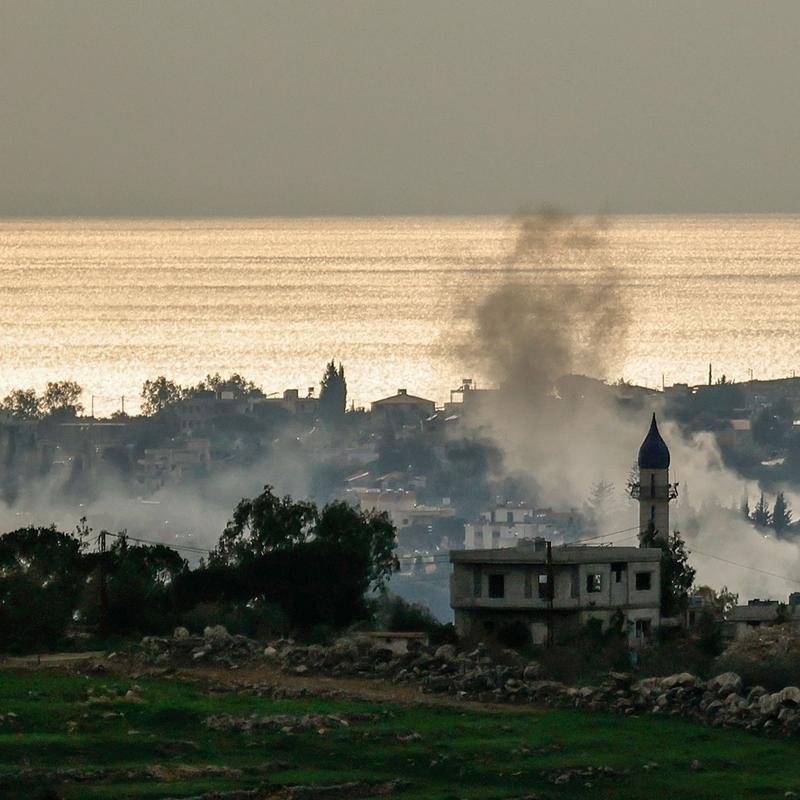
Brian: Elimination of that state. All right. I got it. I think that's fair. I don't mean to cut you off, but I think you've answered the listener's question with your point of view on that. William, you're in Beirut, which has become a major front in the war itself as Israel has moved further inside Lebanon in its quest to destroy Hezbollah, which attacks Israel from the north. Can you describe the humanitarian crisis that's unfolding there?
William: It's really a disaster. You walk the streets of Beirut, and there are people sleeping in tents everywhere, sleeping rough. To give a sense of scale, Lebanon is a country with about 6 million people, a little under 1.5 million people are now displaced from their homes, and only less than 10% of that amount are in shelters. The rest are either out in the streets or living with relatives. It's really a very tough situation.
Now, we have statements from the Israeli defense minister suggesting that they could take parts of South Lebanon as a so-called security buffer for the long term. Not only would that mean the loss of people's homes, forceful displacement of hundreds of thousands, but it would also just be an insane humanitarian situation in Lebanon, a country that's already bankrupt, has no banking system, and was struggling on the best of days. It's really quite tough.
On a personal level, today, I'm doing interviews. I'm working on a story about the impact of this war on children. I got off the phone with somebody whose daughter was killed in an airstrike, a six-year-old. We're seeing a huge civilian toll in this war. There's over 1,000 people that were killed. Israel claims about 560 to 600 of those were Hezbollah fighters. We've seen widespread attacks on medical facilities, around 150 medical facilities and ambulances attacked by Israel, and just a general abandoning of any principles of humanitarian law. We're seeing a lot of the same things we saw in Gaza, a lot of the same principles being applied in Lebanon, with a caveat that, of course, the humanitarian toll is not as big as what we saw in Gaza.
Brian: You say abandoning any principles of humanitarian protection in war. I cited people's pushbacks to Kion. I imagine some people on the other side of what you just said would push back like this, that Israel's position is enough already of this Iranian proxy group attacking from across the border for decade after decade. If Hezbollah fighters are hiding among civilians, then they're the ones responsible for civilian deaths, very much like Israel's position with regard to Hamas and Gaza.
The civilian toll, of course, as you've been describing, becomes epically devastating in that scenario. Can you say with any certainty, as a reporter, how much Hezbollah is embedding in places like schools and hospitals and residential neighborhoods, and those are the targets that Israel is striking, though they're willing to accept those civilian casualties alongside that?
William: I think the first thing is that that first part of that statement that Israel's had enough and they're fighting Hezbollah, fine, it's a war that works, but the way that you fight the war matters. Israel often claims it's the most moral and the most precise military in the world with advanced technologies. Living in Beirut, you hear the drone above your head all day, every day, and you have heard that for the past two and a half years. We know they have intelligence. We know that they know what they're hitting.
The Israeli military, like all other militaries, have an obligation to protect civilians even when they're fighting their war and to take precautions to limit the casualties from strikes. What we're seeing is not only an acceptance on the Israeli side of a higher civilian death toll if it means hitting some Hezbollah targets, but also widening targets explicitly to civilian targets. Israel's been hitting a network of gas stations across South Lebanon, in the meantime, hurting anyone that's nearby. Gas stations are not military targets. They're hitting public bridges, cutting off the south of the country from the rest of the country. Again, that's public infrastructure, even if they do claim that Hezbollah uses it to transport fighters.
When we talk about hitting medical facilities and schools, I don't think we've seen schools yet in Lebanon, but in terms of medical facilities, Israel's claimed last month, and they claimed in the last war in Lebanon, that Hezbollah uses ambulances to transport weapons. We've never seen any evidence of that. I've asked them for evidence. We did a story last week on the targeting of three medical sites and ambulance workers. We visited those sites, we inspected those sites, and we found no evidence of military use. We asked the Israelis specifically, giving them coordinates of those sites, what military purpose did they serve, and we got no answer.
The bigger point here is not so much Lebanon and Israel. It's about how we're accepting the way that wars are fought in the 21st century. I think when we saw Gaza, a lot of the world saw the huge humanitarian toll in Gaza, the amount of civilians that were killed, the raising of public infrastructure, the destruction of homes on an almost industrial scale. They said this is a war that's gotten out of control. We're seeing the way that the war is being fought in Lebanon, and to a lesser extent, Iran, is that some of those lessons that were taken from Gaza weren't taken as a lesson of warning, but rather as a new sort of military doctrine.
We've seen Israeli officials, including the defense minister, make explicit references to Gaza in the way that they want to fight the war in Lebanon. The Israeli defense minister, over the weekend, said that they want to turn the first parts of the borders along northern Israel into Beit Hanoun and Rafah, which now are piles of rubble. I think it's just an ominous sign of the way that wars are going, where any respect for international humanitarian law is being thrown out the window. Oftentimes, actually, the people who are fighting the wars are boasting about violating it, whether it's Pete Hegseth or Israeli military spokespeople.
Brian: What would be the point, from Israel's point of view, of attacking civilians or civilian infrastructure that are not related to stopping Hezbollah's ability to attack Israel? What would be the point of that?
William: It depends on the civilian infrastructure we're talking about. Let's say the gas stations, for example. Israel said publicly that they want to destroy the gas stations because they help finance Hezbollah's war because Hezbollah-linked individual owns them. Again, those are civilian targets, unless they're actually helping military, they're facilitating military purposes.
Then you have things like healthcare workers. Then the question is, why would you attack healthcare workers, even if they're affiliated with a Hezbollah-run charity, for example? Which again, being affiliated with the civilian wing of Hezbollah or Hamas or whoever, does not make you a target, as long as you're not playing a military role. Why would they attack healthcare workers? What we saw in Gaza, what we saw in the last war in Lebanon, and what we're seeing now is that oftentimes the goal is to degrade the conditions for life in certain areas. Israel has declared about 13% of the territory of Lebanon, much of it in South Lebanon, as a no-man's land. They've ordered all the occupants to leave.
What we're seeing in those areas, there's a widespread targeting of medics, including through the use of double-tap strikes, which is when they strike somewhere, wait for paramedics to come, and then they strike the area again, hitting the paramedics in the process. What we saw in Gaza is that the point of this is to make it increasingly difficult for people to stay in those areas, to clear those areas out, so that Israel can fight their war easier. Human rights groups have warned against this, saying that it amounts to forced displacement.
Brian: Let me take one more call. Philippe in Harlem, you're on WNYC. Hello, Philippe.
Philippe: Hi. Thanks for taking my call. Listen, the main question I wanted to ask is that, presuming that Israel's objective is to weaken the regime until there can be a regime change, some US officials have said this. I guess from my understanding, as someone who's not super plugged in, is that every group in Iranian civil society that has significant power, that's not the regime itself, the Revolutionary Guard Corps, the clerics, whatever, are regime-aligned at the very least.
There's not an independent oppositional civil society. I keep hearing people say, for example, that they haven't found the Carmen Maria Machado of Iran, which I think is a problematic statement for a number of reasons, but let's say there isn't one, who is it? If the regime were to weaken enough that it does fall, I don't know that I've really seen much discussion on who is waiting in the wings of anyone to take that mantle up. I'm just wondering if [crosstalk].
Brian: Or if there's an infrastructure, yes. People have said there's no Nelson Mandela because there's no ANC, which was his organization, ready to move into government when apartheid fell in South Africa. Kian, as the Iranian here, the Iranian-American, you want to take that?
Kian: Yes, certainly I do. I would like to offer some good news. I'd like everyone to know that, as I wrote in an article which was titled "Iran Is More Ready for Democracy than Many People Think," and through my research and my book and for traveling around the country and living there and working with people, I believe that Iranian society does have both the motivation, the culture, and more importantly, the institutions which are there in-- They're like a vessel, which I refer to them as dual-use institutions inside Iran.
They are currently being weaponized and used by the regime, these institutions of local governance and civil society, for example, all the municipal elected local governments that my book is about. I traveled the breadth and the length of the country interviewing all these new city councilors and village councilors, and I was so impressed by millions of people willing to work to improve their communities and so forth. This was actually a lot of my experience working in community boards in New York City, and working with--
Before I went to Iran, I was a professor of urban policy at the New School. I worked in poor areas of New York, like Brooklyn and so forth, where I saw the way in which community-based organizations could work with municipalities. To the extent that I could, I would contribute that to the new law, the new structure of governance throughout the country. They exist, they exist, they have been bought, they are dual-use, they have been weaponized by the authoritarian system, but they have not been eliminated by the system. They're there in case in a circumstance where they are allowed to be filled with more democratic content. I'd say the culture is there, the motivation is there, the institutions are there, and the leaders are there.
Your caller is right to say that there is not a lot of discussion about leaders. That's partly because it's a different country, it's only kind of people who follow inside-- Baseball politics of Iran would know who they are. I actually have a few names, which I'm not going to obviously say here, but I spent many months in prison with the central committee of the leading opposition reform parties. They are Islamists, but people who I have tremendous respect for, and who know how to run the country. That's why I think Iran is not like Iraq or Libya or even Afghanistan, where you have to build up these institutions from scratch. They're just so marginalized and pushed out that they can't do anything right now. Your caller is right.
Brian: Maybe they could build. I'm going to have to leave it there because we are now out of time, but thank you for that answer. Thank you for being with us today, Kian Tajbakhsh, international relations professor at NYU. He did write the book that he was just referring to, Creating Local Democracy in Iran: State Building and the Politics of Decentralization. He was a political prisoner in Iran after participating in pro-democracy movements and released as part of the Iran nuclear deal under President Obama. William Christou, reporter for The Guardian, based in Beirut, focusing on human rights investigations and migration issues. Thank you both so much for joining us today.
William: Thanks for having us.
Kian: It's been a great pleasure.
Copyright © 2026 New York Public Radio. All rights reserved. Visit our website terms of use at www.wnyc.org for further information.
New York Public Radio transcripts are created on a rush deadline, often by contractors. This text may not be in its final form and may be updated or revised in the future. Accuracy and availability may vary. The authoritative record of New York Public Radio’s programming is the audio record.
