
What GLP-1s Know About Addiction
[music]
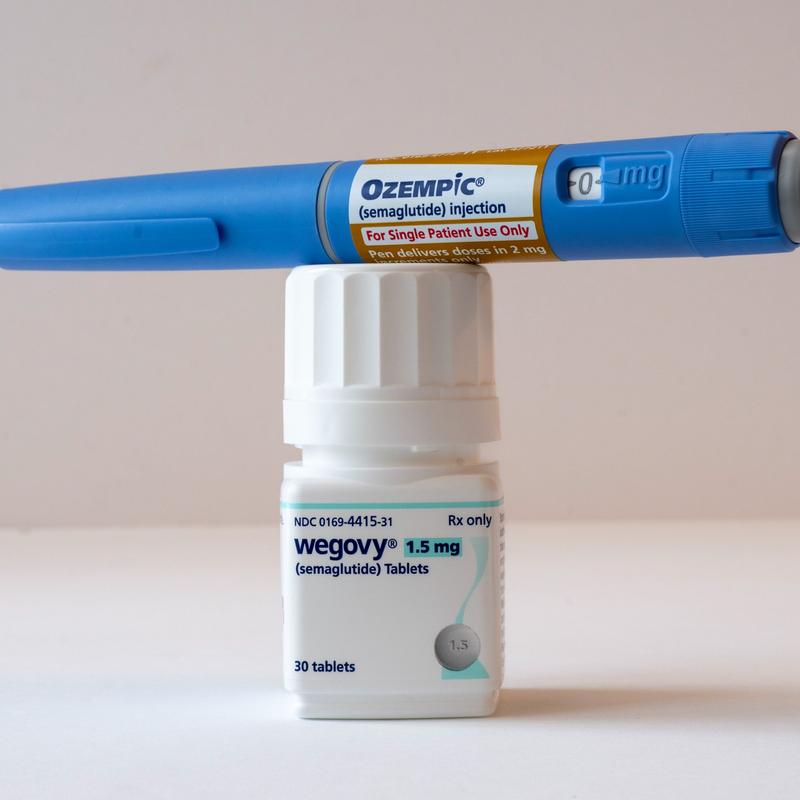
Brian Lehrer: Brian Lehrer on WNYC. Ozempic, Wegovy, Mounjaro. By now, we've all heard of GLP-1 medications and the stunning impact they have on type 2 diabetes and obesity. Maybe you're on one, but researchers are looking into another possible use for this class of drugs now, addiction treatment. While it's known that addiction is a medical disorder, societally, it's often treated more like an indicator of one's morals or strength of will. Untreated addiction often causes antisocial behavior. When medical interventions fail, compassion often runs dry.
Could a medication revolutionize not just how we treat addiction, but also how we think about it? With me now to talk about his latest piece in the New Yorker, Can Ozempic Cure Addiction? is Dr. Dhruv Khullar, a practicing physician, associate professor of health policy and economics at Weill Cornell Medical College, and contributing writer at the New Yorker. Dr. Khullar, always great to talk to you. Welcome back to WNYC.
Dr. Dhruv Khullar: Thanks so much for having me.
Brian Lehrer: There are a lot of names for this class of medications. We have the product names Ozempic, Mounjaro, et cetera, or the drug names Semaglutide, Tirzepatide. I'm sure I said that wrong, but they're all GLP-1s. What does GLP stand for? Let's do that much of 101 and how it functions in the body.
Dr. Dhruv Khullar: Sure. GLP-1s stand for glucagon-like peptide-1. This has historically been associated with digestion. We think about these medications or this molecule, really, GLP-1, as attaching to receptors in the pancreas, in the stomach, in the brain. We've been thinking about it as something that helps release insulin and slows the passage of food through the stomach, and tells our brains that we are full. The naturally occurring molecule, it breaks down within minutes.
What we're starting to learn is, as scientists have tinkered with the molecule, the naturally occurring molecule breaks down in minutes. The medications last in the body for days, sometimes even more than a week. It has had more and more powerful effects, and just on the digestive tract, but actually we're seeing it playing with the reward system in the brain. That seems to be responsible for potentially not just treating things like diabetes and even obesity, but a host of other types of behaviors, including addiction.
Brian Lehrer: Listeners, does anyone out there right now have a story of being on a GLP-1 and having a change of relationship with anything that might be considered addictive behavior? 212-433-WNYC. Call or text if you have a story, or anyone can ask a question, too, for New Yorker contributor and Cornell Weill physician and professor of medicine, Dr. Dhruv Khullar. 212-433-WNYC, 212-433-9692, call or text.
Your piece begins with a story of a woman in Denmark named Mary who's been chronically addicted to alcohol since she was a teenager. She participated in a medical trial testing the effectiveness of GLP-1s in addiction treatment. I should tell our listeners the results of that trial aren't out yet. They'll come out later this year. Anecdotally, why'd you start with her? How did it go for her?
Dr. Dhruv Khullar: She had a very dramatic experience. As you mentioned, Mary had struggled with alcohol use since she was a teenager. When I talked to her, she was in middle age, and she could drink 18 beers in a sitting and barely feel buzzed. She felt like she just had this overwhelming compulsion when she was drinking. She enrolled in this trial, thinking it's strange that this diabetes and obesity medication is being tested for alcohol. She wanted to see what might happen. It was remarkable. She, of course, lost a lot of weight, so she lost 55 pounds in just five months.
What happened was that her desire for alcohol started to change. First, she switched from beer to white wine, and then she stopped drinking altogether. Not only that, it changed what she described as-- people are describing food noise, but for her, it was alcohol noise. She was always ruminating on when to drink, how to drink, how much to drink, how not to drink. It changed that desire, but it also helped her make other changes in her life, second-order desires. She had been having marital problems for years. Within months of starting this medication, she said it freed up all this mental space, and this energy, and she decided to move out and leave her partner.
What's so interesting to me about these medications, we're seeing all this anecdotal evidence, all these stories of people who are feeling less of an urge to drink alcohol or smoke cigarettes or take opioids or even things like gambling or shopping. I got interested because it seemed like the GLP-1s were doing something more fundamental to our reward system, and that could have profound benefits. The way that the brain processes rewards, drives all sorts of addictions and maladaptive behaviors.
There's also an obvious potential downside when you're messing around with the reward system is that other kinds of rewards are what make life worth living. It seemed like a very interesting and important tension to tease out between these GLP-1 medications as moderation molecules. On the other hand, potentially desire dampeners.
Brian Lehrer: You used the term second-order desires. I saw that you wrote one way to think about addiction is as a battle between first and second-order desires. Can you distinguish between those two?
Dr. Dhruv Khullar: That's right. First order desire might be you want to have a drink. That's the immediate desire that you have in that moment. Then you have this other desire where you don't want to want the drink. People think about this with, let's say, junk food or cookies all the time. The immediate thing is it's right in front of you. You really want it. In the back of your mind, you wish you didn't want it. What is potentially happening here is that not only is our GLP-1s changing that first-order desire, that in-the-moment desire to take whatever's in front of you, but also potentially these second-order desires, higher-level desires of what type of life you want to live or what type of person you want to be.
Brian Lehrer: Listener writes, "I've been on Zepbound for a few months. I have noticed definitely that while I still drink wine, I'm able to drink less and drink it slowly without finishing the bottle. I've also noticed a decrease in my urge to go shopping and waste money on things I don't need. I think twice now, especially when shopping for clothes." This person writes, "It's very strange, but welcome." You participated in what's called a cue reactivity test, used to screen patients for addiction during a 2023 trial of a semaglutide for heavy alcohol use. What was that test like, and what did it tell you about how addiction appears in the brain?
Dr. Dhruv Khullar: It was very interesting. The cue reactivity test, is basically like-- maybe some listeners have heard of the marshmallow test, where you put a marshmallow in front of a kid and see how long they can last without grabbing it and shoving it in their mouth. Basically, this is a adult version of that where they bring you your favorite drink. You have to bring it to your nose and smell it, and there's all these instructions about inhaling deeply, but you can't drink the drink. Then you have to respond to how strong your urges are to drink the drink.
You do this at the beginning of the study, and you do it at the end of the study if you've been on one of these GLP-1s for a few weeks. In addition to that, they also image your brain. They do an MRI of the brain to try to see how your brain is responding to images of different types of alcohol. For me, when I did it, my drink was a Negroni. They poured Negroni in front of me and mixed it, and I had to smell it, and it was alluring. I wouldn't have minded taking a sip, but it wasn't overwhelming. A participant in the trial who had alcohol use disorder, she told me it was torture to do that cue reactivity test. It seemed like it lasted forever. She wanted that drink so badly.
Then when they imaged our brains, in my brain, there wasn't a lot lighting up in terms of what was happening when I saw a picture of beer, or wine, or whiskey. For people with alcohol use disorder, it looks very different. There are places in the brain that are associated with reward, something in particular called the mesolimbic pathway, which is called the reward system sometimes. That lights up when people are looking at just images of alcohol, let alone actually drinking the alcohol. For me, it drove home this idea that we know conceptually that addiction is not a moral failing. It's a biological process. Seeing it so starkly on the screen really drove home that point for me.
Brian Lehrer: Medically, why is the urge to drink or use or do things, certain things that could be addictive, so strong for some of us and relatively nonexistent for others? Your piece mentioned something called the Opponent Process Theory. Maybe start there.
Dr. Dhruv Khullar: Sure. There's many reasons that people engage in a behavior, and for some people, it turns into addiction. For some people, it doesn't. Of course, for many people, it doesn't. Part of that has to do with genetics, and part of it has to do with our environment and upbringing and environment and behavior, and so on. There's a lot of theories about how this is working psychologically. One is called Opponent Process Theory, which was refined in the 1970s, and it supports this idea that your body wants to maintain some type of homeostasis. You start taking the drug, and it hits you with a high. Then there's always a comedown and a withdrawal.
Over time, that come down, withdrawal, the pain of that type of abstinence starts to become more and more overwhelming. People start taking a drug to feel good, but they go on taking it to avoid feeling bad. What's so interesting about the GLP-1s, at least in animal studies, we don't have this all worked out in humans yet. It seems to be the case that they may limit that high, that people get these spikes of activation, dopamine hits that people are getting, but they may also reduce the pain of abstinence. People may not feel as badly when they're not using a drug, or they're not using alcohol, or they're not gambling. That's why it may actually have this Goldilocks effect, where they are, for many people at least, these moderation molecules.
Brian Lehrer: Here's a text. Dr. Khullar, listener writes, "I fear that these drugs lower desire and want in every form." You did mention that before. This listener picks up on that, and they write, "For food, alcohol, and all forms of pleasure. Lower desire and want, leaving one feeling flat and lacking enthusiasm, and joie de vivre." Listener writes, "I'd far rather stay plump and desirous." What do you say to that person?
Dr. Dhruv Khullar: They're hitting the nail on the head in terms of one of the big concerns with these medications. In my reporting and in my understanding of the evidence, this isn't the average case where people have this universal lack of desire. Certainly, we hear from some minority of people that it causes things like anhedonia, which is a struggle to experience pleasure. It gets back to this point where these are psychoactive drugs. They're affecting how our brains process and think about rewards. For many people, that remains in the space that's affecting food, or alcohol, or drugs. It can easily bleed out into other parts of our psychology.
There are people who have lost interest in sex. One woman I spoke with, she loved to garden, and she just stopped gardening, and all her plants started to die. There are other people, if you look on Reddit or other forums, people do experience things like depression or not able to feel excited about things anymore. This gets to one of the big questions about the drugs is how do we understand who is most likely to benefit while limiting the number of people who have these types of side effects?
Some of that might have to do with people's underlying mental health conditions. Some of it might just be their genetics. That's where the research needs to go because we need to figure out who's going to get the most benefit out of these without experiencing these unfortunate side effects. I should note that--
Brian Lehrer: Also, if I could jump in, if the chemistry of the drugs could be adjusted so they help with the good parts but don't produce that flatness of relationship to life as much. Right?
Dr. Dhruv Khullar: That's an open question. Certainly, there are many different types of formulations, and there's going to be more in the future in terms of different types of GLP-1s that affect 1, 2, 3, even more receptors. We're not at a point where we can individually modulate specific behaviors and say this drug is only going to affect food or alcohol or gambling and not affect these other things. I think the broader point here is that if one of these medications is having these untoward effects, it's possible that switching to a different version of a GLP-1 or a different dose, even, might reduce some of those negative side effects that people are experiencing.
Brian Lehrer: Listener text almost as a response to the previous text, though it came in at the same time. "Have been on GLP-1 since November 2024. Was struggling with a drinking problem. Stopped drinking cold turkey. Have no or little desire to drink, and lost 35 pounds. I still enjoy all foods. I just eat less. The noise in my head is gone." Sue in Westchester, you're on WNYC. Hello, Sue.
Sue: Hi, how are you?
Brian Lehrer: Good. What you got?
Sue: Good. I've been taking Zepbound, which is a trizepatide GLP-1 and something else, which I'm sure your guest could explain. I did it mainly for weight loss and concerns about diabetes in my family. I don't have diabetes yet, but everything kept going up. I also have sleep apnea. I found it very interesting that I did lose interest in drinking. I was someone who drank wine pretty regularly. I've stopped drinking before, but it was more of like a struggle, and thinking about it like alcohol noise, I guess, like you were talking about, similar to the food noise.
I found it really interesting. It doesn't interest me. It's not something when I see other people drinking, I used to if someone else was having a drink or having a glass of wine, I'd want to have one. I realize now that I spent a lot of time thinking about it, how much should I drink? Oh, I had a couple glasses of wine. I shouldn't have another one, or should I open another bottle? That kind of thing. It all just disappeared.
Brian Lehrer: In your case, it sounds like you're still watering your plants and enjoying the rest of your life.
Sue: Yes, I'm actually on the lowest dose, the 2.5 dose. I've lost like 17 pounds in six weeks. That was the amount of weight that I was interested in losing and didn't want to lose it really any faster. I am still, yes, doing other things, enjoying other things. I'm hoping if I can stay on a lower dose that I won't have any other negative side effects, but-
Brian Lehrer: Sue, thank you.
Sue: -the alcohol is interesting. Thank you.
Brian Lehrer: Interesting to hear how that's working for you. Thank you very much. Here's Mook in State College, Pennsylvania, that has a question that a number of people are also texting in. Mook, you're on WNYC with Dr. Khullar. Hi.
Mook: Hi, Brian. Hi, Doctor. I just wanted to learn more about what the research says about the root causes of addiction and whether or not these drugs actually counteract the root causes of addiction. I've just from my own experience, I haven't taken any of these drugs. I've noticed with addiction, it takes many forms, and it comes in many different ways at different parts of my life. I just want to learn more about whether or not these drugs actually tackle the root cause of addiction or just are simply changing the patterns of how it manifests in people's bodies. Thank you so much.
Brian Lehrer: Thank you, Mook.
Dr. Dhruv Khullar: Yes, it's a great question. What the drugs are principally doing is changing how we perceive and are motivated by certain types of rewards. When we think about the root causes of addiction, I tend to think about why do people turn to drugs or alcohol, or what often keeps them continuing to use them. That can range from things like trauma and loneliness and pain, stress, poverty, all these things that are not necessarily even biological, but have biological effects, but originally started out as social.
Of course, these drugs aren't changing anything around those external forces that are acting on a person. I don't think of these as a panacea, but for many people, they can maybe loosen the hold of some of these coping strategies that they have developed in order to deal with some of these challenges and give people a kickstart to make important changes in their lives. I think of them as modulating the way that we're processing a lot of what's happening to us, whether that's through genetics or the behaviors that we've engaged in, or the environments that we find ourselves in, but not necessarily treating those root causes, as you put it.
Brian Lehrer: We're just about out of time. I'll read a couple of more texts. One person says, "Please comment on the use of these drugs by bodybuilders, people trying to reduce the amount of fat while they're increasing the amount of muscle." Somebody else asks, "Is there any correlation between these drugs and ADD, ADHD symptoms?" Listener writes, "My husband just started taking one for weight loss and smoking cessation, and his therapist suggested it might help with ADHD as well." Somebody else, skeptic, writes, "What I think I'm hearing is the description of a wonder drug, meaning we wonder what the side effects are." Address any or all of those, and then we're out of time.
Dr. Dhruv Khullar: Yes. I do want to steer away from the idea that these are miracle drugs or wonder drugs. They do seem to have pretty powerful effects and often very positive effects, not just for diabetes and weight loss, but things like cardiovascular risk and chronic kidney disease. Now we're seeing addiction and so on. It's really important to point out that studies have found that more than half of people, in some cases, come off the drugs within a year of starting those drugs. Drugs only work if you use them.
There may be some things about the side effects, access cost, all these reasons where it makes it challenging for people to stay on the drugs. That presents a huge problem for treating addiction, which can be a chronic, lifelong disease. Some people might develop tolerance to the medication. We don't really know about the long-term effects for people who are taking these medications for the indication of, let's say, smoking cessation or alcohol use. It's possible that over time their cravings return. A lot of these studies are just taking place over the course of weeks or months.
I think there's still a lot that we need to figure out. I think for me, the reporting has really driven home that these are really promising medications that continue to deserve attention, and I hope really end up helping a lot of people who are struggling with addictions of various forms.
Brian Lehrer: Dr. Dhruv Khullar, physician, associate professor of health policy and economics at Weill Cornell Medical College, and a contributing writer at the New Yorker, where his latest piece is titled Can Ozempic Cure Addiction? Really interesting. Thanks so much.
Dr. Dhruv Khullar: Pleasure. Thanks so much.
Copyright © 2026 New York Public Radio. All rights reserved. Visit our website terms of use at www.wnyc.org for further information.
New York Public Radio transcripts are created on a rush deadline, often by contractors. This text may not be in its final form and may be updated or revised in the future. Accuracy and availability may vary. The authoritative record of New York Public Radio’s programming is the audio record.
