
What Comes Next for the US and Venezuela
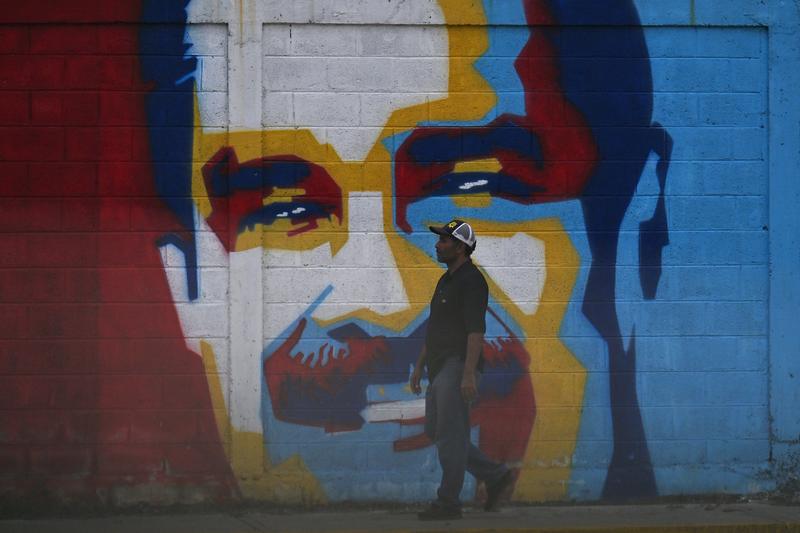
( Juan Barreto/AFP / Getty Images )
[MUSIC - Marden Hill: Hijack]
Brian Lehrer: Brian Lehrer on WNYC. Well, let's talk about the US military action in Venezuela and what comes next for either country. Our guest is former New York Times journalist and former bureau chief in Caracas and the author of Things Are Never So Bad That They Can't Get Worse: Inside the Collapse of Venezuela, his book published in 2022, journalist William Neuman. William, thanks for your time under these intense circumstances. Welcome back to WNYC.
William Neuman: Brian, thank you very much. It's great to be back here.
Brian Lehrer: Here's Secretary of State Rubio on NBC's Meet the Press yesterday with Kristen Welker, giving some of the rationale for this and making clear that it's largely about oil and the presence of US adversaries with Venezuela's oil market.
US Secretary of State Marco Rubio: We don't need Venezuela's oil. We have plenty of oil in the United States. What we're not going to allow is for the oil industry in Venezuela to be controlled by adversaries of the United States. You have to understand, why does China need their oil? Why does Russia need their oil? Why does Iran need their oil? They're not even in this continent. This is the Western Hemisphere. This is where we live. We're not going to allow the Western Hemisphere to be a base of operation for adversaries, competitors, and rivals of the United States.
Kristen Welker: Have specific oil companies--
US Secretary of State Marco Rubio: We also want to see that oil and the proceeds from it-- Hold on. We want to see the oil proceeds of that country benefit the people of Venezuela.
Brian Lehrer: All right. William, to what degree is this a war or intervention or kidnapping or arrest, whatever people want to call it, for oil?
William Neuman: It very clearly is, Brian. I don't think that we necessarily could have said that definitively before this whole thing started on Saturday night or Friday night, I suppose it was. Trump, in his news conference on Saturday, said it very clearly. I believe I counted. He used the word "oil" 21 times in that news conference, which was about the capture of Maduro. He never spoke the word "democracy" once. They have given, over the last few months, this whole shifting menu of rationales for what they were doing and what their objectives were in Venezuela.
First, it was about stopping drugs, which was absurd, then it was about Maduro being a dictator of Venezuela. Now, they've dropped all pretense, and they say we are there to take over the oil industry. Rubio's statement was remarkable, the one that you just played. He says, "What we're not going to allow--" Venezuela is an independent country. The oil in Venezuela belongs to the country of Venezuela and its people. It's up to them to decide who they sell their oil to. It's not up to the US to do that.
Brian Lehrer: Well, let me ask you to expand on that because I also thought that was remarkable. That's why I pulled that clip. I'm going to play another one from Rubio on Meet the Press that goes even further in that direction, but he said in that clip that the US doesn't need Venezuelan oil. We have plenty of oil. Why would the US care so much if Iran or other countries are dealing in Venezuelan oil so much that he sends in the military?
William Neuman: Great question. First, I just want to go back to something else that Rubio said, where he continued in that statement. He said, "We also want to make sure that the proceeds from the oil sales goes to help the people of Venezuela." It's very clear that the intentions of the White House and all of this had nothing to do with the well-being of the people in Venezuela.
Currently, in Venezuela, just days after this whole thing happened, the same government is in charge. Diosdado Cabello. The intent of the interior minister, I'm told, today announced that anybody who goes out into the street to either protest or voice support for the capture of Maduro will be arrested. Hundreds of political prisoners are still in jail in Venezuela. None of that has changed. The question about if the US doesn't need the oil, why are we there?
Well, let's think about that. The oil in the US, they see oil as a strategic asset, I think, in terms of geopolitics. I think that this gets down to something that I'm sure we're going to talk about here quite a bit, which is this idea of Trump's new strategy for the hemisphere. What he likes to call the Donroe Doctrine, which comes off of a headline from the New York Post. It's curious that now New York Post front pages are somehow making--
Brian Lehrer: Speech writers for the President of the United States.
William Neuman: Yes, but also making US foreign policy, but they have this idea that they want to now control the Western Hemisphere, similar to, in their concept, the United States used to do. That includes controlling the resources. The first one that they put their eyes on is Venezuela. Venezuela is a plum. It's a prize. It has the world's largest reserves of oil in the ground. It seems to be, for them, a test case to show what they can do and the reach that they see for themselves around the hemisphere.
Brian Lehrer: Here is another clip of Rubio on Meet the Press, expanding on the concerns about US adversaries being involved in Venezuela.
US Secretary of State Marco Rubio: You can't flood this country with gang members. You can't flood this country with drugs that are coming out of Colombia through Venezuela with the cooperation of elements of your security forces. You can't turn Venezuela into the operating hub for Iran, for Russia, for Hezbollah, for China, for the Cuban intelligence agents that control that country.
Brian Lehrer: It's the end of that clip that I'm interested in here. Iran, Russia, China, Hezbollah, Cuba, certainly US adversaries, but how does their relationship with Maduro threaten the United States as he sees it, or do you think that's a distraction, too, and they're just trying to get their hands on the money from Venezuelan oil?
William Neuman: It does not threaten the United States. Russia has a close relationship with Venezuela, certainly with the Maduro government while it existed. China is very involved all over Latin America as a commercial partner, buying resources or agricultural products, or investing in infrastructure projects as they do elsewhere in the world. Those are things that both of those countries are going to continue to do. It has long been a scare tactic that opponents of the Venezuelan government used to say, "Oh, Iran is there. Hezbollah is there."
Now, even recently, I saw Maria Corina Machado say that Hamas is in Venezuela. Iran is an ally of Venezuela. They have been involved in Venezuela, both doing business and supporting Venezuela in avoiding US sanctions on oil sales for quite a while. Hezbollah has fundraising activities or has had all over South America for many years, but those don't really go beyond that in terms of there is no operational hub in Venezuela for terrorist groups targeting the United States. Those are that sort of noise that they use to justify this intervention.
Brian Lehrer: Listeners, we'll start bringing you in on this now. Any Venezuelan Americans, any other Latin Americans, because Colombia is part of this discussion. Cuba's part of this discussion. Other countries are part of this discussion. Venezuelan Americans, any other Latin Americans who want to weigh in from your experience or point of view or anyone else, 212-433-WNYC.
Call or text, or with questions for our guest, William Neuman, former New York Times journalist, former bureau chief for them in Caracas, and author of the book that came out in 2022, when, of course, things were already terrible in Venezuela, so much so that more asylum seekers were coming in that year of mass asylum-seeker entry into the United States, 2022, than from any other country. The book, Things Are Never So Bad That They Can't Get Worse: Inside the Collapse of Venezuela. Call or text, 212-433-WNYC, 433-9692. Since we were just talking about Russia or China, I'll read this text first. Listener writes, "Have Russia or China responded to Rubio's comments?"
William Neuman: That's an excellent question. With all the flood of news over the last couple of days, I haven't focused on what Russia or China have said and, specifically, whether they responded to Rubio. I think that we can understand that China has its own agenda and strategy for Latin America and isn't going to be perturbed by that sort of thing. Actually, Trump said the other day that he was going to pump oil in Venezuela and sell it to China. [chuckles]
China has a longstanding relationship with Venezuela. They loaned a lot of money to Venezuela when Chávez was president, and those loans are being repaid with oil. A lot of the Venezuelan oil is pledged to China as repayment for loans. Regardless of who's pumping the oil, presumably, those debts still need to be repaid. One would think that China is concerned about that. In terms of Russia, they see Venezuela as a strategic partner. Certainly, they did when Maduro was in place. It's an open question. What's going to happen with that now?
They've supported Maduro through all this, and I think they were quite happy for them. It was a very small investment. They sold weapons to Venezuela. They watched as Venezuela became this chaos agent in the hemisphere, just hemorrhaging refugees that went into other countries and created a regional crisis, and then their refugees came here and caused problems here. I think Russia was perfectly happy to sit back and watch all that happen. I don't think they're happy about Maduro being removed, but it's anybody's guess what's going to happen now and how deep a quagmire this is going to be for the US.
Brian Lehrer: Rachel in Nyack, you're on WNYC. Hello, Rachel.
Rachel: Hi. Yes, so I heard your speaker say that, no, we don't need the oil, but we went there because they thought it was good geopolitical strategy. I think that what most of us believe is not that they necessarily think it's good geopolitical strategy, but they think that they can make money off of that oil. We've heard that already. We wouldn't even have to hear it to know and think that, "Hey, it's for the oil." They've been saying it's for the oil. Then Trump even said, when he was answering, that if China and Russia are going to want oil, well, we'll have to see what happens with Russia, he said, but we're businesspeople. We'll be in business. He's already talking about selling it.
Brian Lehrer: Right, so he's talking about setting the US up as a middleman, which makes it sound even more like it's military action for money. On the geopolitics, here's a text, William. Listener writes, "Does this give China an opening to 'run' Taiwan if the US is running Venezuela?" There is a question of a precedent that Trump is setting for the big powers in any particular area to declare their sphere of influence, right?
William Neuman: Yes, very much so. As Rachel said, yes, absolutely, it is about making money. Trump is purely transactional. Given everything that we've seen over the last year, it's perfectly legitimate to ask how may he or his family or his close associates profit personally from this sort of thing. In terms of China and Taiwan, absolutely.
People who closely follow these issues have said one of the great dangers of Trump's adventure here is that it removes any legitimate argument the US can make that other countries shouldn't, powerful countries shouldn't, go into their neighbors to change the government takeover. That applies both to China's interest in Taiwan and also to the ongoing invasion of Russia in Ukraine, and then any possible number of conceivable scenarios in other areas of the world. It's a Pandora's box, I guess we could say.
Brian Lehrer: Let's hear from some callers of Latin American origin or heritage. Ernest in Mount Olive, you're on WNYC. Hello, Ernest.
Ernest: Hello. Good morning. I am a Cuban immigrant, and I totally support what Donald Trump has done. I know very well what it is to live under an authoritarian regime, communist regime. I think you've seen time and time again that sanctions and blockades just don't work again with countries like Venezuela, with Cuba. They're just not enough. Regimes like Maduro's survive by shifting pain on civilians.
They protect their loyal elites, their security forces, and corruption networks, as we've seen with narco trafficking. Pressure has to be real. I support totally what Trump's actions have been. They have to be coordinated. They have to be targeted. They got to go against this money laundering, this sanction invasion, military leadership that we see time and time again with these Latin American countries. I understand people's points of freedom, but we're dealing with violations of human rights. People suffer. People are killed.
People are tortured in these countries, and you don't hear about it. If you speak up, you can get arrested. People in Cuba right now, family that I have, that we connect through WhatsApp, they're all worried. They're scared. They don't know what to say. They don't want to comment, all because of fear. I totally applaud. I wish he would do more. I wish he would do the same with Cuba. We need to liberate people. The Cubans have been under this kind of regime for over 60 years, and enough is enough.
Brian Lehrer: There's so much analysis, Ernest, that Trump is not interested in democracy and human rights in Cuba. He doesn't make that a cornerstone of his foreign policy anywhere in the world, as previous presidents of both parties have done. His critics will say, and certainly not here, he's not supporting that the legitimately elected president, when Maduro rigged the election, be installed, those kinds of things. A lot of skeptics will ask, despite the problems that you point out with Venezuela and Cuba, for example, being very real, why think that Trump is going to do anything for democracy or human rights as opposed to monetary extraction, which seems to be a lot of the going analysis of what this is about?
Ernest: Well, I also agree with what you've just said. I think Trump is seeing it from a point of view of, I think, Maduro had been mishandling the oils. Venezuela is a rich country. It used to be very rich. I think with the influence of Russia and China, for instance, China's been extracting or has been getting oil very, very cheap. When they get oil, they have oil in their country, they get oil from Russia as well, but they've been abusing because Maduro's focus has been more on illicit narco trafficking, money laundering. He should have been more focused on the riches of his own country and expanded on that. I think maybe Trump is trying to help with that.
Brian Lehrer: Help with that, but ignoring democracy and human rights. That's okay enough for you at the start, if I'm hearing you right.
Ernest: Yes, yes, I think there's a bit of both there. I don't think US is going to go in there to run that country. I don't think that's what's happening. I think they want to do a smooth transition into free elections, which they, time and time again, have rigged. Maduro had. Urrutia, I think, is the one that was elected last June in 2024. Where is he now? Urrutia had to exile to Spain. You had Juan Guaidó, which I think was in 2019, who actually started this whole-- Yes, and where is he now? He's an exile in Miami, Florida. They should allow free elections and let that government run with democracy. I don't think Trump is there to run the country.
Brian Lehrer: Ernest, thank you very much.
William Neuman: Brian, if I could just jump in for a moment.
Brian Lehrer: William, go ahead, and then I want to play a clip of the opposition party leader, Maria Corina Machado, who supported Trump. Now, Trump is not supporting her, but go ahead.
William Neuman: No, I just wanted to say that I'm very sympathetic to Ernest's concern. I have many friends in Venezuela who, in the lead-up to this, would say anything just to get rid of Maduro. Things are so terrible, and Maduro is. He ruled as a dictator. People were tortured, arrested. There are still hundreds of political prisoners in Venezuela. I understand this urge and need to get rid of a dictator.
The problem is that the US has a terrible track record in going into countries and deciding who should or should not govern. Then the aftermath of that often becomes very chaotic and very destructive. That's where the concerns arise or some of the concerns over what we're seeing here. Trump did say very clearly the other day, "We are going to run Venezuela. We are running Venezuela." He says, "We're in charge." He said it repeatedly since then.
Brian Lehrer: There are no Americans there, right? He didn't leave any troops there?
William Neuman: No, not at all.
Brian Lehrer: There aren't bureaucrats there presumably telling the government what to do. Our guest is former New York Times journalist William Neuman, bureau chief in Caracas for them, and author of Things Are Never So Bad That They Can't Get Worse: Inside the Collapse of Venezuela. Let's get more to who is running Venezuela and who would be legitimate. One way to look at this is that Trump threw yet another woman politician, who supported him, under the bus when it came his time to support her.
We know about Elise Stefanik and Marjorie Taylor Greene and others domestically. The 2025 Nobel Peace Prize winner, for those of you who didn't pay attention to that in the fall, was the opposition party leader from Venezuela, Maria Corina Machado. Here she is on CBS Face the Nation in December after the Peace Prize ceremony in Oslo. Margaret Brennan, the host, asked if she supported what Trump was doing at that time.
Margaret Brennan: Do you endorse this idea of more seizures and possibly even a blockade?
Maria Corina Machado: Look, I absolutely support President Trump's strategy. We, the Venezuelan people, are very grateful to him and to his administration because I believe he is a champion of freedom in this hemisphere. That's why, and I say this from Oslo right now, I had dedicated this award to him because I think that he finally has put Venezuela in where it should be in terms of a priority for the United States' national security.
Brian Lehrer: She dedicated her Nobel Peace Prize to President Trump and asked if she would support US military action inside the country.
Maria Corina Machado: It's absolutely absurd that you see a regime, a criminal regime like Maduro, that gets support from Russia or from Iran, and then as a benefit to our own people, not to ask support from democratic countries and democratic leaders.
Brian Lehrer: That's a yes to military intervention from the US as a democratic country with a democratic leader. Now, Trump, in control of Venezuela, says Machado does not have enough respect or support among the people. Here's that clip.
President Donald Trump: I think it would be very tough for her to be the leader. She doesn't have the support within or the respect within the country. She's a very nice woman, but she doesn't have the respect.
Brian Lehrer: William, are advocates for democracies' heads exploding in Venezuela? For you, as somebody who's covered the country for so long, how much is he right or wrong about support or respect that she has or doesn't have?
William Neuman: No, no, this is a really extraordinary exchange there in many ways. There's a lot to pull out of this. Trump, for one thing, had obviously publicly lobbied and said that he deserved the peace, the Nobel Peace Prize, because he claims to have ended all these wars. Then, when it was given to Maria Corina Machado in Venezuela, he was clearly miffed. Many people said publicly that this was an overt snub of Trump, and he was very aware of that takeaway.
You could see him at the news conference the other day at Mar-a-Lago when he tossed-- He not only tossed her under the bus. He waited for the bus to run over her, so he could go in and kick her a few times. There just seemed to be this-- I'm reading into it, obviously, but this glee that he was expressing when he dismissed her and said, "No, she is not going to be involved in this process." From my reading, is that it comes out of that very petty sense of his that she got something that was rightfully his.
Now, Maria Corina Machado is a very complicated character in the Venezuelan opposition. Maria Corina Machado, since at least 2019, so that's seven years and possibly even longer, has been calling for foreign military intervention in Venezuela. She has a long history of claiming that it was impossible to do really opposition politics in an electoral way in Venezuela, and that the only solution to Venezuelan problems was a foreign military intervention, which clearly meant a US intervention.
Now, she finally got the intervention that she's been asking for all these years, and it's turned out to backfire on her, at least in terms of her personal ambitions and involvement. It goes beyond her. She is a figure, but this is more about democracy in Venezuela. Much more concerning than his petty insistence that she not be involved is, what about a transition to democracy in Venezuela?
He's given no indication that he's interested in doing that. He seems quite content to want to work with the remainder of the Chavista government that's still in charge there and has said nothing about demanding the release of political prisoners, said nothing about bringing in Edmundo González Urrutia, who is the candidate who overwhelmingly won the last presidential election in 2024, and creating a transition where he could govern, or in lieu of that, calling new elections in the country.
When he says, "We're going to run Venezuela," that means that the Venezuelans are not going to run Venezuela. That includes the democratic opposition in Venezuela. Now, he may be content to let the Chavistas run it according to his dictates. That remains to be seen. For the time being, he seems to think that they are more pliable partners than a democratic opposition would be. A lot going on there.
Brian Lehrer: Here, another voice originally from the region. Andrew in Jersey City, you're on WNYC. Hi, Andrew, thank you for calling in.
Andrew: Hi, thank you for taking my call. I'm American-born. My father's Ecuadorian. My mom's Puerto Rican and Cuban. My grandfather came from Cuba as a result of Batista. Having studied Latin American and South American history, this is just more of the same. The US just embarking its will on Central and South America. We have assassinated democratically elected leaders in Central and South America.
We have overthrown the governments of Guatemala, Argentina, Bolivia. It just goes on. For me, as a Latin American, this is just more of the same. We do it unapologetically. We still have a colony, Puerto Rico, which is a colony in modern-day times. I find it just sickening. Anybody who can sit there and support this doesn't really see the bigger picture of how horrible we have treated Central and South America, the Caribbean, over the last 100 years.
Brian Lehrer: Andrew, thank you. Surely, William, this is, in a certain respect, not new. Anybody who's lived long enough or studied history can talk about US military involvement in Panama, in Grenada, in the Dominican Republic, in Haiti, in the US's interest, not necessarily in the interest of the people of those countries, from the standpoint of, "We support the dictators who support us," especially during the Cold War. We don't support the dictators who don't support us, and we take action against them. What are you thinking as you listen to Andrew?
William Neuman: Yes, Brian, Andrew's right. It is more of the same. I think that there is a key difference here that we really need to talk about and be aware of, which is that for Trump and the people around him, this is partly to go back to an era of US bullying and making decisions in Latin American countries. What we're seeing is a process of Trump and his people working to expand presidential powers. We saw that in boat strikes in the Caribbean, which were clearly illegal, where they went in there.
They started blowing up boats that they claimed were carrying drugs and murdering the people who were on these boats. Part of the idea there, I think, and it's been reported in The New Yorker and elsewhere that the strategy there was to always be pushing the envelope. We're going to do these things that used to be beyond the limits of presidential power in order to expand, step by step, presidential power. This incursion into Venezuela is another and much larger step in that same process.
Yes, they do want to go back to the hegemon of the region that the United States has been in the past and perhaps never stopped being, although perhaps was less aggressive about it recently. They're also concerned, and maybe even more concerned, with creating this enormous presidential power where nobody can stop them in the use of force. We've seen it in other sectors in terms of domestic policy, the use of troops in American cities, et cetera. It's all part of the same thing. That goes well beyond, "Oh, the US is the bully with the big stick in Latin America."
Brian Lehrer: Last question then for you, who has covered from within Venezuela and wrote that book, Things Are Never So Bad That They Can't Get Worse: Inside the Collapse of Venezuela. We have heard from two callers. Obviously, we've heard a lot of opposition, too, including from our last caller with roots in the region. We've also heard a couple of callers now this morning. One from Venezuela, originally in a previous segment, and the one a few minutes ago from Cuba, who support this.
What do you see? Based on your reporting and the millions of people who have left Venezuela because conditions for them and their families were so horrible, and your framing of it as the collapse of Venezuela, which, of course, includes their economy, as well as any pretense of democracy, what's the role of competing camps of Venezuelans now? How would you describe, if you can describe, percentages of the country who might like this or object to this, or how you see their role with or against each other?
William Neuman: That's a great question. I just want to say, first of all, thank you, Brian, and thanks for mentioning the book. I want to say that Trump said in an interview to The Atlantic yesterday or the day before, talking about Venezuela, he said, "Well, it can't get any worse." I'm happy to see that he actually isn't a reader of my book. It remains to be seen whether things get worse and how much worse they get, or whether they improve with the Americans there.
I think that's really the test for Venezuelans. Whether they support this or oppose it, we don't know yet. It's very early. If Venezuela can turn the corner, if Venezuela returns to democracy, if Venezuela prospers, and all the millions of people who have left Venezuela can go home and be reunited with their families, that's certainly the outcome that we all want to see. Things could go either in the other direction, or they could remain more or less the same within Venezuela.
Chavismo, which started with Hugo Chávez, who was the predecessor of Maduro, was, during a period of time, extremely popular. Chávez was a populist president. I like to say that Trump is the American Chávez because they use many of the same political tactics and strategies to divide and conquer domestically. Chávez was very fortunate because when he became president, the price of oil soared, and the country was full of money.
When the price of oil dropped, Chávez died, Maduro came in, the country went into economic collapse, and the support for Chavismo disappeared largely. There still is a core Chavista element there. In the last elections last year, I believe over 70% or close to 70% of voters chose the opposition candidate. Clearly, people in Venezuela are done with Chavismo and certainly done with Maduro. People wanted to get rid of him. Many people have been saying to me, "Please, we're suffering here. We want to get rid of Maduro."
We're also seeing that, okay, they got rid of Maduro, but they didn't get rid of Maduro's government. It's still there. I think that within Venezuela, from people that I talk to, people are very cautious. They're afraid. People are still just several days after this has happened, a lot of people are staying home. The streets are still very quiet, slowly coming back to life, but there's a tremendous amount of caution, and especially a lot of fear, seeing that the same people are still in charge.
Brian Lehrer: William Neuman, former New York Times bureau chief in Caracas, Venezuela, and author of the book, Things Are Never So Bad That They Can't Get Worse: Inside the Collapse of Venezuela. Thank you very much for joining us today.
William Neuman: Thank you very much, Brian.
Copyright © 2026 New York Public Radio. All rights reserved. Visit our website terms of use at www.wnyc.org for further information.
New York Public Radio transcripts are created on a rush deadline, often by contractors. This text may not be in its final form and may be updated or revised in the future. Accuracy and availability may vary. The authoritative record of New York Public Radio’s programming is the audio record.
