Wednesday Morning Politics: Trump's Diplomatic Success and More
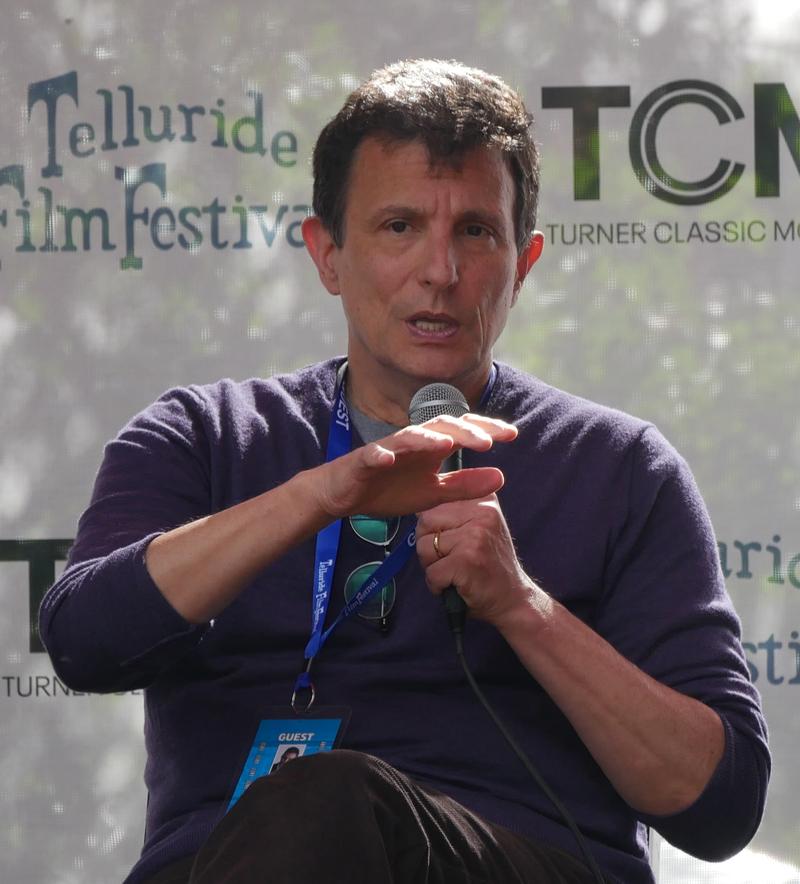
( Sizzlipedia / Wikimedia Commons )
Title: Wednesday Morning Politics: Trump's Diplomatic Success and More
[MUSIC]
Brian Lehrer: It's The Brian Lehrer Show on WNYC. Good morning, everyone. First of all, thanks to Michael and Brigid for getting the membership drive going this morning. Who wants a tote bag that says, "You can't defund the truth"? We'll try to do our share of pitching in on that during the show. We'll also have today's installment of our 30 Issues in 30 Days election series.
Today, it's Issue 18, the ballot question for New York City voters to decide on, "Should the city change its mayoral election years to presidential election years?" The argument for that is to increase voter turnout. It says that's the argument for that right on your ballot when you see your ballot, but not everyone is for that. Brigid will be back later in the show with an explainer of the pros and cons for 30 issues today.
We'll also have, as we often do in the membership drives, a daily 10-question quiz where we'll give away some WNYC swag. Today, it'll be a Brian Lehrer Show baseball cap or a "You can't defund the truth" tote if you get two questions in a row right. It's going to be a New York area geo quiz coming up later today, but we begin not with Brigid Bergin, but another local dignitary. David Remnick is with us, editor of The New Yorker magazine and host of the WNYC weekend show, The New Yorker Radio Hour.
If you like this show on the weekdays at 10:00 AM, you'll definitely want to listen to our Saturday 10:00 AM show. Among other things, we'll preview the upcoming New Yorker Festival in which David will interview Jon Stewart and Salman Rushdie, and there'll be lots of other live events. We'll discuss David's recent commentary in the magazine called Trump Presses Mute on Free Speech. David, always great of you to pop out of your editor's cave on a weekday. Welcome back to The Brian Lehrer Show.
David Remnick: It's great to speak with you. How are you?
Brian Lehrer: I'm okay. Surviving.
David Remnick: Yes, I have a feeling.
Brian Lehrer: Trump Presses Mute on Free Speech. Trump Presses Mute on Free Speech. You had a great New Yorker magazine cartoon cover on this one. You want to describe the cartoon visual for the radio audience first?
David Remnick: Well, it's very one month ago, it almost feels. It was in the wake of the whole Jimmy Kimmel incident. It shows a hand that's distinctly the President's, not a very big hand, with a remote control in it. Instead of showing Channel 1, 2, 3, and so on, it shows Silence, Mute, Stifle, and so on. While Jimmy Kimmel's been returned to the airwaves, I think it's just very evident that this president has an unprecedented view of the press and of free expression.
He is, in a very, very concerted, sophisticated, and I would have to say, ruthless way, has gone about putting pressure on the press in a way I've never seen in my lifetime, certainly. When I was a kid, there was Richard Nixon. He would steam in the Oval Office. We know this, thanks to the tapes, how much he hated The Washington Post or CBS or whatever it was, but in the end, he didn't go one fraction as far as Donald Trump.
You've now seen at CBS, ABC, The Washington Post, Los Angeles Times, to say nothing of Facebook and so on, that his pressure has made a difference, has made a real difference. I hardly think he's going to stop at that.
Brian Lehrer: Yes, besides Mute and Muzzle, and Silence, you could have added a Defund button, so maybe for a later version, but then you wrote the press and the First Amendment are in for a test of unprecedented dimensions. Some of that context is obvious, but I'm curious how you see the test for news organizations themselves.
David Remnick: Well, I think it's a test of some human beings, too. I think it's a test for you, for me, for many, many other editors and writers, and broadcasters. The most formative experience in my life, Brian, was to have the privilege in the late '80s and early '90s of living in a country than the Soviet Union that was experiencing history in a different direction, which is to say that free speech was coming into being.
That was part of what that revolution, that Gorbachev revolution, was all about was the flourishing of something that had been dormant and suppressed for centuries. The effect on that society, unfortunately, too briefly, was like seeing fresh water poured on crops. There was a real flourishing. It produced conflict. It produced, even, you could argue, chaos, but it produced a society of possibility.
To see history moving in the reverse direction, I think we can't kid ourselves. This will hurt us in ways that we can't even calculate because we're so accustomed to all these laws and institutions that we take them for granted, and public radio is one of them. It's a test of all of us and even your listeners, whether they can come forward and donate a few dollars to help make up the gap in order to have real, fact-checked, deep, and uncompromising news and commentary, and discussion, and debate. That's the lifeline. It's an individual test, but it's, it's a societal one.
Brian Lehrer: Interesting that you mention Russia in this context, because one line from your piece that jumped out at me was, historically, autocrats are a mirthless bunch, and Putin was one of them that you referred to in that context, but autocrats are a mirthless bunch. What's the historical context you're giving there?
David Remnick: Well, I remember Al Franken, who obviously, before he became a senator, had an insight as a comedian that he had never seen Trump really laugh, and certainly not laugh at himself, maybe laugh at other people. You saw this in his performance in the Knesset the other day in a different context. I don't remember Vladimir Putin being particularly hilarious or having a sense of humor.
Humor is one of the first things that Vladimir Putin went after when he came to office at the beginning of the 21st century. One of the first things he censored, if not the first, really, was a show on television called Kukly, which means "puppets." It was a satirical political show that made fun of just about everything, including Vladimir Putin, and he hated it. He couldn't stand it. He couldn't bear it.
He not only criticized it the way you hear Trump criticizing Saturday Night Live or the late-night talk shows and much else, but he had it taken off the air. Then, not long after, he also took off the air news programs that were, to one degree or another, independent. Now you have something that's quite Soviet, more sophisticated, but quite Soviet. I don't want to see my country go in that direction. I know what it can do.
Brian Lehrer: This cover and commentary, though, were before ABC restored Jimmy Kimmel very quickly.
David Remnick: That's right.
Brian Lehrer: Even the conservative-owned ABC affiliate group, Sinclair, and Nexstar brought Kimmel back in the cities where they carry ABC. Do you have a take on that? Was that the broad appeal of free speech in America, or a commercial profit and loss calculation by the networks or the affiliate groups? Do you have any take on that?
David Remnick: I like to think it was both. I think it was probably the latter more than the former. I look at a person like Bob Iger, the head of ABC, and he's responsible to his shareholders. There's no question about that. He's running a business. In the past, he has done the right thing. When he was under pressure about the discussion about gay rights in Florida, he stood up, and he did the right thing.
I don't think that was universal, universally applauded by everybody, but unfortunately, he did the wrong thing. He knuckled under. Maybe he thought he could finesse the whole thing so that he could have his cake and eat it, too, that his business could continue to thrive without pressure from Washington, and maybe have a little temporary measure where he'd say, "Jimmy Kimmel, sit on the bench for a week and calm down."
I think he thought he could finesse his way through, but the problem is, once you start making these terrible public concessions to an autocrat, there's no end to it. There's absolutely no end to it. Look at Trump the other day, maybe it was yesterday, going on, on television about the interview between George Stephanopoulos and J. D. Vance. There's no question that was an exercise in futility in the end, and that was cut off, but to have the President of the United States not take questions from ABC, to threaten further sanctions, to gloat about winning that shameful lawsuit, a settlement, that lawsuit for $16 million, there'll be no end to it. You cannot knuckle under to this.
Brian Lehrer: Well, maybe this is where you promote The New Yorker Festival. My guest is David Remnick, editor of The New Yorker, host of The New Yorker Radio Hour here on the station. Maybe this is where you promote the upcoming New Yorker Festival, because I see one of the interviews we'll be doing yourself is of one of those late-night hosts, Jon Stewart. I know he's appeared at the festival before. Want to give us a little preview of how you see the context this time?
David Remnick: I guess it's interesting in that I'm interviewing two people that free expression is everything to them. One is Jon Stewart, who is obviously on the comic side of things and continues, has come back from a hiatus with his family in New Jersey for a while. We missed him. He's come back at least once a week now and is back on the case in ways I really admire, and I hope he'll survive his own merger drama at Paramount.
That's one person, and even more so, I'm interviewing a real avatar of free expression who suffered terribly for it more than once is Salman Rushdie. Salman Rushdie, as you remember, was put under a fatwa by the Ayatollah Khomeini, a death threat that made him have to live underground for years, and then he reemerged. As you recall, a couple of summers ago, he was speaking in upstate New York, and a radicalized young man from New Jersey who had gone back to Lebanon and kind of come under the sway of Hezbollah, attacked him with a knife on stage and nearly killed Salman.
Salman lost a tremendous amount of blood, lost an eye. It was really out of commission. It's a miracle that he survived this. I have the privilege of interviewing them, them both and my colleagues. First of all, there are still tickets around for many of these events, or some of these events at least, that you can go to newyorker.com either to subscribe or get tickets or both. There are a terrific number of events that are either entertaining or interesting or full of debate and discussion about essential things.
We've always thought of The New Yorker Festival as the magazine in three dimensions. If you're interested in literature, you can come see Jamaica Kincaid speaking with Sandy Frazier, or if you watch Jeopardy!, you can see the great Ken Jennings come. The variety is enormous.
Brian Lehrer: Back in January, on previewing your interview with Jon Stewart, he warned on his show against calling everything Trump does fascist. He said, "The constant drumbeat of encroaching fascism will erode the credibility we need, we will need if, hopefully if and not when, it hits," but that was back in Week 1 of the administration. I wonder what he would say about that now. You think he'd go to anything like that?
David Remnick: It's a good question to ask him at the festival, to be sure. Look, I think some of this, the language that we use, authoritarian, fascist, whatever it might be, the interesting thing, and sometimes the terrifying thing, is that these things don't happen in one stroke. They don't happen overnight. You look at the Hungarian experience, and Andrew Marantz has written about this brilliantly, I think, in the--
Brian Lehrer: New Yorker writer?
David Remnick: Yes. Is that if you were to go to Budapest today, you could have a good meal. You could live a life. You could become an engineer. You could have the semblance of a life. You see this among Hungarians, and there's even little pockets of independent media. It's not absolutist, it's not North Korea in 1975. Autocrats all over the world have become more sophisticated than their predecessors in some way.
There are safety valves. There are little tiny arenas, all of them shriveling, that allow some degree of some semblance of what you and I would call a free life, but it gets, in the main, whittled away, whether it's universities, and we've seen shutdowns of universities in Budapest. We've seen pressure on universities and their free expression in this country. It's in the realm of education or the press, in the name of culture war.
It doesn't come overnight. It's not like the streets of New York or Kansas City or Chicago are changed in the main, on every street, but on the other hand, you're seeing ICE officers behaving the way they're behaving. You're seeing people being deported. You're seeing all kinds of acts, legislative and executive, and in terms of law enforcement, that can easily be interpreted as authoritarian.
It comes bit by bit by bit and then all at once. I think while I and many others are accused of being alarmist and branding Trump an emergency, and I have since 2016, I think if you take a real bird's eye view of what's been happening in just a year, it's very difficult to just be sanguine about it all and think, "Oh, well, this is just, ordinary conservatism, and then the pendulum will swing back." Sometimes you don't know what you've got till it's gone. I'm deeply concerned about that psychological dimension of this.
Brian Lehrer: In the context of you as not just a magazine editor, but a radio host, obviously, host of The New Yorker Radio Hour, first of all, you just continue to shine, in my opinion, as not just a magazine editor, as if that was a just, but also a radio host. You're very thoughtful. Interviews recently on the kinds of things you've just been talking about with Ezra Klein and Marc Elias, and Robert George, three different points on the political spectrum, and yet with a through line. Last week, you did the whole hour with Zohran Mamdani. I have one question for you about that.
David Remnick: Please. By the way, that compliment coming from you is all I need when it comes to writing or anything else. Thank you, Brian.
Brian Lehrer: That's very nice. You did that interview, I presume, not for New York City voters who are getting plenty of Mamdani, Cuomo and Sliwa-
David Remnick: Exactly.
Brian Lehrer: -but for your national audience on The New Yorker Radio Hour, where Mamdani is mostly characterized, I think it's fair to say, by other people, by both fans and critics-
David Remnick: Yes, that's right.
Brian Lehrer: -in St. Louis or Seattle or wherever you want. What's one question that you asked him on behalf of your listeners elsewhere in the country?
David Remnick: That's a great question. First of all, I was very mindful doing that interview that you have dug into the granular issues of the City, not only for years and to the great benefit of this city, but with Mamdani, to say nothing of Cuomo and others. For me to repeat that, given the time that I had, would have been maybe a fool's errand. One thing I did ask him on a local level that I haven't heard that much about was education.
I want to know if somebody who had gone to Bank Street, which is an elite private school, however progressive, and then to Bronx Science, which is an elite, Gifted and Talented high school, and Bowdoin, an expensive private college, I wanted to ask him whether he would do that for his own kids and those dilemmas that I think that we face and not to point out any hypocrisy. I don't think that was the issue, but just to get a sense of his feeling about that.
The other thing that we dug into that I think does have a more national relevance was his self-image, self-labeling as a democratic socialist, and what that means and what it doesn't mean. Because if language means anything, there's a difference between a democratic socialist, a social Democrat, which is something a bit different, and a liberal Democrat or somebody who's a member of the Democratic Party who's on the liberal end of things. We dug into that a bit, too.
I think overall, what you see with Mamdani is an extremely talented politician who both wants-- Some of these things are in conflict with each other. He wants to win because if he doesn't win, he doesn't get to do any of these things. He wants to win. He doesn't want to betray what he sees as first principles, but he's looking for common ground, whether it's in terms of policy or language or ways of putting things so that he's not alienating.
He's become increasingly sophisticated and mindful of the fact that he's not running to be the head of a movement in a university; he's running to be the mayor of a complicated, very complicated and a source of pride, but wonderful New York City that has all kinds of political exigencies, whether it's a powerful governor, an inability to pass things on your own, that you have to persuade people politically, and that you have all kinds of tribes and constituencies in this city that matter.
One of his great discoveries, of course, or embodiments, is that he has given voice to and power to a constituency that had really been mainly overlooked, certainly in Gracie Mansion. That's the Muslim and South Asian population, which numbers in the hundreds and hundreds of thousands.
Brian Lehrer: We'll be talking more about the mayoral race later in the show with our weekly Wednesday appearance by political reporter Liz Kim. David, before you go, and we have one minute left, some of our listeners know this already; many do not. With the federal defunding of public broadcasting, WNYC is making our several national shows available for free to smaller stations around the country that are being most grievously strapped by those cuts-
David Remnick: That's right.
Brian Lehrer: -if they need the help. That offer includes our signature national shows, Radiolab, On The Media, and yours, The New Yorker Radio Hour. Is this a meaningful financial gesture that you support or find important?
David Remnick: Well, I'm very aware of the fact that there are a lot of places in this country where public radio is not seen as some commie outlet, as it's been caricatured and insulted by any number of national figures on the right, but rather the only, the only or the best source of news on both the national and community level. I read any number of stories in places like The New York Times and others describing, in the most moving terms, remote or small place, small towns in America, where the local public radio station is the lifeline to news not only about Washington or Jerusalem or Cairo, but about their place, their town, their community.
To know that we can help that effort by giving them some relief for whether it's The New Yorker Radio Hour or Radiolab, or Brooke's great show, On The Media, I'm all too happy to participate in that, and I wish them all the best.
Brian Lehrer: David Remnick, editor of The New Yorker, host of The New Yorker Radio Hour. You want to just tell people how to get tickets to see, as you put it, the magazine in three dimensions on The New Yorker Festival coming up? Is it just newyorker.com?
David Remnick: Newyorker.com will get you not only to the website. You can read and read and read and more, and you can also access our podcast there, too. From newyorker.com, you'll find your way to the festival, and you can buy tickets and see what the program is. I think there's an enormous range of choice and enjoyment. There are some things, admittedly, that are sold out, but there's tickets available for a lot of terrific stuff. I hope you'll do that. It's newyorker.com.
Brian Lehrer: Thanks again, David. Always good to talk and hear you.
David Remnick: Thank you for having me, Brian. All the best to you.
Copyright © 2025 New York Public Radio. All rights reserved. Visit our website terms of use at www.wnyc.org for further information.
New York Public Radio transcripts are created on a rush deadline, often by contractors. This text may not be in its final form and may be updated or revised in the future. Accuracy and availability may vary. The authoritative record of New York Public Radio’s programming is the audio record.