
Wednesday Morning Politics: Birthright Citizenship, War in Iran, and More
[music]
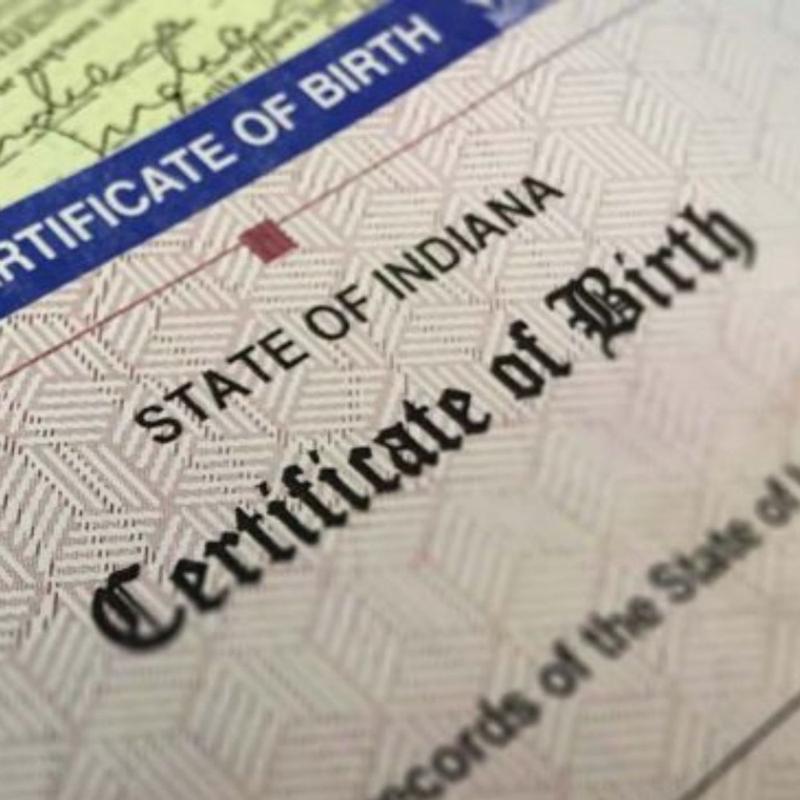
Brian Lehrer: It's The Brian Lehrer Show on WNYC. Good morning, everyone. Well, as we begin our show today, the Supreme Court is about to begin to hear oral arguments in the birthright citizenship case, officially called Trump versus Barbara. This is about his executive order that says babies born in the U.S. to parents who are not citizens or legal permanent residents do not get to be automatic United States citizens. This would reinterpret the straightforward language in the 14th Amendment, which says, "All persons born or naturalized in the United States and subject to the jurisdiction thereof are citizens of the United States." This is estimated to affect about 250,000 births a year in this country. The arguments are scheduled to last one hour. Here's what we're going to do. We have two Brian Lehrer Show producers listening in to take notes and pull some clips. Then, at the end of the hour, right around eleven o'clock or just after, we'll bring on legal eagle Emily Bazelon from Yale Law School and The New York Times to listen to those clips with us and describe what just happened in the landmark case. Also, of course, give us her sense of whether swing justices like John Roberts and Amy Coney Barrett, who are considered potential swing justices in this case, seem inclined to uphold birthright citizenship or not.
Meanwhile, Jonathan Lemire is here, co-host of Morning Joe on MSNOW, staff writer for the Atlantic, and author of the book The Big Lie. We'll talk about this case. Also, a new Trump executive order that may also wind up quickly at the Supreme Court to limit mail-in voting before the midterm elections. Also, the president's announcement that for the first time during the Iran war, he will address the American people with a live speech about it tonight. It's no April Fool's joke when I say this April 1st is shaping up to be a very consequential day for war and peace and for the United States Constitution.
Hey, Jonathan, we're always appreciative that you segue right from hosting the nine o'clock hour of Morning Joe to come on with us from time to time. Welcome back to WNYC.
Jonathan: I'm always glad to be here. It's certainly gonna be a consequential and very busy day.
Brian Lehrer: One thing about the spectacle of the birthright citizenship arguments is that Trump said he would personally attend. That would make him the first president ever to attend Supreme Court arguments in any case. I also heard some skepticism that he might not go through with it. Is he actually there? Do you know?
Jonathan: His motorcade just arrived at the Supreme Court a few moments ago. He has pulled into the back entrance. The press pool that travels with the president, I'm looking at the real-time reports right now, didn't actually witness him enter the building, but by all expectation and belief, he is indeed inside. Therefore, after making the short ride from the White House, will in fact be in attendance at this hearing today. As you say, as best as historians know, that he'll be the first to ever do this.
It's clearly an effort meant to persuade or perhaps better said, intimidate the justices to rule in his favor. He, of course, appointed three of them. He speaks of them as "My Justices," as if they're his personal attorneys rather than serving the Constitution and the people of the United States. He has been bitterly disappointed at them at times when they have ruled against him, so this is his effort to try to sway them to his side.
Brian Lehrer: Considering the enormity of so many cases in Trump's two terms, not to even mention in the whole history of the Supreme Court, what does it say that no other president has ever attended any oral arguments or that this is the only one Trump has chosen to be attending in person?
Jonathan: I have two thoughts on that. The first is other presidents have respect [sound cut] hours. [unintelligible 00:04:19] different [sound cut]
Brian Lehrer: Whoops, we may have lost-
Jonathan: [unintelligible 00:04:26] President. The executive branch is different than judicial branch, and therefore their opinion should be respected. He would not and should not be trying to persuade them. I think that's why previous presidents have not done this. This president, as we know, Brian, has little use for traditions, norms, and precedents set by his predecessors. He is trying to take a more active role here, and I think it's this case in particular, because at the end of the day, immigration and his efforts to change how the United States thinks about immigrants, admits immigrants, about who is an American citizen is a significant part of what he ran on all three of his campaigns and what his followers want to see him follow through.
Brian Lehrer: Listeners, your calls and texts are welcome for Jonathan Lemire from The Atlantic and MSNOW. He has a new piece in The Atlantic about the war. We're going to get to that. How would you rule on birthright citizenship, listeners, or mail-in voting, if that gets to the Supreme Court and you are on the bench? What would you like to hear the president say in his nine o'clock speech tonight about the war or any other relevant questions or comments for Jonathan Lemire at 212-433-WNYC. 212-433-9692. Before we get to those other topics, do any of your Supreme Court experts over there at the network think Trump's presence can have any effect on the justices or anyone else?
Jonathan: They are skeptical that it will have any impact at all. If it does, it's probably going to backfire on Trump, that the justice wouldn't likely be intimidated. Perhaps rather, want to defy such an overt pressure campaign. I think that the experts we had on this morning and have had in days past don't think they'll be swayed one way or the other, that they would like to think this would be ruled on the merits of the case, the law, and the Constitution.
I will say I have yet to encounter an expert beyond those who clearly live on the far right of the political spectrum, who think there's much merit to this case and that some even wonder, think the only question is if it's nine nothing or not. I'm always skeptical of that, but they seem to think this is pretty clearly will be a loss for the administration's position.
Brian Lehrer: Well, since you went there, and I won't ask you to be a legal analyst too much, we'll have an actual one later in the show after the arguments. Here's Trump on part of the heart of his argument that the 14th Amendment, even though it says all persons born in the United States are citizens, was really to address the right of Black Americans, slave or free, who had previously been denied that, despite being born here.
Trump: This was meant-- when it was originally done for the children of slaves, and that was a very good and noble thing to do. It wasn't meant for the entire world to occupy the United States.
Brian Lehrer: Do you have any take or do experts you've had on your show have any take on how the justices might view that argument if we assume it's historically accurate?
Jonathan: Well, Brian, I'm no legal expert, but I do occasionally play one on TV. I think that he's not entirely wrong in terms of the president, in terms of the origins of birthright citizenship, but there have been legal challenges for 150 years, most notably about 100 years ago, I believe. The case of a Chinese immigrant looking to become a naturalized citizen. Every time the challenges to this right have been defeated, that this is something, though not available in all countries, not available in all Western democracies, but this is something that is enshrined in the U.S. Constitution and has survived a number of challenges over the decades.
Brian Lehrer: Is it possible? On that case from the late 1890s, I know that they argue, the Trump people argue that it's not relevant because those parents, though they were not citizens, were legal immigrants in the United States. Trump's order does allow legal permanent residents to have kids who are automatically U.S. Citizens. They're going to argue that that case really does not set a precedent for this. You know what? Let's step in for a second. Justice Thomas is speaking. Let's see if we can hear how he's setting this up.
Justice Thomas: Citizenship Clause refers not just to national citizenship, but also to state citizenship. Are we to have two different definitions for those? It's one word, citizens of the United States and citizens of the state wherein they reside. So, as you begin, I'd like you to go back at the beginning and be more specific about the answer, and I want you to explain whether or not those two definitions are the same or related, and what state citizenship is based on.
Mr. Sauer: Thank you, Justice Thomas. I'll maybe start by addressing Dred Scott. As you alluded to the fact. Dred Scott, [unintelligible 00:10:06]-
Brian Lehrer: This is Mr. Sauer, Trump's Solicitor General.
Mr. Sauer: -of this Court, and it led to the outbreak of the Civil War. It's very clear in this Court, in all of its early cases interpreting the 14th Amendment, said the one pervading purpose, the main object of the Citizenship Clause, is to overrule Dred Scott and establish the citizenship of the freed slaves. If you look at the debates in the Congressional Record and discussion surrounding the adoption of the Citizenship Clause, what you see is a very clear understanding that the newly freed slaves and their children have a relationship of domicile. They do not have a relationship to any foreign power.
For example, there's a comment where he says, look, people have been here for five generations and clearly have no relationships to any foreign African American potentate, have a relationship of allegiance to the United States. That reinforces our point that allegiance is what the word jurisdiction means. It doesn't mean regulatory jurisdiction or orally, or being merely subject to the laws. They're talking, and they're thinking about it in those debates about allegiance.
Now, as to your second question, if you look at the text of the clause, we believe it says, "Born in the United States, born or naturalized in the United States and subject to the jurisdiction thereof, are citizens of the United States and the states of which they reside." There's a constitutional guarantee that applies to both federal or national and state citizenship. The key point we make there is that that word reside, if you look at, for example, section 1473 of Justice Stories Commentaries, was understood to mean domicile.
When they say subject to the jurisdiction and then they go on to say you're a citizen of the United States and it's state in which they reside, the very text of the clause itself presupposes that the citizen is domiciled in the United States. If they're present in a state at all, they reside there. Reside means domicile in the Constitution, and we think that strongly supports our interpretation. It's textual evidence of our domicile-based theory of jurisdiction.
John Roberts: Well, starting with that theory, you obviously put a lot of weight on subject to the jurisdiction thereof. But the examples you give to support that strike me as very corky about children of-
Brian Lehrer: That's John Roberts talking, Chief Justice.
John Roberts: ambassadors, children of enemies during a hostile invasion, children on warships. Then you expand it to a whole class of illegal aliens are here in the country. I'm not quite sure how you can get to that big group from such tiny and sort of idiosyncratic examples.
Mr. Sauer: There are those narrow exceptions for ambassador foreign [unintelligible 00:12:32]. Tribal Indians is an enormous one that they were very focused on in the debates as well. What I do is I invite the court to look at the intervening step, which is the enactment of the Civil Rights Act of 1866. There, they didn't say subject to the jurisdiction thereof. There, it says, "Not subject to any foreign power." Now, if you go back to Blackstone in Calvin's case, they say it does not matter if you are subject to any foreign power. If you are born in the king's domains, you have this indefeasible duty of allegiance to the King at any time. There's a clear repudiation in the Civil Rights Act.
The Civil Rights Act is this breakwater, which makes it very, very clear that they are not thinking about allegiance in the terms of the British common law; they've adopted the republican conception of allegiance. It's from not subject to any foreign power, and then the debates just a couple months later make it very clear that they're recodifying the same conception. They were dissatisfied with the potential ambiguity in the phrase "Indians not taxed," and they adopted subject to the jurisdiction thereof. One of the strongest statements of this is Senator Trumbull's statement that I quoted at the beginning, where he says he's asked what does that mean, subject to the jurisdiction there as?
He says, "It means not owing allegiance to anybody else. That is what it means." This court picked up on that in Elk against Wilkins, when it says uses-- completely subject to the political jurisdiction, not merely regulatory jurisdiction.
Brian Lehrer: All right, we're going to jump back in here. Again, that was a little bit of the Supreme Court live as they begin to hear oral arguments in the birthright citizenship case. We may dip in again in a little while. Again, these arguments are scheduled for this hour to end around eleven o'clock. We're going to come back then with Emily Bazelon and do a full analysis segment of what we've been hearing.
Meanwhile, Jonathan Lemire is still with us, co-host of Morning Joe on MSNOW, staff writer for The Atlantic, and author of the book The Big Lie. Jonathan, I guess there's a little taste of how things go at the Supreme Court if you're not a lawyer. There was a lot of legalese in there about residents versus domiciled and things like that. Did you take anything from that stretch?
Jonathan: Yes. First of all, it's just always fascinating to hear. It's basically about 30 minutes of a free-for-all questioning and then followed by a round of one-on-one questions in descending order of the justice's seniority. Certainly, even Justice Thomas seemed to express some skepticism to my ears about the administration's argument there. The Trump team, of course, is making their familiar argument that the existence of birthright citizenship is an incentive for people to come to the United States illegally, cross the border illegally, and then have kids here in the United States.
The children would be citizens, and that it goes runs contrary to their political games and goals. It is an uphill battle for the Trump team, Trump lawyers to make that assertion. Again, we're based on 150 plus years of precedent.
Brian Lehrer: Is it possible that this executive order is more geared to mobilizing his base to vote in the midterms? I realize it's not new. He issued this executive order on day one of his administration last January 2025, but that it's still more geared to political mobilization than to actually challenge the Constitution. As you've been saying, the constitutional challenge is a long shot, but citizenship for babies of people here illegally is not popular in the polls. It wouldn't be popular for Democrats in swing districts to defend.
Jonathan: I think there's certainly a political aspect to this and a significant one. In some ways, it's the president signaling to his base. Look, I've tried all that I can. I've turned over every rock and made every argument in terms of to try to bring down the number of illegal immigrants in this country. That is a signature campaign promise, of course. We've heard that all the way back since 2016.
I also think that the timing of it is interesting because it first came, as you just noted correctly, early in his term, last year, when the president was fairly popular in the polls and his initial pledge for deportations was focused on the so called worst of the worst, violent criminals and the like, that they'd be the ones who would be shown the door in the president's language. What we have seen, though, is a real change that this, the hard line, draconian policies by this president and his group of ICE agents storming city after city, have proven unpopular. These detention centers, like Alligator Alcatraz, have proven unpopular.
The fact that the deportation experts expanded beyond criminals, but rather just people who have lived in the country for decades, sometimes grandmothers or moms picking up their kids from school lines, that's unpopular. Then, of course, what we saw in Minneapolis with two American citizens killed during protests around these deportations, extraordinarily unpopular.
The president, at least in his rhetoric, has backed off some of the deportation plans. Although we should note the DHS quota system is still very much intact, and though there's a new DHS secretary, the power behind the throne remains Stephen Miller. This is a moment where this is revived in the headlines, when it's not as politically as much of a winner for Trump outside of maybe just motivating his base.
Brian Lehrer: We'll continue in a minute with Jonathan Lemire. We're going to shift to another legal gauntlet that the president has now thrown down in an executive order, one restricting mail-in voting. We'll tell you what's in it. It actually surprises me me the way he went about it. We'll discuss that, the president's plan to address the nation on the Iran war for the first time, and more, and take your calls and texts with Jonathan Lemire. Stay with us.
Brian Lehrer on WNYC with Jonathan Lemire, staff writer for The Atlantic and co-host of Morning Joe on MSNOW, including being the primary anchor in the nine o'clock hour. He segued right from his own show to come on with us this morning, which we really appreciate. All right. This new executive order from President Trump restricting mail in voting, as The Washington Post describes it. "The order directs the U.S. Postal Service to send ballots only to voters who appear on a list of citizens to be compiled by the Department of Homeland Security with the assistance of the Social Security Administration. The order also specifies what types of secure envelopes are to be used for mail ballots," from The Washington Post.
Jonathan, this seemed like a fairly complicated way to go about this. The post office has to do something. The Social Security Administration has to do something. The Department of Homeland Security has to do something. Do we know how DHS would compile a list of eligible voters that the post office would then screen the mail-in envelopes for?
Jonathan: We don't know much the way it details yet, Brian. The president signed this executive order yesterday, but we do know that two states have already filed suit or announced their intention to file suit challenging this executive order. Others are expected to follow their lead. In fact, on the show in the nine o'clock hour, we have the secretary of state for the state of Colorado, Jenna Griswold, on, and she made clear that they would be party to this. She underscored what other legal experts have done since the moment Trump signed this yesterday, that in the United States, elections are the subject of the states. States administer elections, not the federal government.
This is an effort in some way to federalize the midterm elections, which President Trump has mused about from time to time, which again, much like the case we're talking about with birthright citizenship, would seem to have a significant uphill climb in order to happen. To me, this is much more about a political story. This is an effort to cut down on the number of Americans who can vote this November. A party that is confident in its ability to win this November does not do that. This, to me, is the latest example of Republicans recognizing they're in a whole lot of trouble in these midterms and the president and his party trying to put their thumb on the scale to try to tip things to his advantage.
Brian Lehrer: Yet, Jonathan, The Washington Post article said the new executive order is far less ambitious than what it might have been. It says Trump allies have pressed the president to declare a national emergency. I guess that would be a national emergency of voter fraud, but declare a national emergency to suspend mail-in voting altogether. That yesterday's executive order came well short of making such a move. Any idea why he did it this way and not that way?
Jonathan: Well, I do think that there are simply, even for this ambitious presidency, who's trying to expand article to executive power as often as he can, there are some roadblocks he can't clear, at least not yet. This also might just be an opening salvo. There has been-- I've spoken to a number of Democratic governors over the last few months who fear that President Trump will declare some sort of national emergency between now and November, whether it be on voter fraud or some sort of immigration related matter or some sort of counterterrorism threat, whatever it might be, in order to put, whether it's National Guard members or ICE agents or some other sort of federal law enforcement on the streets of American cities around Election Day, milling about polling places, their very presence perhaps acting as a deterrent to get some people to not come out to vote.
We know that Tulsi Gabbard, Director of National Intelligence, who's this is very much not her job, is running investigations into into alleged voter fraud in 2020 in Georgia or Arizona, claims that have long since been debunked. We know that President Trump will never admit that he lost the 2020 election, though he did. The investigation, looking backwards, is really a head fake. This is about setting up systems, precedents, testing the system to see what they can get away with going forward, both with the 2026 midterms and then the 2028 presidential election.
Brian Lehrer: Right. We should mention, for context and clarity, that any previous investigations of voter fraud have found that it is vanishingly rare in American elections, including in the 2020 election. Some states looked into whether there was fraud sufficient to overturn any of the state's electoral votes to Trump, and not even close anywhere. Trump himself appointed his own panel in his first term to look into voter fraud, and they didn't come up with anything. That's some context, just for clarity.
On the constitutionality of this executive order, The Washington Post says, "The Constitution gives states oversight of elections while giving Congress the power to establish national standards for them. It does not give the president unilateral authority over how voting is conducted." It says. I think that potentially gives me a clue as to why he made the order this way. He's not actually ordering the states to do anything. He's directing these various federal agencies to do it. Compile a list of people who the Constitution says are eligible to vote, U.S. citizens at least 18 years old.
Here's maybe the most important immediate question, Jonathan, and in the context of what you said about his insecurity about Republicans holding the House and the Senate in the midterm elections. That's why, even if the courts allow this order to stand, could they set up such a system in time for this fall's midterm elections?
Jonathan: It seems unlikely. I think that it was explained to me by some experts in this field who are, we should note, work with Democrats, so that's perhaps coloring their view of this. They see this, but they think what they're seeing from this administration right now in 2026 is trying to, to quote one of them, "Seeing what they can get away with." That they recognize the midterms. Look, for the party in power, midterms are often tough, particularly for a president whose poll numbers are as bad as Trump's.
'26 is to see what they can get away with, but this is really about 2028 unless that President Trump is going to, again, challenge the Constitution to try to run for a third term. That's likely not to happen, but even just to get a Republican be president again, a successor who could preserve Trump's legacy and frankly, ward off any problems for Donald Trump in his post-presidency. Perhaps be able to issue pardons and the like.
I do think that it's very much in Trump's interest to steer the election as best you can. 2026, yes, but maybe even more so 2028. Some of what they're undertaking now, and we're also waiting for the Supreme Court to rule on the Voting Rights Act, that again, clear whether that would happen in time to impact 2026, but all of these things would be in place theoretically before 2028.
Brian Lehrer: Let's dip into the birthright citizenship oral arguments for another minute or two. Again, listeners, we're going to play excerpts that we're screening and picking out that seem to be the most consequential, and do a lot of coverage a little after eleven o'clock with legal eagle Emily Bazelon, because it's just taking place now. Let's listen to a little bit live as Amy Coney Barrett starts to question Trump's solicitor general, John Sauer.
Amy Coney Barrett: [unintelligible 00:26:45] where they were from, and you say that the purpose of the 14th Amendment was to put all slaves on equal footing, newly freed slaves on equal footing, and so they would be citizens. That's not textual, so how do you get there? You say it in just a few sentences. Can you elaborate?
Mr. Sauer: Sure. I think if you look at the 19th-century sources, what you see is that even though their entry may have been unlawful, 19th-century Antebellum law never treated their presence as unlawful. In fact, quite the opposite. One of the amici, in fact, points like a Mississippi statute, which probably is replicated throughout the South before the Civil War, that says slaves in Mississippi have an indefeasible domicile in Mississippi. In other words, even if they run away, if they get away, Mississippi says, no, you still live here. Right.
It'd be astonishing, in other words, for the opponents of the 14th Amendment to say, oh, these people were not domiciled and therefore it goes the other way because actually, U.S. law, even if they were brought in illegally through an illegal slave trade, once they were there, by [unintelligible 00:27:43] law-
Amy Coney Barrett: Well, their intent is to return as soon as they can, let's say. They're here, they're resident, and maybe under your theory, which says, well, lawfulness for a different purpose, but they're here, they're resident. Let's take your assumption that they're not here unlawfully. Let's say they don't have an intent to stay, they want to escape and go back the second they can. Are they domiciled?
Mr. Sauer: Under the 19th-century law, I think this is the flip side of the hypothetical that we talked about earlier. Under 19th-century law, they are treated as domiciled in the United States. It'd be astonishing. In the debates in the Congressional four talk about not this specific case, but they say, look, slaves who have been forced to come here and have been here are lawfully domiciled here. They don't use the ways domiciled, but they have. They use allegiance. They say they don't have allegiance, that once they've been forced to come here, they don't have allegiance to any foreign or African potentate. Therefore, they're-
Speaker 8: General, that goes-
Amy Coney Barrett: How would that apply to the children of illegally trafficked people today? Would the same reasoning apply?
Mr. Sauer: It would turn on whether the parents are lawfully domiciled in the United States.
Amy Coney Barrett: If they're brought in illegally, but then they choose to remain, and they want to remain, and they're domiciled, you would say that their lawful presence is not dictated by whether they were brought here lawfully or not, and that's different from someone who, say, crosses the border unlawfully?
Mr. Sauer: Yes, I think it would determine whether their presence is lawful.
Speaker 8: General, can I-
Mr. Sauer: In other words, in other words, obviously, there may be many other important things that could be done to assist people like that. The question is if they give birth to someone in the United States, is that person naturally a citizen? That would turn based on the original public-
Brian Lehrer: A little bit more of the Supreme Court live as they hear oral arguments in the birthright citizenship case. Again, these arguments are scheduled for this hour. A little bit after eleven o'clock, we'll play a few of what seem to be the most salient excerpts. I'm not sure that was one, and we'll get analysis from legal eagle Emily Bazelon from The New York Times and Yale Law School.
Yes, Jonathan, you're laughing. The two dip-ins that we've done, both had justices questioning the Solicitor General about the meaning of the word domiciled. This was not at all what I was expecting to hear. That word does not appear in the 14th Amendment.
Jonathan: No. I was just looking as well, thinking that maybe I missed something. I didn't go to law school, so I can happily deplete ignorance here. You're right, it is always just interesting to pull back the curtain and see how these things happen. One wonders with this dry, at times, very dry legalese and handling over the meaning of a certain word, how President Trump is watching this in the gallery. Let's remember he's there; he is in attendance. The first president ever to do so. Considering how many times we have seen him doze off in public settings in recent months, perhaps this is a chance for him to catch a little mid-morning nap.
Brian Lehrer: We will see. Well, actually, Roland in D.C. is calling about the President being there in person. The first president ever to attend a Supreme Court oral argument session. Roland, you're on WNYC. Hello.
Roland: Hi, good morning. Thank you for the format. This is very informative and very timely. I worked on the House staff. I always found it interesting that the Supreme Court building is on the other side of the Capitol, away from the Pennsylvania Avenue side that leads you to the White House. I think Donald Trump's appearance today is for one reason, and one reason only. That's to intimidate his appointees to the court. I don't know it will work. I certainly hope it won't work.
I'm one of those people that Justice Roger Tawney said in his decision in Dred Scott, that I have no rights that any white person is supposed to respect whatsoever, ever. The 14th Amendment was clearly an attempt to make certain that the children of slave-- we were here legally. I didn't want to come here, not me and my ancestors. You can't have us count [unintelligible 00:31:59] compromise as people for one reason and then not as people for another reason. It's a very strange, peculiar argument. I don't know where this is going, but the logic totally escapes me.
One more interesting thing. The 14th Amendment also contains its laws that anyone who engages in an insurrection against the government of the United States of America should never be allowed to hold office without specific authorization from the Congress. I don't know what January 6th was in your mind, but it seemed like an insurrection to me despite the fact that it was [unintelligible 00:32:35]
Brian Lehrer: Of course, Trump was impeached on those grounds, although the Senate didn't convict, so he didn't become subject to that limitation. Yes, the 14th Amendment includes both of those things. There are really five sections of the 14th Amendment, and the birthright citizenship language is the very first line of section one. Just saying. Roland, I have a follow-up question for you.
Since you have this relevance, obviously, to the central meaning of the birthright Citizenship Clause affecting people who are enslaved and their descendants. Is it a persuasive argument to you at all that this was really meant for people like you, this was not meant for people who sneak into the United States across the border or are otherwise here illegally, and the babies that they have?
Roland: It was clearly done for us, but I think the subsequent Supreme Court decisions that apply to other people, no one thinks that somebody can get off the boat, illegally sneak into the country to have a baby, and suddenly claim that because of that child's citizenship, this family has a right to be here. I don't think that was ever the intent. I think it's pretty clear that the same states that wanted me to count as a person for one thing and not for others can't have it both ways.
America is a is a soup that you probably wouldn't want the recipe for, but once you have it, it tastes good. You add a little salt, you add a little pepper, it comes up okay. It comes up great. This is a ludicrous argument, and for the president to show up at the Supreme Court, I just find that-- and I've been depth in oral argument, it's offensive. It's just highly offensive.
Brian Lehrer: Roland, thanks a lot for calling us from D.C. We really appreciate it. We'll take one more call on this topic from Kate in Queens, who is going to raise something that I've heard in our morning edition coverage today, could be an argument from the pro birthright citizen side about making some of these babies stateless. Kate, you're on WNYC. Hi.
Kate: Hi, Brian. Something that I don't think is talked about very often is the idea of statelessness. If we get rid of citizenship by birthright, people who are born in the United States, who come from countries where, if they're not born there, might not have citizenship anywhere. I know that this has been a problem for the United States. It's something that, in international fora, they discussed and is a problem internationally. All of a sudden, here we are creating a bigger problem.
Brian Lehrer: It might especially apply to people like the party in this case. The case is called Trump versus Barbara. Barbara, not her real name, because she was afraid of retribution and things like that. Barbara came seeking asylum from Honduras. If she was seeking asylum because it's dangerous for some reason for her to go back there, then she could not return with that baby, and there would be no country that the child would be a citizen of. There's a piece of the statelessness. Kate, thank you very much.
All right, Jonathan, in our last minutes, next topic, Trump says he will-- Again, listeners, we have producers monitoring the oral arguments and pulling some of the most salient clips, and we'll do analysis with court watcher Emily Bazelon after the eleven o'clock news. Next topic for now, Trump says he will deliver a primetime address on the war with Iran tonight, nine o'clock Eastern time. He's not done anything like this before about the war, as presidents customarily do when they're ordering something as gravely serious as American troops into combat. So, Jonathan, why now?
Jonathan: Well, it's striking that he did not make the case ahead of the conflict, in part because he didn't think he needed to. He was of the belief, he and his advisers thought this would be a conflict that would last a couple of days, couple of weeks at most, that it would resemble the Venezuela operation from earlier this year, and therefore no need to sell it to the public. Well, that has proven to not be the case. It's been over a month now, and we are seeing, though militarily successful, there has been a real-- it's been far more of a challenge than expected, particularly on the economic front.
Iran has proved resilient. They have more or less closed the Strait of Hormuz. We are seeing resulting skyrocketing prices both at the gas pump and the energy sector, but now in other fields as well. This is an attempt for the president to tell the American people why he has ordered this and where it could go because his goals for the his mission seemed to be shifting by the day, his timeline for winding it down as well. I would note, I would suspect tonight that he will express real disgust at our NATO allies for not helping reopen the Strait of Hormuz.
Mind you, these are allies who were not consulted ahead of time, and that it is the U.S.-Israeli operation that closed the strait, and therefore these other nations are wondering why they have to be responsible for reopening it. As much as the president has been suggesting he'd like to wind this conflict down, that he said even a true social post this morning that some progress is made with negotiations. I'll fact-check that by saying we have no knowledge of actual direct negotiations yet. There's been some indirect talks, but the President has not ruled out the use of ground forces, which would be a significant escalation.
In fact, I just published a story in The Atlantic with my colleague a few minutes ago, noting that the Pentagon military planners have two potential operations in mind. They now have the assets in the region needed if the president were to give his go ahead. One mission would be to seize Kharg island, the hub of the Iranian energy sector. The other would be a special ops mission to try to retrieve the uranium materials that Iran would theoretically use to build a nuclear weapon. President Trump has not given the go-ahead for these missions. He may never do so, but they're in place if he does.
Brian Lehrer: I'm looking at your article right now. It's the central article on the homepage of The Atlantic website. Trump's Fateful Choice: The military is waiting for the President's go-ahead for high-risk ground operations in Iran. I saw you on TV this morning say that Trump is boxed in right now with two choices. To escalate the war with U.S. Ground troops, troops who he's now sent to the region, or he walks away with the Strait of Hormuz still under Iranian control. Jonathan, on that second option, if the United States walks away and stops bombing Iran, why wouldn't Iran reopen the Strait of Hormuz?
Jonathan: They may, but they may do so after really achieving more authority over it. That includes they floated more or less a tolling operation where they would charge ships potentially exorbitant rates to use that passageway to resuscitate there's now battered economy. They also know the pressure point here. They know that if they close the Strait of Hormuz, it doesn't take much. Yes, the Iranian navy has been more or less wiped out, but some mines in the water or a speedboat packed with explosives or a drone or a person, a handheld rocket. It doesn't take much to menace a cargo ship.
You blow up one tanker, these companies are not going to want to put their boats in that very treacherous water. First of all, they may not have incentive to reopen it. If they do, they're going to make life expensive for the West and companies going through there. They also realize that if they have a problem with the U.S. again, let's say, they'll close it, and they could achieve real leverage. Yes, the president is boxed in because if the Strait remains closed, this war was a loss. Because if the Strait remains closed, the price of everything continues to go up.
Trump's advisors are worried about the economic fallout of this war. Well, that fallout would only get worse if the Strait remains closed. But if the President orders an operation to try to reopen it, ground forces, well, that's inherently risky, too. First of all, American lives could be lost. More than that, per polling, the American public simply does not want to see an escalation. They don't want to see a ground invasion, even a limited one. There's too much scar tissue from other recent Middle East wars. The president tonight, as he addresses the nation, has an opportunity to make his case. At this point, the future of this conflict remains very unclear.
Brian Lehrer: Last thing, as we anticipate this nine o'clock Eastern Time speech, Trump did post this morning that Iran has asked for a ceasefire because the new leaders are "Less radicalized and more intelligent" than the old leaders. Now, we never know if Trump's post reflect anything real. Is it clear who he's referring to? Since Iran's new supreme leader is Ayatollah Khamenei's son, who's considered maybe even more hardline than his father.
Jonathan: Yes, the son's considered more of a hardliner. Also embittered because the U.S. and Israel wiped out basically his entire family. His health is also in question. U.S. officials say they believe he was injured. They're quite frankly, not quite sure of his whereabouts, but that's almost irrelevant. The IRCG, the Hard Line Revolutionary Guard, they're running the show right now.
The U.S. Is trying to suggest that the parliament speaker might be who they're negotiating with, but it's also not clear if that speaker, A, has the authority to really negotiate on behalf of the regime, and B, whether he's even willing to do so himself. There's some questioning when we pressed the White House this morning about, well, what's the President talking about? We haven't got any answers. As I said a few minutes ago, to this point, there have not been any direct talks between the U.S. and Iran. That could change. At some point, all wars end at the negotiating table. Right now, this seems to be the president again asking about for a way out here, some sort of escape. He's in a real bind.
Brian Lehrer: Jonathan Lemire's new article in The Atlantic is Trump's Fateful Choice: The military is waiting for the president's go-ahead for high-risk ground operations in Iran. He is co-host of Morning Joe on MSNOW. Thanks for staying up late with us, Jonathan.
Jonathan: My pleasure. Let's do it again soon.
Copyright © 2026 New York Public Radio. All rights reserved. Visit our website terms of use at www.wnyc.org for further information.
New York Public Radio transcripts are created on a rush deadline, often by contractors. This text may not be in its final form and may be updated or revised in the future. Accuracy and availability may vary. The authoritative record of New York Public Radio’s programming is the audio record.
