
US Strikes on Venezuelan Alleged Drug Boats
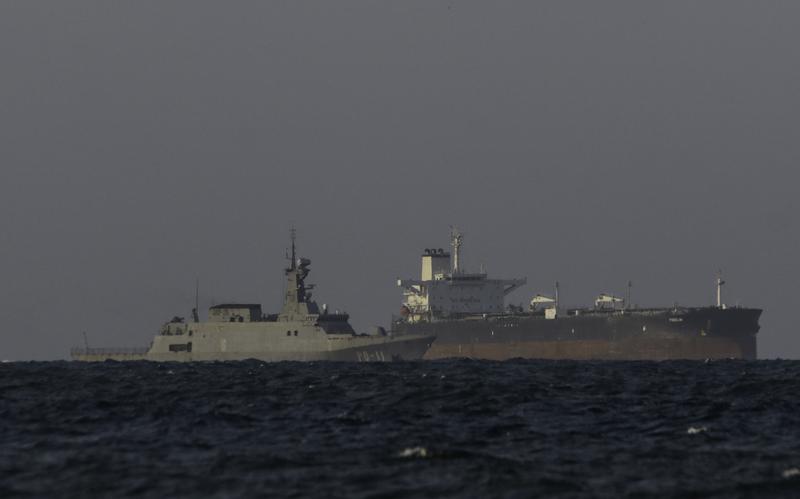
( JUAN CARLOS HERNANDEZ/AFP via / Getty Images )
Title: US Strikes on Venezuelan Alleged Drug Boats
[music]
Amina Srna: It's The Brian Lehrer Show. I'm producer Amina Srna filling in for Brian today. Good morning again, everyone. Now we turn to Venezuela. Since early September, the US Military has been attacking boats in the Caribbean Sea and Eastern Pacific Ocean, that the Trump administration says are smuggling drugs. Legal experts have said the strikes are illegal, extrajudicial killings. They say the military is not allowed to target civilians, even suspected criminals. As of last weekend, 21 US strikes have killed at least 83 people. Those numbers are from The New York Times.
In a continuing escalation, the Trump administration has sent the world's largest aircraft carrier to the coast of Venezuela. 12,000 US sailors and Marines are currently in the region in what the US Secretary of Defense Pete Hegseth formally named Operation Southern Spear. The administration says its military actions are an effort to counter the flow of illegal drugs. Venezuela sees the ramping up of US Military Force in its waters as a pretext to force out its president, Nicolás Maduro. Joining us now on the latest is Regina Garcia Cano, Andes correspondent at The Associated Press. Welcome to WNYC, Regina.
Regina Garcia Cano: Hi, Amina. Thank you for having me.
Amina Srna: Thanks for being here. Listeners, those of you with ties to Venezuela or neighboring countries in Latin or South America, we want to hear from you, help us report this story. What are you hearing from friends, family, or Spanish media on the US strikes on suspected drug boats in Venezuela, or what questions do you have for our guest Regina Garcia Cano, Andes correspondent at The Associated Press. 212-433-WNYC, that's 212-433-9692. You can also text that number.
Regina, President Trump has said each sunken boat has saved 25,000 American lives, meaning the administration prevented overdose by fentanyl by striking these suspected drug-smuggling boats. Can you fact-check the president for us on that, and what do we know about what was on those boats?
Regina Garcia Cano: Sure. What we know from our reporting is that it is not uncommon for boats departing from Venezuela's northeastern coast, which is from where some of the boats departed, to carry more than just fish. It's an open secret there that the boats sometimes also carry drugs, wildlife, fuel, migrants, and much more. When we traveled there to try to figure out who were the men on those boats, residents and relatives of some of the men told us that they had indeed been running drugs but were not narco-terrorists or leaders of a cartel or gang as some have alleged.
Amina Srna: As you were mentioning, the US has historically dealt with drug smugglers from this peninsula in Venezuela but in a very different way. Can you explain what that was like before?
Regina Garcia Cano: Sure. The Coast Guard for decades has interdicted small vessels that they suspect are carrying drugs. That was not just limited to boats with ties to Venezuela. Much of that work has been focused on stopping shipments of cocaine, which is mostly produced in Colombia, which happens to be Venezuela's neighbor. That was a traditional approach because that allowed authorities to interview boat crews and learn valuable information that they could then use to better target cartels or trafficking networks.
Amina Srna: You're specifically mentioning cocaine, which has certainly upended many American lives over the decades, but Trump has specifically talked about fentanyl being on these boats. Is that true?
Regina Garcia Cano: In my reporting, fentanyl was not something that relatives or villagers, anyone in the area that I visited mentioned as something that is moved on those boats, but they did mention cocaine.
Amina Srna: Human rights groups, including Amnesty International, have condemned the strikes as illegal, extrajudicial killings of civilians. You, as you mentioned, pieced together the details of some of the men who were killed by US boat strikes. Trump has referred to these men on those boats as narco-terrorists, but you found the truth was more nuanced. Do you want to talk to us about what you found?
Regina Garcia Cano: Sure. We visited, again, the northeastern coast of Venezuela, which is close to Trinidad. We were looking for their names, their occupations, what drove them to be on the boats. What we learned of those, who we were able to identify by name, is that one was a fisherman, another one was a down-on-his-luck bus driver, a third was a former military cadet, and another one was a well-known local crime boss who contracted out his services. What we also know is that they were from these villages that are economically depressed, that lack job opportunities, and where people struggle to buy food and can't really afford much more than the very basics.
Amina Srna: You write about how both the Venezuelan government and drug cartels are actively suppressing information about the boat strikes, making it hard for the friends and family members that you spoke to of some of these men to find out what actually happened to them. Can you explain that a little bit further?
Regina Garcia Cano: Yes. The families, and in general, people who live in that part of the country are deeply afraid to talk and very, very fearful of any sort of government repression or retaliation from local criminal groups. Repression is not new in Venezuela, but it certainly intensified since last year's presidential election. The relatives of some of the men killed in the strikes were especially fearful of speaking because police and state intelligence agents searched their homes shortly after their loved ones passed away.
Amina Srna: Does that imply that there's maybe some sort of organization between the two happening, or would you not go so far as to say that?
Regina Garcia Cano: I have not specifically focused my reporting or been able to dig deeper into that, but the families in general, they are in an area that's very remote as well, so they fear that anything that they say or do could lead to something be done against them and that they really wouldn't have anyone to ask for help or report it, so their fear is deep and it's also quite generalized.
Amina Srna: Well, let me ask you about this. The US has ratcheted up pressure on Venezuela in recent days, saying, according to your reporting, that it was "expecting to designate as a terrorist organization a cartel it says is led by Maduro and other high-level Venezuelan government officials." Can you talk to us more about that claim by the Trump administration and to what extent it has any merit?
Regina Garcia Cano: Yes. The Trump administration plans to designate Cartel de los Soles as a terrorist organization by November 24th, which is next week. After that was announced, President Trump over the weekend said that he may talk with President Maduro, and then he repeated that on Monday, and that also led to President Maduro to express some openness to have discussions. Certainly, one way that that announcement from Secretary Rubio about the designation, what it has resulted in is this sudden interest in having discussions between the two countries.
Amina Srna: A listener texts, "What a bunch of lies and excuses about Venezuela," I believe this listener is referring to the Trump administration and not our conversation. Listener, tell me if that's wrong. "If it was for the war on drugs, then why seven military bases in Colombia for the last few decades?" Regina, do you want to weigh in on that at all?
Regina Garcia Cano: The seven military bases in Colombia, that is not a subject that I am deeply familiar with. I cover mostly Venezuela. I know that there are bases in Colombia, but I definitely don't want to speculate about those bases.
Amina Srna: Let's talk about what is actually happening. Let's go to a listener, José in Brooklyn. José, you're on WNYC.
José: Hello. Good morning.
Amina Srna: Good morning.
José: Hi. My question was-- Well, I've been reading a lot of information. I don't know what's accurate or not, but I was reading that if the United States was to attack Venezuela inland, I don't know if it's true, the way they form their warships-- Well, the question is, would China and Russia get involved? From what I've also read is the warships are formed in the Caribbean so that they would block any aid coming from them. Is this true?
Amina Srna: José, thank you so much for your call. Regina, I didn't see this China or Russia in your reporting, but anything about warships in the Caribbean blocking aid or anything else you want to weigh in on?
Regina Garcia Cano: Yes. Both countries, Russia and China, have been allies of Venezuela for at least two decades under the late President Hugo Chávez and now under President Maduro. Over the years, they have signed a variety of agreements that include military assistance. We do know that there is Russian military equipment in the country, they've sent that in the past to Venezuela.
Amina Srna: One listener asked where these strikes are actually taking place? I think specifically wondering under which territory. Is this right off of the coast of Venezuela or closer to the United States in the Caribbean?
Regina Garcia Cano: They're happening both in the Caribbean and the Eastern Pacific, and they're happening in international waters. They're not happening right off the coast.
Amina Srna: The military is striking boats. At the same time, the administration is [unintelligible 00:12:29] increasing pressure on President Maduro, as we've been talking about. You report how the Justice Department in the US has doubled a reward for Maduro's arrest to $50 million, and the US Military has built up an unusually large force in the Caribbean Sea, as we've been talking about. Let's take that first part though. Why is the Justice Department seeking Maduro's arrest?
Regina Garcia Cano: President Maduro has been indicted on drug trafficking and narco-terrorist charges in the US. This indictment was announced a few years ago, so they certainly want to detain him, and they believe that a larger amount or a larger reward could perhaps aid in his arrest.
Amina Srna: Listeners, I'm seeing a couple of texts coming in, as people are sharing that they have friends and family in Latin and South America. We can take a few more of your calls here at 212-433-WNYC. What are you hearing from friends and family? Does this look like an escalation from the media outlets that you are reading, especially Spanish-speaking media outlets? 212-433-WNYC, that's 212-433-9692.
Regina, as I mentioned in the intro, Defense Secretary Hegseth has formally named this intervention Operation Southern Spear. To your knowledge, what does that move made by him last Thursday signify, if anything else? I mean, we know Congress has the power to declare war. Where is the US as far as, you know?
Regina Garcia Cano: What analysts have told us is that the the name as well as the arrival of the largest aircraft carrier that the US has to the region signaled that neither Secretary Hegseth nor President Trump have really forgotten about this area, that their attention is here, but we've also heard from analysts that President Trump appears that he's yet to determine what this operation's victory will look like, that he hasn't decided that, and so we could still see a variety of things take place.
Amina Srna: Let's go to a caller, John in Caldwell, New Jersey, you're on WNYC. Hi, John.
John: Hi.
Amina Srna: Hi.
John: Hi. Thanks. I wrote an opinion piece about Venezuela in Newsweek not long ago in which I said, "Look, Trump is focused on the cocaine, but we all know the underlying issue is Maduro having stolen two elections, acting as a dictator, basically overthrown the democracy there." My question is, why do we never focus on what other Latin American leaders are doing? We're always just focused on Trump or what the US is doing, but why haven't the leaders of Brazil, Colombia, Mexico, Argentina, and so on, why haven't they acted to get rid of Maduro after he stole two elections and jailed all his opponents, destroyed the economy, locked up all the journalists and so on?
Amina Srna: John, thank you so much for your call. Regina, two points that John is bringing up there, one on what he referred to as Maduro's stolen election. You had said earlier in this segment that there's been a lot of upheaval since Maduro's last election. Can you just explain for listeners who aren't familiar what the elections looked like in Venezuela last year?
Regina Garcia Cano: Of course. Venezuela had a presidential election in July of last year, and there was a lot of attention around it because there have been negotiations over time leading up to the election to make sure that it would take place under free and democratic conditions. As the election got closer and closer, those agreements were definitely tested by Maduro's government.
Then, shortly after polls closed on July 28th, the National Electoral Council, which is stacked with ruling-party loyalists, declared President Maduro the winner, but they did not show any of the the detailed tallies that they have offered in previous years. Shortly after, the opposition published online more than 70% of those detailed tallies that are printed by every electronic voting machine used in the election. Those tallies showed that the opposition candidate Edmundo González had defeated Maduro by a 2-to-1 margin. [crosstalk]
Amina Srna: Sorry, go ahead.
Regina Garcia Cano: Yes. Then, after that was announced, there were protests in Venezuela, and the government detained more than 2,000 people in the days after the election.
Amina Srna: To John's second point there, I think he was asking broadly to what extent are other South American countries intervening or interested in intervening? Is there any incentive or any movement?
Regina Garcia Cano: Well, a number of presidents urged Maduro after the election to publish those detailed tallies which the Electoral Council didn't do. There was also an effort by Brazil's President Lula as well as Colombia's President Gustavo Petro and at the time Mexico's President Andrés Manuel López Obrador to try to get, again, Maduro to publish those records. There was a brief negotiation effort, but that failed.
Amina Srna: Let's take another call, Tim in Brooklyn, you're on WNYC. Hi, Tim.
Tim: Hi. good morning. Yes, you haven't mentioned that Venezuela has the largest proven oil reserves on planet Earth and that this is a very convenient distraction from other things for the president and that the DEA itself says nothing about fentanyl coming from Venezuela. Venezuelan coast is as far away from the Mexican cartels producing it as Maine is from Tucson, Arizona. The idea that fentanyl is flowing through is ridiculous. This is obviously completely false information being put out by the president. You just need to call it. Don't step around it. This is nonsense. Let's call it what it is. That is murder.
Amina Srna: Tim, thank you so much for your call. Regina, you have, I believe, reported on some interest in Venezuela's natural resources. Is that correct? Am I remembering correctly?
Regina Garcia Cano: Venezuela does have the largest proven oil reserves in the world. In fact, in previous negotiations between Maduro's government, the Venezuelan opposition, which is backed by the US, and the US itself, one of the concessions that the US made to Maduro, to get those democratic conditions for the election, was to grant a sanctions license to Chevron, the oil giant, to restart operations here in Venezuela. Yes, the oil that the country has, has been part of negotiations in the past.
Amina Srna: Let me get in one more caller real quick. Dominic in the Bronx, you're on WNYC. Hi, Dominic.
Dominic: Hi. Hi. Hi. I just wanted to offer some-- kind of following up and connecting with the previous caller. The idea of the United States once again actively overthrowing a government in South America is, as my kids put it, a film I've seen before, and it never goes well. Machado is a very problematic figure, but she's acceptable because she's rabidly right wing. I can't trust any US Administration, but especially the current one. For anybody to entertain the idea that we're going to go in and fix Venezuela, it reeks of capitalistic opportunities, and the people who will suffer are the people who are against Maduro for good reasons.
Maduro, he's not a nice guy, none of them are, but I think having our fascist overthrow some other authoritarian is just really bad press. I just hope against all hope that cooler heads will prevail and that Hegseth goes back to Fox where he basically belongs.
Amina Srna: Dominic, thanks for your call. Regina, I thought Dominic was going to get into a little bit of the fight on the ground. We know María Corina Machado won the Nobel Peace Prize this year for her efforts to advance democracy in Venezuela. Do you want to comment on how maybe the interventionism, if we can call it that, on the part of the United States, is being seen on the ground? My understanding is you are in Caracas right now, right?
Regina Garcia Cano: Yes, I'm here in Caracas. People in Caracas are going about their days. They're going to work, they are going to school. The the main worry that Venezuelans have is their economy and how they will be able to buy groceries this week or next week. That's really their main concern.
There is some tensions among people, and if you ask, some of them will share a bit of worry, but in general, they're going about their day, and they tell you that this is not the first time that Venezuela has been under pressure, that this is not the first time that they've heard that the country may be on the brink of a change and that they're used to it, and that over time they've learned to simply focus on what affects them directly and what they need to do on that day.
Amina Srna: We'll leave it there for today. Regina Garcia Cano is the Andes correspondent at The Associated Press. Regina, thank you so much for coming on today.
Regina Garcia Cano: Thank you for having me.
Copyright © 2025 New York Public Radio. All rights reserved. Visit our website terms of use at www.wnyc.org for further information.
New York Public Radio transcripts are created on a rush deadline, often by contractors. This text may not be in its final form and may be updated or revised in the future. Accuracy and availability may vary. The authoritative record of New York Public Radio’s programming is the audio record.
