
Universities and Democracies
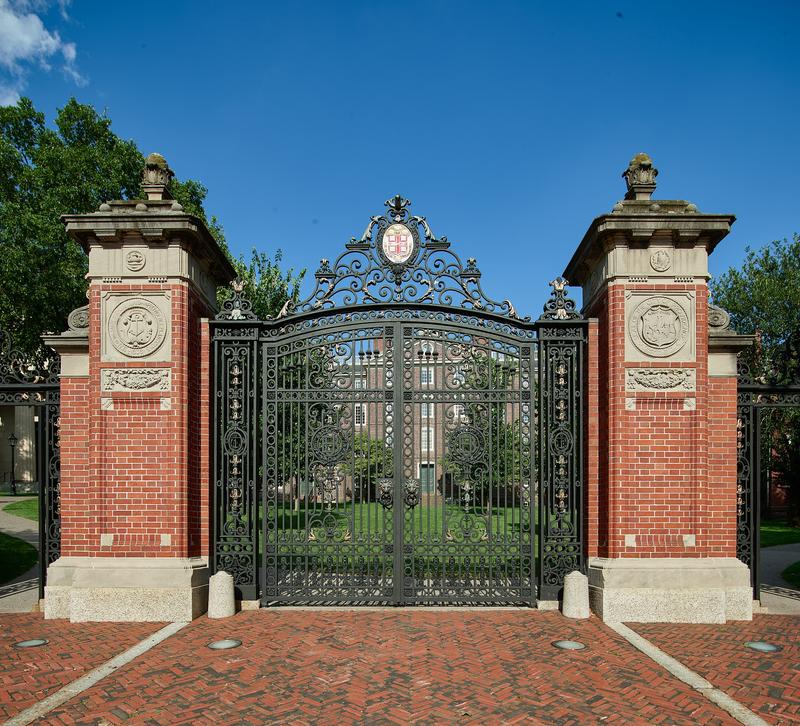
( Carol M. Highsmith, Public domain, via / Wikimedia Commons )
Brian Lehrer: It's The Brian Lehrer Show on WNYC. Good morning again, everyone. With us now, Lee Bollinger, constitutional scholar and lawyer and the president of Columbia University from 2002 to 2023. Before that, he was president of the University of Michigan. Some of that, while at Michigan, a landmark Supreme Court case, Grutter versus Bollinger, upheld the school's right to use race as a factor in admissions to build a diverse student body. That decision, as many of you know, was overturned by the current court in 2023. Lee Bollinger still teaches law at Columbia, which, as you probably know, is coming under fierce criticism these days from the left and right alike. He still teaches a class that ties academic freedom and journalistic freedom together called Freedom of Speech and Press. In that context, he has a new book called University: A Reckoning. Professor Bollinger, thanks for coming on for this book. Welcome back to WNYC.
Professor Bollinger: Thank you, Brian. It's a pleasure to be with you.
Brian Lehrer: Let's go right to the heart of the matter. You write that we're witnessing a tectonic shift in America toward the use of authoritarian tactics that threaten our democratic form of government. Quote from you. How do you think that most applies to universities?
Professor Bollinger: What we saw beginning in the past year was a very, very strong and unfortunate attack on universities using the lever of funding through the NIH, National Institutes of Health, and the National Science Foundation, which for decades have funded science and biomedical and medical research using that funding, suspending it in order to try to capture various aspects of control of universities, from admissions to faculty hiring to DEI programs and so on. This was really an unprecedented assault on traditional notions of academic freedom.
I don't think there's been anything like it until you go back to the McCarthy period. It's unclear where this is going, what the next steps will be. I can tell you that there is a really deep intimidation that has occurred within higher education and American universities. It's not the only area. Obviously, the press was one of the first to be also attacked with baseless lawsuits and the like. Law firms that represented opponents of the administration were denied access to federal buildings and denied national security permission. Civil service, obviously, has also been attacked and undermined in order to capture more control of that.
Businesses have been also intimidated. Across the board, including, by the way, I should mention, NPR Corporation for Public Broadcasting. This is a broad assault on free speech, on free press, on independent thinking, on independent gathering of data that is necessary for democracy to function. I really am focused here on universities.
Brian Lehrer: I noticed that what you highlight about the book on your Columbia bio page is that the book describes how the structure of modern universities contributes to their success, but that structure also leaves them vulnerable. How do you mean that duality?
Professor Bollinger: One of the things I wanted to do was to try to explain just why universities are such a great achievement of the United States. I think over the past century, there have been two things that have defined America, among several, but two major success stories. One is the First Amendment, which I will get to and which I know a lot about because I've taught and written about this all my life. The other is universities. The higher education system in the United States is the best in the world. It's widely regarded as such.
It is an incredible powerhouse of research, advancement of knowledge, education of young people. While it has some issues like any part of the society does, overwhelmingly, it is one of the great, as I said, success stories. I want to explain that and also explain why that is so. It's a unique structure that has evolved. The structure has to do with the fact that some of the most talented people in every generation, not all the most talented people, but some, dedicate their lives to being in a university setting in order to preserve knowledge and to advance it across the spectrum of the human sciences, the natural sciences, social sciences, literature, professional schools like law and business.
These faculty spend their lives, really, in a very special environment with a very special intellectual mentality that I call the scholarly temperament, really trying to preserve the knowledge that we've inherited and to advance it. That structure, which gives people a lifetime appointment after a certain period of testing their capacities and their potential, is something that appeals to some of the best of each generation. That is a system that is unique in the world, and people from all over the world want to emulate it. People want to come to the United States for higher education.
It's also critical that it teaches youth. The fact that young people are part of these communities is a very special and critical ingredient in their success. They're very fragile because they don't have any real capacity to fight back. They're not the press, which can point out that the government is doing this. They're not as committed to everyday kind of participation in public debate. They're really very serious scholars, and they're committed to the long-term advancement of knowledge. It's just a fact that when governments start to use authoritarian techniques to try to seize control of the society, they want to go after sources of independent thinking and voices.
The first is always the press. We see that here. The second is the university, and then there are other sectors that are attacked as well. That's what we find. That's what you find in Hungary with Orban. That's what you find in Turkey with Erdogan. There are many other unfortunate examples.
Brian Lehrer: Listeners, we can take a few questions, comments, or stories for First Amendment lawyer and scholar, Lee Bollinger, president of Columbia University from 2002 to 2023. He left that post before October 7, 2023, when a lot changed at Columbia or got highlighted. He was the president for 20 years for just before that. His new book is called University: A Reckoning. You can call about the main points that he's been making so far, that universities are core institutions of democracy that are now under authoritarian attack, or anything else relevant.
Call or text 212-433-WNYC, 433-9692. Your book is called University: A Reckoning. Does part of that reckoning, for you, include whether universities, especially elite universities, have helped bring this right-wing authoritarian backlash on themselves by marginalizing conservative thought? Do you accept the critique that that has happened?
Professor Bollinger: I don't accept the critique. I think there has been a campaign to try to discredit universities over the past decade or so and to characterize them in ways that are really not consistent with the reality. I teach every single year. I teach undergraduates, some 200 in a class, on the First Amendment. I teach law students. I am around faculty all the time. I know what students are thinking, how they're responding to their education. I just would invite, I say this at the beginning of the book, anybody to come onto a campus, go into any seminar, any class on any subject, and you will find that there is an openness, a commitment to this scholarly temperament of being prepared to accept arguments that attack your positions and your responsibility to the students to bring them into all ideas that are relevant.
This is the core of what faculty do every single day. Of course, there will be instances where some faculty will become too politicized, or there will be instances in which some speakers will be denied access to the campus because of opposition to their views. Every one of those is unacceptable, but they do not define the overwhelming behavior and commitment of faculty to this general enterprise of advancing knowledge. I think that is really just being used as a pretext for attacking institutions that are independent mindedness in the society. That's what we have to realize, that we are in jeopardy of losing something that is one of the greatest achievements in the United States.
Brian Lehrer: As a follow-up to that, though, the great Harvard historian and New Yorker staff writer Jill Lepore, no right-winger, as I'm sure you know, recently said this to the New York Times. "Something really changed on campus around 2014. Students started showing up, determined that their job in the classroom was to humiliate one another and possibly catch a professor in saying something that was a violation of what they believed to be a way you can speak. This entire campus," Harvard, "Became incredibly prosecutorial. I just think it's silly to deny that that existed, that it didn't harm a lot of people, that it wasn't wildly out of control on many occasions. I just think the left has to admit that it has done a lot to make a lot of Americans feel like they do not belong." Some excerpts from what Jill Lepore told the New York Times.
Professor Bollinger: Right.
Brian Lehrer: How much do you agree or disagree with Jill Lepore on that?
Professor Bollinger: I would say to Jill, we could have a discussion about how much this defined the campus experience and what were the causes of it. Was it because the university as such allowed it to happen, or was it because the society in which there's great polarized opinions, as we know all the time, has infected the university? What did the universities do to try to counteract that? That would be an important, very, very significant discussion. Just how much did this define universities generally? Are we self-correcting on these matters? The fact of the matter is that what the Trump administration has done is way out of proportion to that problem and is being used, as I said, as a pretext for taking control of universities in ways that we have not seen in decades. I don't want to conflate the two issues. That is really the key point.
Brian Lehrer: Follow up to that from a listener who writes, "This era was also an unprecedented assault on Jewish students on American campuses, and the universities wanted to hide behind free speech, First Amendment claims." I think they're talking about the protest era. Also, for your reckoning to this point, I saw that you told the student newspaper, the Columbia Spectator, last year, "I view what's happened to many Jewish students and faculty and the anti-Semitism they've experienced as horrendous. Universities do need to attend to that. I think our systems of discipline for violations of that kind and many others are inadequate to the moment."
That's you to the Columbia Spectator. As president of Columbia for 20 years, did you preside over the degradation of the environment in that way, such that it contributed to a rise in anti-Semitism and the expression of it?
Professor Bollinger: No, I don't think so. Let me just say, I think what happened to many Jewish students and faculty in that period was horrendous. I've said that repeatedly, and while I was president on many occasions, many occasions, I spoke out against what I felt was a kind of rising anti-Semitism, particularly around the so-called BDS, Boycott Divestment Movement. I was very concerned and alarmed by a rising anti-Semitism on campuses and in the society, and very important to address. It's also very complicated because we haven't gotten to the First Amendment and how that fits into this, Brian.
One of the other achievements in the society, as I said, is the development of the First Amendment, which begins in 1919. There are no Supreme Court cases before that. As the American university was rising, so was the First Amendment. I think most people think in the society that this too is one of the great success stories. That First Amendment doctrine has, over the decades, developed extreme protection for speech, including anti-Semitic speech. So many people may remember the Skokie case from the late 1970s, when a small group of neo-Nazis wanted to march in a suburb of Chicago called Skokie, which had 40,000 Jewish citizens and 4,000 survivors of concentration camps.
As appalling as that speech was, as horrendous as that speech was, the courts, under the First Amendment doctrines that had evolved, held that was protected speech. The same is true of the Klan speech in a famous case in the 1960s. In the United States, we have taken the First Amendment very far in protecting some of the ugliest ideas that exist. We are unique in that. European countries don't do that. Canada doesn't do that. This has defined what free speech has meant in America. Every campus basically in the United States has, the public universities have to abide by that.
Private universities can choose, and every private university has basically chosen to abide by the First Amendment. When there's anti-Semitic speech about public issues on campuses, that is something we're committed to not censoring in the way that it's not done in the society at large. You have to distinguish between treatment of anti-Semitic speech in a free speech context and other anti-Semitic speech.
Brian Lehrer: On a free speech level. Columbia is also under fierce criticism from the pro-Palestinian side as well. A release from the New York Civil Liberties Union just mentioned the ACLU supporting the Nazis' right to march in Skokie, Illinois. This is the New York Civil Liberties Union saying, "Student groups, Students for Justice in Palestine and Jewish Voice for Peace, were peacefully speaking out on a critical global conflict, only to have Columbia ignore its own longstanding existing rules and abruptly suspend the organizations. The protest was sponsored by a coalition of over 20 groups, yet none of the other groups involved faced disciplinary action."
It continues, "That's retaliatory, it's targeted, and it flies in the face of the free speech principles that institutes of higher learning should be defending." There's a strongly held view that Columbia itself trampled on that value of free speech and that right due to the backlash to the protests. Others focus on the suspension or other punishment of about 70 students. Columbia is seriously under fire from both sides of this issue, as you know. Your response to this one, to the pro-Palestinian side, on what they see as a Palestinian exception to free speech or to the alleged retaliation. I know you weren't president then, but obviously you were there.
Professor Bollinger: I can speak about this generally, but I've followed the principle since I stepped down, the normal principle that I'm not going to critique or criticize my successors. As you said, this happened after I stopped. In general, I think that in periods of intense debate and disagreement and anger, which certainly characterize this period, there is going to be feelings, sometimes legitimate, sometimes not, of censorship and intolerance on each side. That certainly happened here. I'm not going to comment on the particulars of the claims about what happened at Columbia, but I would say this.
I would say that it is imperative on universities to explain the First Amendment and freedom of speech principles to the community over and over and over again because they're not naturally embraced. One of the things I always say is the First Amendment is counterintuitive. We're not born believing in free speech, and so when we get into environments where there is really, really strong disagreement and people are using excessive ideas and language to express their feelings and views, there's going to be people hurt and injured in that. That's part of free speech to a certain extent, that the Supreme Court has developed over the past century.
When that happens, it is really important that leaders explain what it is that we're doing, the principles at stake, and why we believe in those principles, and then follow them. They also have to explain that there are limits on free speech and that there are things that you do, which you may claim are expressive or speaking are not necessarily protected. You need strong disciplinary procedures to take care of that.
Brian Lehrer: You don't want to take a position either way on whether there was a double standard?
Professor Bollinger: Not in the specific context of Columbia.
Brian Lehrer: Sally in Montclair, you're on WNYC with former president of Columbia, Lee Bollinger. His new book is called University: A Reckoning. Hi, Sally.
Sally: Hi. Thank you, Brian. Professor Bollinger, I'd like you to address legacy admissions. I just don't think it gets enough attention. I happen to have been a director of admissions of Antioch School of Law in the early '70s. Actually, the leadership, being Jean and Edgar Cahn, brilliant people, we devised a competency-based admissions process. It leveled the playing field, and it resulted in the most diverse law school student body in the country. Now, as things are being assaulted, I think that many models were good, but this is an assault on fairness. Very important to deal with this uneven playing field. Not enough is said about legacy admissions. I'd appreciate hearing from you.
Professor Bollinger: Sure. Just to be clear, meaning that legacy admissions are unfair. Is that the position you're advancing?
Sally: Unfair? Yes. Arguably, yes. If it's to the exclusion of the enrollment of diverse classes and taking into account the background of disadvantaged folks, you can devise something that's based on merit and competency that makes for a very diverse, including the rich, student body.
Professor Bollinger: Right.
Brian Lehrer: Legacy admissions, meaning basically, if your parent went there, you get a leg up, that kind of thing, right?
Sally: That's right, yes.
[crosstalk]
Brian Lehrer: Go ahead, Professor Bollinger.
Professor Bollinger: The area of admissions, obviously, is something that attracts a lot of attention. The most serious attention over the past couple of decades has been about affirmative action for African Americans, Hispanics, and Native Americans. As Brian indicated at the beginning, I was very involved. Initially, I led the defense of the University against the litigation that sought to overturn the use of race in admission that had been allowed by the Supreme Court. We won victory in 2003, but the Supreme Court has now taken a different tact on this.
My view on that is Brown versus Board of Education set the country on a path of trying to deal seriously with two or three centuries of the most serious discrimination against African Americans. That will take generations to overcome. Universities in the 1970s and onward began trying to take steps to do that by taking race into account. There are many things that are taken into account in not just standardized test scores and grades in the admissions process. Low income, your family didn't have parents who went to college, so you're first generation.
Different parts of the country, different parts of the world. There are many things that admissions officers try to consider in order to get a diverse student body in a belief that that's a more exciting learning environment. Legacy admissions, just like athletic scholarships and special weight given to athletic capacities, but those are ones that have proven also to be troublesome to many people just focusing on legacy. The argument for allowing legacy admissions at universities is that universities want to establish a sense of community, and their graduates are people who are loyal to the institution, and we want that.
One thing to make part of that is that their children will have some degree of help, not complete, but some degree of help in the admissions process, and that that creates this sense of community. The other view is that this is really perpetuating hereditary types of advantages, and that's not good in a society dedicated to equality. I defended legacy admissions, but I always felt queasy about it, to be honest. I think it's a very hard problem. There are some university presidents who feel very strongly that they are needed in order to build successful institutions, and there are some who believe the opposite, that they are inherently unjust. I would just say, I think it's one of those cases of a very, very difficult problem.
Brian Lehrer: As we begin to run out of time, you deal in the book with how to move forward and how to fight against this authoritarianism coming from the government that threatens freedom of speech and freedom of thought at universities. You do acknowledge in the book that Columbia has chosen a path of conciliation and negotiation with the Trump administration, as you put it, which led to a settlement, while Harvard chose resistance and. negotiation. I think to many democracy and academic freedom advocates, Harvard chose the more righteous path. Maybe you don't want to take a Columbia-specific stand on this one either, but do they have a point?
Professor Bollinger: My distinction is I just won't talk about the particular decision of Columbia, but I'm really ready to talk, as I do in the book, about the way in which the respondent, and that view of mine advanced in the book is that a strong resistance, using litigation, using collective action of universities joining together, trying to get other sectors of the society, law firms, businesses, and so on, media to join together in resistance, to stand up for independent voices, opinions that are different from what the administration favors at any given moment, that that is really necessary.
I try to make the case that there is a basis in the First Amendment which is committed to advancing knowledge. That is the rationale, the core rationale of freedom of speech and press, that that makes universities a key institution in advancing what the First Amendment tries to achieve, just like it is true for the press. While the press we think of as the fourth branch of government, as it were, the university system is the fifth branch of government. We need to solidify that in our constitutional doctrines. Universities need to embrace that identity. We need to stand up for universities at this moment, as well as for other parts of the society that are experiencing similar attacks.
Brian Lehrer: Stand up how?
Professor Bollinger: Through litigation, I think, is the first and foremost, but there are other ways of joining together. If you look at all the scholarship on how democracies end, how they fail, how we lose democracies, it's really when civil society does not join together and voice opposition to the moves that are taken to abridge freedom of speech and press. That can take many different forms. Once the society says, "This cannot happen, we cannot lose our liberties, we cannot lose our freedoms, they have been hard won, and they're far too fragile," once that becomes part of the civic culture, then you really can have effective resistance.
Brian Lehrer: Lee Bollinger, former president of Columbia University, and before that, the University of Michigan, is now the author of University: A Reckoning. Thank you for sharing it with us.
Professor Bollinger: Thank you very much, Brian.
Copyright © 2026 New York Public Radio. All rights reserved. Visit our website terms of use at www.wnyc.org for further information.
New York Public Radio transcripts are created on a rush deadline, often by contractors. This text may not be in its final form and may be updated or revised in the future. Accuracy and availability may vary. The authoritative record of New York Public Radio’s programming is the audio record.
