
Uniting Amazon Workers
Brian Lehrer: It's The Brian Lehrer Show on WNYC. Good morning again, everyone. Organized labor, you might say, is having a moment right now. A 2024 Gallup poll showed that 77% of Americans think labor unions mostly help workers. That's up from an all-time low of just 48% in 2009, so 48% up to 77% now. If you're not already in a union, you may have asked yourself at some point in recent years, "Should my workplace unionize? If so, how do I actually do it?"
As a lot of you probably saw, maybe you even heard about it on this show at the time, back in the spring of 2022, an Amazon warehouse on Staten Island known as JFK8 made history when workers voted to unionize. It was the first successful unionization effort at Amazon anywhere in the country. It was a very David and Goliath-esque story. A completely independent worker-led union took on one of the most powerful corporations in the world and won. Now, it hasn't exactly been smooth sailing since then.
There's been a fair bit of internal conflict within the Amazon Labor Union, or ALU, and Amazon leadership, perhaps predictably, hasn't exactly been easy to work with. The ALU's victory was really symbolically significant. A moment where it became clear that while it might be difficult, it's ultimately not impossible for organized labor to take on a big corporation like Amazon these days. It sparked a ton of national attention and raised a big question that labor activists are still parsing, was this a one-off or a model that others can follow?
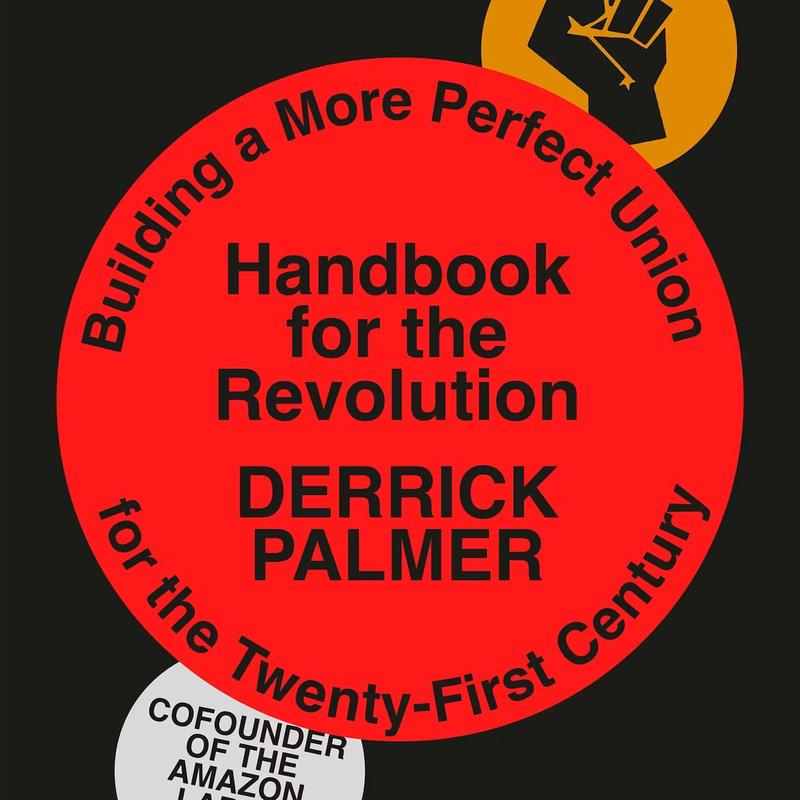
Our guest today, Derrick Palmer, is one of the co-founders of the Amazon Labor Union, and he has a new book. It's called Handbook for the Revolution: Building a More Perfect Union for the Twenty-First Century. In it, he lays out a practical guide, as he sees it, to workplace organizing based on what he learned on the ground as an Amazon union leader. We'll talk about his experience founding that historic labor movement at Amazon and run through some tips on what it actually takes to unionize a workplace elsewhere. Let's dive in. Derrick, thanks for joining us. Congratulations on the book. Welcome to WNYC.
Derrick Palmer: Oh, thank you, Brian. Thank you for having me.
Brian Lehrer: You write about the atomic moment is your phrase, which prompted you to really dive headfirst into organizing. Tell everybody about that moment. What was happening inside JFK8 at the time, and what pushed you personally past the point of no return?
Derrick Palmer: I felt like it's been brewing for a long time. Once I really started Amazon, I started to notice the conditions of how we were working and the amount of hours, how much repetitive motion we were doing, and that really played a toll on me. I felt as though that, there had to be something done about this. We had to make some type of move. I didn't know it at the time. I started to advocate for workers inside the building prior to the union starting. That gave me a lot of notoriety inside the building. People came to me for whatever issues they were having.
I feel as though the pandemic, in March of 2020, that's when things started to really kick up, and we decided to take things up a notch because Amazon, they didn't have the proper safety measures and the proper safety equipment for us while we were working during the pandemic. At the time, New York was the epicenter of the coronavirus. A lot of people were getting sick, and didn't know what was going on, and we didn't have the protection. Actually, a supervisor close to me, she actually got sick. I actually saw her face. She didn't look well at all.
Myself and Christian Smalls we noticed that. Chris actually told her to go home because you look sick. Chris was my process assistant at the time. He had a meeting with management, and they told him that, "Don't worry about people getting sick. We'll handle it." He was like, "What do you mean, don't tell anyone?" That awoken something in him, and it awoken something in me as well because he told me that they don't want anyone to know about this. That was very alarming to me. A billion-dollar corporation, they were trying to hide it.
We immediately left the building once we found out that this lady was sick. We took it upon ourselves to go to work the next day, but tell everybody in the building that someone was getting sick and that we need to do something about it. We gathered a group of workers every day for 40 hours, 10 hours each shift, each day. We went to the office and demanded that they close the building down, sanitize it, and ensure our safety. Of course, they denied that, so we took it to another level and we planned to have a walkout.
I planned it out in, actually, an Instagram chat. I messaged every worker that I had a group message and told them that we're doing a walkout. Also, we reached out to multiple media outlets as well, and we informed them, and we got a lot of great attention. Once we did that walkout, it was a very powerful thing. We got workers to actually walk out. A lot of attention was on Amazon about what are they going to do about the situation. Of course, they retaliated.
They fired Chris. They gave me a final write-up for violating safety, social distancing, which they didn't implement at the time. They fired another Amazon worker named Gerald Bryson as well. Once that happened, they got a lot of scrutiny for it. Bessemer, Alabama, was inspired by that actual walkout and decided to start a union. They were successful in holding an election. Myself and Chris we decided to drive from New Jersey all the way down to Alabama with the film crew. We studied what was going on down there, and a lot of things that we liked that they were doing, a lot of things we didn't like that they were doing.
We felt as though, based on that trip and that experience, that it was our duty to take the efforts up to New York City. Before we started, we found out that they lost pretty bad in Alabama. It was a perfect time for us. It was perfect for us to go about starting a union, and the rest is history. April 2021 is when we started, and April 1st of 2022, is when we were successful and created the first union for Amazon United States.
Brian Lehrer: Chris Smalls has previously been on the show to talk about this, and I'm glad you're here with it today. To the spirit of your book, which is called Handbook for the Revolution: Building a More Perfect Union for the Twenty-First Century, now that you've told some of the origin story of how the union at Amazon in Staten Island got started, I want to invite you to give some of that advice in the spirit of a handbook to other people who might be interested in forming unions at their places. For example, once you decided to move forward, what were the very first concrete steps that you took?
Derrick Palmer: Number one, you have to study the labor law. We did that for New York City, studied the labor law. We printed out some authorization cards because you need those authorization cards so that workers can sign them. You have to get 30% of your building to sign these cards in order to hold an election by the National Labor Relations Board. We decided to create t-shirts with ALU on it, to pass out the workers. We passed out food to them based on different cultures because New York City has a lot of different cultures, and it reflected in the building at JFK8. We decided to do that, and that was very powerful as well.
The inside, outside organizer. We set up at the bus stop across the street from the Amazon warehouse, where all the workers go to take the bus to commute to the ferry. Also, people like myself was organizing in the inside. On my 30-minute break, I was organizing, I was passing out literature to the workers, and I was informing them about what Amazon Labor Union was about to do and our goal. That's to get a contract.
Brian Lehrer: Listeners, we invite some phone calls for our guest, Derrick Palmer, right now. 212-433-WNYC. Again, in the spirit of a handbook, if you've been thinking about unionizing your workplace and have questions for how to do it, we could take those calls. Maybe you're already in the process and finding yourself hitting certain roadblocks, or if you're already one of the 10% of Americans in a union, what role does it play in your life and in your company?
Call or text with your questions or stories about organized labor in your workplace. 212-433-WNYC 212-433-9692. Again, you can call, you can text. Derrick, you've said that part of the reason you think the Amazon Labor Union was so successful is because you really created a culture around the movement. You had cookouts with music, free food. Why do you think that kind of culture-building mattered?
Derrick Palmer: Just for myself, I can speak for the fact that Amazon doesn't really have any culture. All you do really is just go to work and go home, and you're dealing with managers who treat you like a number, and that plays a role on people mentally. This is based on conversations that I've had with plenty of workers who feel as though we're just being utilized for the numbers that we produce for a company, but it doesn't seem like they're returning the favor for us.
One of Amazon's quotes is saying that the customer comes first. There's customer obsession, but there's nothing about employees and employee appreciation. Those things don't necessarily exist. That's a problem. We knew that there's different amounts of people that are commuting from different boroughs, different states to come here and make money so that they can pay their wages, and keep a roof over their head.
We had to find a way to really connect with them because they don't even really have time to do anything outside of working. We wanted to make it fun, and we wanted to make it interesting. We know that there's so many different cultures. We had food available for them, and whatever culture you're with, and that was important. We wanted to create a fun vibe. We wanted people to really come to us and connect with us, and that's what happened. We actually held bonfires outside across the street at the bus stop.
Workers would come on their 30-minute break, they would leave the building, come across the street, and talk to us about their day that they're having. We got a lot of insights on what we didn't see in certain departments, and that was perfect. We utilized that to our full advantage. These barbecues work. People were looking forward to these barbecues. People were looking forward to getting educated, and that's the most important thing, the education.
Brian Lehrer: You were building community through social events in order to build power.
Derrick Palmer: Absolutely. That was successful. Amazon continued to bring in union busters, union consultants to stop our movement. These guys are getting paid well. They're driving in nice cars, but they're telling workers in these captive audience meetings so that workers shouldn't fight for $30 an hour and that the company has the best interest. That didn't work because you have people like myself and others with the ALU that were inside of these meetings and pretty much combating all the information that they're trying to spill about unions. There was no way that Amazon had the advantage. We had the advantage the whole time, I can say. I think those were successful keys for us winning.
Brian Lehrer: Let's take a phone call for you from Cal in Stamford, Connecticut. You're on WNYC. Hi, Cal.
Derrick Palmer: Hey, Cal.
Cal: Hi. I was just wondering, is this Amazon Labor Union, is that a nationwide thing for Amazon, or is that mainly New York-centric?
Derrick Palmer: The goal is to get Amazon Labor Union across the country. Right now, JFK8 in Staten Island is the only unionized facility in the United States right now.
Brian Lehrer: Right now. There have been other instances around the country where they've been organizing efforts, but the workers voted no. What do you think is the main reason that workers, given the choice, decide not to form unions? Obviously, the companies, not just Amazon, are trying to dissuade them in these situations. What do you think works in that respect, that's an obstacle to you?
Derrick Palmer: The community that we built in JFK8, I feel like, is maybe unmatched, but it's more than possible to get done. It has happened in North Carolina. North Carolina, they had a union vote as well. It's a little harder, I would say, to organize in the south because of the labor laws and because the union density is so low. There was also another campaign in California as well, in San Bernardino. Not every campaign is going to be successful. Even us, we've had some failures as well. We failed at organizing the LDJ5 warehouse across the street right after we won in 2022.
Brian Lehrer: Why? How would you debrief that? Why?
Derrick Palmer: For one, I don't think we had enough time. I can honestly say that we rushed that campaign, based on the momentum that we had at JFK 8. We didn't really have enough time to really organize that building the way it should have been. Nonetheless, regardless of the losses, which is going to happen, but JFK8 right now is the catalyst. We're leading the effort right now, and not just Amazon workers are looking at us, workers and people in the labor movement are looking at us from all different states. This wind was so catapulting that it created a tidal wave. Once we get the contract, I feel like it'll spread like wildfire. All Amazon workers from different buildings will decide to step up and join and unionize their facilities as well.
Brian Lehrer: If you're just joining us, my guest is Derrick Palmer, one of the co-founders of the Amazon Labor Union, and he has a new book called Handbook for the Revolution: Building a More Perfect Union for the Twenty-First Century. In the spirit of that advice-giving, I think Caroline in Forest Hills is calling, asking for some advice. Caroline, you're on WNYC. Hello.
Caroline: Hi. Can you hear me?
Brian Lehrer: I can hear you. Hi.
Derrick Palmer: Yes, I hear you.
Caroline: Oh, great. Hi. Thank you so much, Derrick. I'm a production assistant in the television industry, and I was the lead organizer in flipping the first TV show in the New York City area last year. We watched the movie Union for inspiration. Our plan is to unionize production assistants who are pretty much the only non-union workers on a television or film set and get paid the lowest amount. We're going into our first contract negotiation, and I just wanted to say thank you.
Derrick Palmer: Oh, thank you. That's what this book is about. It's not just inspiring Amazon workers, but all essential workers and workers all across the world to unionize and go against the grain. We went against Amazon. There's regular Amazon workers who are very dedicated to the cause. We stuck to the code, and we created our own culture, and we were successful. I'm very excited to hear about your story, and I wish you nothing but the best. I hope that you do read my book and get inspired even more.
Caroline: Thank you.
Brian Lehrer: Caroline, thank you. Here's a little pushback on the role of unions, I think. Kaplan in Astoria, you're on WNYC. Hello, Kaplan.
Speaker 5: Hi. I wouldn't say I'm pushing back, but rather, I think sometimes being in the role of the union, as a union person, my brothers got a little complacent in their roles. Then, when the property went out of business, and they got kicked out into the real world, they had a really hard time of adapting because they didn't keep up with the technology. For me, the seniority aspect of the whole thing didn't really help accountability where-- Not all unions are built the same. The one I experienced, I wasn't at my best, performing, and I chose to leave.
It was right for me at the time when I needed health insurance, where I could only work a certain amount a month and get guaranteed. I left that property, and I started my own business. I employ a lot of the people that I used to work for, and they feel the same way. I feel like the seniority aspect doesn't allow as much accountability as needed, where you can't discipline somebody and expect more. Again, not all unions are built the same. Some have higher expectations, and they're wonderful people, but sometimes the places that I've worked at don't inspire people or give-- Geez, I'm getting hit. Someone's hitting my car, backing into me. They don't give the incentive.
Brian Lehrer: Sounds like you might have something more immediate to deal with there, Kaplan. Go get that person's license number or something, or at least see if your car is all right. You hear his content, Derrick, and people bring this up a lot with respect to a downside of unionization.
Derrick Palmer: I'm not going to sit here and act like everything about unions is perfect. What I can say, just speaking from my experience and what's happening now, is that people inside of our facility are inspired by what we're doing. They feel as though they have some sort of protection. They feel like someone has their back. Even though we don't have a contract yet, we're still working on that. The base of the Amazon Labor Union was built off independence. We were able to do what we wanted. We were able to organize the way that we wanted, and I think that that's very powerful.
There are some issues with established unions. In the book, I talk about how having our independence was so important, at the time we were doing our campaign. Now that we are affiliated with the Teamsters, there are a few differences. I'm going to be transparent about it. There are some issues on that note, but we're working together side by side to get the contract. It's unfortunate what you're going through there, but it's really just gathering the members of that union that's having these issues and raising these concerns. That's the only way to really change the issues that's happening.
Brian Lehrer: A couple of things before you go. How do you feel about the Democratic Party? I see that you didn't have much support from elected officials early on, including some very pro-union figures, or we think of them that way, like Congresswoman Alexandria Ocasio-Cortez and Senator Bernie Sanders. The way you tell the story, they only jumped on board after you won the election. Your union, the Amazon Labor Union, has decided it won't endorse political candidates. Why is that? Do you have a take, a critique, or anything of the Democratic Party in this respect?
Derrick Palmer: As far as our campaign went, being new to organizing, we just expected people to support us, with politicians or whoever with a name would support us. Unfortunately, that didn't happen. Like you said, the support was after we won. Sometimes people want to ride the bandwagon. This is the way that I felt personally. I'll speak on myself. It was great to have that support. It got some attention. Ultimately, when we were organizing, we wanted to stay away from left and the right and just focus straight on the issues that were occurring inside of JFK8. Workers were getting retaliated against, they were getting discriminated against based on their health. The working conditions are just not well. They're not good at all. We wanted to just focus on those issues. That's why we created--
Brian Lehrer: [crosstalk] all those issues, so your relationship with your employer. Is there anything at the policy level? Because it is very powerful. Government policy can empower or disempower unions from the organizing efforts to what rights they have in negotiations once there is a union, all of it. Are you prioritizing anything at the policy level, or you're just staying out of that?
Derrick Palmer: Yes. We're pretty much staying out of that right now, but you never know what's going to happen in the future.
Brian Lehrer: Last thing, you do still work at Amazon, and you write in the book about how many of the demands of the union, even after you did successfully organize it, haven't been met. Why have you stayed, and how would you describe how things stand right now with contract negotiations at JFK8?
Derrick Palmer: What I would say about right now with contracts negotiations is that Amazon has actually been ordered by the National Labor Relations Board to bargain with the Amazon Labor Union. That's something we were seeking since April 1st of 2022. That's a huge step in the right direction for getting Amazon to negotiate. As far as me staying inside the building, I think is very powerful. Me being one of the founders, me being the voice of the people, people gravitate towards me in regards to issues that take place inside of JFK8.
They're well aware of what I'm doing with writing the book and advocating for other workers. I don't want them to feel as though I'm out of touch by just leaving Amazon. I want to finish the goal and get the contract. Then once all the rules and everything is put in place with the union, then I'll decide to leave and take this to another level.
Brian Lehrer: Derrick Palmer, one of the co-founders of the Amazon Labor Union, and he now has a book called Handbook for the Revolution-- By the way, why the word revolution?
Derrick Palmer: I feel as though Amazon workers fighting against the system is revolutionary in itself. Once we're successful in creating unions, like I said, it's going to create a lot of attention. A lot of workers from different facilities will decide to unionize, and people from different companies will decide to unionize as well. The revolution against a system that was built to oppress the people, and that's the revolution I'm referring to.
Brian Lehrer: Handbook for the Revolution: Building a More Perfect Union for the Twenty-First Century. Congratulations on the book. Thank you for sharing it with us.
Derrick Palmer: Thank you, Brian. Thank you for having me.
