
Trump Ends Temporary Protected Status for Haitians in the US
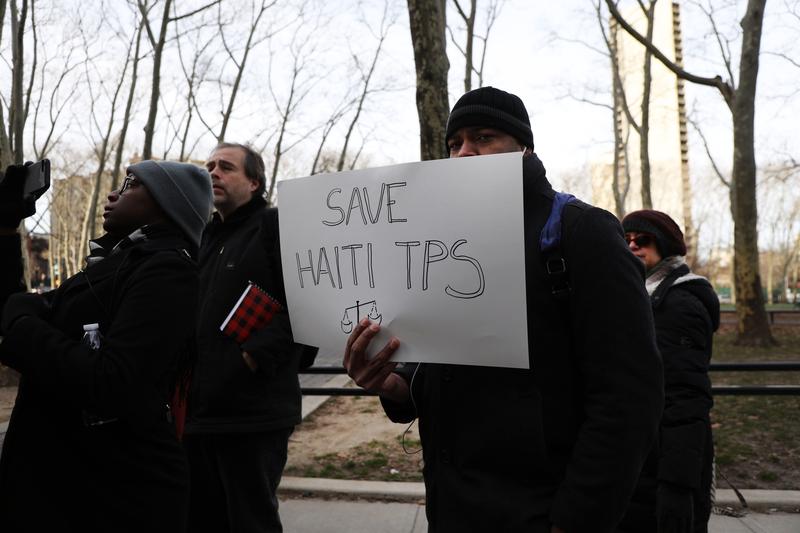
( Spencer Platt / Getty Images )
Brigid Bergin: It's The Brian Lehrer Show on WNYC. Good morning again, everyone. I'm Brigid Bergin, senior reporter in the WNYC and Gothamist newsroom, sitting in for Brian today. Hundreds of thousands of Haitian people living in the United States are confronting an abrupt and devastating shift in their status. For nearly 15 years, Haitians here under Temporary Protected Status, a humanitarian designation originally granted after the catastrophic 2010 earthquake, have been able to live and work legally, raise families, and contribute to communities across the country, but as of tomorrow, that protection is ending.
The Department of Homeland Security under President Trump is revoking TPS for Haitian nationals, leaving many with a stark choice: face deportation to a country reeling from political turmoil and violence, or try to stay here without legal status. The impact reaches beyond the individuals at risk. Haitian immigrants are essential workers, caregivers, health professionals, a vital part of our cities and health care systems.
What does this mean for those families in the communities they serve? What avenues are left for people now without legal protection? Here to help us understand what's at stake is Macollvie Neel, Special Projects Editor at The Haitian Times. Listeners, you can help us report this story. Are you Haitian, or do you have friends or family affected by the end of TPS? What does this mean for your community and your future? Call us at 212-433-WNYC. That's 212-433-9692. Macollvie, welcome to WNYC.
Macollvie Neel: Thank you, Brigid, thank you so much for having me and giving space to this very important issue, especially in New York City.
Brigid Bergin: Especially in New York City is right. Can we start by just an explanation? What is Temporary Protected Status? Why was it originally granted to Haitian nationals? What protections has it offered over the years?
Macollvie Neel: Sure. TPS stands for Temporary Protected Status. It's an immigration designation that was first granted to Haitians back in 2010 after that devastating earthquake, if you'll recall, that killed at least 200,000 people. TPS has been granted to other countries. I think at the moment, we're at about 11 countries that have that designation, but for Haitians in particular, under the Obama administration, when that earthquake struck, people who could came here to the US for care, to be with their families, because they really had nowhere else to go. Others also went to other parts of the Americas, the Caribbeans, to try to just figure out a way to live, right?
Brigid Bergin: Sure.
Macollvie Neel: The administration decided to grant TPS to Haitians who were living here because there was, like I said, nowhere else for them to go. Over time, that designation allows people to live and work here legally. It comes with employment authorization so that they can make a living while they're waiting out whatever might come. Over the years after that initial temporary approval, other people advocates said, "There are Haitians who've been living here since before the earthquake who now also can't go back to Haiti because they've lost their homes, their livelihoods, and whatnot. Can they also be granted the approval authority to work and live here under TPS?"
Those people were also added to that designation. Over the years, as Haiti has fallen deeper and deeper into crises, I'm not going to name them all, but when things like the assassination of President Jovenel Moise happened in 2021, folks who were here visiting family and friends or who had been granted visas for different reasons also asked to be part of this designation because they really couldn't go back, right?
Brigid Bergin: Sure.
Macollvie Neel: Over time, we've seen the gang violence just continue to become more and more destabilizing for the country and for families. All told, over the years between the disasters in Haiti, the political crises, and then after COVID, the migration of tens of thousands of Haitians from Latin America and South America via the southern border, all told, we're looking at a number of people who are about 320,000, 330,000 who have had this designation granted to them.
Brigid Bergin: Wow. Do you know where in the United States those Haitians are primarily living?
Macollvie Neel: The majority of Haitians in the US, about 1.5 million of us, live in Florida. Half the US Haitian population is in Florida. By that virtue, most of the TPS holders in the country also live in Florida, about 48% or 50%. I think the exact number I've seen is 158,000 of that 330,000. That's according to reporting some fact sheets that we've gotten from FWD.usa, the Haitian Bridge Alliance, and other coalition members who've really been advocating for TPS to be extended.
Some other places that really rely on Haitian TPS holders besides Florida, I mentioned New York, right? New York State has about 40,000 Haitian TPS holders; Massachusetts, 19,000; New Jersey, 16,000. Places like Pennsylvania and Ohio are about 15,000 and 14,000. Georgia and Indiana kind of round out the top 8 with 11,000 each in their states.
Brigid Bergin: Listeners, we'd love to have you help us report this story. Are you Haitian, or do you have friends or family affected by the end of TPS, and what does that mean for you, or your community, and your future? You can call us at 212-433-WNYC. That's 212-433-9692. Macollvie, the administration says, Haiti has met certain criteria to end TPS. As you see it, does that assessment align with realities on the ground both in Haiti and here in the United States?
Macollvie Neel: As we've reported at The Haitian Times, not at all. In fact, Haiti has fallen deeper and deeper into crises, like I mentioned, since 2010, right? At the moment, right now, we're dealing with an emerging political crisis where the governing body of Haiti right now, this transitional body called the Transitional Presidential Council or CPT, is in the midst of leaving because it's ended, and it's in a fight with the State Department over whether or not it can install a prime minister to continue to carry out plans it had to hold elections and whatnot, and whether it can't.
We've seen the State Department actually going back and forth and threatening this body with sanctions, visa sanctions, and other things that it says, unless it keeps things status quo, meaning a specific prime minister who's in charge right now, it's contributing further to the destabilization of Haiti, and so there'll be consequences, right? Underneath all of that is the fact that the gangs are still in control of about 90% of Haiti's capital and its metropolitan area, right?
What that means is that close to 1.5 million people have been displaced. This is a capital city and environs that number about 2 million people, generally, 2 million out of a 12 million population for the country. A large majority of those folks have been displaced internally. We've seen a lot of people living in shelters, many by the droves. They've left the city and moved back to places in the provinces or outside of the capital.
Some have also decided to migrate and just leave the country, however they can. To say that conditions have either improved or doesn't fall into the category of crisis at the moment vetween the political stalemates we're observing and the fact that there's a humanitarian crisis with people losing their jobs, losing their homes, losing their lives, and having to just seek just safety anywhere is really mind-boggling.
Brigid Bergin: A listener texts, "It seems important to point out that if deported, there's no guarantee Haitians would be sent back to Haiti. The Trump administration has been sending deportees to countries in Africa, the Middle East. A recent news story was that the administration has been in talks with Argentina about sending deportees there." What are you hearing from Haitian families in the US about how they're processing this change and what some of their concerns are?
Macollvie Neel: I think for the vast majority of the 330,000 people I mentioned, many of them, fortunately, have made plans and just tried to prepare themselves and their families, the same way that you would do if you were engaging in estate planning, for example, right? "What happens if I'm not able-bodied and able to make decisions for myself? What happens to my children? Who has access to my bank account? Who should reach out to the schools/ Who has a health care proxy?"
That sort of planning is part of the preparations that many advocates in our community have been trying to encourage people to go through that as a process. Some have done it; others have not. Many of them do feel like they've dealt with so much over the past few years, between gang violence in Haiti or trekking through the Darien Gap, for example, to make it across the border to the US to work and live. They'll just kind of live it in the hands of Providence and pray and just deal with whatever may come when it comes, right?
I would say there's a mix of definitely fear, fear on the part of not just the people who have only the status, but their families as well, who just aren't sure what might happen if there's an encounter with ICE, right? There's also frustration because, within that group of folks or people who did come here "the right way," they came with a visa with permission, what have you
A lot of them came through what we call the Biden program, which is the humanitarian parole program that allowed folks who had a sponsor here in the US to sponsor them to come in, right? That was during 2023 to 2025. People like that who went diligently through the process of being vetted, getting their passports, getting their visas, and then coming here, those folks, when that program ended, also applied and were granted TPS to continue to live and work here, right?
Now, it's sort of like they're at a road where there's no more forks in the road. They're kind of stuck. That frustration of people trying to follow the rules and follow the government's requirements to stay here now just feels like it's being taken away from them, or they were doing it for nothing, and they just don't really have a choice anymore, and that feels very debilitating.
At the same time, I would say many families we've spoken with are feeling a sense of fortitude in the way that they've managed to survive so many different tribulations in the past decades or so, the past few years, that this too shall pass. We have a lot of people who are turning to prayer. There are a lot of vigils happening in the community, many rallies. Obviously, there are legal challenges as well that allies of the community have filed to try to get this extended.
We're in this wait-and-see period right now, especially today, with this one particular ruling that we're waiting on to see if the challenge to this Department of Homeland Security's criteria of Haiti not deserving any more of TPS, if that actually holds up in court. Then come tomorrow or tonight at midnight:01, as this one memo said, we'll see what ICE actually does in terms of enforcing this expiration.
Brigid Bergin: If you're just joining us, you're listening to The Brian Lehrer Show on WNYC. I'm Brigid Bergin, senior reporter in the WNYC and Gothamist newsroom. My guest is Macollvie Neel, Special Projects Editor at The Haitian Times. We are inviting particularly callers who are Haitian to call in and share your experience, your questions, and concerns about the potential end of TPS tomorrow. The number is 212-433-WNY That's 12-433-9692. You can call or text.
Part of the conversation has to also reflect the many ways that Haitian immigrants are a part of US Society and particularly the US health care workforce. Karen in Manhattan, I think, has a call specific to that. Karen, you're on WNYC.
Karen: Good morning. When I had surgery through Medicare, a lovely and hard-working nurse's aide from Haiti who was here on TPS helped me to function until I could function independently. I'm thinking about all the health care workers who are immigrants. I'm just really wondering, as the administration gets rid of these people, who is going to be there to take care of us? It's not like Americans are rushing in for these jobs.
Brigid Bergin: Macollvie, to Karen's question, I think she's asking about the impact on the health care workforce and the different ways that Haitian immigrants have been working here under TPS during this time.
Macollvie Neel: That's the question, right? The economic impact and also the human impact that this would have if folks were suddenly, over the next several months or years, just expelled from the country, right? In health care in particular, the numbers kind of vary, but we know that there are at least 13,000 nursing assistants serving patients across the country who are TPS holders. These are people who work as CNAs in some places, right?
They have different names across the country, but these are the folks you'll see in nursing homes, in assisted living facilities, and in other places that require support from patient techs. The nursing staff, as well, in hospitals across the country, also have a significant number who are or have been TPS holders. The caller's question really goes into the economic impact, like, "What happens to these jobs? Who's going to fill these jobs if these folks are not allowed to continue to do them? Then what happens to the patients that they've made connections with over time?"
We had this one story from Springfield, Ohio, just last week we published where this one woman in particular, she was resigned and okay with going back to Haiti because she just figured she could make it, but she was really worried about what would happen to the patients that she cares for every day that she's been caring for for the past two years. As you know, Brigid, and your listeners will know, when folks are in assisted living facilities, many of them are elderly.
Some suffer from cognitive conditions where any change in their routines could really set back their treatment and their care plans. The thought, or lack of thought, I guess, that has gone into this idea that it expires and you have to leave now, is really cruel in different ways. Economically, we were seeing numbers like $6 billion as an economic impact or just money that these TPS holders have generated in the economy each year, right? From state to state, it varies.
There really is an impact in how to fill the jobs, how to prepare, and upskill folks, or even get initial people to qualify to do these jobs if they even want to do it. I would be really interested to hear what the government's plan is and how to replace the 200,000 TPS holders who are in the workforce at the moment. I have some numbers for you I could share, but I'll take a break.
Besides the nursing assistants I mentioned, we're talking about 22,000 and servers across the country who are Haitian TPS holders. Okay. Another 22,000 who work in warehouses as stockers and packers, people who are getting shipments ready to go through Amazon or Target, and whatnot, right? Amazon has been a huge employer of TPS holders in the past few years, especially coming out of the pandemic, where there just weren't enough hands to pack these boxes and operate these forklifts properly, right?
Security guards, factory workers, about 7,000 each, 15,000 agricultural workers, and agriculture encompasses people who work in meatpacking plants as well, not folks who are specifically out in the fields, so that's the question this raises, like, "Who will do all of these jobs that we're talking about?"
Brigid Bergin: Sure.
Macollvie Neel: These folks filled a huge gap, and that's why the Biden administration saw fit to actually provide authorization for them to fill these roles. If you recall, during the pandemic, all the signs, the Help Wanted signs that were all over the place, especially in mid to smaller cities that really didn't have the manpower, that's where a lot of these people moved to over the past three to five years, and helped to revitalize these places. Again, it's a huge economic impact and also on a human-to-human basis, like interactions with your coworkers, your patients, your neighbors, that gap would really open up pretty wide.
Brigid Bergin: Macollvie, is there anyone in Congress that is pushing the State Department or DHS to extend TPS for Haitian immigrants? That's a question we got from a listener via text. Then another question was, in the last 15 years, have TPS recipients been eligible to apply for permanent residency or citizenship? If so, why do you think that this is still an issue? Why haven't they done that?
Macollvie Neel: The first question first is yes, there's a Haiti House Caucus that includes members like Ayanna Pressley, for example, Yvette Clarke in New York, who represents us here, and some folks like Sheila Cherfilus-McCormick, out in Florida. They have been pushing pretty aggressively, I would say, over the past year and a half or so, since this administration came back on and started threatening mass deportation with the mass executive order.
We've seen them try legislation to extend it in the House. I don't know if that's-- That hasn't seemed to have moved anywhere most recently, but they have been trying; there have been efforts to try to get their colleagues on the Hill to take this up as a point of discussion to extend this protection for immigrants. The other question that your listener posed is, I think, a really interesting one because it speaks to how the US right now is trying to close a lot of paths to permanent residency and citizenship.
A lot of folks who were or have had TPS were fortunate enough over the past decade or so to apply for and have their green card permanent residency. Many of them have filed for asylum. I think that's the one bright spot here, that of that 330,000 that I mentioned, it seems like a pretty significant number have asylum applications pending, especially those who had come in initially through the southern border and declared that they were seeking asylum.
Even if there were to be a huge enforcement action after this expires, there is that little glimmer of light that they might not be immediately deportable because their asylum cases are pending. As you may know, Brigid, asylum cases take years and years to resolve through the courts, right? Other people have sought different paths to permanent residency by applying for different immigration relief. The issue is that many of those options have just kind of closed or stalled.
I think two or three months ago, the administration announced that it would stop processing pending immigration applications for folks who had spouses that they had applied for and things like that. It's pushed folks to continue to be frustrated and just not have a definitive answer to what to do next, right? Even to apply for permanent residency, you do have to meet certain criteria to become a US citizen.
You do have to meet the eligibility requirements, one of which is being in the country for five years, right? Actually, not being in the country for five years, having been a permanent resident, rather, for five years, so there are all of these rules that the current immigration policies have had in place that people have had to follow. It's not that quick or easy to kind of convert or adjust your status from one thing to the other.
That's been part of the problem when we talk about comprehensive immigration reform. The other thing I'll add is that more and more we're seeing that the Trump administration, in particular, does have a preference for people who look a certain way or are from certain countries. They are not prioritizing the plight or the applications of people from Black and brown countries like Haiti.
Brigid Bergin: Sure.
Macollvie Neel: It is worth really keeping that in mind [crosstalk]
Brigid Bergin: Yes. We can note that Haitians were singled out in some very explicit ways during the campaign that were both racist and false claims that surfaced in places like Springfield, Ohio, accusing Haitian immigrants of eating people's pets and dogs, claims that were amplified by President Trump and Vice President Vance.
Macollvie Neel: Absolutely.
Brigid Bergin: That is a very important context to keep in mind as we consider what is happening here. Macollvie Neel is Special Projects Editor at The Haitian Times. Macollvie, I'm sure today, tomorrow will be very busy days for you, and the week ahead. We'll keep an eye on that ruling. Thank you for making some time to join us this morning.
Macollvie Neel: Thank you, Brigid.
Copyright © 2026 New York Public Radio. All rights reserved. Visit our website terms of use at www.wnyc.org for further information.
New York Public Radio transcripts are created on a rush deadline, often by contractors. This text may not be in its final form and may be updated or revised in the future. Accuracy and availability may vary. The authoritative record of New York Public