
Trump Angers Greenland, Denmark and Europe
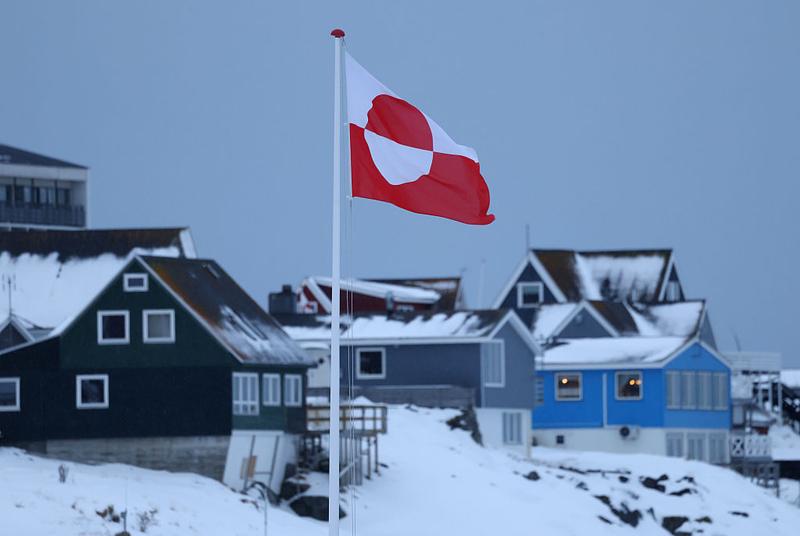
( Sean Gallup / Getty Images )
[music]
Brigid Bergin: It's The Brian Lehrer Show on WNYC. Good morning again, everyone. Happy Friday. I'm Brigid Bergin, senior reporter in the WNYC and Gothamist newsroom, sitting in for Brian today. Now we'll talk about Greenland, Denmark, and what it means for Europe when the United States starts threatening an ally. For a long time, Denmark has been one of America's most dependable allies in Europe, but in the second Trump term, the relationship is under real strain.
The President has repeatedly suggested the United States should take control of Greenland, a semi-autonomous territory within the Kingdom of Denmark. In Denmark and across Europe, leaders are no longer treating that as just a provocation or a negotiating ploy. Some NATO countries have even sent small numbers of troops to Greenland because the question isn't just what Trump wants, it's what Europe does if the alliance itself starts to come apart.
Margaret Talbot is a staff writer at The New Yorker. She went to Copenhagen to report on what this moment is doing to public opinion in Denmark, to European security thinking, and to the idea that America and its allies are on the same side. The headline for that story is 'Denmark is sick of being bullied by Trump.' Margaret Talbot joins me now. Hey, Margaret, welcome back to WNYC.
Margaret Talbot: Hi, Brigid. Glad to be here.
Brigid Bergin: I'm so glad, too. I'm curious, what did it sound like in Denmark when you were reporting this out? How are people talking about the United States right now?
Margaret Talbot: Well, Denmark is really kind of a special case because, as you said, it had an unusually close, friendly, and admiring relationship with the US. I'm putting that in the past tense for now. Maybe it will change in the future. Many people told me that historically of the EU countries, Denmark was really the closest ally of the US. It sent thousands of troops to Afghanistan and Iraq with those operations at the behest of the United States, and numerous other ways it's cooperated with the US in its foreign policy goals over the last decade.
I think this came as a particular shock and felt like a betrayal in a way. I think at this point, the kind of rhetoric, the kind of threats that Trump is making against Denmark and Greenland would be outrageous and offensive to any country and certainly any NATO ally, but I think it really felt personal for Denmark.
Brigid Bergin: The way I read it, it felt like you were describing the Danish government taking it on the chin in some cases for its pro-US positions in the past. An alliance with the US that even involved some military intelligence. Is that right?
Margaret Talbot: Yes, exactly. This came to light in 2021 that Danish military intelligence had helped the US spy tap the phones of various other European officials, including the then German Chancellor Angela Merkel. When this came to light, it created a lot of difficulties for Denmark with its own European allies, and it really had to work to repair those relationships. That was something where it went out on a limb for the US in a very striking way.
Brigid Bergin: Listeners, we want to invite you to be part of this conversation. Do we have any Danes who are listening, anyone with connections to Denmark who wants to weigh in on what you are seeing from the US? Give us a call or text 212-433-WNYC, that's 212-433-9692, or just anyone who is from another place in Europe that's listening, or in Europe right now. How is President Trump's talk of acquiring Greenland going over where you are? Or maybe you're back in New York, where you were. Call or text 212-433-9692.
Margaret, before we get into the latest, maybe you could give us the Greenland, Denmark civics lesson here. Greenland is part of the Danish kingdom, but it's also self-governing in some important ways. What's the current political arrangement?
Margaret Talbot: Yes, Exactly. Since 1953, Greenland has been, as you said in the introduction, what they call a semi-autonomous territory of the Danish Kingdom along with the Faroe Islands. It has its own parliament. It is self-governing and increasingly has gotten more autonomy from Denmark over the years, but its foreign policy is still determined, to a large extent, by Denmark, and it is very economically tied to Denmark and receives, in fact, a large block grant of about $600 million a year, an annual block grant from Denmark that helps it to maintain its economy and run its own social welfare system.
Of course, Denmark is a very generous social democracy with heavily subsidized health care, education, and child care. Greenlanders who want to, for example, come to Denmark for a university education are entitled, like Danes who live in Denmark, to a free education. There are a lot of ties between the two places.
There has also been an independence movement in Greenland, people who were looking for more autonomy from Denmark and not to have this post-colonial relationship in some ways. There is an indigenous movement. That movement has actually been kind of put on pause by Trump's interest in and designs on Greenland. It's kind of driven Greenland and Denmark closer together, and also, I think, led to some soul-searching on the part of some Danes and some apologies on the part of the Danish government, and the current prime minister, Mette Frederiksen, for she's called some dark chapters in the relationship with Greenland, which included things like a scandal where indigenous women in Greenland were being fitted with contraception with IUD without their full consent. This has come to light. Mette Frederiksen recently issued an apology for that. There have been a couple of other chapters like that, that there has been more of a reckoning with. It was going on anyway, but it's been accelerated by the American aggression towards Greenland.
Brigid Bergin: Listeners, if you're just joining us, my guest is New Yorker writer Margaret Talbot. We're exploring how Trump's comments on Greenland are landing in the ears of those in Denmark and those in Greenland, or in fact, anyone who is in Europe listening or who's recently been in Europe, who was there, could tell us how it's landing overseas. You can call or text us at 212-433-9692. Margaret, as you mentioned, there has been this internal independence movement that predates any of Trump and his comments by a long time. You also cite some polling that says very few Greenlanders are particularly interested in becoming part of the United States. What is the prevailing mood there?
Margaret Talbot: Sure, independence is one thing. Being subsumed by a newly imperialistic, chaotic United States is another. I think when Trump initially began talking about acquiring or taking Greenland in his first term, a lot of people in both Greenland and Denmark regarded it as kind of a joke, almost like trolling. The people who took it seriously to some extent back then, and now we're at a point where it really has to be taken seriously, but I think the people in Greenland who were taking it seriously then, some of them saw this as maybe an opportunity to form some new investment relations with the United States to circumvent some of the Danish role in their economy. There was some, I think among a minority, but still some enthusiasm for that idea of having better and less impeded relations with the US.
I think now that sentiment has largely faded. The polling shows that only about 6% of people in Greenland, which is a small population of about 56,000, only about 6% would be interested in joining the United States, let alone being militarily taken over by the United States.
Brigid Bergin: Margaret, Trump has had this interest in Greenland for a long time. What do you think that's all about?
Margaret Talbot: That's a really good question, and requires some speculation about Trump's internal world that may be beyond me. What he has said is, it is a strategically located territory between the United States, Europe, and Russia. The Arctic is increasingly a national security concern. To counter Russian and Chinese influence, to have more of a US presence there has been something he's talked about. He's also talked about it because it has a certain number of resources. It has oil, it has rare earth minerals. Although many of these resources are quite hard to access because currently they are under glaciers, they're in areas that are not really served by any infrastructure. There is a chance that climate change may make these more accessible with the retreat of glaciers. That's one goal.
He's also talked about it, frankly, just as real estate, as ownership being important and the size, the sheer bigness of it. That's been a repeated motif. The security issue that he raises is one that many people in Denmark pointed out to me. He's kind of kicking down an open door because we have a base there now, Pituffik, the space base that used to be Thule Air Base. The US used to have 13 military bases there. It has an agreement with Denmark that would allow it to reopen bases, expand its military presence there again for the protection of Europe. It has that by the 1951 agreement, which still holds sway, it has that capacity. It really would not be necessary to buy or militarily invade the island in order to increase the US Military presence there.
Brigid Bergin: I want to bring some of our callers into this. We've been particularly interested in what people are hearing from Europe. Let's go to Maria in Westchester. Maria, thanks for calling WNYC.
Maria: Thank you so much for taking my call. I'm not Danish. I am from Sweden. I lived here in the US for the last 23 years, but I grew up very close to the Danish border, and family and friends very integrated with Denmark. Copenhagen was always closer to me than Stockholm. What I'm hearing from friends and family is it's a deep hurt, and something is different this time. It's a deep hurt that, then, has turned into anger. Like nobody [unintelligible 00:13:05] has given as much as Denmark to the causes of the United States abroad in Afghanistan and in Iraq. This is just not how you treat a friend. That's what I'm hearing.
Brigid Bergin: Maria, thank you for that call. Margaret, does that reflect some of the sentiment that you were hearing on the ground there as well?
Margaret Talbot: It really does that, that sense of sadness, like a breakup almost, but also, yes, anger and betrayal. Particularly as the rhetoric coming out of Washington from Trump, from Stephen Miller, has become more and more bellicose and insistent on taking Greenland, having Greenland. Something I talk about in the article, too, is Denmark has become an unlikely target of Trump's ire in other ways, too, because it's a very, very big exporter of wind power. Wind power has been a very important part of Denmark's identity as it transforms itself into a climate-forward country.
There is a large project by the partly state-owned Danish company Ørsted, off of New England called Revolution Wind that has been canceled by the Trump administration. There's been this very erratic back and forth because Ørsted has sued, and then judges have ruled in its favor. It's been allowed to resume building. It was almost complete, this project. It's been a real economic assault on a very important element of the Danish economy, identity, and belief in the importance of clean energy.
Brigid Bergin: I want to get to some of those other dimensions of the Trump Denmark conflict. Before we do, I want to play a clip from the president at a press conference earlier this week, saying that we have to protect Greenland from Russia and China. Getting into some of what you were talking about there, Margaret, in terms of the foreign policy stakes of this current administration.
[press conference clip]
President Trump: Greenland is very important for the national security, including of Denmark. The problem is there's not a thing that Denmark can do about it if Russia or China wants to occupy Greenland, but there's everything we can do. You found that out last week with Venezuela. There's everything we can do about things such as that; not going to happen. I can't rely on Denmark being able to fend themselves off.
Brigid Bergin: Margaret, I want to share a text from a listener that feels almost like a response to that remark. The listener writes, "I'm from Denmark. I've lived in New York for many years. I can tell you that people in Denmark and Greenland are extremely anxious. This is all over Danish in Greenlandic news every day. Mind-boggling to many of us, the choices made by US voters who wanted an America-first president is now terrorizing people everywhere. People who are just living their lives, minding their own business. In Denmark, I'm seeing people's attitudes towards the US, which I think have generally been very positive, really change."
Some striking language and a real interweaving of Trump 2.0 foreign policy in what we heard there from the president, invoking both what we saw in Venezuela as a foreshadow for what could potentially happen in Greenland.
Margaret Talbot: Yes. I think Venezuela obviously upped the ante here and upped the fear level quite a bit in Greenland and in Denmark. I think increasingly, Prime Minister Frederiksen in Denmark is talking about how seriously this has to be taken. There was a meeting yesterday with the Foreign Minister of Denmark and Trump officials. The accounts that came out from what occurred there were quite different. Karoline Leavitt saying, "We're moving forward with plans to acquire Greenland." The Danish officials saying, "No, that's not the case. We're talking about if there are ways we might be able to cooperate on security," but that's a quite, quite different thing.
Brigid Bergin: Well, in the vein of security, let's go to Michael in Jackson Heights. Michael, you're on WNYC.
Michael: Thanks so much for talking about this. My question is based on the distinct possibility that Trump and Putin are in cahoots. How might the US taking over Greenland benefit Putin and weaken Europe? I think that in a lot of things where we're scratching our heads and wondering "Why might Trump be doing this?' to ask 'How might it benefit Putin?' I'm wondering what your thoughts are on that.
Margaret Talbot: How might it benefit Putin? Yes, that's some strategic chess that I don't think I can play. I have to say that shocking as it is, the United States has not ruled out military action, aggression to take over Greenland, which is, again, part of a NATO ally country, very close NATO ally country. Already, the Europeans have sent some military personnel to Greenland, France, Germany, and several other countries, Sweden, and Mette Frederiksen has warned that if this military incursion happened, it would crack up NATO. I think the most immediate implications are really for the future of NATO and of European security and of post-war alliances that have maintained peace and stability in Europe.
Brigid Bergin: Let's go to Jonathan in Brooklyn. Jonathan, you're on WNYC.
Jonathan: Yes, good morning. I have a perspective. Friends of mine in the UK, particularly, are saying that the EU, as the largest single market, will use its power if the US invades Greenland, will call in US debt, kick out military bases, expel US companies, ban US airlines, stop playing with America in the Olympic Games and FIFA, et cetera, et cetera, et cetera. This is not my perspective. I frankly don't think the European leaders have shown any signs of doing any of this except flatter and appease. What is your guest's opinion on this?
Margaret Talbot: Well, as you say, there certainly is a lot of economic power to be leveraged. I personally hope there would be a plan to leverage it. There are certainly immediate things that European countries could do. Denmark itself has an agreement with the US to allow US Military personnel to use Danish bases in Denmark. That was just signed, and it was actually agreed upon under the Biden administration and then ratified by the Danish parliament just in June. Would that be something that they could act on immediately, expelling those personnel? Would there be other economic actions they could take? I've got to assume they're talking about all of those at this point, that they're all on the table.
Brigid Bergin: Margaret, I'll share with you and our listeners that we just got an alert over the AP wire with very little context, so I can share only what we're seeing, which reads, "Trump suggests he may put a tariff on countries that 'don't go along with his plans for Greenland.' That seems to be kind of engaging in some of the economic policy chess that Jonathan was proposing Europeans try to use against the United States, but this, of course, another potential move coming out of the Trump administration."
Just any initial reaction to that? I know we have very little information at the moment.
Margaret Talbot: Sure. Well, the tariffs obviously have been something that Trump has used in a chaotic fashion throughout his administration to threaten and weaponize economic power. It doesn't surprise me that he's pulling that out now in a way that's a lesser threat than some of the recent ones he's made to get Greenland, whatever it takes, to again, not rule out military action there, to invoke the example of Venezuela and so on. In the scheme of things, that seems a little less menacing than some of the other things he said in the last week or so.
Brigid Bergin: Margaret, you mentioned this and touched on it already, but the other piece of this economic back and forth relates to some of the pressure Trump has put on some high-profile Danish companies. You mentioned Ørsted and their energy generation. It's a company that you described; it's something that Danes feel very proud of. You also wrote about how Trump has been pressuring Novo Nordisk to lower the price of its GLP-1 drugs by 30%. How central are these companies to Denmark's economy? Does this feel like just ordinary trade pressure, or is this really just part of a broader effort to squeeze Denmark for not giving up Greenland?
Margaret Talbot: Novo Nordisk has obviously been a huge part of the Danish economy and really contributed to its robustness over the last few years. Denmark is really a small country, and it's a trading country. It's very dependent on trade. I think some people I spoke to there, politicians, political scientists, and ordinary people, did feel like this had a quality that was a little different from just trade pressures, as you say, that it almost felt like a form of hybrid warfare because it was a harassment of these companies that had a major role to play in the Danish economy.
In the case of the wind farms and the Ørsted agreement, this also will have an impact, of course, on the US and on the likelihood of European companies wanting to invest in the US, and also on the future of wind energy for the US. Ørsted can go somewhere else and probably will, but we are going to lose out on a form of clean energy that was going to generate a lot of jobs in the New England area.
Brigid Bergin: I want to sneak in one more caller before we wrap up. George in Manhattan. George, you're on WNYC.
George: Yes, good morning. Denmark literally bled for the United States in the Afghan-Iraq war. They lost 54 soldiers in all, which, as a proportion of their less than 6 million population, is only second to the US in terms of losses. The alert you just read about the vindictiveness of Trump in going after people who do not support the invasion of Greenland, this is horrendous. He basically is just reinforcing how vindictive he is. That's all I have to say.
Brigid Bergin: George, thanks for your call. Thanks for listening. Margaret, I think, probably not entirely surprising, some real frustration, and then even sadness from some of our callers who have direct ties to Europe. I will note that we've also had several texts from Americans saying this is not what they voted for. As we run out of time, is this a moment where you fear the way America is being viewed in other parts of the world? Was that much of the feeling you had when you were in Copenhagen?
Margaret Talbot: Yes, it really was, because many people there that I spoke to, and I think this is true in other places in Europe as well, still had a lot of admiration and appreciation for American culture, for American democracy. I think this is a real blow to that relationship, to that admiration.
George: Second to the United States.
Brigid Bergin: Well, I want to thank you. We're going to have to leave it there for today. My guest has been New Yorker staff writer Margaret Talbot. Margaret, thanks so much for coming on and for your reporting.
Margaret Talbot: Thanks very much. Thanks for having me.
Copyright © 2026 New York Public Radio. All rights reserved. Visit our website terms of use at www.wnyc.org for further information.
New York Public Radio transcripts are created on a rush deadline, often by contractors. This text may not be in its final form and may be updated or revised in the future. Accuracy and availability may vary. The authoritative record of New York Public Radio’s programming is the audio record.