
Trouble in NYC's Tow Truck Industry
[music]
Kousha Navidar: It's the Brian Lehrer Show on WNYC. Welcome back, everybody. I'm Kousha Navidar filling in for Brian today. If you have a car that's ever been towed in the city, odds are you've interacted with a little known black market industry illegal towing. Unauthorized tow truck companies have been operating in the city for decades. The scam basically looks like this.
Unlicensed tow truck drivers will rush to the scene of a crash, haul your car to their repair shop, inflate the cost of the damages, and defraud insurance companies to win big payouts. By big, I mean tens of thousands of dollars per vehicle sometimes. Insurance companies are by no means the only victims of these scams. First off, there's a street safety issue.
Competing tow truckers essentially race each other to be the first on the scene of a crash, recklessly speeding through residential neighborhoods on the way. A man died a couple years after being swiped by one of these trucks zipping through a quiet intersection in Queens. There's also been a culture of violence within the industry. Last week, the owner of a South Bronx auto body shop was sentenced to 19 years in prison for killing the owner of a rival shop over a turf dispute.
Yet the city has dialed back enforcement in recent years, allowing the number of unlicensed tow trucks to skyrocket. At this point, there are actually now more illegal tow trucks operating in the city than legal ones. Liam Quigley is a reporter at Gothamist WNYC. He recently published a huge investigation into the illegal towing industry, and why the city has had so much trouble cracking down on it. Liam, welcome to the show.
Liam Quigley: Hey, how are you?
Kousha Navidar: Good. So nice to have you here. Really excited to talk about this. You've been covering this illicit industry for years, and you just published this big story giving a detailed layout of the landscape and of this industry. As I was reading it, I was wondering why now? What information came out that makes this story so timely given that it's been an issue for decades?
Liam Quigley: This was really something that I figured out in the past few months, drilling into the data of all these speed and red light cameras that are all over the city, and saying, "Is there a way we can see are they picking up tow trucks?" Because tow trucks, if they're properly registered with the state, they have a tow truck designation. We have a big list of speed camera tickets.
I've asked the city for years, each year to show me the list of licensed tow truck plates because the city does license, if things are done correctly, you're on that list. I compared those two lists and found that there were 700 trucks absent from the licensed list. That's the ghost fleet of unlicensed tow trucks that are [crosstalk]
Kousha Navidar: Those 700?
Liam Quigley: 700, yes.
Kousha Navidar: How does that compare to the wider tow truck? By not a population, but just inventory that there is.
Liam Quigley: Back in 2019 or 2017, 2018, there were around 1200 licensed tow trucks. That number has really dropped to where it's roughly on par with the unlicensed industry. We're also not even talking about tow trucks that don't have tow truck plates at all. They have passenger plates, Pennsylvania plates, Florida plates, no license plates. We've tracked dozens of those trucks all around the city as well.
Kousha Navidar: Wow. Listeners, we want to hear from you. Have you ever been towed by one of these illegal trucks and have a story to share? Maybe you've seen some of these trucks barreling down your streets and want to voice your concern. Or do you have questions for Liam about what these scams look like, how to avoid them? Or maybe you're thinking, "Wait, was I a victim of one of these scams and didn't even realize it?"
Perhaps you even drive one of these trucks and want to chime in or explain something about the industry that we might be missing. We're here to hear from you. We're taking your calls and your texts. 212-433-WNYC. That's 212-433-9692. Give us a call. Send us a text. As you said, you've crunched the numbers for this investigation and found that there's been a massive boom in the industry over the past several. What factors go into that boom?
Liam Quigley: I started noticing that there seemed to be more unlicensed trucks on the streets. I was looking for a way to quantify that feeling that you get as a reporter when you're in Canarsie, and you're saying that truck doesn't have any identifying information on it. It doesn't even have the right medallion that licensed trucks are supposed to have in the city, and they're obviously engaged in towing work. What we ended up finding is in 2020, there was a big change in NYPD policy where they stopped responding to a lot of crashes without injuries. In that vacuum--
Kousha Navidar: People found an opportunity.
Liam Quigley: Right, because the police are the ones who, when they spot an unlicensed truck, can take action. Then even adding to that, a couple years later, the police changed their policy and made it so officers are not able to immediately seize an unlicensed tow truck when they see one. That's because NYPD says there was a federal lawsuit and city council legislation that restricted their ability to summarily seize an unlicensed tow truck.
Kousha Navidar: I see. A lot of things going on, but there's power vacuum, like what you said, and people saw an opportunity to make a profit off of it. Let's talk about the enforcement efforts, which you alluded to right there. In 2017, the former Manhattan district attorney, Cy Vance announced a major bust that he said would put an end to the industry.
You also described the former city council member Bob Holden as being obsessed with this issue. He was gunning for tougher regulation throughout his six years in the council. As we just heard, the rules have actually been loosened over the same period of time, and the industry is booming. Can you tell me about some of these efforts and how they failed or were abandoned? What's going on?
Liam Quigley: The efforts to regulate New York City's towing industry go back decades. There were even protests on the street in Brooklyn after chasers racing through the streets hit and killed and seriously injured people. There were big reforms put into place around '87 to divide the city into zones, start making it so the police come to the scene of the crash, it's like, "No, no. We decide who tows your car, and you have to be on that list and you have to be licensed."
It's always been a struggle. The city agency that oversees the industry has just around 62 inspectors with-- They cannot arrest you, they cannot stop a vehicle, they are unarmed. It's something the city's really struggled to fully get its hands around for a long time.
Kousha Navidar: You're describing bureaucratic bottlenecks in some sense, of saying who has responsibility or authority. In that, there is a challenge as to responding timely, and that's where the power vacuum comes from. Is that a fair 10,000 foot view of it?
Liam Quigley: Look, the Department of Consumer and Worker Protection are also tasked with so many other things in the city, like the scale at the supermarket, the quality of your gasoline, and dozens of other industries. Throughout their regulation of the tow truck industry, it's remained one of the most complained about industries. In court filings, lawyers for that agency have said that the schemes in the tow truck industry, licensed and unlicensed, had become "increasingly more brazen." That was in 2019. The tow truck industry is always trying to stay a step ahead of regulators.
Kousha Navidar: Listeners, we're taking your calls about the tow truck industry in New York City and this phantom fleet that is operating illegally. We've got Gerald in Somerset, New Jersey. Hey, Gerald, welcome to the show.
Gerald: Thank you. You said in your introduction that the insurance companies are getting defrauded, but they're not the only ones getting defrauded. I wondered how they could be defrauded when their adjuster, I would think the first question they would ask when they get to this illegitimate body shop, where's your registration?
Kousha Navidar: Gerald, let me make sure I'm hearing you correctly. Your question is how could they be defrauded if it would be so easy to verify?
Gerald: Yes.
Kousha Navidar: Liam, what do you think?
Liam Quigley: We've looked at licensed body shops that have been accused of charging really high storage fees. For example, the repairs don't get done and the car owners are left without their vehicle for months, and then they're in possession of the vehicle. It can be very tough going there. I talked to a woman in Brooklyn who, she ended up going to small claims court just to try to recoup a little bit of the money she says was owed to her by this body shop. Last I checked with her, she didn't receive any of that cash. That body shop was later shut down by the NYPD. Certainly there's elements of consumers being taken advantage of here.
Kousha Navidar: Let's go to Gogo in the Bronx. Hey, Gogo, welcome to the show.
Gogo: Thank you for having me. My complaint is that back in '22, I had a minor fender bender with a car that I've long since gotten rid of. The car wasn't worth fixing. I asked one of the chasers, two of them had showed up, if they can just tow it to my house because I have a fairly large yard. They both flat out refused. They said it has to go to the shop, it has to go to the shop. There's this damage that damage, stuff that to the naked eye you couldn't really see. I really didn't care because, again, the car was on its last legs anyway. I found it odd that I offered cash to tow it to my house less than a mile away, and they both just refused.
Kousha Navidar: Oh. Gogo, I'm sorry to hear that you had that experience. Thank you so much for sharing. It sounds like a lot of people have that experience.
Liam Quigley: Look, if you're dealing with unlicensed tow trucks, you're in another realm entirely. Licensed trucks that show up to the scenes of crashes in New York City, you're supposed to be able to get towed to any location in the five boroughs at your request. You're not obligated to go to a specific body shop. That's in the towers tow truck bill of rights for consumers. Obviously there's a lot of complaints in this industry about, just like we just heard that rules are not being followed.
Kousha Navidar: Speaking of going around rules, I want to touch on one more point to what we were discussing before about why some of these crackdowns haven't worked. I want to talk specifically about bribery because you also reported that public officials have actually been threatened or bribed when they try to crack down on illegal towing. Are those the main things that are stopping the city from getting a handle on the problem? Where does corruption play into this?
Liam Quigley: I should clarify that we haven't reported that public officials have been bribed to look the other way around the industry as a whole, but there have been a couple high profile cases of NYPD officers who were accused of being complicit with tow truck companies/body shops to steer crash victims to their cooperators.
Kousha Navidar: Thanks for clarifying that.
Liam Quigley: That's an ongoing issue that police oversight agencies have tabulated over the years because it's common enough that it it continues to happen. I did talk to Bob-- Going back to Bob Holden, that official you mentioned earlier in the show, he's been on a mission while he was a city council member.
Kousha Navidar: Six year mission.
Liam Quigley: Exactly. He told me that he was threatened for taking photos of chase trucks, those illegal tow trucks parked on sidewalks, or confronting tow truck drivers who were at the scenes of crashes that they weren't supposed to be at. Then going back to that agency, we were talking about the department of consumer and worker protection, officials there told me that one of their attorneys left the job because when they were working on the tow truck industry, they believed they were followed by a tow truck near their home.
Kousha Navidar: These are just folks that are saying it. I'm guessing it's hard to gauge what the actual impact is, but you have seen evidence.
Liam Quigley: In terms of?
Kousha Navidar: In terms of this corruption or threatening happening?
Liam Quigley: Oh, yes. It goes back to that brazenness that DCWP was-- The consumer protection agency was talking about in court filings. That was in 2019 when, in the licensed industry, they said that fraud was so widespread that they moved to revoke a quarter of all licensed companies. It's on both sides here. The licensed and unlicensed industries are both challenging to regulate.
Kousha Navidar: I want to put a point on what you're talking about with the Department of Consumer Protection. I find it very telling that you're saying they're in charge of a lot of different things and their hands are full. There's definitely a capacity issue. At the same time, there does seem to be threats. There's a lot in this stew that is making it hard to crack down. We got a text that just came in that leads me to another question. The text reads, "Does the city lose money from illegal towing? Are there fees paid to the city by the legal tow companies?" Can you explain that?
Liam Quigley: I can say that, certainly when our calculation-- This didn't make it into the story that you can read on gothams.com, but I actually calculated how much money is owed by the unlicensed industry in parking fines, and it's in the thousands and thousands. I think it's over $100,000. It's a drop in the bucket for the city, but certainly there's a cost of the public safety risk, like the injuries, the fatal hit and runs. I think that alone is a huge cost.
Kousha Navidar: Former Mayor Eric Adams was also involved in a sprawling tow truck scandal, right?
Liam Quigley: Yes, he was among his portfolio of those kinds of issues. Mayor Eric Adams was caught up in something involving tow truck companies in Brooklyn, including one who, it was alleged was trying to bribe their way to a better contract for serving the city's highways, which can be very lucrative. There's a tow truck story in every borough.
Kousha Navidar: In every borough, yes. Let's go to Vicky in Tudor City. Hi, Vicky. Welcome to the show.
Vicky: Oh, good morning. I want to thank this journalist for his efforts. Is there a specific question you could ask a tow truck driver? Are they legal or illegal? If you can only tell by the license plate, and the average person doesn't know what to look for, what can you ask? Can you wait for a legal one once they disclose they're not legal?
Kousha Navidar: Great question, Vicky. Liam, do you have any sense of that?
Liam Quigley: Much like taxis have medallions, licensed tow trucks have medallions, which should be on the left side of the vehicle. It's about the size of a sheet of paper, blue with white numbers on it. You should definitely look out for that. You should be very careful about anyone who shows up at a crash scene without having been asked to be there.
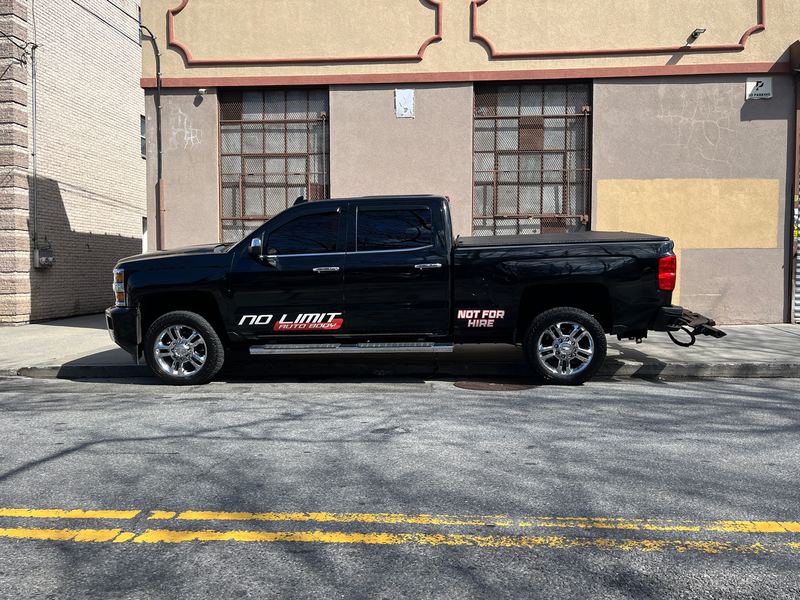
Tow trucks are supposed to have company names on them and a phone number, and the rates for their services. Those are definitely things you should want to see on a tow truck. If you're looking at, for example, a pickup truck with dark tinted windows with Pennsylvania plates and a towing rig sticking out from under the rear of the bed of the truck, that's not a licensed truck, at least not with the city.
Look, the DCWP, again, that consumer protection agency, they put out towing tips that you can read on their website. We also did a story about some of these tips, which you can check out on gothamist.com in addition to the original main tow truck story.
Kousha Navidar: That'll give you some steps that you can use in case you're ever in the situation where you actually have to figure out, is this legitimate, and what to do about it. Let's talk about Chung Lun Shao, who's the man who was hit by one of these illegal trucks and tragically ultimately died. I wonder how common these kinds of cases are. Have there been other instances of traffic violence that you know about?
Liam Quigley: Absolutely. We tracked fatal crashes involving licensed and unlicensed tow trucks in New York City going back to 2010. We found 15 fatal crashes. This one you just brought up was in 2023 that involved a truck that was not licensed to do towing work in New York City. There's been two further in the Bronx that police described as being unlicensed tow trucks. One was a hit and run. In my work, I even found a fatal crash involving a tow truck that was never reported in the news, which in New York City is very uncommon for there to be a fatal crash without the media learning about it.
Kousha Navidar: You're talking from 2010?
Liam Quigley: From 2010.
Kousha Navidar: You said 15, so that's about one a year that is losing a life from this practice.
Liam Quigley: Yes, that we're aware of. The characteristics of some of these unlicensed trucks make it so-- You might not realize that it's a tow truck unless you know what you're looking for.
Kousha Navidar: It's at least.
Liam Quigley: It's at least. It's definitely at least. I was surprised to have found that one that that never was reported.
Kousha Navidar: In the case of Chung Lun Shao, it turns out the man who hit him, Filippo Bonura, was actually operating with a suspended license and has ties to the mob. His criminal case was ultimately dismissed. Is this thing common, that people in this industry can avoid accountability in criminal cases? If so, why?
Liam Quigley: It's tough. Even when we're talking about fatal crashes involving vehicles, generally speaking, in New York City, it can be tough to prosecute drivers. That's why Mr. Bonura was charged, I believe it's just failure to yield and driving with a suspended license. His attorney in that case said this crash had nothing to do with his work as a tow truck driver. It's tough. Tow truck drivers who have their license revoked can simply reapply after a few years. It can be tough to keep bad actors out of the industry.
Kousha Navidar: We're getting a lot of texts about this. Here's one that I would love to read. "The racing of tow trucks through city streets reminds me of emergency vehicles racing through city streets. None of it is safe." This text is coming from a retired New York City paramedic. Liam, the drive by shooting that you reported on was tragic. Can you tell me a little bit more about that incident? Maybe elaborate on the criminal component of all this? I don't think it's a stretch to say that the towing industry could be likened in some ways to organize crime rings. That's what it feels like.
Liam Quigley: That was the position of federal prosecutors who, like you're saying, just last week found this Bronx tow truck company owner being sentenced to 19 years in prison in a scheme that they say was over rival turf in The Bronx, where many of the tow truck workers were armed. Things escalated after a crash. It's actually one of the unlicensed trucks was being driven in the Bronx and was involved in a crash in supposedly rival territory.
That worker convinced the victim of the crash that they had gotten to the crash with, to come back to their shop. There was a fight over that. It was really a drive by that turned into a shootout because according to the prosecutors, both groups were carrying firearms. That really blew up in a big way with these two groups of unlicensed tow trucks workers fighting.
Kousha Navidar: Let's go to Miroslav in Lake Como, New Jersey. Hi, Miroslav. Welcome to the show.
Miroslav: Good morning. I'm a retired police officer from New York City, and interest of full disclosure, it's been 22 years since I retired. My question and my comment is what happened to the ROTOW policy that was strictly enforced? For your listeners, as a police officer, if I responded to a motor vehicle accident, I had no say in which company was allowed to tow.
Our radio dispatcher had a list that he/she would rotate through. Whoever was next on the list had 30 minutes to respond to the accident. If they didn't make it in 30 minutes, it automatically went to the next company on the list. If an unauthorized or somebody who wasn't in the rotation responded, we were required to write them a citation. I think it was called a LD6. I'm wondering what happened to that.
Kousha Navidar: Thank you so much for that call, Miroslav. ROTOW policy, Liam, what happened to it?
Liam Quigley: Remember that 2020 issue we're talking about with the big reduction in response to crashes? There's no police officer at the crash, they can't issue an LD6 summons. ROTOW and DARP, they still exist. Those are the foundational tow truck regulations. It's not as if they're never followed, but what I'm told by many licensed operators is that they're ignored a lot more often than they used to be. There's two issues here that are maybe reducing the number of times the regulations are actually being followed.
Kousha Navidar: Thank you so much for that call, Miroslav. We're getting questions about advice. I'd like to pick on that for a second. This is similar to what we heard before, but I think it might be helpful for us to revisit this in a new perspective, a text that says, "I'm a New Jersey resident and I have a New Jersey plate on my car. I'm also a member of AAA. How do these rogue tow trucks affect an individual's usage of AAA or their automobile manufacturer towing services? What are one's rights to tell a rogue truck to hit the road?" Two pieces there about AAA and then what your rights are when you actually are in that situation.
Liam Quigley: Under the rules, if you're in a crash and the police are there, they do need to use this list of licensed towers to keep things-- The idea is to keep things fair, but certainly if your vehicle's disabled in some other way, there's nothing to stop you from calling AAA. As far as backing off an unlicensed tower, look, I think these are business people.
Look, if you decline their services, I think they're going to be onto the next one. I have not talked to any consumers who were beaten up not for going with a chaser. Certainly, you have rights as a driver in New York City that it's worth checking again that DCWP website for those tips, just to have them in your back pocket.
Kousha Navidar: What have we heard from Mamdani on all of this? Do you have a sense of whether he's going to take this issue on?
Liam Quigley: I asked Mamdani about this yesterday. He said that city hall is aware of the issue. They thanked us for our reporting and said they'd be following up. I asked for specifics after that yesterday. I have not heard back. We obviously are going to stay on this issue and try to learn how the city is going to get, or if the city is going to get their hands around this.
Kousha Navidar: Before I let you go, I just want to check in with you as well, because we talked about how officials who've tried to shine a light on this issue, they've faced some intimidation tactics. Liam, now that this pieces out, are you good? Any concerns about you being a target?
Liam Quigley: Not yet. That's part of being a reporter in New York City. You have to get into uncomfortable situations sometimes.
Kousha Navidar: Absolutely. We appreciate the work that you're doing. We'll have to leave it there. I've been speaking with Gothamist WNYC reporter Liam Quigley, whose deep dive investigation into the unlicensed tow truck industry is available now at gothamist.com. Liam, thanks so much for joining us.
Liam Quigley: Thank you very much.
Copyright © 2026 New York Public Radio. All rights reserved. Visit our website terms of use at www.wnyc.org for further information.
New York Public Radio transcripts are created on a rush deadline, often by contractors. This text may not be in its final form and may be updated or revised in the future. Accuracy and availability may vary. The authoritative record of New York Public Radio’s programming is the audio record.