
Tracing the Path from Bernie Goetz and Reagan to Today
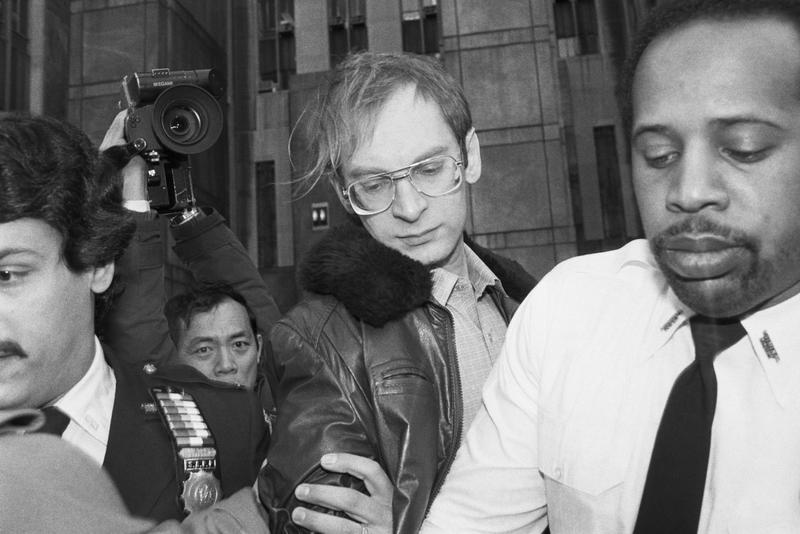
( Bettmann / Getty Images )
Brian Lehrer: It's The Brian Lehrer Show on WNYC. Good morning again, everyone. Some of you of a certain age may remember, and many others of you may have read about, the infamous subway shooting of 1984. A man named Bernhard Goetz gunned down four Black teenagers on the No. 2 Train. Of course, the media ran wild with the story. It was, of course, a real story.
The New York Post and the Daily News published hundreds of pieces with sensational headlines framing the teens as hardened criminals and Goetz as a sort of vigilante hero. It was an era-defining incident in the Koch '80s, the Reagan '80s, a time when crime and poverty were running rampant in the city, certainly compared to now. Despite the fact that the shootings appeared to be basically unprovoked to critics of Goetz, prevailing public opinion pretty quickly sided with him and celebrated the shootings as an act of bravery, or at least self-defense from a mugging.
Pulitzer Prize-winning historian Heather Ann Thompson recently published a book that details the shooting and its political backdrop. The book offers a rich narrative account of the incident and how the public's reaction to it offers crucial insight into the kind of racial resentment that politicians have been capitalizing on before, certainly, but also maybe in a different way ever since.
It's also about the fallout of Reaganomics, the rise of conservative media in the city and maybe the country, the weaponization of fear that has come to define a big part of American politics. I'll also note that it's a page-turner. She dives into the lives of the victims whose names are Darrell Cabey, Barry Allen, Troy Canty and James Ramseur. I mention their names because they are far less famous than Bernhard Goetz himself.
Through their stories, he lays out a deep political and social history of the late 20th century, remember, Heather Ann Thompson is a historian, and how it set the stage to some degree for the kind of white rage that dominates Trump-era politics right now. The book is called Fear and Fury: The Reagan Eighties, the Bernie Goetz Shootings, and the Rebirth of White Rage. Heather Ann Thompson is here with us now to talk about the book. We'll also open up the phone, especially for some of you who may remember the Bernhard Goetz shooting. Heather, welcome back to WNYC. Thank you for coming on today.
Heather Ann Thompson: So glad to be here.
Brian Lehrer: Why this story at this time?
Heather Ann Thompson: Oh, well, I think it's in part because this story has so much resonance to where we are today, feeling a lot like cities are in crisis and feeling like the response to it that is too often encouraged is an unleashing of violence and rage on the ground against the people who are actually suffering it the worst. I felt like this was a moment that we needed to go back to, to lay the groundwork to better understand where we are now.
Brian Lehrer: Can you start by doing a short version of what actually happened on that train that day, the incident itself?
Heather Ann Thompson: Sure, so this is three days before Christmas in 1984. Four teenagers, as you mentioned, from the South Bronx decide they're going to get on this train to go into Manhattan with the intention of going to a video arcade to jimmy-open the coin receptacles to get a few quarters. That act itself was very common, particularly for teenagers in this period, because the economy was in very, very bad shape.
Jobs had dried up. Educational opportunities had dried up, and so teenagers were scrapping around to get money any way they could. They're on the train on their way to do that. Meanwhile, another guy, a white loner by the name of Bernie Goetz, gets on the same train at the 14th Street station. He has his own history that he's bringing to this, which is also a response to the city that is in serious trouble.
He is angry at the trash piling up. He is angry at the decimation of social services, but he doesn't understand the origin of why these things are the case. He sees these as just the result of crime and dependency and Black teens like the four that he now sits right across from. One of the teenagers asks him for $5, in part because he wants to have a little cash when they go into this arcade, to make it at least somewhat reasonable why they would be in there.
It appears that he's going to give him the money, but he stands up, turns, and immediately swings back around, having reached in a hidden holster with a .38 Smith & Wesson, assumes a combat position, and shoots the one kid who has talked to him in the chest, the one behind him in the back as he's trying to run away. There's two more friends a little slightly down in the car. One whom he shoots through the arm and into his lungs. He shoots the fourth, but he misses.
Then stunningly, to eyewitnesses, he walks over there, looks at this kid who's now cowering on the subway seat, and says, "You look okay. Here is another." He shoots him, point-blank range, severing his spinal cord. That is the beginning of what will become a story that goes over decades, really, and I think not only just changes New York, but really sends a message to America about the re-legitimization and legal sanctioning of that kind of act.
Brian Lehrer: Did Goetz have reason to believe that he was in the act of being mugged or about to be mugged, not just being asked for money? There was something, I think, in the narrative from Goetz's point of view, that there was a weapon.
Heather Ann Thompson: Well, so, actually, this is such a great question because he will go on the lam. He turns himself in nine days later and then gives this extraordinary two-hour videotaped confession in which he makes clear, as he put it, robbery had nothing to do with it. Makes clear that even an earlier mugging that he had experienced several years earlier had nothing to do with it when he was asked, but that he didn't like the gleam in this one kid's eyes.
Then he goes on this rant about, essentially, the decline of the city and the coddling of would-be criminals like these teenagers. He didn't feel that he had any weapons directed towards him. In fact, that will become one of the biggest mistruths about this case, as, meanwhile, these victims are being villainized and weirdly also simultaneously erased from the story.
Brian Lehrer: Did any or all of the victims survive?
Heather Ann Thompson: They all survived the shooting, although their lives were permanently marked thereafter, traumatized. In fact, only two of them still are living today. They're all taken to local emergency rooms into ICUs with very severe injuries. The most severely injured was Darrell Cabey, the one who was shot deliberately the second time. He was not only paralyzed permanently thereafter, was never able to walk again, but then suffered a coma and also suffered brain damage.
Brian Lehrer: Did Bernhard Goetz get charged and stand trial?
Heather Ann Thompson: Well, so that too became part of the really extraordinary thing about this case at the time, which is that it was very difficult to bring him trial. One grand jury convenes and only wants to ultimately indict him on a carrying-illegal-weapons charge, and then the confession comes out. The DA goes back to it and does convene a second grand jury that will indict him on much more serious charges, including attempted murder, and thus begins one of the most traumatic trials, I think, in New York history.
He hires Barry Slotnick, who many people might remember as having also defended the likes of John Gotti, a very flashy, really brilliant lawyer. Thus, a show, a pure theater begins. Ultimately, the jury, despite seeing the wreckage of this violence, despite the confession, despite all of this, ultimately does not find him guilty of anything worse than, again, the carrying of these illegal weapons.
Brian Lehrer: Why do you think the jury came to that conclusion?
Heather Ann Thompson: Well, that's one of the things that I had to really struggle with and try to figure out as a historian. You're looking at every piece of paper, every scrap of everything, and you're pulling it all back together again. I have to say, it was really quite inexplicable, given the evidence that was presented. They are essentially being told that, as many Americans feel they are being told today, that up is down and down is up. What they're seeing with their own eyes didn't really happen. They clearly want to believe it. For starters, half of the jury picked had themselves been victims of crime in New York, including on subways. It was mystifying, and yet all too familiar at the same time.
Brian Lehrer: Does it mean the jury basically bought the premise that they were going to mug him? I asked you that question before about whether they were going to mug him or flash the weapon or anything, and you cited Goetz, his own testimony, or not testimony in court, but the interview that he gave after the incident, where he said, "No, this had nothing to do with crime." We're getting texts like this one. The teenager "asks him for cash." Let's be honest. They wanted to rob him. I'm not saying get shooting these kids was justified, but they looked at him as a mark and wanted to mug him. A lot of people who remember it have that impression. Maybe the jury did.
Heather Ann Thompson: Oh, I think absolutely. I think it requires just taking just a pause to remember that one of the reasons why this is the story that now everyone feels that they know and has come down to us is that, at the time, even before the New York Post and the New York Daily News knew who this guy was, they were already celebrating him as the death-wish vigilante, the hero that the city needed, and were already publishing stories that, for example, these teenagers were carrying sharpened screwdrivers, that they were armed, that they were threatening him.
Of course, none of this proves true, but those stories and that storytelling has an incalculable impact on the way people understand the story. Of course, it feels like that is exactly what would happen to certain white folks, particularly feeling like they're already nervous and scared about Black teenagers. This is a racial narrative that is stoked. It's curated. We fast-forward to today, and we hear that Troy Canty asks Bernie Goetz for $5. I say "asks" because he says, "Do you have $5?"
No other subway passenger in that car felt threatened by him. At no point did someone get off or report anything to the conductor, which, by the way, often happened when people felt that there was something untoward about ready to happen. Bernie Goetz himself does not get off. This all happens within five minutes of him getting on this train. When you read this, I really encourage folks to read this trial and the transcript and see the story as it actually happened. It is an extraordinary moment where we want to believe. I think the jury wanted to find him innocent, and the nation wanted to celebrate him.
Brian Lehrer: My guest is historian Heather Ann Thompson. Her new book is called Fear and Fury: The Reagan Eighties, the Bernie Goetz Shootings, and the Rebirth of White Rage. We are getting some phone calls as well as texts from people who remember the incident. We'll take some of your calls next. 212-433-WNYC, 212-433-9692. Mike in Manhattan, you're on WNYC. Hello.
Mike: Hello, Brian. Hello, Brian. Yes, I remember that. I'm 81 years old, and I remember this incident. What I recall about these kids being presented as almost innocent, there was a live interview with a lawyer of these kids, with the kids present, live TV interview. They actually had to protect the lawyer from one of these kids, who was going to attack his own lawyer. These were not nice kids. I have no doubt they were going to mug this guy, Bernie Goetz. This presentation is really offensive to me to hear this. You think he's an innocent kid? They're not innocent kids. That's all I have to say.
Brian Lehrer: Did they deserve to be shot?
Mike: No, I agree with you. They probably didn't deserve to be shot, especially the kid who was sitting by himself, apparently. When you're feeling threatened, your adrenaline runs. You're not thinking calmly anymore, especially if there's four kids, then you're by yourself.
Brian Lehrer: Mike, thank you for your call. Heather, your reaction to that, including the incident he describes. I don't know if it's accurate about one of the victims and the lawyer.
Heather Ann Thompson: No. I think it isn't that I don't understand this sentiment about the case. Again, the media at the time was reveling in any opportunity to portray them not just as potentially threatening Bernie Goetz, but as one judge put it, "Animal, animal, dangerous criminal." The facts were on the ground. Even if they are uncomfortable facts that these were teenagers that had, in fact, racked up a host of misdemeanor citations prior to this event, so things like jumping turnstiles in the subway, having no money, jimmy-opening these coin receptacles.
These were not teenagers with violent criminal records. In fact, one of the reasons why New Yorkers come to this impression is that right when they are in the ICUs, they're recovering from these injuries, two Bronx judges suddenly look at all of these misdemeanor citations that they had not come into court for. Again, why? Because when you come in on a misdemeanor citation, you have to pay a fine, and issues this blizzard of warrants against them, and warrants for their arrest.
The front-page headlines is criminal teenagers, teenagers fleeing the law, and so forth. Meanwhile, let's be really clear. Bernie Goetz was the one carrying illegal weapons. Not only that, he had pulled that illegal weapon on people numerous times before. When he was arrested, he had, for example, marijuana in his apartment, in his possession at a time when not only is this illegal, but plenty of people are being arrested and given major stints of time. The question in this case about who's the criminal and who's the victim gets really, really complicated.
Here's what I will say to your caller that I absolutely think is worth pulling out here. In the New York '80s, it is a terrible time where people are all feeling a measure of threat. All people are feeling very unsettled by the, really, decline of city, everything, city services, the graffiti, the trash, the sense of danger at every turn. What is, to me, so interesting about this moment for today is that nobody was really stopping to ask, "Why are things deteriorating on the ground?" and then turn on one another rather than ask these more structural questions.
Brian Lehrer: Another caller. Francesca in the Bronx, you're on WNYC. Hello, Francesca.
Francesca: Hi. I was a teenager when this happened. I remember. These very kids were my age, and they weren't doing anything. Their records weren't anything particularly shocking. We were all a lot of unsupervised kids in those days. This wasn't anything crazy. I remember the media painting these boys as being animals and monsters, which was really in fashion in those days. It was really in fashion anytime anything happened. It was really exciting to demonize the Black people in this situation and then paint the white people as innocent victims.
This happens numerous times in the media. I remember watching a piece of that confession video or whatever they called that. I saw a piece of it as a kid. I remember looking at it and thinking, "You got to be kidding me." This guy, he's telling us himself. He lost his temper. He lost control of himself. He was seeing red, and he wanted to attack them. He described that himself in his own words. I was like, "What is wrong with the adults not grasping what this man is saying?" As a teenager, it seemed really, really plain and clear to me. I don't know. I was very upset at the time about what I was watching.
Brian Lehrer: Thank you very much for your call. You could tell from even the two calls that we took, and we're not going to have time to take more, but you look at the board. People who remember the incident are still polarized over it. Tell me about your decision not to interview Goetz himself for this book. He is still alive, living in the city, I gather, and giving interviews. He's even built a name for himself, I read, as a conservative political pundit. Did you make a conscious decision not to get his side of the story?
Heather Ann Thompson: Ultimately, I did, and that is for two reasons. One, I am a historian. To me, it's really, really important to just go back to the beginning and actually look at what everybody was saying at the time and what every piece of press coverage was at the time. I was digging into crime victims' files and probation reports. You name the piece of paper, that's what I was basing this information on.
I was also, in the beginning, tempted to try, which I don't normally do, but to talk to both Goetz and the victims, and tried to initially reach out to that end. Then I thought, "You know what? I actually don't want to talk to Bernie Goetz." The reason is because he would be yet again able to tell the story in retrospect, the present-day version of the story, but I wasn't going to be able to interview all of the victims.
I wasn't going to be able to give them the same time. Two of them were dead. One of them killed himself. It very likely appears on the anniversary of this horrific event. Another one had a drug addiction problem, ended up dying later on after a prison term. One of them managed to go on and make a life for himself and is so traumatized by coverage, doesn't want to talk. The main person I talk about in this book is unable to really give interviews because of the wreckage of this violence, so I decided not to.
His own words, as your previous caller said, were just so extraordinary. He doesn't just say that, "I didn't like the gleam in this guy's eyes." He said, "If I would have had more bullets, I would have murdered them all." He said that he would have tried to gouge one of their eyes out, but then realized that it was unnecessary at that point. This is a level of rage, and it's something that I'm inviting, I think, people to obviously react to, have their opinions to.
I really invite them to the book, Fear and Fury, to read it from the beginning and take ourselves back to the '80s. I think the resonance with today will feel both chilling, but it's also illuminating because I think it's a cautionary tale, both why not to unleash this kind of rage and legally vindicate it, but also for us to really be leery of being told that what our eyes have just seen didn't happen and be leery of stereotypical explanations for what we think we saw.
Brian Lehrer: How, in our last few minutes, do you think it resonates with today? I know you mentioned Daniel Penny, who, listeners will remember, strangled a Black man on the subway in 2023 in a situation where he and riders thought they were under threat, though Jordan Neely hadn't done anything to anyone at that point. You relate it to Trump as well?
Heather Ann Thompson: Yes, and also to the Kyle Rittenhouse case and to the unleashing of fury and rage on January 6th. There are so many incidents that follow this that aren't just examples of people feeling it's okay to take the law in their own hands and to explode, but that the courts side with it, and that they think it's okay. This is very noticeable that after the Bernie Goetz case, the NRA not only supports his legal defense, but makes incredible inroads in selling guns as something we all need for our own personal safety, not just for sportsmanship or for hunting.
This is a turning point, I think. For today, I think it reminds us of two really, really important things. You had the mayor on earlier, so I was actually really thinking about this, that if we're really, really serious about public safety, we have to really think about the structural things that make people so fearful, make them feel unsafe, and incite that kind of rage and resentment, particularly racialized rage. Then we have to trust that just because we are told that something happened to be really skeptical of it.
Minneapolis comes to mind. The recent murders in Minneapolis, when, from the White House on down, we are told that, no, in fact, this was a domestic terrorist that got shot. In fact, this was someone that was wielding a weapon when our eyes are telling us something quite different. People are now invested in a rage narrative that is very dangerous to our society. I think the '80s is a turning-point moment that we can revisit and rethink where we are today.
Brian Lehrer: Pulitzer Prize-winning historian Heather Ann Thompson. Her new book is Fear and Fury: The Reagan Eighties, the Bernie Goetz Shootings, and the Rebirth of White Rage. If you're interested in seeing her in person, she'll be speaking about the book at the 92nd Street Y with Pulitzer Prize-winning journalist Andrea Elliott. That's next Thursday, February 12th, a ticketed event. Tickets at 92Y.org. She'll also be speaking at the Roosevelt House on March 4th. Thank you for joining us, Heather.
Heather Ann Thompson: Thank you so much.
Copyright © 2026 New York Public Radio. All rights reserved. Visit our website terms of use at www.wnyc.org for further information.
New York Public Radio transcripts are created on a rush deadline, often by contractors. This text may not be in its final form and may be updated or revised in the future. Accuracy and availability may vary. The authoritative record of New York Public Radio’s programming is the audio record.
