
TPS for Haitians and Syrians Hangs in the Balance
Title: TPS for Haitians and Syrians Hangs in the Balance
[music]
Amina Srna: It's The Brian Lehrer Show on WNYC. I'm Amina Srna, a producer for The Brian Lehrer Show, filling in for Brian today. Coming up on today's show, we're going to hear what recipients of the federal food assistance program SNAP need to know as new work requirements are about to go into effect. These changes were part of last summer's so-called One Big Beautiful Bill Act. Plus, a USAID whistleblower has written a book about the DOGE dismantling of the agency and what it's meant for the countries receiving, or in some cases that used to receive, US assistance.
We'll wrap today's show with a conversation that we think many of you might identify with. Our guest is a writer who says she used to go to her dad for advice on lots of things, life stuff. Now, for any question that she has for him, like, "How do I fix the leak under my sink?" His answer is, ask ChatGPT. If you have anyone like that in your life, we'll want to hear from you about how that's affecting your relationships.
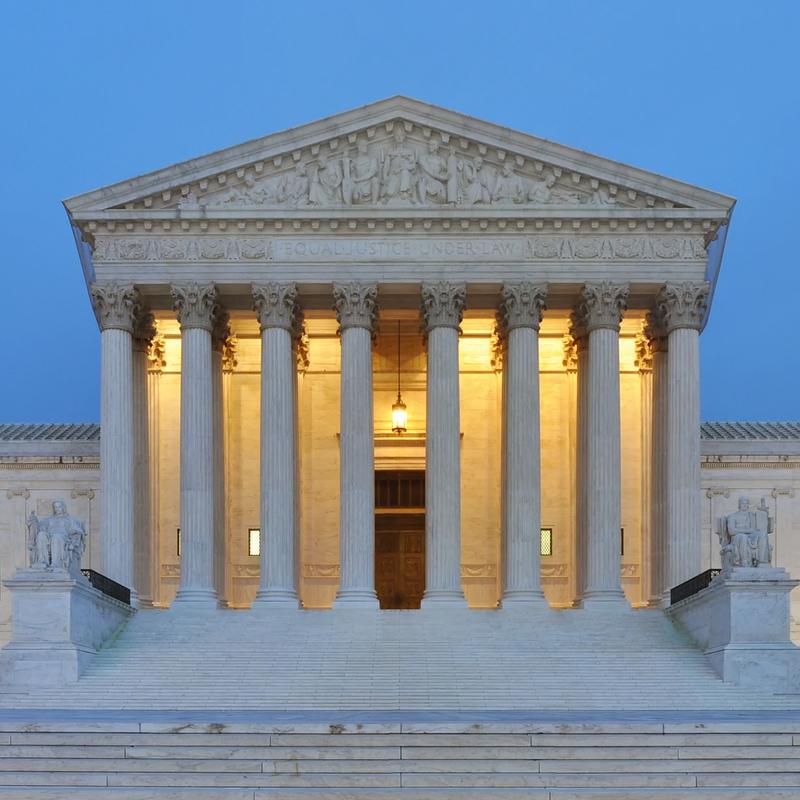
First, yesterday the Supreme Court indicated it will back President Donald Trump's push to end temporary protection status for millions of people who received TPS status from countries enduring war and natural disasters. That's according to analysis from CNN and Reuters. The two class-action lawsuits before the justices involve more than 350,000 Haitians and about 6,000 Syrians whom the Trump administration has sought to deport from the United States.
One of the central questions in those cases is whether the Department of Homeland Security sufficiently considered conditions on the ground in those two countries before it moved ahead with terminating those designations. The attorneys representing the TPS recipients said the Trump administration did not and is potentially sending back these people to dangerous conditions. While the cases represent Haitians and Syrians specifically, more than 1 million immigrants are permitted to live and work in the United States under the program.
Yesterday, Brian spoke with Yale Law Professor Emily Bazelon about the judicial considerations before the court as the hearing was underway. Today, we'll talk about the politics, both on the ground in Syria and Haiti and here in the United States. Joining me now are two guests from the International Rescue Committee, a leading humanitarian nonprofit organization. Ciarán Donnelly is senior vice president for International Programs at International Rescue Committee, and Daniel Berlin is policy director of Protection Pathways at the International Rescue Committee. Ciarán, welcome back to WNYC, and Daniel, welcome.
Ciarán Donnelly: Thanks, Amina. Great to be here.
Amina Srna: Let's begin with a little TPS 101. Temporary Protected Status was created by Congress through the Immigration Act of 1990, signed into law by President George H.W. Bush in November of that year. Daniel, what does TPS actually grant its recipients?
Daniel Berlin: TPS, Temporary Protected Status, is, as the name says, a temporary protection for people who are fleeing environmental disaster, conflict, or other temporary and extraordinary circumstances that make it unsafe to return to their home countries. People who are granted TPS, they have to have a clean criminal record. They have to apply and be screened by the US government, and they are granted both temporary status and work authorization. Importantly, there is no pathway to permanence through TPS, so there's no pathway to a green card or to US citizenship.
Amina Srna: I'll ask you a little bit more about that later. First, the program was designed to replace inconsistent practices back then, such as extended voluntary departure, with a formal mechanism to provide humanitarian relief. That was first assigned to be determined by the Attorney General. Now it falls under the purview of the Secretary of the Department of Homeland Security. How does that work, and how often is it reviewed?
Daniel Berlin: TPS designations are usually granted in 18-month increments. 60 days before a designation is going to expire, the Secretary of DHS is required to review the conditions in the country that TPS was granted for, to consult with other departments, including the Department of State, to understand what it looks like on the ground, and decide whether that country is now safe enough to return its citizens to. In the past, that process has involved those kinds of consultations.
The State Department puts out reports every year. They have on-the-ground experts who are understanding what the humanitarian situation looks like, what the human rights situation looks like. We have seen some of these TPS designations be renewed over and over again, frankly, because the humanitarian situation in a lot of these countries has not been improving over the years. Ciarán can speak in plenty of detail to the situation in Haiti and Syria and many of the other countries that have had TPS designations.
Amina Srna: Ciarán, I'll get to you in just a second. Let me invite some listeners to participate. Listeners, those of you who are recipients of Temporary Protected Status or those of you who work with TPS recipients, we want to hear from you. If you have ties to New York City's Haitian or Syrian communities, help us share their stories. Also, as we'll discuss with our guests, this Supreme Court case is part of the Trump administration's broader effort to curb asylum and refugee admissions in the United States. Maybe you work with those communities. What do you want people to know about what's changed in this past year of the second Trump administration? 212-433-WNYC, that's 212-433-9692. You can also text that number.
Ciarán, one of the central questions in these two cases before the Supreme Court is whether the Department of Homeland Security sufficiently consulted with the State Department about conditions on the ground. Let's begin with the conditions on the ground in Haiti. IRC reports that armed gangs control an estimated 90% of the capital of Haiti, Port-au-Prince, and are expanding to other parts of Haiti as well. For listeners who aren't familiar, what sorts of conditions are these gangs creating for Haitians?
Ciarán Donnelly: Thanks, Amina. The IRC publishes an annual report called our Emergency Watch List. That report details out the 20 countries in the world that are most at risk of humanitarian deterioration over the course of the year. Haiti this year was number 5 on that list. It's ranking up there with crises like Sudan and Gaza and places like that in terms of both the levels of humanitarian need on the ground and the risks of further deterioration.
The drivers of that really come from, as you've described it, the domination of large parts of the country, in particular the capital, Port-au-Prince, by armed gangs and the conflict between those gangs and the government. The result of this violence over the last five years, since it surged in the wake of the assassination of Haiti's president, is essentially that the government is not able to fulfill its basic functions of safety and public service provision across most of the country.
We did an assessment. Our team there provides healthcare and emergency protection services for women and children. We did a survey earlier this year in which 73% of households reported feeling unsafe where they sleep, 60% don't send their children to school because of safety concerns, and 75% of people can't afford health services. There's 12 million people in Haiti. Over 6.5 million people are in acute need. 1.4 million have been displaced from their homes. Many have sought safety elsewhere in the region and here in the United States.
I'll stop here with one final statistic, Amina, which really stopped me in my tracks when I first read it. Last year, UNICEF reported that sexual violence against children in Haiti had increased by over 1,000%. That's just a staggering glimpse into the kind of dystopian situation that many Haitians face on a day-to-day basis.
Amina Srna: Ciarán, to pick up on that last stat, what stood out to me in the IRC report was, in 2025 alone, 8,000 cases of gender-based violence were recorded, a 25% rise over the previous year. IRC notes that the UN now assesses half of all gang members to be children, with a 200% rise in recruitment in 2025. Do you want to just take us one step further and talk about the violence that women and children, in particular, are facing?
Ciarán Donnelly: Yes. I know this may be disturbing for some listeners, and in particular those who come from Haiti or have family and connections to the country. The reality is very distressing and dangerous for women and children, and in particular, women and girls in Haiti, like in many conflict zones around the world. They're at risk from sexual assault by gang members as part of an effort to subjugate and control populations, to exert leverage over communities in areas they wish to dominate.
We have reports of significant numbers of children, young girls, being essentially conscripted into sexual slavery and held and abused over a period of time by gang members. That's one very tragic and distressing aspect of the gender-based and sexual violence that women and girls experience in Haiti, but as in conflict zones around the world, it goes beyond that. When people don't have enough food for their families, when they can't afford healthcare, that often forces women and girls into transactional sex, essentially into prostitution and into other types of activities that expose them to sexual assault.
We also see rises in domestic violence against children in particular, also against women, in these kinds of contexts, as the strain on family ties continues to increase. On multiple dimensions, not just on the street and from gangs and armed actors, but also in the search for just day-to-day access to services and food, and even on the home front, women and girls are incredibly vulnerable.
A big part of our programming is to try to provide safe spaces and services to help combat some of the sexual violence to the extent that we can, and critically, to provide timely and quality services for people who have suffered violence. I've met Haitians in some of our programs around the region, in Mexico and elsewhere, and indeed had the opportunity to speak to some here in the US. Many of them report fleeing because of fears for their safety and their children's safety because of these kinds of issues.
Amina Srna: Haiti's transitional presidential council has given power to the US-backed prime minister, Alix Didier Fils-Aimé, in February. How has the government been responding to the gang violence?
Ciarán Donnelly The government is working to do what they can to provide social service provision, but they just simply don't have the capacity to be able to exert control over territory, particularly in Port-au-Prince, where it's very difficult even for government officials to be able to move around safely. They're subject to attack and to kidnapping and so on as they move between different neighborhoods controlled by gangs. Of course, the challenges in Haiti extend way beyond the last five years since the assassination of the former president.
There's a long history of violence and conflict, and of course, the legacy of the 2010 earthquake continues to cast a shadow over the efforts of the government to exert control. The government is really constrained in their ability to fulfill that most basic function of governments, to exert a monopoly on the use of force and to be able to provide safety for their citizens. That is really the single biggest driver of the humanitarian need that we've been talking about.
Amina Srna: Daniel, before these two cases reached the Supreme Court, a federal judge first ruled that the policy change was motivated at least in part by racial animus. We are getting a few listeners texting on this. That was brought up again yesterday by the Supreme Court's liberal judges. Let's take a listen to Supreme Court Justice Ketanji Brown Jackson during yesterday's oral arguments.
Justice Ketanji Brown Jackson: The statements about Haiti and eating pets and the names that were called with respect to these immigrants, even though they are lawfully in the United States, those are pretty recent. Let's separate it out then. What do you say about those kinds of things?
General Sauer: Again, as the court held in Regents, these are statements made in different contexts that are remote in time. They are unilluminating.
Amina Srna: Daniel, the legal analysts are saying if the decision by the Trump administration to end TPS was made based on race, it would violate the Equal Protection Clause. That's on the legal issues. I wonder if you can weigh in on the national politics of that case?
Daniel Berlin: I can't speak to the administration's motivations in why they're terminating TPS. We'll see what the court has to say about that. What I can say is that the Haitian clients that we work with across the country are vital members of the communities. They are well integrated. Many of them have been living in the US for a long time. If you even just look at the plaintiffs in this case, the lead plaintiff, Fritz Miot, he is a neuroscientist who was brought to the country as a child, has been living here his whole life.
Many of the people we work with are working in critical workforce areas. There are, I think, 1 in 5 Haitians in America are working in the healthcare industry. They are members of our churches, of our schools, of our communities across the country. We'll see what the court has to say about the motivations for the termination of TPS. What we've seen is both the Haitians and many of the other TPS holders that we work with are really just long-term and vital community members.
Amina Srna: To underscore that, we have a listener who texts, "If we helped our southern neighbor countries to prosper economically, we would not have the immigration problems we now have, but then we would not have the cheap labor for the hardest jobs that we now enjoy." As you said, the plaintiff in the case, I believe, was a surgeon, but just underscoring, I guess, your point that TPS is legal status to work in the United States. Can you just define that one step further for us? Because I do think that the Trump administration will often lump in its comments about the Haitian community in particular with its animus towards illegal immigration?
Daniel Berlin: I'm glad you asked that question. People with TPS status are legal. They are lawfully present in the United States, and if they have applied for work permits, they are allowed to work. What we know is that Haitian TPS holders each year contribute about $5.9 billion to the US economy. They pay hundreds of millions of dollars in taxes and state and local and federal taxes. They're also job creators. We know that TPS holders generally are more entrepreneurial than US citizens. About 15% of TPS holders are entrepreneurs compared to about 9.3% of US-born workforce. Those kind of characterizations are really just false.
Amina Srna: Another listener asks, "What happens to Venezuelans' TPS now that the regime has changed?" Do either one of you want to weigh in?
Daniel Berlin: The Venezuelan TPS case was looked at by the Supreme Court several months ago. The Trump administration ended TPS for Venezuela, and the Supreme Court basically allowed that to move forward, although there's still litigation. For now, Venezuelans who were protected by TPS status no longer have that protection. Regardless of the change in government, the TPS program for Venezuela was already ended.
Amina Srna: We are going to take a quick break. When we come back, we'll shift and talk about the case before the Supreme Court regarding Syrian TPS recipients. Listeners, we can take a few more of your texts and your calls at 212-433-WNYC, that's 212-433-9692. Stay with us.
[music]
Amina Srna: It's The Brian Lehrer Show on WNYC. I'm Amina Srna, filling in for Brian today. We're talking about the Temporary Protected Status issue before the Supreme Court, who heard arguments in two cases yesterday. We're speaking with Ciarán Donnelly, senior vice president for International Programs, and Daniel Berlin, policy director for Protection Pathways at the International Rescue Committee.
We've been talking about Haitians because they represent the majority of TPS recipients, roughly 350,000 nationally, according to the American Immigration Council. The other case involves Syrian TPS recipients, which number around 6,000 people. The Obama administration granted TPS for certain Syrians in 2012 following the crackdown on protesters by former Syrian President Bashar al-Assad. Daniel, can you talk about that political moment and how the administration came to that 2012 decision?
Daniel Berlin: Again, the decisions around TPS are based on when there's a conflict that makes it unsafe or unreasonable to return people to the country. With the Arab Spring and the civil war in Syria, the US government decided that it would not be safe to return people to Syria during that period, and that decision has been renewed basically up until this year.
Amina Srna: Ciarán, as Daniel was just saying, the TPS designation was repeatedly extended amid a civil war. Trump administrations have noted that the Assad regime fell in 2024 in their oral arguments, and that the Department of Homeland Security announced that it would end the TPS designation last November. What do we know about the political situation on the ground in Syria in the last two years?
Ciarán Donnelly The situation in Syria, as it happens today, is a relative bright spot in the Middle East, but "relative" is really the operative word in that sentence, Amina, given the conflict in Iran and Lebanon and the fallout around the wider region. As you say, the Assad regime fell towards the end of 2024. I was actually in Lebanon meeting with Syrian refugees along the Lebanese-Syrian border in about two weeks after the regime fell.
Many of them told me then that while they were eager to go home, and I've rarely met a refugee who didn't want to go home at some point when conditions allow, they all told me they were very nervous and worried about that prospect. They weren't sure if they would be safe. They weren't sure if their homes would still be standing, if there would be jobs and schools and electricity and healthcare. Almost a year and a half on from that point, Syria remains a country that's still very much in an early stage of coming to terms with the legacy of well over a decade of civil war and significant destruction of social services and infrastructure that took place during that time.
There are unexploded ordnance in many parts of the country. Infrastructure has not been rebuilt, electrification remains a huge priority, access to basic healthcare and education is a real challenge. There's about 4 million Syrians who've left Syria. Most of them live in neighboring countries. The numbers here in the US and in Europe are relatively small, but there's about 1 million in Lebanon and around 2 million in Turkey and so on.
Surveys suggest that only about 18% of those think that it's safe and appropriate to return to Syria right now. The numbers who wish to return in the long term are much higher, but conditions on the ground just aren't right yet. The current instability in the region only makes the challenge for the new Syrian government all the more difficult in terms of rebuilding the country and creating an environment in which people feel safe and supported to be able to return with their families.
Amina Srna: I want to play a clip for you. Here is Justice Samuel Alito making a similar case as the Trump administration during yesterday's oral arguments.
Justice Samuel Alito: It's active armed conflict. No part of Syria is safe. Every part is of active violence.
Justice Brett Kavanaugh: It's not the Assad regime anymore, though. The whole thing was the Assad regime, after 53 years of complete oppression and brutal treatment, is gone.
Amina Srna: Ciarán, you were just saying that on the ground, Syria is just not politically stable at the moment. Do you agree or disagree with the Justice's take? I think you'd probably disagree. Also, I guess it goes to the question of what does the US owe the people who are currently here, and what would they go back to if they were sent back, right?
Ciarán Donnelly Yes. Obviously, Syria is no longer gripped in the throes of the all-consuming violence and conflict that it experienced during the worst parts of the civil war, and that's a good thing, unquestionably. It is also not the case that Syria is uniformly safe for civilians today. There remain residual pockets of low-level conflict, reprisals, political violence in many parts of the country. As I noted, a significant amount of reconstruction remains to be done. We have several hundred staff working across the country.
Our focus is only now shifting from basic humanitarian service provision towards reconstruction because those essential life-sustaining and life-saving programs that we've been running remain very, very relevant and needed by the people on the ground today. I'll let Dan, perhaps, speak on the legal aspects of TPS.
When it comes to countries who have accepted Syrian refugees under various forms of protection, I would suggest that the moral commitment that goes with that is not simply, we're going to send you back as soon as barrel bombs stop falling from helicopters and chemical weapons stop being deployed in your hometowns, but we're not going to worry about everything else. I think the moral commitment goes beyond that, that we're going to provide you with safe harbor and refuge until such time as you determine that it is safe and appropriate for you and your family to be able to return and to rebuild your lives with some measure of dignity and access to quality social services.
Amina Srna: Daniel, it's been widely reported that the court's ruling, which is expected in late June or July, will also most likely have implications for immigrants from other countries whose protections the administration has sought to terminate. Several news outlets report it could potentially affect more than 1 million people. Do you want to walk us through some of the communities that are maybe most at risk here?
Daniel Berlin: Yes. They asked a few questions yesterday about the conditions in both Syria and Haiti, which you played some of those clips, but most of the arguments in this case were about the process and also about whether or not the courts can even look at the decisions that are made by the government. There were a lot of jurisdictional questions about whether or not somebody can even challenge the decision by the US government to end TPS.
What that means, since this administration took power, they have ended or tried to end TPS status for 13 different countries, many of the countries that are on the IRC's watch list. We're talking about Afghanistan, Cameroon, South Sudan, Myanmar, Yemen, Somalia. All of these countries are still facing significant humanitarian challenges. They're some of the most serious humanitarian crises in the world.
If the court says that judges can't even look at the decision to end TPS, it could impact all of those countries because most of those countries are subject to other litigation, and a lot of those litigations have kind of paused the process while the Supreme Court makes its decision. It could have massive impacts on, like you said, about 1.3 million people who have TPS in the United States.
Amina Srna: On the process, Daniel, legal analysts report that any victory for the migrants in these cases right now could be short-lived since the administration will revisit its decisions to terminate the program on a regular basis anyway. Yesterday, we had a caller who identified as an immigration lawyer named Richard, who explained just how hard it is for TPS recipients to get on a path to citizenship. You started your first answer talking about this, but let's take a quick listen to about 42 seconds of that caller.
Richard: I wanted to clarify the answer to the questions about whether people with TPS can apply for naturalization or can they legalize in any other way. The answer is almost invariably, completely no. TPS does not by statute lead to permanent status. There has to be a separate avenue, a separate way that people are getting the green cards. The majority of people in that situation who are covered by TPS, it's an umbrella of protection that prevents deportation and allows you to work. It gives you no other rights.
Amina Srna: Daniel, you want to fact-check that for us and take us one step further with some context?
Daniel Berlin: Yes, that's generally true. People with TPS status do not have an automatic pathway to permanent residence or citizenship or any other permanent status. There are some people with TPS who can apply for other types of protections. If they have a well-founded fear of persecution, they can apply for asylum, or if they're afraid of torture, they can apply for protections under the Convention Against Torture.
There are some other types of pathways, but I think this is a really common misconception that people have, and will ask, "If somebody's been in the US for so long, why didn't they just get their residence? Why didn't they just get their citizenship?" For many, many people, both TPS holders and people with other status or with no status, there is no line to get into, there is no application to fill out. There just is no pathway to long-term residence or citizenship for many, many people, both in the United States and, of course, outside of the United States.
Amina Srna: As we wrap up here, Daniel, the president's plan to end TPS protections is being framed as only one part of his administration's broader effort to crack down on legal and illegal immigration. Some of this has been done by already strictly limiting the resettlement of refugees, except for South Africans. A listener asks, "Are white South Africans being allowed in under TPS or asylum?" Can you answer that question and just maybe explain that distinction for us?
Daniel Berlin: Yes. There's no TPS designation for South Africa, so there are no South Africans who are covered by Temporary Protected Status. People of any nationality can apply for asylum if they are in the United States and have a fear of persecution in their home country. There are certainly South Africans, probably white and Black, who have applied for asylum in the United States. Under the current administration, the US Refugee Admissions Program has prioritized the resettlement of South African refugees. They are allowing white South Africans to enter through the US Refugee Admissions Program.
Amina Srna: Here's a text: "It's more complex than saying TPS recipients are legally here. They may be, but they are not lawfully admitted. This is the real legal issue. In essence, they have no way to become legal without leaving the USA. If they had a means of adjusting, legalizing their status, they would have done so. There is virtually zero way of becoming legal today." Did that listener get that right, Daniel?
Daniel Berlin: Yes, I think that person was basically restating what I had said. There is no pathway to permanent status just by having TPS.
Amina Srna: Last question, a listener asks, "Why not provide, after four or six years, a path to citizenship for those with TPS status?" Daniel, I was reading there are some Democratic lawmakers, there's a push in Florida on behalf of a Democratic lawmaker there. Do you want to talk about any sort of efforts that you think are promising?
Daniel Berlin: Sure. One thing that is happening in Congress right now, and it's happening on a bipartisan basis, is the House passed what was called a discharge petition, essentially a bill to extend TPS status for Haitians. It's very rare to talk about bipartisan anything in Washington right now. This was a pretty remarkable piece of legislation where I believe 10 Republicans joined all the Democrats, including representatives like Mike Lawler in New York, Brian Fitzpatrick in Pennsylvania, María Salazar in Florida, all to extend TPS protection for Haitians.
This is something that Republicans and Democrats recognize. Haitians and other TPS holders in our communities really do play a vital role. They are essential to our businesses. They're essential to our schools and our hospitals. Ohio Governor Mike DeWine has talked about the importance of extending TPS. There is some bipartisan movement. That bill is now in the Senate, and we'll see what happens, but it's one of the few things that has passed through the House in this current Congress. There is support on both sides of the aisle.
On the larger question of creating new pathways or figuring out long-term solutions for people without status in the United States, that's obviously a big question. I think there are some people who are working on that right now in Congress. I'm not incredibly optimistic that we'll see that kind of legislation pass in the near future, but we would certainly support any kind of solution that protects our clients and other people who are vulnerable from being returned to these really, really dangerous situations.
Amina Srna: Ciarán Donnelly is senior vice president for International Programs at International Rescue Committee, and Daniel Berlin is policy director of Protection Pathways at the International Rescue Committee as well. Ciarán and Daniel, thank you so much for coming on today.
Ciarán Donnelly: Thank you.
Daniel Berlin: Thank you so much.
Copyright © 2026 New York Public Radio. All rights reserved. Visit our website terms of use at www.wnyc.org for further information.
New York Public Radio transcripts are created on a rush deadline, often by contractors. This text may not be in its final form and may be updated or revised in the future. Accuracy and availability may vary. The authoritative record of New York Public Radio’s programming is the audio record.
