TikTok's New Trump-Approved US Owners
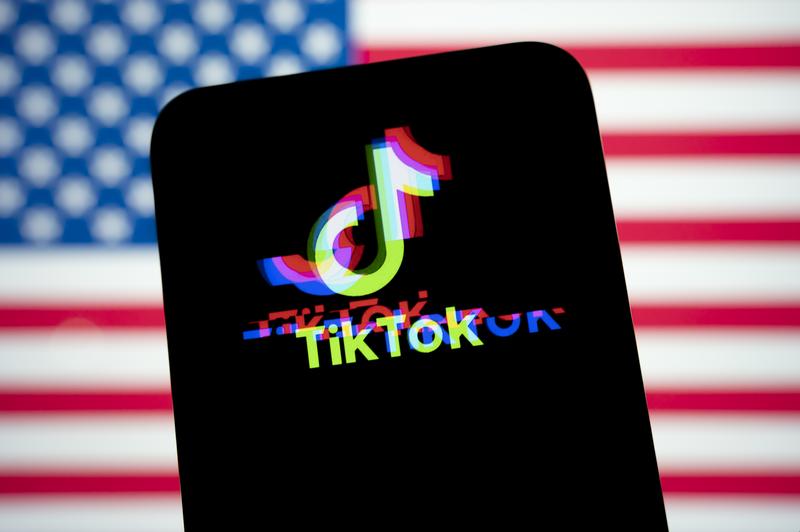
( Samuel Boivin/NurPhoto / Getty Images )
[MUSIC]
Amina Srna: It's The Brian Lehrer Show on WNYC. I'm producer Amina Srna, filling in for Brian today. Good morning again, everyone. TikTok in the United States has entered a new phase. The American version of the app now has a new ownership structure, one that includes major corporations and investment firms with close ties to President Donald Trump. The transition has already been rocky with a nationwide outage earlier this week, a newly updated terms of service, and growing claims from users that political content is being throttled or censored.
What actually changed? Who's in charge now? Who controls the algorithm? What does this mean for a new era of speech, surveillance, and power on one of the most influential platforms in the country? Joining us is Vittoria Elliott, senior writer for WIRED who covers platforms and power. She's reporting on TikTok's new American owners and the questions they raise about trust and control. Hi, Vittoria. Welcome to WNYC.
Vittoria Elliott: Thanks for having me.
Amina Srna: Listeners, we want to hear from you. Are you a TikTok user or creator? Have you noticed changes lately in what you see, what performs well, or what feels risky to post? Do you trust the platform more, less, or about the same under its new ownership? 212-433-WNYC. That's 212-433-9692. You can also text that number. Vittoria, who owns TikTok's US operations now, and how different is the structure from what existed before the transfer?
Vittoria Elliott: The new TikTok owners are a bunch of investors that are lumped together under TikTok USDS Joint Venture LLC, and it's made up of a group of investors. The one that has caught people's attention and caused the most concern is Oracle, which is a company co-founded by Larry Ellison, who has long been a Trump ally. He is also a tech billionaire, but not necessarily as public as people like Elon Musk. He has been a longtime Trump supporter, and that is something that has been particularly concerning. I think a lot of people are thinking about what happened when Elon Musk took over Twitter. There's sort of this idea that another Trump ally is going to be in control of a social media platform or at least have substantial say over how that platform's going to be run.
Previously, TikTok was a subsidiary of ByteDance, which is a Chinese company, and they operate globally, but the operations for TikTok specifically in the US were sort of cordoned off from the regular ByteDance operations. That was actually because there was a lot of concern, particularly in Trump's first administration around US user data being shared with ByteDance teams and being stored on ByteDance servers in China. Now, there was a big effort to sort of cordon off US user data and the teams working on the US side of content, but that never felt like it was enough for US politicians. This is sort of the end of almost a five or six-year arc of what to do with this platform.
Amina Srna: Underscore that a little bit more for us. TikTok didn't just decide to sell on its own. Why was it pushed to spin out its US operations in the first place? What were lawmakers and national security officials worried about? How do we get from those concerns to this forced sale of the American version of the app?
Vittoria Elliott: Yes. Like I mentioned, this actually started during Trump's first administration. There was this concern about US user data being potentially shared with teams in China, and the idea that because of the way that China is structured, that therefore the Chinese government would have access to US user data.
Initially, during Trump's first administration, and maybe people don't necessarily remember this because it was also during peak pandemic time, there was this idea that perhaps TikTok would need to sell or have the Chinese entity divest from the majority ownership of US TikTok. That sort of died down. Then in the wake of, particularly after the October 7th attacks in Israel, there was renewed interest in this divestiture.
There were national security experts who said this is a national security concern. If the Chinese can access US user data, that could be a national security risk. If they can, say, toggle the algorithm so that it feeds people particular types of content, that that could also be a national security risk. It was something that a lot of lawmakers started to voice concern about, particularly because TikTok, more than almost any other platform, was a place where people were engaging with content that showed the destructiveness of the conflict on Palestinian citizens.
There were several lawmakers, including Chris Murphy from Connecticut, who talked about holding TikTok accountable for that kind of content, which some people categorized as anti-Semitic. It was a real conflict that sort of re-earthed the ongoing concern about the platform and the ongoing concern that this foreign country could shape American public opinion based on how the algorithm was feeding people content and might have access to US user data.
There was a vote in the Senate in 2024, Joe Biden signed off on forcing this divestiture, basically meaning that TikTok would have to spin off US operations into a separate company where ByteDance would no longer maintain majority ownership and it would be owned by a US company or US investors.
Amina Srna: Vittoria, we're getting several texts in, and I'll read you a few. First, I want to take the opportunity to invite some more listeners to join us. Listeners, we can take your comments, questions, concerns, observations for this new era of TikTok at 212-433-WNYC. That's 212-433-9692. Are you seeing these reports of political posts disappearing? Are you a content creator that was previously successful on the platform but have decided to maybe move away, or anything else you want to share? 212-433-WNYC. That's 212-433-9692.
On the disappearing posts, a listener texts, "I'm hearing multiple people report TikTok is disappearing political posts. My friends are already saying TikTok is over and everyone needs to move on." On that story, Vittoria, what do we know?
Vittoria Elliott: Yes. First off, I think there was already concern going into this sale that TikTok would sort of face the same fate that X, formerly Twitter, faced under Elon Musk's leadership, where we saw him bring back a lot of people who had been previously banned from the platform for violating its policies around hate speech or disinformation, where he drastically rolled back content moderation. We definitely do see that X has become increasingly more right-leaning in terms of the content that gets boosted there and the users who prefer it as a platform.
I think there was already a baseline concern that TikTok being taken over by a Trump ally would result in that. Then what happened this weekend when the sale was actually finalized and when that transition happened, we saw the murder of Alex Pretti in Minnesota, and that meant that there was tons and tons of people posting about ICE, about immigration, about the Trump administration. This was all happening at the same time as a massive winter storm.
What TikTok and Oracle, which runs a lot of TikTok servers actually in the US, have said is that they experienced an outage, a weather-related outage, which I think we might be able to assume had something to do with this massive storm. What users saw was that suddenly all this content that they were posting, probably likely around this political moment, was not being posted, was not receiving views, that their algorithms seemed weird, that things were that things seemed to be suppressed. That's sort of what people were seeing on the outside.
Now, that doesn't necessarily mean, for instance, that they're not going to change the algorithm, or that changes were not already being made to the algorithm. That's something we don't have insight into. At least what TikTok and Oracle are saying publicly is that the glitches that people were experiencing over the weekend and some of the user side issues was the result of this outage that they're still trying to correct. Again, one of the primary things that's going to happen here with the new ownership of TikTok is that they are going to retrain, test, and update the content recommendation algorithm based on US data. It is entirely possible that we are going to see different types of content being promoted and preferred under this new ownership.
Amina Srna: A listener who identifies as Steve from Lynbrook writes, "I just deleted TikTok on Monday. It's a sad thing to admit, but I trust the Chinese government with my personal information more than I trust our own government." Vittoria, you were getting to the politics of it all. How close are these new owners to Donald Trump and his political orbit? Why does it matter for a platform like TikTok?
Vittoria Elliott: Well, so I think when we're talking about Larry Ellison particularly, I think a really good recent analog here is CBS. Last year, we had the big merger of Paramount and Skydance and now the CEO of that company, of that merger, is Larry Ellison's son. We have seen the rapid changes that have occurred at CBS where Barry Weiss, who was a more conservative-leaning pundit, the founder of The Free Press is now head of CBS.
There was the very publicized decision to hold an episode about the deportations to CECOT, to the very, very violent prison in El Salvador of some people, particularly Venezuelans who were deported last year by the Trump administration. We've seen those changes happen at CBS, which is a legacy news outlet after being owned by a member of Ellison's family. I think people are wary of the idea that TikTok may really face the same fate and that this sort of creation of a more conservative-friendly media ecosystem is really part of this sale.
Amina Srna: Just to underscore your point even further, Fortune magazine reported a while ago that not only is David Ellison the owner of Skydance Media and now CBS, Larry Ellison's son, Larry Ellison also provided $40.4 billion in personal guarantee to support Paramount's acquisition bid. They're very entrenched. They're a family, but they're also business partners, as has been widely reported. There's a new corporate entity and a new leadership structure as well. Is there a new CEO or governing body for TikTok US, and where does the real decision-making power seem to sit?
Vittoria Elliott: Well, the new CEO is Adam Presser. Again, it's unclear exactly what's going to happen. We're still trying to figure out what that's going to mean in terms of content moderation teams, in terms of how people's jobs are going to look, and exactly how decisions are going to be made in this new structure. I think it's still really early days in this space, but the old CEO, Shou Chew, obviously, is no longer in charge. He was based out of Singapore. Adam Presser will be based in the US, and the other members of the buy are Silver Lake, Oracle, a lot of different sort of big investment partners.
Again, we don't have a ton of insight right now into exactly the types of changes they're going to make or how decisions are going to be made. What we do know from a lot of other American social media companies, and I think this is something to really think about, is many American social media companies, like Meta, like X, formerly Twitter, there's sort of this bias towards free speech, for instance.
By that, I mean the US definition of free speech is actually quite broad. It's much broader than, say, many countries in Europe. TikTok was actually a place where there was a lot more restrictions on, say, being able to sell political merchandise on the platform, even though many people found their way around that.
I think what we may assume here is that we will see certain types of content moderation that people have become accustomed to, get rolled back, and others possibly changed in a different way. I think it's still early days and it's still unclear how those decisions are going to be made. I do think when we're thinking about a company that's now really operating with its eyes towards the US market, rather than thinking about sort of global content moderation across markets, we may see something more specific to this area.
Amina Srna: Let's go to a call. Here's AK in the Bronx. Hi, AK, you're on WNYC.
AK: Hi, I'm a Silicon Valley guy who's now here trying to fix the hallucinations now, AI. One thing that's super important to understand, and I'm a developer on the Facebook platform and Twitter platform, so I'm a technical person, is that the algorithm for TikTok still controlled by ByteDance in China and it's not opened up. That's super important. You know what, Larry Ellison's strong. He's a little bit to the right of Genghis Khan politically. You're looking at more an Israeli social network on some of those things. He's not a free speech libertarian like some of the other technical conservatives. It's something to be looking.
One thing I've noticed because I downloaded before the actual site was transferred the app just to check it because I didn't use it before that. I noticed that all of a sudden it's starting to offer recommendations of content and asking for content, telling you that there are contacts in your contacting without me giving it permission that actually are on TikTok, and I didn't give it permission to access my contacts like that. Something to be concerned about because the TikTok and WeChat were places where the social media score for China was used.
It's just something people be aware of and maybe work with groups like CryptoHarlem and other groups that really are looking at as developers on the platform what's really happening because we don't really know. There are about 20 million Americans, I think, when they were discussing whether or not they should ban it, that are making their businesses on TikTok. A lot of folks make their income there. It's important for us to have transparency.
Amina Srna: AK, thank you so much for your call. Vittoria, what stands out for you in that call?
Vittoria Elliott: Well, yes, I think, AK, thanks so much for calling in and sharing. I think that really brings up the other thing that people saw at the beginning of the weekend, which is an entirely updated terms of service, the new privacy policy. Actually, my colleague Reece Rogers wrote a piece about this if anyone wants a fuller explainer. Now, the new TikTok privacy policy includes precise location tracking. They also will track any of your interactions with AI. If you like the filters that make your face look a particular way or add little freckles, that's technically AI. They will start tracking your interactions with that and possibly even your queries around the kind of AI to use or the things that you ask it to do or produce.
Then it also has off-platform ad targeting. Apologies. Meaning that, initially, your ad data would net would only be used to serve you ads on TikTok, but now the data that you're putting into TikTok might actually inform the ads you're seeing across many other platforms. As our caller was saying, also about accessing your contacts.
I think that's been even before everything happened this weekend, where people were having issues with actually using the app and having these questions around whether or not their content was being suppressed or sent or censored, people were already on high alert, having read through the new terms of services.
Amina Srna: Under this new setup, who actually controls how the videos are recommended and distributed? Do we know?
Vittoria Elliott: This is controlled by an algorithm. Actually, TikTok's algorithm is sort of its secret sauce. That was a big point of contention as part of the sale because the Chinese government considers TikTok's algorithm to sort of be a state secret, meaning that they told the American government, basically, "Sure, you can spin off US TikTok into its own company, but we're not going to give you the algorithm. That is our secret sauce. We're not giving that to you." Which would kind of be like ripping the spine out of the whole platform.
The way the deal works is they are still using the Chinese algorithm, but they're licensing it, is my understanding. They will have the ability to, again, retrain, test, and update the content recommendation algorithm based solely on user data. There will be the ability for the new American entity to make changes in that way. Again, it's still kind of unclear about what that's going to look like.
Amina Srna: A listener, Kevin, in Nassau County texts, "It's meaningless to discuss trust in TikTok or any social platform in the absence of any effective legal framework and government will and capacity to ensure accountability. Congress lacks the knowledge, sophistication, or stomach to tackle the social media platforms, and government regulatory machinery is being dismantled in every domain. TikTok is now clearly in Trump's camp. All social media, like cryptocurrency, is a lever for the Trump machine to amass power, limit free speech and dissent, and reward its friends."
Alot in that text there, but to the point of accountability and the effective legal framework that Kevin mentions, what do we know? Is Congress looking at this?
Vittoria Elliott: I think as a tech reporter, I will say that I think, frequently, legislators are years behind the issues that are pressing in the industry. I definitely agree that I think lawmakers have really, really, really struggled to figure out how to regulate some of these companies and how to regulate these platforms. I think we see that in terms of so much of the regulation or the conversation in Congress was around, for instance, free speech and content moderation. The reality is that the thing that seems more fundamental is we would need really effective data privacy laws, and we have struggled with that.
Trying to sort of say our legislators are going to try and govern the externality of what content shows up on your feed, that is only sort of one element of a really big constellation of the ways in which these platforms vacuum up data, can use that, obviously, to inform their algorithms, but can use that data for many, many other things.
I think the fundamental issue is that we have lawmakers who are frequently trying to legislate the things that they're seeing, which is the content on the platform, or are kids seeing this damaging content, or should we introduce age restrictions as opposed to really getting into sort of the fundamentals of how these platforms are actually operating, which would kind of require a deeper understanding of how their systems work, how that algorithm works, the kind of data they collect, how that data is labeled, how it's used, how it's sold. I think that type of regulation, where it's really getting into how these products are designed, is something that I think US legislators have really struggled with.
For instance, in Europe, they have the GDPR, which is their big suite of data privacy regulations, and that gives them a greater foundation through which to hold some of these platforms accountable, because they can sort of say, "Well, you're using user data in an inappropriate way." That provides an avenue to sort of investigate some of these issues as opposed to really looking at the externalities. That doesn't mean that they're also not concerned about issues of content moderation or age restrictions or things like that. I think the foundational piece of legislation comes down to data privacy. The US has really struggled to kind of come to a consensus about what that would need to look like.
Amina Srna: Here's a question from a listener. They write, "I don't have a TikTok account, but I'm able to see some posts even without an account or the app. Is TikTok collecting data if we don't have an account?" Vittoria, do you know?
Vittoria Elliott: I actually don't know the answer to that question, especially not with the new ownership of TikTok right now. I will happily file that one in the bank, and maybe you will see a WIRED story about it in the future.
Amina Srna: Brian Lehrer Show listeners inspiring WIRED stories. I love it. Let's go to another caller, Edith in Manhattan, you're on WNYC. Hi, Edith.
Edith: Oh, hi. How are you? This is a really important show. First of all, with CBS, let's not forget about Colbert. That was part of the deal that Skydance made with the Trump administration to get rid of Colbert. I'm sad about that. The second thing is, just yesterday, I heard, I think it was on Bloomberg, 11:30 AM, I think I heard that there was, there were complaints of people who were critical of Trump and the administration that their algorithms went all wonky. There was one case in point where it was a guy who had like over 10,000 followers and he suddenly overnight went down to 0. I don't know. I mean, they couldn't verify that it wasn't a glitch, but it was a little concerning.
Amina Srna: Edith, thank you so much for helping us report that story. Vittoria, just to add a little bit more context to the caller, earlier this week, TikTok experienced major US outage just days after the new ownership transfer. Can you explain what happened, and why did it immediately raise censorship concerns among users?
Vittoria Elliott: Yes. What Oracle and TikTok are saying, because Oracle, in addition to now being part of a suite of investors that owns the US entity that is TikTok, they also provide its data center services. What they told us was that, over the weekend, an Oracle data center experienced a temporary weather-related outage which impacted TikTok. The challenges US users may have been experiencing as a result of these technical issues that followed the outage which Oracle and TikTok are working to resolve.
We did have a massive winter storm. It seems like that may have impacted one of Oracle's data centers. We had the sort of confluence events of events of the new ownership, a shooting in Minnesota with ICE shooting a disarmed civilian, and the winter storm. I think all of these things kind of colluded to this point where people were talking a lot about the Trump administration and about ICE, and they were experiencing these glitches.
Now, again, we don't necessarily know the extent to which this glitch accounts for all of that. There could be changes that are being made, and maybe we will see those borne out over time. Right now, this is at least what Oracle and TikTok are saying about why people are experiencing what feels like a really big change and why they are seeing their posts maybe be, again, not posted, not receiving the sort of reach that they normally would.
Again, I think because people saw an updated privacy policy that was much more invasive than they were used to and that they were expecting the takeover of TikTok by a Trump ally to come with all of these changes, I think people were really already ready to distrust the platform and are not necessarily willing to stick around to give it the benefit of the doubt.
Amina Srna: Here is a text along those lines. A listener writes, "I'm concerned about the US owners trying to curry favor with Trump by suppressing anti-Trump/MAGA content, but I'm far more concerned about the personal information being shared by the administration with Palantir." Slightly separate issue there, but where do you want to tackle it?
Vittoria Elliott: Yes. I think there's a couple of things here. Palantir is not the only company that works with the US government in a data capacity to share data, to aggregate data for these things. Oracle also has several contracts with the US government for data support for technical systems, et cetera. I think it is totally fair that US citizens, given that we've seen more and more money being funneled to ICE and DHS, and that many of those are going into procurement contracts to allow them to gather more data.
My colleague Caroline Haskins has done a lot of reporting on the new contracts and RFIs that ICE is putting out, sort of either giving out contracts to companies that do this work or seeking that kind of work. Actually, over the weekend, she reported on an RFI, so a request for information that was put out by ICE, particularly looking for ways that they could use ad tech and data from big tech companies in their operations.
I think, obviously, Palantir has gotten a lot of attention because they are one of the biggest contractors doing this work, and they certainly are involved in supporting ICE and DHS. I think this concern, again, around user data and US citizens data being collected by these companies and being shared for any number of reasons is a really valid one. That sort of goes back to that fundamental question about the fact that we don't really have comprehensive data privacy protection in the US in the way that you might have in Europe. That does lead to all these kinds of concerns, whether it's through something like TikTok or Palantir.
Amina Srna: A Listener texts, "I'm going to cancel my TikTok account today." Vittoria, at the risk of asking too technical question here, how do you actually delete the app? Is it a done deal that it's completely off the app? Should people trust it that it's gone?
Vittoria Elliott: I have not yet deleted my TikTok for full transparency, partly for work purposes. I feel the need to sort of be on these platforms. I know that you have to do more than delete the app itself. I think you actually have to go into your-- if you have an iPhone, which is what I have, so I may not be able to guide you through a different one. You may actually have to go into your settings and go into your apps and make sure it is fully removed from your phone, because sometimes if you delete something from your screen, that doesn't mean it's fully deleted from your phone. That's true for several apps, not just TikTok.
I will say that deleting the app is certainly a major topic of conversation, especially after the outage this weekend and the change in ownership. New data that was shared on CNBC, I think, yesterday was saying that the daily average users deleting the app has increased by 150%. I think your question is one that a lot of people are going to be asking in the next few days.
Amina Srna: Here's something from Reddit, a producer, our producer Carl Boisrond, is adding, "Here's what worked for me to delete the account and avoid agreeing to the terms of service. Put your phone in airplane mode, open TikTok and go to settings, turn off airplane mode, delete your account. No TOS popped up for me with this." Listeners, try it out and let us know.
In another text saying, "I'm a student in Texas where TikTok has been banned on government-issued devices. When I use the university computers, I constantly get pop up saying, 'This content has been blocked.' This appears on many different websites such as news outlets, and I don't have TikTok. I do believe TikTok is tracking non-users and gathering data from non-TikTok platforms." An interesting point there. As we run out of time, Vittoria, what do the new owners stand to gain from TikTok either politically, economically, or culturally? What should users be watching most closely related in the months ahead?
Vittoria Elliott: First, obviously, TikTok, in an era where a lot of other social media platforms are really struggling to retain their relevance, TikTok has really bucked that trend. I think in August, Vice President JD Vance valued the deal for US TikTok at around 14 billion, and ByteDance as a whole is valued at 330 billion. Economically, having in on one of the most rapidly growing social media platforms, sort of the one that has really been the success of the past five years, is a boon sort of on its face.
I think really in the past few years, we kind of can't discount the idea that having control of the media, whether that that's traditional journalism or social media, is certainly a real political move. It feels like a new thing, I think, for a lot of us. We have to keep in mind that a lot of the early newspapers were founded by people with clear political leanings, by rich people who wanted to be able to control the conversation.
This is not necessarily a new phenomenon that wealthy individuals or wealthy conglomerates that really have a substantial political horse in the race find it advantageous to control media outlets, whether that is a newspaper or a TV station or a social media platform. I don't think the concerns around the idea that this could be a way for really controlling political discourse are necessarily unfounded, and that could be really advantageous if that is what this group decides to do with the algorithm.
Amina Srna: Vittoria Elliott is a senior writer for WIRED who covers platforms and power. Vittoria, thanks so much for your time today.
Vittoria Elliott: Thank you for having me.
Copyright © 2026 New York Public Radio. All rights reserved. Visit our website terms of use at www.wnyc.org for further information.
New York Public Radio transcripts are created on a rush deadline, often by contractors. This text may not be in its final form and may be updated or revised in the future. Accuracy and availability may vary. The authoritative record of New York Public Radio’s programming is the audio record.