
Thursday Morning Politics: Trump's Primetime Address; ACA Subsidies Fight
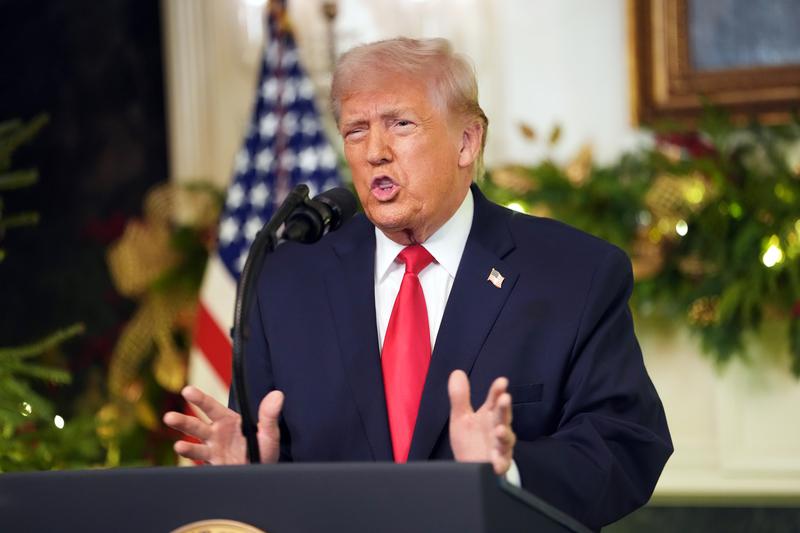
( Doug Mills - Pool / Getty Images )
Title: Thursday Morning Politics: Trump's Primetime Address; ACA Subsidies Fight
[MUSIC]
Brian Lehrer: Brian Lehrer on WNYC. Susan Page is back with us, Washington Bureau chief for USA Today and author of books about important women in politics and media, including Barbara Bush, Barbara Walters, her forthcoming one next year about Queen Elizabeth, and, relevant to some of what we'll discuss right now, her book Madam Speaker: Nancy Pelosi and the Lessons of Power.
Pelosi, as you may know, has announced that she will not run for reelection next year. This week, Susan sat down with the former speaker of the House for kind of an exit interview. Here's a clip in which Susan asks about Zohran Mamdani and winds up hearing how Pelosi thinks the Democrats can win the presidency back in 2028.
Nancy Pelosi: I don't think anybody, any mayor, is the new face. We have a great mayor in San Francisco. He's wonderful, and he's doing a great job. I wish the mayor success. I want mayors to succeed, coming from the mayor's family, where I lived my whole life, when my father was mayor, and my brother was mayor, but I don't think you define who the face of the party is. That has to emerge from the party.
Here's the thing, and count on this. In '05, we said in the first year, we're going to the president's numbers. President Bush was 58% in January; 38% in September because he gave us a gift. He was going to privatize Social Security. Now we know when we win the House next year is our path to the White House. We have a big bench, some women on it, maybe more women will join that bench.
We have a Democratic Congress to talk about the issues in a way that the press will cover. Press doesn't really cover so much in the House, Democrats in the House, because we don't have power. When you have power, it's a different story. We won't be able to get his signature on things, maybe, but we'll be able to slow down the terror that he is inflicting on the country.
Brian Lehrer: Nancy Pelosi with Susan Page, Washington Bureau chief for USA Today. Hi, Susan. Welcome back to WNYC.
Susan Page: Hey, Brian, my question for you. Is The Brian Lehrer Show one of the reasons to love New York this year?
Brian Lehrer: I would argue that it is, but you know we allow dissent and disagreement on this show. Some of our callers may beg to differ.
Susan Page: Well, I would definitely vote for your show as a reason to love New York.
Brian Lehrer: Well, thanks. That was an interesting comparison of this year to 2005, right after President George W. Bush was reelected. Of course, now we have Trump reelected. Could you reflect on why you think Pelosi made that analogy and how much you think it might apply?
Susan Page: Well, she definitely sees parallels between the situation when the Democrats managed to win back the House, control of the House, and make her the first woman speaker. Parallels with what Trump faces today, his approval rating has gone down. In Bush's case, that was in large part due to the Iraq war. In Trump's case, I think concern about the economy has been the biggest factor eroding his support.
She makes the point that the best predictor historically, in modern times, to who's going to win the midterms is "What is the approval rating of the sitting president?" The sitting president, a Republican, his approval rating is now sagged down into the 30s. Historically, that would be a sign that Democrats are going to do really well in next year's midterm elections.
Brian Lehrer: It's certainly relevant to President Trump's televised address last night on affordability. You just mentioned the economy, in which I thought he looked angry and defensive about his sinking poll numbers, especially on his economic job approval. He was scowling and looking anything but celebratory as he tried to celebrate his record. Now, folks, you can't see his face on the radio if you haven't seen these clips online or on TV, but imagine that, that description as you listen to the words.
President Trump: Over the past 11 months, we have brought more positive change to Washington than any administration in American history. There's never been anything like it, and I think most would agree.
Brian Lehrer: Susan, we know he talks in superlatives like that a lot, but last night I thought he had this vibe of "You ungrateful people, you don't know how good you have it because of me." It was sort of the words and the vibe were sort of a mismatch. Are other people hearing it that way?
Susan Page: Yes. Historically, you make a speech, a president, a week before Christmas, you'd have Christmas good cheer, you'd tell maybe a little bit of humor, tell an anecdote. None of that last night. This was a speech delivered at the top of his voice. He was almost shouting through this 19-minute speech and trying to make the argument that things are better in the economy than Americans believe they are. I can tell you that presidents never win that argument. You cannot tell people how they're supposed to feel about the economy. You need to recognize how they feel and try to do something about it. That has been, I think, a difficult thing for Donald Trump to do.
Brian Lehrer: Joe Biden had a very different style, of course, but didn't he also try to convince people the economy was in better shape than they were experiencing it? We know how that went.
Susan Page: Yes, absolutely. He, President Biden, would present statistics showing things were good. I am so old. I remember President George H. W. Bush making the case the economy was doing pretty well when he was standing for reelection, and in fact, the economy was in a recovery, although we didn't, I think, fully understand it at that point. You cannot persuade people who feel pinched by groceries and pinched by rent and facing a big spike in health care costs in just two weeks that things are going well; they just don't understand.
Brian Lehrer: Back to Pelosi, what did you make of her response in that clip about Mayor Elect Mamdani and the future of the Democratic Party? She said something that I think is probably right, probably reasonable: no one person is the future of the Democratic Party, but did you get any more from her on Mamdani?
Susan Page: Well, it was interesting because she didn't repeat his name. One thing a politician might have said is that, well, he had a wonderful victory, but other people had victories with much more moderate stances. She clearly does not want Mayor Elect Mamdani to be the face of the Democratic Party. She is, in fact, personally very liberal, but she's always politically pragmatic. I think that is not how she sees a route to victory in the presidential election in 2028.
Brian Lehrer: She's, of course, been used by the Republicans over the years herself as the face of the left. "Nancy Pelosi wants to remake the whole country in the image of her liberal San Francisco," that sort of thing. Now they may start using Mamdani that way, but she has also clashed with the left in the Democratic Party, including with Alexandria Ocasio-Cortez, right?
Susan Page: Oh, well, they had a big conflict when AOC first came to Washington. You remember she supported a sit-in at Pelosi's office. If you wanted to give some advice to a new Democratic member of Congress, do not anger Nancy Pelosi. I think it took them a long time to get over that. When I was interviewing her for the book I did, she came. One of the interviews I did was right after she had had a really angry meeting with the Democratic Caucus, including a clash with the members of the squad, as they were then called. She referred to them as more interested in showing what purists they were than in actually getting anything done.
Brian Lehrer: Was she going to be primaried from the left next year? I'm not sure that conflict hurt Alexandria Ocasio-Cortez's rise to prominence. Is Pelosi going to be primaried from the left next year if she didn't decide to retire?
Susan Page: Hey, first of all, it didn't hurt AOC with her voters, but it hurt her in terms of building the kind of personal relationships that give you power within Congress, something that she has, in fact, been very good at in the years since then. There was a cost, I think, to that conflict with Pelosi. Yes, Pelosi was already being challenged. It was clear that AOC's former Chief of Staff was going to be among those challenging her, and she had served for 20 terms.
She told me that she, in fact, had known for some time that she was going to step back, but she didn't announce it because she didn't want to be a lame duck. Yes, she was going to be primaried. She did say with quite some fervor that if she had decided to run, she would have won. I think that's likely true, but it would've been a messier election than she's used to.
Brian Lehrer: I'm curious what you think then, about this narrative of a need for generational change. I often think it's a cover for the ideological split in the party, and there's nothing wrong with ideological debate. It's a good thing, necessary, as evidenced perhaps by how important and out in the open it was between Mamdani and Cuomo in the New York mayoral race, but when I look at who's getting primaried and who's not, Bernie Sanders, 84, isn't getting primaried on generational grounds as long as he's in office.
Elizabeth Warren, 76, but younger Democrats like New York Congressman Ritchie Torres from the Bronx and Dan Goldman from Brooklyn, Manhattan, 49, Torres is only 37, are next year because they're seen as not progressive enough for a wing of the party. Senator Ed Markey of Massachusetts, who'll be 80 and is a progressive, is getting primaried by Seth Moulton, who's younger and saying generational but is more centrist. My point is, do you think generational concern change is a real concern or a cover for legitimate political differences?
Susan Page: Hey, both things can be true. You can use generational change as a tactic to go after longtime members of Congress that you think aren't progressive enough, but there is also a sense, I think, in the country, not just in the Democratic Party, in the Republican Party as well, and the Republican Party has made this transition maybe more easily than the Democratic Party has, but a desire for generational change after we've had two presidents who set records with their age and who have faced scrutiny for whether they really have had the figure, and the mental acuity to serve as president. We had those questions, of course, with President Biden, and some people raise those questions now with President Trump.
Brian Lehrer: Looking at the news this week, you would think the biggest thing that happened in Washington, okay, maybe not the biggest, but was the publication of a Vanity Fair article with many dishy quotes from White House Chief of Staff Susie Wiles. Is there real news from that article, as you see it, I have not read it through yet, or just gossip about Trump and people in his orbit that won't affect policy or Americans' lives very much?
Susan Page: Well, the news is that the President's top staffer and the one staffer with whom he is personally closest and trusts the most is saying in the confines of the White House what analysts are saying outside the White House, which is that there's conflict within the administration, that he's weaponized the justice system. It's not that what she said was so extraordinary. In fact, it was such a common-sense analysis of her own team.
It's like that, Michael Kinsley, great line that a gaffe in Washington is when you accidentally tell the truth. That was the feeling you got from the Vanity Fair interview. Brian, you're a great student of people. Tell me, why do you think that Susie Wiles, who mostly avoids publicity, did 11 interviews on the record with this author?
Brian Lehrer: Well, I can only guess that she's got a no-drama reputation, like no-drama Obama, they used to say. She's got a no-drama reputation, right? I would only think that she sat down with the reporter from Vanity Fair many times because she thought she would put a convincing and what might seem like sensible spin on policy to somebody from the mainstream media, which they, in general, don't trust, but I've never met Susie Wiles. I've never interviewed Susie Wiles. You tell me how close you think I came.
Susan Page: Well, I think that's a very reasonable speculation. Chris Whipple, who is the reporter who wrote it, wrote a really classic study of White House Chiefs of Staff. It's been a kind of specialty of his. She might have wanted to see herself in that lineage. You talk about a tough job in Washington. Being Donald Trump's White House Chief of Staff has been a really tough job, and one a lot of people have cycled through.
She hasn't quite gotten the record there yet, which I think is 15 months with Chief of Staff Kelly, but the betting now is that she will become his longest-serving Chief of Staff. I'll tell you, the most remarkable thing to me in the aftermath of this article, which is quite extraordinary and definitely worth reading, is that she calls Trump an "alcoholic personality," which is not really praise, and Trump is so committed to having her. Not only did Trump not fire her, he went out and said, "Yes, she's right. I have an alcoholic addictive personality." That is a sign, the fact that she would so easily survive a controversy that would've caused many staffers to have to resign or be fired. I thought that was one of the more amazing things to happen.
Brian Lehrer: I can imagine him saying, "Yes, yes, I have an addictive personality. I'm addicted to winning." [laughter] You think, then, if I'm hearing you right, that it was vanity that put her in Vanity Fair because she wanted to be remembered in the future with the great Chiefs of Staff from history.
Susan Page: Vanity Fair, this great, glossy magazine, they sent in a star photographer who took these portraits of not just Susie Wiles, but Vice President Vance, Secretary of State Rubio, and others. I think she was not the only one who was caught up with this idea that this would be a classy place to be.
Brian Lehrer: Our next guest in just a minute will be Republican Congressman Mike Lawler, one of the four who defected from his leadership to vote through that discharge petition yesterday to force a vote to extend the current Affordable Care Act subsidies. Why do you think Lawler and three from Pennsylvania stepped out of the fold in that way?
Susan Page: Because they hope to be reelected in November. Health care is already setting up to be a really big liability for Republicans. 20 million Americans are going to see their premiums spike, sometimes double, in a week or two weeks, after the end of the year. That is a crisis for many of their household budgets, and it could be a crisis for Republicans generally.
I thought it was really not that the action by these four members of Congress, four Republicans, is going to extend the subsidies, but it is an early sign of a willingness to kind of buck the leadership, buck the president, buck the speaker of the House, because of concern that Republicans are on a very dangerous and risky path as they head into this election year.
Brian Lehrer: Just give me your political analysis. I'll ask Congressman Lawler the same question, but looking at the coming votes on the substance, which this discharge petition will force, I guess they'll come in January, most likely, could this extension pass the House and Senate and save people those sudden premium spikes?
Susan Page: Yes. Please ask the congressman. He'll know better than I do, but I would say the chances are pretty close to zero.
Brian Lehrer: Susan Page, Washington Bureau chief for USA Today, we always appreciate when you come on with us. Thank you so much. Happy New Year if we don't talk before then.
Susan Page: Happy New Year to you, Brian. Thank you.
Brian Lehrer: Congressman Lawler, next. Stay with us.
[MUSIC]
Brian Lehrer: Brian Lehrer on WNYC. With us now, Congressman Mike Lawler, Republican from north of New York City, all our parts of Rockland, Westchester, Putnam, and Dutchess Counties. He's in the headlines today as one of the four Republicans who broke with Speaker Mike Johnson yesterday to vote for a so-called discharge petition. Those four defections from party leadership guarantee that there will be a vote on aversion of continuing the extended Affordable Care Act subsidies that are set to expire with the new year, causing massive premium spikes for millions of people. Congressman Lawler, we always appreciate when you come on with us. Welcome back to WNYC.
Congressman Mike Lawler: Thanks for having me, Brian.
Brian Lehrer: Open mic to start out, why did you vote for the discharge petition?
Congressman Mike Lawler: Well, during the 43-day shutdown that Democrats caused, they said that this issue was existential. I and other Republicans had raised this issue prior to the shutdown with our own leadership. I said then that when the government reopens, I will sit down in good faith with my Democratic colleagues and negotiate. We did that over many weeks, and we came up with compromise legislation that would extend the ACA subsidy, the enhanced premium tax credit. So that people understand this, we're talking about an enhanced tax credit that was put in place during COVID, which is the difference between the federal government subsidizing these plans at 88% of the premium or 78% of the premium.
Even if the enhanced premium tax credit expires, there is still a premium tax credit that is staying in effect and continues to help fund these plans, but the challenge is, obviously, health insurance costs continue to skyrocket under Obamacare. It has not actually reduced costs. In fact, on these plans in particular, health care premiums have spiked 125% over the past decade-plus. This needed to be addressed.
We worked in a bipartisan way to do that and put reforms in place, including income limits so that somebody making $600,000 was not getting subsidized. We put in place insurance reforms to start going after the insurance companies on fraud. We put in place the elimination of zero-premium plans to make sure that everybody's got a little skin in the game with a nominal $5 fee.
We put in place PBM reforms and HSA expansion so that people can use their HSA accounts to pay for premiums, and it would roll over into the next year, so you're not stuck in this "use it or lose it" phase, which is one of the big problems with HSAs. We worked tirelessly to get House Republican leadership to allow a vote on this compromise bipartisan legislation. Ultimately, for various reasons, we could not get them to agree to put it on the floor.
I and three of my colleagues, Brian Fitzpatrick, Ryan Mackenzie, and Rob Bresnahan, felt very strongly that we needed to force a vote and to have an up or down vote on the House floor on this issue. We signed the existing discharge. We had introduced two separate discharges on these bipartisan bills. Unfortunately, the Democrats wouldn't sign on en masse. We had enough Republicans to move them, but they wouldn't sign on.
We were really left with two options: do nothing and let it expire, or sign on to the three-year discharge. We signed on. It'll force a vote on January 6th when we come back, and it'll pass the House. What will happen then is that it'll go to the Senate, and the Senate has already voted on this exact bill. Chuck Schumer put it up for a vote last week, and it failed. The Senate will have to work in a bipartisan way to come back with compromise legislation, which will likely be similar to what we put forth in the House. I do believe, if it is a bipartisan bill, it will pass, and it will become law.
Brian Lehrer: On the bigger picture of health care reform, Congressman, there's always coverage of President Trump saying for 15 years that he'll come up with a plan to completely replace the ACA with something better, and then he never does, and the party never does, and the ACA only becomes more popular in the polls. You mentioned some reforms that are in this bill, and people could debate those, but do you have, even just in your head, if not on paper, in legislation, another whole approach?
Congressman Mike Lawler: Yes. Brian, let's be clear about where we are. The reason there's a health care crisis, the reason there's an affordability crisis with health insurance, is because Obamacare has not actually worked the way Democrats said it would. They created a system written by the insurance companies for the insurance companies. The insurance companies have seen a 2,000% increase in profits while health insurance premiums have skyrocketed nationwide by 96%.
This notion of repeal and replace obviously has not happened, but the question to me is not repeal and replace, not I hate Obamacare; I like Obamacare, what do the polls tell us? The question is, is it working? If it's not working, how do you fix it? That's why I've looked at this realistically and pragmatically and said, okay, we need to address the short-term extension on subsidies until we can actually get reforms in place and start to fix the system.
I'll give you a few examples. Associated health plans, you have small businesses that oftentimes cannot afford to provide health insurance because it is so expensive. If you allow associated health plans, it means that small businesses can pool together with the self-employed and actually purchase plans at a much cheaper rate, and be able to provide health insurance for their employees.
The CBO just scored that and said it would reduce health insurance costs by 11% nationwide. That's great for the vast majority of Americans who continue to see their health insurance rise without the benefit of these subsidies that you are talking about. The enhanced premium tax credit only applies to 7%. The other 93% are saying, "What about us?" You have to address this. You look at issues like purchasing across state lines. You do need to do that because you need competition.
You have states where there's only one, two, three insurance providers. They have a monopoly on it, and that's why they don't feel the need to reduce health care premiums. Sorry, this is important.
Brian Lehrer: Go ahead. Sorry.
Congressman Mike Lawler: This is important. You look at issues like UnitedHealthcare or Aetna. They should not be owning providers or PBMs. It's a conflict of interest. You have to be able to separate out insurance from the actual providing of health care or negotiating of prescription drug prices. Insurance companies should not have control of that. You have to break up the monopoly here. There's a lot of things that we are focused on doing. PBM reform is one of them. The Democrats voted no yesterday on associated health plans on PBM reform en masse, and that's foolish.
Brian Lehrer: I think they might agree about breaking up the insurance company vertical monopolies, depending on the context of the plan. I think I'm hearing that from Democrats, and Democrats would say a lot of the reasons for the increase in premiums under Obamacare or the Affordable Care Act is because the Republicans keep pulling the legs out from under it in any way that they can, like getting rid of the original requirement that everybody be insured, because the young healthy people who had to pay into the system but not draw a lot out with health care costs, they were allowed to not get insured.
The costs for those who actually need it go up, they would say. Let me pick one of the things that I hear a lot. I'm not sure if you just mentioned it yet on your list. You correct me if you did not, but Democrats tend to be skeptical of health savings accounts, which we certainly hear from President Trump a lot, as any kind of bedrock alternative to the ACA because they say they advantage better off people who are not the ones who need more health care affordability the most that the more income you make, the more you can put into those accounts for a medical rainy day. If you're living paycheck to paycheck, they really don't help. I'm curious your reaction to that critique.
Congressman Mike Lawler: Well, I think obviously it very much depends on how it is structured and what you do with the money. What the President is talking about is, rather than send these, for instance, premium tax credits to the insurance companies, remember, the money is not going to the individual, it's going to the insurance companies with no controls on their rate hikes, and so basically they're just [crosstalk]
Brian Lehrer: Let me just jump in for a sec. Doesn't it go to the individual because it's a tax credit for the individual?
Congressman Mike Lawler: No, the enhanced premium tax credit goes directly to the insurance company. That's the problem here, and that's what the President is saying, "Why are we giving money to the insurance companies? We should be giving it directly to the people." Now, if you set up the HSAs in a way that people can use it to pay premiums, which has not been allowed, and you allow them to roll it over from year to year, okay, that actually creates a much better system for them to be able to use pre-tax dollars to pay for health insurance, and instead of subsidizing the insurance company, you send the money directly to these HSA accounts for the individuals that need the assistance.
That, to me, is a functional way to actually address the issue. If you allow more competition in the marketplace, then people will be able to purchase a cheaper, better plan for themselves. You also need to allow for catastrophic coverage. Some people are not going to want to purchase health care plans. To your point about earlier, when you said younger people being required to buy a plan and not really need it, they're not going to use it, but that's why you would allow catastrophic coverage, so that in the event they did have an issue, they could purchase it.
Brian Lehrer: Democrats say that just enables a lot of crappy coverage, as I've heard some people put it.
Congressman Mike Lawler: Well, the problem with the system that they set up is, it's only sending money to the insurance companies. For instance, on this enhanced premium tax credit, of the 24 million people benefiting from it, 12 million have no claims, so the insurance companies are literally just taking the money and not providing any services to these people.
Brian Lehrer: You're centering the middlemen in this critique of the current system. Proponents of a Bernie Sanders Medicare for All-style plan say that's a lot of the point: our health care is so expensive largely because we have these various for-profit businesses extracting money from the pipeline as middlemen at every step, insurance companies, most of all, they probably agree with you on that, pharmacy benefit managers, who you mentioned, et cetera. Why not make it a public service that only aims to break even as it provides health care services?
Congressman Mike Lawler: The challenge with Bernie Sanders' approach is, it is trillions upon trillions upon trillions of dollars in taxes that would fund such a system, which means everybody's taxes are going up significantly. There's not enough billionaires in the world to cover what Bernie Sanders is proposing.
Brian Lehrer: Let me, just because I know our time is short. They would say there's even more money going into the private system as the middlemen keep extracting from it, so if they come up with a fair tax rate, there might be a need for a tax increase in that scenario, but it would probably be cheaper in the large scheme of the economy and fairer.
Congressman Mike Lawler: If you look at our health care system, I think there's broad agreement from Republicans and Democrats that this current structure doesn't work. If you look at how Obamacare was written, it was written by the insurance companies to benefit the insurance companies. There needs to be an overhaul of that. I'm not sitting here saying repeal and replace; I'm sitting here saying we have to fix what is broken in this current system.
Brian Lehrer: I know you have to go in a minute. I want to acknowledge that a number of Democrats from your district are calling in and writing in to say-- I'll read one text as Representative. "Mike Lawler was the deciding vote on the so-called One Big Beautiful Bill. In that vote, he voted for these price hikes. Why didn't he take a stand on May 22 when he could've actually stopped them? Why should anybody believe what he's saying now? He's not really a moderate. He mostly votes with Trump."
Congressman Mike Lawler: Okay. Look, I have a very strong record of bipartisanship and putting my district first. In terms of the Working Families Tax Cut Bill, I delivered the single largest tax cut in the whole bill, which was lifting the cap on salt. The average New Yorker is going to get a $4,000 tax cut because of the work that we did in that bill. As far as this particular provision goes, we raised this with leadership. We raised this issue throughout the process.
I introduced legislation, along with Jen Kiggans, back in September to extend the enhanced premium tax credit. Again, Democrats put this in place. They're the ones that made it sunset at the end of this year. They're the ones that said it was supposed to be temporary. I am willing to extend it for the purpose of fixing the health insurance system. I went and approached Leader Jeffries and said, "Work with us on this."
It was a very clear-as-day answer. He said no. The fact is, we have worked tirelessly in a bipartisan way to get to a compromise agreement. This is not going to be a "my way or the highway" approach. There's going to have to be a bipartisan result here. That's what I am working towards and will continue to do.
Brian Lehrer: We will continue to invite you on the show, and obviously, next year, when you have a Democratic opponent, them too, with their spin on all of this. Thank you for today, Congressman Mike Lawler.
Congressman Mike Lawler: Thanks, Brian.
Copyright © 2025 New York Public Radio. All rights reserved. Visit our website terms of use at www.wnyc.org for further information.
New York Public Radio transcripts are created on a rush deadline, often by contractors. This text may not be in its final form and may be updated or revised in the future. Accuracy and availability may vary. The authoritative record of New York Public Radio’s programming is the audio record.