
Thursday Morning Politics: President Trump's Week
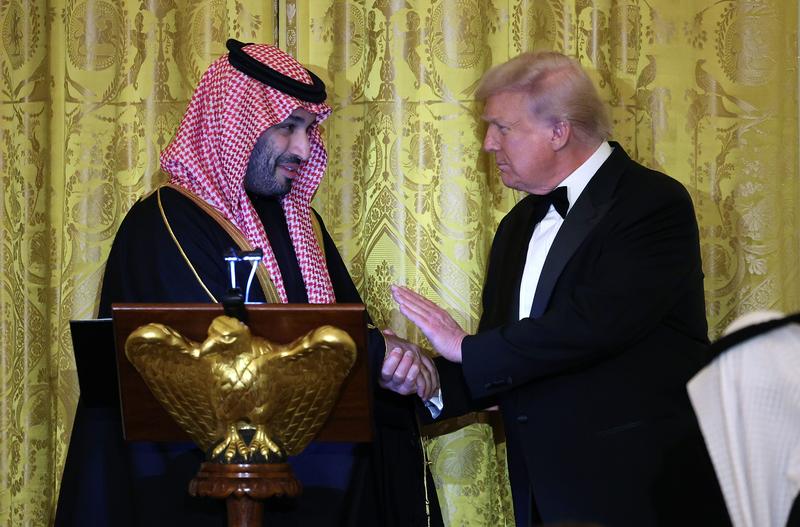
( Win McNamee / Getty Images )
Title: Thursday Morning Politics: President Trump's Week
[MUSIC]
Amina Srna: Foreign. It's The Brian Lehrer Show on WNYC. I'm Amina Srna, a producer for The Brian Lehrer Show, filling in for Brian today. Good morning, everyone.
Coming up on today's show, we'll talk to an emergency physician who is also a health equity advocate about the fight over the Affordable Care Act subsidies and how they're going to have real effects on people's access to healthcare. Plus, what's going on with the school bus system here in the city? Parents and students say they deal with terrible service, like a bus that never comes or students spending actual hours on the bus for shortish trips. The city and school bus operators are in a contract dispute. WNYC and Gothamist reporter Jessica Gould will explain where that stands and whether families might see improved bus service anytime soon.
We'll wrap today's show with a conversation with the CEO of Citymeals on Wheels, which provides food to homebound seniors. Thanksgiving is just a week away, and the holiday season is a busy time for food assistance organizations. We'll ask her how you can help check in on your elderly neighbors and get them the help if they need it.
First, Congress has overwhelmingly passed a bill requiring the Justice Department to release its files on convicted sex offender Jeffrey Epstein. Last night, President Donald Trump signed it into law, but it's unclear when or whether the public will see those files in whole or even in part. That's because baked into the bill are several exceptions that could prevent a full release. For one, Attorney General Pam Bondi is allowed to withhold or redact information that "would jeopardize an active federal investigation or ongoing prosecution." Since Friday, at the behest of Trump, Bondi has opened an investigation into top Democrats on connections to Epstein.
This month marks a decade since President Trump has been in office, with a seemingly firm grip on the Republican Party despite being out of office for four of those years. Within this past week, Trump is reversing several long-held stances and even some policies. This includes signing an executive order to lift his tariffs on certain products, including coffee, bananas, and orange juice, and seemingly advocating for foreign workers.
Joining us now to explain those reversals and whether they will impact Trump's approval among his supporters is Philip Bump, MS NOW contributor, the author of How To Read This Chart newsletter, former national columnist for The Washington Post, and the author of The Aftermath: The Last Days of the Baby Boom and the Future of Power in America. Philip, welcome back to WNYC.
Philip Bump: Very happy to be here. Thank you.
Amina Srna: Yesterday at an unrelated press conference, Attorney General Pam Bondi was asked about why she opened up an investigation into top Democrats on connections to Epstein, as I was mentioning in the intro. Let's take a listen to a 22-second clip.
Attorney General Pam Bondi: There's information that-- new information, additional information, and again, we will continue to follow the law to investigate any leads. If there are any victims, we encourage all victims to come forward, and we will continue to provide maximum transparency under the law.
Amina Srna: All right, Philip. Just for a bit of context, the reporter there asked Bondi about how, back in July, she said the investigations into the Epstein files were concluded. Philip, what has changed?
Philip Bump: I think that's the central inconsistency here. What has changed is that there was a request to subpoena that was driven by Democrats in the House to ask Jeffrey Epstein's estate for any material they might have. The Epstein estate provided these documents, the ones that were released a week or two now ago. The ones that included all the new emails that we hadn't seen before. Jeffrey Epstein talking about Donald Trump, Jeffrey Epstein in communication with people like Larry Summers, and things along those lines. All of those things were newly obtained by the House. It's not clear that they were newly obtained by the government.
Obviously, the government had been investigating Epstein for quite some time. It seems pretty likely that they already had copies of Jeffrey Epstein's email accounts. Given that they're doing this investigation, I'm sure they subpoenaed them as well. It's not as though he had emails printed out on his desk that were at his house that no one else had seen. That's not how emails work.
I think that it's pretty obvious that the odds are high that Pam Bondi is simply starting this investigation after having said there was nothing more to investigate back when she was probably, safe to assume, trying to shield Donald Trump. That this reversal has come now, both because Donald Trump pressured her to open these investigations, and because it does provide this fig leaf that now they can say, "Well, we can't release everything because some of this stuff is still part of an active investigation."
We're probably going to get to this, so I'm sorry if I'm getting ahead of you a little bit, but I think fundamentally this is the real problem, is that there's no reason we should be confident that they're acting in good faith. That they've already eliminated so much of the trust that we would normally assign to federal law enforcement and to the president of the United States simply by virtue of everything they've done, essentially, that it's hard to assume like, okay, no, I'm going to take Pam Bondi at her word that this is new information to them and she's doing a good faith investigation. There's simply no reason for us to assume that's the case.
Amina Srna: Listeners, we'll open up the phones for you. How is this news on the Epstein files playing out in your circles? If you're a Trump supporter or know a Trump supporter, is the party fracturing over this divide, or does the president signing the bill to release the files garner more support? We'll also get into Crown Prince Mohammed bin Salman of Saudi Arabia's visit to Washington and what Saudi Arabia got from the United States, as well as Philip's reporting on food prices and how, despite what the president is saying, they are not down. Give us a call now at 212-433-WNYC. That's 212-433-9692. You can also text that number.
Philip, you have reported on the polling on the Epstein files in particular. What does it show about Trump supporters and what they specifically want to see regarding the documents?
Philip Bump: It's pretty consistent across the board that Americans are eager to see the documents. In part, I think, not necessarily because they think there's something juicy in there, although there very well may, but because they think that it's a measure of accountability that is necessary. We have seen polling consistently show that Americans, including Democrats and independents and including often a plurality of Republicans, think that these files should be released, and that Donald Trump's handling of the situation to date has been poor, that he has not done a good job of addressing this.
It's been a real fissure within the GOP, or at least it had been up until the point of this bill being passed, which we'll see what the effects of it are. That Republicans generally think Donald Trump is doing a good job as president, but really thought he was not doing a good job on his handling of Epstein. That provided a lot of space for a lot of Republicans on Capitol Hill to go sideways on Trump. This is ultimately the reason why he said, "Go ahead and vote for the bill," because he didn't have a choice. He knew that he was going to have all these defections. He's done this before. There have been times when someone he endorsed, for example, is about to lose the race, and he switches his endorsement.
He tries to maintain this idea that he is the driver here, but it's very clear he was not the driver on Epstein, and in fact was instead the person pumping the brakes, to belabor that metaphor a little bit. That was because, in part, so much time had been spent prior to his coming back into office for his second term by the right insisting there was something devious and nefarious in the Epstein files that needed to be released. There's all this groundwork that had been done to prep the right and Republicans to say the Epstein file was very important. Then Donald Trump gets into office, doesn't really want to release them, and it puts him at odds with his base, and so ultimately he has to capitulate to his base.
Amina Srna: You mentioned the fissure in the Republican Party, and I just want to pause on that just for a moment in case some listeners have missed that story. Trump is also losing support, or was losing support, over the Epstein files from three otherwise very loyal allies — Republican Representatives Lauren Boebert from Colorado and Nancy Mace from South Carolina. Trump wanted them to rescind their support to release the Epstein files, but they refused. Representative Marjorie Taylor Greene has been making the media rounds to press the release, while also sharing how the president's ire towards her precipitated a lot of vitriol from his supporters.
Can you just briefly break down the pressure campaign against Boebert and Mace, or anything you want to add about Marjorie Taylor Greene's media tour from over the weekend?
Philip Bump: Sure. It's interesting because I'm not sure that the pressure extended too much further than Donald Trump and his allies trying to lean on these folks. There was this report about how Lauren Boebert was called into the White House complex and brought into the Situation Room, where she was asked to change her vote. Just so people understand, there was this initial vote on what's called a discharge petition, which is basically if House leadership doesn't want to bring a bill to the floor, if a majority of members of the House say, "No, we want to bring this thing to a vote," then it has to come to a vote. That's called a discharge petition.
That was the original driver of getting this thing to a vote in the first place, and then it came to this floor vote. The discharge petition passed, and then they came to the floor vote, which was nearly unanimous after Trump capitulated. They've been putting pressure on Boebert, Mace, and others to try and withdraw their support for the discharge petition. It was fascinating to watch because Mace, for example, is someone who wants to be the governor of South Carolina. She's going to be running in the Republican Party primary. Normally, that would mean that legislators would not go crosswinds with Donald Trump because Donald Trump is someone who can help people win Republican Party primaries.
Mace took the stand that she was going to stick to her guns and not do what Donald Trump wanted to do, and ended up winning on this fight. Lauren Boebert ended up not flipping and not changing her position. Marjorie Taylor Greene is somewhat different, both because she has a higher profile than do Boebert or Mace, but also because there are all these rumblings and reports about how she had sought an endorsement from Donald Trump or that she had sought his blessing to potentially run for Senate in Georgia. That he declined to offer that.
There's some potential other political bitterness between the two of them. It's been a much more public and bitter fight that I think probably extends beyond just the Epstein thing. The fundamental issue here is that Donald Trump tried to leverage what power he had on this to get people to change their minds, and was completely ineffective at doing so.
Amina Srna: A listener texts, "Forget the sex, follow the money. Good chance that Epstein, besides a financial advisor, was a major money launderer, and that's what the White House fears." Another wrinkle to this story, I believe, Attorney General Pam Bondi will be expected to at least release those files in the next 30 days. Is that correct?
Philip Bump: Well, yes. As you noted, there are stipulations within the document about what can be released and when. It seems pretty obvious. Look, I may be wrong here. Maybe they do just dump all the files, which, honestly, they should have done at the outset. Just whatever they have, throw it out there and rip off the band-aid. Now they've paused for so long in doing so and insisted there was nothing to do that I doubt they're going to do that. They have created all these exceptions, which are very rational exceptions.
If you have a bunch of documents that are related to a criminal investigation and you are a good-faith actor, you may not want to release those documents because you don't want to tip your hand on your investigation. Of course, if the investigation is contrived and exists solely as a vehicle to prevent the documents from being released, then it's a whole different issue. I do think there are probably going to be some efforts to restrict what is released, which will just put the White House back in the same pickle that it was in a week ago, or they release as much as they possibly can and do so in good faith.
Even then, they aren't trusted to have done it completely and in good faith because they have totally immolated that trust. They're really in an ongoing bind here, and I'm not sure if there's any resolution to it besides the news cycle moving on to something else.
Amina Srna: All right, let's move on. On Tuesday, Trump welcomed Crown Prince Mohammed bin Salman of Saudi Arabia, also known as MBS, to the White House for the first time since 2018. For listeners who aren't following this story, there was a lot of fanfare over the prince's visit, at least on the part of the White House. Can you tell us about the visit and why MBS was here?
Philip Bump: Yes. The crown prince was here because he and Donald Trump have a close relationship. That he has been working with the Trump administration and working with Trump even when Trump was not president. Trump had, for example, hosted this tournament run by the golf organization called LIV, which is funded primarily by the sovereign wealth fund of Saudi Arabia, which the crown prince enjoys. They have long-standing ties back and forth, and they have a close relationship.
The crown prince was here because they had reached a new agreement with the Trump administration, Saudi Arabia had, that they were going to be a favorite partner of the United States. That Trump had decided to sell them a particular type of fighter jet, over some warnings that this might mean that those jets would then be accessible by China. There were some concerns about doing so, and then there were a series of events.
Look. Full disclosure, I used to work at The Washington Post. I worked at The Washington Post when Jamal Khashoggi was murdered at the hands of MBS's henchmen at an embassy in Turkey. I have strong feelings about the extent to which he ought to be welcomed by an American president in the White House, but this was the predicate for his being here this week.
Amina Srna: I was going to mention that. We did pull the clips of an ABC reporter in the White House yesterday, asking MBS and Trump very directly about the killing of Washington Post columnist Jamal Khashoggi. Let's take a listen first to Trump, who-- He intercepted the question that was directed at MBS on Khashoggi. Here it is.
President Trump: As far as this gentleman is concerned, he's done a phenomenal job. You're mentioning somebody that was extremely controversial. A lot of people didn't like that gentleman that you're talking about. Whether you like him or didn't like him, things happen, but he knew nothing about it, and we can leave it at that. You don't have to embarrass our guest by asking a question like that.
Amina Srna: Here's MBS's response.
Mohammed bin Salman: About the journalist, it's really painful to hear anyone that been losing his life for no real purpose or not in a legal way, and it's been painful for us in Saudi Arabia. We've did all the right steps of investigation, et cetera, in Saudi Arabia, and we've improved our system to be sure that nothing happened like that. It's painful and it's a huge mistake, and we are doing our best that this doesn't happen again.
Amina Srna: Philip, I recognize that Khashoggi was a colleague of yours at The Washington Post at the time of his murder, so as you said, this brings up a lot of feelings. What stands out to you in that exchange?
Philip Bump: It's striking that obviously the president himself-- Look, one can assess MBS's assertions on the merits. The CIA, during the first Trump administration, determined that MBS was primarily responsible. This is, the crown prince was primarily responsible for Khashoggi's death. If you're asking someone who's accused of murder whether or not he committed a murder, yes, he's probably going to say that he did not do so. Fine. One can take that as what it is.
The president, though, saying that essentially Khashoggi had sort of merited being murdered because he was controversial is a gross thing for anyone to say, much less the president of the United States, who is someone who's supposed to be a champion of the constitution and of the free press. Donald Trump has long been hostile to the press and long been obnoxious towards the press. It's, in party shtick, in part, I think, something he actually feels. People may remember when he was first running for president in 2016, that he was asked about how Vladimir Putin had this track record of having journalists murdered, and Donald Trump waved it off. This was a conversation on MSNBC, I remember, at the time.
Donald Trump waved it off, and everyone was aghast, like, how can you wave off the murder of a journalist? It's because Donald Trump doesn't really care, and he doesn't really care about freedom of the press, fairly obviously. That's reflected here, that he has a friendship with the Crown Prince of Saudi Arabia, and he finds it rude for a reporter to ask about the crown prince's role in the murder of an American journalist. Donald Trump doesn't want to hear that, and so he responded in a way that I think is-- I would be disappointed if my kids were to say something like that, much less the President.
Amina Srna: You had started to talk a bit about what Saudi Arabia gained in this visit. Here's a little bit more from The Washington Post. MBS returns home with permission to purchase 48 advanced F-35 fighter jets that many in the Pentagon and Israel do not trust him to have, as well as nearly 300 Abrams tanks. Trump also conferred "major non-NATO ally status" on Saudi Arabia and agreed to provide it with "world-leading artificial intelligence technology." What did the United States get in return?
Philip Bump: That's exactly the question. That is the right question. I'm not sure there's a great answer to that. Certainly, it is the case that Donald Trump got to cozy up to MBS more than he had been, which I guess is of value to him. We are able to sell some fighter jets, which may bring some revenue into the manufacturers of those, but I don't know. I don't know what the answer to that question is. I think that we have seen lots of occurrences over the course of the past 10 years in which Donald Trump has made decisions that are of personal benefit.
There are all sorts of relationships that he has with Saudi Arabia. That there's a new development project that his private organization is working on there. I don't know what the answer to that question is, very frankly. I'm not a national security reporter, so maybe there's something that people are aware of that I'm not, but I can't answer that with a clear response.
Amina Srna: I think it is a little bit unclear. According to the recent reporting, the Saudis evidently committed to invest "$1 trillion in the US," but they did not--
Philip Bump: Oh, right. Sure, yes.
Amina Srna: I think analysts say that it's going to be pretty difficult to achieve, given the fact that Saudi Arabia has made some shaky investments, also lower oil prices. If you want to weigh in on that, you can, but I think in general--
Philip Bump: No, I do. For two reasons. The first is that I believe the GDP of Saudi Arabia is something like 1.3 trillion. This is essentially they're saying they're going to commit 1 of 1.3 trillion to the United States. Seems unlikely. Also, that this was bumped up from, I believe, 600 billion to 1 trillion in the room after Donald Trump publicly said, "I think we can get up to 1 trillion." We have had all sorts of these commitments from foreign actors that have been related through Donald Trump that have not necessarily come to fruition.
In fact, in his first term, there was a commitment that was made by Saudi Arabia to buy a bunch of military equipment to the tune of something like $100 billion that The Washington Post tracked over time, and it just was vaporware. It just did not occur. We've seen these sorts of commitments before, including from Saudi Arabia, come to nothing, but Donald Trump likes to talk about these trillions of dollars that he's brought in through the deals that he's made. He's talked at times about having brought a $20 trillion investment in the United States, which does not exist, has not been manifested.
Perhaps it will someday. I think it's safe to assume that it probably won't. This appears to be one of those commitments.
Amina Srna: We have to take a quick break. When we come back, we will switch gears and talk about Trump's seeming about-face on H-1B visas and foreign workers. Stay with us.
[MUSIC]
Amina Srna: It's The Brian Lehrer Show on WNYC. I'm Amina Srna, filling in for Brian today. My guest is Philip Bump, MS NOW contributor, author of the How To Read This Chart newsletter, former national columnist for The Washington Post, and author of The Aftermath: The Last Days of the Baby Boom and the Future of Power in America.
Philip, yesterday was a busy day. After that meeting at the White House, Trump gave a speech at the US-Saudi Arabia Investment Forum yesterday, where he addressed foreign investments in the country. What stood out to a lot of people is a seeming reversal on his stance against foreign workers, specifically the importance of H-1B visa holders in the development of domestic semiconductor chip foundries. Let's take a listen.
President Trump: I'm going to welcome those people. I love my conservative friends, I love MAGA, but this is MAGA. Those people are going to teach our people how to make computer chips. In a short period of time, our people are going to be doing great, and those people can go home where they probably always want to be.
Amina Srna: Seems like Trump is getting out ahead of maybe some criticism he anticipates. Philip, can you just explain a little bit the context of that clip and that speech?
Philip Bump: Sure. It's fascinating. Obviously, the sort of chips we're talking about were invented in the United States. It's not as though there are not people in the United States who didn't know how to make those chips. There are, however, a lot of chips that are manufactured overseas, particularly in Taiwan. This issue of bringing in immigrants on specific visas, high-skilled visas, to do work is something that really was roiling the right about a week ago, after Donald Trump was interviewed by Laura Ingraham on Fox News, and Laura Ingraham pressed him on this.
Laura Ingraham is very much an immigration hardliner. She represents a faction of the right that advocates for very, very tightly restricted immigration, and she pressed him on this question. The Trump organization itself has often used immigrant visas to bring people in. Not these types of visas necessarily, but has had a lot of immigrants to come in and work, for example, doing hospitality work at Mar-a-Lago and things along those lines. Ingraham pressed him on this and asked about this. Donald Trump said explicitly that we needed to bring these immigrants in because we didn't have Americans that were talented enough to do it. Ingraham was incensed about that, and so were a lot of people that were tuning in.
This is striking because it's Donald Trump again going against his core base by embracing this issue. I think that it is a reflection of how close he's gotten to the tech industry. That the tech industry is very reliant upon these types of visas and these types of workers, and advocates strongly for them to be made available, if not expanded. He's been very close to tech during his second term. Very involved in cryptocurrency, very involved in advocating for AI, and so on and so forth. I think they have his ear on this more than his base.
Now his base is splintered. It's not the case that everyone in his base is opposed to every form of immigration, but obviously, immigration is a central issue for his base, and it's hard to square the circle if you're Donald Trump. Why are immigrants bad when they're coming in to do construction work, but good when they're coming in to do chip-making? The only obvious answer to that is that chip-making, the people who run the places that use those chips, are the people who are donating to his big ballroom, whereas the people who make the houses potentially are not.
Amina Srna: A listener texts, "When Japan invested billions in the US in the 1980s, people were concerned about foreign ownership. Is that concern gone?" I wonder, Philip, is that a concern at all for his base? Does the polling suggest that it might be?
Philip Bump: Yes. Foreign ownership is still a big issue, I think, for a lot of Americans, not just his base. We see this, for example, manifested when there was recently a sort of alarm that arose over the extent to which China or Chinese actors owned farmland in the United States. We do see these sorts of concerns. There was a push for years for the United States to be more hospitable, to have foreign companies come in and build factories here. We saw Honda building factories in the South. We've seen a lot of foreign companies that have built facilities in the United States.
While those things are meant to offset some of the buy American rhetoric that we've heard for quite some time now, Donald Trump is also stepping on that. You saw this big raid of plants owned by a South Korean company earlier this year.
Amina Srna: The Hyundai plant, right?
Philip Bump: Yes, exactly.
Amina Srna: In Georgia.
Philip Bump: Right, in which all these people were detained or arrested. It caused a huge furore in South Korea and really made, I think, probably a lot of foreign companies wary of doing the sort of investment that had become de rigueur when they were trying to show, "Hey, look, we're making good faith effort to hire Americans and be involved in the American market as you treat them as a customer base." All these ways in which Donald Trump's rhetoric on immigration often works across purposes.
Amina Srna: Listeners, we can take a few more of your calls and texts on this topic or any of the news from the past week. Politics news, I guess I should say the 180 in several of policies coming from the Trump administration and stances. 212-433-WNYC. That's 212-433-9692, and you can also text that number.
On Monday, Trump made public remarks at a meeting of McDonald's executives and franchise owners, saying that the cost of food was down. You report that his information likely came from two sources. He said he had a private meeting with a McDonald's official who told him prices "were up 40% because of Biden and inflation, and they're coming down and they're coming down rapidly." That's Trump. Then there was a Walmart report saying that Thanksgiving this year is cheaper than last year. Do you want to take that one by one and fact-check both those claims for us?
Philip Bump: Sure. The first point about his purported conversation with the McDonald's executive, Donald Trump will often talk about conversations he had with people that those people don't later confirm. He claims that he was told that he was thanked by this executive for food prices coming down. Food prices have not come down. Food prices have continued to rise, including fast food. When I was at The Washington Post, I helped build this tool that tracks food prices over time. It's still alive and with updated information. The price of a fast-food meal has gone up over the course of the year.
In fact, if you continued the trend line from early 2024 into now, it's about where it would have been anyway. Donald Trump has had no apparent effect on bringing those prices down. Luckily for him, some of the effects of his policies have not dampened or risen those prices higher. For example, curtailing beef imports and adding tariffs to beef products. A pound of ground beef is 14% higher now than it was at the beginning of the year. That has had an effect to some McDonald's franchises.
McDonald's, over the course of the year, has reported slowing growth, particularly from lower-income customers, who are now skipping breakfast. They have put together some value meals to try and get more people into their stores, but they've really been hurt by both rising prices and the slower economy. You note that Donald Trump cited this information from Walmart. Walmart says that a Thanksgiving meal is 25% cheaper than it was last year, but they've changed substantially what they include in that meal. There are fewer items in the meal than they included last year, and they're using more generic brands than they did last year, which is a core aspect of why those prices are down.
Prices are up. People understand prices are up. McDonald's understands prices are up. Not only that, but McDonald's understands that the slower economy, which is in part because of the tariffs that Donald Trump has imposed, that that's hurting their bottom line too. That it doesn't matter if the prices are the same if people have less money or are generally worried about what they're spending everywhere else as well. They're not going to stop and get McDonald's breakfast when they can get something at home if they're that worried about prices, because everything is more expensive, or because they've lost their jobs, or because they're concerned about where the economy is headed.
All of these things combine to really paint a picture. Donald Trump is trying to tell these McDonald's executives and franchisees, to whom he was speaking on Monday. He's trying to tell them, "Look, I've been so good for you." It's really hard to contrast that with his actual record and the actual state of the economy.
Amina Srna: A listener texts us, I believe, a picture — I can't open it on my end, listener — of a bag of lettuce for $9, a product of the United States, signaling maybe this isn't obviously something that is grown here, but Trump reverses stance on some foodums that can't be grown in the United States. Can we anticipate those reversals having an impact anytime soon, either on domestic or foreign products?
Philip Bump: Yes. It seems likely the administration's been caught flat-footed on this. They have insisted for a long time that their tariffs are not being paid by Americans, and that all they're doing is bringing products into the United States. It has been constantly pointed out that there are things like bananas and coffee, which we don't grow in the United States. We don't have a lot of places where it possibly could grow, especially at scale, and so the price of coffee is up. What is the administration doing? They are reversing some of their tariffs on that, on beef, on bananas, in an effort to bring those prices back down, which, of course, is a tacit admission that the tariffs help drive those prices up.
The administration is trying to do what it can to undo some of the damage that was done by the administration, which I think is important context. They are trying to gloss over the fact that they're hoping to fix a problem that they largely caused.
Amina Srna: Philip, as happens a lot in these Thursday morning politics roundups, we have listeners who will call in on many of the different things that we have talked about today.
Philip Bump: Sure.
Amina Srna: Briefly going back to the Epstein files, we have Mark in Clifton, New Jersey. Hi, Mark. You're on WNYC.
Mark: Hi, good morning.
Amina Srna: Good morning.
Mark: My feeling about it is I feel like it's a sick joke going around and around and around again. Is this going to be the time? Is this the thing that's going to fracture the Republicans once and for all and turn them to the side of nonpartisan justice, and finally, Trump's going to have to see some accountability for what he does? Absolutely not. The loophole of the "ongoing investigation" which is conveniently just about Democrats and which was ordered directly from the president to Pam Bondi, is going to be the reason that they can't open it up and can't go public, or whatever reason they come up with.
He will see no accountability for this, as has always been the case for however many years now we're dealing with this. Every time it becomes a news story also, this is going to be the time. This is the one, this is the thing. It's not. That's all I have to say about it.
Amina Srna: Mark-- Sorry. Go ahead, Philip.
Philip Bump: I'm sorry. Go ahead.
Amina Srna: Thank you for calling, Mark.
Philip Bump: Yes, thank you. I have two thoughts on that. Absolutely, one would be justified in thinking that, no, this is Donald Trump's base of sports knocking the road underneath him. That's totally fair. It's been 10 years. It hasn't happened. I think there are two things that are different here. The first is that the Epstein files are not like his tax returns. He did the same thing on his tax returns. He always said, "Oh, I can't release my tax returns because there's an audit going on, and my lawyers say you can't do it." His base didn't care because his base didn't care about the tax returns. They didn't care about what those tax returns said, so they didn't get mad about it.
The Epstein files are different. His base does care about the Epstein files. His base does think he should handle it differently and does think that he should release what he can. I don't know that they're going to be satisfied, because he looks so evasive on this, with what may be produced, if something less than what seems like the full documentation is produced. There's that aspect of it. The other aspect of it that I think is really important is that Donald Trump is a lame duck. He was a lame duck as soon as he came into office, but he's becoming increasingly a lame duck. We are seeing Republicans start to go sideways on him in a way that reflects that status.
They know he's not going to be on the ballot again. They know that next year's midterms are going to be tough for their party, and we're going to start seeing people starting to peel away at his power. We're already starting to see this, and I wrote about this for MS NOW. It's up on their website. We're starting to see people start to peel away his power and start to try and figure out what section of the Trump base they can use for themselves once Donald Trump is out of the White House. We're seeing that jockeying happening already. That's part of what Marjorie Taylor Greene has been doing, and she's been going on doing this.
That means that there's a lot of impetus for Republicans who normally would have stood with Trump and helped assuage the concerns of his base on things like the Epstein files. There's now an impetus for them to go out and say, actually, this is still a question. To pull on Nancy Mace or to pull on MTG, or to be one of those others out there in the world that is saying things that aren't exactly what Donald Trump wants to hear, because they understand that is what the base wants to hear. This is an issue in particular where it's going to be easy to drive a wedge between Donald Trump and his base. That provides an opportunity as Donald Trump's power continues to wane.
Amina Srna: To that point, it's broadly reported and understood in the media that many people who voted for Trump, whether they were Republicans or not, voted on kitchen table issues. I think the price of food certainly falls under that umbrella. One listener text says frozen turkey breast is two times one year ago. To your reporting, is that moving the needle at all in terms of polling data?
Philip Bump: Yes, absolutely. We've seen polling repeatedly suggest that a central part of why Donald Trump's approval rating has dropped is this question of prices and inflation and concerns about the economy. There are a lot of people, particularly on the left, who feel as though Donald Trump's actions on immigration, his efforts to erode the federal government, and to combat democracy, that all those things should be a reason why his approval ratings are down. It seems safe to assume, based on the poll numbers, that the central factor is that he did not do what he said he was going to do, which he couldn't do. I mean, he was never able to do it.
He made this promise he's going to bring prices down, and he hasn't been able to do it because that's not really within his ability to do, and people are noticing. In fact, his tariffs have driven a number of prices up. That is a real political problem for him, and it's a real political problem for his party. He has started in recent weeks making overtures about how affordability is the watchword. That's not his phrasing, but how Republicans are the party of affordability and so on and so forth.
It's also hard to see that while he's tearing down a third of the White House and building a huge luxurious ballroom, having fancy dinners for MBS, and having parties in Mar-a-Lago that are themed with the Roaring Twenties. There are all these manifestations of wealth that he enjoys and earn brand for him that does not comport with these affordability messages he's trying to press. I think that also puts him in a difficult position.
Amina Srna: Citing a YouGov polling from this year since February, you write about how, among Republicans, the approval rating has dropped more subtly from 91% to 86%. You write, "People rarely go from strong support to strong opposition." As we wrap up for today, what do you want listeners to take away from the polling data?
Philip Bump: I think one thing in that piece, what people ought to look at, is the fact that the number of people who said they strongly approve of Donald Trump has dropped, while the number who say they somewhat approve has risen. His support, even though the top line is his approval is about the same, underneath that, you see that that support has softened. My point is, you don't generally go from loving something to instantly hating it. You go from loving something to being apathetic about it and then potentially disliking it.
I don't think they're going to start disliking Trump, but if they start becoming, "I sort of like what he's doing," again, that's happening in a moment when a lot of other people are going to be jockeying for that power that exists on the right. There are going to be a lot of people saying, "We understand you're concerned about how Donald Trump is addressing X. Why don't you join our coalition, which focuses on X, and we will get this job done?" There's going to be a lot more of that, particularly as the midterms approach, and then in the last two years of his presidency.
Amina Srna: Philip Bump is a contributor to MS NOW, author of How To Read This Chart newsletter, and the author of The Aftermath: The Last Days of the Baby Boom and the Future of Power in America. Philip, thanks so much for coming on.
Philip Bump: Of course. Thank you.
Copyright © 2025 New York Public Radio. All rights reserved. Visit our website terms of use at www.wnyc.org for further information.
New York Public Radio transcripts are created on a rush deadline, often by contractors. This text may not be in its final form and may be updated or revised in the future. Accuracy and availability may vary. The authoritative record of New York Public Radio’s programming is the audio record.
