
The Texas Senate Race and Its National Impact
Title: The Texas Senate Race and Its National Impact [music]
Brian Lehrer: It's the Brian Lehrer Show on WNYC. Good morning, everyone. On today's show, we'll look at Mayor Mamdani's first annual budget proposal. Budget, of course, is policy, right? How much will New York City, or any place, spend on education, housing, law enforcement, childcare, and more? Who will pay how much in taxes to fund those spending and policy goals?
In Mamdani's case, you probably already know some of the prelude to this. He campaigned on fostering more equality in the city through universal childcare, free city buses, new housing programs, and more. Also on taxing, the wealthiest corporations and people with million-dollar-a-year personal incomes several percentage points more to help pay for those things.
He inherited a multi-billion-dollar budget deficit for the coming fiscal year that, by law, he will have to close before adding anything new by raising revenue, dipping into the city's reserves, or finding savings in existing programs. What is the new mayor prioritize? Is it much different from past mayors? Why is he suddenly talking about the possibility of a property tax increase? That's not the tax-the-rich proposal from his campaign. That's coming up later this hour.
We'll continue our annual series today with the directors of the five documentaries nominated for the Oscar for Best Feature-Length documentary. Nothing wrong with talking about the great actors, and other great artists connected to the entertainment films that are nominated, but we've carved out a lane here on this show for a number of years now as a public radio show to talk about and hear clips from the nominated documentaries. We have the second of those five in our series for this year coming up, too, but we start here.
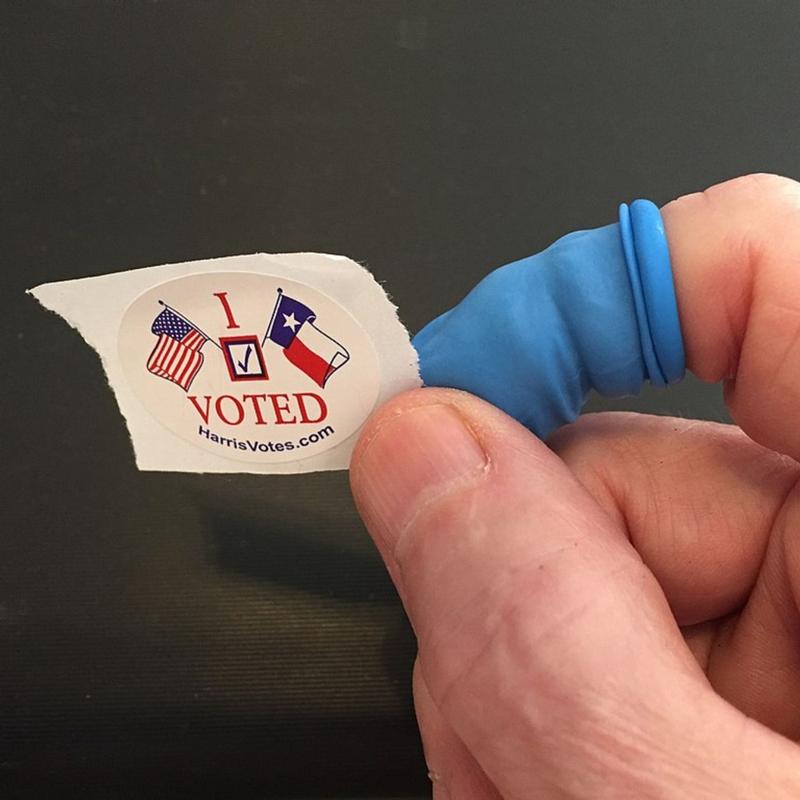
The midterm elections aren't just coming anymore. They are now officially here. Early voting has begun in one of the most interesting and most contested Senate primaries in the country. Maybe you already know, it's the Democratic and Republican primaries in Texas, of all places. The underlying question might this be the year that Democrats actually flip a Senate seat in what used to be considered the deep red Lone Star state? Will that matter to who controls Congress for the second half of President Trump's term, which of course matters a lot.
On the Republican side, Senator John Cornyn, a 23-year incumbent who was seen as a strong contender to replace Mitch McConnell as the Senate's GOP leader in 2024. Remember that he almost became the Senate majority leader now fighting for his political life against Ken Paxton, who is currently the state's attorney general, and also against one of the first Black Republicans to represent Texas in the House of Representatives, Wesley Hunt. We may have reached a point where John Cornyn isn't Republican enough as the party's base moves right.
On the Democratic side, two rising stars of the party, Congresswoman Jasmine Crockett and Texas Representative James Talarico, are attempting to avoid alienating each other's supporters, you might say, in an increasingly messy race. If you've heard anything about the Texas Senate race, as early voting began this week, it was probably that Democrat Talarico taped an interview with Stephen Colbert, but it did not air on television with CBS citing new pressures from the Trump administration's FCC, the Federal Communications Commission. It may, however, be a classic case of banning something. This has happened with books, as you probably know, banning something causing even more love and attention to it as views for the segment have exploded on YouTube, where they could show the segment because YouTube is not regulated by the FCC. Here's a clip of Talarico on Colbert addressing the CBS blackout directly.
James Talarico: I think that Donald Trump is worried that we're about to flip Texas.
[cheers]
James Talarico: Stephen, this is the party that ran against Cancel Culture, and now they're trying to control what we watch.
Brian Lehrer: We'll dig deeper into that media angle in a few minutes with Washington Post media reporter Scott Nover. First, the race itself. With me now is J. David Goodman, Texas Bureau Chief for the New York Times. Hi, David. Welcome to WNYC.
David Goodman: Thanks for having me.
Brian Lehrer: I remember when the late Texas columnist Molly Ivins used to get a laugh by calling your paper The New York City Times. Thanks for having a foot in each of these two worlds for us.
David Goodman: Sure, of course.
Brian Lehrer: Listeners, if you are in, or have ties to Texas, chime in here yourselves or ask a question. What's your take on the Senate race there this year with early voting now underway in the Democratic and Republican primaries? Or ask a question to our guest, David Goodman, Texas Bureau Chief from The New York City Times. 212433 WNYC, Call or text 212-433-9692. All right, David, the Republicans first. Senator Cornyn, as I said a 23-year incumbent, an institutional figure in Texas politics. Why is he suddenly in a vulnerable position?
David Goodman: Well, John Cornyn has been someone that a part of the Republican Party in Texas has always felt like was a little too cozy with Democrats, a little too centrist. This is going back years now, and he really hasn't faced, though, despite all that, much of a challenge. He hasn't run for reelection in many years. He's really an institution in Texas. Beyond the 23 years in the Senate, his time in office really dates back to the '80s and '90s. He was attorney general before going into the Senate. He's this person that's been part of Texas politics forever, and really represents kind of old model for what a Texas Republican was, someone who both was staunchly conservative, but also willing to work with Democrats when there were opportunities to do so.
That really comes from his experience at a time when Democrats did control parts of the Texas government. This is a long time ago, of course, but that's still part of his political biography. It's important to understand that aspect of his character that he really sees himself as holding some portion of the middle. Now, he's tacked to the right in this election, but he's been attacked by more hardline Conservatives and Republicans for those stances over the years.
On the other side, not to jump ahead, Ken Paxton represents this other strain that's been rising in the Republican Party in Texas for many years now. This is the Republicans that are more comfortable, and have more experience fighting with themselves that they've only ever been in Texas when Republicans have dominated politics, have controlled all the offices, and where the primary has been the only race that mattered. That's been true in Texas for a long time. Ken Paxton comes out of that part of the party. He's been really fighting Republicans his entire career. He made a splash early on in the Texas legislature by challenging the speaker. He lost that race, but he lost and moved up over time.
This clash between the two of them has been a long time in the making, and so we're seeing really two parts of the party. Part of the reason why it's been so bitter is that these two parts of the party have been eyeing each other for decades, and not really very kindly.
Brian Lehrer: I see that the ad spending is staggering, nearly $93 million total, the second most expensive Senate primary ever, with most of it on the Cornyn side. From what I read, Cornyn's allies have spent close to $60 million of those $93 million, and he's still trailing Ken Paxton in some polls. What does that tell us?
David Goodman: Yes, that's what's been amazing about this race, is that they've really dumped the Cornyn folks in his Cornyn's campaign. Then his supporters have dumped tens of millions of dollars on Ken Paxton, and it really hasn't moved the needle much. I think they would argue that it's gotten the race much closer to a margin where they believe they can win it. Ken Paxton, when he jumped into the race last year, he came in a double-digit favorite, and he's maintained his lead throughout despite the fact that Cornyn has been spending this money. Ken Paxton's really stayed off the air. It's amazing to have a candidate really walking into this primary without having done much campaigning. He started to campaign this week, but he really hasn't been going around doing too much and hasn't been spending much on the air. He's content to watch Cornyn and his allies flail around trying to see if anything will stick against him.
Brian Lehrer: Well, tell us more about Ken Paxton and his political life. As I said, he's currently the state's attorney general, but he's been plagued by political and personal scandals, hasn't he?
David Goodman: That's right. He's really survived a decade of these kinds of scandals. He was indicted for a securities fraud back when he was in the state Senate, right before he got elected attorney general in the state court. That charge followed him for a while. He was then impeached by the Texas House, and later acquitted by the Texas Senate for alleged corruption having to do with a real estate developer in Austin, and some favors that that developer did for him, and part of that was helping to conceal an extramarital affair. Like I said, he survived the impeachment in the state Senate. They acquitted him, and he later had the state charges dropped against him. There was also a federal and FBI investigation that tracked some of the same impeachment charges. That investigation was also dropped.
More recently, his wife has filed for divorce against him, citing what she called biblical reasons, referring to an extramarital affair. Yet he still survived all of this. All these things seem to bounce off him much in the way that they have President Trump. He's very much an ally of President Trump. He has support from the same part of the party's base. All these things, part of the reason why John Cornyn's had trouble running against him is that so much about his corruption, or alleged corruption, I should say, so much about his history is known to voters in Texas. The Republican primary voters, anyway, have been willing to look past that and elect him to higher office.
Brian Lehrer: I guess you've just answered this question, but a listener texts, "Why didn't Paxton's criminality," as the listener frames it, "cause him political harm?"
David Goodman: I think we can look at the time when he is rising up in politics. These criminal charges come around 2015, and in 2016, you have the first election of President Trump, and so he's really running in parallel with the kind of changing culture, especially in the Republican Party, that's grown much more tolerant of certain kinds of behavior, and much more skeptical of law enforcement, and willing to see some of these charges and accusations as coming from maybe a disingenuous place. That was what happened at his impeachment trial. It really became a referendum on these two parts of the Republican Party where Ken Paxton is saying to his supporters in the Texas Senate when he's arguing in his trial, "Hey, look, these are RINOs, Republicans in Name Only, and they don't like me because I'm too conservative, and I'm with the base." Just this sort of message has really resonated and been a powerful one. He's been saying it for so long that voters trust him when he says it.
Whereas, John Cornyn, who's made some of the same claims and tried to tie himself to President Trump, and talked about his support for the president's agenda, it doesn't really work as well with voters here who have seen him make deals in the past, be willing to be a statesman at the federal level. Something that does work in the Senate but doesn't play that well in a Republican primary in Texas.
Brian Lehrer: Well, what are one or two core issues that actually divide the Paxton right from the Cornyn center-right?
David Goodman: It's interesting. They really are aligned on most of the major issues. Take abortion, take the place of religion in public schools, which is a major issue, but not among Texas Republicans. One thing that divides them is sort of stylistic and procedural. The hard right in Texas has been very upset at the way the Texas government works, where you still have, actually, Democratic leaders of committee chairs in the Texas House. This is a long-standing feature of the House. There's a bipartisan camaraderie that actually happens, surprisingly, in the Texas House, even if most of the stuff they pass is very hardline. There's a willingness to work together as colleagues in a way that you don't see maybe in the US House of Representatives.
As an example of this, in the Texas House, they actually don't have an aisle. There's not a split between where folks sit. Everyone's mixed together, so you might have a deskmate who's a Republican if you're a Democrat or vice versa. The hardline conservatives really dislike this. They want Republicans to take charge of the Texas House and push through even more conservative policies.
Part of the objection from the Cornyn side of the camp is what would those look like? Texas is very conservative already, but we aren't really seeing huge policy differences. There are a few. John Cornyn has supported money for Ukraine in a way that Ken Paxton has criticized in the past, and you see Ken Paxton being very willing to use his office, much in the way we see the Trump administration now, use his office as attorney general to file suits that are maybe on the edge of what might be legally permissible, or might be upheld in court, but to make political statements, and to try and gain political ground. That kind of use of the office is not really what John Cornyn did when he was in office, but it is something that's much more popular these days with the party.
Brian Lehrer: David Goodman, New York Times Texas Bureau Chief with us as we talk about the state where the midterm elections are already underway, early voting in the contentious, contentious for both parties, Senate primaries, and the possibility that Democrats could actually flip a US Senate seat in Texas of all places. We're talking about the Republicans first. We'll get to the Democrats shortly. Then distinct from both of them, the controversy around the Stephen Colbert Late Night Show having to cancel an appearance by one of the Democratic candidates this year. Actually, not cancel because they did it, but it couldn't air on CBS. It only aired on YouTube, and maybe other platforms, but that's causing a big stir, and actually, maybe causing more people to have viewed that segment than would have on television.
Staying with the Republicans, what about the third candidate in that primary, Wesley Hunt? You report that he's seeking the endorsement of one very rich Texan in particular, a guy named Elon Musk. What theory of the race is he running on?
David Goodman: That is a very good question. For really most of last year, this was a two person race. A huge amount of animosity between John Cornyn and Ken Paxton, even before Paxton jumped in. It looked like that was the contour of it. Then suddenly, Wesley Hunt, who is a Congressman from Houston, he has a district that's in the west part of the city, a fairly conservative area of the city, and then stretching out into the suburbs, he jumps in. He's a veteran. He's fairly conservative, but also in the past had been aligned with the kinds of interests that you would see in Houston. Very sort of business oriented, pro oil and gas, a very standard Republican, but in gearing up to run, and then in deciding to make this run, he really has tried to align himself with Ken Paxton, and that part of the party.
The promise of his candidacy is that he would be Ken Paxton, but without scandals, but he has not, interestingly, been running a campaign attacking Ken Paxton, or making that point. He really has run almost entirely against John Cornyn. His path, if he has one, is to try and force Cornyn into third place, and then maybe face Ken Paxton in a runoff. So far, all he's really done in the race is to further wound John Cornyn and to force the Cornyn campaign to spend money against him. Most of the attacks against Wesley Hunt have come from John Cornyn. Cornyn's finding himself under attack from both Wesley Hunt and from Ken Paxton, and is fighting for his political life.
Brian Lehrer: I see. Baked into that answer, importantly, was the fact that you do have to win a majority under the rules there to win the nomination. If Cornyn is injured, but Paxton isn't strong enough that nobody wins a majority, then whoever the top two are, are going to have a runoff. Trump hasn't endorsed anybody saying he supports all three. Is that neutrality, or is it something more strategic?
David Goodman: Well, there's a lot of internal divisions within the party, and some of the consultants behind the scenes have different allegiances in Trump world. All of these candidates have really kind of bent the knee, so to speak, to the President. None are running in any way against him. They're trying to show as little distance from him as possible, and they were vying for that endorsement. The fact that it didn't come is probably most hurtful to John Cornyn. If he had gotten the endorsement, that would have really bolstered his candidacy. You can see why the President would not have wanted to give it, because at this point, Ken Paxton is still leading in the three-way polls. The most likely outcome we'll see on March 3rd is that this is going to go into a runoff. That's what Wesley Hunt's entry into the race really did, was to force this race to go into late May. The runoff election won't be for another couple months after the initial vote.
What we'll see in that case is a much narrower path, really for John Cornyn, because the folks that vote in a primary in Texas are already very conservative. Then in the runoff, you get an even more distilled electorate. Fewer people vote in those runoffs. They just don't remember to do it. They're at odd times, and so you get more hardline, more hardcore parts of the party voting. We're likely to see more supporters for Ken Paxton, if that's the outcome, which it seems like that's where we're going here.
Brian Lehrer: I see that one of Cornyn's campaign themes is that a Paxton nomination would result in a GOP massacre come November in the general election. We have a text from a listener who says, "Born and raised Texan turn Brooklynite here. I learned long ago to not get my hopes up about Texas politics. See Beto O'Rourke, meaning a Democrat who people thought could flip Texas, and he lost, but I still hope for the best for the good people of Texas." Writes this former Texan, obviously, Democrat.
Are Senate Republicans panicking about having a candidate in Paxton if he gets a nomination, who might be too far to the right? Does Texas have a base of swing voters large enough to make that argument matter?
David Goodman: I think that's unlikely, but hope springs eternal. I think there's the analogy that I like to think about when it comes to this is sort of Lucy and the football with the Democrats. They come to each race really hoping to finally kick that football like Charlie Brown, and they keep missing. This is a year that does favor Democrats nationally, but a lot of the dynamics in Texas are still present. You have just a huge, huge rural swath of the state that is hardline conservative, 70-30 or 80-20 in its voting patterns. That extends to some of the suburbs, some of the smaller towns. Texas, it has some very large cities, but it's really a state of small towns, and those places tend to be very conservative.
You also have the governor, Greg Abbott, running for reelection. He has a huge war chest, and he's going to spend it to turn out Republicans as well. I think whether Ken Paxton is at the top of the ticket for the Senate or not, it's going to be a hard road for Democrats. Now, they think that there's enough Republicans who are turned off by Ken Paxton that if they had the right candidate, they could maybe get some of those people peeled off, so you have some Greg Abbott voter who might actually also then not like Ken Paxton and vote for a Democrat. It hasn't happened yet.
Like you said, Beto O'Rourke got pretty close, but he was still only within three points, and so they need to get a good deal of a bit more votes on their side. The trends, at least in 2024, were not heading in their direction. They need a reversal of what happened in the last national election, and then some to win in the state.
Brian Lehrer: David Goodman is with us. New York Times, Texas Bureau Chief, as we talk about the US Senate primary that is already underway in Texas, early voting began this week. The midterms are not just coming, they are here. Let's get to the Democratic side, and then we're going to talk explicitly about what happened with Colbert and one of the Democratic candidates this week. The context here on the Democrat side is the party has not won a statewide election since 1994. Congresswoman Jasmine Crockett is one of the candidates hoping to take the seat from Cornyn. Nationally, she's admired by Democrats for viral moments like this.
Jasmine Crockett: The fact of the matter is that you will be remembered as one of the worst attorney generals in history, an attorney general who has prioritized obstruction over justice, corruption over the law, fealty to the president over loyalty to the Constitution, and Mr. Chairman, I will yield.
Brian Lehrer: Of course, she was addressing Pam Bondi there, the US Attorney General under Trump. Crockett's only been in Congress since January 2023, barely three years, but she's become one of the party's biggest fundraisers and most recognizable faces. Her whole brand, I gather, is built on confrontations like the one we just played. Is that a national Democratic brand, or does it play in Texas?
David Goodman: It certainly applies with certain voters in Texas. She's very popular among Democrats, especially those that I spoke to at events during this campaign. People were very excited to have her get into the race. Many Democrats watch her on TV and are cheered by what she's doing. Democrats say one of their top priorities here in this election is to get a fighter in office, and she's certainly that.
She entered this race very late. She got in December, and that's only a couple of months before early voting started. She's got to extend her base of support beyond those Democrats who really, really like what she's doing on TV to those who maybe are more in the middle, and are worried that the same stuff that energizes Democrats. Her attacks on Republicans actually turns off, and motivates Republicans, and that's been an attack that we've seen on her during this primary. That as much as she energizes the Democratic Party, she also energizes Republicans who watch those clips and say, "I can't imagine having this person as a Texas senator," and are more likely to turn out for that reason, so we have those two dynamics in her candidacy. She's fiery, she brings people to the polls. She brings Republicans to the polls as well.
Brian Lehrer: She announced her Senate run the same day that Colin Allred, who had been a rising star candidate dropped out December 8th. Why did she throw her hat in the ring just months before the primary, and what happened with Allred?
David Goodman: This is an unfortunate example of the Democrats in Texas not being able to get organized. They had a lot of really good candidates this year as far as they were concerned. There was this talk over the summer and into the fall about how could we organize folks like Colin Allred, Jasmine Crockett, even Beto O'Rourke, James Talarico, all these folks into different races, maybe put one of them running for governor, another running for attorney general. Instead, we saw a bit of a pile up here in the Senate race.
James Talarico, state representative, got into the race fairly early, but Colin Allred was the first one in, and his candidacy was a bit expected. He had run against Ted Cruz in 2024, and he lost, but he overperformed Kamala Harris in that race. There was some confidence among his camp, anyway, that he could appeal to Republicans. He could be that centrist candidate that had appeal both among hardline Democrats and then Republicans. He really didn't catch fire this time around. He's not a big personality. He's a former football player, but he's actually quite soft spoken, and he just didn't really energize in the way that Democrats had hoped.
He was staying in the race, and it looked like it was going to be Talarico and Allred. Then Jasmine Crockett got in, as you say, in December, and there were discussions behind the scene about how that would work, because as we're saying, you have to have more than 50%, or you get into a runoff. Democrats really didn't want to end up in a runoff. They wanted a clean vote on March 3rd, and really focus on Republicans. Colin Allred made the decision to drop out of that race, which it seemed like he had no real path to victory in the Senate race, and to run for reelection in Congress, or really he lost the CGS to run for a different seat, but he's going back to a congressional district to run there, and leave Jasmine Crockett a lane to run against James Talarico, which is what we see now.
Brian Lehrer: We'll get to the Stephen Colbert, Talarico controversy, which is probably how most Americans have heard his name this week, but give us the contrast between the two candidates, Talarico and Crockett. Are they very different on any issues?
David Goodman: They're not so different on the issues, per se. In the same way that the Republicans are differing on style and approach, and theory of who the voters are these days, we see that on the Democratic side, too. As I mentioned, Jasmine Crockett is really appealing to those Democrats who think the way to counter what we've seen from the Trump administration is to fight, and to be sort of a roadblock, and someone who's willing to push back hard, and publicly against it.
James Talarico is also someone who's criticized the ICE enforcement efforts around the country and has done a lot to rhetorically criticize the Trump administration. He's positioned himself as someone who can appeal to Republicans and Independents who are also turned off by those policies. He's presented himself and is a Christian seminarian. He's studying to be a pastor right now, and brings his faith into a lot of his campaign rhetoric, which is something that is, at least among white Democrats, quite unusual, something that we don't see in Texas anyway.
He's tried to make a brand that can appeal both to Democrats who are upset about the Trump administration and to Republicans who also, similarly, don't agree with what's been happening. Now, for folks that have been paying a little bit of attention to what's going on in Texas, the first time James Talarico penetrated the national consciousness is he did an appearance on Joe Rogan.
He sat for quite a while and talked about some of his various clashes that he's had. Most famously, he criticized a Republican plan in the state legislature to put the Ten Commandments into public schools. He basically said that the kind of Christianity that Republicans claim to represent is not the Christianity that he believes in, or really what he says is the original biblical Christianity. There's been debates about that in these races, which is interesting in and of itself. He was on Joe Rogan and was telegraphing that he's this crossover candidate, someone different, and he's willing to go into spaces that other Democrats aren't willing to go in.
Brian Lehrer: The polling shows that Talarico does perform marginally better than Crockett against Republicans, but Crockett has overwhelming support from Black Democratic primary voters. This seems to be one of those cases of what will actually win you the election in the fall. Is it appealing to swing voters or motivating the base? On the issue of Black voters, Talarico, I see, got into some hot water after a political influencer in the state alleged that he called his former competitor, Colin Allred, a mediocre Black man. Here's a clip of Allred's response posted to X earlier this month.
Colin Allred: I understand that James Talarico had the temerity and the audacity to say to a Black woman that he had signed up to run against a mediocre Black man, meaning me, not a formidable, intelligent Black woman, meaning Jasmine Crockett.
Brian Lehrer: What can you confirm that Talarico actually said, and how does it seem to be influencing the race?
David Goodman: Well, I've spoken to the influencer, and also to the Talarico campaign, and Talarico put out a statement right after this saying that, yes, he had used the word mediocre to describe Colin Allred's campaign. He said what he was describing in that conversation with the influencer was that he had run a mediocre campaign against Ted Cruz, and was running a mediocre campaign this time around as well, and that that's what he had signed up to run against, not Jasmine Crockett, who's, I guess, in his estimation, running a better campaign. This was an off-the-record conversation, but the influencer, who's from the Dallas area, said that she really felt compelled to share it because she was turned off by a lot of the rhetoric that was coming from Talarico's camp.
There's been increasingly bitter sniping between the two camps along racial lines, with folks supporting Crockett saying that these comments by Talarico's camp that he's the more electable candidate are really a dog whistle. We've actually seen Jasmine Crockett say the same thing that people questioning her electability are saying so because she's a Black woman, and that she's actually the more qualified candidate, and he has been in politics for less long, and has less of a track record than she does. Really, what this video, and the response from Colin Allred especially did was to open up a racial debate that Democrats were really hoping to avoid, especially Talarico was hoping to avoid in the primary because it has the potential to sour Democrats, especially Black Democrats on Talarico if he wins in the general election, and in any case, create a lot of bad blood within the party. We're seeing the kind of infighting that the party hoped to avoid, but seems fairly routine when we look at Democratic races around the country.
Brian Lehrer: All right. Now, after the break, we're going to come right back with the clip of Stephen Colbert on his show on the controversy having to do with Talarico's appearance on the show this week. We'll talk all about the media issues there and the influence on the campaign. As we add, in addition to David Goodman, Texas Bureau Chief for The New York Times, a media reporter from The Washington Post. We'll do that right after this.
[music]
Stephen Colbert: You know who is not one of my guests tonight? That's Texas State Representative James Talarico. He was supposed to be here, but we were told in no uncertain terms by our network's lawyers who called us directly that we could not have him on the broadcast.
[booing]
Stephen Colbert: Then I was told in some uncertain terms that not only could I not have him on, I could not mention me not having him on.
[applause]
Stephen Colbert: Because my network clearly doesn't want us to talk about this, let's talk about this.
[applause]
Brian Lehrer: That Stephen Colbert clip is where we pick up. Scott Nover of The Washington Post is here to explain what exactly the FCC did, what CBS did, what the law actually is, and what it means for the rest of this election. Scott Nover, media reporter for The Washington Post, joins us. David Goodman, Texas Bureau Chief for The New York Times, is still with us. Scott, welcome to WNYC.
Scott Nover: Thanks for having me, Brian. I appreciate it.
Brian Lehrer: Walk us through first, Colbert's allegations against CBS and the FCC. Why wasn't he allowed to air his interview with James Talarico on Network Television, according to him, and then tell us what the actual law is.
Scott Nover: I think it's important to note that Colbert's allegation is mostly against CBS. He went on air on Monday night and said that, as you heard in the clip, CBS's lawyers called him and blocked him from airing an interview that he had recorded with with Talarico, and said that they couldn't have him on the broadcast, couldn't even talk about it, and basically cited FCC guidance on something called the equal-time rule. His allegation isn't chiefly against the FCC for blocking it, but more against CBS for going along with the FCC's guidance.
Brian Lehrer: Is it rare that the equal-time rule is applied to late-night comedy shows or talk shows as opposed to just news programs?
Scott Nover: It's rare that it's applied at all. This is a kind of archaic rule from about 100 years ago that's followed the history of the FCC. I think that last night on Laura Ingraham's program on Fox News, Chairman Brendan Carr, the chair of the FCC was asked when the last time this was invoked, and I don't think he had a clear answer. Now, there's been a general understanding that the equal-time rule doesn't apply to late-night talk shows, to daytime talk shows, just as it doesn't apply to news programs that need to interview lawmakers and elected officials, and political aspirants.
Brian Lehrer: We should probably clarify that this equal-time rule, to the extent that it's ever been applied, or at least the way it's on the books, only applies to old-style broadcast television, right over the air television channels and networks like CBS. It does not apply to Fox News. If some of you are thinking, "Oh, wait, Fox News has Republican candidates on all day and all night. MS NOW has Democrats on all day and all night, and they don't ever get dinged by the FCC." It's because this rule only applies to over-the-air television, those old-school channels and networks. It does not apply to cable, obviously, it doesn't apply to anything that's web-based, but it doesn't even apply to cable news, so it's to this increasingly narrow slice of television viewing, right?
Scott Nover: Right. Anything that you can get with an old-fashioned antenna that's the FCC's remit. It's increasingly limited in the cable age, in the digital age, in the social media age. The remit of the FCC is chiefly anything over the air on the main broadcast channels, and their network affiliates, and that's TV and radio.
Brian Lehrer: It goes way back in time, you said, 100 years to I think what was a good faith intention originally, when broadcasting was seen as a scarce resource.
Scott Nover: Right.
Brian Lehrer: When there only were a few channels per city, and a few major networks, and the government, in an act of what I think was generally considered good faith, was trying to make sure that those privileged few who got to own stations and networks didn't use the license for their own political agendas, and to favor one side, or another locally or nationally.
Ironically, as we look at the history, it was really the Republicans, the Conservatives, who wanted to break that down. A related thing that I'm sure you know about, some of our listeners do, was called the Fairness Doctrine, which got repealled under Ronald Reagan. Why? So that conservative talk show stations on the radio, for example, could do Rush Limbaugh, Sean Hannity-type programming all day, and not have to in "fairness," under the Fairness Doctrine, air so many opposing points of view. This was a conservative agenda. Now, when a talk show like Stephen Colbert's wants to favor Democrats, it gets used against him.
Scott Nover: Right. Like you said, going back to the history of the FCC, there are real reasons that it was set up to regulate the limited broadcast spectrum, namely that it's limited that you can't have multiple people trying to broadcast over the same broadcast spectrum. This [chuckles] gets really sciency, but also that's where the public interest standard comes from is the government saying, "It's in the public interest to regulate what is on the scarce broadcast spectrum, and with regard to the equal-time rule, we don't want private actors to be able to use our public airwaves to influence elections one way or another, be it paid advertising, or political content." These are airwaves that should be owned by the American people via the government, and we don't want them to be manipulated." I agree that there's good faith intent. If not, it's being archaic.
Brian Lehrer: There's a language question here, whether CBS censored Colbert, which they say they did not. Their story is the lawyers for the network weighed in on what would be advisable. Can you make that distinction and say what really happened?
Scott Nover: Sure. If we want to give a dictionary definition of censorship, it usually comes from the government. Now these are First Amendment issues that we talk about all the time, that I write about all the time. That being said, this is an issue where a private corporation which has its own free speech rights, which can handle editorial content the way that it feels is proper, along with the guidance of the US government, it intervened to stop speech before it got to the government level. Is it censorship? Critics would argue that it is censorship to appease the government, even though it's being done by a corporate actor. The FCC could have fined CBS afterwards if it didn't make other candidates available to be interviewed. It's a fine distinction about who is doing the censoring. Brendan Carr, the chairman of the FCC, at a press conference yesterday, said that he didn't do any censorship, that this was CBS's own decision.
In January, a month ago, he revised his interpretation of an old statute to say that late-night and daytime talk programs like The View and The Late Show with Stephen Colbert, both of which air on broadcast networks, are not exempt from this equal-time rule.
Brian Lehrer: Listener writes, "The problem isn't the law, but how the Trump administration might abuse it, and how CBS appeased." On CBS's motivations here, maybe we should put this in the context of CBS, recently acquired by Skydance, run by David Ellison, big media mogul, and conservative politically. Also, Bari Weiss is now the editor-in-chief of CBS News, and that role, she hired a conservative ombudsman, for example, who may have weighed in on this. How much of the behavior here is really about the content of having Talarico on Colbert, and how much is about protecting a larger corporate deal, as Skydance is competing with Netflix to acquire Warner Brothers?
Scott Nover: There's a lot of economics going on here. Just to bring it back a little bit, CBS has been taking moves to appease the government for a while now. They were trying to get Skydance to approve their merger to buy Paramount, CBS's parent company. In order to do that, they settled a lawsuit with President Donald Trump, brought in his personal capacity over a 60 minutes interview, they promised to review editorial content, to get rid of diversity, equity inclusion programs, to install an ombudsman, who, when they installed him had Republican Party ties.
Under those conditions, the FCC, which has some regulatory power here, allowed their $8 billion merger to go through this summer, and that put David Ellison, the son of Larry Ellison, in charge of one of the oldest broadcast networks in America. Then at the same time, this new megacorporation is vying to buy Warner Brothers Discovery, which owns CNN, and HBO, and some other networks. It's not clear that the FCC actually has a role in that deal, but critics would argue that this is part of a broader appeasement of the Trump administration, and of Chairman Brendan Carr specifically, when it comes to the ongoing business that CBS has before the commission.
Brian Lehrer: Interesting text from a listener. I want to get to two more things real quick before we run out of time. One of them comes in, in this text says, "Could Colbert appease the FCC by giving equal time to Jasmine Crockett?" [chuckles] Maybe Trump's FCC commissioner has equal time for Republicans in mind, but of course, Talarico is on in the context right now of a Democratic primary. It makes me wonder, why would Colbert have Talarico on and not the other competitor, Jasmine Crockett?
Scott Nover: Well, a couple of things. I believe that Colbert did have Jasmine Crockett on, though I'm not sure if it was in the confines of the right electoral period. It might not have for qualification, but yes, the equal-time rule, if applied here, would apply to the Democratic primary. It would lead to more interviews of Democrats, not interviews of Republicans. At this moment, I think critics are worried about the precedent that it sets just in general for having any news or news adjacent program being held to that standard.
Then there's other ways that CBS could have ameliorated the concerns. They could have interviewed Jasmine Crockett and the other candidates. They could have interviewed them on another CBS program that airs in Texas. It didn't necessarily have to be The Late Show with Stephen Colbert. CBS said in a statement that it gave Colbert specifically ways to keep the Talarico interview on the air and make it work, and Colbert claims otherwise, and says that it was an outright block. There's a lot of legal minutia here, but [chuckles] we're really just playing in a new ballpark with changing FCC.
Brian Lehrer: One more listener writes, "Call the FCC's bluff. I would love to see Colbert interview Ken Paxton." Do you know if Colbert has considered it?
Scott Nover: I don't know. Colbert has interviewed plenty of Republicans. Whatever you think of his political leanings, he's obviously been a critic of conservatives for 20 years on this program, and his last one. He interviews Republicans all the time, and I'm sure he would relish the opportunity. [chuckles] It's just speculation.
Brian Lehrer: Last thing. This could not air on CBS, but they did put it on YouTube-
Scott Nover: Yes.
Brian Lehrer: -where I read at last count it's sitting at 7.4 million views. Has all this backfired if the point was to suppress a Democrat being on CBS? Is it helping Talarico against Jasmine Crockett in the primary, or is it too early to tell?
Scott Nover: I'll let David weigh in on whether it helps Talarico, but there is a clear bump in interest. There's 7.4 million YouTube views, which is much higher than most Colbert segments if you just scroll through his YouTube page.
Brian Lehrer: What about Colbert on CBS? What's a typical audience number for a typical night?
Scott Nover: Well, I don't have that in front of me, but it's got to be much less than that, but just apples to apples, even if it does appear on CBS broadcasts, many people don't tune in live, and do watch on YouTube, so I think it's fine to compare YouTube to YouTube here as well. Many critics will point to the Streisand effect, which is the idea that in trying to suppress something, you actually create a bigger audience because people seek out something that they're not supposed to see. I think Talarico is relishing that moment.
Brian Lehrer: David Goodman, New York Times, Texas Bureau Chief, thank you for your patience as we walk through all that with Steve Nover, media reporter. I should say I got your first name wrong. What is it again? Scott Nover-
Scott Nover: Scott. I could be Steve, if you want.
Brian Lehrer: -from The Washington Post, who reports on media, but David Goodman, Texas Bureau Chief for The New York Times, we're going to come back to you for a last response on that last question that I teed up. Does this seem to be affecting all the positive attention to Talarico on Colbert's YouTube channel, affecting the race that's actually being run, which is against the other Democrat, Jasmine Crockett?
David Goodman: This was a huge gift to James Talarico. If one of the liabilities that Talarico had going into early voting, which has already started this is happening as Texans are voting, if one of his vulnerable points was that he hasn't shown how he can stand up to Trump, the idea that the Trump administration might be behind keeping him off the air makes a national story out of the Trump administration fearing him in some form or fashion, and so he gets that.
He raised a huge amount of money in the 24 hours after this happened. His campaign said, I think it was over $2 million in campaign contributions that came in that he can spend in these last couple of weeks. He can make ads off of this. He can run as a foil against Trump and get beyond the Jasmine Crockett controversies that have engulfed his campaign recently. This was a huge win and really, in a way a misstep by Republicans, as many say, they'd rather run against Jasmine Crockett, in the same way Democrats want to run against Ken Paxton, Republicans in Texas would rather run against Jasmine Crockett. She's an easier person for them to motivate their base to oppose. All of this has backfired in a pretty spectacular way, and we'll see how it actually plays out at the end of the day. It's nothing but a gift to the Talarico campaign.
Brian Lehrer: All right, the midterm elections aren't only coming, they are here with voting now underway in the Senate primaries in Texas. David and Scott, thanks so much.
David Goodman: Thank you.
Scott Nover: Thank you.
Copyright © 2026 New York Public Radio. All rights reserved. Visit our website terms of use at www.wnyc.org for further information.
New York Public Radio transcripts are created on a rush deadline, often by contractors. This text may not be in its final form and may be updated or revised in the future. Accuracy and availability may vary. The authoritative record of New York Public Radio’s programming is the audio record.
