
The Supreme Court and Trump's Expanding Executive Power
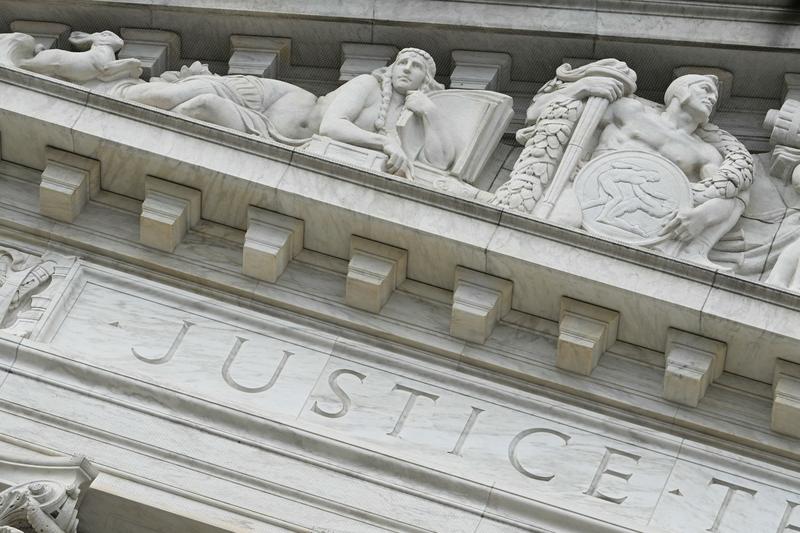
( Jim Watson/AFP / Getty Images )
Brian Lehrer: Brian Lehrer on WNYC. This morning, I was reading the list of the most recent NPR stories about the Supreme Court. Anyone can do that, by the way. Just Google NPR SCOTUS, and it reads right now like a scorecard of a Trump Super Bowl win. Listen to this list. Supreme Court appears poised to vastly expand presidential powers. Supreme Court lets Texas use gerrymandered map that could give GOP five more House seats. Supreme Court allows Trump to prohibit gender election on passports and Supreme Court agrees to hear arguments in birthright citizenship challenge.
Those are the most recent four. We'll dig in a little bit on those now, including some sound bites from this week's hearing on one of the main goals of Project 2025. I think we can fairly call it that, destroying the power of independent agencies or what they call the administrative state. Our guest is very critical of this trend at SCOTUS. We'll see where he thinks they get it wrong and what the implications are for the American people. It's Elie Mystal, justice correspondent for The Nation magazine, host of their podcast Contempt of Court and and author of books including Bad Law: Ten Popular Laws that Are Ruining America, which was published this year.
Elie was here for a book interview. Elie, always good to have you. Welcome back to WNYC.
Elie Mystal: Thanks for having me, Brian.
Brian Lehrer: First on the big picture, it is quite a recent winning streak that I read out there and on a whole variety of Trump agenda issues. When we think about the scope just of those four headlines, racial gerrymandering in Texas, immigration as an issue with hearing the challenge to birthright citizenship, gender with forcing people into a binary choice on passports, and now probably expanding his executive power again with the administrative state case. Across categories, the Trump and Project 2025 agenda is landing at the Supreme Court just in this first year of this presidential term and they win most of the time. How sweeping does this judicial remake look?
Elie Mystal: Brian, I've been coming on your show since let's say, 2015, 2016. I think every time I've been on your show, I've tried to get people to understand this fundamental point that if you, as a liberal, if you as a Democrat, if you as a person who is concerned with the future of democracy, if you do not control the Supreme Court, you control nothing. Because the Republican MAGA Trump court is going to rubber stamp and push through the entirety of the MAGA agenda through the auspices of six unelected, unaccountable justices. That is going to happen again and again and again and again until people take control of the Supreme Court. I keep saying it, and I keep waiting for the leaders of the, of the so called opposition to this administration to get the memo to understand just how little they can accomplish without controlling the Supreme Court. You listen--
Brian Lehrer: What can they do? If they want to be responsive to your plea, what can they do? Only presidents can nominate Supreme Court justices.
Elie Mystal: You have to expand the Supreme Court. That is the A solution. That is the only solution. When you have control of the House and the Senate and the White House, as the Democrats did in 2021, you have to expand the Supreme Court. Even now, as we head towards a midterm election, as we head towards another presidential election, you still don't have Democrats running explicitly on a court expansion plan. You still don't have Democrats willing to come out and say the first thing we're going to do if we are allowed to hold power again is expand the Supreme Court so we can roll back many of these awful decisions.
You start the clock with the court's term this year. I want to go back to right before the term started in October to September 8th, when Brett Kavanaugh on the shadow docket reauthorized racial profiling as a "common sense solution in this country." That happened on September 8th on the shadow document.
Brian Lehrer: With respect to detaining people who might be undocumented immigrants, right?
Elie Mystal: Yes. That anybody who looks like they could be an undocumented immigrant because of how they speak English, perhaps they speak English with an accent, perhaps they speak Spanish, perhaps they're coming out of a car wash. Any of these and dishes, according to Kavanaugh, of non citizenship is a reason that the government can detain you, which he called a minor inconvenience if you happen to be a citizen. We have multiple reports saying that it's far more than a minor inconvenience for people who are detained by ICE. That started on the shadow docket. That's the other thing that we haven't talked about, Brian, of the cases that you mentioned, half of them came out without any explanation or ruling. Half of them came out without a full hearing. The court's decision on racial profiling, the court's decision to allow Texas to use its racially gerrymandered maps, the court's decision to force people to choose a false binary on their passports, all of that happened without a full hearing. We're still waiting on the shadow docket for the court to tell us whether or not Trump can invade Chicago.
Brian Lehrer: Before we get into some of the particular cases and the arguments on one side and the other, what's the single standard for you on expanding the Supreme Court? Because I could imagine people on the other side, I don't know if they actually did it, but I could imagine theoretically that they might have wanted to do it in the 1960s and '70s, the years of the Warren Court, whatever, when so many liberal decisions were coming down after some years of Democratic presidents getting to make a lot of the Supreme Court nominations and saying, oh this isn't fair, we need to expand the Supreme Court to 13 seats so conservatives have more of a fair shot. What's the single standard there?
Elie Mystal: First of all, I just want to slightly disagree with the premise there because I know that in the zeitgeist, in the history, it's, oh, the Warren Court was so liberal. Folks, Democrats haven't had a majority on the Supreme Court since 1969. All right? It's been a minute since there's actually been anything approaching a liberal Supreme Court in this country. I just want to have that as a scene setter. My standard for expanding the court is when the court gets out over its skis and refuses to allow the normal operation of law to happen. When the court gets out over its skis and refuses to allow democracy to happen, that is a point that the court has gone too far and must be reined back in.
This is a point that a lot of people have trouble understanding or believing. The constitutionally preferable way to rein in the Supreme Court is with court expansion. You can't fire justices. They are appointed for life. That is a constitutional mandate. You can't reduce their salaries, you can't remove them, except for cases of impeachment, right? There's no easy way to just make them change their ideas. The way that you're supposed to do it is to expand the court, which has been done repeatedly throughout American history. Madison did it, Jefferson did it, Jackson did it, Lincoln did it, Johnson did it. Right?
It's been nine for a while, and people say, oh, FDR tried to do it and it didn't work. Did it not work because FDR was losing new deal cases 5 to 4 and then he threatened to expand the court and then he started winning New Deal cases 5 to 4. Go back and tell FDR that his plan didn't work.
Brian Lehrer: You're saying the justices were susceptible to the politics, not just to their interpretation of the Constitution.
Elie Mystal: That's the other thing, Brian. You have to make these justices afraid of the politics at some level because that's actually part of what reins them in. Right now, they know nothing is ever going to happen to them. The justices, the Republican justices aren't afraid of a Democratic takeover of the government. They're not afraid about what happens to their power then because they know that the Democrats are feckless and weak. The only people the justices are afraid of is Donald Trump, because Donald Trump is the only one who has that dog in him that would make him ignore a Supreme Court order he doesn't like.
If you're John Roberts and you have all this power and the only person you're afraid of is Donald Trump, what do you do? You give Donald Trump everything he wants. You never give Donald Trump a reason to ignore your order because you order in a way that he already likes. That's how John Roberts protects his power. See, a lot of people think the court is just giving Trump everything he wants because they're scared of him. They are scared of him, but it's not about-- They're not scared of him in terms of he's going to have so much power, and he's going to take it away from us.
The way to protect their own power is to give Trump everything he wants now, because they know Trump and Trump basically alone is the person who might ignore Supreme Court order. And they know they'll outlive Trump. They know they'll outlive Trump. They know that Trump is slated to be term limited out of office in 2028. We can talk on some other segment about whether or not we think that's actually going to happen. Assuming that it does happen, the court's still going to be there. Roberts is still going to be there. He's a 70 year old man. Robert still has another 10, 15 years left in him.
The most of the other Republicans, except for Sam Alito and Clarence Thomas. Kavanaugh, Gorsuch and Barrett they're all in their 50s. They're going to outlive Donald Trump, and this is how they keep their power away from him by right now, for these last few years, giving Trump whatever he wants.
Brian Lehrer: Listeners, we have a number of recent Supreme Court decisions. They're not all decisions. Some are just decisions to accept a case, which are also very newsworthy and indicate a certain propensity that we're going to get through with Elie. Not a lot of time for phone calls in this segment, but we can probably get to a few. Your arguments for or against or questions for Elie Mistal, justice correspondent for The Nation, on any of these cases, the Supreme Court has recently accepted or heard or ruled on. Birthright citizenship, redistricting in Texas, the independent agencies and gender election on passports. 212-433-WNYC 212-433-9692 call or text.
Elie, now I'm going to throw some of their arguments at you. I know you're going to disagree with them on these cases, but I want to lay out for the listeners where the tension [crosstalk] tension points are in the law and the Constitution that make these cases contentious in the first place. Let's start with birthright citizenship, which the Court has now agreed to reconsider. The basis is that the 14th amendment, ratified after the Civil War, says all persons born or naturalized in the United States and subject to the jurisdiction thereof are citizens of the United States and of the state wherein they reside.
The issue is whether that applies to children of immigrants or children of immigrants here illegally, more specifically. The conservative argument is that that amendment was passed to nullify the Supreme Court's racist Dred Scott ruling that said descendants of African slaves could not become American slaves citizens. The argument is it had nothing to do either way with immigrant families, and so it does not apply. What say you?
Elie Mystal: Yes, well, that's wrong on many levels. First of all, in addition to providing citizenship for newly freed slaves, the 14th Amendment created a new thing which was called an American citizen. Right? Because prior to the 14th Amendment, citizenship did not flow down from the National government. It flowed up from the states. Each state had the ability to determine for itself who was a citizen and who wasn't a citizen, which is how you get to Dred Scott, because Missouri says Black people aren't citizens and Illinois says that they are, right?
Like that's how you get there. Having each state decide for themselves who is a citizen and who is not is what led to civil war. It is the causes belly. It is is the thing that sparked the war, this different state approach to citizenship. The 14th Amendment comes in and it says, you know what? We're not doing that anymore. If you're born here, you're a citizen of this place we call United States of America. Doesn't matter if you're a citizen in Georgia, doesn't matter if you're a citizen in New York, you're a citizen of the United States, America. That is the fundamental principle of the 14th Amendment. That is the fundamental principle that they want to take away.
Because in this New World, the Republicans and the MAGA people imagine we end up going back to a state by state determination of who gets to be a citizen and who doesn't get to be a citizen. Because you can imagine that as soon as they try to get rid of birthright citizenship, New York will pass a law saying that anybody born in New York is still a citizen in New York. I mean, even Kathy Hochul will do that. Right? You imagine that Texas and Greg Abbott won't. Right? If you take away the 14th Amendment protection for citizenship, you devolve back into an antebellum state of conflict.
That's the first and most obvious problem. The second problem, Republicans never have a great answer for this. If you're not going to be a citizen based on birthright, what are you a citizen based on? Based on where your parents are from? Well, geez. That's how they did it in the Old World. That's a colonial standard, right? You're a Frenchman, wherever you are, even if you are in Vietnam, you're still French, right? That's that mentality.
Brian Lehrer: Well, they would say you have to at least come here legally and then go through a naturalization process.
Elie Mystal: That's based on what your parents did, not on what you did. Right? Why is my citizenship tied to what my parents did or didn't do? That is a colonial mentality. One of the reasons why the Old World citizenship standard stayed in the Old World, whereas the New World citizenship standard was based on birthright, is because of the very immigrant nature of the New World. Right? It's not just America that has birthright citizenship. It's Canada, it's Mexico, it's Brazil, it's Venezuela, it's Chile. Everybody in the New World does it this way because of the fundamental immigrant nature of the New World.
Brian Lehrer: Oh, that's an interesting way to look at the map because I think--
Elie Mystal: It is rife with hypocrisy for people who came to this land to steal it from natives, to steal it from other people to now say, well actually you're not a citizen if you're born here. Beyond the legal and moral arguments, there's a disgusting hypocrisy and in the MAGA Republican argument.
Brian Lehrer: That's an interesting way to look at the map because I see the argument from the other side sometimes includes, well most of Western Europe, the countries that we supposedly compare ourselves to the most in terms of Western democracy, don't have birthright citizenship.
Elie Mystal: Yes, that's because they're colonial powers. Having citizenship tied to your parents is a colonial idea because it allows you, the parent, to go to somebody else's country, steal their stuff, but still have the children that you produce in those countries have the citizenship of the colonial master. That's why you have citizenship tied to the parents. When you have citizenship tied to your birth, it means that the children, wherever you are, you are a citizen of where you were born. That is a pro immigration standard, and that's why it was adopted throughout the New World, because we are a land of immigrants living on land that we stole from people who were born here.
Brian Lehrer: All right, let's spend some time on the case they heard this week, Trump vs. Slaughter, about Trump's right to fire Federal Trade Commission member Rebecca Slaughter without cause. Here is Rebecca Slaughter herself arguing for the importance of independent agencies like the FTC.
Rebecca Slaughter: The Constitution does not say the president must do whatever he wants when he's in office. It says he must take care that the laws passed by Congress be faithfully executed.
Brian Lehrer: She also said that independence allows the decision making that is done by the FTC and other boards to be on the merits about the facts and about protecting the interests of the American people, not on politics. That's another of her arguments. Rebecca Slaughter after being fired. A basic argument on the Trump side is that the Constitution has no provision for independent agencies. The Constitution has three branches of government, right? Executive, legislative, and judicial. That's the President, the Congress, and the courts.
Any past law that sets up independent agencies was unconstitutional in the first place because it sets up an unaccountable fourth branch of government. I assume you take issue with that argument.
Elie Mystal: Yes. I'd say that the entire thrust of bourgeois, liberal, constitutional, democratic revolution, the revolution that happens in England, the revolution that happens here, the revolution that happens in France, the revolution that happens in Germany, the revolution that happens in Russia, all of these revolutions, one of their key tenets was to take away the power of the absolute monarch to fire at will his ministers and functionaries, right? The power to fire willy nilly on a whim the ministers of the government is the power of a king. It's Something that the revolutionaries fought desperately to take away. The idea that in our own Constitution, which is part of the liberal democratic constitutional revolutionary trilogy, if you will, the idea that our own Constitution somehow forgot to insulate congressional agencies, agencies created by Congress, agencies created by the legislature, from having their officials fired at will by the President is ridiculous. It is ahistorical. It's not what the law says. Congress, the legislative branch, has the power to create these independent agencies.
Nobody disputes that, not even the Republicans dispute that, that Congress has the power to create these agencies. If they have the power to create these agencies, then surely can co-commit it with that power is the power to insulate these agencies from executive fiat. That's number one. Number two, it's a law. Congress. I mean, when we were talking about the FTC, Congress literally passed a law when it was creating the FTC that determined how the FTC commissioners could be fired. It's a statute. When Trump is doing this, he is overcoming the statute.
What the Republicans are relying on is something called unitary executive theory. This is something that they've essentially made up in the last 10, 15 years, that says the executive power is vested in the president and only the president. That means the president has the right to hire or fire any person working in the federal government, whether they be an agency head, whether they be a part of an independent commission, or whether they just be a random federal employee who happens to be Black. That is the argument behind the unitary executive theory.
The reason why I call it the unitary executive theory is that it's never been something that we've done in this country. If you want to go all the way back to like, 1790. Okay. People who have watched the musical Hamilton, which I'm going to just go on and assume for a lot of your listeners, right. If you listen to the musical or watch the musical Hamilton, you know Jefferson and Hamilton, they're rapping, they're having a battle about the national debt. They're having a big rap battle about that. What are they battling about?
What they're actually battling about is something called the Sinking Fund Commission, which was in 1790, the first independent agency created by Congress meant to discharge the national debt. Jefferson didn't want it, Hamilton did. Hamilton won. This independent agency was protected from having people be fired by the President, quite obviously. The idea that the President has this power was an idea rejected by the people who wrote the actual Constitution in one of their first major bills to discharge the debt of the Revolutionary War. For these conservatives to now come up here, like actually, the Constitution says the president has all-- Again, that's just ahistorical and not true.
As you said in your open, Brian, this has been a long term conservative project. I argued in a piece that I wrote for The Nation there have been four pillars of the American conservative movement over the past 40 years. One is to take away civil and gay rights. Two is to take away women's rights. Three is to kill us all with unfettered access to guns. Four is to destroy the administrative state. I know for a lot of people, the fourth one doesn't usually get people out of bed. I mean, very few people pen signs, "Protect the bureaucrats." I get that's not sexy. The state bureaucracy, the ability to make and promulgate regulations, is a fundamental thing of how the government functions. When you put that to the fiat of the executive, you are giving Trump a truly kingly power.
Brian Lehrer: Let me just play one short excerpt now that we've heard from Rebecca Slaughter, the plaintiff in the case who got fired. One short excerpt from Chief Justice John Roberts from the bench when they heard the arguments on Monday. He states the 90 year old Supreme Court ruling upholding the independence of the FTC that they would have to overturn here was in a very different context than the Federal Trade Commission of today. The case was called Humphrey's executor, and Roberts argument--
Chief Justice John Roberts: Is that Humphrey's executor is just a dried husk of whatever people used to think it was, because in the opinion itself, it describes the powers of the agency it was talking about and they're vanishingly insignificant, has nothing to do with what the FTC looks like today.
Brian Lehrer: That is really interesting to me, Elie, because it's a changing contemporary context argument which I thought we usually hear from the liberal side. The living Constitution to apply its principles of justice for the people who need it today, as opposed to the so-called originalist or textualist argument that all the court should do is follow the exact words in the text of the Constitution or in this case follow a 90 year old precedent.
Elie Mystal: Yes. One thing that you'll notice about originalists is that they abandon originalism whenever originalism doesn't produce the answers that they want. That's why we know originalism is not a deeply held intellectual belief. It is an outcome, determinative way for them to get to what they want. As you can see with Roberts, as soon as originalism doesn't take him where he wants to go, he ignores it. Oh, it's a dried husk of an old thing. His argument is that the living, modern breathing interpretation of the FTC is just so much different than it was during Humphrey's executors that we don't have to look at this 90 year old case.
He's saying that the FTC is too powerful to be brought under the strictures of originalism. I wish he would say the same thing about an Uzi. I wish he would say the same thing about an AR-15, but no, no, we can still regulate AR-15s the same way we regulated muskets, but the FTC, oh gosh, that's just too powerful now. It's intellectually soft, right? Roberts is a very smart man, but he's making an intellectually disingenuous argument because he is outcome determinative, which goes back to my earlier point.
The only way you stop him is to expand his court because I think especially like a certain kind of crust of intellectual liberals, people who have been well educated liberals, people like me, we like to think that arguments matter, that logic matters, that there is a way that you can pin these people on their own logic, on their own past statements and have them agree. I'm just telling y'all, that's not how they roll. They do not care about their own hypocrisy. They care about winning. This is a case Roberts thinks he can win. He's willing to ignore all of his prior arguments in order to win now. That is their true North Star-- Winning.
Brian Lehrer: Vincent in Hopatcong has a question about the shadow docket that you mentioned before. Vincent, you're on WNYC with Elie Mystal from The Nation.
Vincent: Hi, Brian. Long time listener, first time caller. This is pretty wild and Elie, you're awesome. This is really great. Thank you so much for everything. I just had a question about the shadow docket. Is there any precedent for being used in this manner in the recent history? I know it was used like during COVID 19, but like as a tool or it seems to be a tool for Trump to get a lot of the things that he wants without going through like normal political processes. Is there a way to rein it in as a procedure in the Supreme Court?
Brian Lehrer: Or up the chain of the judicial system in that usual procedure? Briefly on this, Elie, because I want to touch on those other two cases before we run out of time.
Elie Mystal: Yes. Vincent. No. There is no precedent for this. The shadow docket started being used this way in 2017 to basically become the Trump document. It is unprecedented in American history. Can it be stopped legislatively? I'm not sure. The Supreme Court has a lot of discretion about how it handles its own docket. Again, the way you stop the shadow docket is that you appoint justices who won't use it in this way and will use it as it's intended to be used, which is as an emergency docket for cases where there will be irreparable harm if the court doesn't decide today, which, prior to 2017, was usually just death penalty cases.
Like you're going to be executed in the morning, you need a decision tonight. It's only since 2017, since the first Trump term, that the court started using it this way and they should be stopped. It's very bad.
Brian Lehrer: We just have a few minutes, so we're going to have to do the gerrymandering in Texas case briefly. We've done whole segments on it in the past, so I don't feel too bad about giving it short shrift here, and the gender identity on your passports case. On Texas gerrymandering, the court now will let Texas use the gerrymandered map that could give the GOP five more House seats. This case seems to hang on where the line is between racial redistricting to weaken the power of Black and Latino voters, which would violate the Voting Rights Act, versus the right of states to engage in partisan redistricting.
I guess the tension, Elie, is that if partisan redistricting is okay and different racial groups happen to be the base of one party or the other, how does partisan redistricting get done without changing the electoral power of the racial groups? Your take?
Elie Mystal: Yes, it doesn't. In 2019, the Roberts court issued Rucho v. Common Cause, which said partisan gerrymandering is okay, but racial gerrymandering was not. I wrote at the time, I said at the time that all that's going to happen is that every person who is doing partisan is doing racial gerrymandering will say, actually, they're doing partisan gerrymandering. That's exactly what's happening. That's what's happening in Texas. John Roberts, his standard is that he will not say that something is a racial gerrymander unless the racist self-report. Roberts only sees racism if the racists say in John Roberts's courts, "Hey, John, I'm being racist today," then he doesn't like it. As long as you say, I don't have a racist bone in my body, Mr. Chief Justice, well, then John Roberts is cool with it. That's what's happening in Texas.
Brian Lehrer: Do you not accept the idea that the overwhelming reason for all this redistricting that's taken place is because the Republicans want to win more seats, so it's explicitly partisan?
Elie Mystal: No, actually. I don't agree with that because I think what they want to do is the racism. The Texas case is shocking with its precision of racial gerrymandering. The Texas redistricting did not cut the power of white Democrats in Texas. They only cut the power of Black and Latino Democrats in Texas. It was precise. While I think that there are Republicans who are only interested in this for Republican outcomes, and if that means they have to crack some Black skulls, they're fine with it.
There also are Republicans who are specifically interested in taking away the power of Black and Brown voters. Those Republicans are in Texas, and when you look at how they drew the maps, and this came up during arguments, when you look at how they drew-- This came up during arguments in the Louisiana case, which is on their regular document, if you look at how Louisiana drew their districts, it was particularly racially targeted, and the same thing is happening in Texas.
Brian Lehrer: Last thing in our last minute, we're going to go over by just a little bit. Last case from these recent four. Supreme Court allows Trump to prohibit gender election on passports was the NPR headline. We know Trump's political position is that there are only two genders, but what was the legal issue the court was addressing there?
Elie Mystal: I don't know. Cause it was on the shadow docket, right? They didn't even tell me why they did it this way. Look, it goes back to the unitary executive that Trump is a king and by fiat, as he can do what he wants is the fundamental legal reasoning behind it. Like I said, there are four pillars, and one of those pillars is taking away civil and LGBTQ rights. This is another example of that pillar.
Brian Lehrer: Elie Mystal, justice correspondent for The Nation, host of The Contempt of Court. Did I say that right or wrong? It was a contempt for court.
Elie Mystal: Of.
Brian Lehrer: The Contempt of Court podcast and author of the book. Wait, I have to get back to page one of my notes. I want to plug your book.
Elie Mystal: It's Bad Law: Ten Popular Laws Ruining America. That's a New York Times bestseller, Brian.
Brian Lehrer: Published this year. Thank you very much, Elie, as always.
Elie Mystal: Thank you so much for having me.
Copyright © 2025 New York Public Radio. All rights reserved. Visit our website terms of use at www.wnyc.org for further information.
New York Public Radio transcripts are created on a rush deadline, often by contractors. This text may not be in its final form and may be updated or revised in the future. Accuracy and availability may vary. The authoritative record of New York Public Radio’s programming is the audio record.
